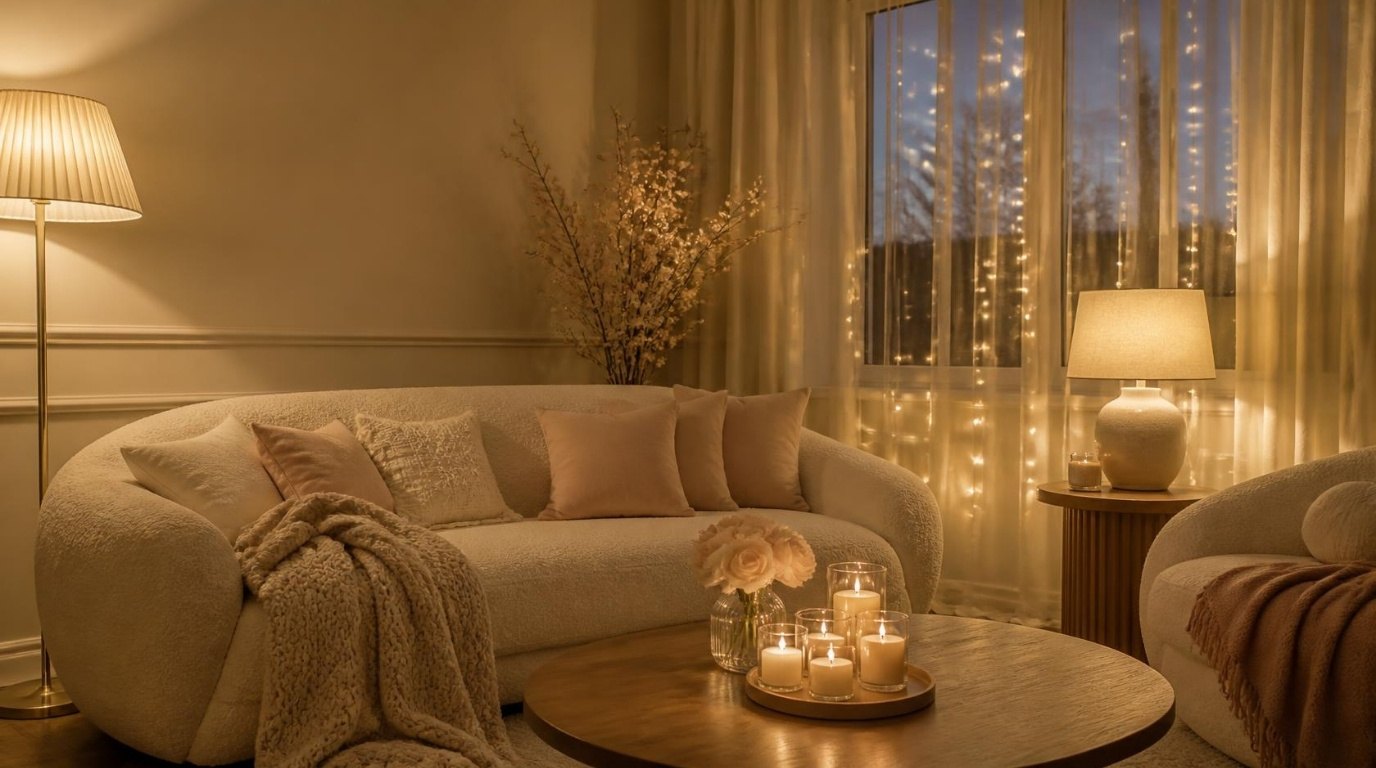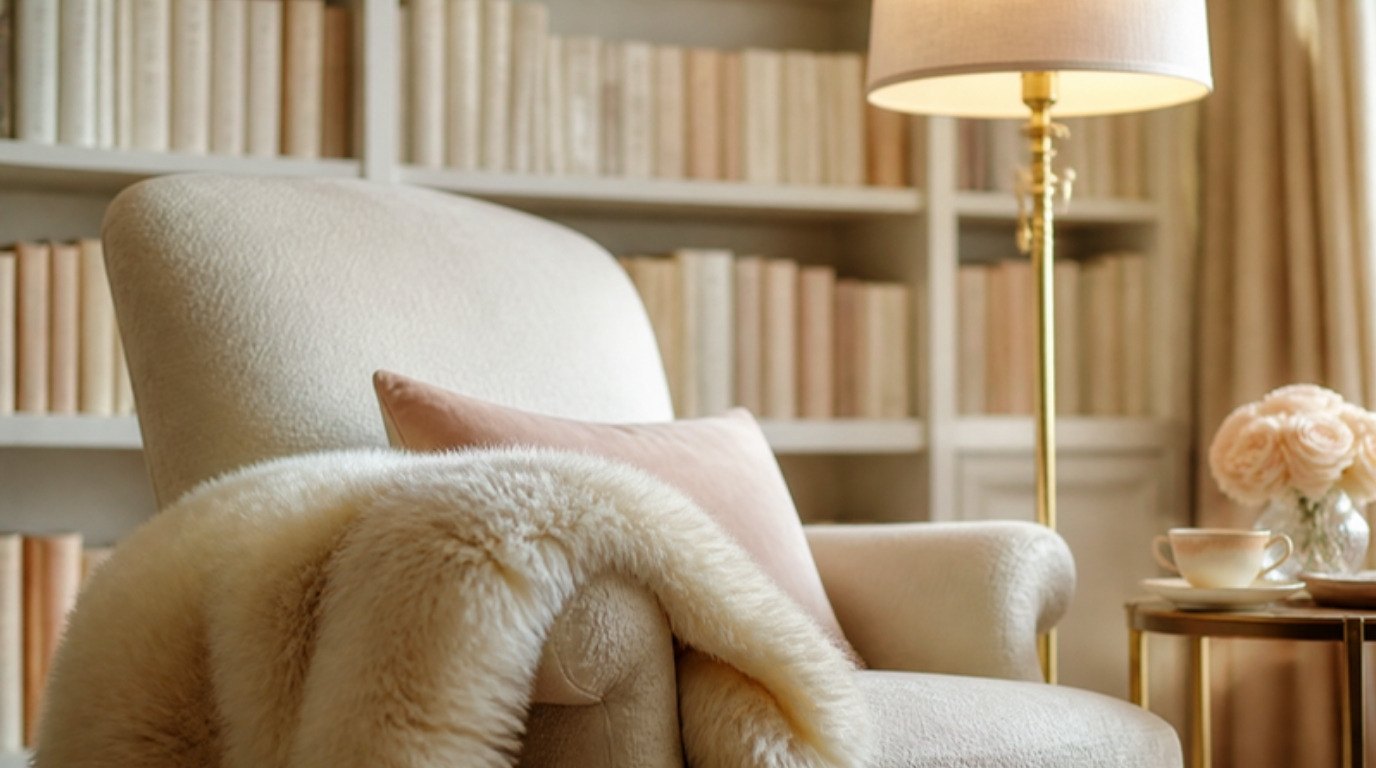
A home library isn't about how many books you own or how big your house is. It's about giving your books a place that feels intentional – a spot where reading looks like something you chose, not something squeezed in between the laundry and the TV.
That can be a whole wall of shelves, a single tall bookcase beside a soft chair or a little run of books under the stairs. What turns any of these into a "library" is the same short list: books displayed with care, good light, a comfortable place to sit and a feeling of calm when you walk past.
This guide is full of home library ideas for every kind of space: ten layouts from a full wall to a tiny apartment corner, how to organize your books, lighting, seating, rugs and ladders, how to style the shelves so they look curated rather than cluttered and a "home library by space" table to help you plan yours.
I'm a firm believer that every home deserves at least one corner that quietly says "sit down and read." Let's find yours.
What Makes a Space Feel Like a Library
Before you buy anything, it helps to know what you're aiming for. A library feeling comes from five things working together:
- Books as the main event. Shelves that are mostly books, not a few paperbacks lost among random objects.
- A sense of enclosure. Shelves on more than one side, a corner, a nook or a ceiling-high wall make a space feel wrapped and quiet.
- Warm, layered light. Several soft light sources instead of one bright overhead bulb.
- A dedicated seat. One chair that's clearly for reading, with a throw and a small surface for a cup of tea.
- Something underfoot. A rug softens sound and makes even a hallway feel like a room.
You don't need all five on day one. Start with the books and the light, and add the rest over time.
10 Home Library Ideas for Any Space
Pick the idea that fits the space you actually have, not the one you wish you had. Every one of these can look beautiful.
1. A Full Wall of Shelves
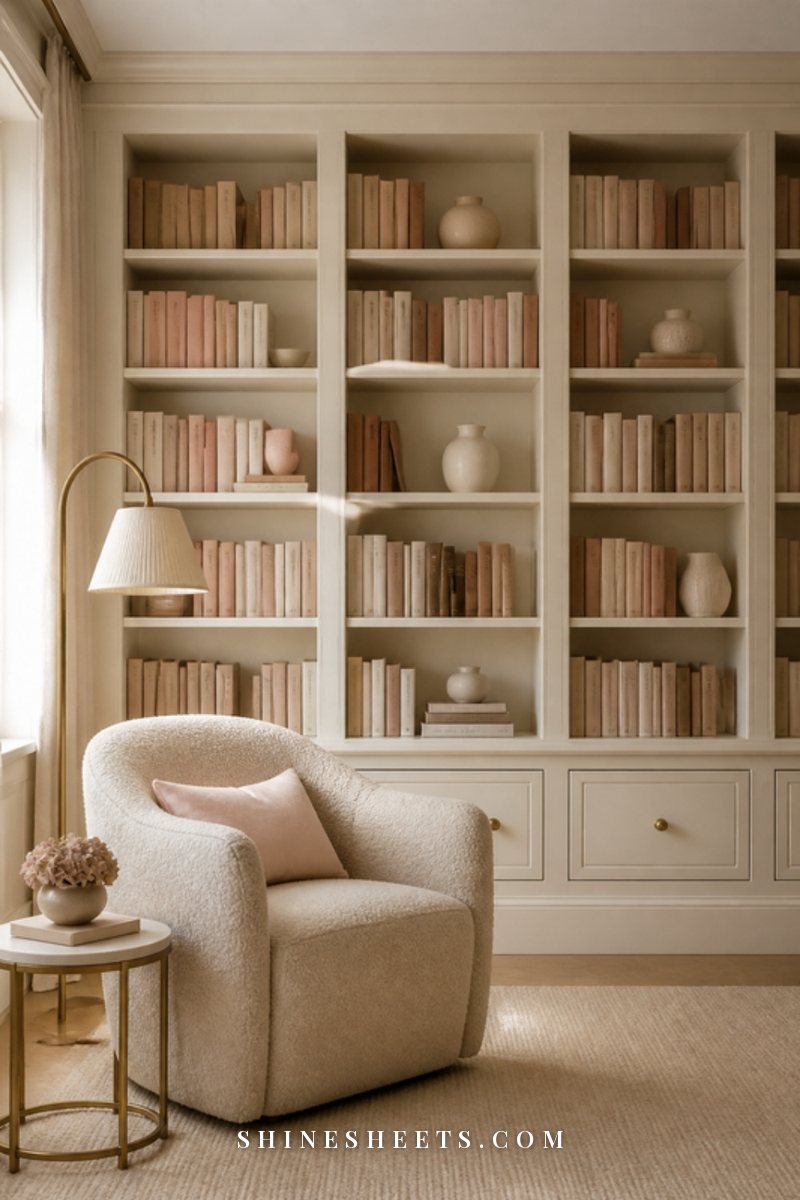
The classic library look: one wall, shelved from floor to ceiling. It's the single most dramatic change you can make, and it works in a living room, a dining room or a spare room.
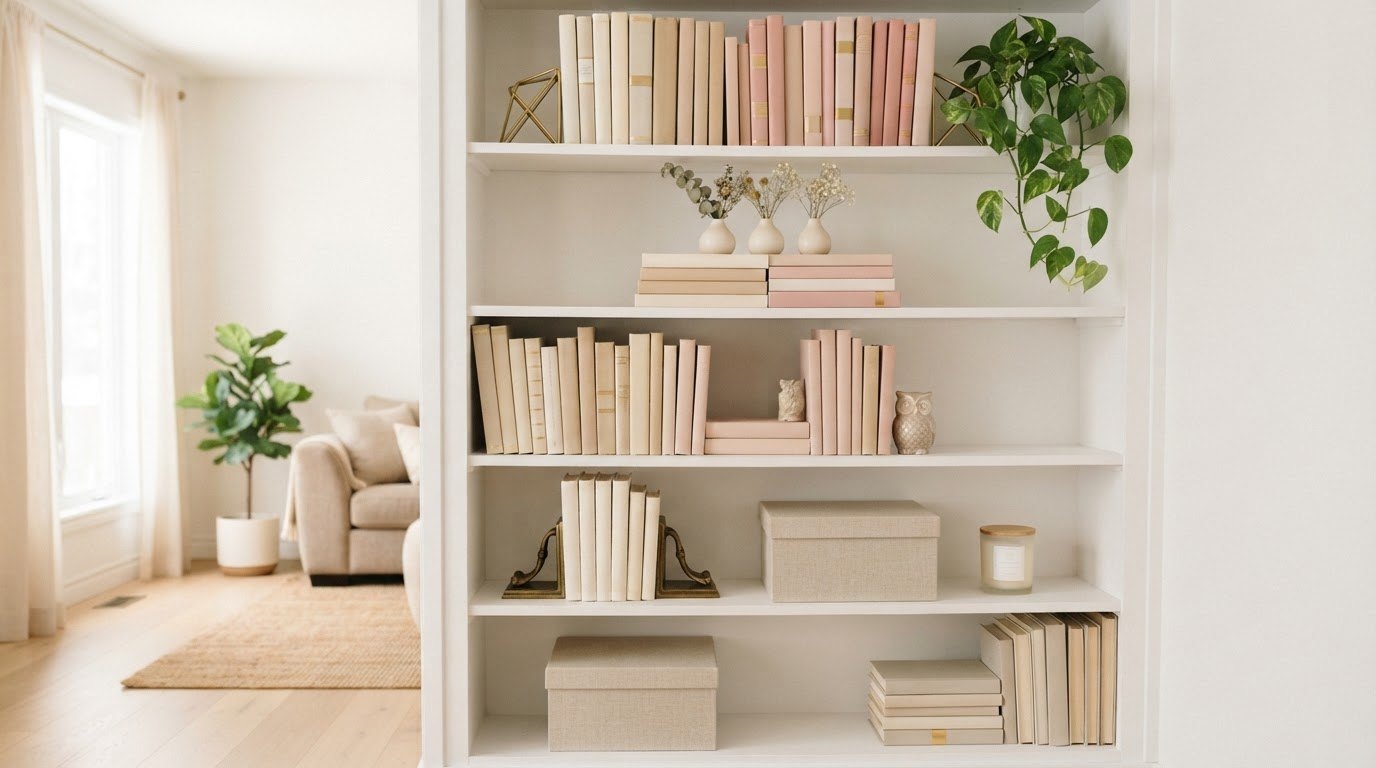
Choose shelves in the same color as your wall (cream on cream is beautiful) so the books become the color and the shelving almost disappears. Leave the lowest shelf for heavy art books or baskets, keep the middle shelves for the books you reach for most and use the top for things you rarely need. Plan for about 30% empty space so the wall can breathe.
2. A Reading Corner Library
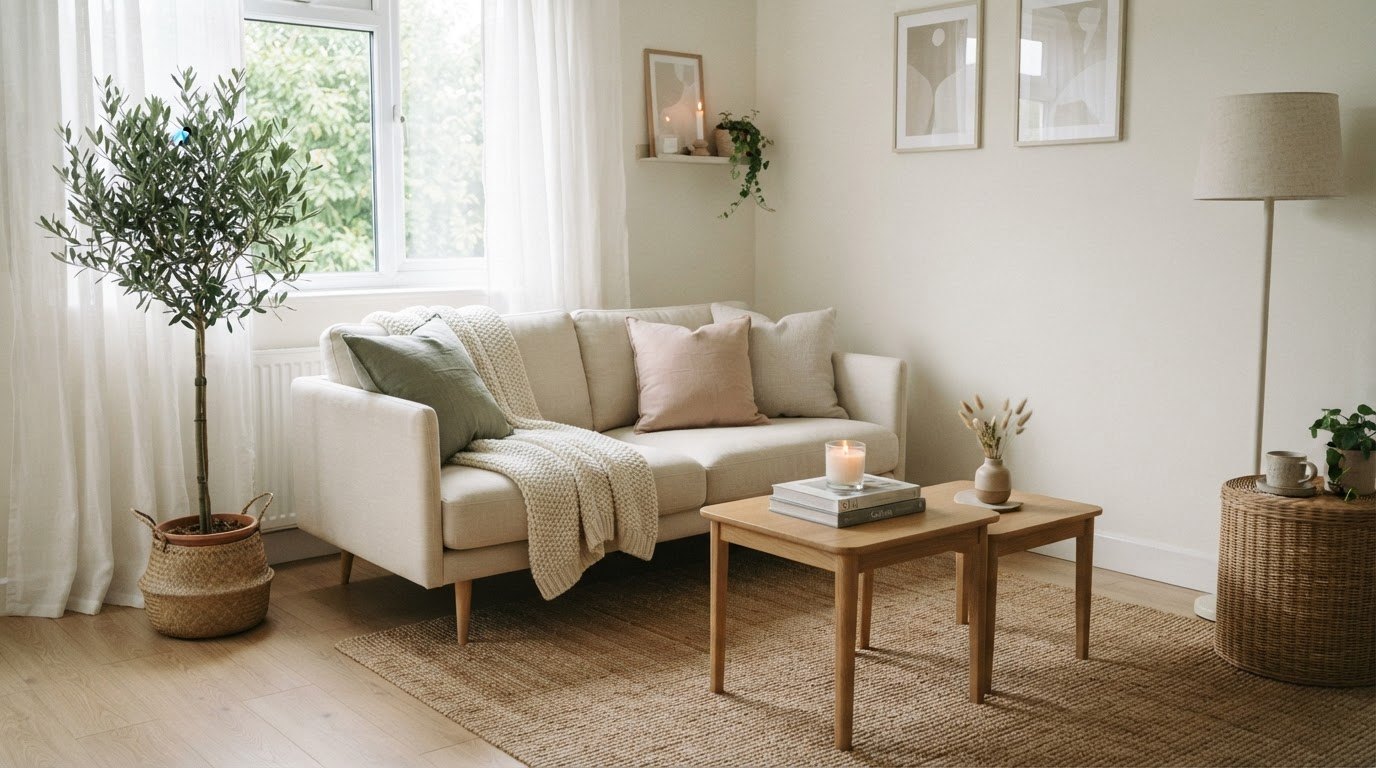
If a whole wall is too much, take one corner. Two bookcases meeting at a right angle, a chair tucked into the corner and a floor lamp behind it create an instant mini library. The corner shape wraps around you, which is exactly what gives a library its quiet feeling. A cream upholstered reading chair with arms and a slightly reclined back is ideal, because you'll want to stay for hours.
My guide to reading nook ideas has more ways to make a small corner feel tucked-in and special.
3. A Hallway Library
Hallways are often wasted space, and shallow shelves turn them into something lovely. Use bookcases about 25 cm (10 inches) deep so the path stays clear, run them along one side and add a runner rug. Picture lights mounted above the shelves make a narrow hallway feel like a gallery of books.
Keep the styling here especially simple, mostly books with an occasional small object, because people walk past closely and too many items quickly look crowded.
4. An Under-Stairs Library
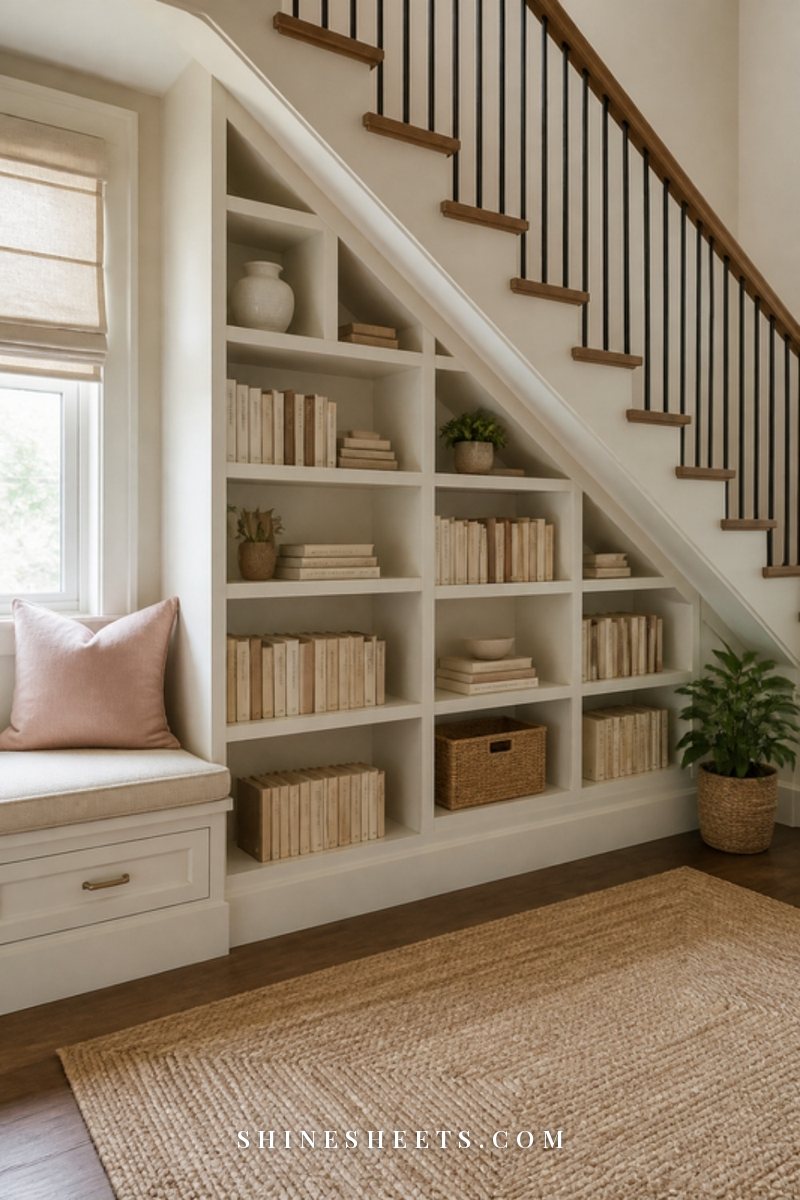
The angled space under a staircase is perfect for shelves that step up with the stairs. Fill the tall end with books and put a small bench or floor cushion at the low end for a hidden reading spot. Even freestanding bookcases of different heights, lined up from short to tall, give the same stepped effect without a carpenter.
5. The Built-In Look on a Budget
Real built-ins are expensive, but you can fake them beautifully. Line up several identical tall bookcases side by side, secure them to the wall, then:
- Fill the gap at the top with a strip of wood (crown molding) painted the same color.
- Add a simple base board at the bottom so they look grounded.
- Fill small gaps between the cases with paintable caulk.
- Paint everything – shelves, trim and the wall behind – in one soft color.
From across the room, it reads as custom joinery. Always anchor tall shelves to the wall, especially if children or pets visit.
6. A Window Seat Library
If you have a deep window, put low shelves on either side and a cushioned bench in between. The window gives you natural reading light during the day, and the shelves frame it like a little stage. A couple of throw pillows and a folded blanket complete it. Add a lift-up lid or drawers under the seat and you gain hidden storage for extra books or blankets.
7. A Bedroom Library Wall
Shelves behind or around the bed create a calm, bookish bedroom. Keep the books here gentle – novels, poetry, the comfort reads – and the styling minimal so the room still feels restful. A pair of wall sconces on each side of the bed doubles as reading light.
8. A Living Room Library
Two matching bookcases framing a sofa, a fireplace or a window instantly add a library feeling to the living room. Keep the shelves balanced: similar amounts of books on each side and a few matching objects repeated across both cases. Pull a reading chair close to one bookcase and the living room gains a second, quieter purpose.
9. A Small Apartment Library
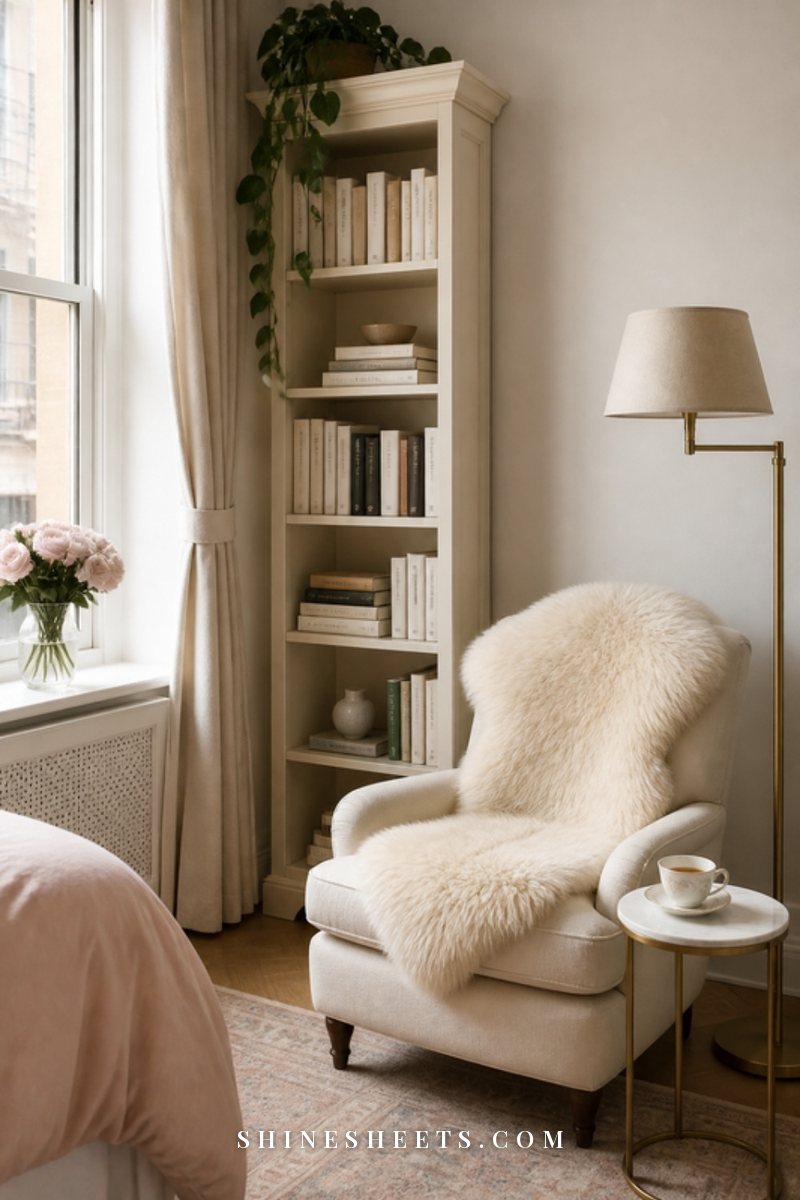
Small space, big love for books? Go vertical. One tall, narrow bookcase next to a compact armchair, a wall-mounted shelf above a desk or a picture ledge for face-out books all add up. Choose light colors so the shelves don't overwhelm the room, and let a single cream sheepskin throw on the chair do the cozy work.
Other small-space tricks: a shelf running above a doorway, a slim bookcase as a room divider between living and sleeping areas and a stack of beautiful hardcovers as a side table.
10. A Spare Room Library
If you have a spare room or a home office, consider turning it into a true library with a desk. Shelves on two or three walls, a comfortable chair, a desk lamp and a rug make it a calm place to read, write and think. A sofa bed means it still works for guests.
Choosing Shelves for a Home Library
The shelves are the backbone of any library, so a few practical details are worth getting right before you buy:
- Depth. Most books fit on shelves 25–30 cm (10–12 inches) deep. Go deeper only for large art books or if you want to style objects in front.
- Shelf span. Books are heavy. Shelves wider than about 80 cm (32 inches) can sag over time unless they're thick solid wood or supported in the middle.
- Adjustable heights. Adjustable shelves let you fit tall hardcovers and short paperbacks without wasting space.
- Color. Cream, white or the same color as the wall keeps a room calm. Darker wood feels more traditional and cocooning.
- Safety. Anchor every tall bookcase to the wall with the kit it comes with. A full bookcase is much heavier than it looks.
If you're renting, freestanding bookcases with wall anchors (small holes are easy to fill when you move out) are usually the best choice.
How To Organize Your Books
There's no "correct" way to organize books, only the way that makes you happy to look at your shelves and easy to find what you need. Here are the four most popular options:
| Method | Best for | Looks | Watch out for |
|---|---|---|---|
| By color | Decorative shelves, smaller collections | Calm and striking | Harder to find a specific book |
| By genre | Big collections, regular readers | Organized and natural | Can look busy without styling |
| Alphabetical by author | Very large collections | Classic library | Needs space to grow |
| Mixed with objects | Living rooms, bedrooms | Curated and personal | Easy to over-decorate |
A gentle middle ground I'd suggest: group by genre, then within each genre arrange books from tallest to shortest or by soft color families. You can still find everything, and the shelves look calm.
A few more tips:
- Mix vertical and horizontal. A short horizontal stack of three or four books next to upright books adds rhythm and doubles as a bookend.
- Keep favorites at eye level. The books you love and reread deserve the best spot.
- Remove paper dust jackets if they're torn. Many hardcovers have beautiful cloth covers underneath.
- Edit once a year. Pass on books you won't read again so there's room for new ones.
Looking for books worth a place on the shelf? My list of books every woman should read is a lovely place to start a collection.
Lighting a Home Library
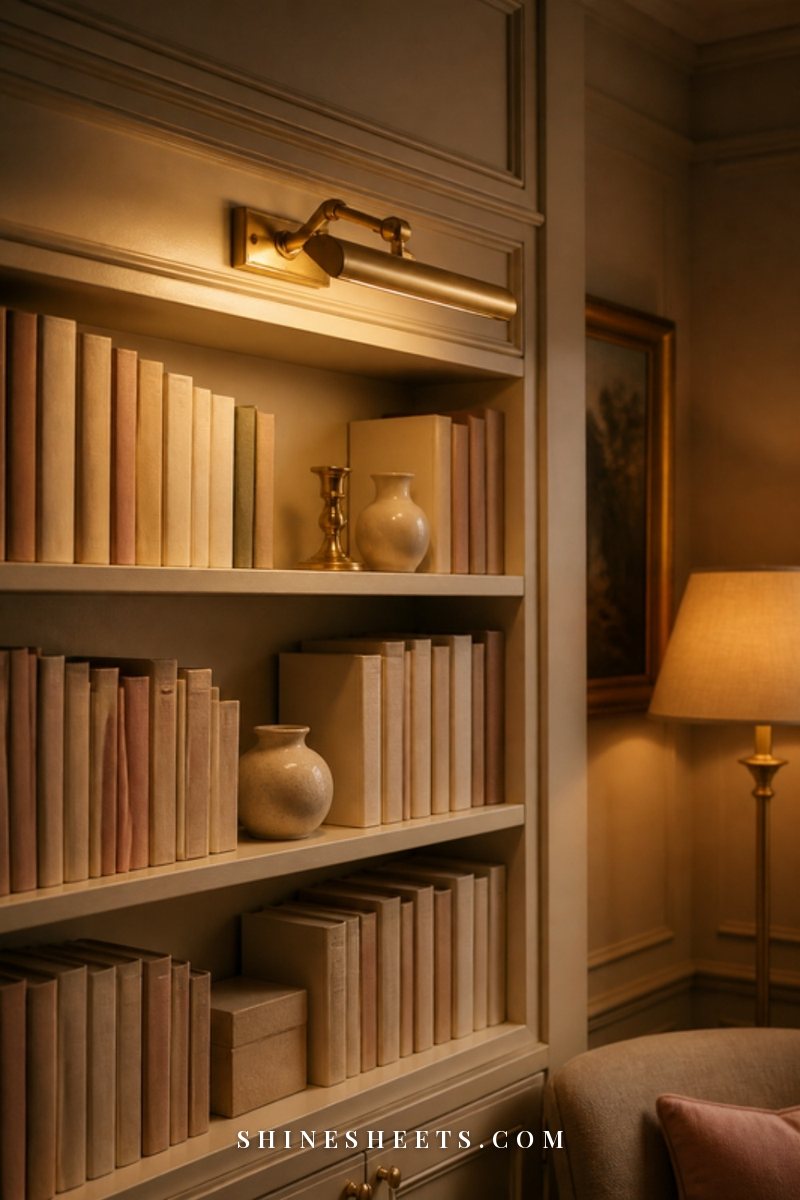
Lighting is what makes a library feel magical in the evening. Aim for three layers:
- Shelf light. A brass plug-in picture light mounted above the shelves washes the book spines in warm light. Plug-in versions need no electrician – just hide the cord with a cord cover painted the wall color.
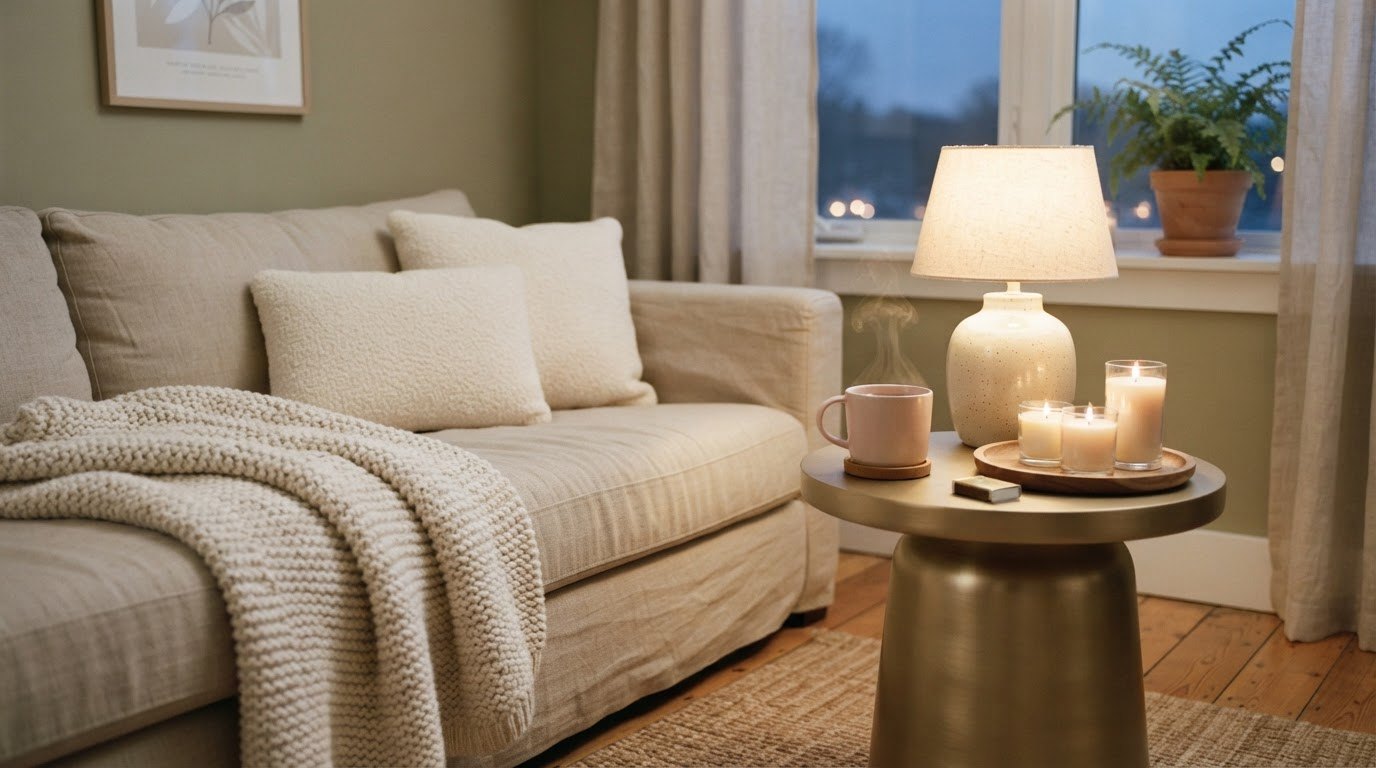
- Reading light. A floor lamp with a linen shade placed just behind and to the side of your chair gives you soft, direct light on the page without glare.
- Ambient light. Wall sconces, a table lamp on a nearby surface or a glass candle (safely away from the shelves) make the room glow.
Choose warm white bulbs around 2700K for that golden library feeling. Keep any candles well away from books and never leave them unattended. My guide to lighting ideas covers bulb temperatures and lamp placement in more detail.
Seating, Rugs and Ladders
These three details turn shelves into a room.
Seating
Choose one chair that's clearly the reading chair. Look for a seat deep enough to tuck your legs up, arms at a comfortable height for holding a book and fabric that feels soft. Add a small side table for tea and a basket for the current stack of books. If you have room, a footstool or ottoman makes long reading sessions much nicer.
Rugs
A rug defines the library area, softens echo and warms the floor. In a corner, choose a rug large enough that at least the front legs of the chair sit on it. In a hallway, a long runner. Soft neutral patterns – cream, beige, faded rose – work beautifully with colorful book spines.
Ladders
For shelves above about two meters (seven feet), a ladder is both practical and romantic. A leaning wooden library ladder is the easiest option for renters. If you install a rolling ladder rail, make sure the shelves are fixed securely to the wall. Even if you rarely climb it, a ladder instantly says "library."
How To Style Library Shelves So They Look Curated
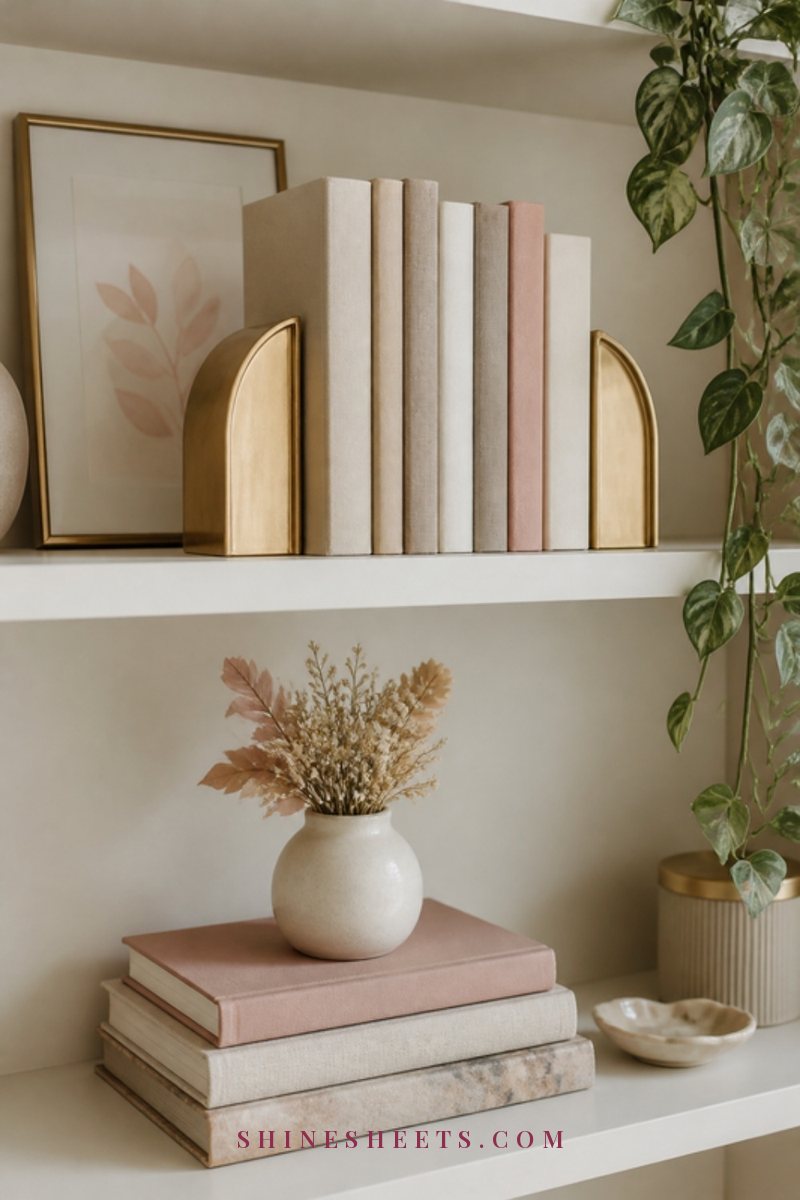
The difference between a curated library and a cluttered one is mostly breathing room and repetition. Here's a simple formula for each shelf:
- 70% books, 20% objects, 10% empty space. This ratio keeps it bookish but calm.
- Vary the arrangement shelf to shelf. One shelf books upright on the left, the next books stacked on the right, so the eye zigzags down the case.
- Repeat a few objects. Two or three cream ceramic vases spread across different shelves look intentional. Ten different trinkets look busy.
- Use bookends as jewelry. A pair of gold arched bookends holds a row in place and adds a little glamour.
- Add one or two framed pieces. A small vintage print leaned against the back of a shelf adds depth.
- Include something living. A small trailing plant on an upper shelf softens all the straight lines.
For a full step-by-step on arranging every shelf, my bookshelf styling guide walks through it shelf by shelf.
Little Touches That Make a Home Library Feel Special
Once the shelves, light and seating are in place, small details give your library its personality. Choose two or three that feel like you:
- A reading tray. A small tray on the side table for your tea, a bookmark and a pencil keeps everything in reach.
- A basket for the current stack. Books you're reading now live in a basket by the chair, so the shelves stay neat.
- A blanket that stays put. One throw that never leaves the reading chair makes it feel ready for you.
- A reading journal. A notebook on a shelf where you jot down favorite lines and books you've finished. I love writing in mine after evening tea.
- A signature scent. A softly scented room spray or a glass candle (lit on a safe surface, away from books) makes the space feel like its own little world.
- Art among the books. One framed print, a vintage map or a little sculpture breaks up the rows and adds character.
Home Library by Space
Use this table to plan a home library that fits the space you have. Screenshot it before you start shopping.
| Space | Shelving idea | Seating | Light |
|---|---|---|---|
| Small apartment corner | One tall, narrow bookcase plus a wall ledge | Compact armchair with a throw | Slim floor lamp with a linen shade |
| Hallway | Shallow 25 cm shelves along one wall | None, or a small bench at one end | Plug-in picture lights above the shelves |
| Under the stairs | Stepped shelves following the stair line | Floor cushion or small bench | Battery puck lights or a small sconce |
| Bedroom | Shelves around or above the bed | The bed itself, plus pillows | Wall sconces on each side |
| Living room wall | Floor-to-ceiling shelves or two framing bookcases | Upholstered reading chair and ottoman | Picture lights plus a floor lamp |
| Window | Low shelves on each side of a window seat | Cushioned window bench | Daylight, plus a small table lamp |
| Spare room | Shelves on two or three walls | Reading chair plus desk chair | Desk lamp, floor lamp and sconces |
Home Library Mistakes To Avoid
A few small missteps can make even beautiful shelves feel off. Here's what to watch for:
- Filling every inch. Packed shelves look stressful. Leave gaps so the eye can rest and new books have somewhere to go.
- Relying on one overhead light. A single bright ceiling bulb flattens everything and is tiring to read under.
- Forgetting the chair. Shelves without a seat feel like storage. Even a floor cushion invites you to stay.
- Too many tiny objects. Lots of small trinkets turn shelves into clutter. Choose fewer, slightly larger pieces.
- Placing books in direct sun. Strong sunlight fades spines quickly. Keep the most precious books on shelves away from bright windows.
- Skipping the wall anchors. Tall, heavy bookcases must be secured, every time.
Final Thoughts
A home library grows slowly, one shelf, one lamp and one well-loved book at a time. You don't need a grand room or a perfect collection to start – just a spot that makes reading feel like an invitation.
Choose the idea that fits your space, give it warm light and a soft chair, and let it fill up over the years. And if your reading habit needs a little nudge to match your beautiful new shelves, these tips on how to read more books make it easy to settle in more often.