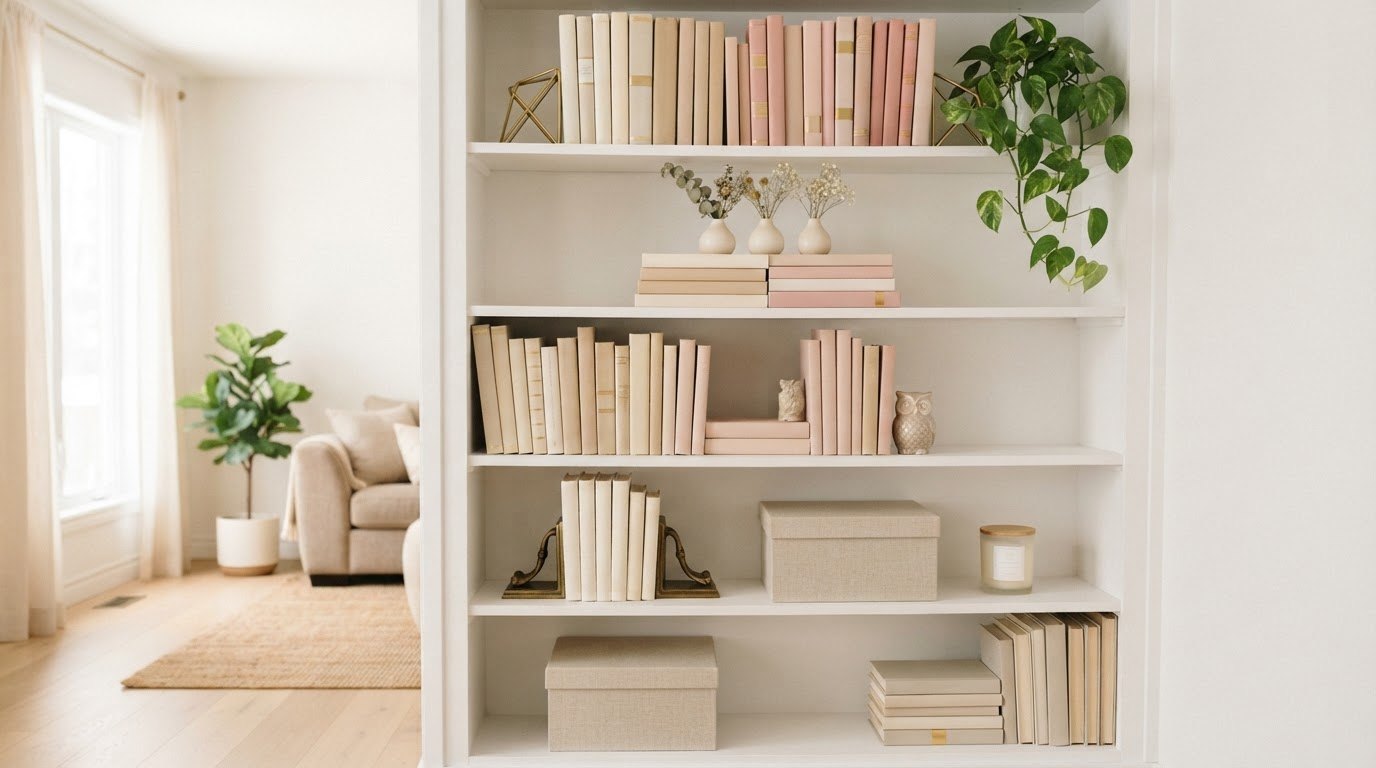
A styled bookshelf rarely looks good because of what's on it. It looks good because of what isn't. The shelves that make you pause on Pinterest usually hold fewer things than you'd guess, arranged with a little rhythm: some books standing, some lying down, one object that catches the eye and a bit of empty space so everything can breathe.
That's good news, because it means you don't need to buy a whole new shelf's worth of decor. You need a plan, an afternoon and the courage to take almost everything off first.
This guide walks you through bookshelf styling step by step: how to empty and edit, where the big pieces go, how to arrange books (rows, stacks and color), how to group objects, where greenery fits and why blank space is your best friend. You'll also find my simple shelf formula you can repeat on every shelf, a mistakes-and-fixes table and ideas for different kinds of shelves.
It took me a while to accept that "more pretty things" is not the same as "a prettier shelf." Once that clicked, styling got so much easier (and cheaper).
What Makes a Shelf Look Curated Instead of Cluttered
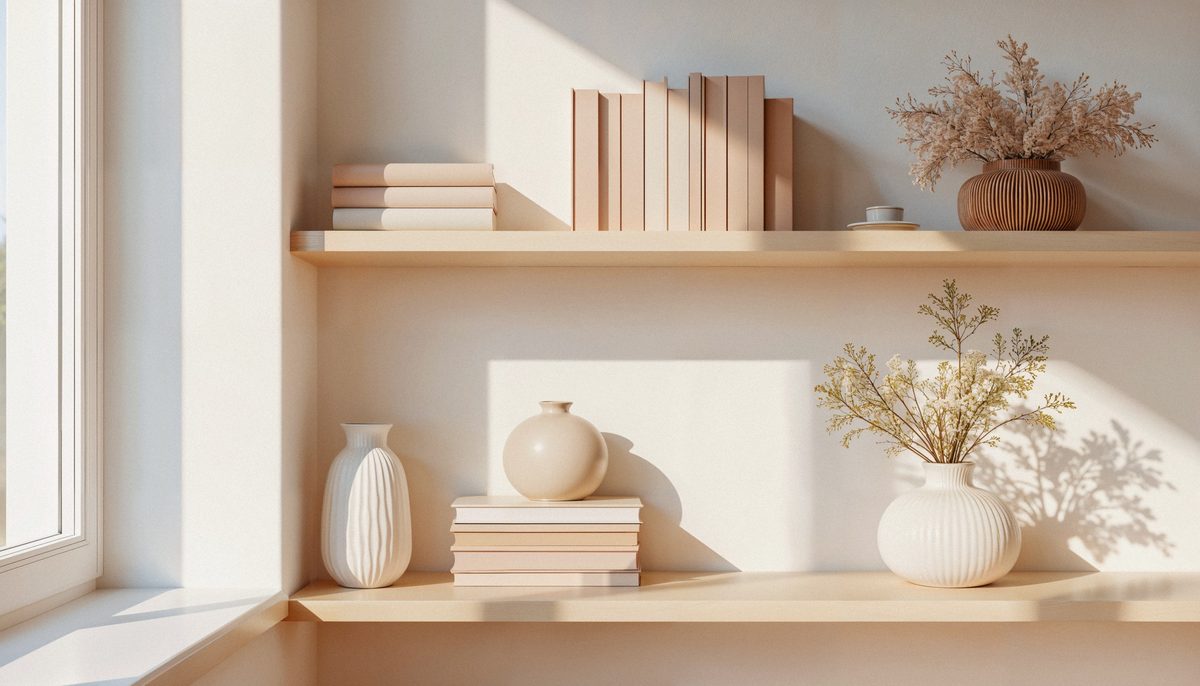
Before we move a single book, it helps to know what your eye is actually reacting to. A curated shelf has four qualities, and a cluttered one is usually missing at least two of them:
- Rhythm. The eye travels in a gentle zigzag from shelf to shelf instead of hitting a solid wall of stuff.
- Variety in height and direction. Tall and short, vertical and horizontal, round and square. Sameness reads as storage; contrast reads as styling.
- A limited palette. Two or three colors repeated across the shelves tie everything together, even if the objects themselves are very different.
- Negative space. Empty pockets give each piece a frame. Without them, even beautiful things blur into one busy shape.
Keep these four in the back of your mind. Every step below is really just a way of building them in.
Bookshelf Styling in 10 Steps
Give yourself one to two hours for a standard five-shelf bookcase. Put on music, make a tea and clear a patch of floor (or your bed) where you can sort things into piles.
Step 1: Empty Everything
Yes, everything. It's tempting to just shuffle things around, but you can't see a shelf clearly while it's full. Take every book and object off, wipe the shelves down and look at the empty bookcase for a minute. Notice its color, the light it gets and which shelves sit at eye level. Those eye-level shelves are your "front row," and they'll get your best pieces.
Step 2: Edit and Sort Into Piles
Sort what came off into four piles: books you love or reference, books you're done with, decorative objects you love, and things that don't really belong on a shelf (receipts, chargers, random paperwork). Be honest with the last two piles. A shelf is display space, not a drop zone.
For the "done with" books, a quick donation box by the door keeps them from creeping back. If you're short on bookcase space and your collection is huge, keep the overflow in a closet and rotate titles seasonally. Nobody needs every paperback on display at once.
Step 3: Anchor With Your Biggest Pieces First
Start with the largest items: a big vase, a framed print leaning against the back, a large basket or storage box. Place them in a loose zigzag, for example top left, middle right, bottom left. These anchors set the rhythm, and everything else fills in around them.
For the bottom shelf, closed storage is a lifesaver. A pair of beige linen storage boxes hides chargers, photos and spare candles while adding a calm, solid base that visually "grounds" the whole bookcase. Look for boxes that fit your shelf depth with a finger-width to spare.
Step 4: Place Your Vertical Book Rows
Now the books. Group upright books into rows of different lengths rather than filling a shelf wall to wall. A good starting point is a row that fills about half to two-thirds of the shelf width. Line the spines up at the front edge of the shelf (not pushed to the back) so the row looks neat and intentional.
Arrange each row from tallest to shortest, or tallest in the middle sloping down on both sides. Mixed heights in random order look messy; a gentle slope looks planned.
To end a row cleanly, a pair of brass bookends does the work of a small sculpture and keeps books from slumping. Choose a simple geometric or arch shape so they don't compete with your objects.
Step 5: Add Horizontal Stacks
Horizontal stacks are the easiest styling trick there is. Lay three to five books flat, largest at the bottom, and you've instantly created a little platform. Use stacks to:
- Break up a long vertical row (a stack at one end works like a bookend).
- Lift a small object so it sits at a better height.
- Fill a shelf that's too short for upright books.
Aim for roughly one horizontal stack on every other shelf. On a five-shelf bookcase, two or three stacks are plenty.
Step 6: Decide How To Handle Color
Book color is the biggest visual element on most shelves, so make one clear choice. Here are your options:
- Rainbow order. Fun and bold, works best when you have lots of colorful spines and simple decor.
- Color blocking by shelf. Group warm spines on one shelf, white and cream on another, blues on a third. Softer than a full rainbow, and you can still find books by "the blue shelf."
- Neutral-first. Put cream, white and beige spines at eye level and bright spines higher or lower. Calm and easy to live with.
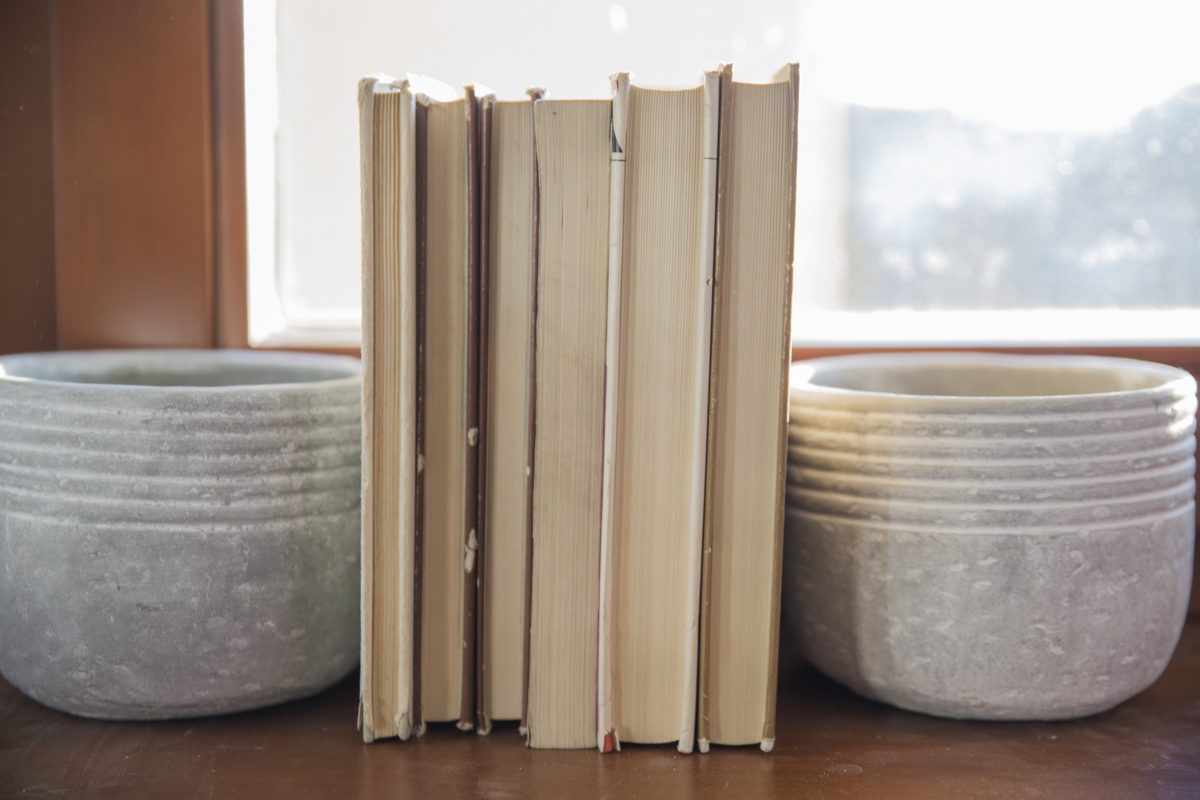
- Removing dust jackets. Many hardcovers have plain linen covers underneath. It's a free way to soften a loud shelf (keep the jackets in a box if you love them).
I'd skip turning spines to the wall. It looks lovely in photos, but you'll never find a book again, and a reading home should feel usable.
Step 7: Group Objects in Odd Numbers
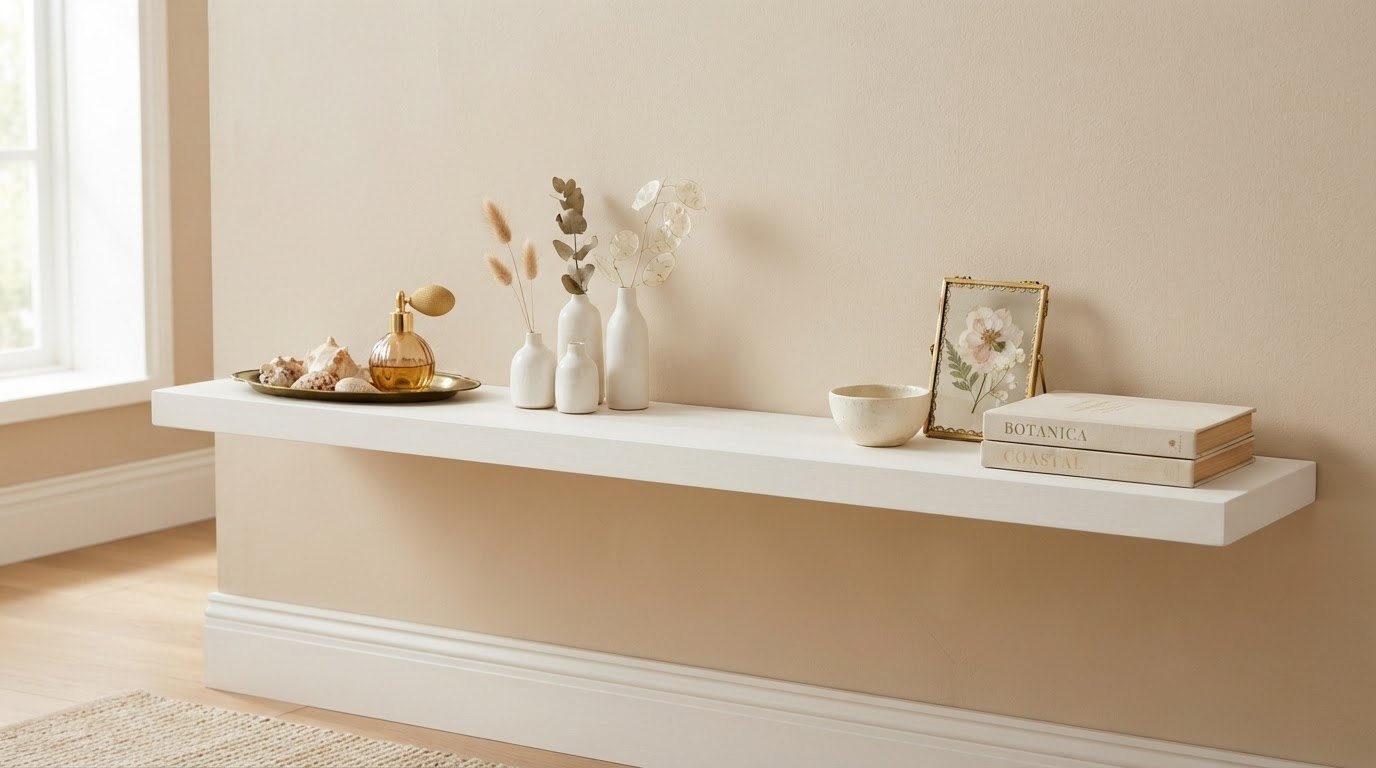
Objects look more natural in groups of one, three or five. Even pairs feel symmetrical and formal (great on a mantel, a bit stiff on a bookcase). For a group of three, think in a triangle: one tall piece, one medium, one low. For example, a tall vase, a candle and a small dish, placed so their tops form a slope.
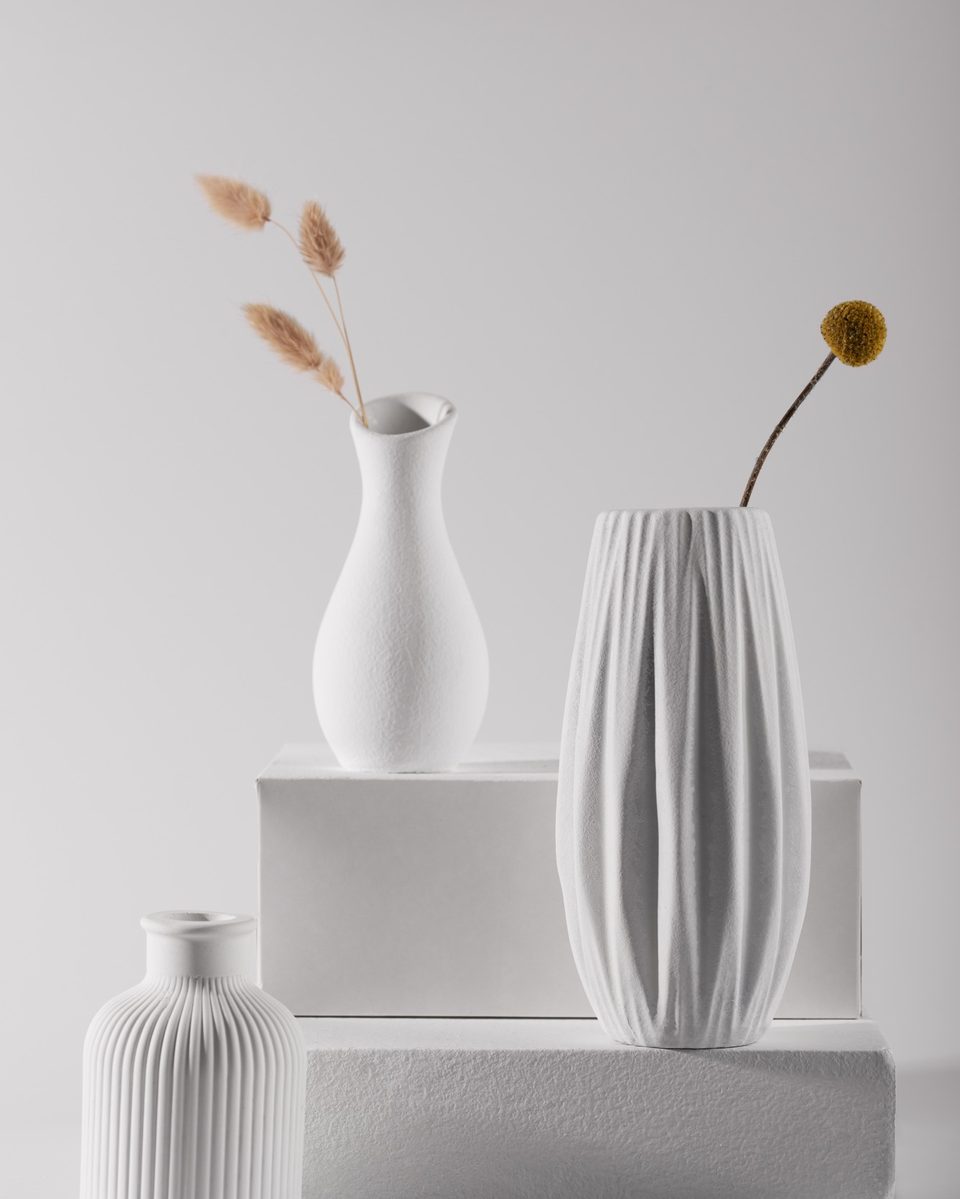
A set of cream ceramic bud vases in mixed heights is an easy win here, because they work as a trio on one shelf or split up to repeat the same color on several shelves. Look for a matte or lightly textured finish; shiny ceramics can look busy next to book spines.
If you collect small treasures (shells, vintage perfume bottles, a ring dish), corral them on a tray or in one spot rather than sprinkling them everywhere. My guide to trinket shelf ideas goes deeper into displaying little collections without them looking like clutter.
Step 8: Bring In Greenery and Organic Texture
Every shelf needs something that isn't hard and rectangular. Plants, dried stems, a wooden bead garland, a woven basket or a stone all soften the lines of books. A trailing plant spilling over a shelf edge is especially good at connecting one shelf to the next.
Real plants are lovely if the shelf gets light. If it doesn't (most bookcases sit in a corner), a small trailing faux plant gives you the same draping shape with zero watering. Choose one with matte leaves in a muted green and put it on an upper shelf so the vines can hang down.
Natural texture also includes wood, rattan and linen. Even a small wooden box on a stack of books adds warmth that ceramics alone can't.
Step 9: Leave Breathing Space
This is the step everyone wants to skip. Try leaving about a third of each shelf empty, either at one end or between groupings. If that feels too sparse, start with a quarter and live with it for a few days.
Empty space isn't wasted space. It's what lets your eye rest, and it's the difference between "she has a lot of nice things" and "this looks designed."
Step 10: Step Back and Edit
Walk across the room and look at the whole bookcase at once. Squint a little: you'll see shapes and color blocks instead of individual items. Ask yourself whether there's a heavy side, whether one shelf looks crowded and whether your colors repeat at least twice.
Then take one thing off. Almost every shelf looks better with one less item. Take a phone photo, too; a photo flattens the view and makes awkward spots surprisingly obvious.
The Shelf Formula (Screenshot This)
If the steps feel like a lot, here's the shortcut. Use this formula on each individual shelf, then vary which element goes left, center or right as you move down the bookcase so the pattern zigzags.
- Books: one vertical row OR one horizontal stack (sometimes both, on wider shelves).
- + 1 object: a vase, candle, bookend, small framed print or sculpture.
- + 1 plant or organic piece: greenery, dried stems, wood, a basket, a stone.
- + space: roughly a third of the shelf left open.
A quick example for a five-shelf bookcase:
| Shelf | Left | Center | Right |
|---|---|---|---|
| Top | Trailing plant | Space | Short book row + bookend |
| 2 | Book row | Space | Vase trio on a small stack |
| 3 (eye level) | Leaning framed print | Book stack + candle | Space |
| 4 | Space | Long book row | Wooden bowl or basket |
| Bottom | Linen box | Book row | Linen box |
Notice how the open space moves around the shelves. That shifting gap is what creates the zigzag rhythm, without you having to think too hard about it.
How To Style Different Kinds of Shelves
The formula works everywhere, but each type of shelf has its own little quirks.
Tall Bookcases and Built-Ins
Treat them as one big composition rather than separate shelves. Repeat each color at least three times across the unit (cream on the top, middle and bottom, for example). Keep the heaviest items low and lighter, airier pieces up high so the bookcase doesn't feel top-heavy. If it's a built-in around a TV or window, style the two sides as rough mirror images, but not perfectly matched.
Floating Shelves
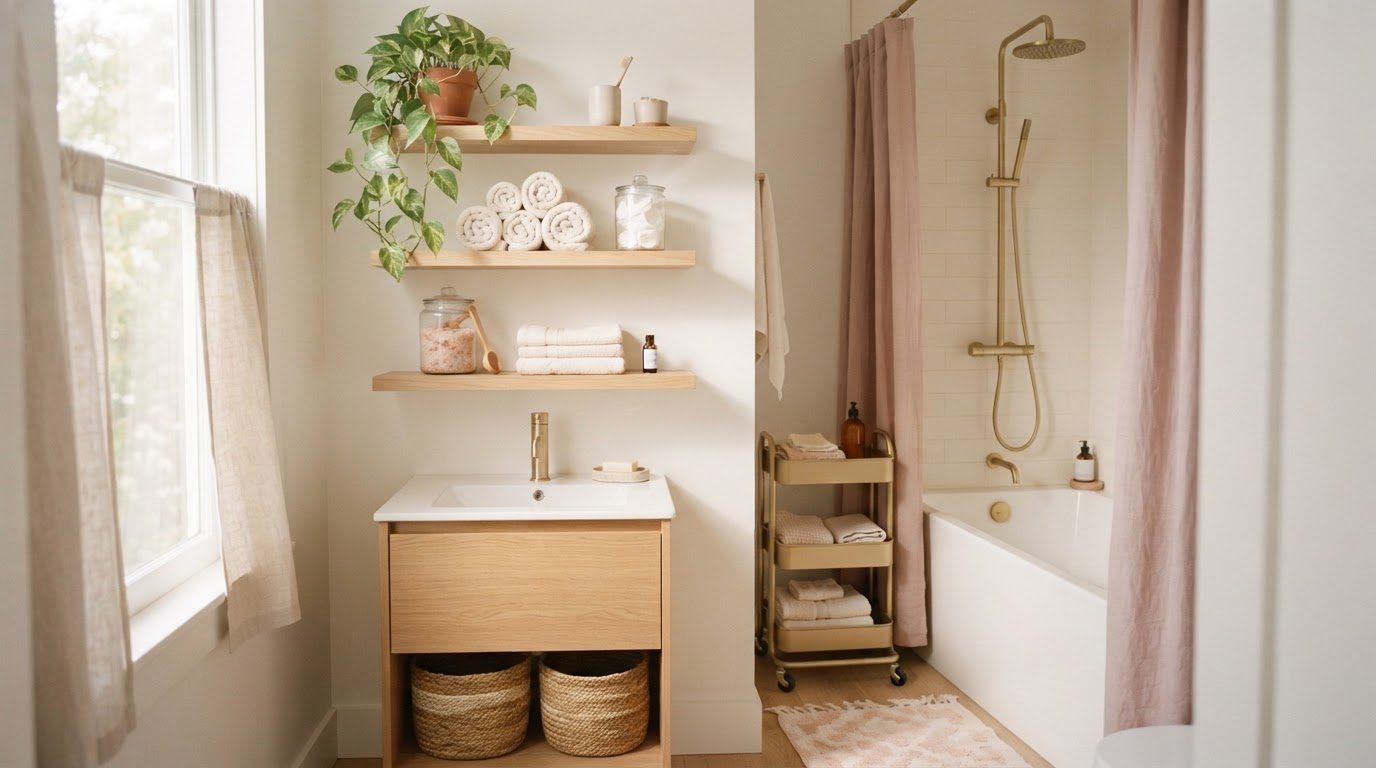
Floating shelves are seen from every angle, so less is more. Two or three groupings per shelf is the max. Keep a small stack of books, one object with height and one low piece. If they're in the kitchen or living area, mix in a few things you actually use, like a pretty mug or a jar of matches. A floating shelf also pairs beautifully with art around it; my gallery wall ideas show how to combine the two without it feeling crowded.
Cube Storage
Cubes are tricky because every square is its own little frame. Use a checkerboard pattern: alternate cubes with books, cubes with closed boxes or baskets, and cubes with one decorative object. Leave at least one or two cubes almost empty with a single piece. It's the fastest way to make budget cube units look more expensive.
The Book-Lover's Shelf (Mostly Books)
If your shelves are full of books you genuinely read, don't force decor in. Instead, vary the books themselves: alternate long rows with short stacks, and place one small object on top of a stack every second or third shelf. Bookends become your main decor. If this shelf sits near a comfy chair, my reading nook ideas help you turn that corner into the coziest spot in the house.
Small Shelves in Small Spaces
In a tiny room, a busy bookcase can make the whole space feel smaller. Choose a lighter palette (white, cream, beige spines and objects), keep the top shelf almost empty and use closed boxes for anything visually noisy. For more on making a small room feel bigger, my small living room ideas cover layout and light too.
Bookshelf Styling Mistakes and Quick Fixes
If something feels off but you can't name it, it's probably one of these. Find the problem in the left column and try the fix.
| Problem | Why it happens | Quick fix |
|---|---|---|
| Shelf looks like a storage unit | Books fill every shelf wall to wall | Remove a third of the books, add one horizontal stack per two shelves |
| Looks busy and cluttered | Too many small objects scattered around | Group small items on a tray or in one cluster; cut total objects by half |
| Feels flat and boring | Everything is the same height | Add one tall piece per shelf and lift small items on book stacks |
| One side feels heavy | Big items all on the same side | Move anchors into a zigzag: left, right, left |
| Colors feel random | Each object is a different color | Pick 2–3 colors and repeat each at least three times |
| Top shelf looks crowded | Heavy or dark items placed high | Keep the top light: one plant or a short row only |
| Decor feels tiny and lost | Objects too small for the shelf | Fewer, bigger pieces; a vase should be at least half the shelf height |
| Books keep slumping | Rows have no support | Add bookends or a horizontal stack at the end of each row |
Adding Light and Warmth
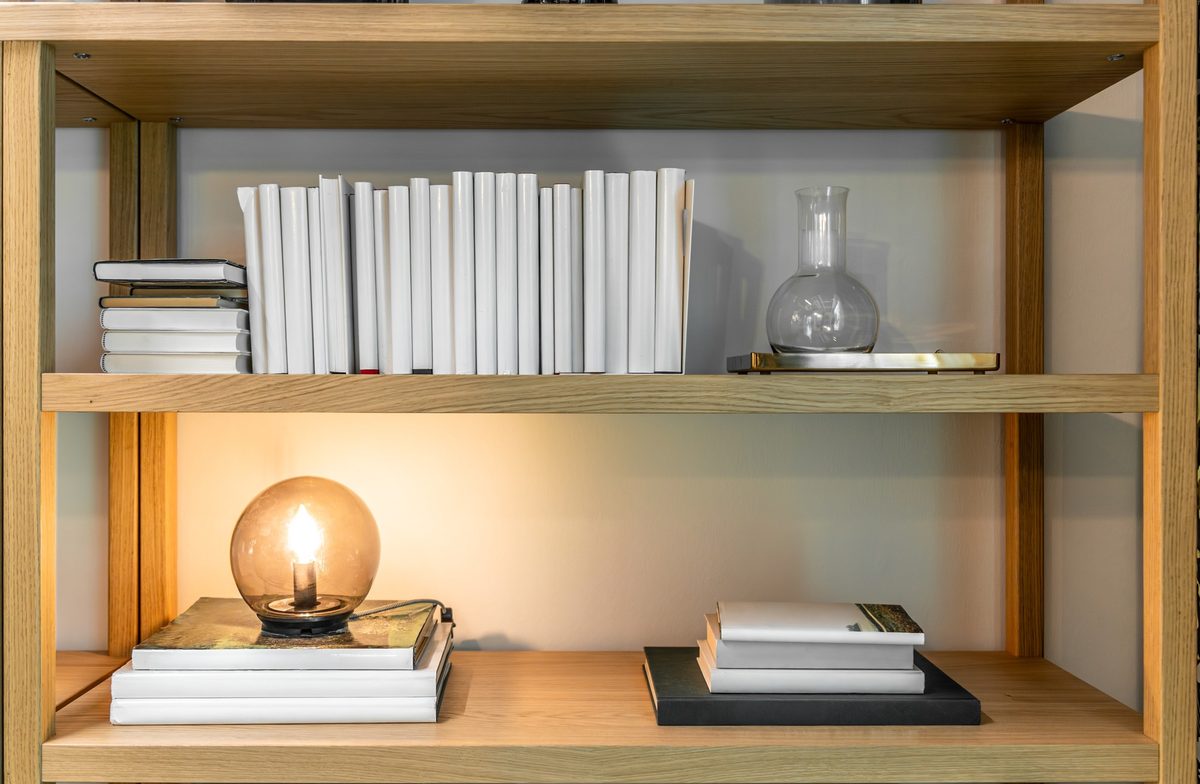
A bookcase can look great in daylight and turn into a dark block at night. A little light changes that completely.
- Battery puck lights stuck under a shelf create soft pools of light on the shelf below. Choose a warm white tone.
- A small lamp on a wide shelf adds a lovely glow, especially on eye-level shelves.
- Candles add warmth, but on a bookshelf I'd keep them unlit and decorative, or swap the real flame for a flameless version. Paper and open flames simply aren't friends, so if you do light a candle nearby, keep it on a separate surface and never leave it unattended.
For the look without the worry, a candle in a cream glass jar reads beautifully on a stack of books even when it's unlit, and the jar keeps it tidy. If you'd love more ideas for grouping candles around your home, my guide on how to style candles has lots of them.
Keeping Your Shelves Curated Over Time
A styled shelf drifts back toward clutter the moment new books, mail and souvenirs start landing on it. A few small habits keep it looking intentional:
- One in, one out. When a new object arrives, something else moves to a closet or a donation box.
- A five-minute monthly reset. Dust, straighten book rows to the front edge and remove anything that wandered in.
- A seasonal swap. Change one or two pieces with the seasons: dried stems in autumn, a pine sprig in winter, fresh tulips in spring. It keeps the shelf feeling fresh without restyling everything.
- A small "currently reading" spot. Give the books you're reading a home, like a short stack on one shelf, so they don't pile up on the coffee table.
- Keep a styling box. Store your off-season decor in one box so swapping takes minutes, not an afternoon.
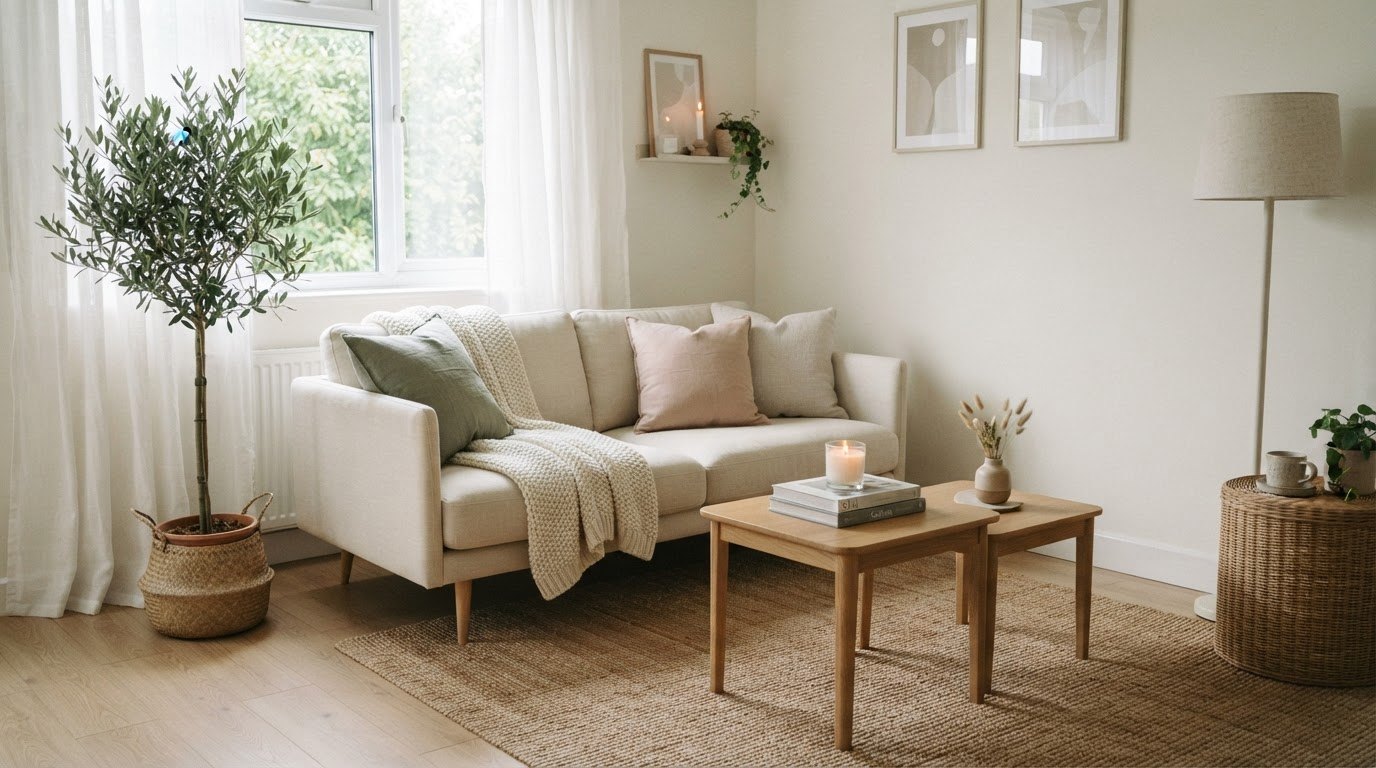
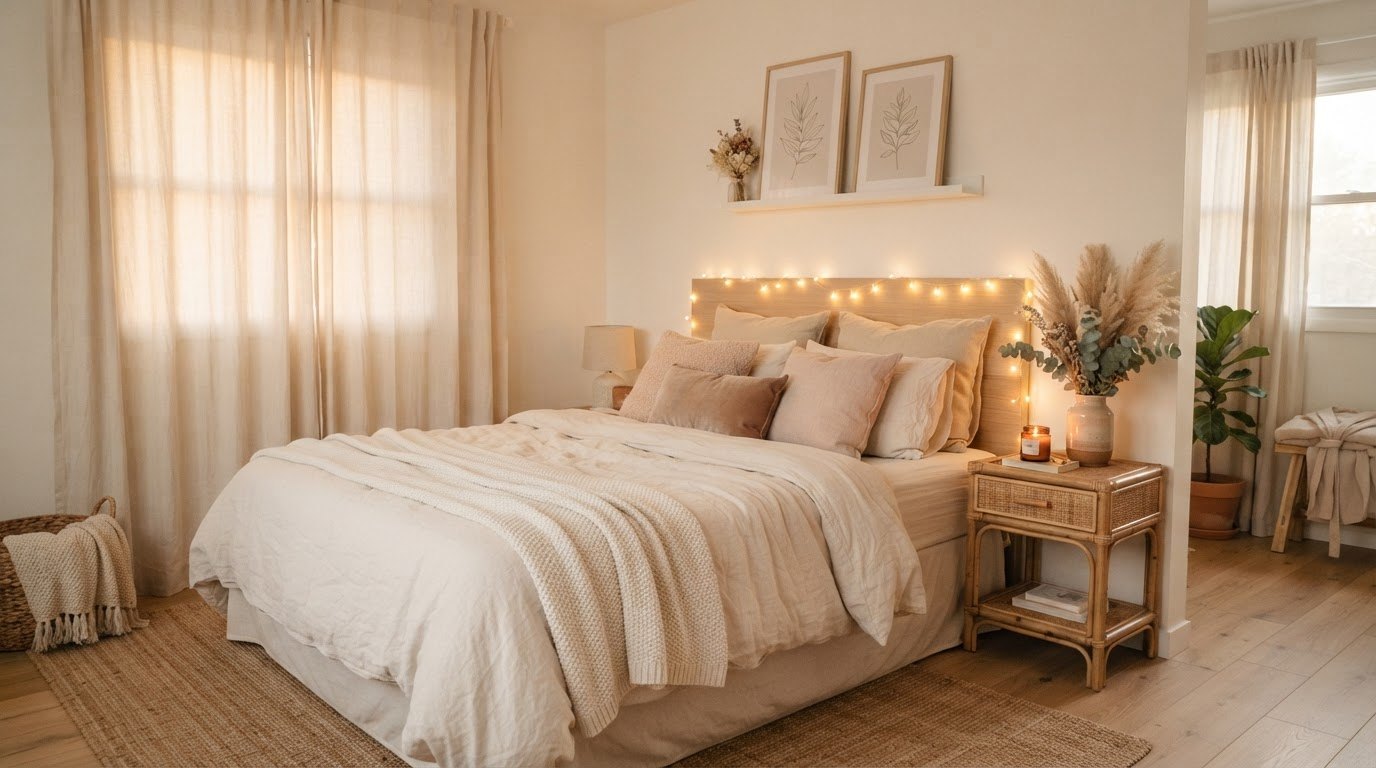
Your bookcase is also part of the bigger picture of your room. If you're refreshing the whole space, my guide to aesthetic room decor helps you pull the shelf's palette into pillows, throws and wall art so everything feels connected.
Bookshelf Styling on a Budget
You really don't need to buy much. Before you shop, go "shopping" in your own home:
- Pull a vase from the kitchen, a bowl from the dining table or a framed photo from a drawer.
- Remove dust jackets for an instant neutral look.
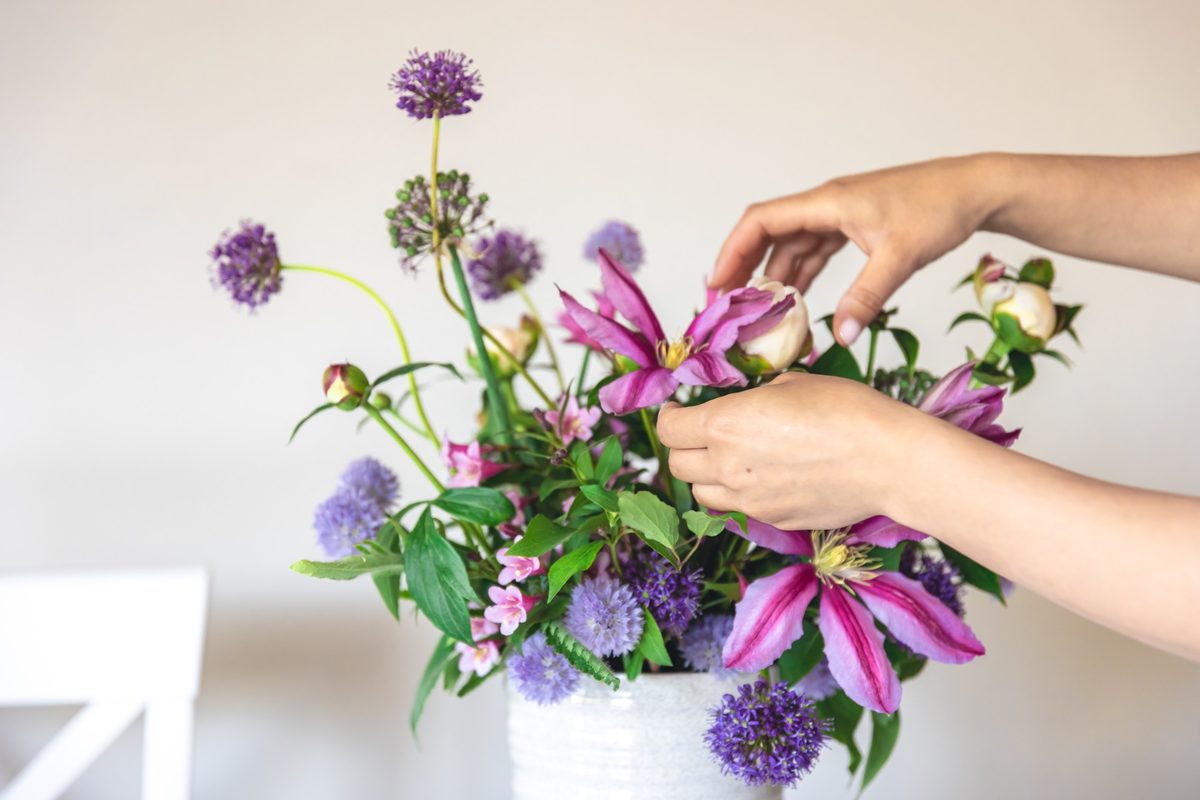
- Use small branches, dried grasses or a few stems from the grocery store instead of pricey decor.
- Thrift stores are full of ceramic vases, brass pieces and old hardcovers with lovely spines.
- Spray-paint mismatched thrifted vases one soft color (cream or white) so they read as a set.
If you do buy something, buy anchors: bigger pieces carry more visual weight per dollar than a handful of tiny trinkets. A white ceramic decorative bowl is a smart first purchase because it works on a book stack, on its own or as a little tray for small treasures.
Final Thoughts
Bookshelf styling isn't about owning the perfect objects. It's about giving the things you already love a little order and a little room. Empty the shelves, set your anchors, play with rows and stacks, and then leave more space than feels natural.
Start with one shelf at eye level this weekend. Once you see how calm it looks, the rest of the bookcase will practically style itself, and every time you reach for a book, you'll feel that small, happy click of a home that feels like yours.