Last winter I looked at the little stack of books on my nightstand and realized that the bookmark in the top one hadn't moved in about six weeks. I love reading. I always have. But somewhere between busy days, tired evenings and my phone glowing on the pillow next to me, books had quietly turned into furniture.
The funny thing is, I didn't need more free time to fix it. When I actually looked at my days, there were plenty of small pockets I could have spent reading: ten minutes here, fifteen there, half an hour before bed. I just wasn't using them for books. Once I changed a few small habits, the bookmark started moving again, and reading went back to being the calm, delicious part of my day it used to be.
This guide is all about how to read more books without forcing yourself through a reading challenge you'll hate by February. You'll find 15 tricks that actually work, a "reading time finder" table that shows how many pages hide in the gaps of an ordinary day, and a simple evening reading ritual to make books feel like a treat again.
One small promise first: there's no "right" number of books to read. Reading more simply means reading more than you do now, in a way that feels good.

Why It Feels So Hard To Read Right Now
If you've been struggling to finish books, you're in very good company. Our phones are designed to be easier to pick up than anything else in the room. They're always within reach, they never ask for more than a few seconds of attention, and they always have something new. A book asks you to settle in, and at the end of a long day, settling in can feel like work.
There's also a lot of quiet pressure around reading. You might feel you should be reading "important" books, or finishing every one you start, or reading as fast as the people with 100-book goals online. All of that turns a pleasure into a chore.
The good news: reading more is less about willpower and more about setup. Make books easy to reach, choose ones you're excited about and give them a regular place in your day. The tricks below do exactly that.
How To Read More Books: 15 Tricks That Actually Work
You don't need all 15. Try three this week, notice which ones stick, and add more later.
1. Read What You Actually Want To Read
This is the most important trick on the list, so it goes first. If you're forcing your way through a book you think you should love, you'll find a hundred reasons to do anything else. Pick books that make you a little excited to get back to them: a juicy mystery, a romance, a memoir, a fantasy series, a gentle novel about a bookshop.
All reading counts. Rereading a comfort book counts. Graphic novels count. Audiobooks count. The more you enjoy what you're reading, the more you'll read, and your taste will naturally stretch in new directions over time.
2. Set a Tiny Daily Goal
"Read more" is too vague to act on. "Read 10 pages a day" is something you can do tonight. Ten pages takes most people about 15 to 20 minutes, and it adds up to roughly 3,600 pages a year, which is around a dozen average-length novels.
If ten feels like a lot right now, start with five, or with one chapter. The goal is to make it so small that skipping it feels silly. On good days you'll read more without trying.
3. Give Yourself Permission To Quit
Nothing stalls a reading habit like a book you don't want to finish. You put it down, you don't want to pick it up, and you don't want to start something else because you "should" finish this one first. Weeks pass.
Try the 50-page rule: give a book 50 pages, and if you're still not interested, let it go with no guilt. Put it back on the shelf or return it to the library. You might come back to it one day, and that's fine. Life is too short for books that feel like homework.
The same goes for slow middles. If a book you love hits a dull patch, it's fine to skim a few pages until the story picks up again. Nobody is checking. Skimming isn't cheating; it's how you keep a good book from turning into the reason you stopped reading for a month.
4. Always Have a Book Within Reach
The people who read the most aren't always the ones with the most free time. They're the ones who always have a book with them. Keep one in your bag, one on your nightstand and one on the couch, or carry an e-reader everywhere.
A padded book sleeve in blush or cream is a pick if you carry paperbacks in your bag and hate bent covers. Look for one with a zip or snap closure and a little extra room for a pen and bookmark. When a book is always there, waiting rooms and long lines turn into reading time.
5. Find Your Hidden Reading Time
Most of us have more reading time than we think. It's just broken into small pieces: ten minutes waiting for an appointment, a lunch break, the time it takes for pasta water to boil. Those minutes add up surprisingly fast.
For one day, notice every moment you pick up your phone while waiting. Each one is a possible reading pocket. The reading time finder table further down shows exactly how many pages those little gaps can hold.
6. Swap One Phone Session for a Chapter
You don't have to give up your phone. Just trade one regular phone session for a book. A good one to swap is the first few minutes in bed at night, or the minutes after you sit down with your morning coffee.
To make the swap easier, put the book on top of your phone, literally. When you reach for the phone, the book is the first thing you touch. Read one chapter before you allow yourself the screen. Most nights, the chapter wins.
7. Stack Reading Onto a Habit You Already Have
New habits stick best when they're attached to something you already do every day. Pick an anchor: morning coffee, evening tea, the bath, the time right after you get into bed.
Mine is evening tea. When the mug is in my hands, the book comes out, and I read until the tea is gone. Then I journal for a few minutes. Use a simple formula: "After I [existing habit], I read for [number] minutes." Write it on a sticky note and put it where the habit happens.
8. Try Audiobooks for Walks and Chores
Audiobooks turn time you can't use for paper books into reading time: folding laundry, cleaning the kitchen, walking, driving, getting ready in the morning. If you've never liked audiobooks, try a memoir read by the author or a lighter novel. They're usually the easiest to follow by ear.
Many public libraries offer free audiobooks through their apps, so check yours before paying for a subscription. Start at normal speed and nudge it up to 1.2x if your mind wanders. Slightly faster often helps you stay focused.
9. Use an E-Reader in Bed
An e-reader is one of the simplest ways to read more, especially at night. It's light, it holds hundreds of books, and you can read in a dark room without a lamp. The screen is designed for reading only, so there are no notifications pulling you away.
A waterproof e-reader with an adjustable warm light is the pick I'd choose for bedtime and bath reading. Look for a glare-free screen, warm-light settings that shift the screen to amber in the evening, and a battery that lasts for weeks. Many connect to your library account, so you can borrow e-books for free.
10. Keep a Little Reading Log
Writing down what you read makes it feel real, and watching the list grow is quietly motivating. It doesn't have to be fancy: the title, the date you finished and one line about how it made you feel.
If you love paper, a reading journal in soft sage or lavender is a pick, especially one with pages for a wish list and short reviews. A section in your regular journal works just as well. For layout ideas, these tracking journal ideas include simple ways to log books alongside your other habits.
11. Read Two Books at Once
This sounds like it would slow you down, but it often does the opposite. Keep one "easy" book (a light novel or a fun series) and one "thinking" book (nonfiction, a classic, something denser). When you're tired, you pick up the easy one instead of picking up your phone.
Keep them in different places if it helps: the thinking book on your desk for lunch breaks, the easy book on your nightstand. You'll find that you read something almost every day, because there's always a book that matches your energy.
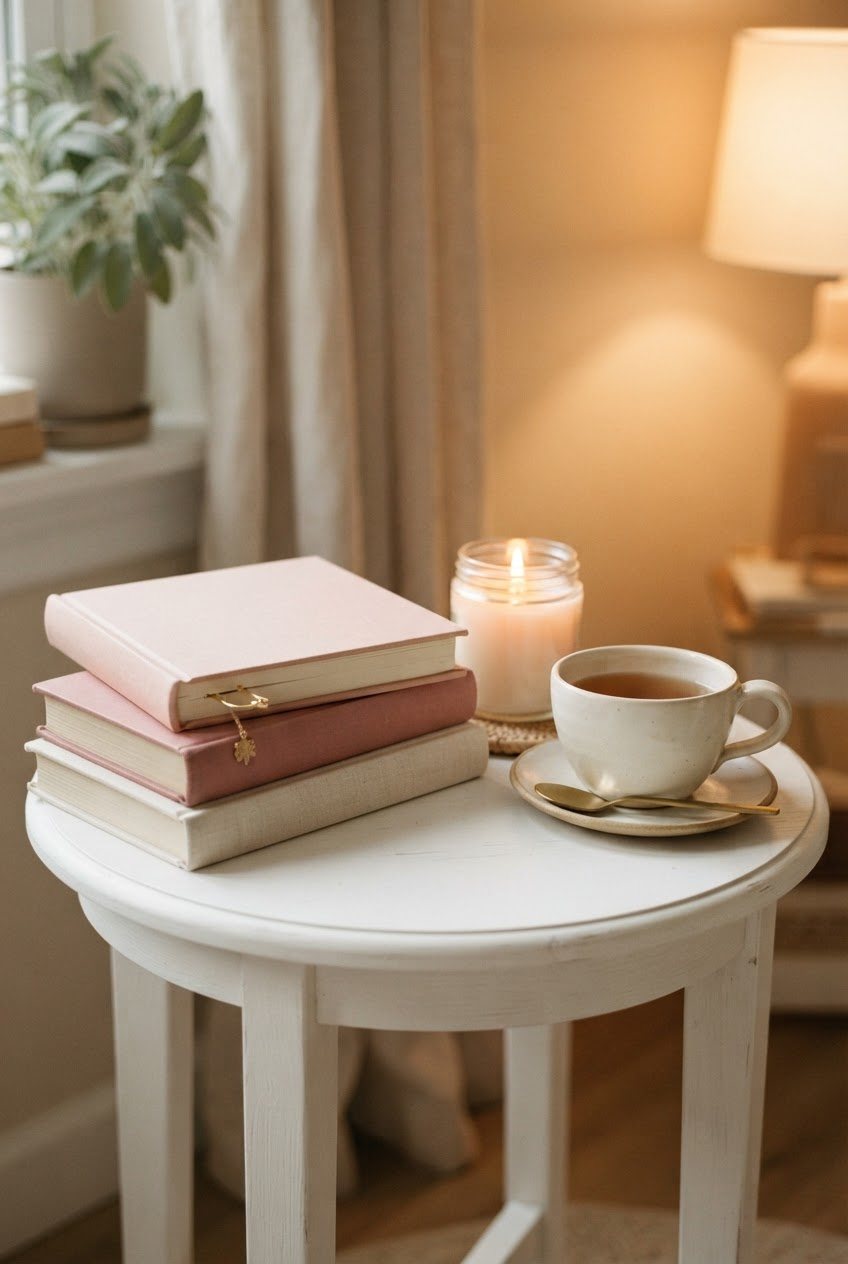
12. Make a Reading Corner You Love
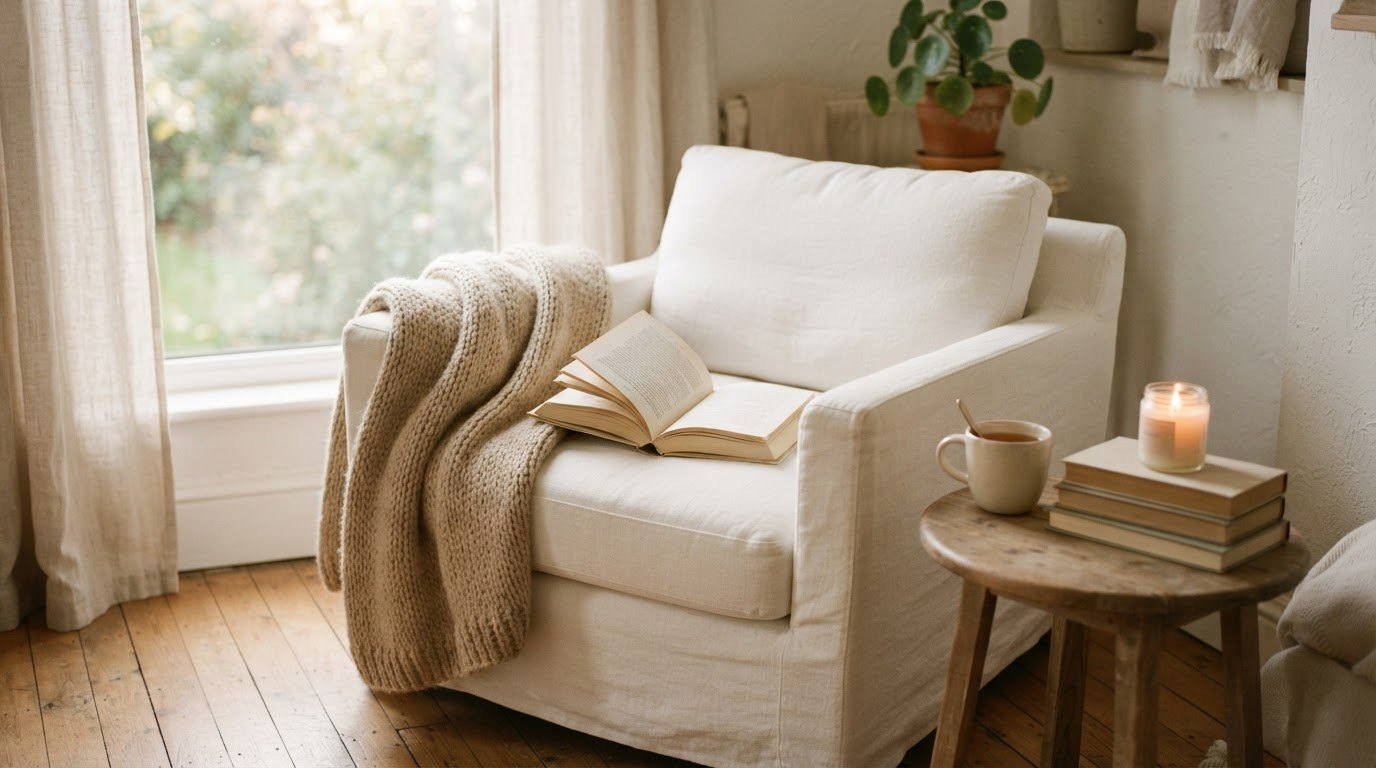
If your only reading spot is the bed or a hard kitchen chair, books end up competing with sleep or chores. Give reading its own little spot, even a small one: an armchair by a window, a floor cushion with a lamp, a corner of the couch with a basket of books next to it.
Add a soft blanket, good light and a spot for your mug. A chunky knit throw in beige or cream is a pick for draping over the arm of your reading chair, so it's always ready. For more inspiration, these reading nook ideas for small spaces show how to fit a reading corner into almost any room.
13. Read in Bed Without Waking Anyone
Night reading is lovely, but a bright overhead light can make it hard to wind down (and isn't always kind to anyone sharing the room). A small, warm light lets you read for 20 minutes and then fall asleep easily.
A rechargeable clip-on book light in white is a pick if you prefer paper books at night. Look for amber or warm-light settings, a flexible neck and USB charging. Reading a calm book under warm light is part of my own winding-down routine, and it pairs beautifully with a gentle winter sleep routine when the evenings get long.
14. Find a Reading Buddy
Reading with other people adds a little gentle accountability and makes books more fun. Join a book club at your library or local bookstore, start a two-person book club with a friend, or simply read the same book as a sister or coworker and text each other about it.
Keep it low pressure: one book a month, a casual check-in halfway through and a coffee date or phone call at the end. Knowing someone is waiting to talk about chapter twelve is a surprisingly strong reason to keep reading.
15. Always Know What You'll Read Next
A lot of reading momentum is lost in the gap between books. You finish one, you're not sure what to read next, and a week passes. Keep a short "next up" list, either in your notes app, your reading log or on a small shelf by your bed.
When you're about two-thirds through a book, pick the next one and put it on hold at the library or set it on your nightstand. Mark your place with a pretty gold metal bookmark so the current book feels special. Then the moment you close the last page, the next story is already waiting for you.
The Reading Time Finder
This is the table that changed how I think about reading. It's based on a comfortable pace of roughly one page every two minutes (most people read faster, so treat these numbers as a gentle minimum). Look for the pockets you already have and see how quickly they add up.
| Pocket of Time | Minutes | Pages (about) |
|---|---|---|
| Morning coffee or tea, before checking your phone | 10 | 5 |
| Commute by bus or train (one way) | 20 | 10 |
| Waiting room or waiting for a friend | 10 | 5 |
| Lunch break, the second half | 15 | 7 |
| Waiting for dinner to cook | 10 | 5 |
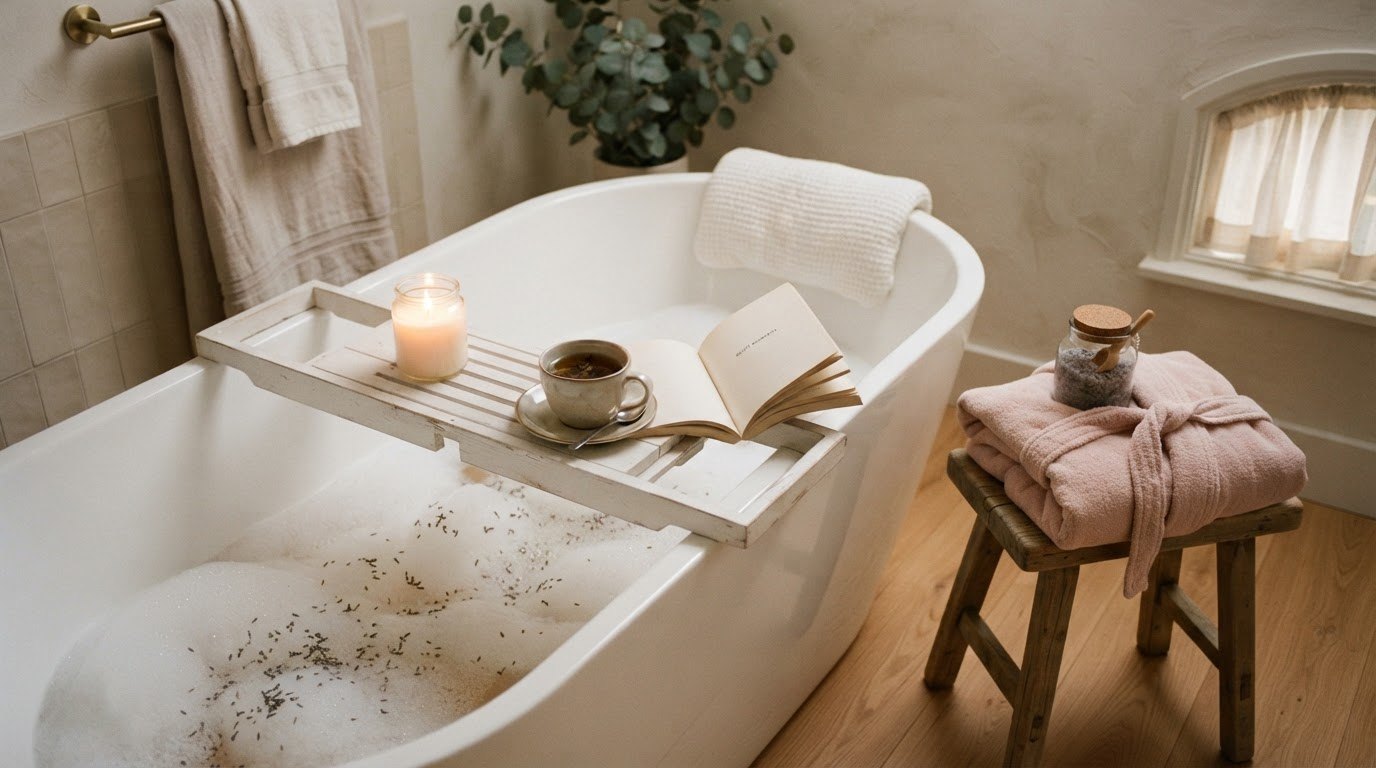
| A warm bath | 20 | 10 |
| In bed before sleep | 20 | 10 |
| Weekend morning, slow start | 45 | 22 |
Here's the math that surprised me: if you use just three of these pockets on a weekday, say morning tea, lunch and bedtime, that's 45 minutes and around 22 pages. At that pace, a 300-page novel takes about two weeks, which adds up to roughly two books a month, without giving up anything you love.
Screenshot the table and circle the three pockets that fit your life best. Those are your reading times this week. If you like planning, you can even drop them into your schedule using a simple weekly planning routine.
A Cozy Evening Reading Ritual
A ritual turns reading from "something I should do" into something you look forward to all day. This is the one I come back to, and it takes about 30 minutes from start to finish.
- Set the scene. Dim the overhead light, turn on a lamp or book light and light a glass candle if you like (blow it out before you get sleepy).
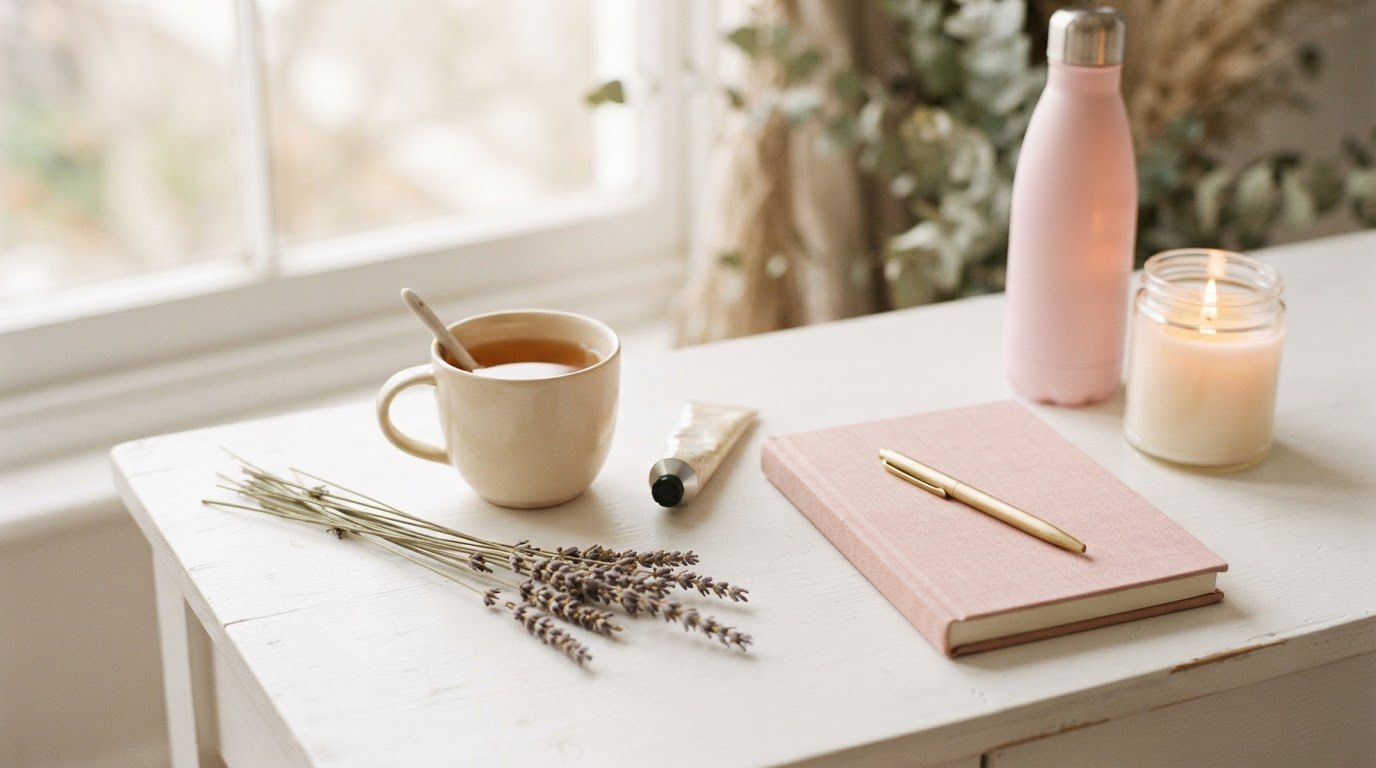
- Make something warm. A mug of caffeine-free tea or warm milk. If you need ideas, these caffeine-free bedtime drinks are lovely with a book.
- Put the phone away. Plug it in across the room or in another room. Set an alarm first if you need one.
- Get comfortable. Your reading chair or bed, a throw over your knees, your feet tucked in.
- Read for 20 minutes or one chapter. Whichever comes first. If you want to keep going, keep going.
- Close with one line. Write one sentence in your reading log or journal about what you read: a line you loved or how the story made you feel.
Do it three evenings a week to start. After a couple of weeks, you'll find yourself looking forward to that half hour more than almost anything else in the day.
What If You Still Can't Focus on a Book
Some seasons, reading just feels hard, and that's okay. Stress, grief, poor sleep and busy periods can all make it difficult to concentrate on a page. A few gentle options:
- Go shorter. Short story collections, essays and poetry ask for less sustained focus.
- Go lighter. Comfort rereads and page-turning plots are easier when your mind is tired.
- Switch format. Audiobooks or graphic novels can carry you through a slump.
- Lower the bar. One page a day still keeps the habit alive.
If trouble concentrating comes with ongoing low mood, poor sleep or anxiety that won't ease up, it's worth mentioning to your doctor. Sometimes difficulty reading is a sign that you need a little more support, not more discipline.
Final Thoughts
Learning how to read more books isn't about hitting a big number or keeping up with anyone else. It's about giving yourself back a little pleasure that's been waiting on your nightstand all along.
Pick one trick and one pocket of time from the table, and start tonight with just ten pages. The books will be there whenever you're ready, and each chapter you read is a small, lovely gift to yourself.