Kitchen countertops don't need stronger cleaners. They need the right cleaner for what they're made of. A spray that leaves laminate sparkling can slowly dull a marble island, and the lemony cleaner that smells wonderful can etch granite after a few months. Most counter damage isn't from dirt at all. It comes from cleaning with good intentions and the wrong bottle.
The lovely part is that once you know your surface, the routine becomes very simple. A daily wipe that takes about a minute, a weekly once-over, and a few targeted fixes when something spills.
This guide covers how to clean kitchen countertops surface by surface: how to tell what yours are made of, a daily 60-second wipe, dedicated steps for granite, quartz, marble and laminate, stain fixes for grease, tea rings and hard water, how to disinfect safely, and six common mistakes. There's also a quick table you can screenshot and keep on your phone.
Why One Spray Doesn't Suit Every Counter
Each countertop material reacts differently to the same cleaner. Natural stone like granite and marble is porous and sensitive to acids. Quartz is engineered with resin, which doesn't love high heat or harsh chemicals. Laminate is a thin decorative layer on a wood-based core, so its weak spot is water sneaking into the seams.
That's why "all-purpose" doesn't always mean "all-surface." Before you reach for a spray, it helps to know two things about your counter: is it sealed stone, and does it mind acid? Once you have those answers, the right products almost choose themselves.
A small honest admission: for a long time I thought a streak-free shine meant a counter was clean, and a squeaky one meant it was extra clean. On stone, that squeak can actually be residue. Gentle and thorough beats strong every time.
How To Tell What Your Countertop Is Made Of

If you rent or moved into a place without paperwork, you might not know for sure. These clues usually help:
- Granite: speckled, grainy pattern with flecks of different colors and a little natural sparkle. Feels cool to the touch, and every slab looks slightly different.
- Quartz: very even, consistent color or pattern, often with soft, uniform veining. Feels smooth and slightly less cold than natural stone. Patterns tend to repeat across the surface.
- Marble: soft, flowing veins, often white or cream with gray. Feels cool and smooth. Dull, slightly rough spots where acidic things have touched it are a telltale sign.
- Laminate: lighter and warmer to the touch, with visible seams or a dark line along the edge. Tap it, and it sounds hollow rather than solid. Patterns can look a little printed up close.
Still not sure? Ask your landlord or building manager, check any renovation records, or treat your counter as the most delicate option (marble) until you know. Gentle cleaning never hurts a tougher surface.
The Daily 60-Second Wipe (Every Counter)
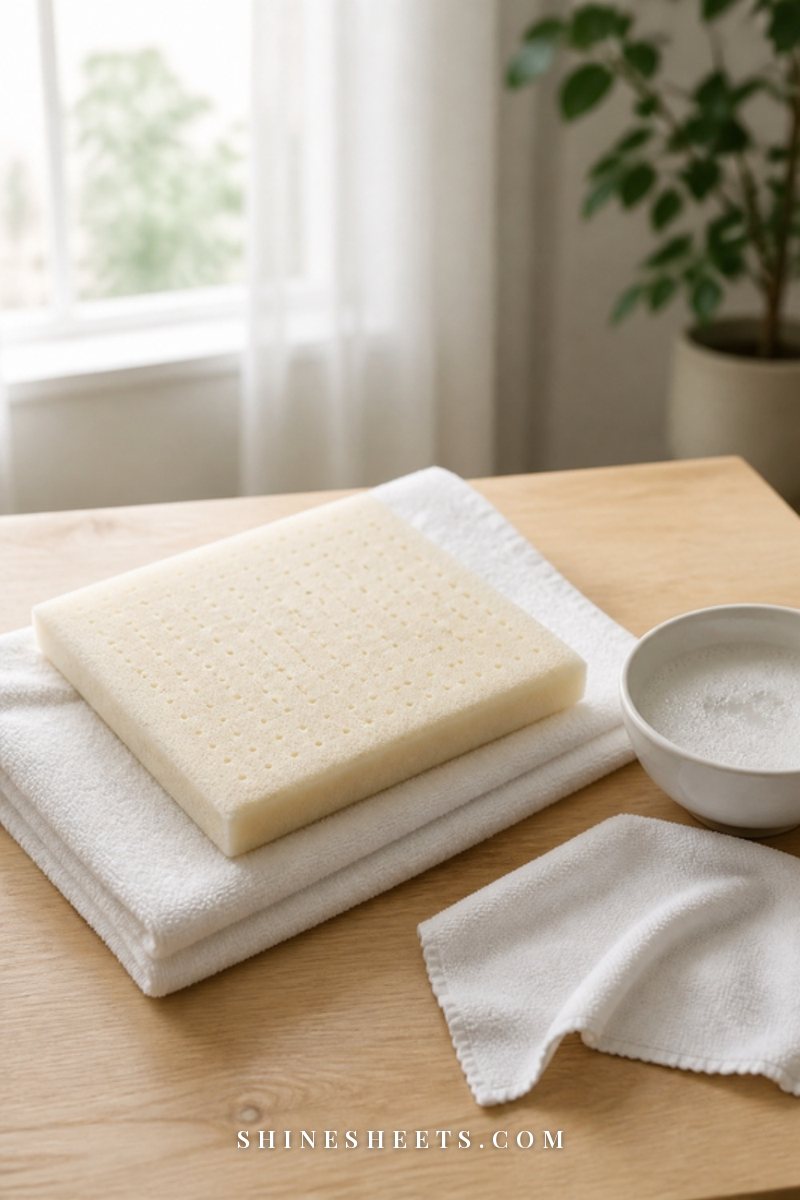
This is the routine that keeps every countertop happy, whatever it's made of. Do it after dinner or whenever you finish cooking.
- Clear and crumb. Move items to one side and brush crumbs into your hand or a small dustpan. Ten seconds.
- Wipe with soapy water. Mix warm water with a single drop of mild dish soap in a bowl or spray bottle. Wipe the whole counter with a damp microfiber cloth, working from the back toward the edge. Twenty seconds.
- Rinse. Wipe again with a cloth dampened in plain water to lift any soap film. This matters most on stone, where leftover soap can leave a hazy layer over time. Fifteen seconds.
- Dry. Buff with a dry cloth. Drying prevents water spots and keeps moisture out of laminate seams and stone pores. Fifteen seconds.
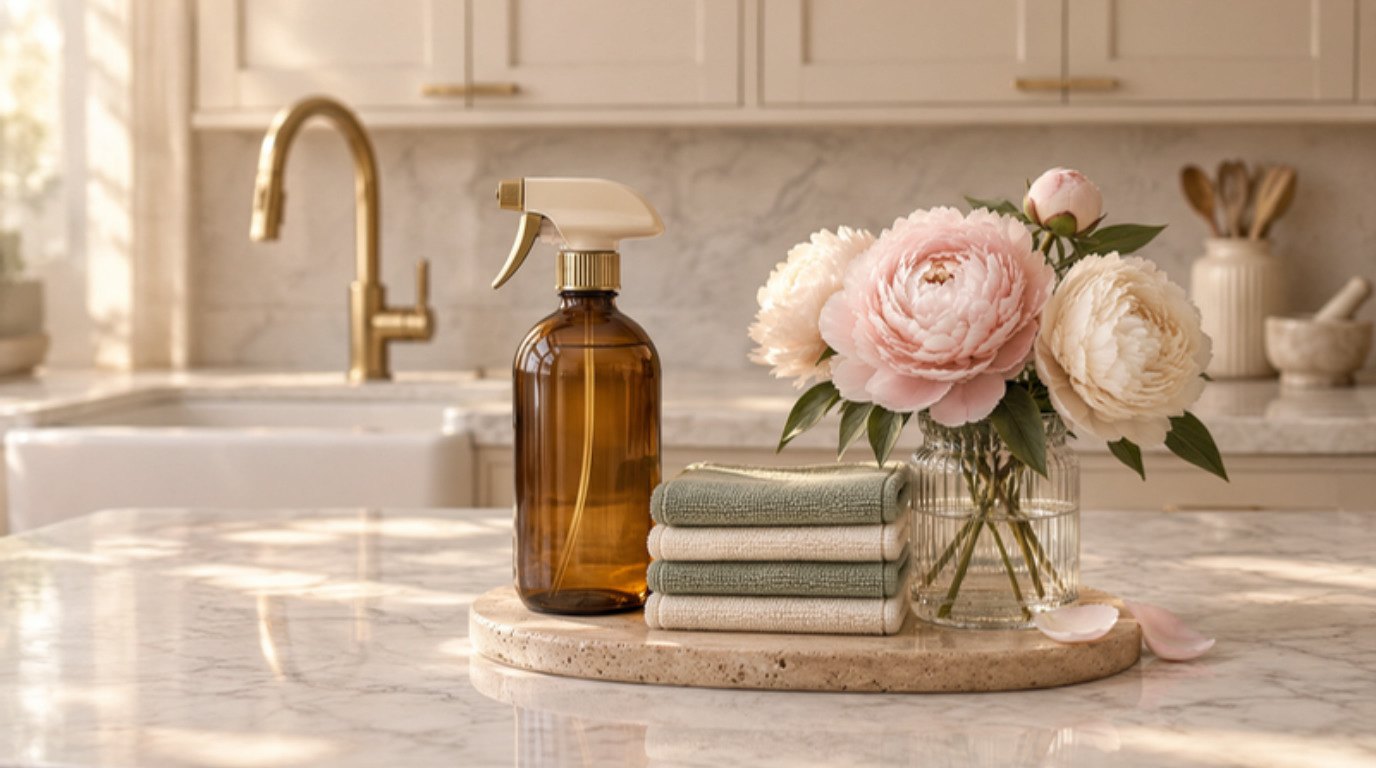
A soft set of microfiber cloths in sage and cream makes this so easy: use one color for washing and one for drying, and you'll never mix them up. Wash them every few days on a warm cycle without fabric softener, which coats the fibers and makes them streak.
If you prefer a ready-mixed bottle, pour your soapy water into one of a pair of glass amber spray bottles and keep it right by the sink. Make a fresh batch every week or so.
Countertop Cleaning at a Glance
Here's the whole guide in one table. If you only remember one row, make it the one for your counter.
| Countertop type | Safe daily cleaner | Never use | Stain fix | Sealing needed? |
|---|---|---|---|---|
| Granite | Warm water and mild dish soap, or a pH-neutral stone cleaner | Vinegar, lemon, any acid, bleach, abrasive powders | Baking soda and water paste, covered, left up to 24 hours | Yes, when the water-drop test shows darkening |
| Quartz | Warm water and mild dish soap | Prolonged bleach, harsh degreasers, oven cleaner, direct heat | Mild soap and a non-scratch pad, or a quartz-safe cleaner | No |
| Marble | pH-neutral stone cleaner or a very mild soap solution | Vinegar, lemon, any acid, bleach, scrubbing pads | Baking soda paste for stains; etching needs a stone professional | Yes, usually more often than granite |
| Laminate | Warm soapy water or diluted all-purpose cleaner | Soaking the seams, abrasive scrubbers, hot pans | Baking soda paste, gently wiped off after a few minutes | No |
How To Clean Granite Countertops

Granite is tough, but its beauty depends on its seal. A good seal keeps oils and liquids from soaking into the stone, and the wrong cleaner slowly wears that seal away.
Daily: the 60-second wipe above, with a rinse and a dry.
Weekly: spray a pH-neutral stone cleaner over the counter, let it sit for about one minute, then wipe with a damp microfiber cloth and buff dry. Look for a spray labeled safe for granite and marble. These are gentle enough for sealed stone and leave no soapy film.
Never use vinegar, lemon juice or any acidic cleaner on granite. Acids can dull the polish and break down the sealer, which leaves the stone open to staining. Skip bleach and ammonia-based glass cleaners too.
The Water-Drop Seal Test
This tiny test tells you whether your granite needs resealing. Pour a few drops of water (about a tablespoon) onto a busy area, like near the sink or stove, and wait 10 to 15 minutes.
- Water beads up and the stone looks the same: your seal is doing its job.
- The stone darkens within a few minutes: it's time to reseal.
- It darkens slowly, after 10 minutes or so: plan a reseal in the next few months.
Do the test once or twice a year. Resealing is usually an easy DIY job with a granite sealer, following the bottle's directions exactly, but if your counter is new or very valuable, ask your installer what they recommend.
How To Clean Quartz Countertops
Quartz is one of the easiest surfaces to care for. It's non-porous, so it doesn't need sealing, and most spills wipe right off. Its weak spots are the resin that binds it: harsh chemicals and high heat.
Daily: warm water with a drop of mild dish soap, a soft cloth, then dry. For anything stuck on, like dried batter or jam, let soapy water sit on it for two to three minutes, then lift it gently with a soft dish brush or a plastic scraper.
What to avoid: prolonged contact with bleach, strong degreasers, oven cleaner and anything highly alkaline or acidic. They can discolor or dull the surface. If something harsh spills, rinse it off with plain water right away.
Heat: never put a hot pan, baking dish or slow cooker directly on quartz. Sudden heat can scorch the resin or leave a pale mark. A pretty set of cream silicone trivets by the stove makes this an easy habit, and they look lovely too.
Every manufacturer has its own care guidance, so if you know your quartz brand, a quick look at their recommendations is worth it.
How To Clean Marble Countertops

Marble is gorgeous and a little delicate. It's softer than granite and very sensitive to acids, which means even a splash of lemon juice or a drop of wine can leave a mark if it sits.
Daily: wipe with a pH-neutral stone cleaner or a very mild soapy solution, rinse with plain water and dry right away. Marble likes being dried more than any other counter.
Spills: blot, don't wipe. Wiping spreads the liquid over a larger area. Blot quickly with a dry cloth, then clean the spot with a damp one. Coffee, tea, wine, citrus, tomato sauce and vinegar dressings are the biggest culprits.
Protect it: use coasters under glasses, a tray under oil and vinegar bottles, and a cutting board for anything acidic. Marble usually needs resealing more often than granite, so use the same water-drop test a few times a year.
Etching vs Staining: What's the Difference?
These look similar but need very different fixes.
- A stain is darker than the stone. Something soaked in, like oil or coffee. It can often be lifted with a poultice (see the stain fixes below).
- An etch is a dull, lighter or rough spot. Acid has actually eaten into the polished surface. No cleaner can bring it back. Light etching can sometimes be buffed with a marble polishing product, but deeper etching needs a stone restoration professional.
Etching isn't a sign you've ruined anything. Many people come to love the soft, lived-in patina marble develops over time.
How To Clean Laminate Countertops
Laminate is practical and forgiving, and its care is mostly about keeping water out of the seams and avoiding scratches.
Daily: warm soapy water or a diluted all-purpose cleaner, wiped on with a soft cloth or sponge, then dried. Don't leave puddles, especially along seams, edges and around the sink. If water gets into the core underneath, it can swell and lift the surface.
Stains: mix a paste of baking soda and a little water, spread it over the stain, leave it for about five minutes, then wipe off gently with a damp soft cloth. Don't scrub hard: laminate scratches more easily than stone, and scratches hold onto future stains.
Avoid: steel wool, scouring powders and hot pans. A trivet or board between laminate and anything hot saves you from scorch marks and bubbling.
For finishing, a wooden-handle squeegee is such a satisfying little tool: pull it across the counter after wiping to clear water and crumbs in one sweep, then buff any last drops dry.
Stain Fixes: Grease, Tea Rings and Hard Water
Always test any stain fix on a hidden spot first, and go back to the table above if you're unsure what your counter can handle.
Grease
Fresh grease lifts with warm water and a few extra drops of dish soap. Let the soapy water sit for two to three minutes, wipe, rinse and dry. On granite or marble, old oil stains that have darkened the stone need a poultice: a paste of baking soda and water about as thick as yogurt, spread over the stain, covered with plastic wrap taped at the edges, and left for up to 24 hours. Remove, rinse, dry, and repeat once if needed.
Tea and Coffee Rings
On quartz and laminate, a damp cloth with a little dish soap or a soft baking soda paste usually lifts rings in a few minutes. On stone, use the same overnight poultice method as for grease. Once it's gone, a coaster under your evening tea is the kindest prevention.
Hard Water Spots
Those cloudy white rings around the faucet are mineral deposits. On granite and marble, never use vinegar or descaling sprays. Instead, use a pH-neutral stone cleaner and a soft brush, or a hard water remover made specifically for natural stone. On laminate and quartz, mild soap and a soft brush usually work; check the maker's guidance before using anything stronger. My guide on how to remove hard water stains from glass, faucets and tiles covers the faucet and sink area too, and if the sink itself needs some attention, here's how to clean a kitchen sink and drain so it smells fresh.
Drying the area around the sink after each use is the best way to stop hard water spots from forming at all.
A Weekly Five-Minute Counter Reset
Once a week, give your counters a little more attention than the daily wipe. It takes about five minutes and stops small grime from building up in the corners nobody looks at.
- Clear everything off. Move the kettle, the fruit bowl, the utensil jar and the soap. Crumbs love to hide underneath.
- Wipe the items too. A quick wipe on the bottom of jars and appliances keeps you from setting sticky rings back down on a clean surface.
- Clean with your surface's cleaner. Use the weekly method from your countertop section, paying extra attention to the backsplash edge and the area around the stove.
- Run a soft brush along seams and the faucet base. This is where grime and mineral buildup collect first.
- Put back only what you use daily. Fewer items on the counter makes the daily wipe faster.
How To Disinfect Countertops Safely
Everyday cleaning with soap and water removes most germs, but after handling raw meat, poultry, fish or eggs, it's worth disinfecting your prep area.
- Clean first. Disinfectants work best on a surface that's already free of crumbs and grease, so do your soapy wipe before.
- Choose a product labeled safe for your counter. Many disinfectants aren't suitable for natural stone. Check the label, and on granite or marble look for a stone-safe option.
- Respect the contact time. The label tells you how long the surface must stay wet to disinfect, often several minutes. Wiping it off right away means it hasn't finished working.
- Rinse food-prep areas. After the contact time, wipe with a cloth dampened in clean water, then dry, so no residue touches food.
Safety notes: wear gloves and open a window or turn on the fan when using any disinfectant. Never mix bleach with vinegar, ammonia or other cleaners, because the combination can release harmful fumes. My guide to natural cleaning and the combinations never to mix lists the most important ones. And keep in mind that a damp kitchen sponge can spread germs right back onto a clean counter; here's how often to replace and clean your kitchen sponge.
6 Common Countertop Cleaning Mistakes
- Using vinegar or lemon on stone. It's the most common one, because "natural" sounds safe. On granite and marble, acids dull the polish and weaken the seal.
- Skipping the rinse. Soap and cleaner residue slowly builds into a dull, sticky film that actually attracts more grime.
- Letting the counter air-dry. Drying with a cloth prevents water spots on stone and swelling along laminate seams.
- Scrubbing with abrasive pads or powders. They leave fine scratches on every surface, and scratches hold onto stains.
- Putting hot pans straight down. Quartz and laminate are especially vulnerable to heat marks. A trivet takes two seconds.
- Wiping off disinfectant too soon. If the surface doesn't stay wet for the label's contact time, it has been cleaned, but not disinfected.
If your counters are part of a bigger reset, my top-to-bottom plan to deep clean your kitchen fits this routine in with cabinets, appliances and floors.
Final Thoughts
Clean countertops come down to two small habits: the right gentle cleaner for your surface, and a quick dry at the end. Do the 60-second wipe most evenings, keep a trivet and a coaster within reach, and your counters will look lovely for years.
There's something quietly calming about a clear, clean counter at the end of the day, ready for tomorrow's first cup of tea.