A clean bathtub has much less to do with elbow grease than with patience. Most of the grime in a tub – soap scum, body oils, the faint gray ring, hard water film – loosens on its own if you give the right cleaner a few minutes to sit. Scrubbing hard right away mostly tires your arms and, on softer materials like acrylic, leaves tiny scratches that make the tub get dirty faster next time.
The second secret is knowing what your tub is made of. A cleaner that's perfectly safe on old porcelain can dull an acrylic tub in one go, and the gritty powder your grandmother swore by can scratch fiberglass. Once you know your material, everything gets easier and much gentler.
This guide on how to clean a bathtub covers how to identify your tub, a material cheat sheet with safe cleaners and what to avoid, a ten-minute weekly routine, and gentle methods for soap scum, hard water rings, rust stains, grout and caulk edges, jetted tubs and the drain. I've also added the small habits that keep a tub looking freshly cleaned for longer.
Open a window, pop on some gloves and let's make bath time feel like a little spa again.
Know Your Tub Before You Clean It

If you're renting or moved in recently, you may not know what your tub is made of. A few quick clues help:
- Acrylic: feels warm to the touch, slightly flexible if you press the side, and sounds a bit hollow when tapped. Very common in newer homes.
- Fiberglass: similar to acrylic but often thinner, with a less glossy finish. It flexes more and scratches easily.
- Porcelain-enameled steel: feels cold and hard, and a magnet will stick to the side. The glossy coating can chip if something heavy is dropped.
- Enameled cast iron: very heavy, cold, solid and silent when tapped. A magnet sticks. Often found in older homes and clawfoot tubs.
- Cultured marble or stone resin: looks like stone with a glossy gel coat on top. Sensitive to acids and abrasives.
Here's the cheat sheet I'd keep in mind (screenshot it for the next time you're standing in the cleaning aisle):
| Tub material | Safe cleaners | Avoid |
|---|---|---|
| Acrylic | Mild dish soap and warm water, non-abrasive bathroom sprays labeled safe for acrylic, diluted white vinegar for short dwell times | Powdered scouring cleansers, abrasive pads, acetone, strong solvents |
| Fiberglass | Dish soap solution, non-scratch sprays, a paste of a gentle cream cleanser on a soft sponge | Steel wool, scouring powders, stiff wire brushes |
| Porcelain-enameled steel | Most bathroom sprays, cream cleansers, oxalic-acid cleaners for rust (per label) | Steel wool, harsh scraping, dropping heavy items |
| Enameled cast iron | Mild sprays, cream cleansers, gentle non-scratch sponges | Long acid soaks (can dull older enamel), abrasive powders on worn finishes |
| Cultured marble / stone resin | pH-neutral cleaner made for stone or cultured marble | Vinegar, lemon, bleach-heavy sprays, any abrasive |
When in doubt, check the manufacturer's care instructions and test any new cleaner on a small, hidden spot first – near the drain end, under the faucet or along the back wall.
What You Need
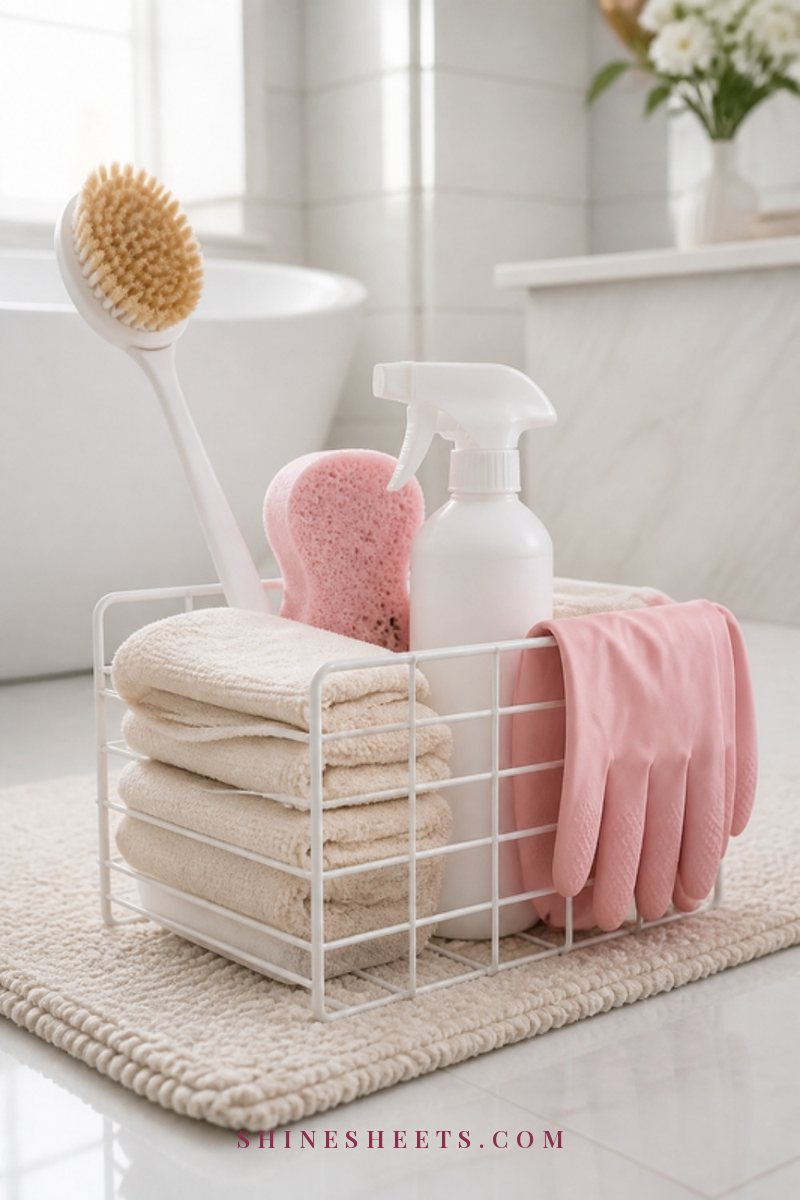
You don't need a cupboard full of products. A small, gentle kit handles nearly everything:
- A pack of non-scratch sponges (the kind that's safe on acrylic and glass).
- A long-handle bath scrub brush so you're not folded over the side of the tub.
- A soap scum remover spray labeled safe for your tub material.
- Microfiber cloths for drying and buffing.
- Mild dish soap and a spray bottle for a simple everyday solution.
- Rubber gloves and an old soft toothbrush for corners and caulk lines.
Keeping these together in one caddy under the sink makes the weekly clean feel like a two-second decision instead of a project.
The Weekly Quick Clean

This is the routine that keeps big scrubbing sessions from ever being needed. It takes about ten minutes, and most of that is the cleaner doing the work while you tidy something else.
- Clear the tub. Move bottles, loofahs and bath toys out. Wipe the bottoms of the bottles if they leave rings.
- Rinse. Run warm water around the tub with the shower head or a cup to loosen surface grime and wash away hair.
- Spray. Mist the walls, rim and basin with your tub-safe cleaner. Pay attention to the waterline and around the drain.
- Wait 5–10 minutes. This is the step everyone skips. Use the time to wipe the sink, empty the bin or fold towels.
- Wipe with a soft sponge. Light, circular movements are enough when the cleaner has had time to dissolve the film.
- Rinse thoroughly. Leftover cleaner can feel slippery and attract new grime.
- Dry and buff. A quick pass with a microfiber cloth prevents water spots and makes the tub look polished.
If you like to clean the whole room in one go, my guide on how to clean your bathroom fast shows how to fit the tub into a quick, top-to-bottom reset, and the step-by-step on how to clean a toilet pairs well with it on the same day.
How To Remove Soap Scum
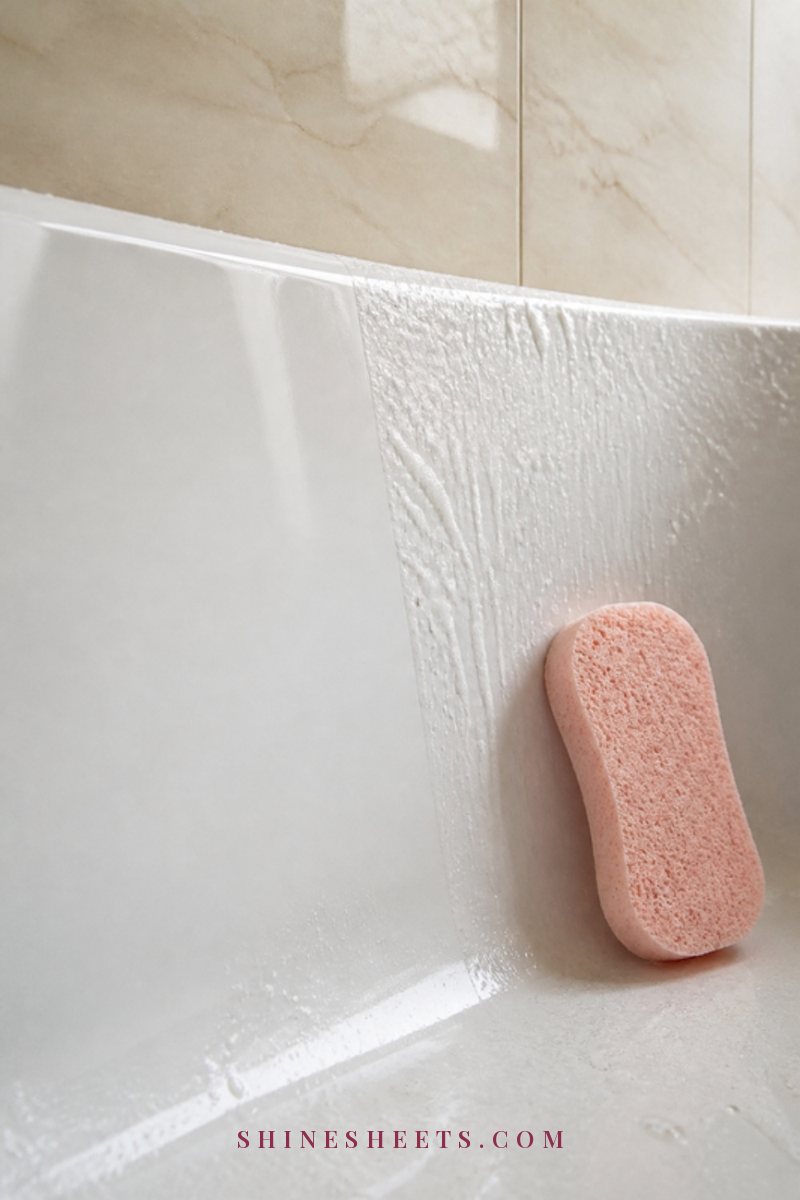
Soap scum is that dull, slightly chalky film on tub walls. It forms when bar soap and body products combine with minerals in water. It's stubborn because it builds up in thin layers, but it isn't hard to remove if you soften it first.
- Rinse the area with the hottest water from the tap. Warmth helps loosen the film.
- Spray a soap scum remover generously, or use a solution of warm water with a good squeeze of dish soap.
- Let it sit for 10–15 minutes. For heavy buildup, lay a damp microfiber cloth over the sprayed area to keep it wet.
- Wipe with a non-scratch sponge in small circles, then rinse and dry.
- Repeat once rather than scrubbing harder. Two gentle rounds beat one aggressive one.
For porcelain, acrylic or fiberglass tubs, a 50/50 mix of warm white vinegar and water with a little dish soap also works well, with a dwell time of about 10 minutes. Skip vinegar entirely on cultured marble or natural stone, and rinse well afterwards on any older enamel.
A quick tip: switching from bar soap to body wash in a pump bottle noticeably reduces soap scum over time.
How To Remove Hard Water Rings

If you have hard water, you've probably seen the faint, crusty ring right where the bathwater sits, or white spots around the faucet. These are mineral deposits, mostly calcium and magnesium, and they respond best to mild acids rather than scrubbing.
- For acrylic, fiberglass and porcelain: soak paper towels or a microfiber cloth in a 50/50 vinegar and water mix, press them along the ring and leave them for 20–30 minutes. Wipe with a soft sponge, rinse and dry.
- For faucets and fixtures: wrap a vinegar-soaked cloth around the base of the faucet for 20 minutes, then wipe and buff dry. Check finish care instructions first, especially for brass or matte black fixtures.
- For cultured marble or stone: use a cleaner made for that surface instead of vinegar.
If hard water marks are a problem all over your home, my full guide on how to remove hard water stains covers glass, faucets, toilets and tile too.
A Gentle Monthly Deep Clean
Once a month, give the tub about 30 minutes of extra attention. You'll rarely need more than this if the weekly clean is happening.
- Empty everything around the tub. Take down caddies, shelves and suction-cup holders, and wash them in warm soapy water. Grime hides underneath.
- Do the soap scum method on all surfaces. Spray the walls, basin and rim, cover heavier areas with a damp cloth and let the cleaner sit for 15 minutes.
- Treat the waterline. While the cleaner works, press vinegar-soaked cloths (or a stone-safe cleaner on cultured marble) along any ring for 20 minutes.
- Clean the hardware. Wipe the faucet, overflow cover and handles, and use a soft toothbrush around the base where gunk collects.
- Use the long-handle brush. Work the whole basin in gentle circles so you don't strain your back leaning over the side.
- Rinse twice. Run the shower over every surface, then rinse again. Residue is what makes a tub feel slippery or look streaky.
- Dry, buff and air out. Finish with a dry microfiber cloth and leave the fan on or the window open for half an hour.
Write "tub deep clean" into the first weekend of the month in your planner and it stops being something you have to remember.
How To Remove Rust Stains
Orange or brown streaks usually come from a dripping faucet, metal cans left on the rim or a scratch in the enamel that exposes the metal underneath. Fix the source first (a dripping tap, a razor left on the edge), or the stain will come straight back.
Porcelain and Enamel Tubs
Use a cleaner containing oxalic acid, which is designed to lift rust from porcelain and enamel. Sprinkle or apply it to the damp stain, leave it for about a minute (or the time on the label), then work it gently with a soft sponge and rinse well. Don't let it dry on the surface. For older, worn enamel, test first and keep dwell times short.
Acrylic and Fiberglass Tubs
Choose a rust remover that clearly says it's safe for acrylic or fiberglass, and follow the label exactly. A gentle alternative for light stains is a paste of cream of tartar and a little water, left for 15 minutes, then wiped with a soft sponge. Avoid pumice stones and anything gritty on these softer materials.
Whatever you use, wear gloves, open the window, and never combine a rust remover with other cleaners.
Cleaning Grout and Caulk Edges
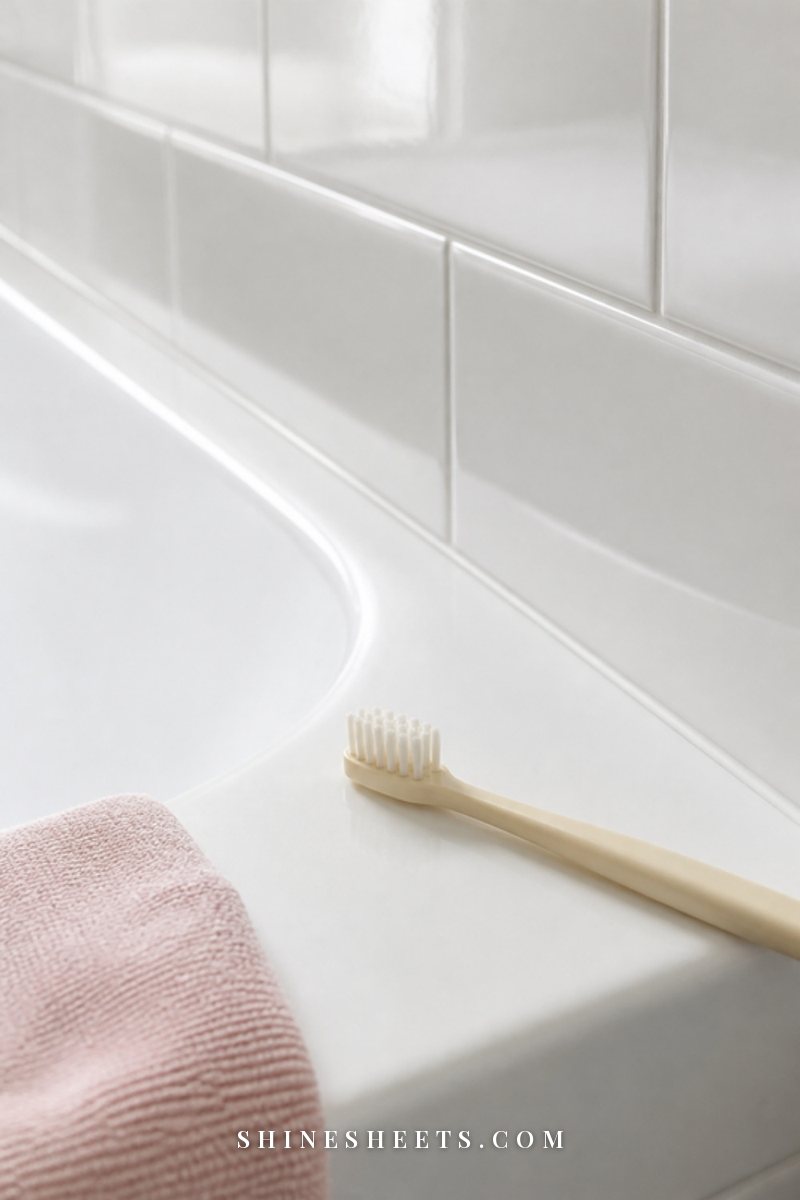
The line where the tub meets the tile is where moisture lingers, so it's often the first place mildew appears. For grout and caulk:
- Spray a mildew-removing bathroom cleaner (labeled for grout and caulk) along the edge.
- Let it sit for 10 minutes, or as directed on the label.
- Scrub gently with an old soft toothbrush, following the line rather than going across it.
- Rinse and dry the edge thoroughly with a microfiber cloth.
If dark spots remain inside the caulk itself, the mildew may be growing underneath. In that case, removing and replacing the caulk is the cleaner, longer-lasting fix. It's a satisfying weekend job even for beginners.
A crucial safety rule: if your mildew spray contains bleach, never use it on the same day as vinegar, ammonia or an acidic cleaner. Mixing bleach with vinegar or ammonia creates harmful fumes. Rinse well between products and keep the room ventilated.
A Quick Note on Jetted Tubs
Jetted tubs need their pipes cleaned too, because water sits in the lines between uses. Every one to three months (more often if you use bath oils), most manufacturers suggest a version of this:
- Fill the tub with warm water to at least 2 inches above the highest jet.
- Add a jetted tub cleaner, or the low-foam cleaning product your manual recommends.
- Run the jets for about 15 minutes, then drain.
- Refill with clean cold water and run the jets for 10 minutes to rinse the lines.
- Drain and wipe the tub dry.
Always check your tub's manual first, because some systems have specific product and temperature limits.
Clearing the Drain and Hair
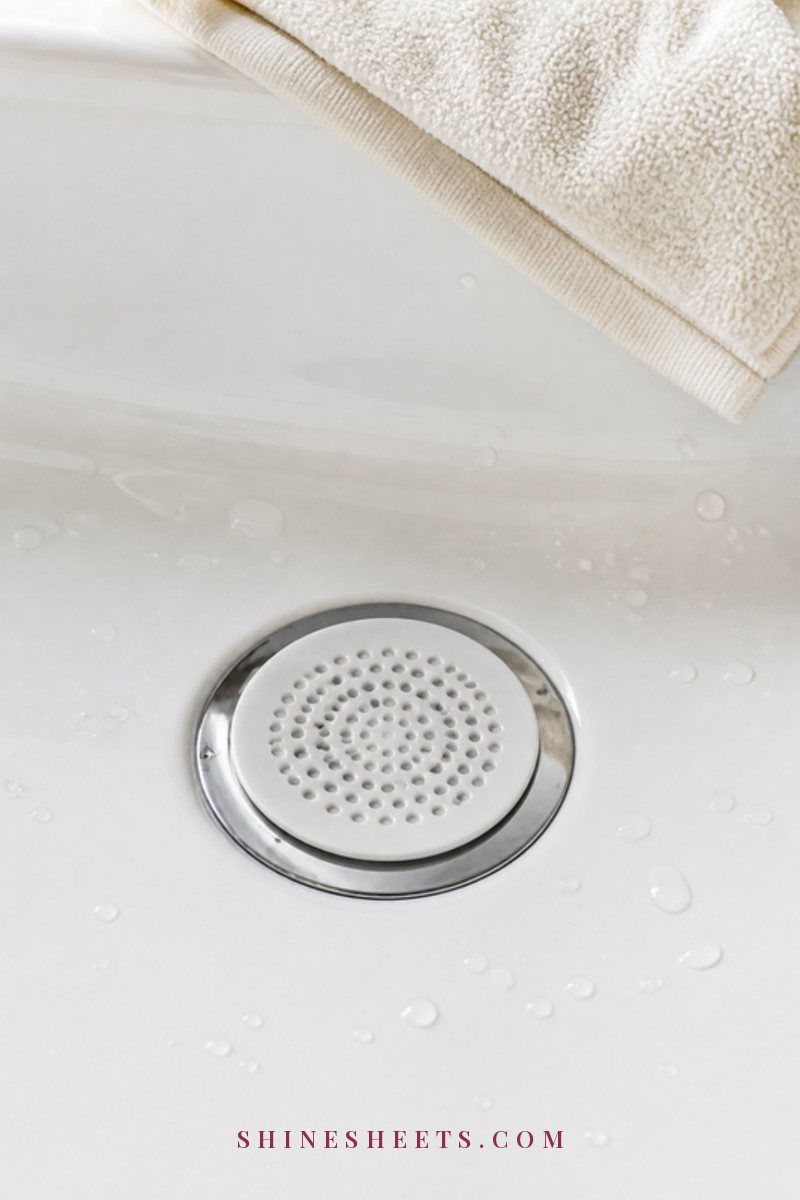
A slow drain leaves a dirty ring every time you bathe, so keeping it clear is part of keeping the tub clean. Once a week, lift the stopper or cover and remove any hair you can see with a gloved hand or a plastic drain snake. Then flush the drain with a kettle of hot (not boiling) water, especially if you have PVC pipes.
The easiest upgrade here is a drain hair catcher. It sits over the drain, catches hair before it goes down and takes ten seconds to empty. Avoid pouring harsh chemical drain openers into a tub regularly, since they can damage some finishes and pipes. If water keeps draining slowly, a plumber is the safest call.
How To Keep Your Bathtub Clean Longer

These small habits cut the weekly clean in half:
- Rinse after every bath. A quick swish of warm water as the tub drains washes away oils before they settle.
- Squeegee after showers. A shower squeegee takes thirty seconds and stops water spots and soap scum from forming.
- Use a daily shower spray. A light mist on walls after showering keeps buildup thin.
- Keep products off the rim. A caddy or shelf stops rings under bottles.
- Air it out. Run the fan for 20–30 minutes after bathing or leave the door open.
- Wash the bath mat. A damp mat can grow mildew and transfer it to the tub.
If you have a glass door, you'll love the routine in my guide on how to clean glass shower doors, and for the full set of keep-it-clean habits, read how to keep a bathroom clean.
Common Bathtub Cleaning Mistakes
Most tub damage comes from good intentions. These are the mistakes I see most often:
- Scrubbing before the cleaner has time to work. Without dwell time, you're relying on friction, which scratches softer tubs and wears out your arms.
- Using a green scouring pad on acrylic or fiberglass. It leaves fine scratches that hold dirt, so the tub looks dull and gets dirty faster.
- Reaching for bleach as the default. Bleach whitens mildew stains but doesn't remove soap scum or mineral rings, and it's harsh on some finishes.
- Using too much product. More cleaner means more rinsing, and leftover residue attracts grime. A light, even mist is enough.
- Forgetting the rinse. Cleaner left on the surface can turn slippery underfoot and dull the shine over time.
- Ignoring the caddy and bottles. If the bottles sitting on the rim are grimy, they'll leave new rings within days.
- Letting the tub stay wet. Standing water and steam are exactly what mildew loves. Airflow matters as much as cleaning.
If you've already made a few of these (most of us have), don't worry. Fine scratches on acrylic can often be buffed out with a polishing product made for acrylic tubs, and the tub will look better from your very next clean.
How Often Should You Clean Your Bathtub?
There's no single right answer, because it depends on how often the tub is used and how hard your water is. As a gentle guide:
- After every bath or shower: a quick rinse and, if you have one, a pass with the squeegee.
- Once a week: the ten-minute quick clean, plus emptying the hair catcher.
- Once a month: the deep clean, including caddies, hardware and the waterline.
- Every one to three months: jetted tub lines, if you have them, and a check of the caulk for gaps or dark spots.
If several people share the tub, or you have very hard water, move the weekly clean to twice a week for the main basin. If you live alone and mostly shower, every ten days is usually plenty. Adjust to what you actually see rather than to a rule.
Safety Notes Worth Remembering
A few rules keep tub cleaning safe for you and your finish:
- Never mix bleach with vinegar, ammonia or other cleaners.
- Always ventilate: open a window or run the fan.
- Wear gloves, especially with rust removers and mildew sprays.
- Test new products on a hidden spot first.
- Read and follow product labels and your tub manufacturer's instructions.
- Rinse thoroughly so the surface isn't slippery, and dry the floor around the tub.
Final Thoughts
A sparkling bathtub doesn't take harsh scrubbing or a shelf of strong chemicals. It takes the right cleaner for your material, a few patient minutes of dwell time and small habits that stop grime from building up in the first place.
Clean it gently once a week, rinse after each bath, and your tub will be ready whenever you want a long, candlelit soak.