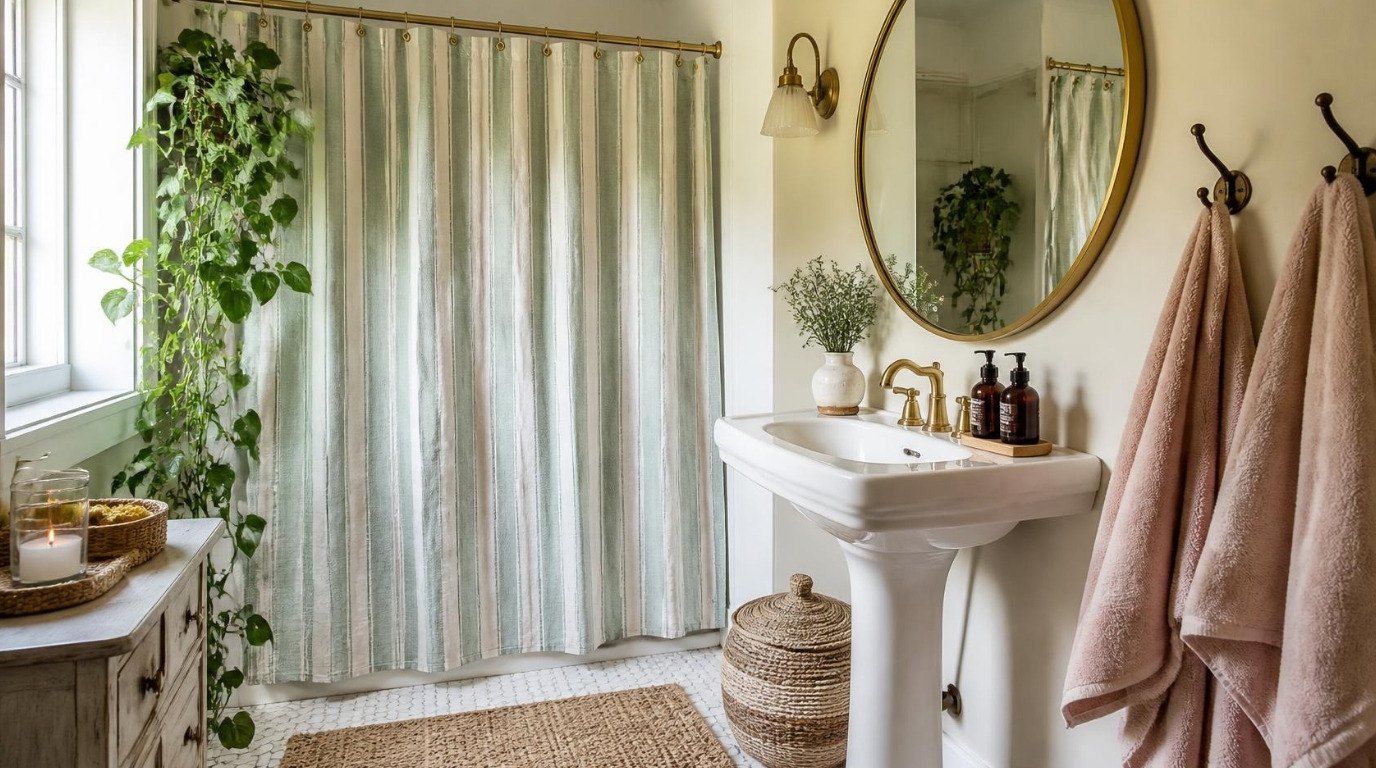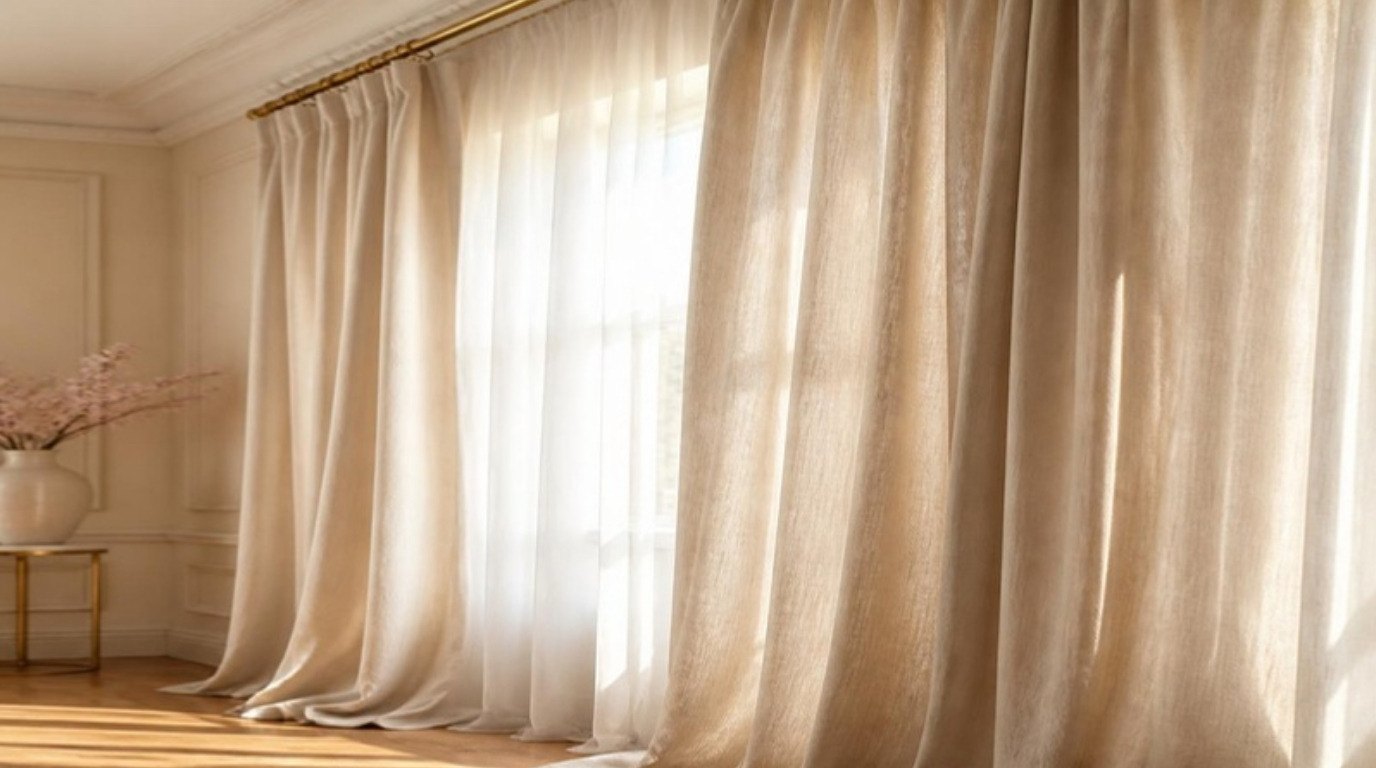
Curtains are the cheapest way to make a room look taller, wider and more finished, and also the easiest way to make it look smaller by accident. The difference is rarely the fabric you pick. It's almost always where the rod goes, how wide it reaches and how far the panels fall.
A short rod hugging the window frame, with skinny panels that stop a few inches above the floor, makes even a lovely room feel cramped. Move that same rod up and out, add a little more fabric, and the window suddenly reads as twice its size. It took me far too long to understand that curtains are mostly about placement, and only a little bit about pattern.
This guide covers all the curtain ideas and hanging rules that designers lean on: how high and how wide to hang the rod, which length to choose, how much fullness you need, fabrics and colors by room, header styles, hardware, renter-friendly options and simple care. In the middle, you'll find my curtain measuring cheat sheet, worked out for a standard 36-inch window, so you can measure once and order the right size.
Grab a tape measure and a pencil. Your windows are about to look much bigger.
Hang Them High and Wide: The Designer Rule
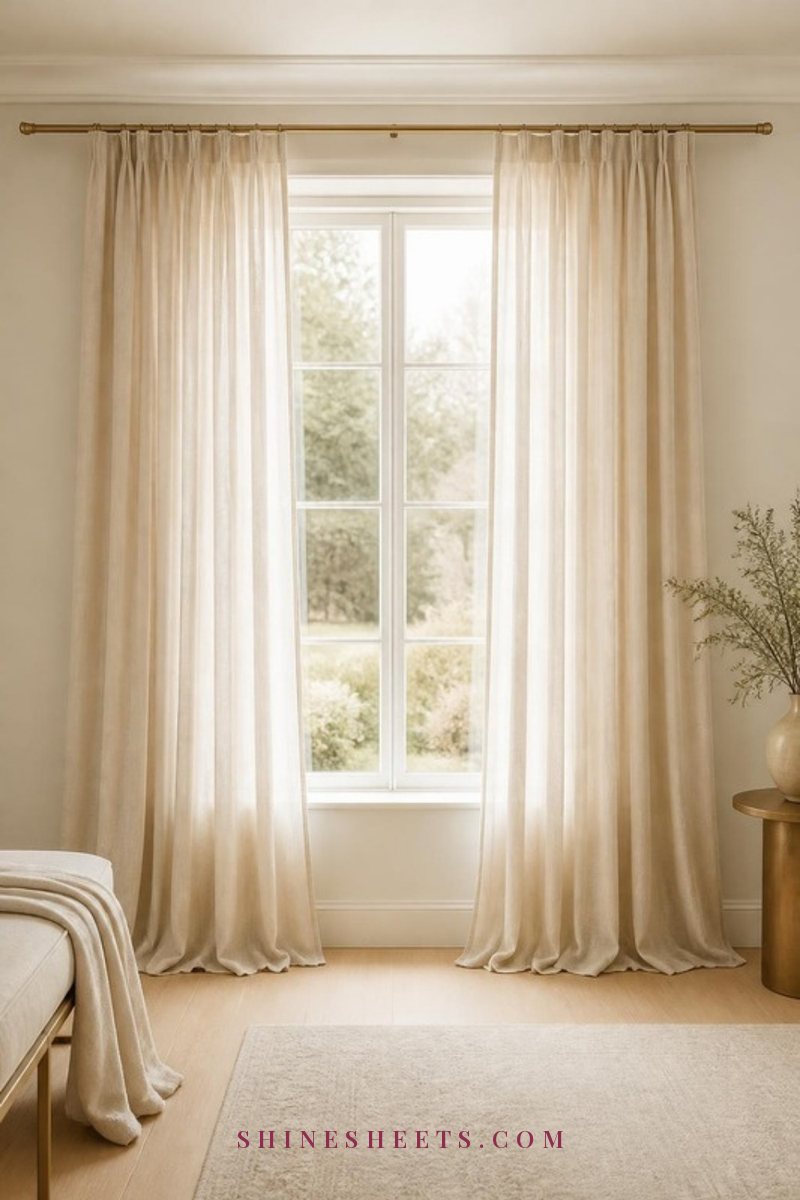
If you remember one thing from this whole article, make it this: hang the rod higher and wider than the window. Your eye reads the top of the curtain as the top of the window, and the outer edges of the fabric as the edges of the glass. Give it more height and width, and the brain happily fills in a bigger window.
- Height: mount the rod at least 4–6 inches above the window frame. For the most dramatic effect, go about two-thirds of the way up between the frame and the ceiling, or 1–2 inches below the ceiling or crown molding if there's room.
- Width: extend the rod 8–12 inches past the frame on each side. When the curtains are open, the fabric then "stacks" on the wall instead of covering the glass, so you keep all your daylight.
- The exception: if a window sits close to a corner or a wall cabinet, extend as far as you comfortably can on that side and match it on the other side if possible, so the window still looks centered.
A quick test before you drill: tape a strip of painter's tape where you plan to put the rod, step back to the doorway and look. If the window looks taller and the room looks calmer, that's your spot. If you'd like more tricks that make a space feel larger, my small living room ideas pair beautifully with this rule.
The Curtain Measuring Cheat Sheet
This is the part people usually skip, and then they end up with panels that are 4 inches too short. Measure twice, write it down, then shop. The examples below assume a 36-inch-wide window with the top of the frame at 82 inches and an 8-foot (96-inch) ceiling.
| Measurement | The rule | Example for a 36-inch window |
|---|---|---|
| Rod height | 4–6 in above the frame, or halfway or more toward the ceiling | Rod at about 90 in from the floor (8 in above the frame) |
| Rod width | Window width + 8–12 in on each side (finials extra) | 36 + 10 + 10 = a 56-in rod (a 48–84 in adjustable rod works) |
| Total fabric width | 2–2.5x the rod width for soft fullness; 1.5x for a flatter look | 56 x 2 = 112 in, so two 54–60 in panels |
| Panel length: kiss the floor | Hanging point to floor, minus about 1/2 in | About 89.5 in, so buy 96-in panels and hem |
| Panel length: slight break | Hanging point to floor, plus 1–2 in | About 91–92 in, so 96-in panels with a small hem |
| Panel length: puddle | Hanging point to floor, plus 6–10 in | About 96–100 in, so 96-in or 108-in panels |
| Ring clip drop | Measure from the bottom of the ring, not the rod | Rings usually add 1.5–2 in, so subtract that from the length |
| Sheer liner | Same width as the drapes, about 1/2 in shorter | Two sheer panels at 95–96 in, hemmed slightly shorter |
Screenshot the table and keep it on your phone for the store. One small tip: always measure each window separately. Older homes especially have windows that look identical and are an inch or two different, and that inch shows.
Choose Your Length: 3 Options and When Each Works
Short curtains that hover above the floor are the most common mistake I see. Unless you're dressing a window above a radiator or a kitchen counter, aim for one of these three:
- Kiss the floor (the clean, tailored choice). The hem just grazes the floor or floats 1/2 inch above it. It looks crisp, it's easy to vacuum around and it suits living rooms, home offices and anywhere with pets or busy foot traffic.
- Slight break (the relaxed, lived-in choice). The fabric touches the floor and bends by 1–2 inches, like a well-cut pair of trousers on a shoe. It's forgiving if your floors are uneven and gives linen that effortless, airy look.
- Puddle (the romantic, Old Hollywood choice). Six to ten extra inches pool on the floor. It's dramatic and gorgeous in a bedroom with velvet or silky fabric, but skip it in kitchens, entryways and homes with shedding pets, because the puddle collects dust and fur.
If you're between sizes, buy longer and hem. Iron-on hemming tape takes about ten minutes per panel, no sewing machine needed.
Fullness: Why Skinny Panels Look Cheap
A single narrow panel stretched flat across a window always looks a little sad. Curtains look expensive when they have fullness: enough fabric to fall in soft, generous folds even when they're closed.
- The formula: total fabric width = 2 to 2.5 times the rod width. For a 56-inch rod, that's 112–140 inches of fabric, which usually means two wide panels or three standard ones.
- Light, sheer fabrics need the most fullness (closer to 2.5x or even 3x), or they look thin and see-through in a not-pretty way.
- Heavy fabrics like velvet can go a little leaner (around 2x), because they hold their folds on their own.
- Purely decorative panels that never close can be narrower, about 1.5x, as long as they stay on the wall beside the window.
When the budget is tight, I'd rather buy two extra panels of an affordable fabric than one pair of pricey panels that look stretched. Fullness beats price almost every time, which is also one of my favorite tricks from ways to make your house look expensive.
Fabrics by Room: 4 Classics and Where They Shine
Each fabric changes the light, the sound and the mood of a room. Here's how I'd think about them:
- Linen (or linen-look polyester). Soft, slightly textured and relaxed, it filters light beautifully without blocking it. It's my first choice for living rooms and dining areas. Look for cream linen curtain panels with a weighted hem so they hang straight instead of flaring out.
- Sheer voile. Light, airy and private by day, sheers blur the view without darkening the room. They're perfect on street-facing windows and as the back layer behind heavier drapes.
- Velvet. Heavy, rich and wonderful at blocking drafts and noise. Velvet makes a bedroom or a reading corner feel wrapped up and glamorous, but it can feel heavy in a small, dim room.
- Blackout or thermal lining. Not a look so much as a function. Lined curtains darken bedrooms, block summer heat and winter chill, and protect furniture from fading.
A gentle safety note while you're choosing: keep all curtain fabric well away from candles, space heaters and lamps with hot bulbs. If you love glass candles as much as I do, place them on a surface where a breeze can't swing a panel anywhere near the flame.
Color: Match for Calm, Contrast for Drama
Choosing a curtain color gets much easier once you decide what job you want the curtains to do.
- Match the walls for calm and height. Curtains in nearly the same shade as your walls (cream on cream, warm white on warm white) disappear into the room and make the ceiling feel higher. This is the most reliable trick for small spaces.
- Go one or two shades darker for gentle depth. Beige curtains against ivory walls frame the window softly without shouting.
- Contrast for drama. Deep sage, blush or chocolate curtains against light walls make the window a focal point. It works best in larger rooms or when the window has a great view.
- Repeat a color from the room. Pull one shade from a rug, a pillow or artwork so the curtains feel connected rather than random.
Patterns are lovely too, but keep them on the quieter side if the rest of the room is busy. My guide to neutral home decor explains how to keep a cream-and-beige palette from feeling flat, and curtains with real texture are a huge part of that.
Layer Sheers With Drapes for Day-to-Night Softness

Layering is how hotel rooms and designer homes get that soft, flexible look. A sheer layer sits closest to the glass for daytime privacy and diffused light; a heavier drape sits in front for evenings, warmth and darkness.
- Use a double rod so each layer slides on its own. The sheer goes on the back rod, the drape on the front one.
- Keep the sheers slightly shorter, about 1/2 inch, so they never peek out under the drapes.
- Pick tones that relate. White or ivory sheers work behind nearly every drape color. Look for white sheer voile curtains with a soft, slightly textured weave rather than a shiny one.
- By day, close the sheers and pull the drapes all the way to the sides. By night, close both. The room changes mood in about ten seconds.
Layered curtains also do a lot for evening ambience, because they soften lamp light and hide dark, mirror-like glass after sunset. If you want to build on that, my lighting ideas show how to make a room glow at night.
Header Styles: 4 Options and the Look Each Gives
The header is the top of the curtain, and it quietly decides how the whole panel falls.
- Pinch pleat. Fabric is gathered into neat, sewn pleats at the top. It looks tailored and traditional and gives the most luxurious folds. Hang it from rings or hooks.
- Rod pocket. The rod slides through a sewn channel. It's the most budget-friendly and gives a soft, gathered top, but it doesn't slide easily, so it suits curtains that mostly stay in place.
- Grommet. Metal rings punched into the fabric slide right onto the rod. They open and close easily and give deep, regular waves, though the look is more casual and modern.
- Ripple fold. A continuous, even S-shaped wave, usually on a track. It's very sleek and contemporary, and it's often found on made-to-measure curtains.
Here's a secret: almost any rod-pocket or tab-top panel can look like a pinch-pleat curtain if you hang it with clip rings and pinch a small fold into each clip. It's the easiest designer upgrade on this whole list.
Hardware: Rods, Rings and Double Rods
Curtain hardware is the jewelry of the window. Choose it with the same care you'd choose earrings for a dress.
- Brass and warm gold rods feel classic and pair beautifully with cream, beige and blush. A slim brass curtain rod with simple ball finials looks expensive without being fussy.
- Ring clips let you hang almost any panel, make sliding easy and add a little height. A set of gold curtain ring clips is the quickest way to make store-bought panels look custom.
- Double rods are essential for layering sheers and drapes. Make sure the front rod is long enough to fully cover the back one.
- Center supports are needed on any rod longer than about 72–84 inches, or the rod will bow under the fabric.
- Thickness: a 1-inch diameter rod suits most rooms; go to 1 3/8 inches for tall windows or heavy velvet.
Always drill brackets into studs or use proper wall anchors. Heavy, lined curtains can easily weigh several pounds per panel, and a rod pulling out of the drywall is no one's idea of a relaxing evening.
Curtain Ideas by Room
The rules above work everywhere, but each room has its own small priorities: light, privacy, sleep or splashes. Here's how I'd dress the windows in each one.
Living Room: Floor-to-Ceiling Linen in a Wall Color

In a living room, curtains are usually more about softness than darkness. Floor-to-ceiling linen panels in the same tone as your walls make the room feel taller and calmer, and they keep the light gentle without blocking it.
- Hang them 1–2 inches below the ceiling and 10–12 inches past the frame.
- Choose "kiss the floor" or a slight break so they stay neat around furniture.
- If you have several windows on one wall, consider one long rod across all of them for a seamless, gallery-like look.
For more ways to make this room feel warm and welcoming, my cozy living room ideas cover rugs, throws and lighting that pair well with soft curtains.
Bedroom: Blackout-Lined Drapes That Still Look Soft

Bedrooms need darkness for good sleep, but blackout curtains can look heavy and flat. The trick is to keep the face fabric soft and hide the function behind it.
- Pick a pretty linen or velvet curtain and add a blackout curtain liner behind it on hooks or a separate rod. You get a lovely front and a dark room.
- Extend the rod a little wider than usual, about 12 inches per side, so light can't sneak in around the edges.
- A puddle or slight break helps block the light gap at the floor and looks wonderfully romantic.
Pair them with soft bedding and warm lamps, and the room starts to feel like a retreat. My cozy bedroom ideas have plenty more renter-friendly ways to get there.
Kitchen: Café Curtains on the Lower Half

Full-length curtains next to a stove or sink aren't practical, but café curtains are charming and useful. They cover only the lower half of the window, so you get privacy at counter height and full daylight above.
- Mount the rod at the middle of the window or at the horizontal bar of the sash.
- Choose a washable cotton or linen-blend fabric, because kitchen curtains collect steam and splashes.
- A café curtain tension rod fits inside the window frame with no drilling at all.
- Keep fabric well clear of the stovetop, at least a few feet away from any burner.
Bathroom: Frosted Privacy Without Losing Light
Bathroom windows need privacy first and moisture resistance second. A short café curtain or a sill-length sheer in a polyester blend handles both and dries quickly after a steamy shower.
- Sill length (about 1/2 inch below the sill) or apron length (about 4 inches below the frame) keeps the hem away from the counter or tub.
- Choose polyester or a poly-linen blend; pure cotton can get musty in humid rooms.
- Open the curtains or crack the window after showers so everything dries out.
Renter-Friendly Curtain Ideas: 5 No-Drill Options
You don't need permission to drill or a toolbox to have beautiful windows. These options all leave walls intact:
- Tension rods inside the window frame. Perfect for café curtains, sheers and small windows. Look for ones with rubber ends so they grip without marking paint.
- Heavy-duty adhesive hooks. Rated hooks can hold a lightweight rod with sheers. Follow the weight limit exactly, and press each hook firmly for about 30 seconds.
- No-drill brackets that clip onto the window frame. They tuck behind the top trim and hold a full rod, so you can still hang high and wide.
- Existing hardware, upgraded. Keep the landlord's rod but add new ring clips and better panels. Most people never notice the rod once the curtains are full and long.
- Swapped finials. Many rods let you twist off the ends. New brass finials make basic hardware look custom in two minutes.
Keep the original curtains in a labeled bag so you can rehang them on moving day. Small, reversible changes like these add up to a home that feels truly yours.
How To Hang Curtains So They Fall Beautifully
Even good curtains can look stiff and wrinkled straight out of the package. A few small steps make them hang like they were made for your window:
- Steam before hanging. Remove the fold lines with a handheld steamer or on a low iron setting with a cloth on top. Fold creases are the number one thing that makes new curtains look cheap.
- Hang, then wait a day. Many fabrics, especially linen, drop slightly after 24–48 hours. Hem only after they've settled.
- "Train" the folds. Arrange the panels into even folds, tie them loosely with ribbon or fabric strips in three places, and leave them for two or three days. When you untie them, they keep their shape.
- Check the stack. When open, the panels should rest on the wall beside the window, not over the glass. If they don't, the rod needs to be a little wider.
- Step back to the doorway. Look from where you usually enter the room and adjust anything that looks uneven.
Curtain Care: Keep Them Fresh All Year
Curtains quietly collect dust, cooking smells and pet hair, and nobody notices until they suddenly look dull. A light routine keeps them fresh:
- Every week or two: give them a gentle shake, or run a vacuum with the upholstery brush from top to bottom.
- Every season: steam them in place to refresh the fabric and loosen dust.
- Once or twice a year: wash or dry clean according to the label. Most polyester and many linen-blend panels can go on a cold, gentle cycle and come out best if you rehang them while slightly damp so gravity smooths the wrinkles.
- Velvet and lined curtains usually need dry cleaning or a careful spot clean, so check the care tag before anything goes near water.
- Sheers wash beautifully in a mesh laundry bag on a delicate cycle.
Washing in batches, one room at a time, makes this feel much less like a project. While the curtains are down, wipe the window sill and rod too, and the whole window looks new again.
Final Thoughts
Good curtains aren't about spending a lot. They're about a few small decisions made well: a rod placed higher and wider, panels long enough to reach the floor, enough fabric to fall in soft folds, and a color that suits the mood you want.
Start with one window, the one you see first when you walk in. Measure it with the cheat sheet, hang the rod a little higher than feels natural, and watch the whole room relax and open up. Your windows deserve that kind of attention, and so does the home you come back to every day.