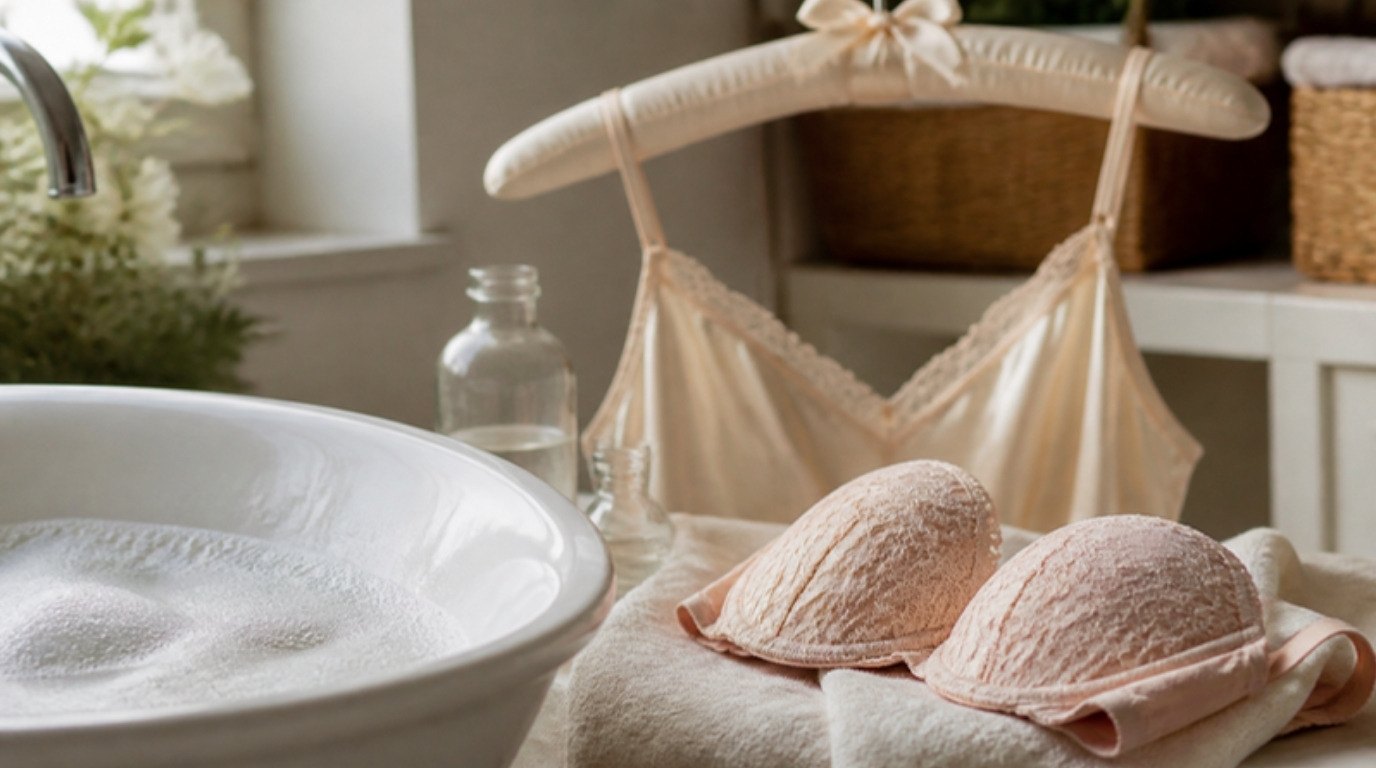
Delicates rarely wear out from being worn. They wear out in the wash – from hot water, harsh detergent, a tumble in the dryer or a hook catching on lace. Change how you wash them, and your favorite bras, silk camisoles and lace sets can look lovely for years instead of months.
The good news is that caring for delicates takes far less time than people think. A gentle hand wash is about ten minutes of actual work. A careful machine wash is even quicker. What matters most is temperature, detergent and how you dry them.
This guide covers how to wash delicates and lingerie so they last: what counts as a delicate, a fabric care cheat sheet, step-by-step hand washing, how to use the machine safely, specific care for bras, silk, lace and cashmere, choosing a gentle detergent, drying, storing and how often each piece actually needs washing.
Pour yourself a cup of tea and let's give your prettiest pieces the care they deserve.
What Counts as a Delicate?
"Delicates" isn't just lingerie. It's any item with fine fibers, a loose weave, decorative details or a structure that can be stretched or bent. That includes:
- bras, especially underwire, molded-cup and lace bras
- underwear, bodysuits and slips
- silk blouses, camisoles, pillowcases and scarves
- lace and embroidered pieces
- cashmere, merino and other fine knits
- sheer fabrics like chiffon and organza
- shapewear and swimwear
- anything with beads, sequins or embellishments
Always check the care label first. It's the most reliable guide to what each piece can handle. "Dry clean only" usually means exactly that, especially for structured garments, while "dry clean" alone sometimes means gentle hand washing is possible. When in doubt, hand wash or ask a professional cleaner.
Fabric Care Cheat Sheet
Here's the quick reference I'd want taped inside the laundry cabinet. Screenshot it, and you'll never have to guess again.
| Fabric | Wash | Dry | Avoid |
|---|---|---|---|
| Silk | Hand wash in cool water with a pH-neutral or silk detergent | Roll in a towel, then lay flat or hang out of direct sun | Wringing, regular detergent, enzymes, bleach, dryer |
| Lace | Hand wash or mesh bag on delicate, cold | Lay flat and reshape | Velcro and hooks nearby, hot water, dryer |
| Cashmere and fine wool | Hand wash in cool water with wool wash | Lay flat on a towel, reshape | Hanging wet, wringing, hot water, dryer |
| Bras | Hand wash, or mesh bag on delicate cycle, cold | Air dry, cups shaped, hung by the center gore | Dryer, hanging by straps, folding molded cups |
| Cotton underwear | Machine wash warm or cold, mesh bag if lacy | Low heat or air dry | Fabric softener on moisture-wicking fabrics |
| Satin and polyester lingerie | Hand wash or mesh bag, cold | Hang or lay flat | High heat, rough fabrics in the same load |
| Shapewear and spandex | Hand wash or mesh bag, cold | Lay flat, away from heat | Dryer, fabric softener, wringing |
| Chiffon and sheer fabrics | Hand wash, cold, gentle swish | Hang on a padded hanger | Rubbing, twisting, crowded machine loads |
How To Hand Wash Delicates Step by Step
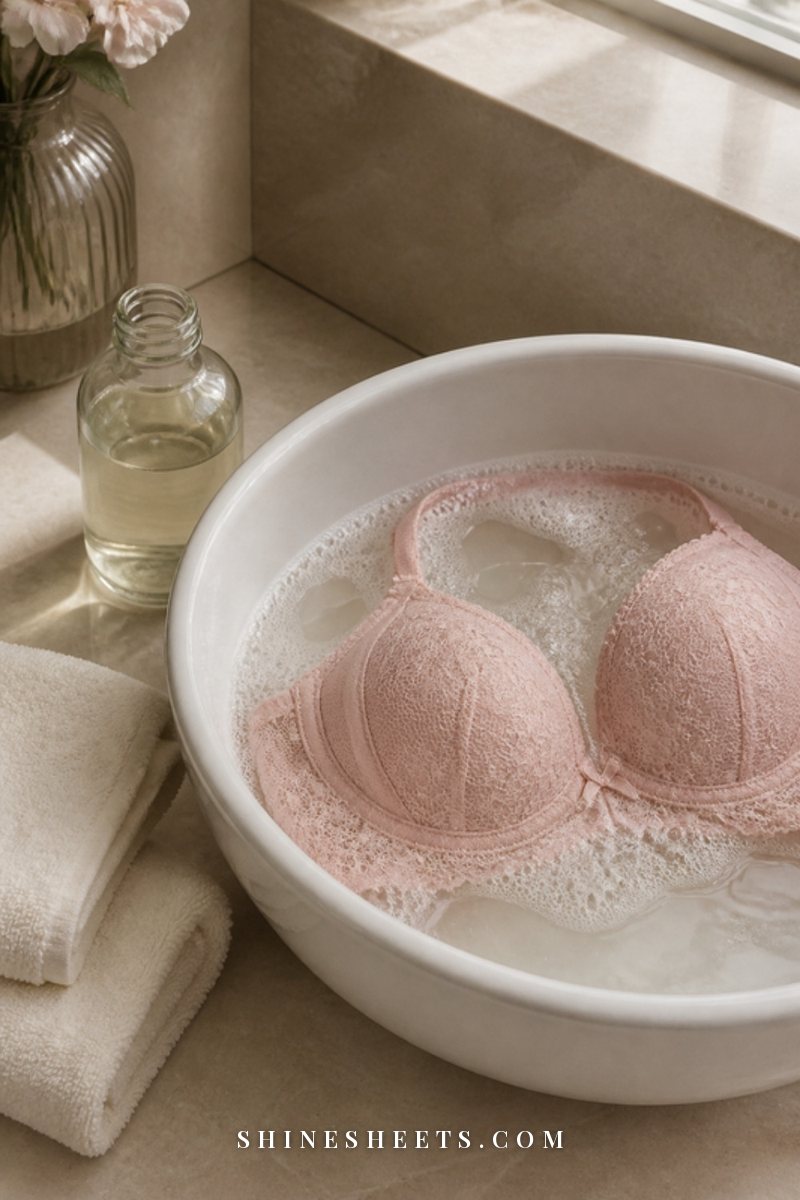
Hand washing is the gentlest option for almost everything delicate. It sounds like a chore, but most of the time is spent soaking, not scrubbing.
1. Sort by Color and Fabric
Wash darks and lights separately, and keep bright or new items (especially reds and blacks) on their own for the first few washes, since dye can bleed. Group similar fabrics together: silks with silks, lace with lace.
2. Fill a Clean Basin With Cool Water
Use a clean sink, a bathroom basin or a dedicated collapsible wash basin. Fill it with cool or lukewarm water, never hot. Hot water breaks down elastic, shrinks natural fibers and fades color.
3. Add a Small Amount of Gentle Detergent
About a teaspoon of a gentle detergent made for delicates per sink of water is plenty. Swish it until it's fully dissolved before adding your clothes, so concentrated detergent never touches the fabric directly.
4. Soak for 10 to 15 Minutes
Submerge the items and gently press them under the water. Let them soak. For lightly worn pieces, 10 minutes is enough. Avoid leaving silk in water much longer than 5 to 10 minutes.
5. Swish, Don't Scrub
Gently move the items through the water with your hands. If a spot needs extra attention (like the band of a bra), rub the fabric lightly against itself between your fingertips. Never scrub with a brush or twist the fabric.
6. Rinse in Cool Water
Drain the soapy water and refill with clean cool water. Swish again and repeat until there are no more suds. Leftover detergent can make fabric stiff and irritate sensitive skin.
7. Press Out the Water
Gently press the items against the side of the basin to remove water. Then lay each piece flat on a clean towel, roll the towel up and press lightly to absorb more moisture. Never wring – it stretches elastic and breaks delicate fibers.
How To Machine Wash Delicates Safely
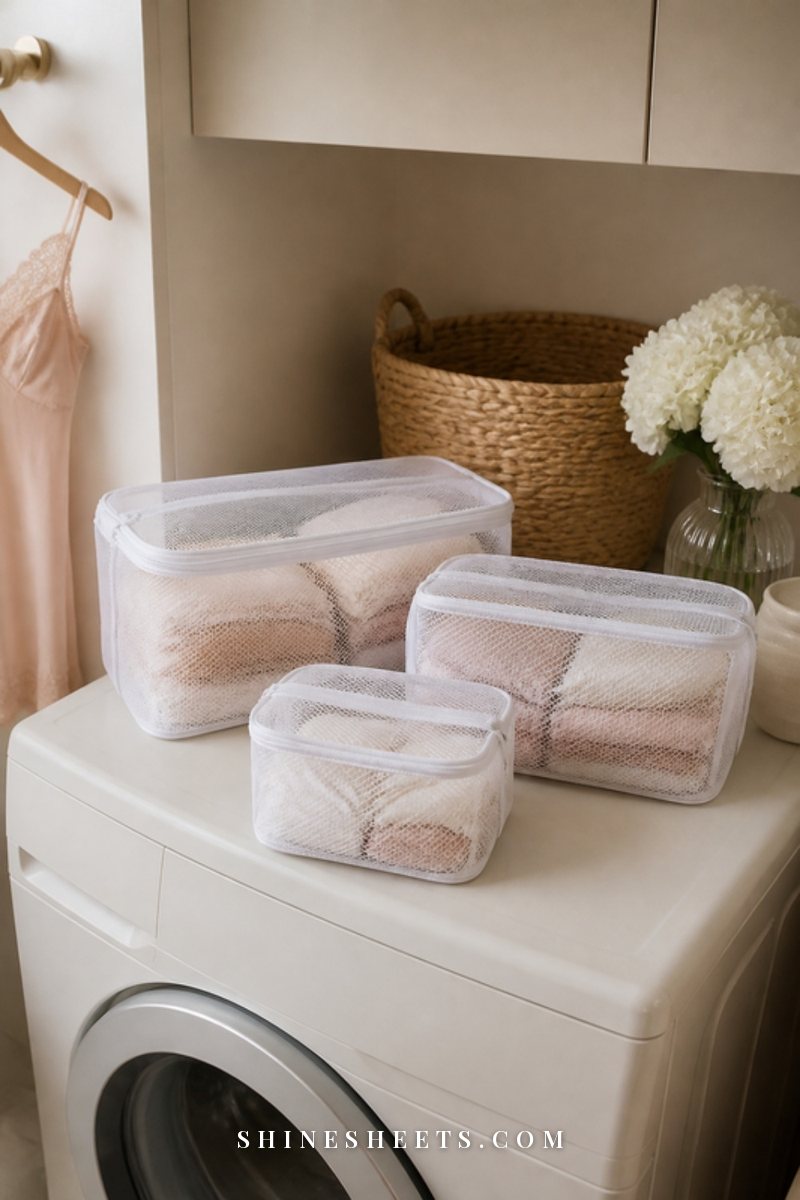
Hand washing is best, but realistically, not every week allows it. Many delicates can go in the machine if you follow a few rules:
- Always use mesh bags. A set of mesh laundry bags in different sizes keeps straps from tangling and hooks from snagging other clothes. Put one or two items per bag, not ten.
- Choose the delicate or hand wash cycle. These use gentle movement and a slow spin.
- Use cold water. 30°C (86°F) or below for almost all delicates.
- Use a smaller amount of gentle detergent. Less is better; too much leaves residue.
- Wash with similar items. Don't throw lace in with jeans, towels or anything with zippers or Velcro. Heavier fabrics rub and crush delicates.
- Don't overload the drum. Delicates need room to move gently.
- Take them out right away. Leaving wet delicates in the drum creates creases and musty smells.
A clean machine matters too, especially for light-colored lingerie. If your washer smells or leaves marks, my guide on how to clean a washing machine will help.
How To Wash Bras So They Keep Their Shape

Bras are the most structured delicates, and the most expensive ones in many wardrobes. A little extra care keeps the band supportive and the cups smooth.
Hand Washing Bras
Fasten the hooks first so they don't snag on anything. Follow the hand washing steps above, paying gentle attention to the band and the area under the cups, where most sweat collects. Rinse well, press out water with a towel, then reshape the cups with your hands while damp.
Machine Washing Bras
Fasten the hooks, then place each bra in its own mesh bag or a padded bra wash bag that holds the cups' shape. Use cold water and the delicate cycle. Molded and padded cups are the most likely to dent in the machine, so hand wash those whenever you can.
Never Put Bras in the Dryer
This is the one rule that matters most. Heat breaks down elastic in the band and straps, warps underwire and can melt or deform molded cups. Always air dry, even if you're in a hurry. More on drying below.
How To Wash Silk
Silk is strong when dry but fragile when wet, and it doesn't like heat, friction or alkaline detergents.
- Check the label; some silks (especially structured garments) should be dry cleaned.
- Test colorfastness by dabbing a damp white cloth on a hidden seam. If color transfers, have it dry cleaned.
- Hand wash in cool water with a pH-neutral detergent made for silk or wool, for no longer than 5 to 10 minutes.
- Rinse in cool water. A splash of white vinegar in the final rinse (about a tablespoon per basin) can help restore shine and remove detergent residue; follow with one more plain water rinse.
- Roll in a towel to remove water, then hang on a padded hanger or lay flat, out of direct sunlight.
- Iron on the lowest setting, inside out, while still slightly damp, or use a steamer.
Silk pillowcases follow the same rules, and they're one of the most-washed silk items in a home. Wash them weekly, gently, so they stay smooth.
How To Wash Lace
Lace snags easily, so the biggest danger is other items in the load. Hand washing in cool water is the safest choice. If you machine wash lace, use a mesh bag, cold water and the delicate cycle, and keep anything with hooks, zippers or Velcro far away.
When drying, lay lace flat on a towel and gently reshape any scalloped edges or trims with your fingers. Never wring lace or hang heavy, wet lace pieces, as the weight can stretch the delicate pattern.
Cashmere and Fine Knits
Cashmere is a delicate in its own category: it hates heat, agitation and hanging when wet, all of which can shrink or stretch it. Hand wash in cool water with a gentle wool detergent, never wring, roll it in a towel and dry it flat, gently reshaped to its original size.
I've written a full guide on how to care for cashmere, including pilling, storing and how often to wash it, if you want more detail.
Shapewear, Swimwear and Activewear
These stretchy pieces aren't always thought of as delicates, but they rely on elastic fibers like spandex and elastane, which break down quickly with heat and harsh products.
- Shapewear: Hand wash or use a mesh bag on a cold delicate cycle. Lay flat to dry. Heat is the fastest way to lose that smoothing stretch.
- Swimwear: Rinse in cool tap water as soon as possible after swimming to remove chlorine, salt and sunscreen, even if you won't wash it properly until later. Then hand wash with a small amount of gentle detergent and lay flat in the shade. Never wring a swimsuit or leave it balled up wet in a bag.
- Activewear and sports bras: Wash after every workout, inside out, in cold water. Skip fabric softener, which clogs moisture-wicking fibers and traps odor. If leggings or tops start to smell even when clean, a pre-soak in cool water with a splash of white vinegar for 30 minutes before washing usually helps.
Washing Delicates When You're Traveling
A few delicates are often the pieces you most want fresh on a trip. Washing them in a hotel sink is easy with a little planning:
- Pack a small travel bottle of gentle detergent or a few single-use laundry sheets made for delicates.
- Rinse the hotel sink, plug it and fill it with cool water and a few drops of detergent.
- Soak, swish and rinse just as you would at home.
- Roll each piece in a hotel towel and press firmly to remove as much water as possible – this cuts drying time in half.
- Hang bras by the center over a towel rail and lay everything else flat on a dry towel overnight.
Washing in the evening usually means everything is dry by morning, especially in a warm room.
Choosing the Right Detergent
Regular detergents are designed for heavy cotton loads and often contain enzymes, optical brighteners and strong surfactants. Those are great for jeans and towels, but they can break down silk and wool proteins, fade colors and weaken elastic over time.
For delicates, look for:
- pH-neutral or "gentle" formulas, often labeled for delicates, lingerie, silk or wool
- enzyme-free formulas for silk and wool, since protein-digesting enzymes can damage these natural fibers
- no bleach or brighteners
- fragrance-free options if your skin is sensitive
In a pinch, a small amount of mild baby shampoo can work for a hand wash. Skip fabric softener for lingerie, shapewear and activewear – it coats elastic and moisture-wicking fibers and can reduce stretch and breathability.
For a stained piece, treat it gently and as soon as possible with cold water and a little delicate detergent. My guide on how to remove stains from clothes has specific advice for common marks like makeup, deodorant and blood.
How To Dry Delicates
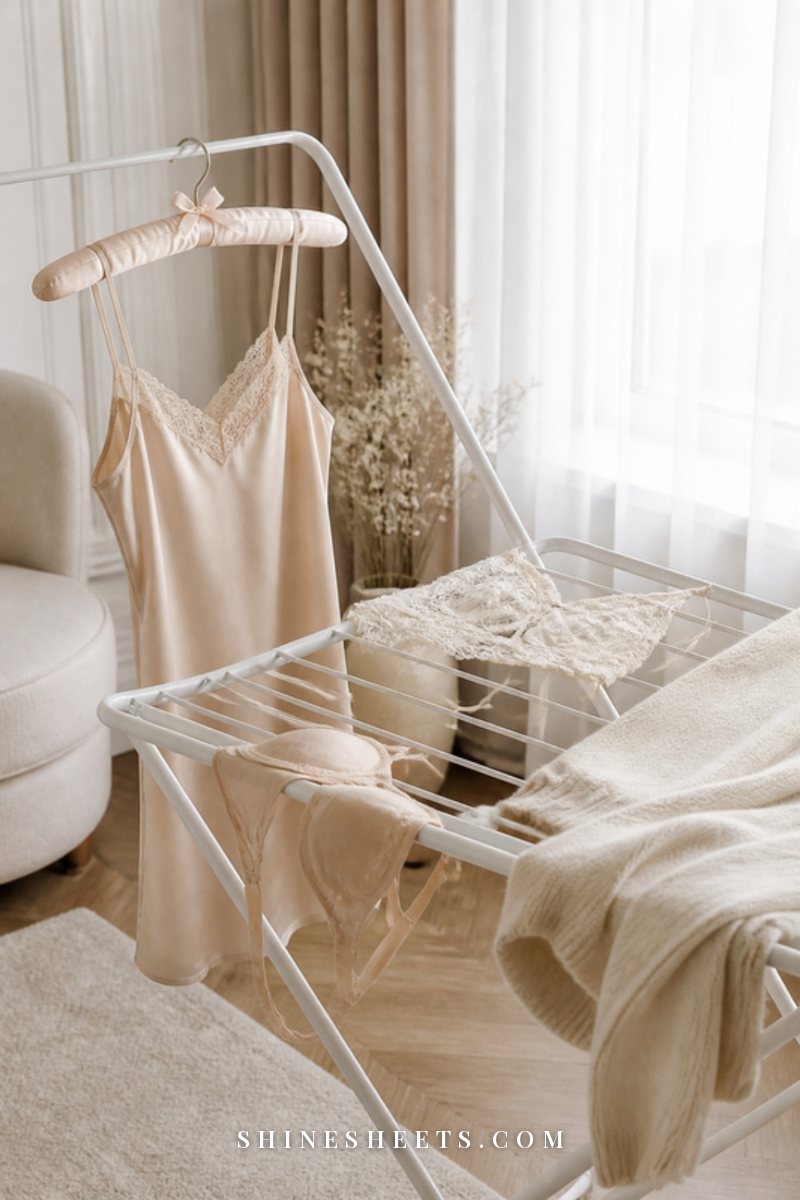
Drying is where many delicates get ruined, so it's worth taking a moment to do it right.
- Skip the dryer entirely for bras, lace, silk, cashmere and shapewear.
- Lay knits and lace flat on a towel or a mesh drying rack, reshaped to their original size.
- Hang bras by the center gore (the part between the cups) over a line or rack, not by the straps, which stretch under the weight of water.
- Use padded hangers for silk and blouses. A set of padded satin hangers prevents shoulder bumps and keeps slippery fabrics from sliding off.
- Keep items away from direct heat and strong sun. Radiators and hot sunshine fade colors and weaken fibers.
- Allow enough time. Most delicates dry in 6 to 24 hours. Give padded bras extra time so the cups dry fully inside.
A folding drying rack is one of the most useful things you can own for delicates. It lets you lay knits flat on top and hang bras and camisoles below, and it folds away when you don't need it.
How To Store Bras and Lingerie
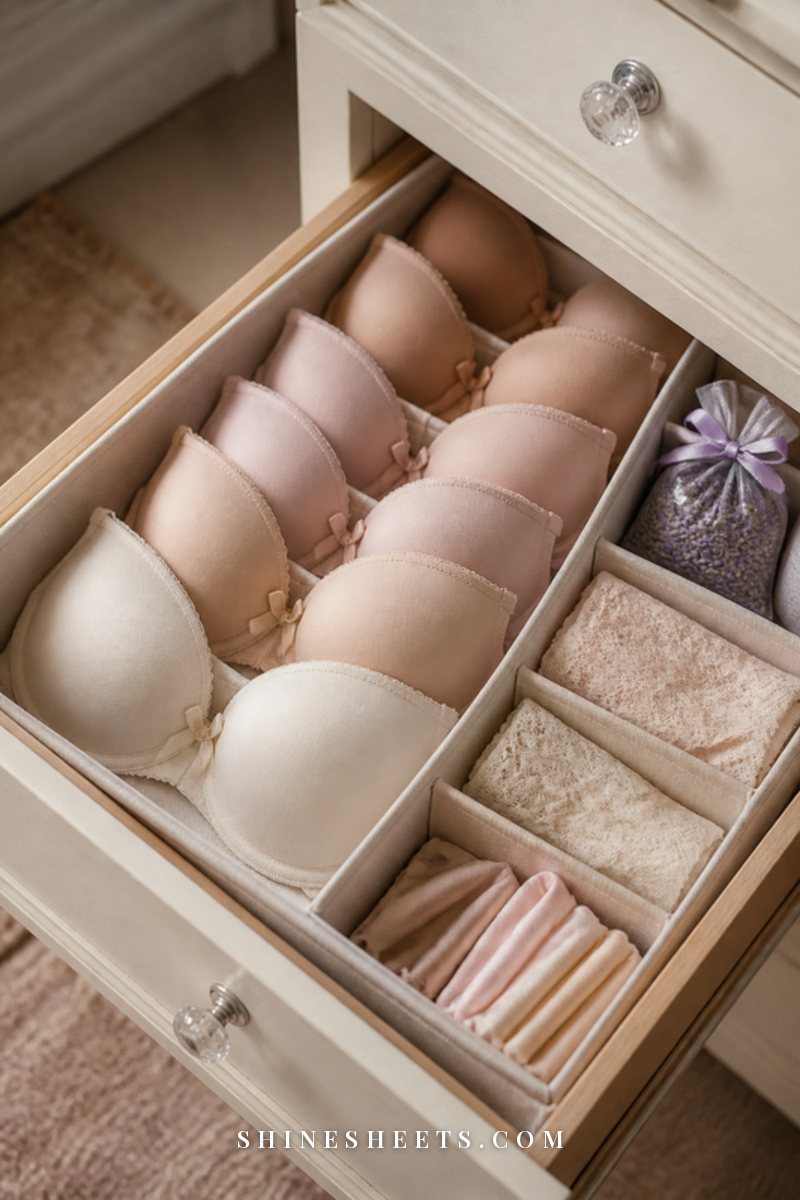
Good storage protects the shape of your delicates between wears, especially bras.
- Never fold molded cups in half. Instead, nest bras of similar shapes inside each other, one cup tucked into the next, and lay them in a row.
- Use dividers. A lingerie drawer organizer keeps bras, underwear and socks in their own spaces so hooks don't snag on lace.
- Store silk and lace loosely, folded in tissue paper or a soft cotton pouch.
- Keep things clean before storing. Body oils and deodorant left on fabric attract moths and discolor over time.
- Add a lavender sachet if you like a soft scent in the drawer – it's a gentle way to keep things fresh.
How Often To Wash Delicates
Washing too often wears delicates out; washing too rarely lets body oils and sweat break down fibers. Here's a realistic guide:
- Underwear: after every wear.
- Bras: every 2 to 4 wears, or after a sweaty day. Rotating between at least three bras gives the elastic time to recover between wears.
- Sports bras: after every workout.
- Camisoles and slips worn against the skin: after 1 to 2 wears.
- Silk blouses: every 2 to 3 wears, or when you notice a mark or smell.
- Cashmere sweaters: every 5 or more wears if you wear a layer underneath; air them out between wears.
- Silk pillowcases: once a week.
Common Delicates Mistakes
A few small habits do most of the damage. Avoiding these alone will make your lingerie last much longer:
- Washing in hot water "to get it really clean"
- Putting bras in the dryer, even on low
- Washing delicates with towels, jeans or zippered items
- Using too much detergent or regular heavy-duty detergent
- Wringing or twisting wet fabric
- Hanging wet knits or bras by the straps
- Leaving wet items in the machine or basin for hours
- Wearing the same bra every day without a rest day
For more everyday laundry advice, including sorting, stain prevention and keeping whites bright, my collection of laundry tips covers the rest of your wash.
Final Thoughts
Learning how to wash delicates is really about slowing down a little: cool water, a gentle detergent, a mesh bag or a quick hand wash, and patience when drying. None of it is complicated, and the reward is lingerie, silk and lace that stay soft, supportive and pretty for years. It all feels much easier when the rest of the washing has a rhythm, and this is my simple laundry routine that never piles up.
Start with the cheat sheet and the "never in the dryer" rule. Your favorite pieces will thank you every time you open the drawer.