Streak-free windows have less to do with the cleaner you buy and more to do with timing, tools and technique. Most streaks come from just three things: glass that dries too fast in the sun, too much product left behind, and a dirty or wrong cloth. Fix those three and even a simple bucket of soapy water will give you clear, sparkling glass.
Clean windows also change a room more than you'd expect. More daylight comes in, colors look fresher and the whole space feels lighter, which is especially lovely as the days get shorter and every bit of natural light counts.
This guide covers exactly how to clean windows streak-free, inside and out: the best time to do it, the tools you need, a safe homemade solution, the squeegee technique step by step, how to clean frames, tracks, sills and screens, how to handle outside windows safely, how often to clean them and a streak troubleshooting table for when things don't go to plan.
The Best Time To Clean Windows
This is the tip that makes the biggest difference, and it costs nothing: clean windows on a cloudy, dry day, or on the side of the house that's in shade.
When sunlight hits the glass directly, your cleaning solution dries before you can wipe it away, leaving streaks and soap marks behind. On an overcast day, you have time to work properly, and you can also see streaks more easily without glare.
A few more timing notes:
- Morning or late afternoon works well if it's sunny, because the sun is lower and the glass is cooler.
- Avoid very cold days for outside windows, since water can freeze on the glass.
- Avoid windy days for outside windows, because dust blows straight back onto wet glass.
- Clean after a rainy spell, not before, so rain doesn't leave new spots on fresh glass.
What You Need To Clean Windows
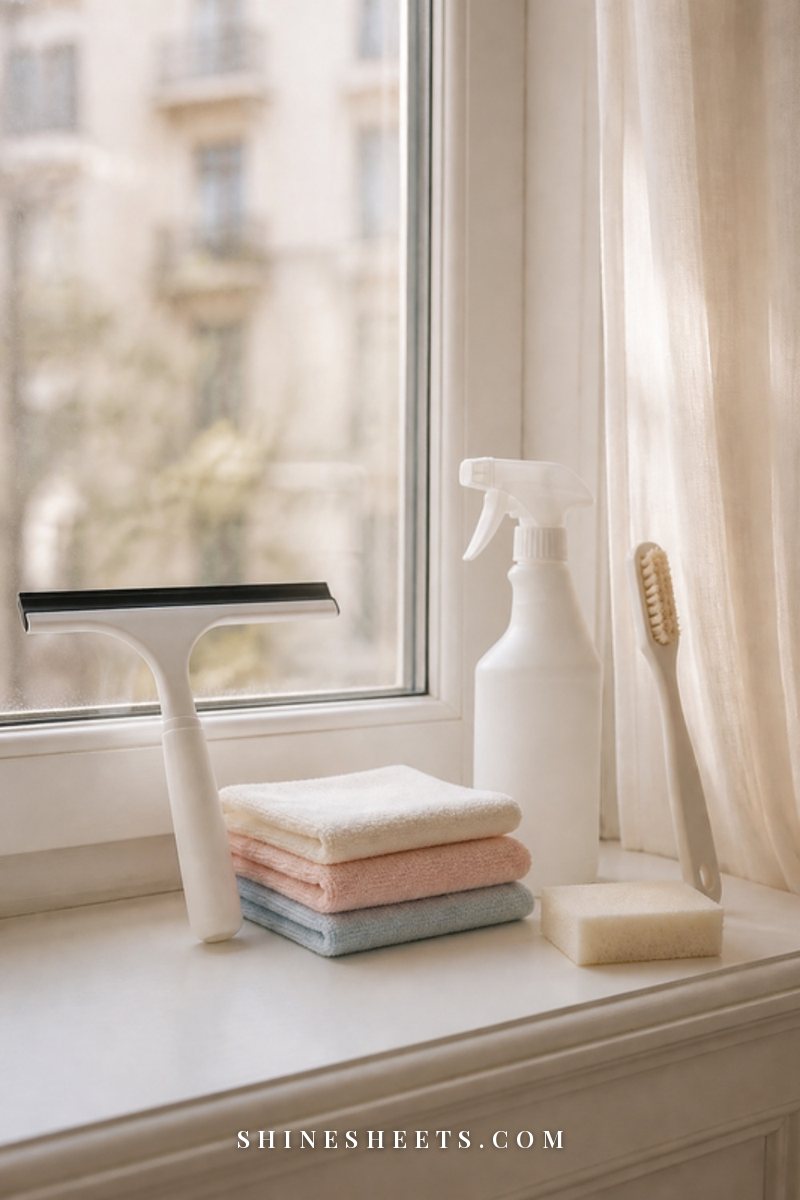
You don't need a cupboard full of products. A small set of good tools does a better job than any special spray. Here's what I'd gather before starting:
- A squeegee. A window squeegee with a rubber blade is the single best tool for streak-free glass. Look for a 10 to 14 inch blade with a smooth, sharp rubber edge and a comfortable handle. A replaceable blade is a bonus, since a nicked edge leaves lines.
- Microfiber glass cloths. Lint-free microfiber glass cloths have a tight, flat weave that polishes glass without leaving fluff. Look for a pack with several cloths so you always have a dry one.
- A spray bottle. A refillable spray bottle for your homemade solution. Look for one with an adjustable mist setting.
- A bucket with warm water and a few drops of dish soap.
- A small brush for tracks and corners, plus a vacuum with a crevice tool.
- A soft sponge or scrubber to wash the glass before squeegeeing.
- An old towel to lay on the sill and catch drips.
The Best Homemade Window Cleaning Solution
Two simple solutions cover nearly every window. Choose based on how dirty the glass is:
| Solution | Ratio | Best for |
|---|---|---|
| Soapy water | About 1/2 teaspoon of mild dish soap in a bucket of warm water (roughly 1 gallon) | Dirty outside windows and use with a squeegee |
| Vinegar spray | 1 part white vinegar to 1 part water in a spray bottle | Light smudges, fingerprints and mineral spots on inside windows |
| Plain water | Warm water only, with a clean microfiber cloth | Quick weekly touch-ups on lightly dusty glass |
The most common mistake is using too much soap. Extra soap leaves a film that looks streaky once it dries, so start with less than you think you need. If suds are piling up, it's too much.
A safety note: never mix vinegar or any homemade solution with bleach or with store-bought cleaners that contain ammonia (many glass cleaners do). These combinations can release harmful gases. Use one solution at a time, keep the room ventilated, and rinse the bottle well before switching products. Also keep vinegar off natural stone sills like marble or limestone, since the acid can etch them.
If you like simple, low-fuss cleaning solutions, my guide to natural cleaning covers where vinegar, soap and other basics work best around the home.
How To Clean Windows Step by Step
This method works for inside windows and for any outside windows you can safely reach from the ground. Work on one pane at a time, from top to bottom.
Step 1: Dust and Vacuum First
Before any water touches the glass, remove the dry dirt. Vacuum the tracks and sill with a crevice tool, and wipe the frame and glass with a dry microfiber cloth to pick up dust and cobwebs. If you skip this, the dust mixes with water and turns into muddy streaks that are harder to remove.
Lay an old towel along the sill to catch drips.
Step 2: Wash the Glass
Dip your sponge or scrubber in the soapy water, squeeze out most of it so it isn't dripping, and wash the whole pane. Use gentle circular motions, paying extra attention to corners and any spots like fingerprints, bird droppings or water marks.
For stuck-on spots, let the soapy water sit for a minute before scrubbing again. Never scrape glass with anything abrasive, like a scouring pad, because it can leave permanent scratches.
Step 3: Squeegee in an S-Pattern
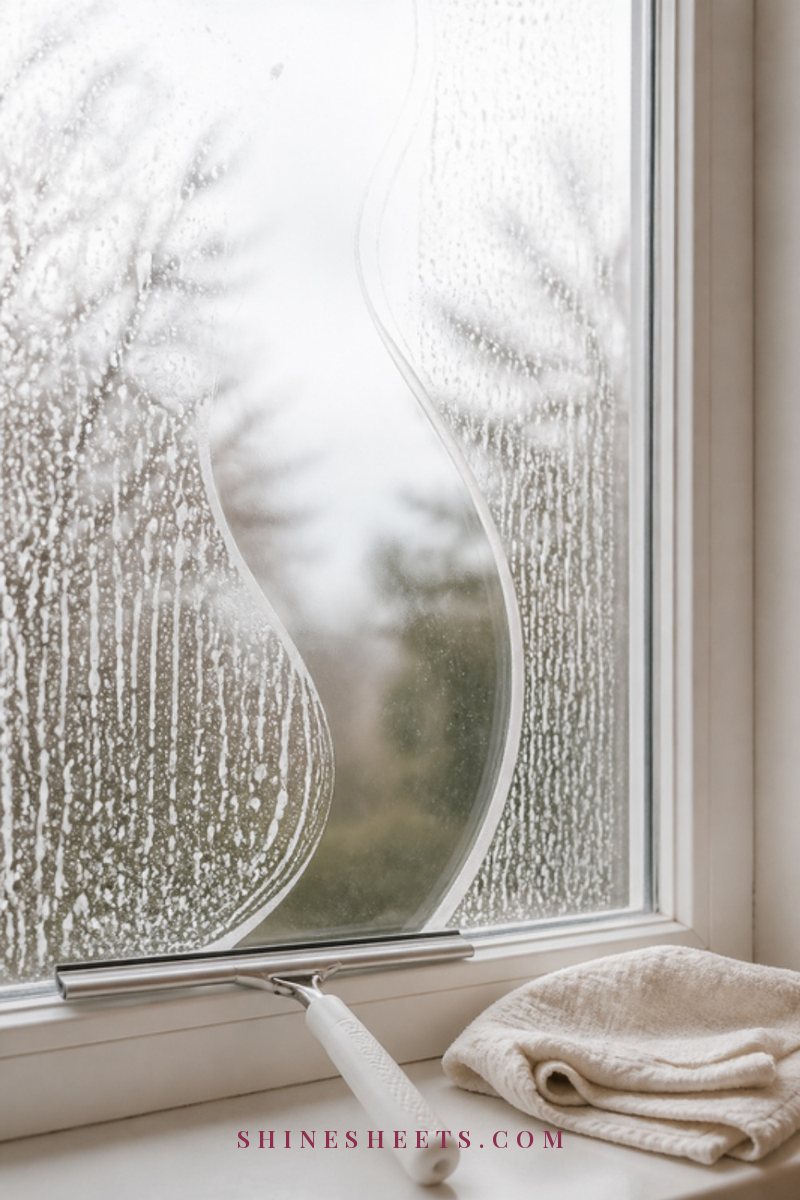
This is the technique that gives you streak-free glass. Professional window cleaners use the S-pattern (sometimes called the "fanning" method) because it keeps the blade on the glass the whole time:
- Dry the top inch of the squeegee blade with a cloth so it starts clean.
- Start in the top corner, tilt the squeegee slightly, and pull it across the top of the window.
- Without lifting it, turn the blade and sweep back across in the other direction, slightly lower, so the path forms a continuous S.
- Keep making S-curves down the window, overlapping each pass by about an inch.
- Wipe the blade with a dry cloth every few passes, or whenever you see a line.
If the S-pattern feels awkward at first, use straight strokes instead: pull the squeegee from top to bottom in vertical strips, overlapping each strip slightly and wiping the blade after every stroke. It's slower but just as effective.
Use firm, even pressure. Too light and you'll leave water behind, too hard and the blade can skip.
Step 4: Dry the Edges
A squeegee can't reach the very edges of the glass, so you'll have a thin line of water along the frame. Wrap a dry microfiber cloth around your finger and run it along all four edges. Then wipe the bottom of the frame and sill, where water collects.
Step 5: Buff Any Last Marks
Step back and look at the window from a few angles, ideally from the side, where streaks show up best. Buff any marks with a clean, dry microfiber glass cloth using small circles. If a streak won't disappear, a light mist of the vinegar spray and a quick buff usually fixes it.
How To Clean Window Frames, Tracks and Sills
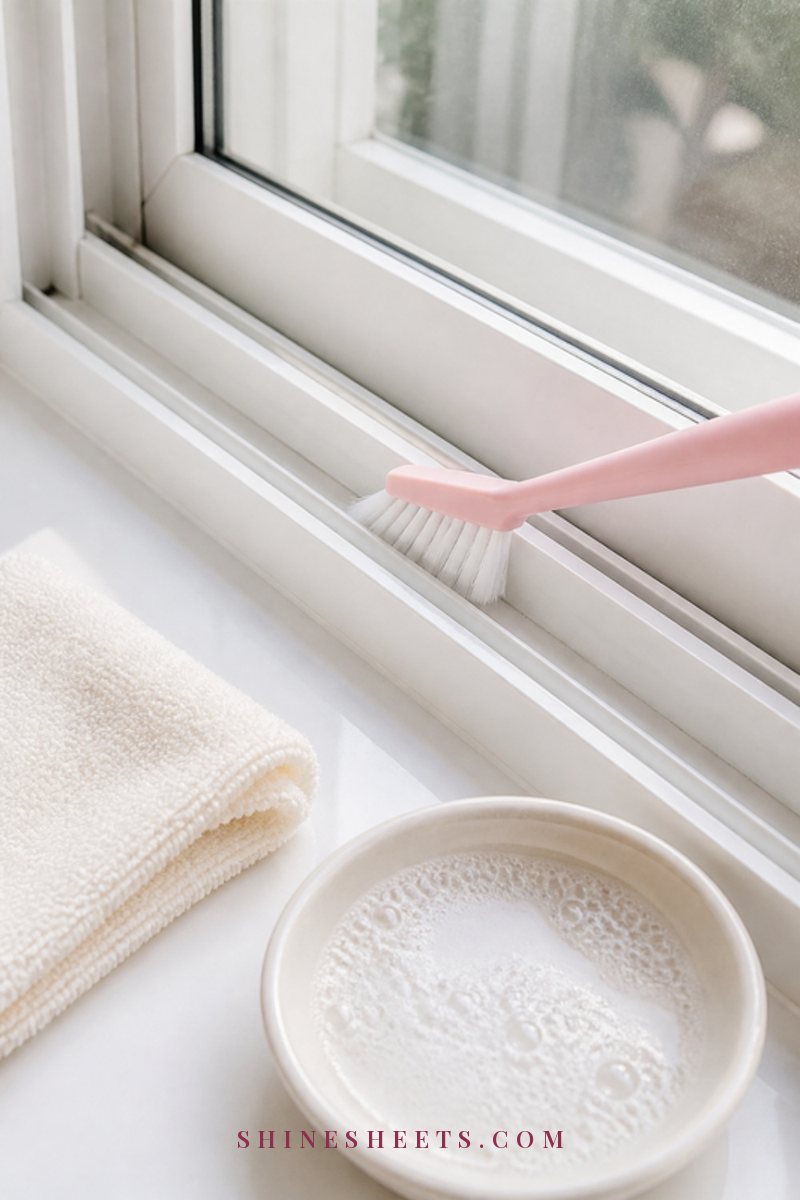
Clean glass looks dull next to a dusty frame, so give the frames and tracks a turn too. Window tracks in particular collect dust, dead bugs and grime that can make sliding windows hard to open. While I am down at that level, I give the rest of the room the same treatment with this quick way to clean baseboards without crawling on the floor.
- Vacuum the tracks with a crevice tool to remove loose dirt.
- Loosen the grime with a little soapy water. Let it sit for two to three minutes.
- Scrub the corners with a window track cleaning brush, which is narrow enough to fit into grooves and corners. Look for one with stiff bristles and an angled tip. An old toothbrush works too.
- Wipe it clean with a damp cloth wrapped around a butter knife or a flat tool to reach the bottom of the groove.
- Dry everything with a cloth so water doesn't sit in the track.
- Wipe the frames and sills with a damp cloth and mild soap, then dry them.
For wooden frames, use a barely damp cloth and dry immediately, since too much water can damage the finish. For painted frames, avoid harsh scrubbing that could lift the paint.
How To Clean Window Screens
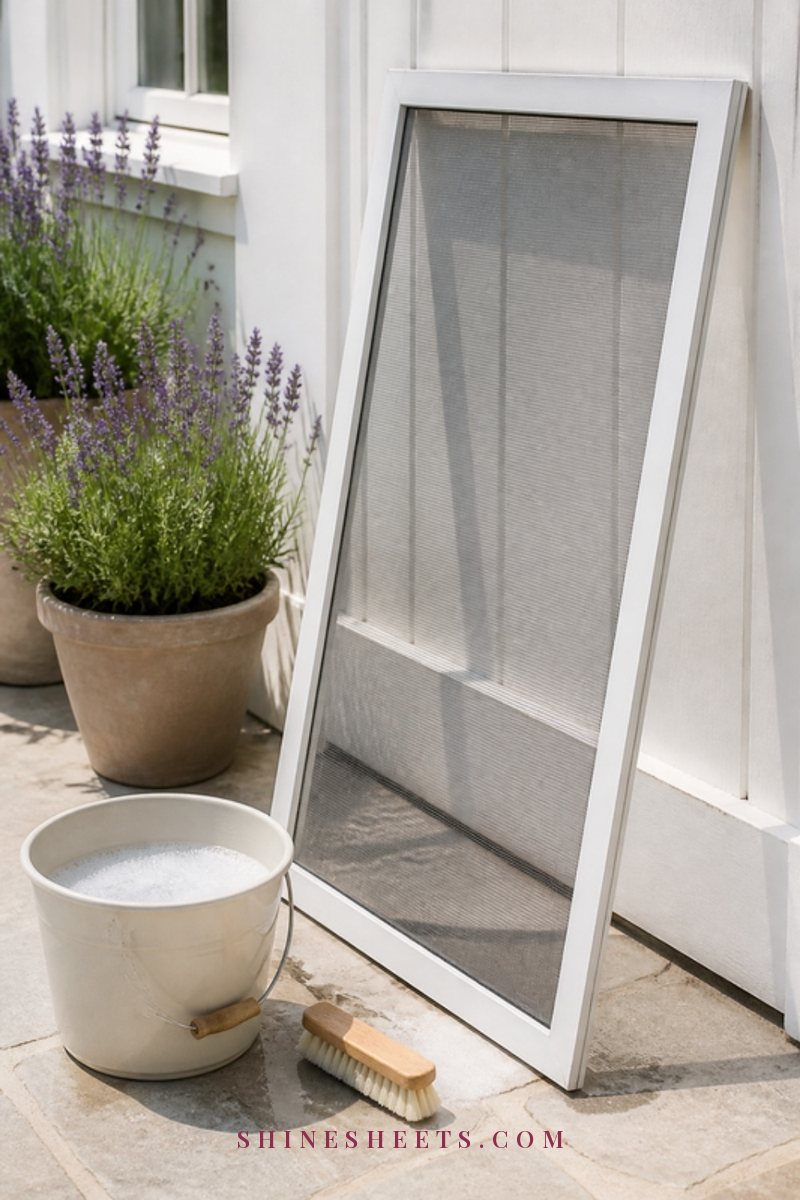
Dirty screens are one of the main reasons freshly cleaned windows look dull again quickly. Every time it rains or the wind blows, dust from the screen moves onto the glass.
- Remove the screens carefully and label where each one goes if they're different sizes.
- Vacuum both sides with a soft brush attachment to remove loose dust.
- Wash with soapy water outside or in a bathtub, using a soft brush and gentle strokes. Screens are delicate and can tear or stretch.
- Rinse with a gentle spray from a hose or shower head (never a pressure washer).
- Let them dry completely, leaning against a wall, before putting them back.
If removing screens isn't possible, vacuum them in place with a brush attachment and wipe them with a slightly damp microfiber cloth.
How To Clean Outside Windows Safely
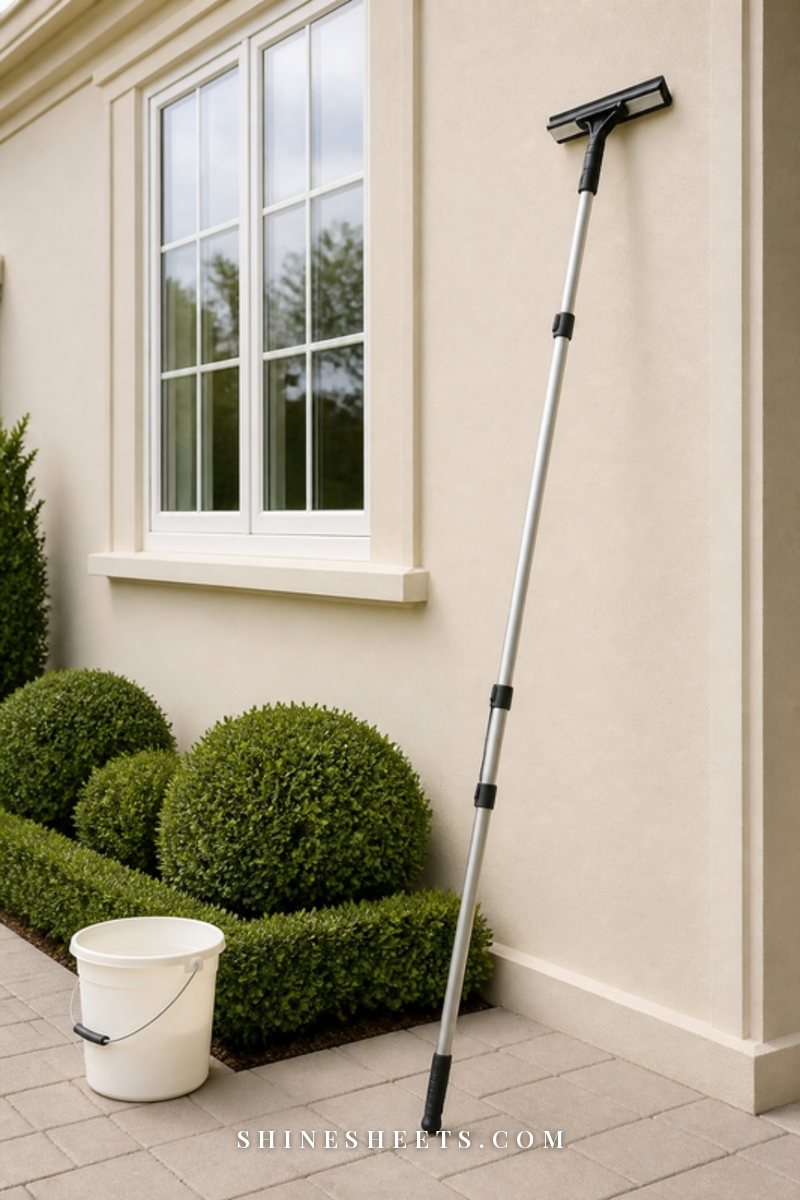
Outside windows are usually dirtier than inside ones, with dust, pollen, rain spots and bird droppings. The method is the same as inside, but safety comes first.
For ground-floor windows: rinse them first with a garden hose on a gentle spray to remove loose dirt, then follow the same wash, squeegee and dry steps.
For higher windows: an extension pole that attaches to your squeegee and scrubber lets you reach second-story windows while standing safely on the ground. Look for a lightweight, telescoping pole with a secure locking mechanism and a threaded tip that fits your tools.
A few safety rules that matter:
- Never use a ladder on uneven, soft or wet ground. If you must use one, make sure it's on a firm, level surface and that someone holds it.
- Don't lean out of upper-floor windows to reach the outside glass.
- Check for tilt-in windows. Many modern windows tilt inward so you can clean the outside from inside the room.
- Watch for power lines when using a long metal pole.
- Call a professional for high windows, skylights or anything that feels unsafe. Clean windows are never worth a fall.
How To Clean Different Types of Windows
The basic method works almost everywhere, but a few window types need small adjustments.
- Sliding glass doors: these get the most fingerprints and nose prints from pets. Clean the lower half more often, and vacuum the track before every full clean so the door keeps gliding smoothly.
- Divided or multi-pane windows: a large squeegee won't fit small panes. Use a small squeegee (6 to 8 inches) or skip it and work with a damp microfiber cloth followed by a dry one, pane by pane.
- Tinted or film-coated windows: avoid ammonia-based cleaners and anything abrasive, which can damage the film. Mild soapy water and a soft cloth are the safest choice. Check the manufacturer's care guidance if you have it.
- Older single-pane windows: the glass may be thinner, so use gentle pressure and avoid scraping. Watch for loose glazing putty around the edges and keep water away from it.
- Skylights: clean the inside with a microfiber pad on an extension pole while standing on the floor. Leave the outside to a professional unless you can reach it safely without climbing onto the roof.
- Glass shower doors and glass tabletops: the same streak-free technique works here too, especially the final buff with a dry microfiber glass cloth.
6 Window Cleaning Mistakes To Avoid
- Using paper towels. They leave lint behind and fall apart when wet. Microfiber is faster and leaves nothing behind.
- Spraying too much product. More cleaner doesn't mean cleaner glass. It means more film to wipe away.
- Cleaning in full sun. The solution dries before you can remove it, and streaks are almost guaranteed.
- Using a dirty cloth. A cloth that has already picked up grime simply moves it around. Switch to a fresh one as soon as it looks gray.
- Forgetting the frames and tracks. Dirt from the frame drips onto fresh glass, and grimy tracks make clean windows look neglected.
- Scraping with anything sharp or abrasive. Razor blades, steel wool and rough sponges can leave scratches that never come out. If you have stubborn residue, soak it with soapy water and be patient.
Streak Troubleshooting
Even with good technique, streaks sometimes happen. This table helps you work out what went wrong and how to fix it quickly.
| Streak type | Likely cause | Fix |
|---|---|---|
| Hazy film all over the glass | Too much soap or cleaner | Wipe with plain water or the vinegar spray, then squeegee and buff dry |
| Thin straight lines | Nicked or dirty squeegee blade | Wipe the blade more often, or replace the rubber |
| Water marks along the edges | Edges not dried after squeegeeing | Run a dry microfiber cloth along all four sides |
| Spotty, dried drops | Glass dried in direct sunlight | Rewash on a cloudy day or when that side is in shade |
| Lint and fluff on the glass | Paper towels or a fluffy cloth | Switch to a flat-weave microfiber glass cloth |
| Muddy smears | Dust not removed before washing | Dust and vacuum first, then rewash |
| Cloudy white spots that won't wipe away | Hard water mineral deposits | Spray the vinegar mix, let it sit a few minutes, then wipe and dry |
| Streaks that show only from one side | Marks are on the other side of the glass | Clean inside with vertical strokes and outside with horizontal ones so you know which side to fix |
How Often To Clean Windows
You don't need to clean every window every week. A realistic rhythm looks like this:
- Weekly or as needed: quick wipe of fingerprints and smudges on glass doors and windows at child or pet height.
- Monthly: wipe inside windows and sills in the rooms you use most, like the kitchen and living room.
- Twice a year: a full clean of all windows inside and out, plus screens and tracks. Spring and fall work well.
- After storms or pollen season: a quick rinse of outside glass.
If you'd like to fit windows into a bigger routine, my cleaning schedule shows how to spread jobs like this across the year so nothing feels overwhelming.
Small Habits That Keep Windows Clean Longer
- Wipe fingerprints off glass doors as soon as you notice them. Thirty seconds now saves a full clean later.
- Keep a microfiber glass cloth in a kitchen drawer for quick touch-ups.
- Clean the screens whenever you clean the outside glass.
- Wash your microfiber cloths without fabric softener, which coats the fibers and causes streaks.
- Vacuum window tracks once a month, so grime never builds up.
- Wash curtains or dust blinds on the same day you clean the windows, so dust doesn't fall onto fresh glass.
For more time-saving tricks like these around the whole home, my roundup of cleaning hacks that save time is a good next read.
Final Thoughts
Streak-free windows come down to a few simple choices: a cloudy day, very little soap, a clean squeegee, a dry microfiber cloth for the edges, and patience with one pane at a time. Once you've done it this way, you'll never go back to spraying and wiping with paper towels.
Start with the window you look through most, and enjoy how much brighter and lighter that room feels. Fresh, clear glass is one of the simplest ways to bring more daylight into your home.