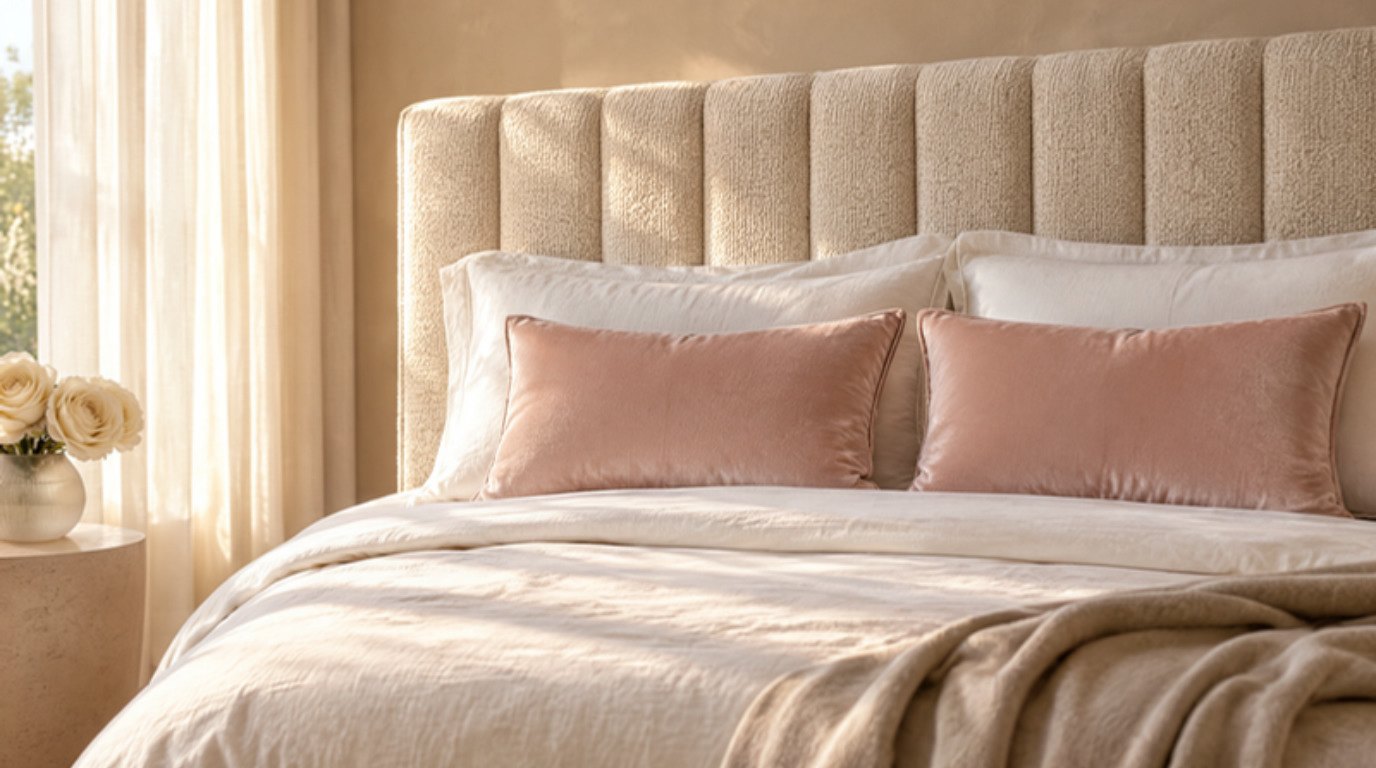
An upholstered headboard is basically a soft wall your head leans on every single night, so it collects more than most furniture: hair oils, night cream, a little sweat, dust and, if you share your bed with a pet, plenty of fur. The fabric usually looks fine from across the room, then one sunny morning you notice a faint gray halo right where your pillows sit.
The fix is gentler than you'd expect. Most headboards come back with a good vacuum, the right cleaner for the fabric and a lot of patience while it dries. The one step you can't skip is checking the care code, because the wrong liquid on the wrong fabric leaves water rings that are harder to remove than the original mark.
This guide shows you how to clean an upholstered headboard and bed frame step by step: how to read the fabric care code, a simple routine to keep it fresh, a deep clean for every code, how to treat 5 common stains, notes for velvet, linen and faux leather, how to clean wooden, metal and upholstered frames, and the prevention habits that make the next clean much easier.
It took me a while to accept that "dab, don't scrub" is the whole secret here. Once you slow down, this becomes a calm Saturday-morning job rather than a stressful one.
Why Upholstered Headboards Get Grubby

Headboards don't get dirty from one big spill. They get dirty slowly, from little things that happen every night:
- Hair oils and scalp products. Leaning back to read in the evening transfers natural oils, leave-in conditioner and dry shampoo straight onto the fabric.
- Skincare. Night creams, facial oils and body lotion are designed to stay put. On fabric, that means they hold dust and slowly darken.
- Dust. Textured fabrics like bouclé, velvet and linen trap airborne dust in their weave, especially along the top edge and in tufting or buttons.
- Pets. Fur, dander and the occasional paw print or drool mark all end up on the lower part of the headboard.
- Sweat. Warm nights leave a slight yellowish tint over time, often in the same spot your head rests.
None of this means your bedroom is dirty. It just means the headboard does its job, and it needs a little care every week or two to keep up.
Read the Fabric Care Code First

Before any cleaner touches your headboard, look for the care tag. It's usually on the back, on the bottom edge, under the cushion area or along one of the legs. Some manufacturers print it in the product manual or on their website instead, so if you can't find a tag, look up the model.
The code is one letter (or two) that tells you what kind of cleaner the fabric can handle. Getting this right is the difference between a fresh headboard and a stubborn tide mark.
If there's no tag and you can't find the information anywhere, treat the fabric as the most delicate type: start with dry methods, and only try a tiny amount of water on a hidden spot once you've tested it and let it dry fully.
Care Code Table: What Each Code Means
This is the table I'd screenshot and keep. Find your code in the first column and follow that row all the way across.
| Care code | What it means | Safe cleaner | Never use |
|---|---|---|---|
| W | Water-based cleaning is safe | Mild soapy water, water-based upholstery cleaner, upholstery foam | Solvent cleaners, bleach, soaking the fabric |
| S | Solvent-based cleaners only, no water | Dedicated solvent upholstery cleaner (dry-cleaning solvent), used with good ventilation | Water, soapy solutions, steam, foam cleaners that contain water |
| WS (or SW) | Either water-based or solvent-based cleaners are fine | Mild soapy water for most marks, solvent cleaner for oily or stubborn ones | Harsh chemicals, bleach, over-wetting |
| X | Vacuum or brush only, no liquid cleaners of any kind | Vacuum, soft brush, lint roller, dry absorbent powder on oil marks | Any water, any solvent, any spray, steam |
Whatever the code, test every cleaner on a hidden spot first (the back or the bottom edge), let it dry completely, and check for color change, rings or texture change before you go near the front.
What You'll Need
You don't need a full cleaning cupboard for this. Here's a simple kit that covers every code:
- A vacuum with an upholstery attachment. A white handheld vacuum with an upholstery tool is the easiest to maneuver around tufting and the top edge, and it lives happily on a closet shelf.
- A soft brush. Look for a soft-bristle upholstery brush with a comfortable wooden handle. It lifts dust from textured weaves and restores the nap on velvet after cleaning.
- Microfiber cloths. A set of white microfiber cloths lets you see exactly how much dirt you're lifting and won't leave colored dye behind on pale fabric.
- A lint roller. A cream lint roller on your nightstand is the quickest way to grab hair and fur between cleans.
- The right cleaner for your code. For W and WS fabric, a few drops of clear, dye-free dish soap in lukewarm water, or a gentle upholstery cleaner labeled for your fabric type. For S fabric, a dedicated solvent upholstery cleaner.
- A spray bottle and a small bowl. A white glass spray bottle is handy for misting your cloth (never the fabric directly).
- Gloves. Especially for solvent cleaners.
Weekly and Monthly Routine Care

Routine care is the reason you'll rarely need a deep clean. Five minutes a week keeps dust from settling into the weave, where it's much harder to remove.
Every Week
- Vacuum the headboard. Use the upholstery brush on low suction. Work from top to bottom in slow, overlapping strokes, paying extra attention to the top edge, the seams and any tufting or buttons. About 3–5 minutes.
- Lint roll the pillow zone. Roll the area where your head and pillows rest, plus the lower section if you have pets. About 1 minute.
- Keep a pillow buffer. Prop a decorative pillow or a euro sham between your head and the headboard when you sit up to read. It takes the oils instead of the fabric, and pillowcases go in the washer.
Every Month
- Brush the fabric. A soft brush lifts flattened fibers and loosens dust before you vacuum. On velvet, brush in the direction of the nap.
- Spot check. Look at the headboard in daylight and treat any small marks while they're fresh, using the method for your code below.
- Vacuum behind and around it. Pull the bed out a little if you can and vacuum the back of the headboard and the wall behind it. Dust bunnies love that gap.
If dust seems to come back faster than you can vacuum it away, my guide on how to reduce dust at home has habits that help the whole bedroom.
How To Deep Clean an Upholstered Headboard by Care Code
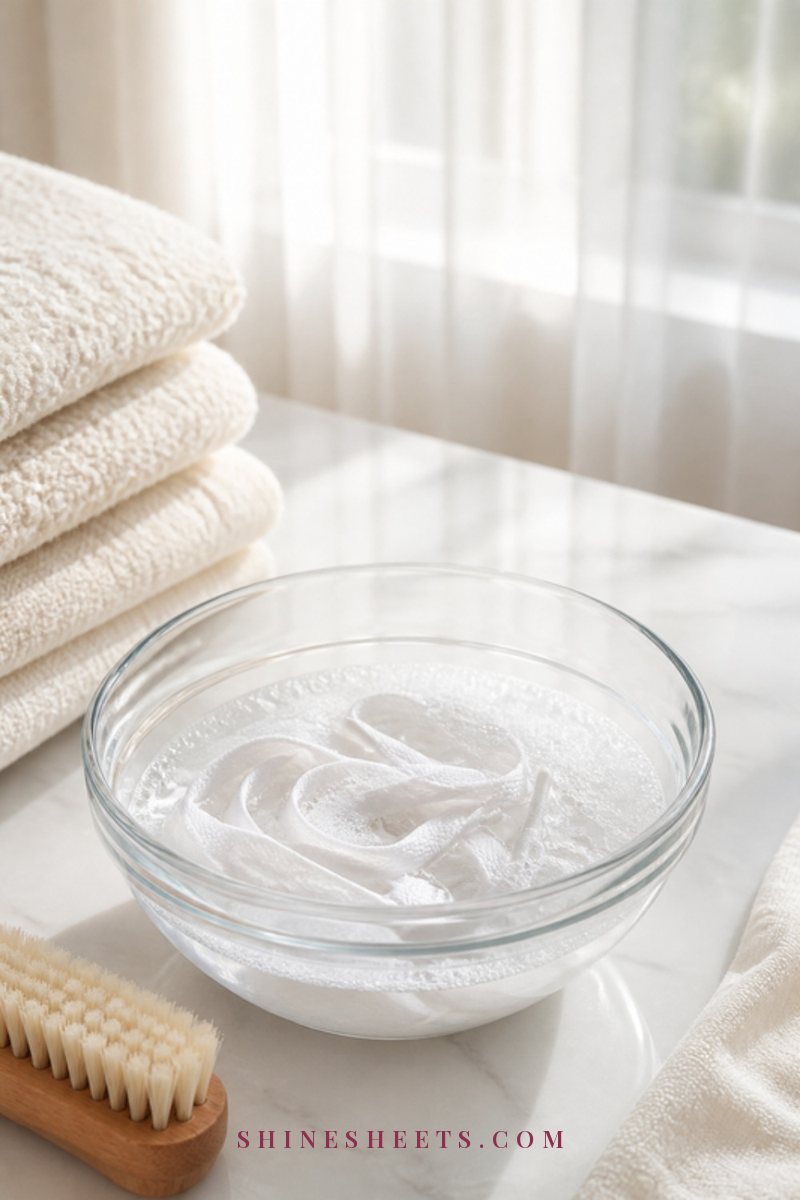
A deep clean every three to six months (or whenever you notice that halo) brings the fabric back to life. Always vacuum thoroughly first, so you're not turning dust into mud.
W and WS Codes: The Gentle Soapy Method
- Mix the solution. Stir about 1/4 teaspoon of clear, dye-free dish soap into 2 cups of lukewarm water. If your tap water is hard, distilled water helps prevent mineral rings on pale fabric.
- Test a hidden spot. Dab a little on the back or bottom edge. Let it dry completely (at least an hour) and check for color loss or rings.
- Dampen a cloth, not the fabric. Dip a microfiber cloth and wring it out until it's barely damp. Never pour or spray directly onto the headboard.
- Work top to bottom. Dab the fabric in small sections, about the size of your hand, starting at the top edge so drips land on areas you haven't cleaned yet.
- Dab, never scrub. Press and lift. Scrubbing pushes dirt deeper and can fuzz or pill the fabric.
- Rinse. Go over each section with a second cloth dampened in plain water to lift any soap residue. Leftover soap attracts dirt.
- Blot dry. Press a dry microfiber cloth firmly over each area to pull out as much moisture as possible.
- Feather the edges. To avoid water rings, lightly dampen the area around a cleaned spot with a nearly dry cloth and blend outward, so there's no hard line between wet and dry.
- Let it air dry fully. Open a window or run a fan. Most headboards need 4–8 hours, thicker padding can take overnight. Don't push pillows back against it until it's completely dry.
Upholstery foam cleaners also work well on W and WS fabric. Follow the label: usually spray onto the fabric or cloth, leave for the stated time (often 5–10 minutes), then wipe and vacuum once dry.
S Code: Solvent Cleaner Only
- Ventilate. Open windows and keep the room aired out. Solvent fumes are strong, and they're flammable, so no candles or open flames nearby.
- Put on gloves. Solvent cleaners can dry out your skin.
- Test a hidden spot. Apply a tiny amount to the back or bottom edge and let it dry completely.
- Apply to a clean white cloth. Use a small amount of the dedicated solvent upholstery cleaner, following the product's directions.
- Dab the mark gently from the outside in, so you don't spread it.
- Let it evaporate. Solvent dries much faster than water, usually within 15–30 minutes, but keep the room ventilated until the smell is gone.
- Brush lightly once dry to restore the texture.
Some makers of S-code microfiber allow isopropyl alcohol as a solvent. Only use it if your manufacturer says so, and always test first.
X Code: Dry Methods Only
X-code fabrics can't take any liquid, so your tools are suction, a brush and patience.
- Vacuum slowly with the upholstery brush, two passes in different directions.
- Brush with a soft dry brush to loosen embedded dust, then vacuum again.
- Use a lint roller for hair and fur.
- For a fresh oily mark, sprinkle a thin layer of cornstarch, leave it for 15–30 minutes to absorb the oil, then brush off and vacuum.
- For anything that won't lift, call a professional upholstery cleaner. It's worth it for an X-code piece you love.
5 Common Headboard Stains and How To Treat Them

Act fast when you can. Fresh marks lift far more easily than old ones. These methods assume you've already checked your care code and tested your cleaner on a hidden spot.
1. Hair and Skin Oil Marks
That gray halo is mostly oil holding onto dust. On W and WS fabric, sprinkle cornstarch over the area, leave it 20–30 minutes, vacuum it away, then use the gentle soapy method. Oil can take two or three rounds, letting the fabric dry between each. On S fabric, use your solvent cleaner, which is often better at breaking down oils. On X fabric, stick to the cornstarch and vacuum.
2. Makeup
Foundation, concealer and lipstick are usually oil-based. Gently scrape off any excess with the edge of a spoon or a dull card first. On W and WS fabric, dab with the soapy solution; a second drop of dish soap in your bowl helps break down the oils. Rinse and blot. For S fabric, dab with solvent cleaner from the outside in. Never rub, or the pigment spreads.
3. Sweat
Sweat marks are yellowish and often build up slowly. On W and WS fabric, the soapy method works well. For stubborn marks, an upholstery cleaner with enzymes (check that it's labeled safe for your fabric) can be left on for the time stated on the label, often 10–15 minutes, before rinsing and blotting. S and X fabric: solvent cleaner or professional cleaning.
4. Coffee or Tea
Blot immediately with a dry cloth, pressing firmly to soak up as much as possible. On W and WS fabric, dab with cool plain water (never hot, which can set the stain), then the soapy solution, then rinse and blot. If there was milk in it, follow up with an enzyme upholstery cleaner. On S fabric, blot dry and use solvent cleaner. On X fabric, blot only and call a professional if a mark remains.
5. Pet Marks
Muddy paw prints are easiest once dry: let the mud harden, brush it off and vacuum. For drool or other organic marks on W and WS fabric, use an enzyme cleaner made for upholstery, leave it for the label's dwell time (often 10–15 minutes), then blot and rinse. Enzyme cleaners also help with lingering smells. For fur, a lint roller and the vacuum do most of the work, and my guide on how to remove pet hair from couches, rugs and bedding has extra tricks that work on headboards too.
Fabric Notes: Velvet, Linen and Faux Leather

Even within the same care code, different fabrics behave differently. A few specifics:
- Velvet. Usually W or S, so check. Vacuum and brush in the direction of the nap. Use as little moisture as possible, because velvet shows water marks easily. After cleaning, brush the nap gently while slightly damp so it dries evenly. Don't use heat to speed it up; it can crush the pile.
- Linen and linen blends. Often W or WS. Linen can shrink or pucker if over-wet, so a barely damp cloth is key. Light-colored linen shows water rings, so feathering the edges matters even more.
- Faux leather. The easiest of the three. Wipe with a soft cloth dampened with a drop of mild soap in water, then wipe with plain water and dry immediately. Avoid alcohol, solvents and abrasive pads, which can crack or dull the surface. A faux-leather conditioner every few months keeps it supple, if the manufacturer recommends one.
- Bouclé. Its loops trap dust and fur. Vacuum gently on low suction (high suction can pull the loops), and use a lint roller rather than brushing hard.
If you have a matching sofa or armchair, the same principles apply, and my guide on how to clean a couch covers bigger upholstered pieces in more detail.
How To Clean the Bed Frame

Once the headboard is fresh, the rest of the frame takes about 20 minutes more. It's a good moment to strip the bed and wash your sheets too.
Wooden Frames
Dust with a dry microfiber cloth first. Then wipe with a cloth barely dampened in water with a drop of mild soap, following the grain, and dry straight away. Avoid soaking the wood or using vinegar, which can dull some finishes. Check for wobbly joints and tighten any loose screws while you're there.
Metal Frames
Wipe with a damp microfiber cloth and mild soap, then dry thoroughly to prevent rust spots. A soft brush helps clean around decorative details and joints. Avoid abrasive pads that scratch painted or brass finishes.
Upholstered Rails and Side Panels
Treat them exactly like the headboard: vacuum with the upholstery brush, check the care code, and spot clean using the right method. Rails near the floor collect more dust and pet hair, so give them an extra pass.
Slats and Under the Bed
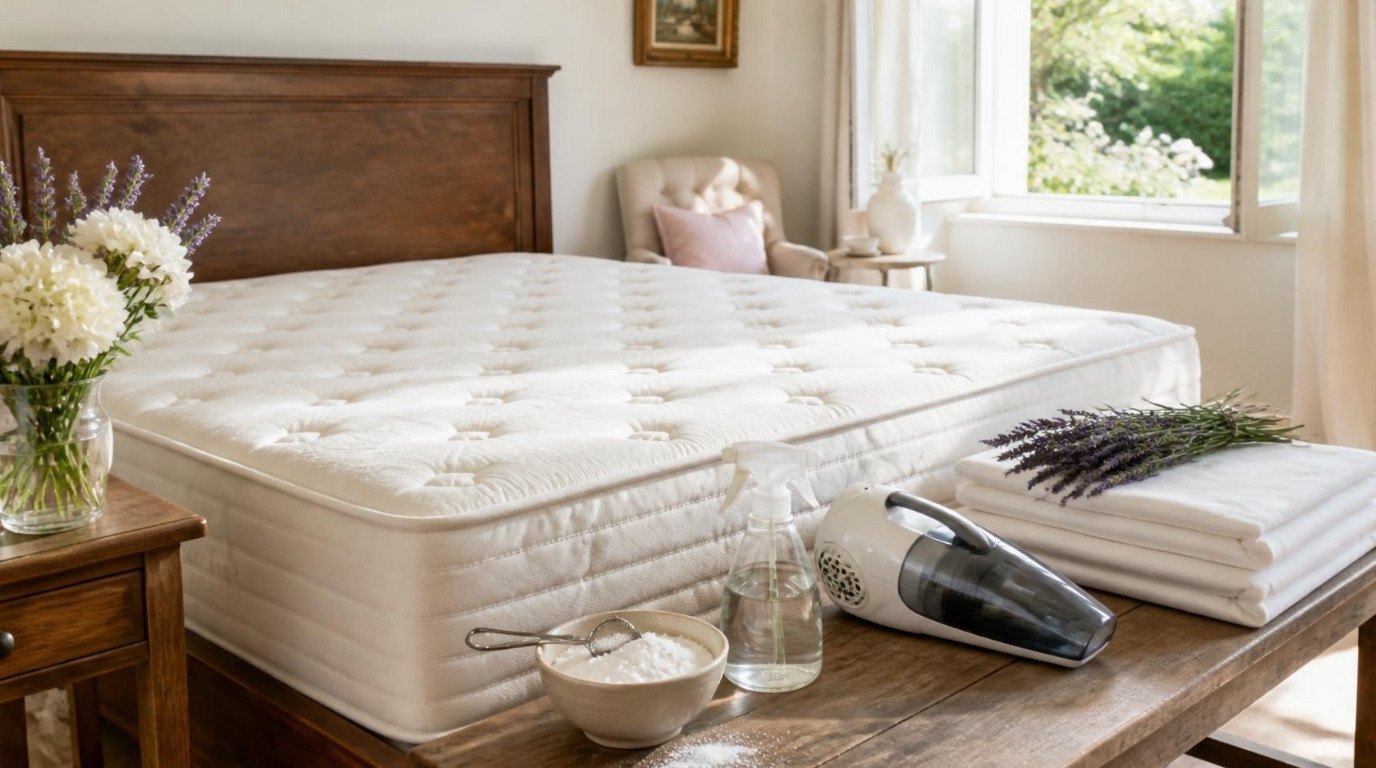
Lift the mattress (with help if it's heavy) and vacuum the slats and the base. Wipe the slats with a barely damp cloth and let them dry before the mattress goes back. Then vacuum the floor under the bed, where dust gathers fast. This is also the perfect time to freshen the mattress itself, and my guide on how to clean your mattress walks you through it step by step.
If you're on a cleaning roll, my plan for how to deep clean your bedroom covers everything else, from curtains to the closet floor.
Safety Notes
- Never mix cleaners. Bleach mixed with ammonia or vinegar releases toxic fumes. Use one product at a time and rinse between them.
- Skip bleach entirely on upholstered headboards. It can discolor and weaken fabric fibers.
- Wear gloves for solvent and enzyme cleaners.
- Open windows or run a fan while cleaning and drying, especially with solvents. Keep candles and open flames away from solvent cleaners.
- Always test first on a hidden spot and let it dry fully before judging the result.
- Let it dry completely before you use the bed or push pillows back. Damp padding can develop a musty smell.
- Keep pets out of the room until everything is dry and aired out.
- Check the manufacturer's instructions for anything removable (some headboards have zip-off covers that can be washed or dry cleaned).
Prevention Habits for a Fresher Headboard

A few small habits will stretch the time between deep cleans from months to a year or more:
- Use a pillow buffer. Keep a euro sham or reading pillow between your head and the fabric when you sit up in bed.
- Let skincare sink in. Give night cream and body lotion 10–15 minutes before you lean back against the headboard.
- Tie your hair up at night if you use oils or leave-in treatments, or wear a silk scarf.
- Lint roll twice a week. Keep the roller in your nightstand drawer, so it takes 30 seconds.
- Vacuum weekly with the upholstery brush.
- Treat marks the same day. A fresh mark is a 2-minute job; an old one can take three rounds.
- Consider a fabric protector on W or WS fabric after a deep clean, if the manufacturer allows it. Test it on a hidden spot first.
- Keep pets on their own blanket. A washable throw at the head of the bed protects the lower headboard from fur and paw marks.
Final Thoughts
An upholstered headboard looks soft and luxurious for a reason, and with a little care it can stay that way for years. Check your care code, vacuum it weekly, keep a pillow between you and the fabric, and dab gently whenever a mark appears.
The first deep clean is the longest. After that, it becomes one of those small, satisfying jobs that makes your whole bedroom feel fresher, calmer and ready for a good night's sleep.