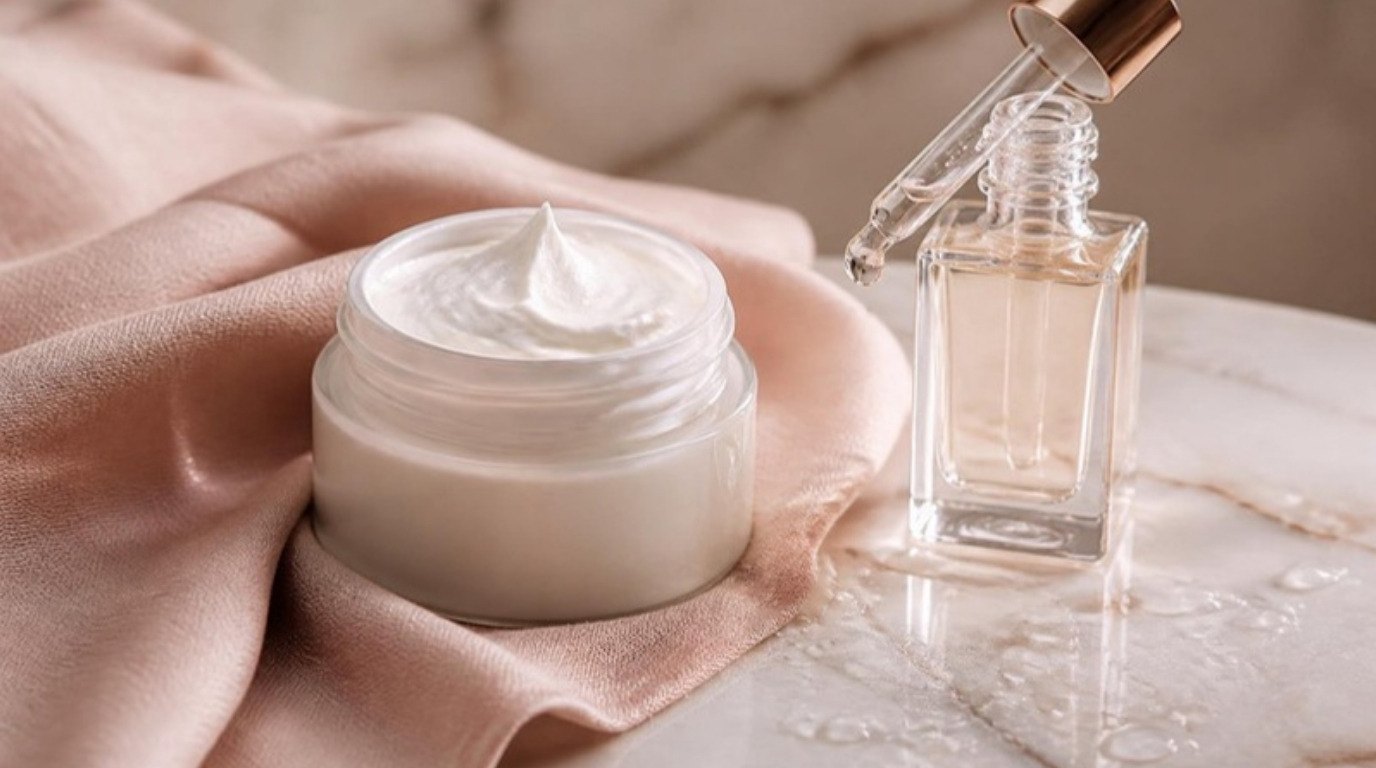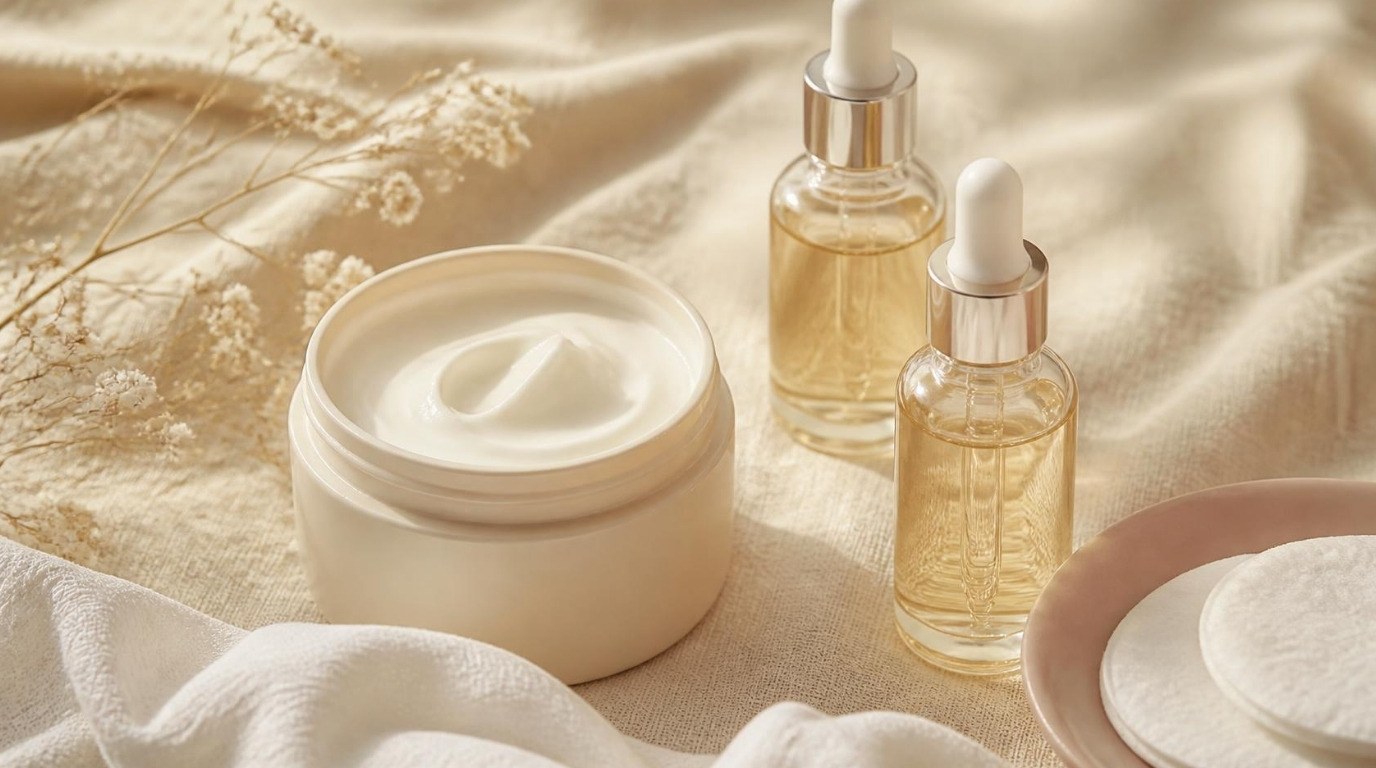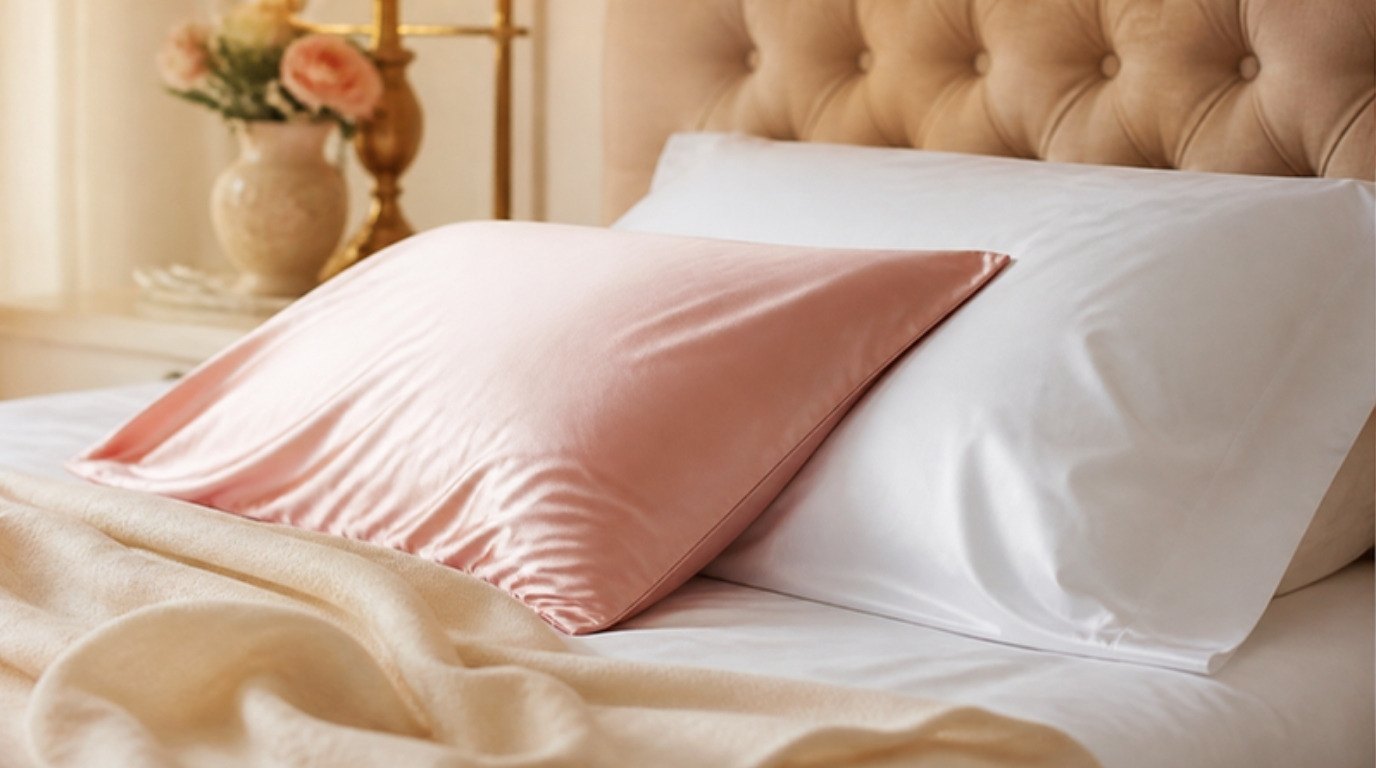
Your pillowcase is the one piece of fabric your face rests on for seven or eight hours every single night. That makes it part of your skincare routine whether you planned it or not. You can double cleanse, pick the gentlest serum and wear sunscreen daily, and still wake up with little bumps along your cheek if the fabric under your face has been collecting oil, sweat and leftover product for a week and a half.
The good news is that this is one of the easiest fixes in all of beauty. No new products, no complicated steps, just a fresher surface and a small rhythm that makes changing it automatic. It took me a while to admit how often my "clean enough" pillowcase was really on day nine.
In this guide I'll walk you through how often to change your pillowcase for clear skin, what actually builds up on it overnight, a simple rotation system, how to wash cotton and silk properly, which fabric is kindest to skin and hair, and a change schedule table you can screenshot and keep.
The Short Answer: How Often To Change Your Pillowcase

If your skin is breakout-prone, change your pillowcase every two to three nights. If your skin is generally calm, once a week is the minimum for everyone. That's it. Everything else in this article is just about making that rhythm easy and choosing the right fabric and wash.
Here's how I think about it. Your sheets get changed weekly because your whole body touches them. Your pillowcase deserves more attention because your face, hair and hands touch it directly, and your face is where most of us notice congestion first. A fresh pillowcase twice a week doesn't mean twice the laundry, either. Pillowcases are tiny, so they slip into any load you're already running.
A few situations call for an even quicker swap:
- You're actively breaking out on your cheeks, jawline or one side of your face: every other night until it settles.
- You've been sick with a cold or anything contagious: a fresh one the morning you feel better.
- You sleep with wet hair or heavy hair oils: every two nights.
- It's hot and humid and you wake up warm: every two to three nights.
- You're using a new active ingredient like a retinoid or an acid and your skin is a little reactive: every two to three nights, so you're not pressing irritated skin into old product.
What Builds Up on Your Pillowcase Overnight

It helps to know what's actually there, because once you picture it, changing the pillowcase stops feeling optional. Every night, your pillowcase quietly collects:
- Natural oil (sebum) from your face and scalp. If you have a shiny T-zone like mine, this alone adds up fast.
- Sweat, even in winter when the heating is on and the duvet is heavy.
- Skincare: night cream, facial oil, sleeping masks, lip balm and spot treatments all transfer to the fabric.
- Hair products: leave-in conditioner, hair oil, dry shampoo, styling cream and anything with silicones.
- Dead skin cells, which your skin sheds constantly.
- Saliva (no shame, everyone drools sometimes).
- Dust and dust mites from the room and the pillow underneath.
- Makeup residue on the nights you were too tired to wash it all off.
None of this is cause for panic. Your skin handles a certain amount of everyday life just fine. The issue is the build-up. Night one is mostly clean. By night six or seven, you're pressing your face into a thin layer of oil and product mixed with dead skin, and for congestion-prone skin that can mean clogged pores and irritation along the side you sleep on. If your breakouts tend to cluster on your forehead and hairline, hair products on the pillow are often part of the story, and my guide on how to get rid of forehead acne goes deeper into that.
Pillowcase Change Schedule by Skin Type and Season
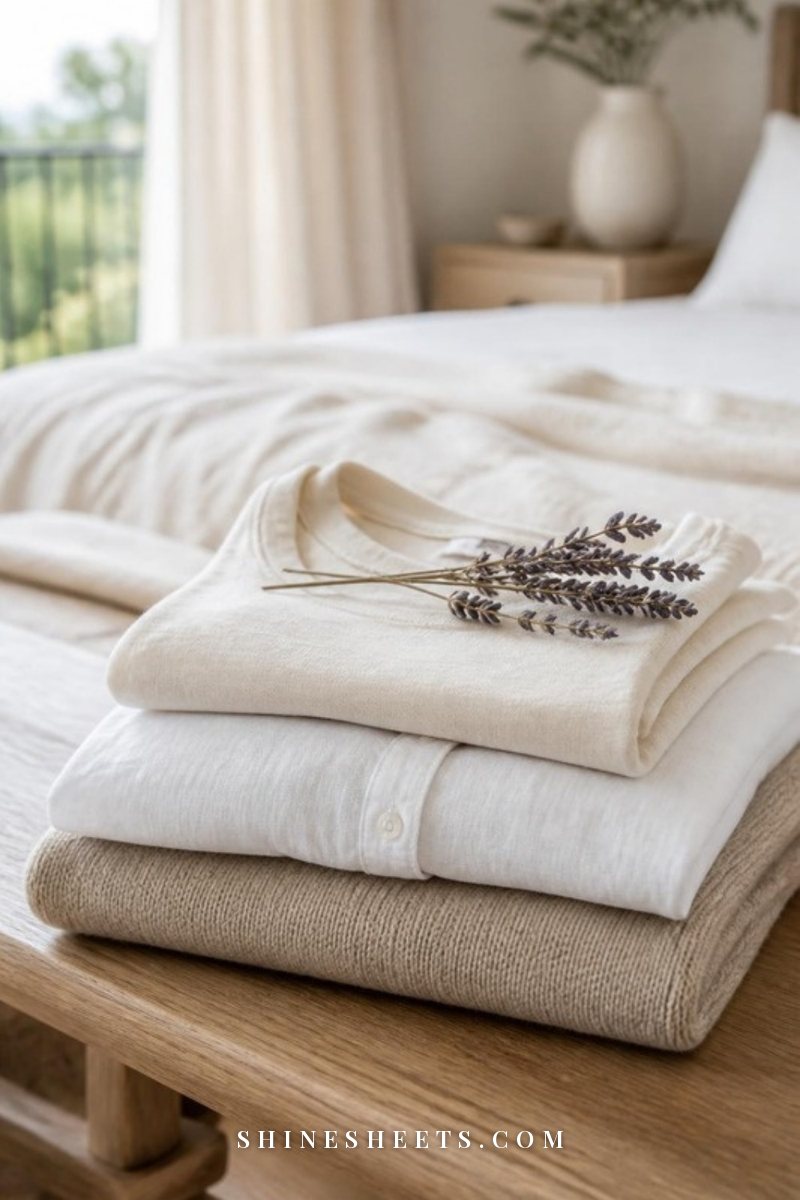
This is the heart of the guide: a simple table that tells you how often to swap based on your skin and the season. Find your row and follow the column for the time of year. Screenshot it and it will save you from second-guessing.
| Skin type or situation | Cool months | Warm, humid months | Extra tip |
|---|---|---|---|
| Acne-prone or breaking out | Every 2 nights | Every night to every 2 nights | Flip the pillowcase on night two |
| Oily or combination (shiny T-zone) | Every 2–3 nights | Every 2 nights | Blot or cleanse well before bed |
| Sensitive or reactive | Every 3 nights | Every 2–3 nights | Fragrance-free detergent only |
| Dry or mature | Every 3–4 nights | Every 3 nights | Let rich night creams absorb 10 minutes first |
| Normal, calm skin | Once a week | Every 3–4 nights | Change sooner after a sweaty night |
| Heavy hair oils or sleeping with wet hair | Every 2 nights | Every 2 nights | Wrap hair in a soft scrunchie or towel |
| After a cold or illness | Same day you feel better | Same day you feel better | Wash bedding on the warmest safe setting |
If you're combination like me, the middle row is where most of us land. Two to three nights in winter, two nights in summer, and a fresh one the moment you notice a breakout starting on your "sleep side."
Signs It's Time for a Fresh Pillowcase
Even with a schedule, life happens. These are the signs your pillowcase is ready to go into the laundry, no matter what day it is:
- It smells faintly of hair product, oil or "sleep" when you lie down.
- You can see a slight shadow or yellowish tint where your face rests.
- The fabric feels a little stiff, waxy or less soft than usual.
- You see makeup marks, mascara smudges or self-tanner transfer.
- You notice new bumps on the cheek you sleep on, but not on the other.
- Your hair feels greasier faster than it normally does.
- You've had a sweaty night, a fever or a night of crying (it happens to all of us).
The "one-sided breakout" sign is the most telling. If one cheek is consistently more congested than the other, and that's the side you sleep on, your pillowcase (and your phone, more on that later) is the first place to look.
A Simple Rotation System That Makes It Easy
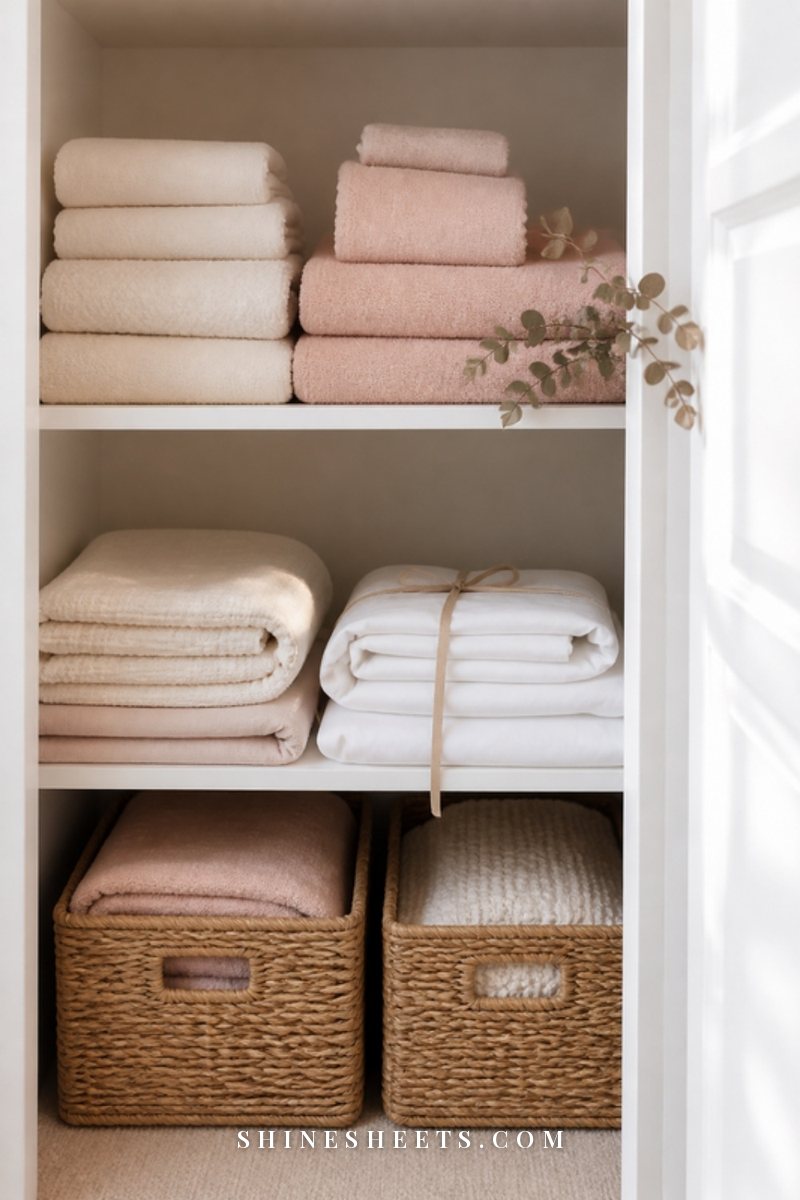
The reason most of us stretch a pillowcase to ten days isn't laziness. It's friction. The clean ones are buried in a closet, the laundry isn't done, and changing it feels like a whole task. The fix is a rotation that removes every bit of that friction.
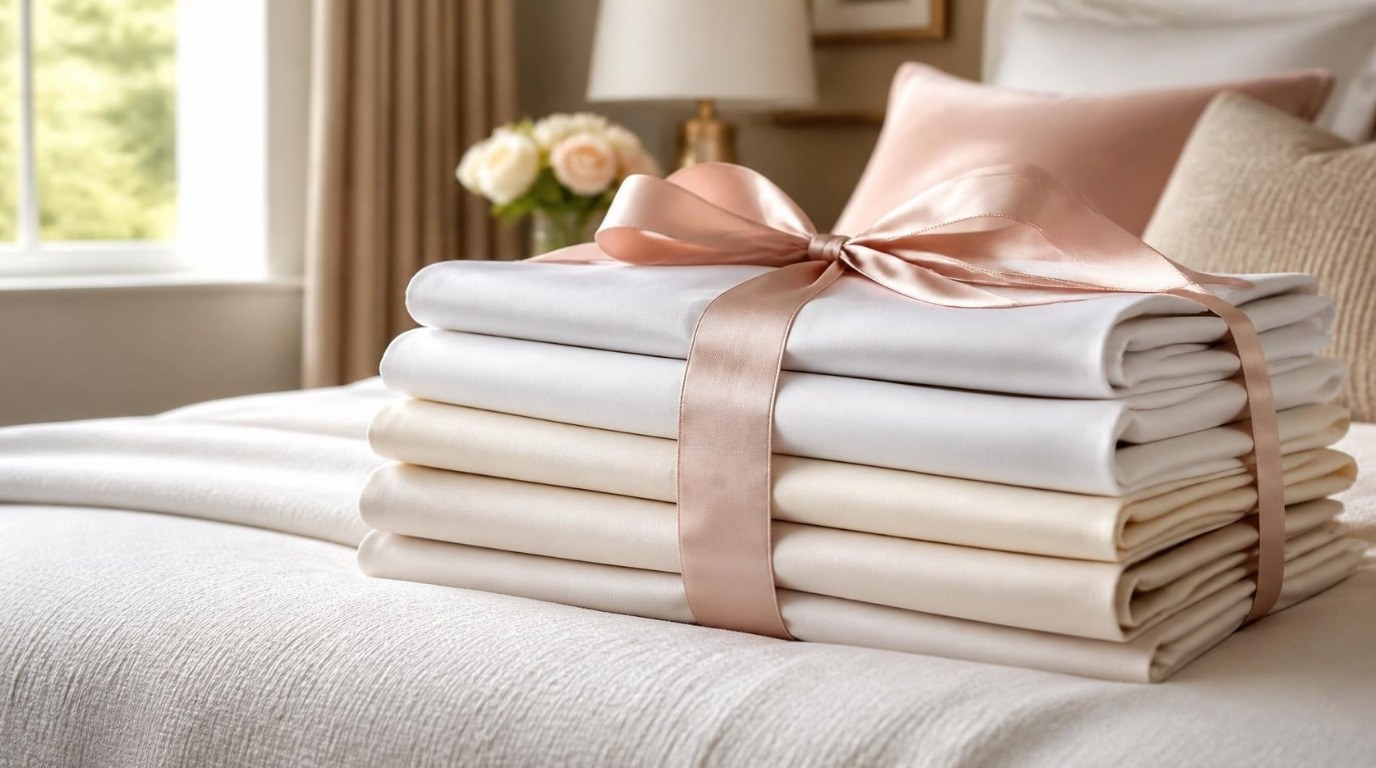
Here's the system I recommend: keep a small stack of clean pillowcases right in your bedroom, ideally in a soft woven storage basket on a shelf or under the nightstand. When it's swap night, you reach over, change it in thirty seconds, and drop the used one straight into your laundry basket. No hunting, no excuses.
The Flip-Side Trick
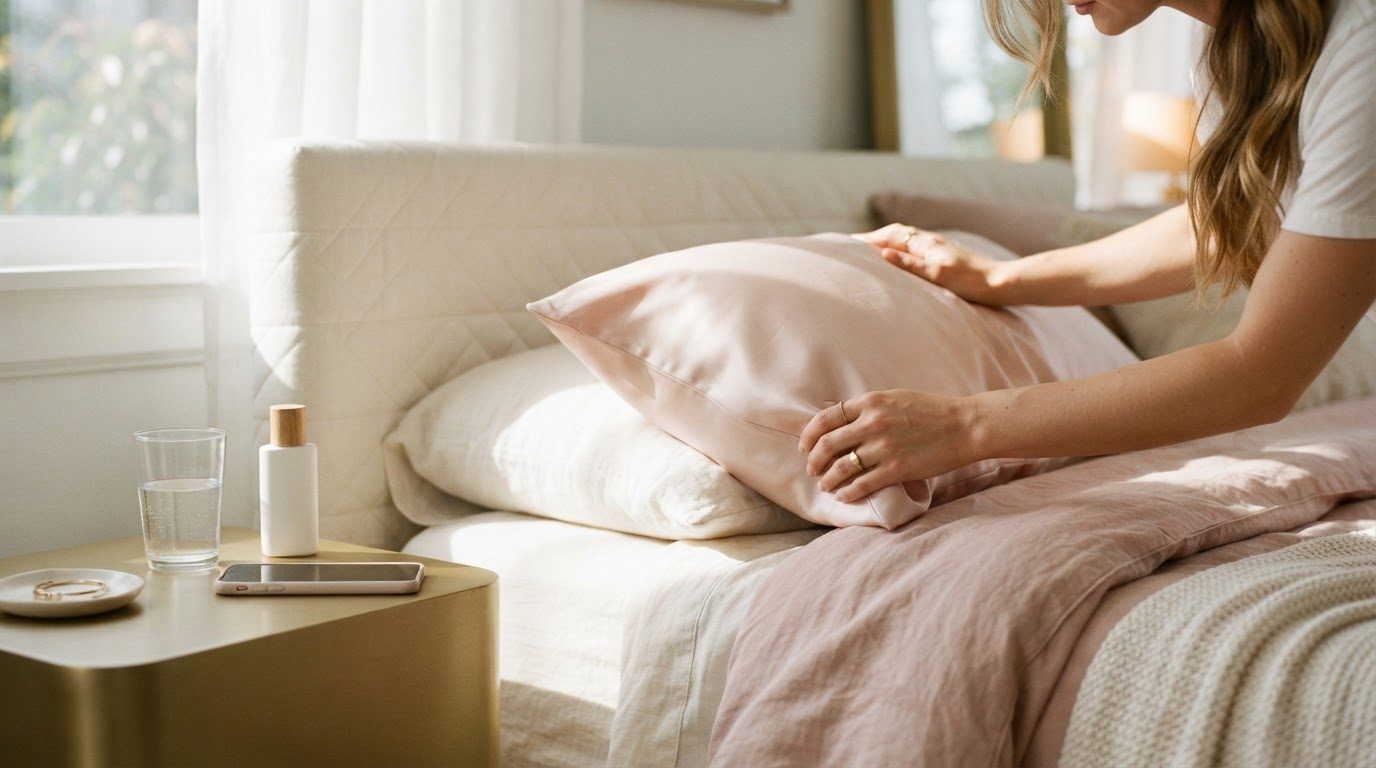
This is the simplest way to stretch one pillowcase into two clean nights. On night one, sleep on side A. On night two, flip the pillow over so you're on the fresh side B. On night three, change it. If you're breakout-prone, this alone gets you to a clean surface every single night with half the laundry.
A small detail that makes it work: put the pillowcase on so the opening always faces the same direction, then flip the pillow top to bottom. That way you never lose track of which side you've already slept on.
How Many Pillowcases You Actually Need
For a twice-a-week change, plan on four to six pillowcases per pillow you sleep on. That covers a full week plus one in the wash and one spare for a sick day or a sweaty night. A white cotton pillowcase set is the easiest way to get there without spending much, and white makes it easy to see when a case is ready for the wash. Look for 100% cotton, a percale or sateen weave and an envelope closure so the pillow doesn't peek out.
If you'd like a silk one for your main pillow (more on that below), you can mix: one or two silk cases for your face, and cotton spares for busy weeks.
How To Wash Pillowcases for Clear Skin

Changing the pillowcase is only half of it. How you wash it matters too, because heavily fragranced detergent and fabric softener can leave residue on the fabric that sits against your face all night. Always check the care label first, since it trumps any general advice, including mine.
The one product swap I'd make for skin's sake: a fragrance-free laundry detergent made for sensitive skin. Look for "free of dyes and perfumes" on the bottle, and use the amount the cap suggests (more detergent doesn't mean cleaner, it means more residue). If you'd like your whole laundry rhythm to feel calmer, my weekly laundry routine shows how to fold pillowcases into a system that never piles up.
Cotton and Linen
- Temperature: warm or hot, whatever the label allows. Hot water (usually around 60°C / 140°F on many machines) is great for white cotton; colored cotton does well on warm.
- Cycle: normal cycle, with similar colors. Wash pillowcases with your sheets or towels to fill a load.
- Skip fabric softener: it coats fibers. If you want softness, add half a cup of white vinegar to the rinse compartment instead (never in the same compartment as bleach).
- Dry: tumble on medium or line dry in the sun. Make sure they're completely dry before stacking, or they'll smell musty.
- Turn inside out if the pillowcase has an embroidered edge or delicate trim.
For the full approach to bedding, including how to keep white sheets bright, my guide on how to wash sheets and duvets covers temperatures and drying in more detail.
Silk and Satin

Silk needs a softer touch, and the care label always wins here. Most mulberry silk pillowcases do well with one of these two methods:
- Hand wash (gentlest): fill a clean sink with cool or lukewarm water, add a small amount of pH-neutral or silk-safe detergent, swish for 2–3 minutes, rinse in cool water until no suds remain. Press out water with a towel, never wring.
- Machine wash: turn the pillowcase inside out, place it in a mesh laundry bag, and use the delicate or silk cycle with cold water and a silk-safe detergent. Wash it with other light fabrics only, never with towels or jeans.
Then lay it flat or hang it out of direct sunlight to dry. No tumble dryer, no bleach, no fabric softener. Polyester satin is more forgiving: a gentle cycle in cool water with a mesh bag is usually fine, and it can often go in the dryer on low (check the label).
Because silk is more delicate to wash, this is where the rotation helps the most. With two silk cases, you can hand wash one while sleeping on the other, and you're never tempted to stretch a single one past its fresh window.
Silk vs Cotton vs Satin: Which Is Best for Skin and Hair

The honest truth is that a clean pillowcase of any fabric beats a dirty silk one. Frequency matters more than fabric. But fabric does change how the night feels on your skin and hair, so here's a quick comparison:
- Cotton is breathable, easy to wash hot and inexpensive, which makes frequent changes simple. It's absorbent, so it can pull a little moisture (and night cream) away from your skin, and the texture creates more friction on hair.
- Silk (look for 100% mulberry silk, around 19–22 momme) is smooth, so there's less tugging on hair and skin, and it absorbs less of your skincare. It's gentler on curls and dry hair, but it costs more and needs careful washing.
- Satin is a weave, usually made from polyester. It gives you a similar slippery feel to silk at a lower price and is easier to wash, but it's less breathable, so hot sleepers may find it warm.
If you'd like to try silk, a blush mulberry silk pillowcase with a hidden zipper is a lovely pick for your main pillow. Look for 100% mulberry silk on both sides (some are silk on top, polyester underneath) and an OEKO-TEX certification if that matters to you. For the full breakdown of what silk can and can't do, my article on silk pillowcase benefits goes through it without the hype.
Extra Habits That Keep Your Pillow Area Clean
Changing the pillowcase is the big win. These small habits around it make every fresh pillowcase last its full window and help your skin even more.
Hair Products and Your Pillow
Leave-in conditioners, hair oils and styling creams are wonderful for hair and not so wonderful pressed against your forehead and cheeks all night. A few ways to keep them off your face:
- Apply hair oil to the lengths only, and do it at least 30 minutes before bed so it has time to absorb.
- Loosely gather your hair up and away from your face with a soft scrunchie while you sleep.
- On hair oiling nights, lay a clean cotton towel over your pillowcase, or plan a pillowcase change for the next morning.
- Keep dry shampoo for the morning rather than spraying it at night.
Clean the Pillow Itself Twice a Year
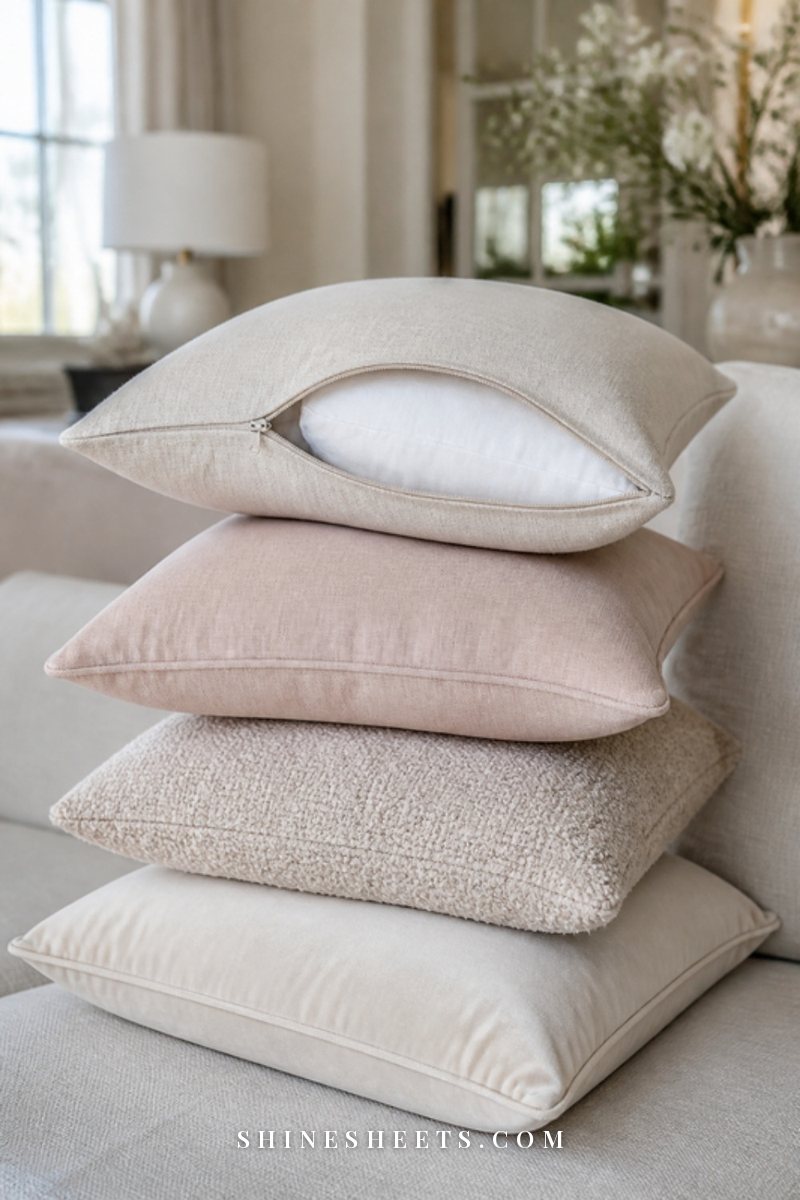
A pillowcase is a thin layer. Over months, oil and sweat soak through it and into the pillow underneath, which is why older pillows turn yellow. A zippered cotton pillow protector between the pillow and the pillowcase catches most of that. Wash protectors once a month, and wash or replace the pillow itself about twice a year, following its care label. My guide on how to wash pillows walks you through every type, from down to memory foam (which usually shouldn't go in the machine at all).
A quick test for whether a pillow needs replacing: fold it in half. If it stays folded instead of springing back, it has lost its support, and most pillows are due for replacement every one to two years.
Wipe Your Phone, Too
If you take calls lying down or read in bed with your phone resting on the pillow (hello, all of us), your phone is the other surface pressed against your cheek. Wipe it down every few days with a soft cloth lightly dampened with a little isopropyl alcohol or a screen-safe wipe, following your phone maker's cleaning guidance. Pair that with a clean pillowcase and you've covered the two biggest everyday things that touch your face.
And one more tiny habit: wash your face before bed, every night, even when you're exhausted. A clean face on a clean pillowcase is the whole point. If I'm truly too tired, a micellar water pass with cotton pads is my bare minimum, and that's still far better than nothing.
When Breakouts Don't Improve
A fresh pillowcase helps a lot of people, but it's not a cure for acne, and I don't want you to feel like you're doing something wrong if your skin doesn't clear up. If you've been changing your pillowcase every two to three nights for six to eight weeks, your routine is gentle and consistent, and you're still breaking out, it's time to see a dermatologist.
The same goes for breakouts that are painful, deep, leave dark marks or scars, or seem to be getting worse. Persistent acne can be hormonal, related to medication, or simply need prescription treatment, and a dermatologist can help you figure out what's going on. Think of your pillowcase habit as solid support for whatever plan you and your doctor choose, not a replacement for it.
If you notice itching, redness or a rash where your face touches the pillow, try rewashing your bedding with a fragrance-free detergent and an extra rinse cycle. If the irritation continues, mention it to a doctor, since detergent residue or a fabric dye can occasionally cause contact irritation.
Final Thoughts
Changing your pillowcase is one of those small, quiet habits that does more than it looks like it should. It costs nothing extra, takes thirty seconds, and gives your skin a clean place to rest every few nights.
Keep a little stack within reach, flip on night two, wash gently, and let the rest of your routine do its work. Your skin will thank you in the slow, steady way good habits always pay off.