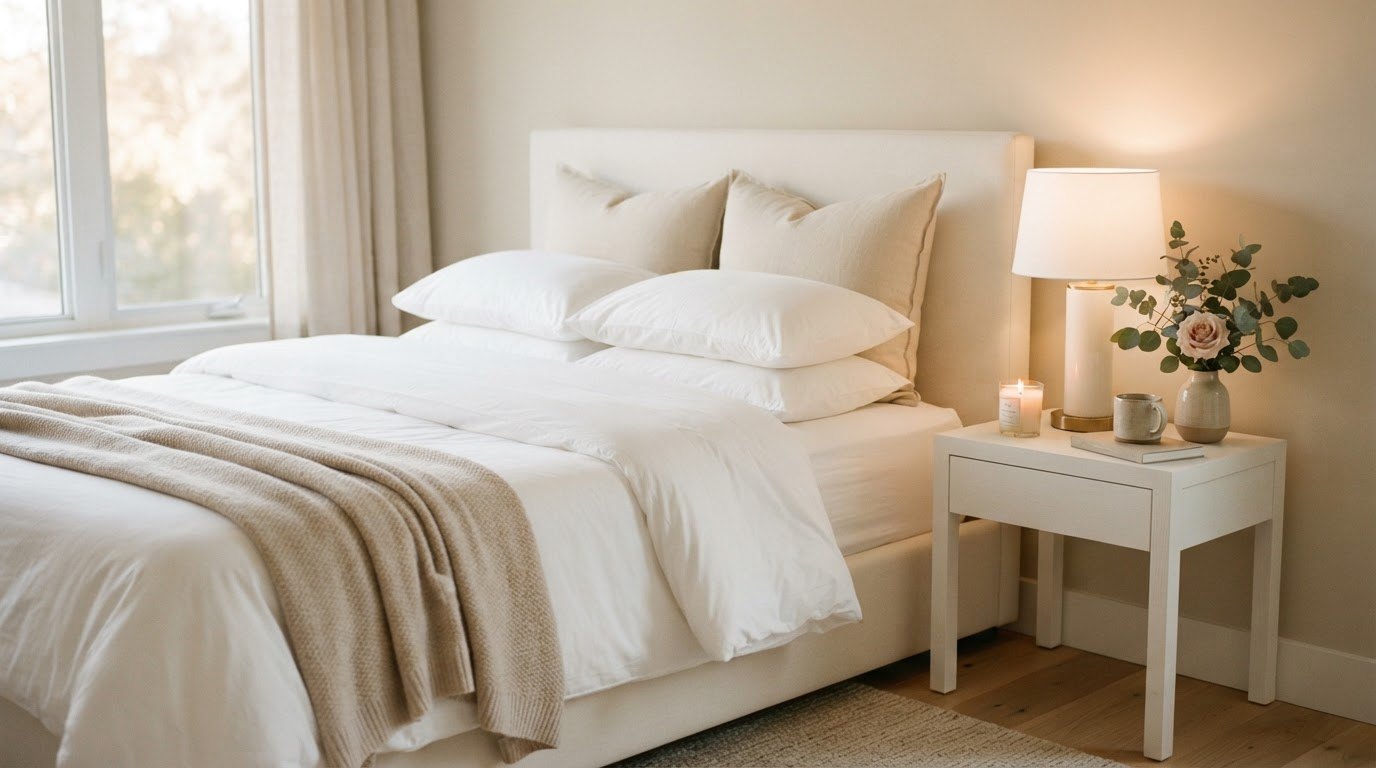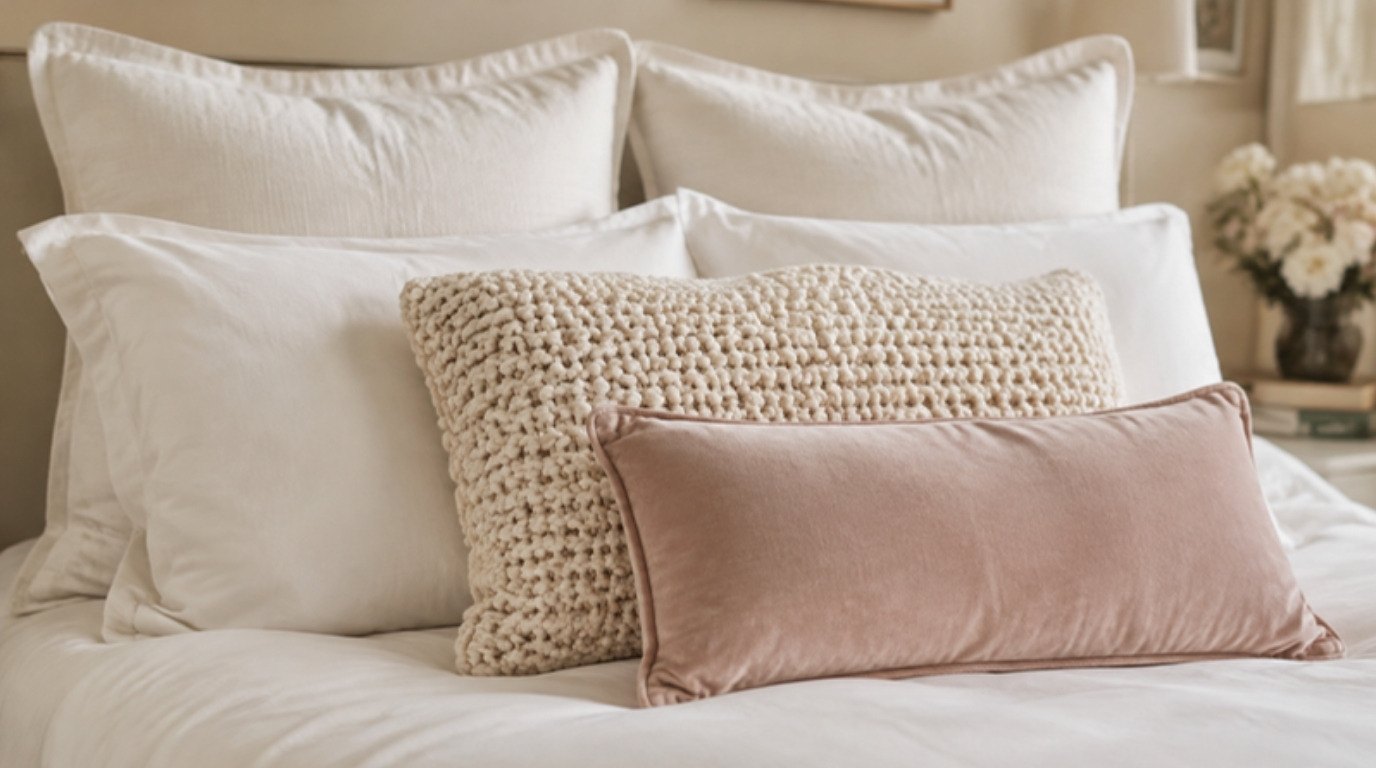
A beautifully styled bed rarely has the most pillows. It has the right pillows, in the right sizes, stacked in the right order. Once you understand that each pillow has a job (sleeping, backing, or adding a little color), arranging them stops feeling like guesswork and starts taking about thirty seconds.
The good news: you probably own most of what you need already. A lot of "my bed looks flat" problems come down to size, not quantity. Two big square pillows at the back can do more than six small cushions scattered at the front.
This guide is all about bed pillow arrangement: the pillow types and sizes explained in plain words, 5 easy arrangements for every bed size, a table that tells you exactly how many pillows to use and in what order, plus simple color and texture rules and what to do with all of them at bedtime.
How Many Pillows Does a Bed Really Need?
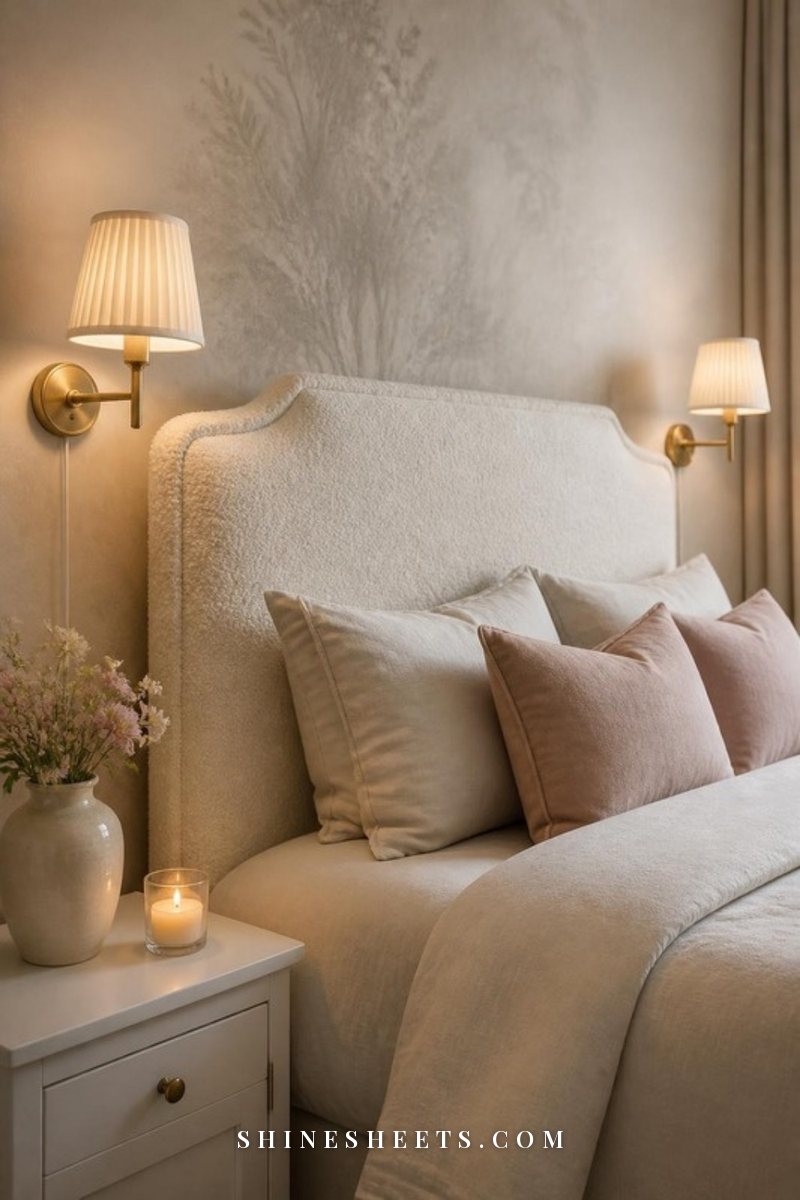
For sleeping, you need one or two pillows per person. Everything else is decoration, and decoration is optional. That's the first thing I'd want you to hear, especially if you're tired of moving a mountain of cushions every night.
For a bed that looks styled, here's a simple guide:
- Twin or single bed: 2–4 pillows in total.
- Full or double bed: 3–5 pillows in total.
- Queen bed: 4–7 pillows in total.
- King bed: 5–10 pillows in total.
The lower number looks clean and modern. The higher number looks layered and plush. Both are "correct." The right number is the one that looks good to you and that you'll actually put back every morning.
If you'd like to style the whole bed (sheets, duvet, throw and all), my guide on how to make your bed look like a hotel bed covers the full process. This article stays focused on the pillows.
Pillow Types and Sizes Explained
Most confusion about pillow arrangement comes from the names. Shams, Euros, lumbars, cushions... Here's what each one is and where it goes, using standard US sizes.
Sleeping Pillows
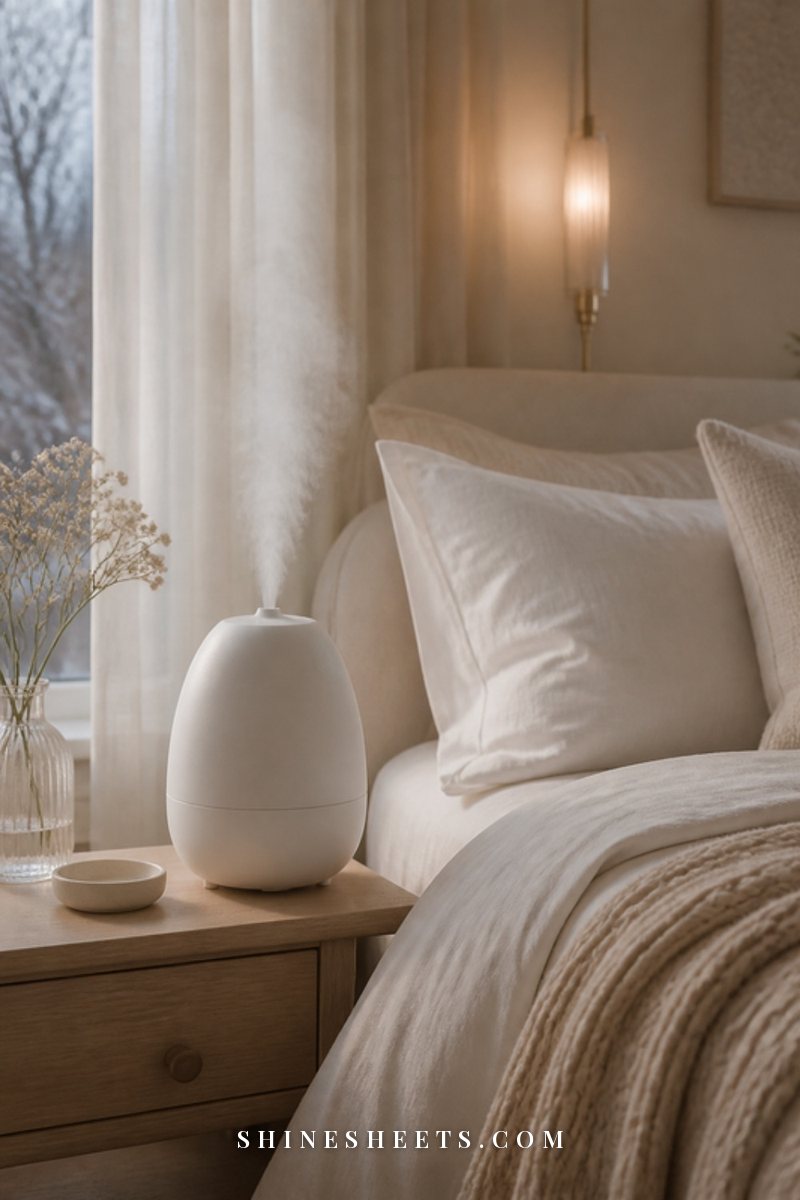
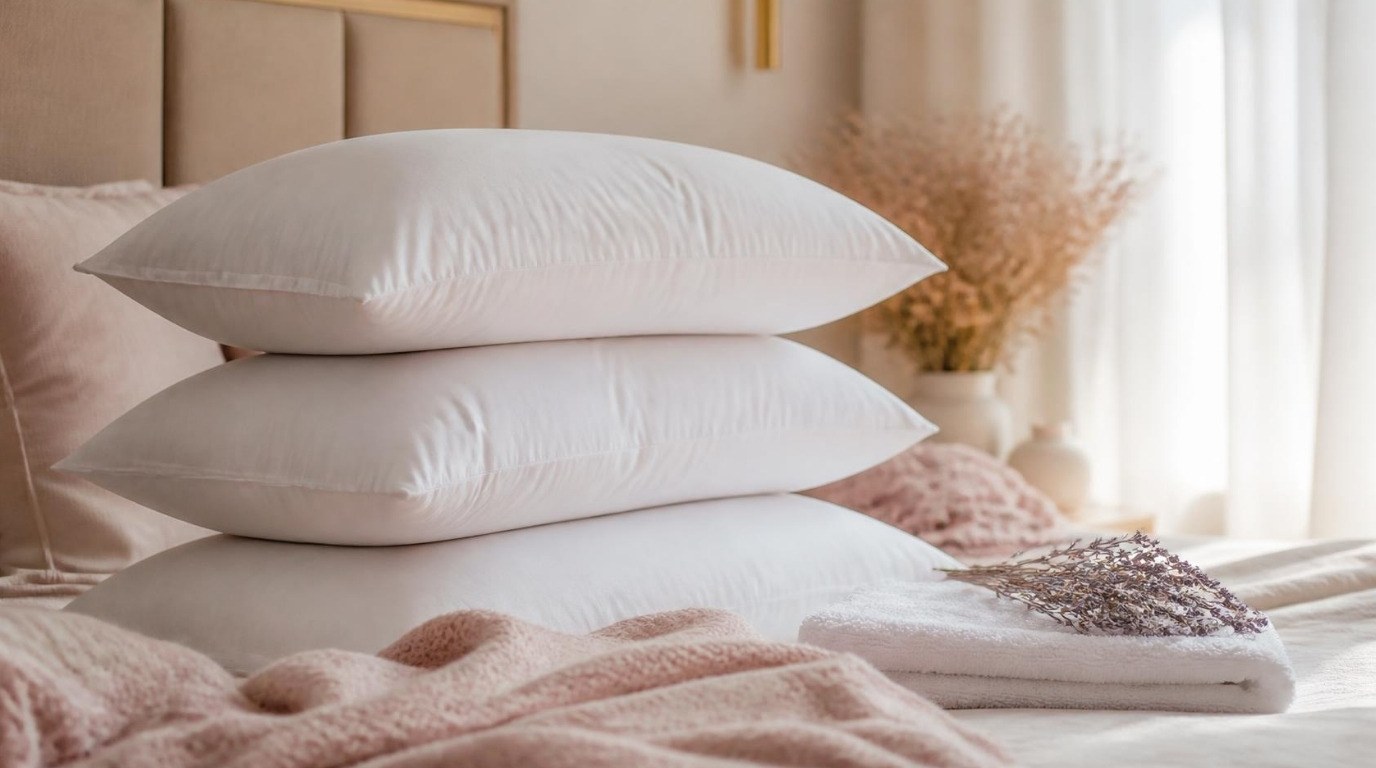
These are the pillows you actually sleep on. They come in three main sizes:
- Standard: 20x26 inches – fits twin, full and queen beds.
- Queen: 20x30 inches – a little longer, nice for queen beds.
- King: 20x36 inches – made to span a king bed with two pillows.
Sleeping pillows usually sit flat or slightly propped right against the headboard (or in front of the Euro shams). Pillowcases are where you can bring in soft color: sage green cotton pillowcases look calm against white bedding. Look for a breathable cotton percale or sateen, an envelope closure so the pillow doesn't peek out, and a size that matches your pillow exactly. If you're thinking about skin and hair too, a silk pillowcase in ivory is a pretty, gentle option; I'd choose mulberry silk with a hidden zipper and a machine-washable label. My article on silk pillowcase benefits explains what silk can (and can't) do.
Euro Shams
Euro shams are large square pillows, usually 26x26 inches. They stand upright against the headboard and form the "back row." They're the single biggest upgrade for a bed that looks flat, because they add height and fill the empty space above the sleeping pillows.
For a soft, relaxed look, white linen Euro shams are hard to beat. Look for stonewashed linen (it's softer and wrinkles look intentional), a hidden zipper or envelope back, and a pair that fits 26-inch inserts. Use a slightly overstuffed down-alternative insert so they stand tall instead of slumping.
Standard and King Shams
A sham is simply a decorative pillowcase, often with a flange (a flat fabric border) or a pretty edge. Standard and king shams are the same size as sleeping pillows but meant for show. In many arrangements, they sit right in front of the sleeping pillows, or in place of them during the day.
Shams are optional. If your sleeping pillows have nice pillowcases, you can skip them entirely.
Decorative Cushions
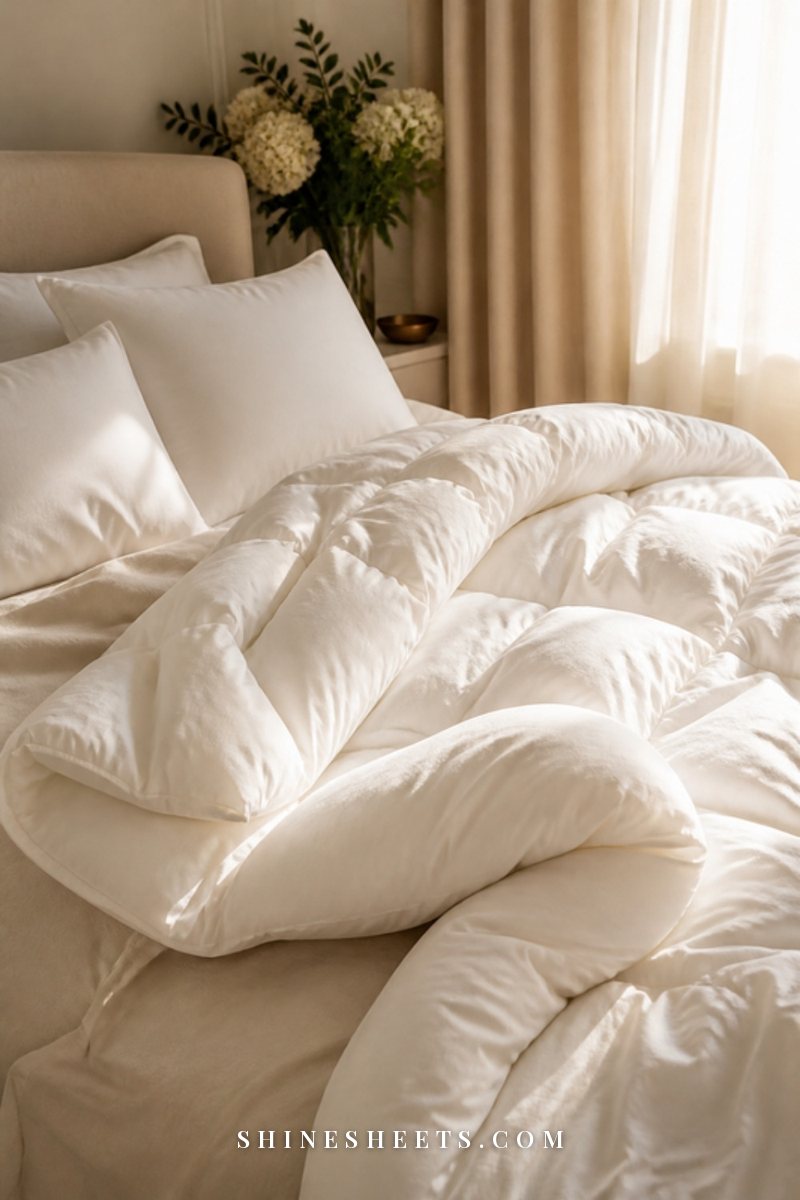
Decorative cushions (or throw pillows) are smaller squares, usually 18x18 or 20x20 inches. They add texture and color. One or two is plenty for most beds.
Knit is one of the easiest textures to add, because it reads soft and warm in any season. Cream knit cushion covers are a good pick: look for a chunky or cable knit, a hidden zipper and a size that matches your inserts (or one size smaller than the insert for a fuller look – a 20-inch insert in an 18-inch cover).
The same formulas that work on a sofa work on a bed, so if you want more combinations, my throw pillow combinations guide is a nice companion to this one.
Lumbar Pillows
Lumbar pillows are long, rectangular pillows, usually 12x20, 14x24 or extra-long 14x36 inches. They sit at the very front of the arrangement and pull everything together. A single lumbar is the simplest way to make a bed look finished.
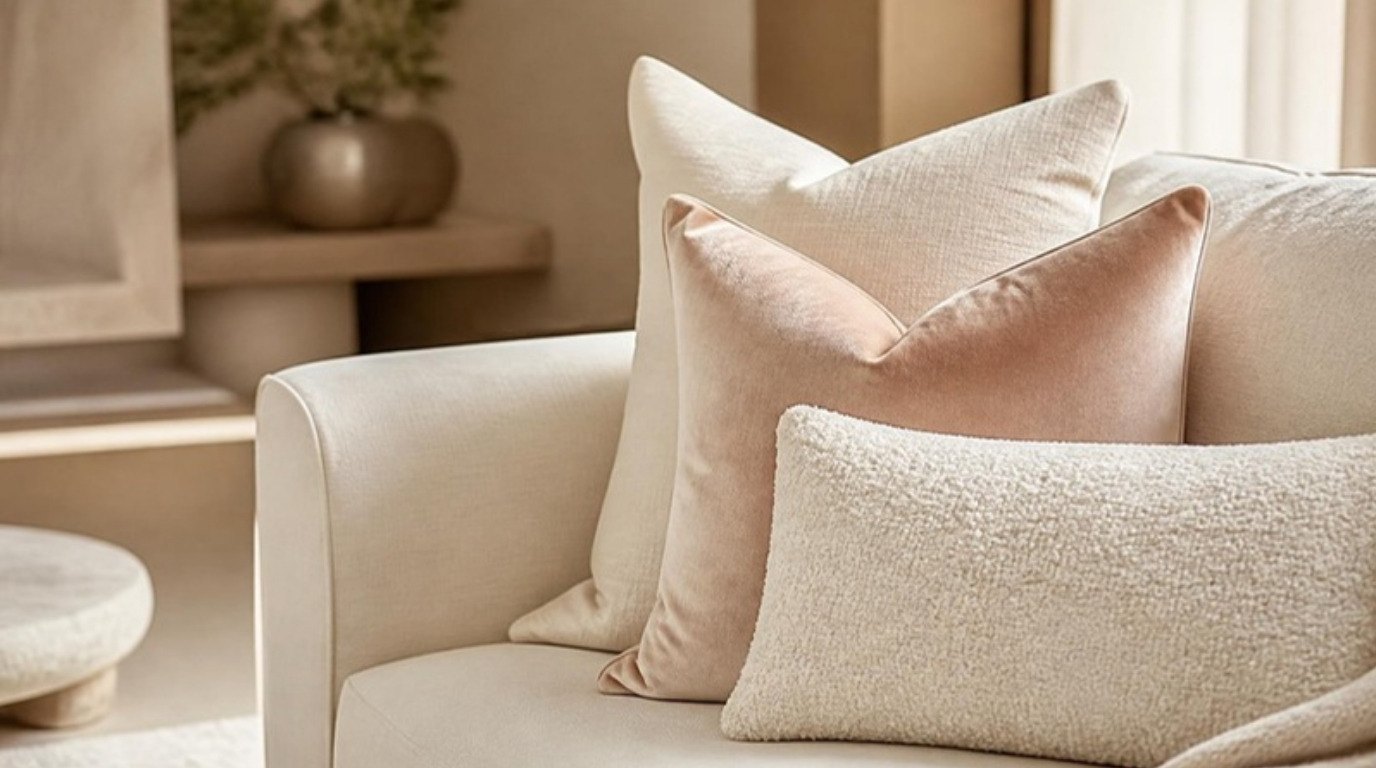
A blush velvet lumbar pillow adds a soft touch of color and a little shine against linen and cotton. Look for a removable cover, a soft matte velvet (not overly shiny) and a length that's about a third to half the width of the bed.
Bed Pillow Arrangement: 5 Easy Layouts
These five arrangements cover almost every bed and every taste. Pick the one that matches your bed size and how much fluffing you're willing to do in the morning.
1. The Minimal Look: 2 Sleeping Pillows Plus 1 Lumbar
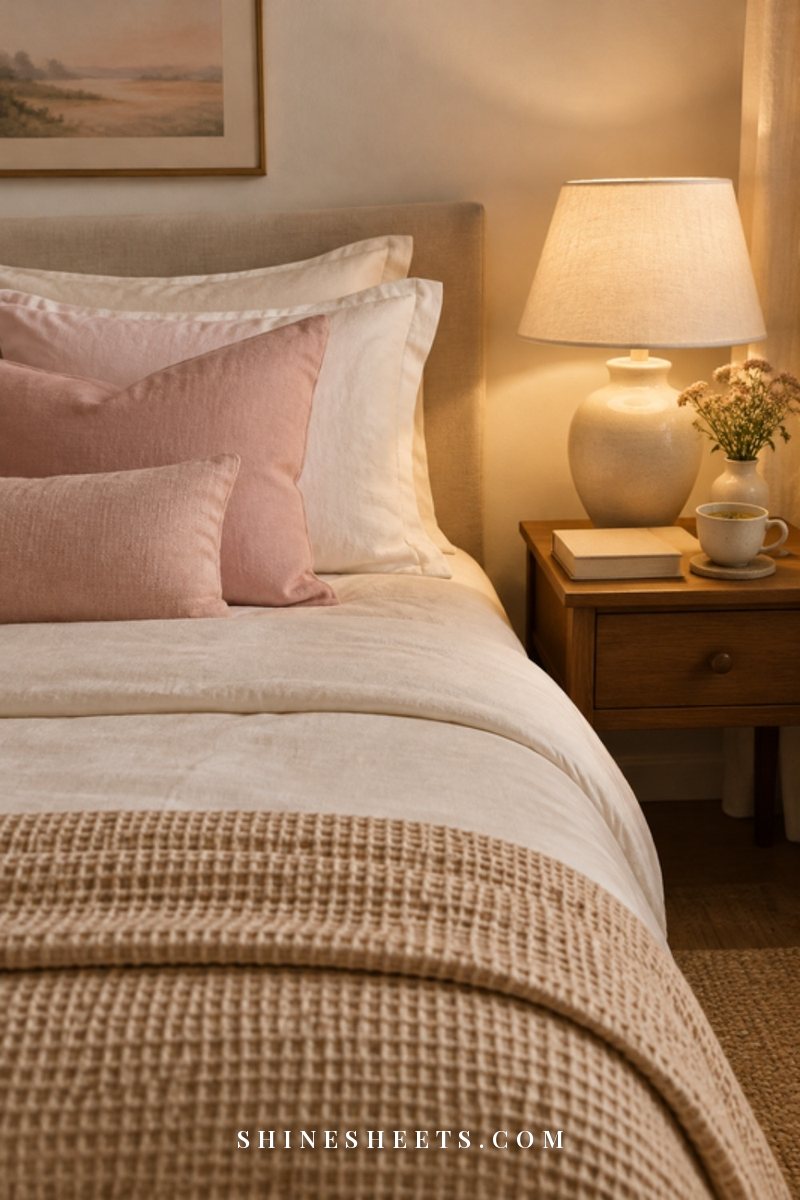
This is the arrangement I'd choose for anyone who wants a styled bed with almost no effort. It works on full and queen beds.
- Back: 2 sleeping pillows, stacked or side by side, propped slightly against the headboard.
- Front: 1 lumbar pillow, centered.
Total: 3 pillows. It looks clean, modern and calm, and it takes about ten seconds to make. Choose a lumbar in a color or texture that contrasts gently with the bedding (blush on white, cream on sage) so the bed has a focal point.
2. The Classic Arrangement: Sleeping Pillows, Shams and 2 Cushions
This is the "showroom" look most people picture. It works on queen beds and larger full beds.
- Back: 2 sleeping pillows lying flat against the headboard.
- Middle: 2 standard or queen shams, propped upright in front.
- Front: 2 decorative cushions (18 or 20 inches), one in front of each sham.
Total: 6 pillows. It's symmetrical and balanced. To keep it from looking stiff, make the two cushions a texture contrast (knit or velvet against cotton shams) rather than another flat cotton.
3. The Euro Back Row
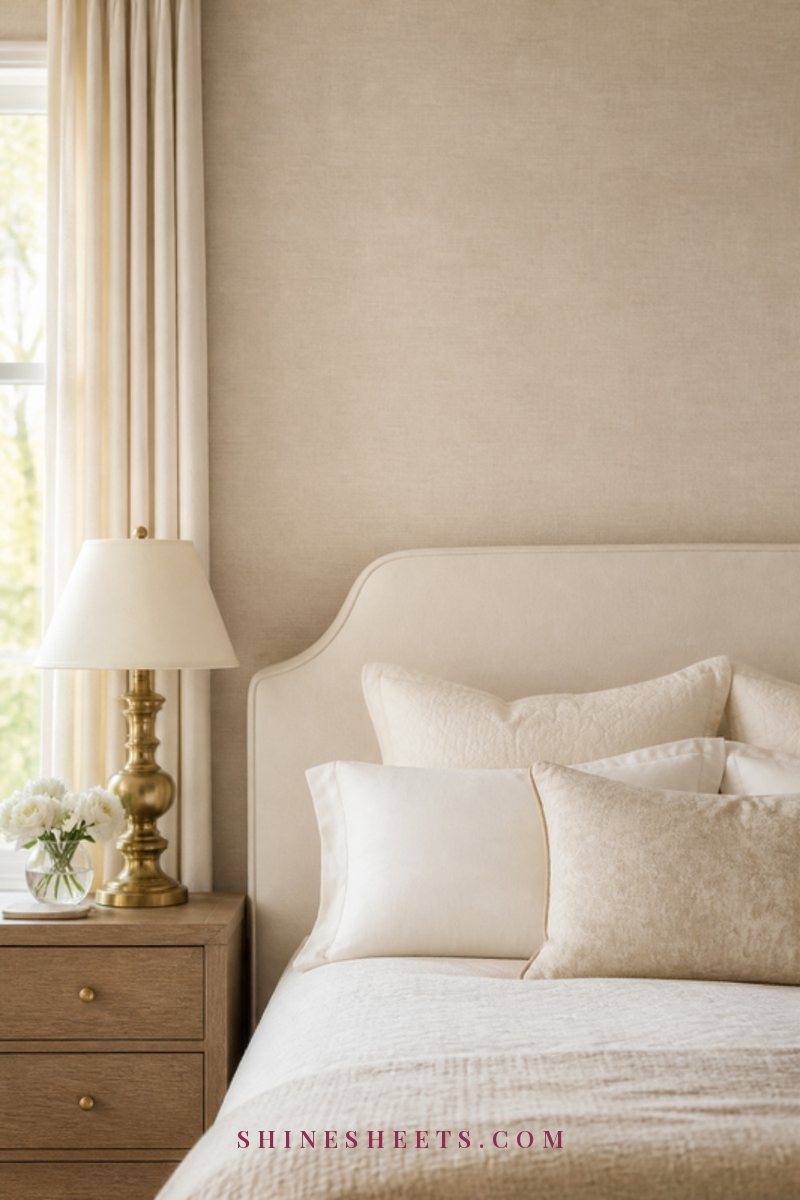
If your bed looks flat or your headboard is low (or missing), this is the arrangement that will change the most. It works on queen and king beds.
- Back: 2 Euro shams standing upright against the headboard (3 on a king).
- Middle: 2 sleeping pillows leaning against the Euros.
- Front: 1 lumbar pillow or 1 decorative cushion, centered.
Total: 5 pillows on a queen, 6 on a king. The Euros act like a soft headboard, so this is a great renter-friendly trick if you don't have a real one.
4. The Full Layered Look for King Beds
A king bed is wide, and a few pillows can look lost on it. This arrangement fills the width beautifully without becoming chaotic.
- Back: 3 Euro shams in a row against the headboard.
- Second row: 2 king sleeping pillows, leaning against the Euros.
- Third row: 2 king shams, propped in front.
- Fourth row: 2 decorative cushions (20 inches).
- Front: 1 long lumbar pillow, centered.
Total: 10 pillows. It's plush and luxurious, but I'll be honest: it's a lot to move every night. If that sounds tiring, drop the king shams and you'll still have a full, layered look with 8.
5. Single and Small Beds
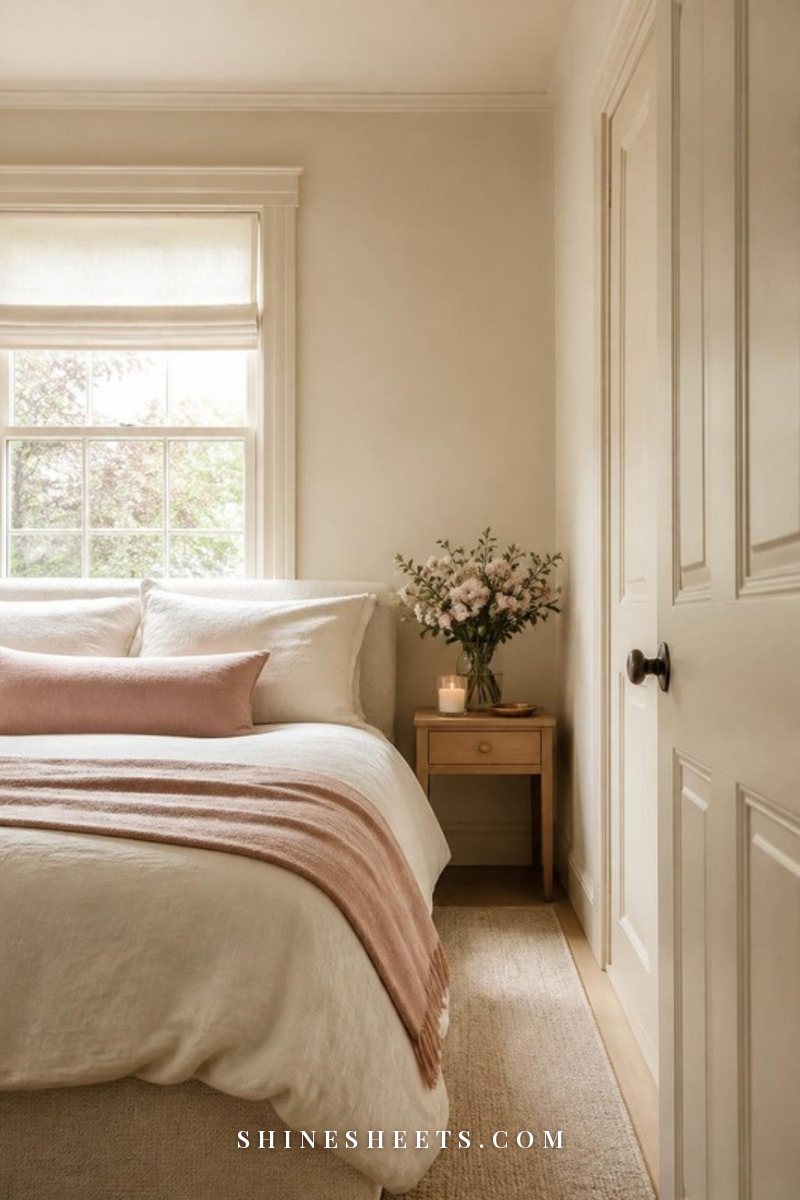
Twin beds, daybeds and small guest beds need a slightly different approach, especially if one long side sits against the wall.
- Classic twin: 1 sleeping pillow, 1 standard sham in front, 1 small lumbar. Total: 3.
- Daybed style (bed against the wall): 2 Euro shams or large cushions along the wall side, 1 sleeping pillow at the head, 1 lumbar. Total: 4. This turns the bed into a sofa during the day.
In small bedrooms, fewer and larger pillows look calmer than lots of little ones. For more ideas that make a tiny room feel restful, my cozy bedroom ideas are full of renter-friendly tricks.
The Bed Pillow Arrangement Table by Bed Size
Here's the whole thing in one table, so you can screenshot it and use it when you're shopping or standing in front of your bed. "Back to front" means the order from the headboard toward the foot of the bed.
| Bed size | Total pillows | Arrangement (back to front) | Look |
|---|---|---|---|
| Twin / single | 3 | 1 standard sleeping pillow → 1 standard sham → 1 small lumbar (12x20) | Neat and simple |
| Twin daybed | 4 | 2 Euro shams along the wall → 1 sleeping pillow at the head → 1 lumbar | Sofa by day |
| Full / double | 3–5 | 2 standard sleeping pillows → (2 standard shams) → 1 lumbar (14x24) | Clean and fresh |
| Queen, minimal | 3 | 2 queen sleeping pillows → 1 lumbar (14x24 or 14x36) | Modern and calm |
| Queen, Euro | 5 | 2 Euro shams (26x26) → 2 queen sleeping pillows → 1 lumbar or cushion | Tall and soft |
| Queen, classic | 6 | 2 sleeping pillows → 2 queen shams → 2 cushions (18x18) | Balanced and traditional |
| King, Euro | 6 | 3 Euro shams → 2 king sleeping pillows → 1 long lumbar (14x36) | Hotel-style |
| King, full layered | 10 | 3 Euro shams → 2 king sleeping pillows → 2 king shams → 2 cushions (20x20) → 1 long lumbar | Plush and luxurious |
Color and Texture Rules for Bed Pillows
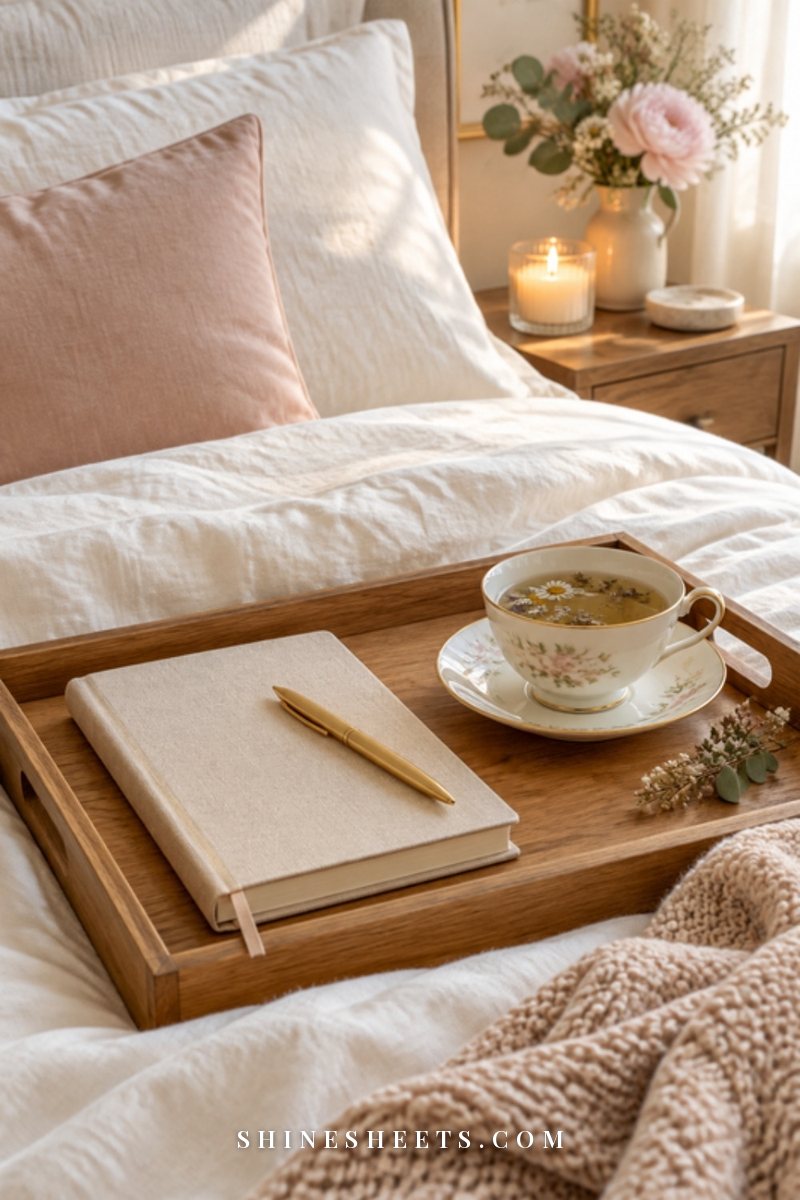
A pillow arrangement looks expensive when the colors are calm and the textures are varied. Here are the rules I'd follow:
- Stick to 2–3 colors. One main color (often your bedding color), one soft accent and, if you like, one neutral in between. White, cream and blush. Sage, ivory and beige. Pale blue, white and gold accents.
- Repeat each color at least twice. If the lumbar is blush, add a little blush somewhere else (a throw at the foot of the bed, a stripe in a cushion).
- Mix at least 2–3 textures. Smooth linen or cotton at the back, chunky knit in the middle, velvet at the front. Different textures in the same color look richer than different colors in the same texture.
- Get bigger toward the back. Large pillows at the back, smaller ones at the front, so every pillow is visible.
- Keep patterns small and few. One subtle pattern (a fine stripe, a gingham, a soft floral) is plenty. The rest can be solid.
Odd vs Even Numbers: Which Looks Better?
You'll hear designers argue about this, and the truth is that both work. They just create different moods.
- Even numbers (2 Euros, 2 shams, 2 cushions) look symmetrical, traditional and restful. Perfect if you like a classic, balanced bedroom.
- Odd numbers (adding a single lumbar or a single center cushion) look a little more relaxed and styled, because the odd piece creates a focal point in the middle.
A simple trick that makes almost any arrangement look finished: build in pairs, then add one odd pillow at the very front. That's why so many of the arrangements above end with a single lumbar.
To Karate Chop or Not?
The "karate chop" is that little dent you make in the top of a cushion with the side of your hand. It gives the pillow a plump, two-peaked shape.
It works best on feather or down-blend cushions that hold their shape, and in classic or glam bedrooms. It looks a bit stiff on linen and knit, and it doesn't hold on firm foam or polyester inserts at all.
My gentle rule: chop the front cushions if you like a polished look, skip it if you want a relaxed, lived-in bed. For a soft in-between, just fluff the pillow, set it down and press the top center lightly with your palm.
Where the Pillows Go at Night
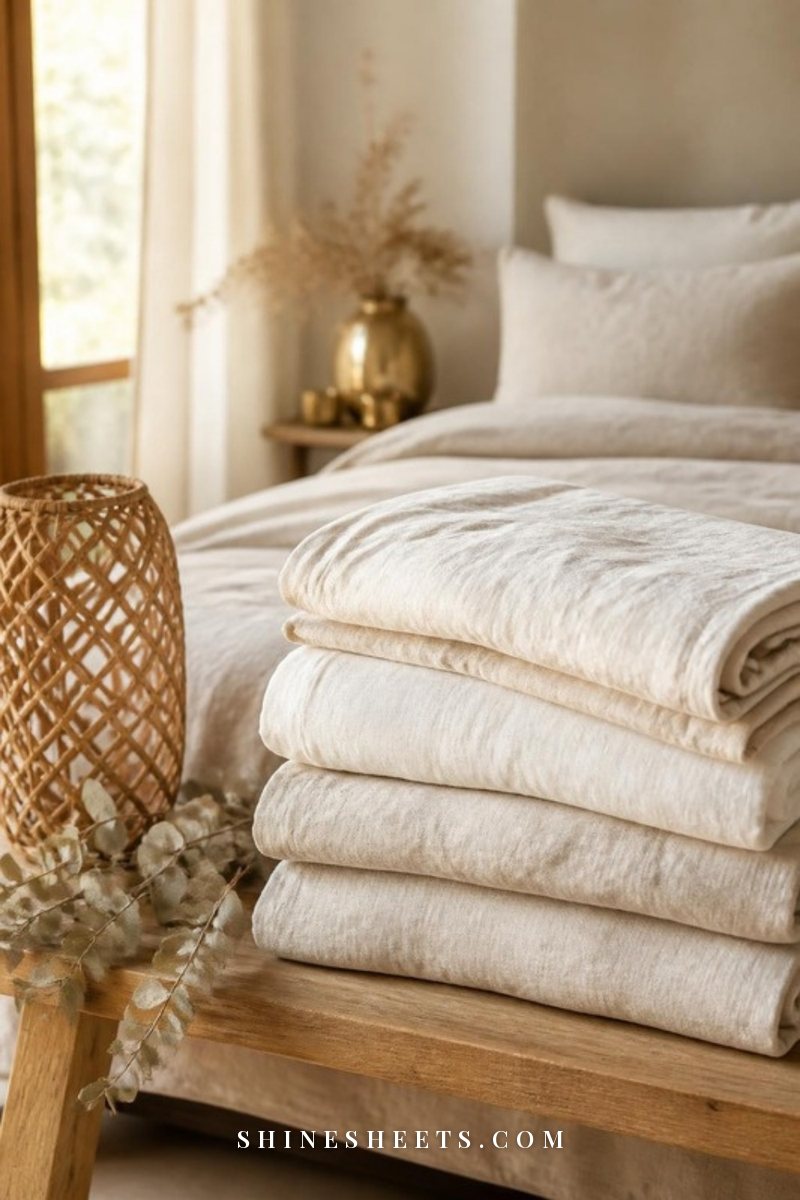
This is the part nobody shows in photos, and it's the reason many people give up on decorative pillows. Having a plan makes it so much easier.
- A bench or ottoman at the foot of the bed: stack the decorative pillows on it, largest at the bottom.
- A large basket: a large cream woven storage basket beside the bed holds cushions and a throw. Look for a soft-sided seagrass or cotton rope basket, about 16–20 inches wide, with handles.
- A chair in the corner: two or three cushions stacked on the seat look intentional, not messy.
- The Euros can stay: many people leave the Euro shams upright against the headboard all night and lean against them to read.
Try not to toss them on the floor. They pick up dust that ends up back on your bed (and your face) the next morning.
Washing and Caring for Your Pillows
A styled bed only feels good if it's fresh. Here's a simple rhythm:
- Pillowcases on sleeping pillows: wash every week, or twice a week if you have sensitive or breakout-prone skin.
- Shams and cushion covers: wash every 2–4 weeks, or once a month if they're only decorative.
- Sleeping pillows themselves: wash every 3–6 months, following the care label.
- Velvet and silk: check the label – many need a gentle cold cycle in a mesh bag or hand washing, and air drying.
- Fluff every morning: a few firm pats on each side keeps fillings even and pillows looking full.
Each pillow type needs slightly different care, and my step-by-step guide on how to wash pillows of every type walks through all of them. A quick safety note: always let pillows dry completely before putting them back, because damp filling can grow mildew.
Common Pillow Arrangement Mistakes (and Easy Fixes)
If your bed still looks a little "off" after following the layouts, it's usually one of these small things:
- All the pillows are the same size. The bed looks flat because nothing steps down. Add one larger pillow at the back (a Euro sham) or one smaller one at the front (a lumbar).
- Too many small cushions. Five little squares look busy and slide around. Swap three of them for one lumbar.
- Thin, tired inserts. A floppy cushion makes even a pretty cover look sad. Use an insert 2 inches larger than the cover, and replace inserts that no longer bounce back after fluffing.
- Too many colors. If every pillow is a different color, pick your favorite two or three and move the rest to a chair or the sofa.
- Pillows that ignore the bed width. Two standard pillows on a king bed leave gaps at each side. Use king-size pillows, add a third Euro, or choose a longer lumbar.
Less Is Fine
If you've ever felt that you should have more pillows, let me take that pressure off. A bed with two well-dressed sleeping pillows and one nice lumbar is just as styled as a bed with ten. Sometimes more so, because it looks calm instead of crowded.
Use the number that makes you happy to walk into your bedroom and that you're willing to fix every morning. If that's three, wonderful. If you love the full layered look and don't mind the extra minute, wonderful too.
Final Thoughts
A bed pillow arrangement is really just a small stack with a simple order: big pillows at the back, sleeping pillows in the middle, one or two soft accents at the front. Pick two or three colors, mix a few textures, and choose a number you can live with every day.
Start with what you already have, add one Euro or one lumbar if the bed looks flat, and enjoy the little moment every morning when your bed looks finished in under a minute.