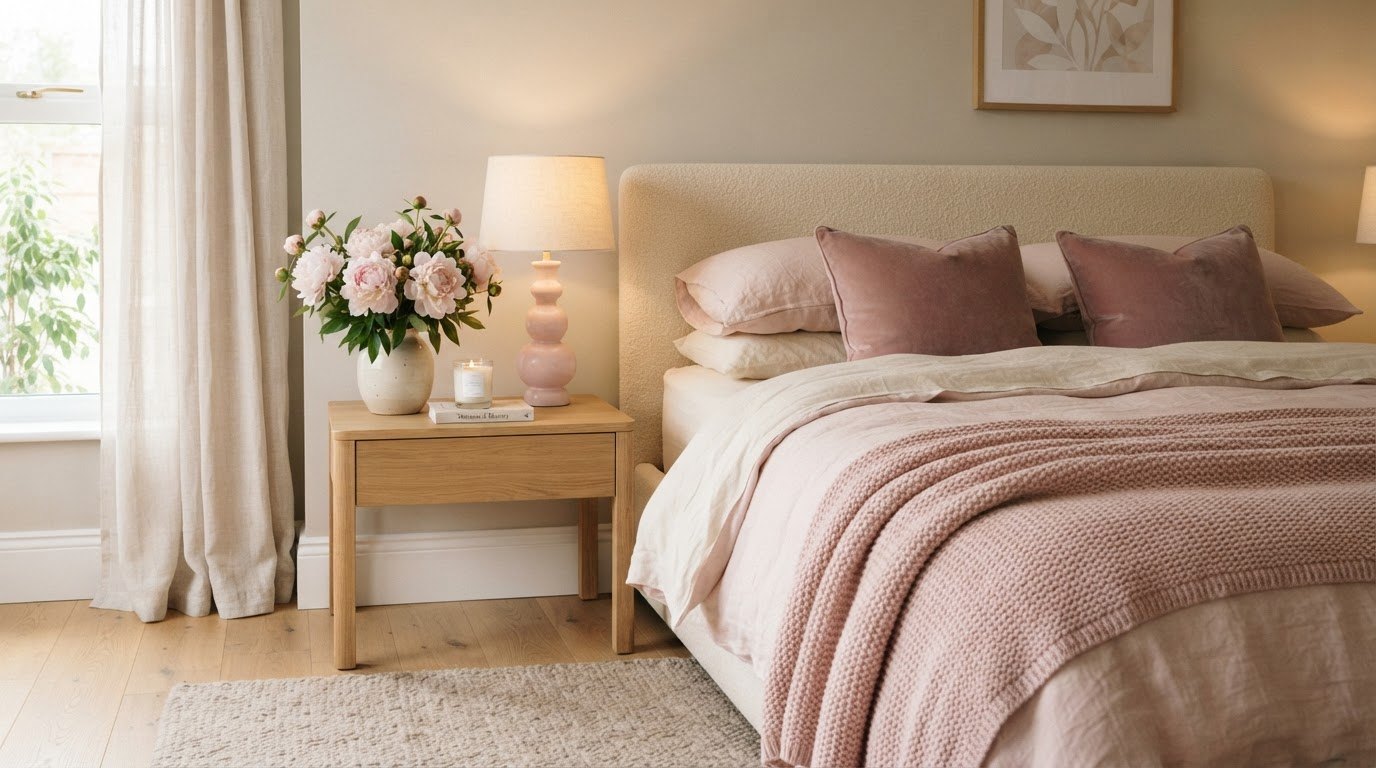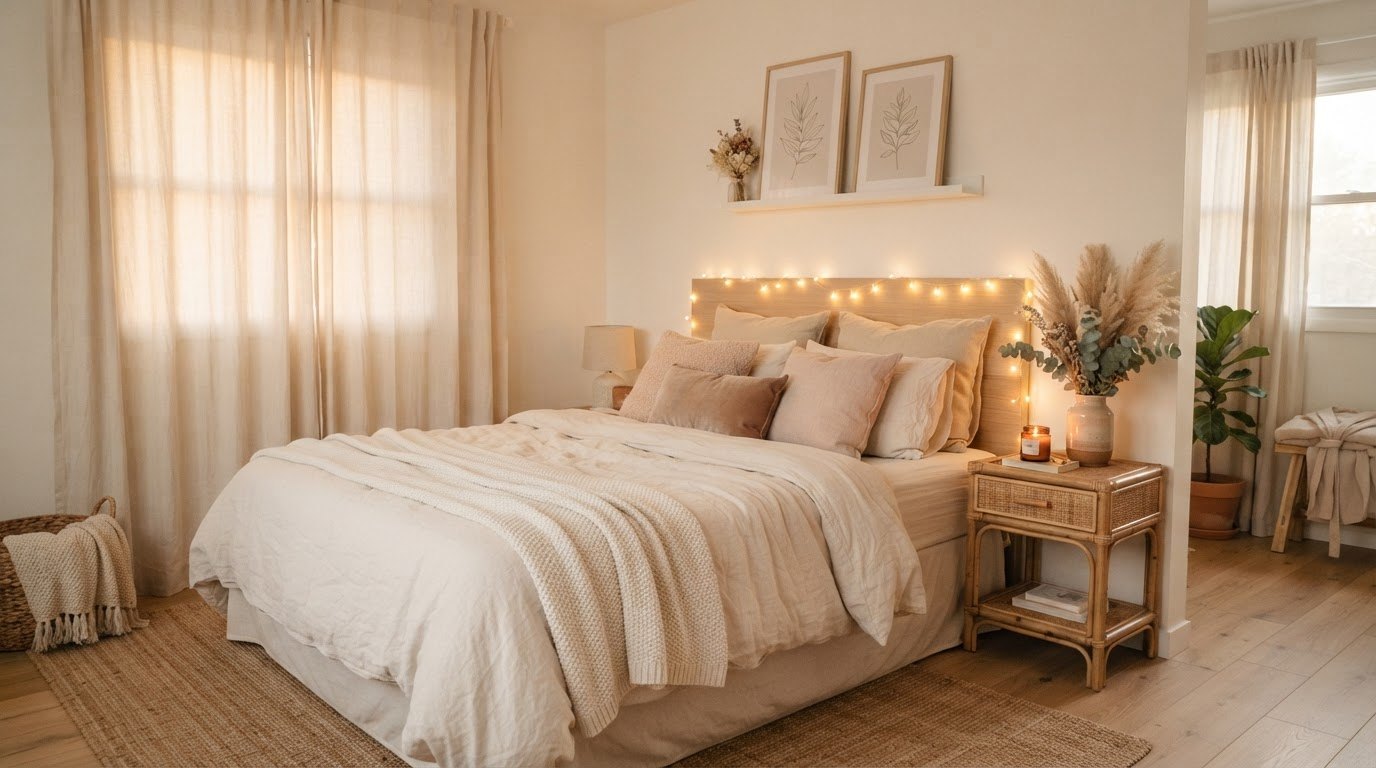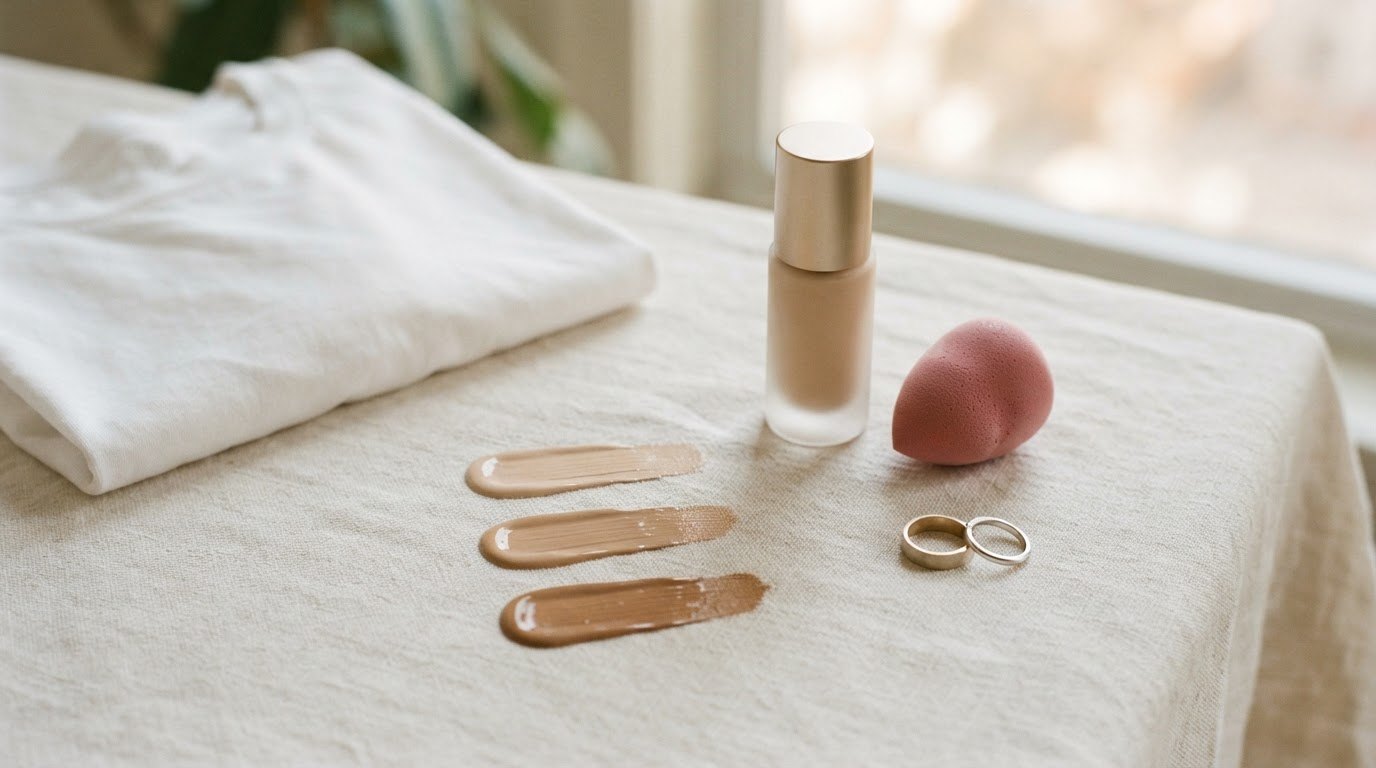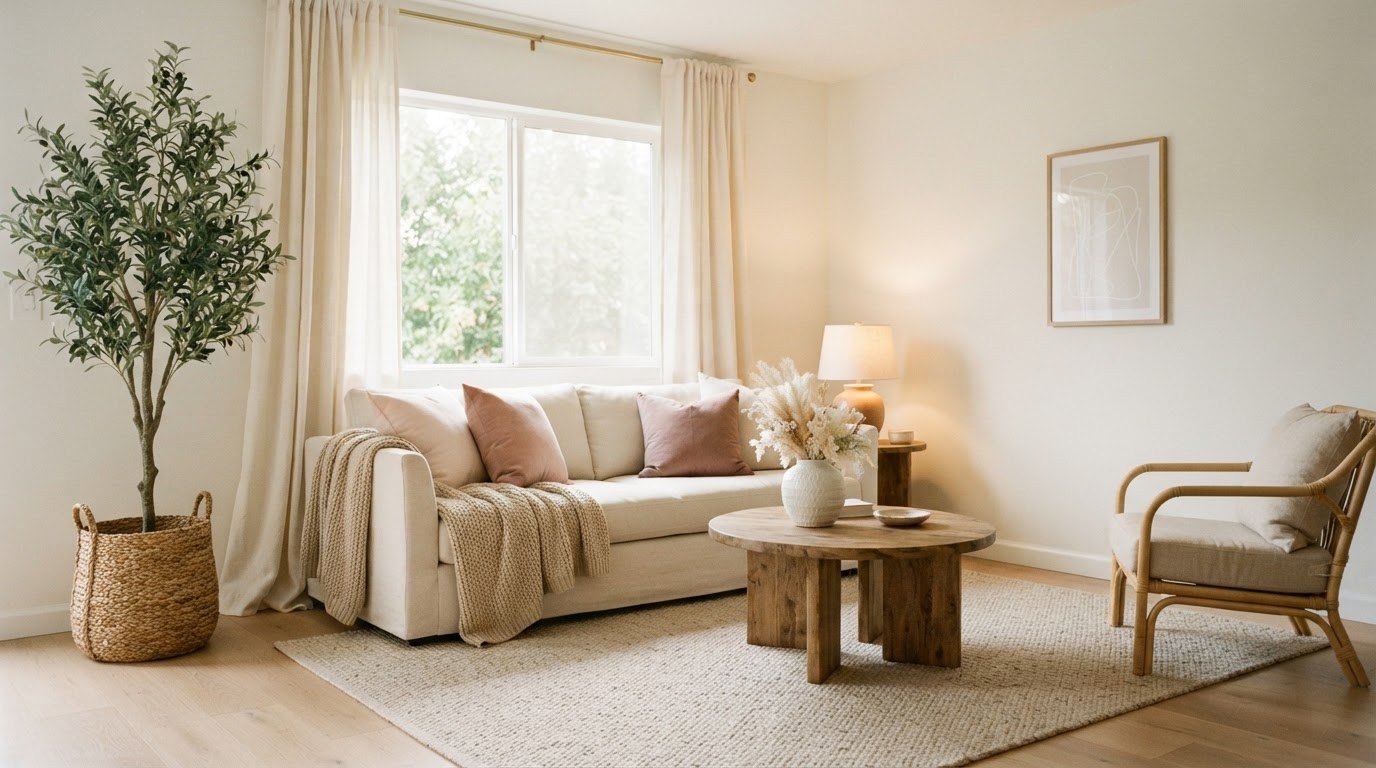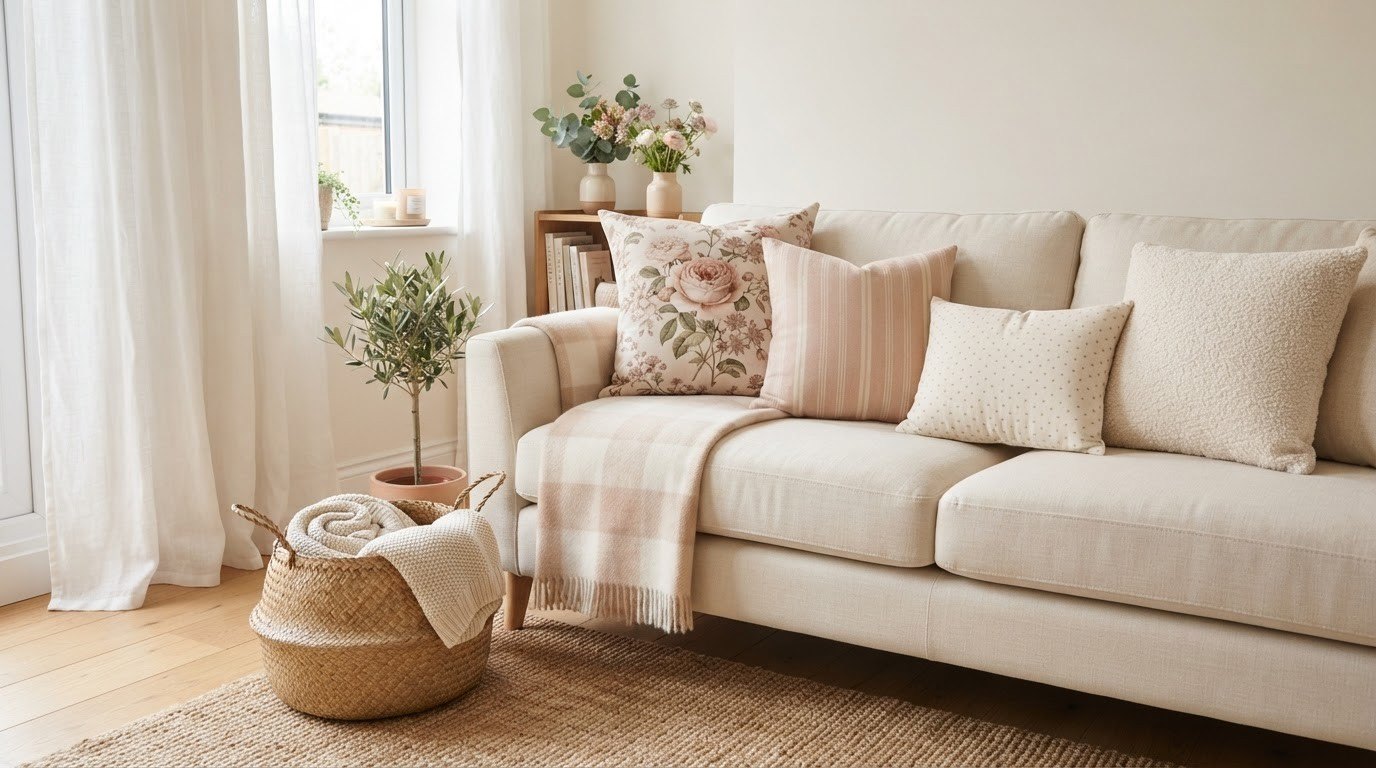
A neutral room rarely feels bland because of its colors. It feels bland because everything is the same: the same shade, the same smooth finish, the same level of light. Cream, beige and white can look warm, layered and incredibly calming, as long as you give the eye a little variety in texture, tone and contrast.
That's the part most neutral decor advice skips. It shows you a beautiful beige room and tells you to "add texture," without explaining how much, where, or why your own neutral room still looks like a waiting area. It took me a while to understand that neutrals need more planning than color does, not less, because there's nothing bold to distract from a flat spot.
This guide is all about neutral home decor that feels warm instead of washed out. You'll find a neutral palette builder for four different moods, a neutral version of the 60-30-10 rule, 12 practical ways to add depth, room-by-room ideas and a quick-fix table for the moment you realize your room feels flat.
Everything here is renter-friendly and works on a budget.
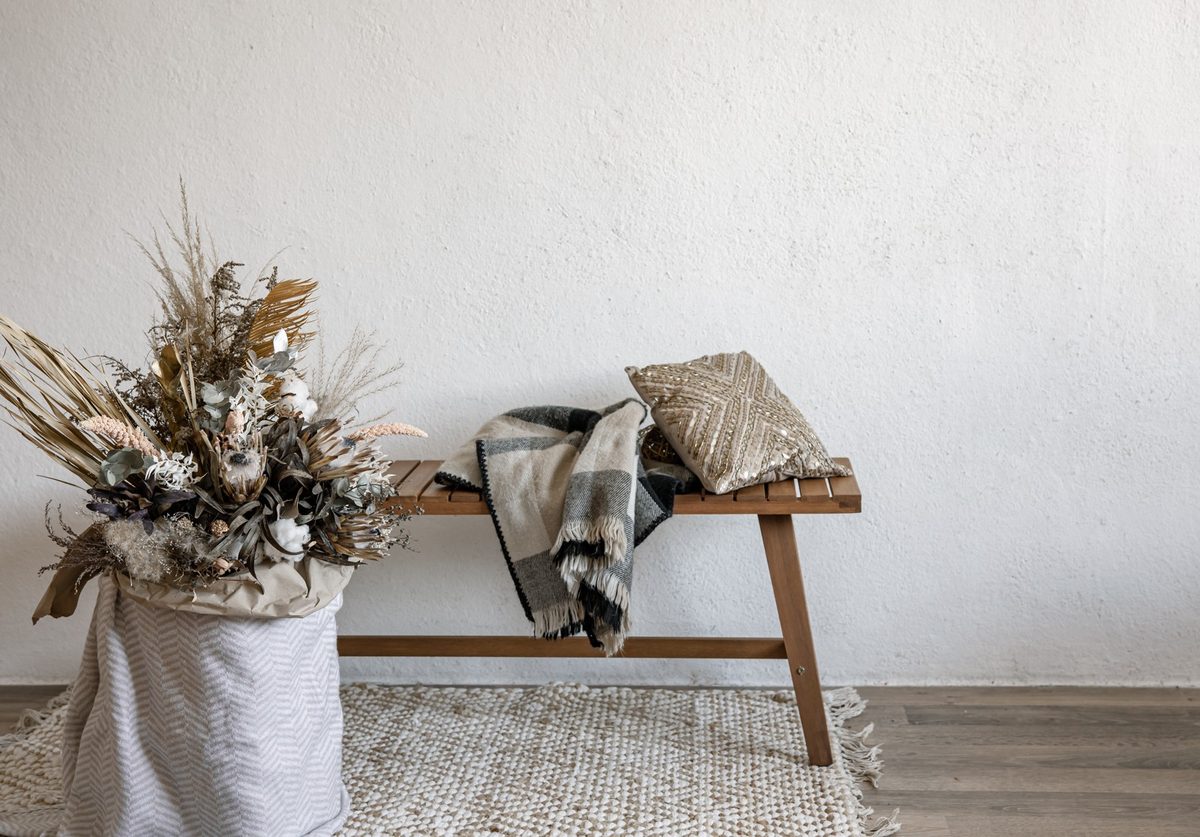
Why Neutral Rooms Can Feel Bland
Before fixing anything, it helps to know what's actually going wrong. Most flat neutral rooms have one (or more) of these problems:
- Only one undertone. All cool whites or all yellow-beiges, with no warm and cool interplay.
- Only smooth surfaces. Flat paint, smooth sofa fabric, glossy tables. Nothing to catch the light.
- No contrast. Without a single dark or metallic note, the eye has nowhere to land.
- Nothing alive. No plants, no branches, no natural materials.
- One light source. A single ceiling light flattens every shade into the same gray-beige.
The good news: every one of these is fixable with small changes, not a full redecoration.
The Neutral Palette Builder
A neutral palette isn't one color. It's a family of four layers: a base (walls and big pieces), a middle (textiles and furniture), an accent (the darkest or richest tone) and a metal. Pick the mood that fits your home and build from it. Screenshot this table for your next shopping trip.
| Mood | Base | Middle | Accent | Metal | Wood tone |
|---|---|---|---|---|---|
| Warm cream | Soft cream or ivory walls | Oatmeal linen, camel wool | Chocolate brown or terracotta | Brass | Honey oak |
| Soft greige | Light greige | Stone gray, mushroom | Charcoal or deep olive | Brushed nickel or aged brass | Weathered gray oak |
| Airy white | Warm white | Pale sand, light linen | Black (thin frames, a lamp base) | Matte black or polished brass | Light ash or birch |
| Earthy beige | Warm beige or sandstone | Clay, caramel, rattan | Rust, deep green | Antique brass or bronze | Walnut |
A quick tip on undertones: hold a paint chip or fabric next to a sheet of plain white printer paper. If it looks yellow or pink next to the paper, it's warm. If it looks blue or green, it's cool. Warm cream rooms feel best with mostly warm pieces and just one or two cool notes (a gray stone, a cool white ceramic) for balance.
The 60-30-10 Rule for Neutral Rooms
You've probably heard of the 60-30-10 rule for color. It works beautifully for neutrals too, with one twist: you're balancing light and dark rather than different hues.
- 60% base: your lightest neutral on walls, large rugs and big upholstered pieces.
- 30% middle: a slightly deeper neutral in curtains, throws, a chair, wood furniture.
- 10% accent: the deepest or most contrasting tone, plus your metal, in small doses (frames, a lamp, candle holders, a vase).
A simple check: take a black-and-white photo of the room on your phone. If everything looks like the same mid-gray, you need more of the 10%. If it looks patchy and busy, you've added too much and the room has lost its calm.
Before You Buy Anything New
Neutral decor is easy to overbuy, because everything in the store looks like it will "just go." A few habits keep your room calm and your budget intact:
- Shop your home first. Move pillows, throws, vases and baskets between rooms before buying anything. A piece that looked lost in the bedroom can be exactly what the living room needed.
- Bring a swatch. Keep a small fabric scrap or a photo of your sofa and walls on your phone. Beige in a store under bright lights can look completely different at home.
- Buy texture before color. If a room feels flat, a nubby pillow or a woven basket almost always helps more than another shade of cream.
- Wait 48 hours on big pieces. Rugs, curtains and furniture shape the whole palette. Give yourself two days to make sure the undertone really fits your mood from the palette builder.
These small pauses save money and keep the room feeling like one calm, connected space instead of a collection of nice but unrelated things.
12 Ways To Make Neutral Home Decor Feel Warm
1. Layer At Least Three Textures Per Zone
In every seating area or corner, aim for three different textures: something nubby, something smooth and something natural. A set of cream boucle pillow covers on a linen sofa with a wooden side table already does it. Look for covers with a hidden zipper and a soft, tight loop so they don't snag.
2. Mix Warm and Cool Neutrals on Purpose
A room with only yellow-beige feels heavy; a room with only cool white feels sterile. Pair a warm cream sofa with a cool stone or white ceramic, or a greige wall with a camel throw. The slight tension keeps the eye interested.
3. Ground the Room With a Natural Rug
A natural jute area rug adds texture, warmth and an earthy tone in one move. Jute can feel rough underfoot, so look for a tight weave or a jute and cotton blend, and add a rug pad so it doesn't slide. In a small room, a rug large enough for the front legs of the sofa to sit on it makes the space feel bigger.
4. Bring In Two Wood Tones
One wood tone throughout can look like a matching furniture set. Two (light oak plus walnut, or birch plus honey oak) look collected over time. Keep the rule simple: one main wood and one accent wood, and repeat each at least twice in the room.
5. Add One Dark Note
Black picture frames, a charcoal lamp base, a deep brown leather pouf or a dark wood bowl. A single dark anchor makes all your soft shades look more intentional. If you're nervous, start with something as small as a black candle wick holder or thin frames on a gallery wall.
6. Choose Warm Metals in Small Doses
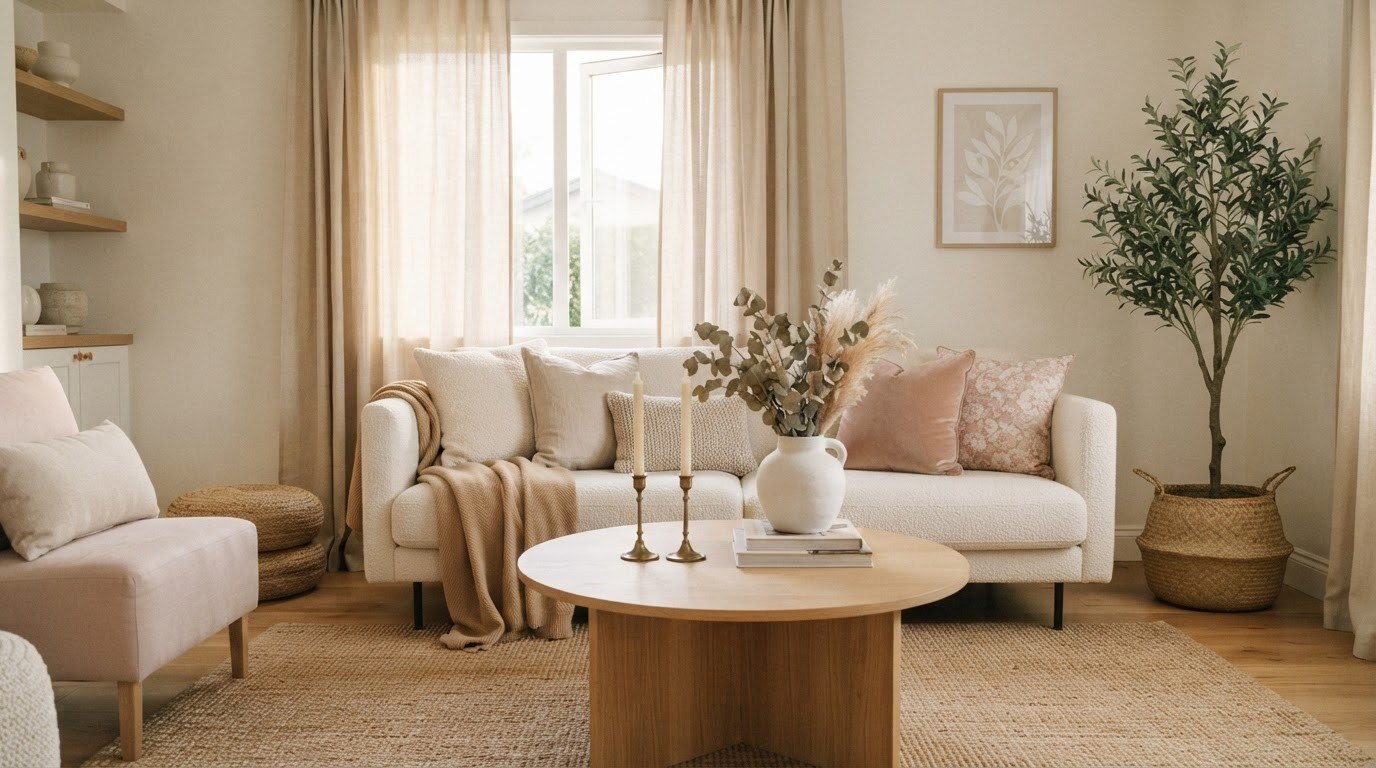
Brass and gold accents warm up neutrals instantly. A pair of brass taper candle holders on a coffee table or windowsill is one of the easiest ways to do it, especially with ivory candles. If you love candles as much as I do (glass candles are my weakness), my guide on how to style candles has more ideas.
7. Hang Linen Curtains High and Wide
Soft beige linen curtains filter light beautifully and add gentle texture. Hang the rod about 4–6 inches above the window frame and let the panels extend a few inches past each side. The window looks taller, and the fabric pools light into the room instead of blocking it.
8. Use Ceramics With Character
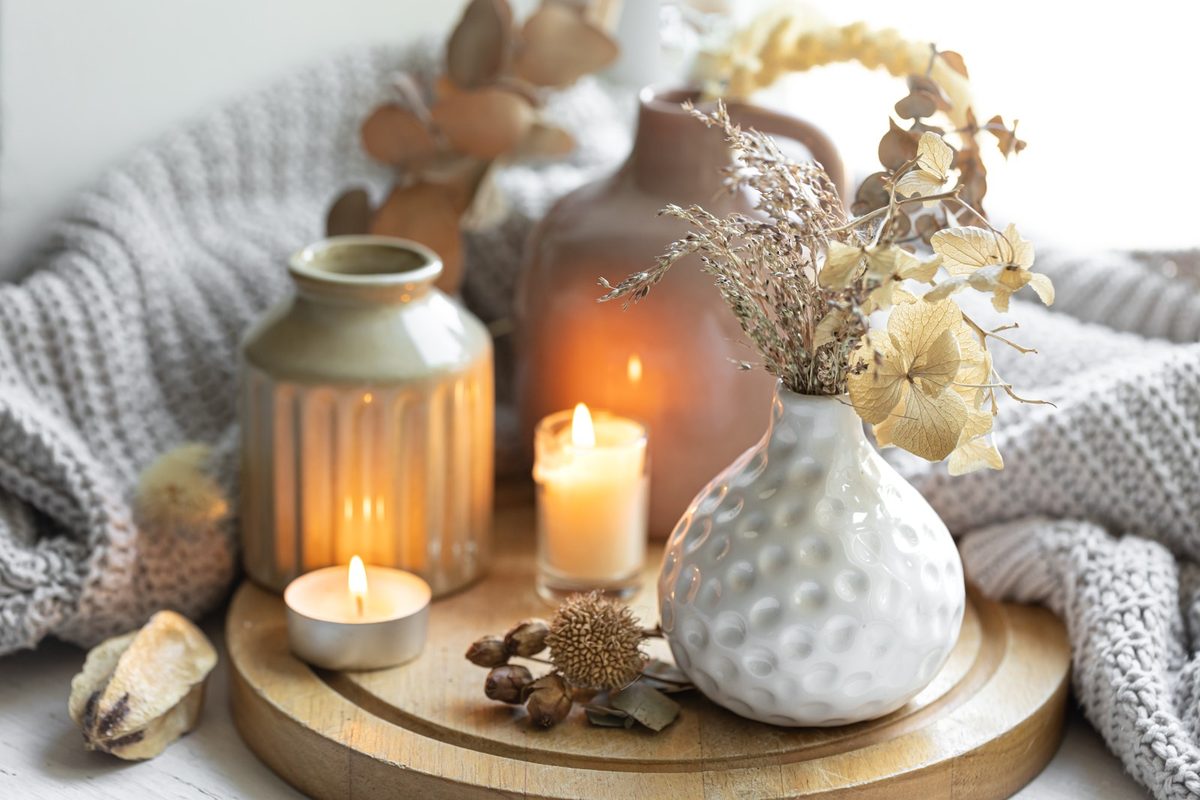
A smooth white vase is lovely, but a slightly textured or matte one has more depth. A white ceramic textured vase with dried pampas, eucalyptus or a few branches works on a shelf, a dresser or a dining table. Look for an organic shape and a matte, slightly speckled finish.
9. Add Greenery (Real or Faux)
Green is technically not a neutral, but in a cream or beige room it behaves like one. A real plant is wonderful if you have the light; if not, a faux olive tree in a corner adds height and softness with zero care. Look for realistic, slightly uneven leaves and a natural-looking trunk, then repot it into a basket or ceramic planter so it doesn't look plastic.
10. Layer Your Lighting
Lighting changes neutrals more than anything else. Aim for at least three light sources at different heights: a floor lamp, a table lamp and something low like candles or a small accent lamp. Warm white bulbs (around 2700K) keep cream and beige looking soft; cooler bulbs can make them look gray.
11. Introduce Subtle Pattern
Pattern doesn't have to mean color. A cream-on-cream stripe, a tonal check throw or a beige and white woven pillow add rhythm without breaking the calm. One or two quiet patterns per room are plenty.
12. Leave Some Space Empty
Neutral rooms shine when they can breathe. Clear one surface completely, leave a bit of wall bare, and give each object room. Calm is the whole point of a neutral home, and empty space is part of the design.
8 Textures That Make Neutrals Look Rich
If "add texture" has always sounded vague, here's a concrete list. Pick at least one from the soft group, one from the natural group and one from the hard group for every room.
- Boucle. Nubby and soft, it catches light and shadow, so even a plain cream reads as layered. Best on pillows, an accent chair or a footstool.
- Linen. Slightly rumpled and relaxed. Curtains, bedding, napkins and lampshades all benefit.
- Chunky knit. A thick throw over the arm of a sofa or the end of a bed adds instant softness.
- Jute and sisal. Earthy and grounding, perfect for rugs, baskets and placemats.
- Rattan and cane. Light and airy, lovely on lamp shades, wall baskets, side tables and headboards.
- Raw or matte ceramic. Vases, bowls and lamp bases with a gently uneven surface feel handmade.
- Natural wood grain. Visible grain adds movement. Oiled or matte finishes look warmer than glossy ones.
- Stone or travertine. A small tray, a candle plinth or a set of coasters adds a cool, solid note that balances all the soft fabrics.
A helpful way to think about it: soft textures make a room feel welcoming, natural textures make it feel grounded, and hard textures keep it from feeling sleepy. You need a little of all three.
Neutral Decor Room by Room
The same principles apply everywhere, but each room has its own easy wins.
Living room. Start with the sofa and rug as your base, then add a textured throw, two or three pillows in different weaves, a wood coffee table and one dark accent. If your space is tight, my small living room ideas show how to keep it light without feeling empty.
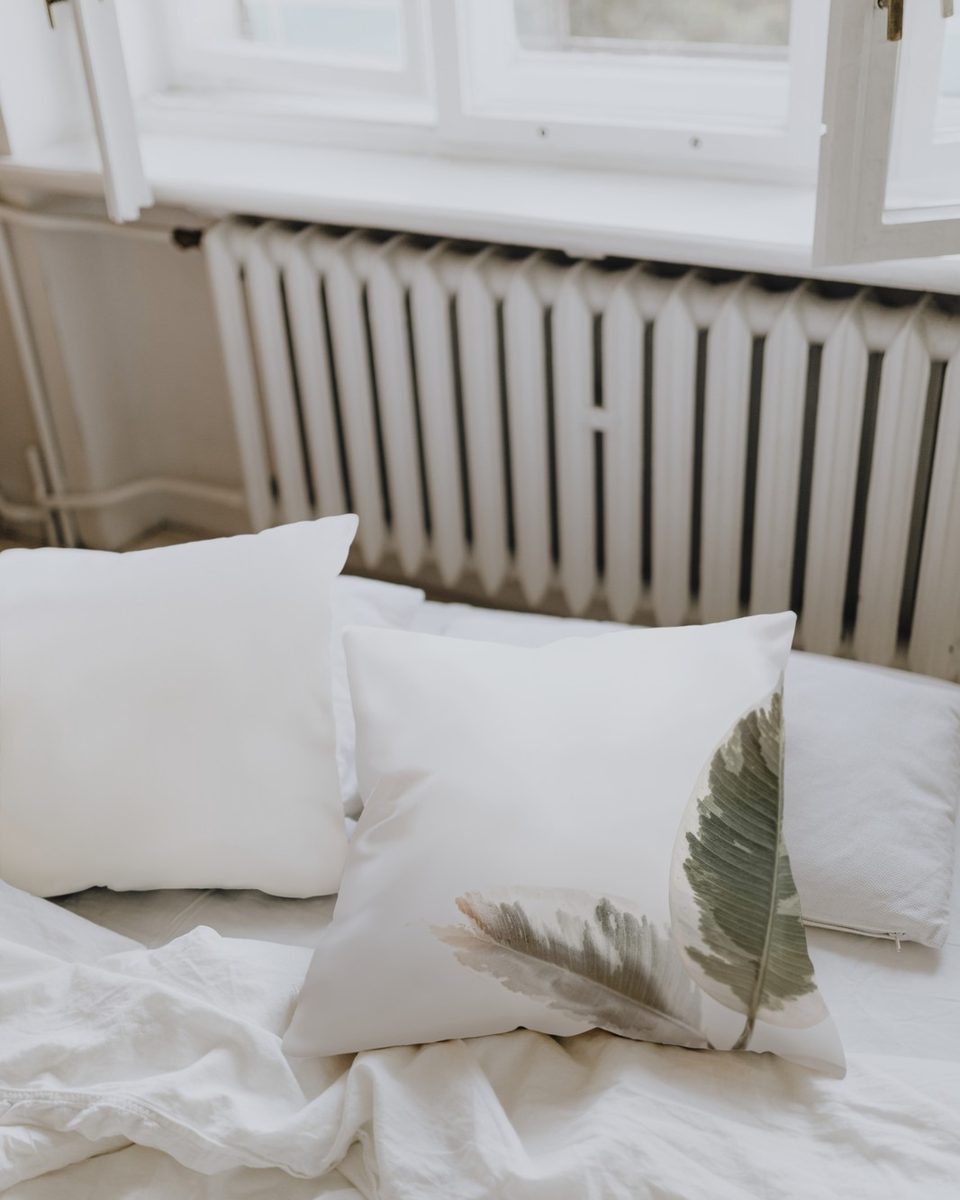
Bedroom. Layer bedding in three tones (white sheets, an oatmeal duvet, a camel or sand throw at the foot of the bed). Add a linen headboard or a wooden one, and keep nightstands simple with one lamp and one small object each.
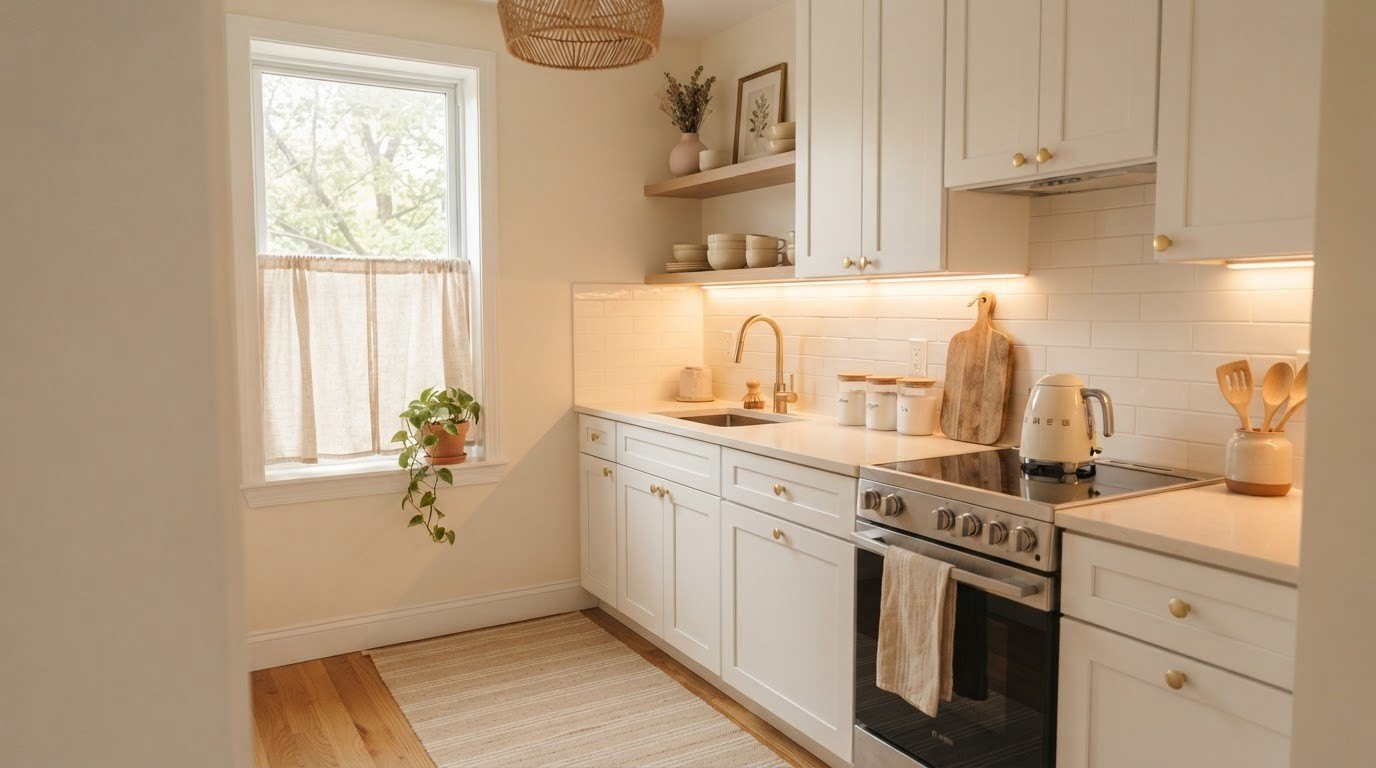
Kitchen. Swap mismatched countertop items for a few pieces in wood, ceramic and glass. A wooden cutting board leaning against the wall, a cream utensil crock and a small plant are often all you need.
Bathroom. Waffle or linen-look towels in cream and beige, a woven basket and one brass detail (a soap dish or a hook) make even a rental bathroom feel warmer.
One tip that helps across every room: repeat each material at least twice. If there's rattan in a basket, echo it in a lampshade or a tray. Repetition is what makes a neutral home feel designed rather than accidental. For more ideas on pulling a look together, my guide to aesthetic room decor covers styling shelves, corners and walls.
Why Your Neutral Room Feels Flat: Quick Fixes
If something feels off and you can't quite say what, find the symptom below and try the matching fix. Most take less than an afternoon.
| What you notice | Likely cause | Quick fix |
|---|---|---|
| The room looks dull and gray in the evening | Cool bulbs or one overhead light | Switch to warm white bulbs and add a table lamp and candles |
| Everything blends together | No contrast | Add one dark element: frames, a lamp base, a wood bowl |
| It feels cold and sterile | Only cool whites and grays | Bring in a camel throw, warm wood or brass |
| It feels heavy and yellow | Too many warm beiges | Add white ceramics, a cooler stone or light linen |
| It looks like a showroom | Only smooth, new surfaces | Add boucle, jute, linen and one vintage or handmade piece |
| Something feels lifeless | No natural elements | Add a plant, branches in a vase or a bowl of fruit |
| It feels cluttered even though it's neutral | Too many small objects | Group items in threes on trays and clear one surface fully |
Try one fix at a time and live with it for a few days. Neutral rooms are all about subtle shifts, and it's easier to see what works when you change one thing at once.
Neutral Decor in Small Spaces
Neutrals are a gift in a small apartment, because light shades bounce light around and make a room feel larger. The challenge is keeping a small neutral space from feeling like a blank box. A few small-space tips:
- Go tone-on-tone with big pieces. A sofa, rug and curtains in close shades blur the edges of the room and make it feel wider.
- Put your contrast up high. Dark frames or a brass sconce at eye level draw the eye upward, which makes ceilings feel taller.
- Choose leggy furniture. Chairs and side tables on thin legs show more floor, so the room feels airy.
- Keep texture where you touch. In a tiny room, you don't need texture everywhere. Pillows, a throw and one basket near the sofa are enough.
- Use baskets as storage and decor. Woven baskets hide clutter and add a natural layer at the same time.
Most of these changes cost very little, and many can come from things you already own. Moving a lamp, swapping two pillow covers or clearing one shelf is often enough to see a difference.
A Weekend Plan To Warm Up a Neutral Room
If you'd like a simple order to follow, this is the one I'd choose:
- Saturday morning: declutter surfaces and take a black-and-white photo to check contrast.
- Saturday afternoon: change bulbs to warm white and add one more lamp.
- Sunday morning: add texture with pillows, a throw and a rug.
- Sunday afternoon: finish with one dark accent, one metal and something green.
By Sunday evening, light a candle and look at the room in lamplight. That's when warm neutrals really come alive. For even more ways to make your space feel inviting, my home ideas guide has plenty of small, renter-friendly touches.
Final Thoughts
Neutral home decor doesn't have to be bland. With a palette that has a base, a middle, an accent and a metal, a mix of textures, a few dark notes and layered warm light, cream and beige become some of the most inviting colors you can live with.
Start with one corner, make one change at a time, and let the room evolve slowly. A calm, warm home is built in small, thoughtful layers, and yours is already on its way.