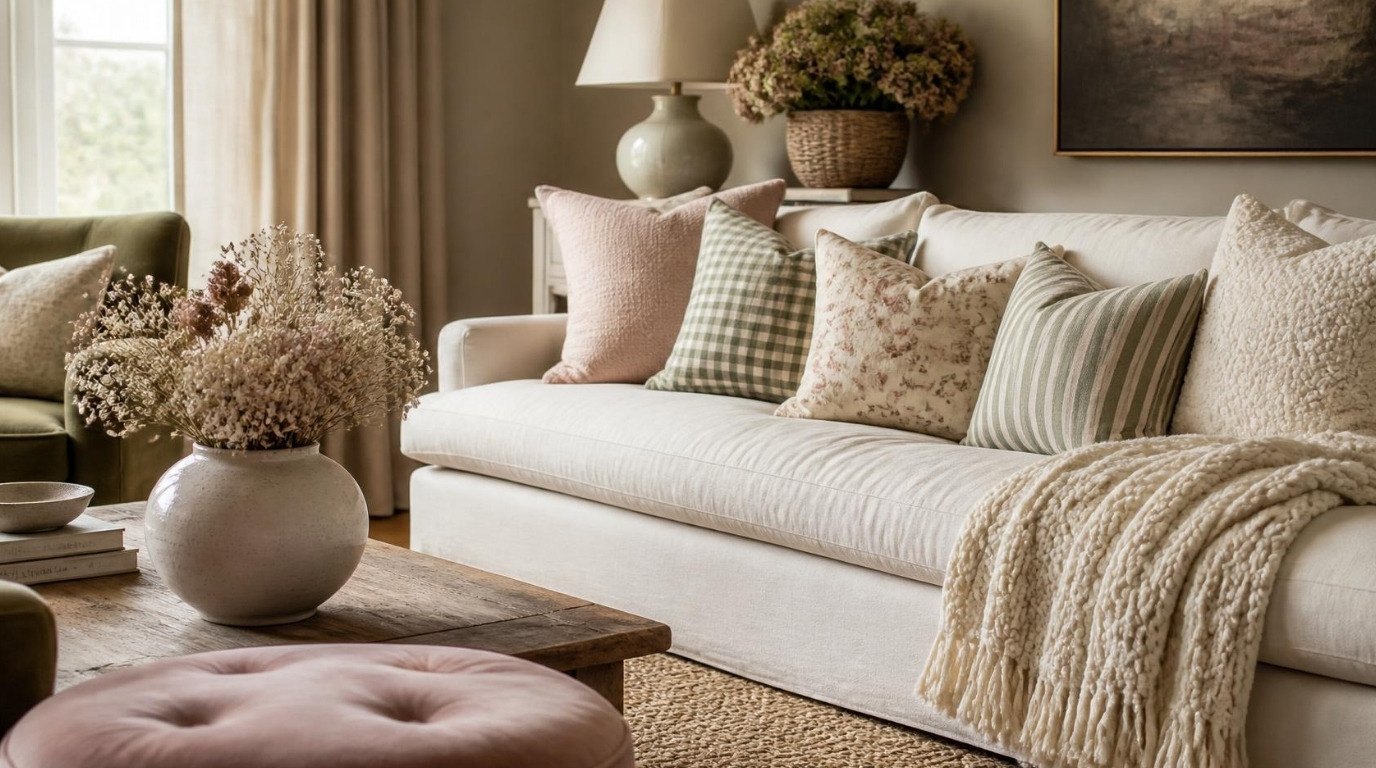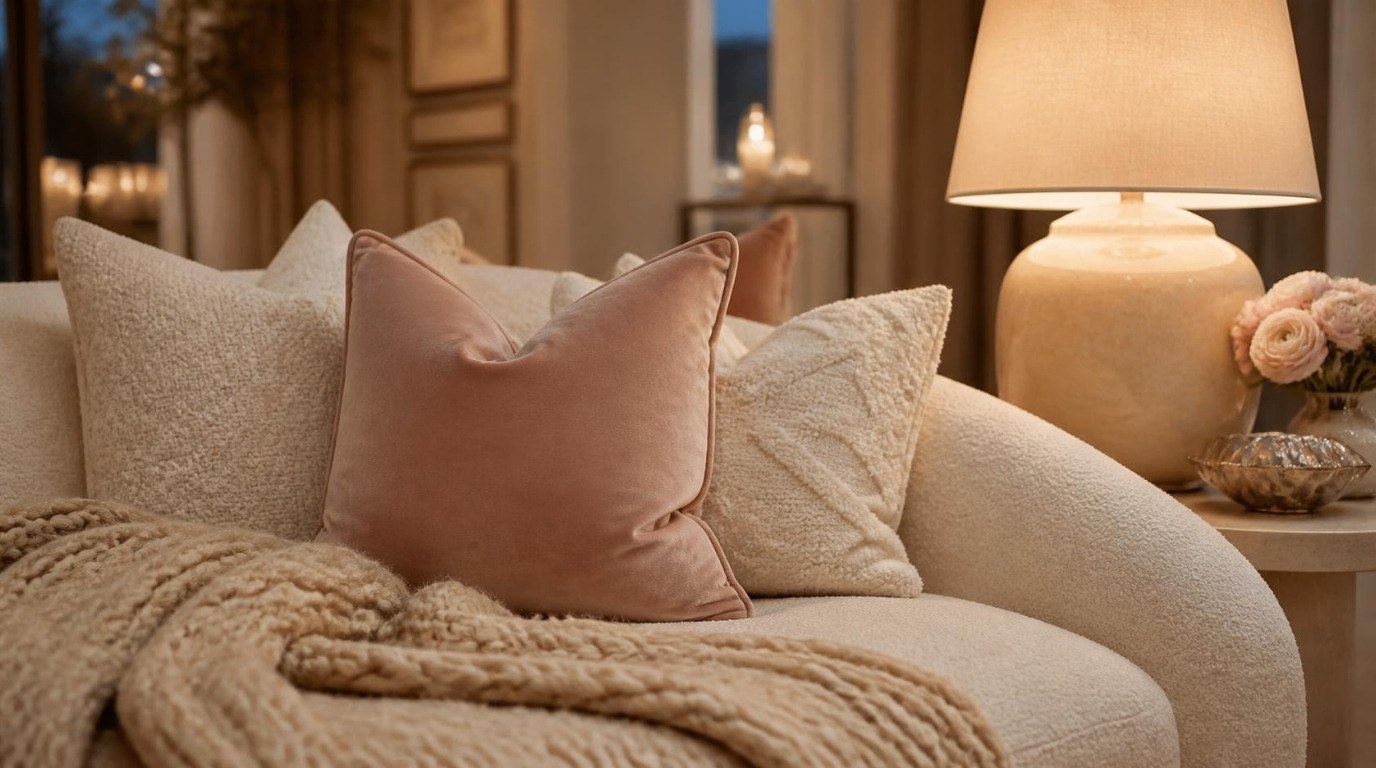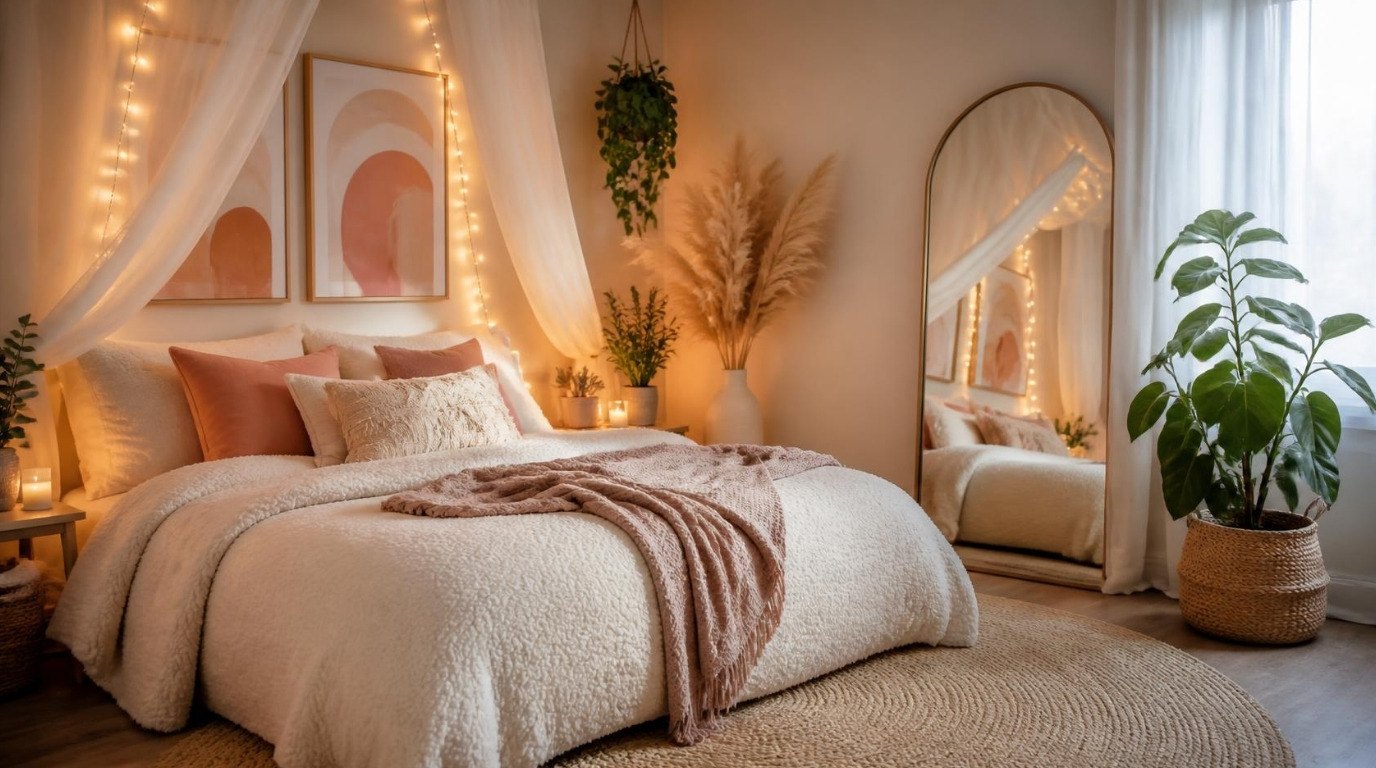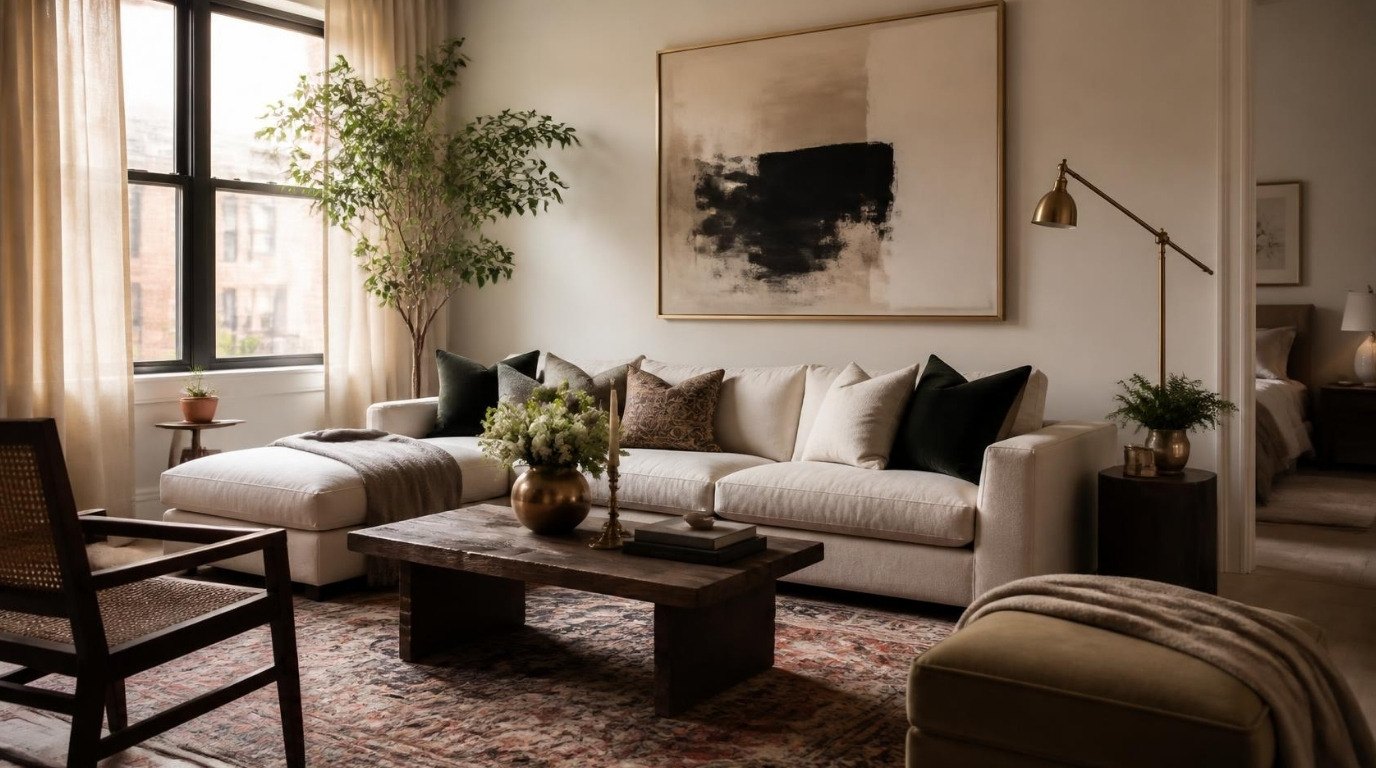
A sofa that looks styled rarely has expensive pillows on it. It has pillows that follow a simple formula: a tight color palette, one bold pattern balanced by a quieter one, a texture you want to touch and inserts full enough to hold their shape. Once you see the formula, you can't unsee it, and you can copy it on any sofa, in any style, on almost any budget.
The good news is that you don't need an eye for design to get there. Pillow styling is surprisingly mathematical. There are real numbers behind it (how many, what size, how much bigger the insert should be), and the rest is a few easy rules about color, pattern and texture that stylists use without thinking about them.
This guide walks you through throw pillow combinations step by step: how to pull a three-color palette from your room, how to mix pattern scales, which textures work together, the right count and sizes for your sofa, symmetrical versus asymmetrical layouts, the insert trick that fixes flat pillows, bed pillow arrangements and seasonal swaps. You'll also get five ready-made pillow formula cards you can copy exactly, plus the mistakes that make a sofa look messy instead of styled.
Think of it as a recipe card for your couch. Pick a formula, swap a few covers and enjoy that just-styled look every time you walk into the room.
The Simple Rule Behind Every Good Pillow Combination
Almost every pillow combination you've saved on Pinterest follows the same quiet structure. I call it the 1-1-1 rule:
- One large pattern (or your boldest pillow) that sets the mood.
- One small pattern (a stripe, check, tiny dot or subtle geometric) that repeats a color from the large one.
- One solid with texture (linen, velvet, bouclé or knit) that gives the eye a place to rest.
Add a lumbar pillow if your sofa is long enough, and that's the whole system. Everything else in this guide is just a way of choosing those three pillows well.
It took me a while to understand that pillows aren't really decor on their own. They're the bridge between your sofa and the rest of the room, which is why they work best when they borrow colors from the rug, the curtains or the art. If you're pulling a whole room together, my guide to living room ideas that feel warm and lived-in pairs nicely with everything below.
Step 1: Pick a Three-Color Palette From the Room
Before you buy a single cover, stand in your living room and pick three colors that are already there. This is the step most people skip, and it's the reason so many pillow piles look random.
- Your base color. Usually the color of the sofa or the main neutral in the room (cream, oatmeal, gray, white). About half of your pillows can sit in this family, just in different textures.
- Your secondary color. A color from the rug, curtains or a big piece of art. This one shows up in your patterned pillows.
- Your accent color. A small pop, used on one pillow or as a thread inside a pattern: blush, sage, soft gold, dusty blue, terracotta.
A quick test: take a photo of the sofa and squint at it. If you can name the three colors in two seconds, your palette is working. If you see five or six competing colors, remove one pillow at a time until the picture calms down.
If your sofa itself is a bold color, flip the rule: the sofa becomes your accent, and the pillows lean into calm neutrals with one pillow that echoes the sofa color in a pattern. And if you love a soft, quiet look, my neutral home decor guide explains how to keep beige and cream from looking flat (the answer is almost always texture).
Step 2: Mix Pattern Scales
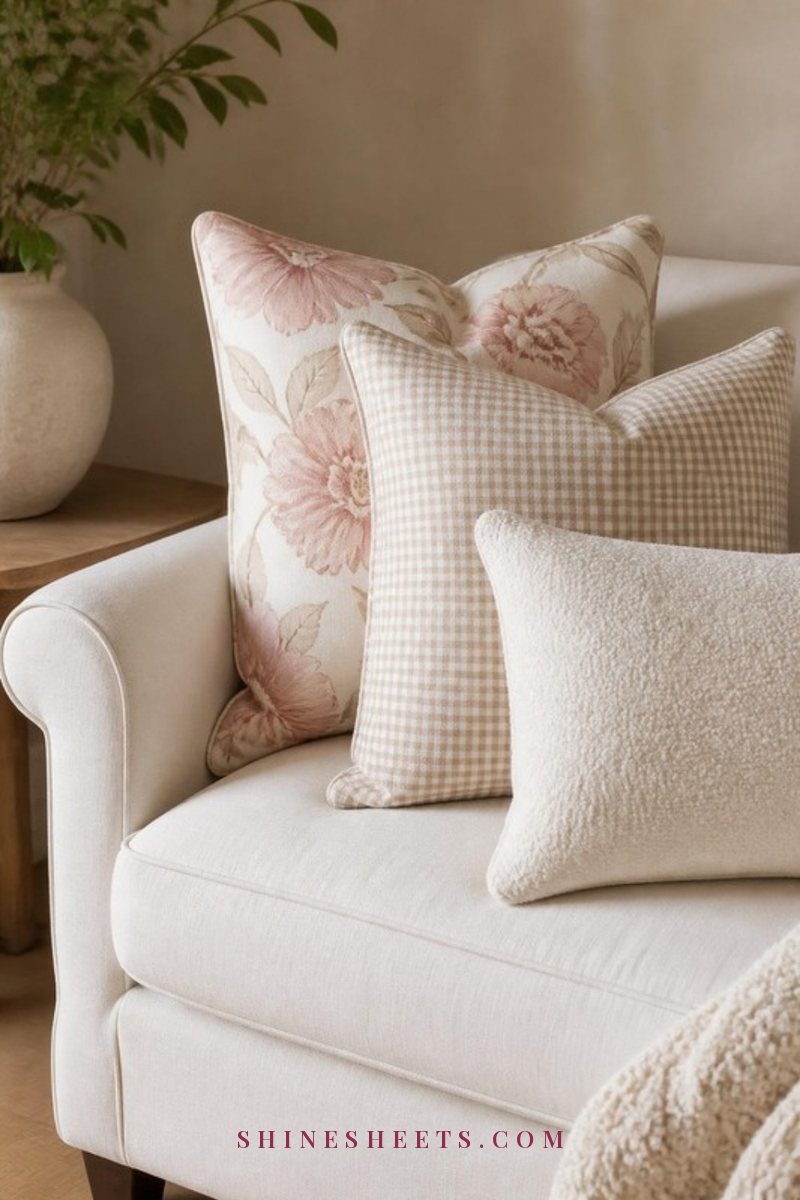
Pattern mixing feels scary until you realize there's only one real rule: vary the scale. Two large patterns fight for attention. Two tiny patterns blur into visual noise. One large, one small and one solid always look intentional.
- Large-scale patterns: big florals, wide abstract brushstrokes, large medallions, oversized checks or wide stripes. Use this on your biggest pillow, at the back.
- Small-scale patterns: pinstripes, ticking stripes, gingham, small dots, tiny block prints, subtle herringbone. This goes on your mid-size pillow in front.
- The solid: no pattern at all, but texture (more on that next). This is the pillow that keeps everything from looking busy.
For the small pattern, a classic stripe is the easiest win. A beige and white striped pillow cover works with florals, plaids and solids, and it quietly reads as "styled" in almost any room.
One more trick that ties everything together: make sure the small pattern shares at least one color with the large pattern. If the floral has blush and beige in it, a beige stripe or a blush check will look like it belongs to the same family. For a deeper dive into this idea across the whole room, see my guide to mixing patterns and textures without the chaos.
Step 3: Vary the Textures
Texture is the secret behind every expensive-looking neutral sofa. Even if all your pillows are cream, they'll look rich and layered if one is linen, one is velvet and one is bouclé. Here's how the most common fabrics behave:
- Linen: relaxed, matte, slightly wrinkled. It's the easiest base fabric and works in every season. Soft cream linen throw pillow covers are the closest thing to a universal pillow I can think of.
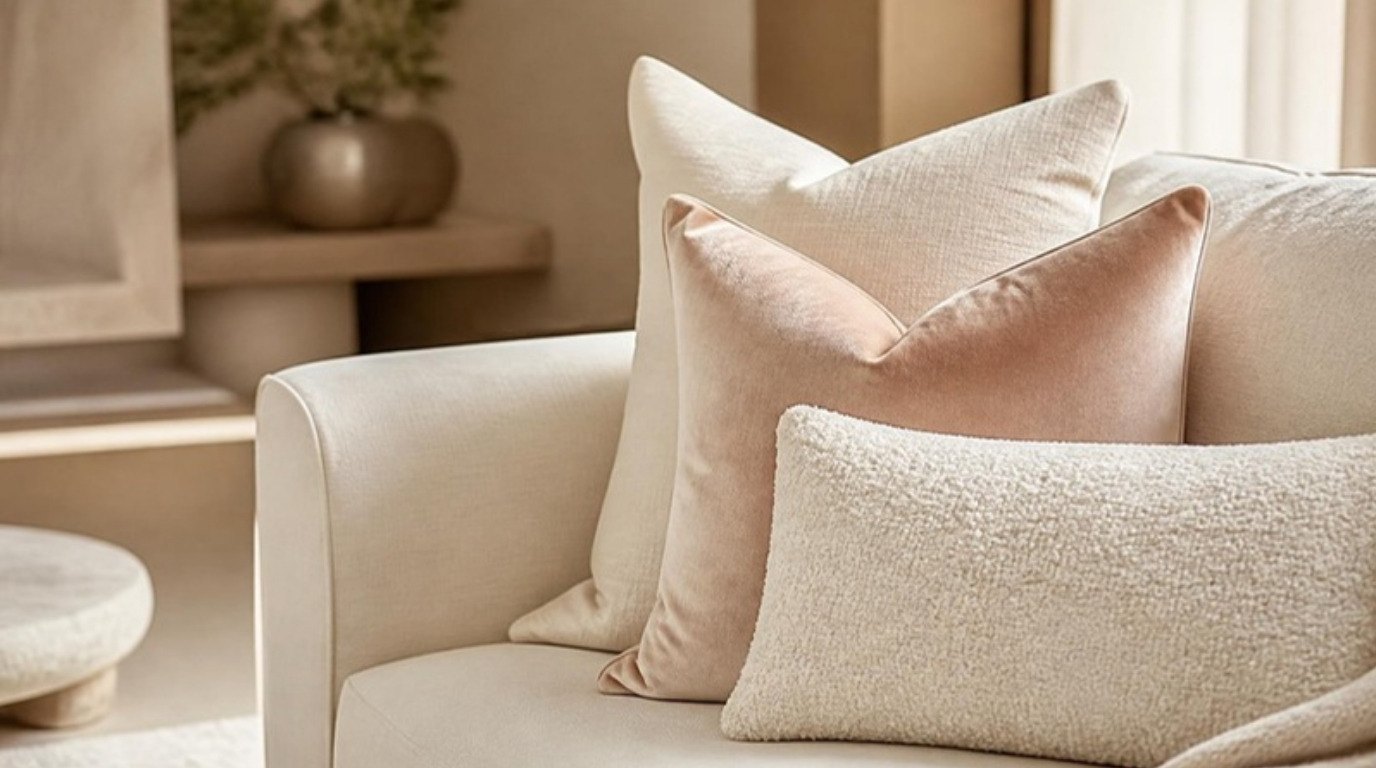
- Velvet: soft sheen, rich color, a little glamorous (very Old Hollywood, which is probably why I love it). A blush velvet pillow cover adds warmth to a neutral sofa without shouting.
- Bouclé: nubby, curly and sculptural. It photographs beautifully and adds instant depth, especially in ivory or oatmeal.
- Knit: chunky, soft, wintery. Perfect for seasonal swaps.
- Cotton and canvas: crisp and casual, great for printed patterns and easy to wash.
- Faux fur and sherpa: one at a time, please. A single faux fur pillow feels luxe; three feel like a teddy bear convention.
A simple formula: pair one flat fabric (linen or cotton) with one shiny fabric (velvet or satin) and one nubby fabric (bouclé or knit). Flat, shiny, nubby. Your eye reads that contrast as depth, even when the colors are nearly identical.
Step 4: Get the Sizes and Count Right
Size is where pillow combinations quietly fall apart. Pillows that are too small make a sofa look sparse and cheap; too many pillows make it impossible to actually sit down. Layering two sizes (big at the back, smaller in front) creates that full, designed look.
Here's my go-to cheat sheet for counts and sizes by sofa type:
| Sofa type | How many pillows | Sizes to use |
|---|---|---|
| Loveseat or apartment sofa | 2–3 | One 20 in per side, optional 12 x 20 in lumbar |
| Standard 3-seater | 4–5 | 22 in + 20 in on each end, plus one lumbar in the middle |
| Large or deep-seat sofa | 5–6 | 24 in + 22 in on each end, plus a 14 x 36 in long lumbar |
| Sectional | 6–8 | 22 in + 20 in at each end and in the corner, lumbar on the long side |
| Accent chair | 1 | One lumbar or one 18–20 in square |
The rule for a standard 3-seater, which is what most of us have: two pillows per side (a 22-inch behind a 20-inch), plus one lumbar if you want the middle filled. That's five pillows, and it's the arrangement you see in most styled living rooms.
If you're working with a smaller space, keep it to two or three pillows and choose one size up from what feels natural. Fewer, bigger pillows make a small sofa look more generous. My guide to small living room ideas has more ways to make a compact room feel spacious.
Symmetrical vs Asymmetrical Arrangements
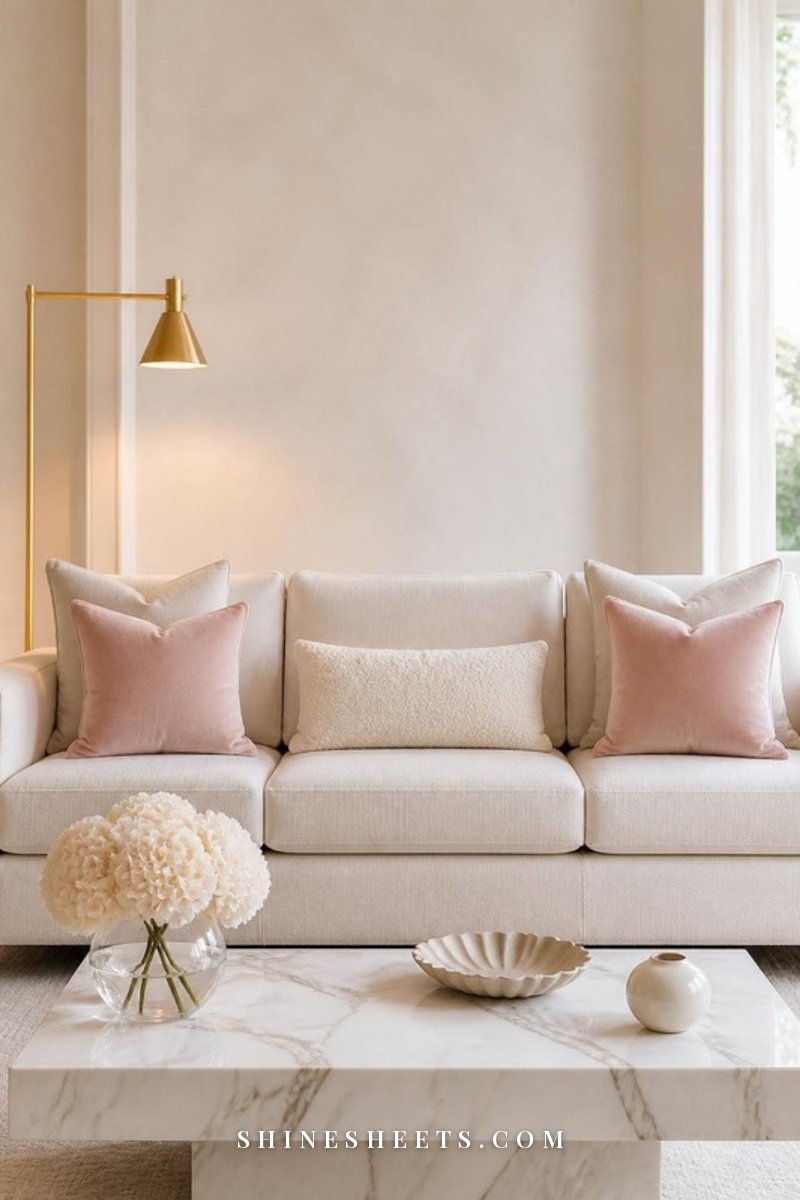
There are two ways to arrange pillows on a sofa, and both look good. The right one depends on the mood of your room.
Symmetrical: Calm, Classic, Polished
Each end of the sofa is a mirror image of the other: the same large pillow at the back, the same smaller pillow in front, and an optional lumbar centered in the middle. This feels tailored and traditional and works especially well in formal living rooms, with a sofa centered under a window or art, and with classic French or hotel-inspired styles.
Formula: A + B | lumbar | B + A.
Asymmetrical: Relaxed, Collected, Modern
One end gets a fuller grouping (for example two or three pillows), and the other end gets one or two pillows. The weights feel balanced, but the arrangement looks more casual and lived-in. This is lovely with sectionals, deep-seat sofas and rooms that have a lot of personality.
Formula: A + B + C on one end, A + lumbar on the other. Repeat at least one pillow on both ends so the look stays connected.
A small permission slip: you don't need perfect symmetry to look polished. If an odd number of pillows feels more natural, go asymmetrical and make sure the colors repeat on both sides.
The Insert Secret: Why Your Pillows Look Flat
If your pillows look limp and sad no matter how lovely the covers are, the problem is almost always the insert. This is the single fastest upgrade in this whole guide.
- Size up by 2 inches. For a 20-inch cover, use a 22-inch insert. For a 22-inch cover, use a 24-inch insert. The cover fills out completely, the corners look plump, and the pillow holds its shape.
- Choose a feather-down blend (or a good down alternative). Feather-down blends are what give you that soft dent on top, the famous "karate chop." Polyester-fiber inserts tend to stay round and stiff. If you prefer no feathers, plush down alternative pillow inserts in 22 x 22 are a great middle ground.
- Fluff them daily. Squeeze each pillow from the sides like an accordion a few times, then chop gently in the middle. Ten seconds per pillow.
- Replace tired inserts every few years. If an insert stays flat after fluffing, it's done.
A note on the karate chop: it looks lovely on soft feather inserts, but it's optional. On firmer inserts or in modern rooms, a simple fluffed and upright pillow looks just as styled.
Pillow Formula Cards: 5 Ready-Made Combinations
Here's the fun part. These five formula cards are complete pillow combinations you can copy exactly. Each one follows the 1-1-1 rule and works on a standard 3-seater (use pillows 1 and 2 on each end, the lumbar in the middle). Screenshot the table and take it shopping.
| Look | Pillow 1 (22 in, back) | Pillow 2 (20 in, front) | Pillow 3 (solid texture) | Lumbar |
|---|---|---|---|---|
| Neutral Layered | Cream washed linen | Beige and white stripe | Oatmeal knit | Ivory bouclé |
| Soft Blush | Blush and cream large floral | Small blush gingham | Blush velvet | Cream linen with fringe |
| Classic French | Toile in cream and soft blue | Thin blue ticking stripe | Ivory linen | Pale yellow velvet |
| Coastal Calm | Wide sand and white stripe | Small baby blue block print | White textured cotton | Natural linen |
| Cozy Winter | Cream cable knit | Small plaid in beige and sage | Sage chunky knit | Camel faux fur |
You don't have to buy all five pillows at once. Start with pillows 1 and 3 (the big one and the solid texture), live with them for a week, then add the small pattern and lumbar.
1. Neutral Layered
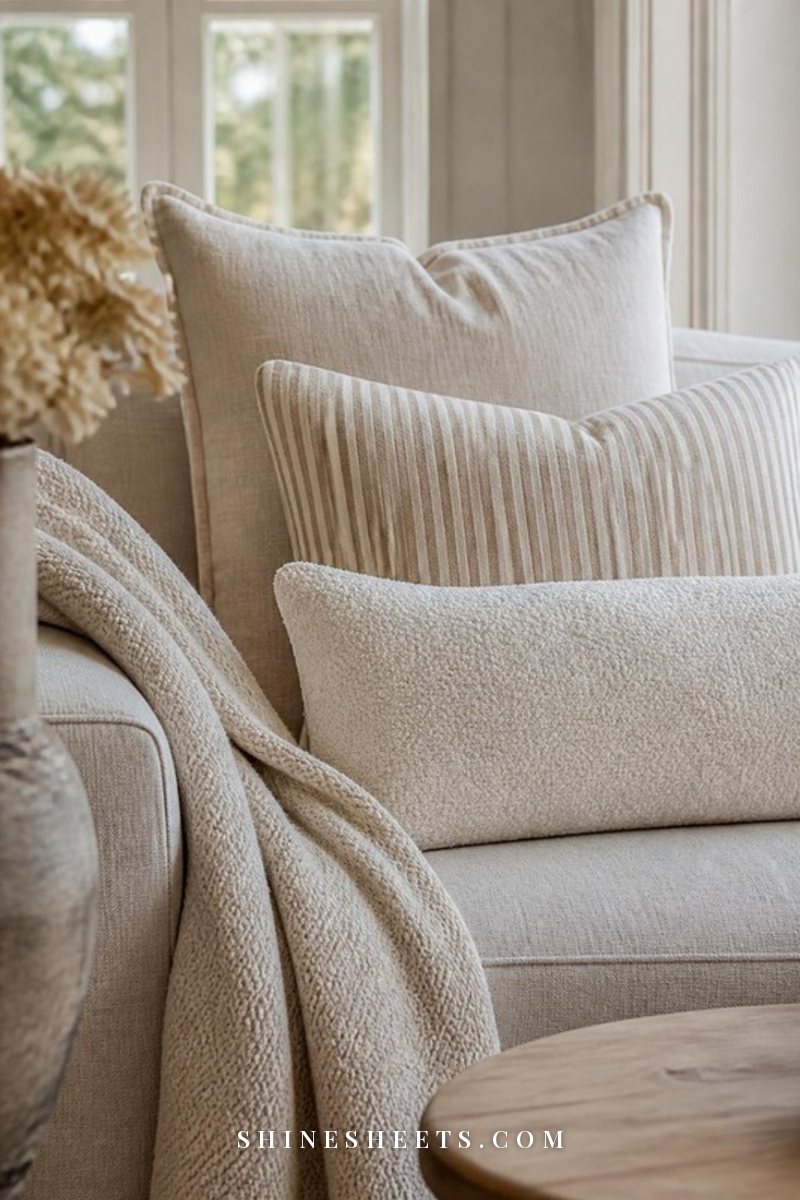
The most forgiving combination of all, and the one I'd choose for a first apartment or a sofa you don't want to commit to a color on. It's all about texture: flat linen, crisp stripe, soft knit and nubby bouclé. An ivory bouclé lumbar pillow is the piece that makes this look feel expensive.
Works best with: cream, oatmeal, light gray or white sofas, natural wood, jute rugs.
2. Soft Blush
Feminine without being sweet. The floral sets the mood, the tiny gingham repeats its blush, and the velvet adds a little glamour. Keep the lumbar cream so the sofa doesn't tip into "too pink."
Works best with: white, cream or light gray sofas, brass accents, a soft rug. If you love this palette, pair it with a few gold-framed prints and a glass candle on the side table.
3. Classic French
Toile, ticking stripe and linen are the holy trinity of French country style. The pale yellow velvet lumbar is the unexpected detail that keeps it fresh and slightly chic instead of rustic.
Works best with: linen slipcovered sofas, antique-style wood, patterned rugs with faded colors.
4. Coastal Calm
Light, airy and relaxed, without anchors or seashells. A wide sand stripe, a small baby blue print and lots of white cotton and linen give you that breezy beach-house feeling all year.
Works best with: white or sand sofas, rattan, light floors, sheer curtains.
5. Cozy Winter
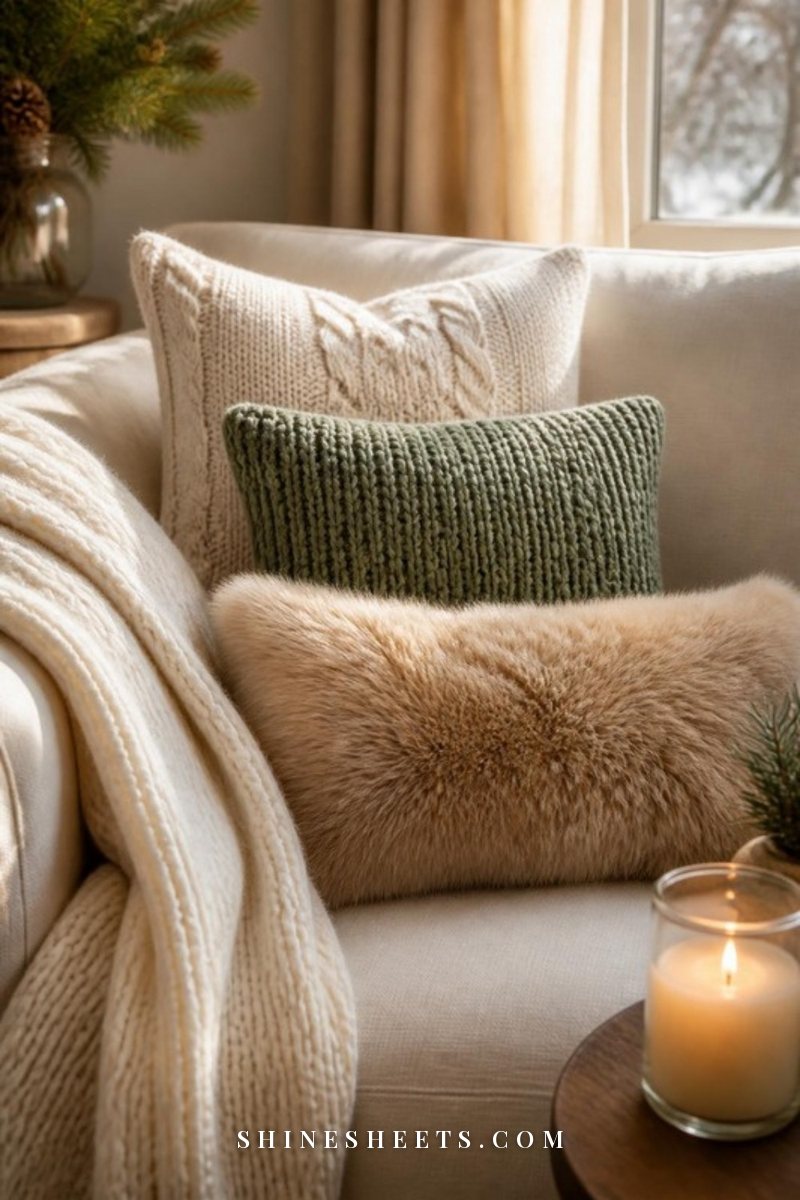
Your cold-weather swap. Cable knit and chunky knit bring the warmth, the small plaid keeps it from looking too uniform, and one faux fur lumbar adds that touchable, layered feeling. A sage knit cushion cover is a soft way to bring a little color into an otherwise neutral winter sofa.
Works best with: any neutral sofa, a chunky throw blanket over one arm and warm lamp light in the evening.
Bed Pillow Arrangements
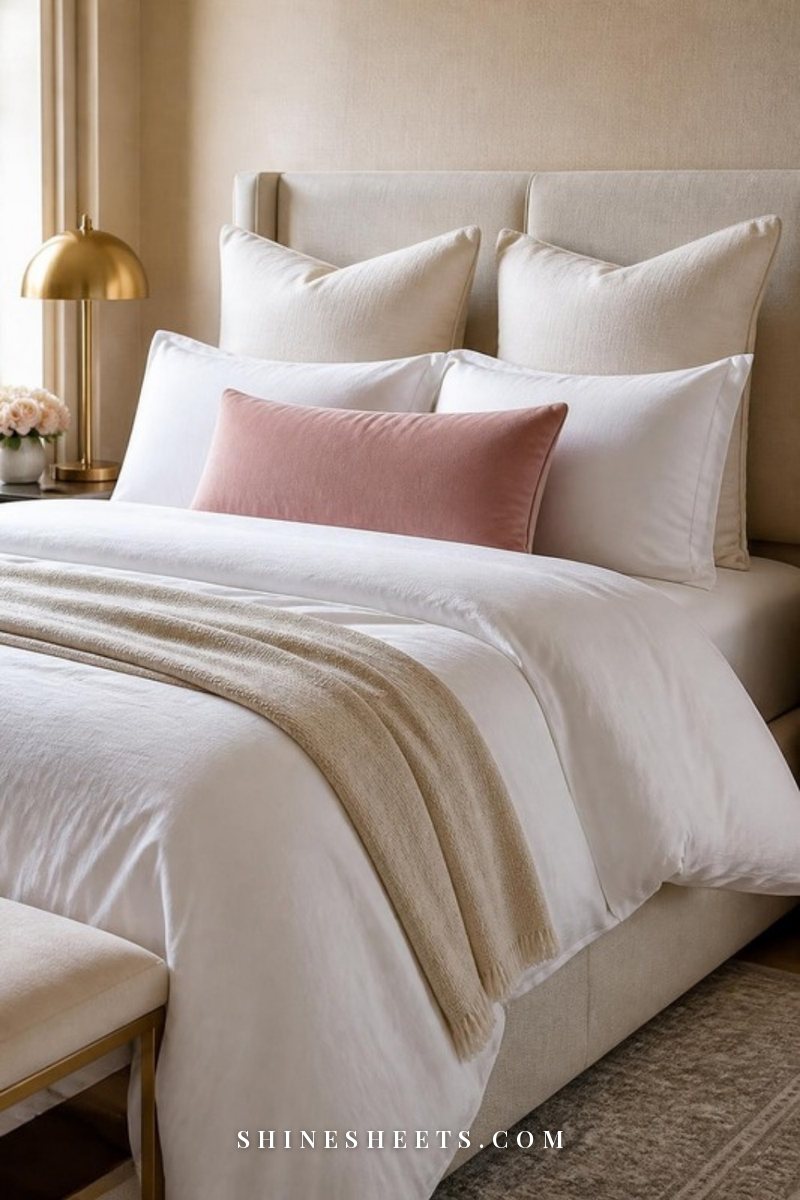
The same rules work on a bed: layer from big at the back to small in the front, and repeat your colors. Here are three arrangements, from simple to full hotel look:
- Simple (everyday): two sleeping pillows in standard shams plus one lumbar in front. Fast to make, still looks finished.
- Classic (queen bed): two 26-inch euro shams at the back, two sleeping pillows in front, one lumbar or one 20-inch decorative pillow in the center.
- Full (king bed): three euro shams at the back, two or three sleeping pillows, then two 20-inch decorative pillows and one lumbar in front.
Keep the euro shams and sleeping pillows in solid, calm colors (white, ivory, beige), and save the pattern and texture for the front pillows. That way the bed looks layered, and you only need to change a couple of covers to refresh it. For the sheets, duvet and folding side of things, my step-by-step guide to making your bed look like a hotel bed covers the rest, and my bedroom ideas that feel like a hug have more ways to soften the whole room.
Seasonal Swaps With Covers Only
You never need to buy new pillows for each season. Keep good inserts all year and swap only the covers. They fold flat, so a full set takes up about as much space as a sweater.
- Spring: swap knit for linen, add one floral or a soft green pattern.
- Summer: white, sand and baby blue in crisp cotton and linen. Remove one pillow so the sofa feels lighter.
- Fall: bring in velvet, warmer neutrals like camel and rust, and a small plaid.
- Winter: knits, faux fur, cream and sage. Add the extra pillow back.
A good rhythm: keep your two base pillows (usually the solid textures) year-round and swap only the patterned covers and the lumbar. That's two or three covers per season, which keeps it affordable. Wash the covers before storing them so they're fresh and ready when the season comes back around.
7 Common Throw Pillow Mistakes
- Too many pillows. If you have to move pillows to sit down, there are too many. For most sofas, four or five is plenty.
- Everything matching. A pillow set that came in one package looks flat. Mix at least two patterns and two textures.
- Flat inserts. Size up by 2 inches and choose a feather-down blend or a plush down alternative.
- All the same size. Layer a larger pillow behind a smaller one for depth.
- Two big patterns side by side. Vary the scale: one large, one small, one solid.
- Colors that don't appear anywhere else. Every pillow color should repeat somewhere in the room (rug, art, curtains, a vase).
- Pillows that are too small for the sofa. On a standard sofa, 16-inch and 18-inch pillows usually look lost. Start at 20 inches.
Fix just two of these, usually the inserts and the sizes, and your sofa will look noticeably more styled by tonight.
Final Thoughts
Throw pillows are one of the easiest, kindest ways to change how a room feels. You don't need a new sofa, a designer or a big budget, just three colors, one large pattern, one small pattern, one beautiful texture and inserts that are a little bigger than the covers.
Pick the formula card that feels most like you, start with two pillows and build from there. Your sofa will look styled, your living room will feel more finished, and every time you sink into it, it'll feel like home.