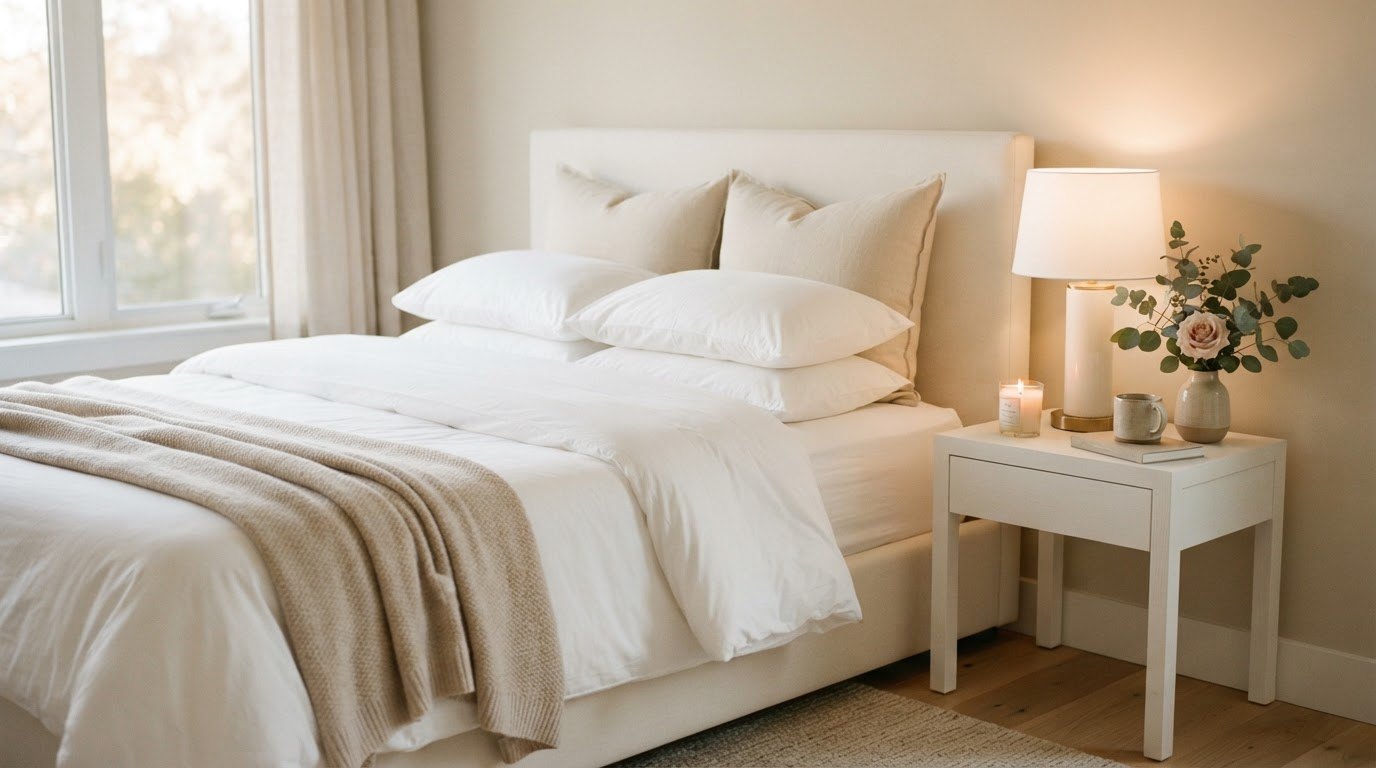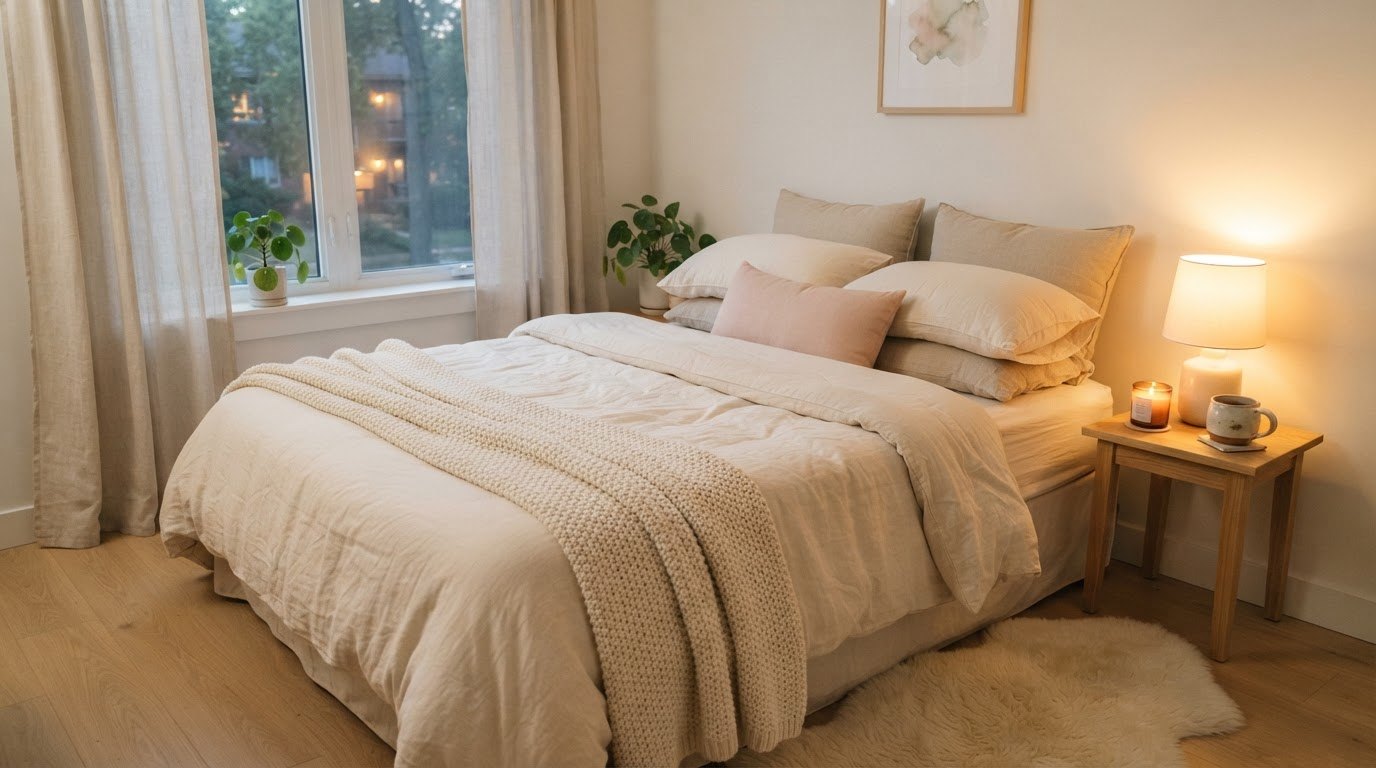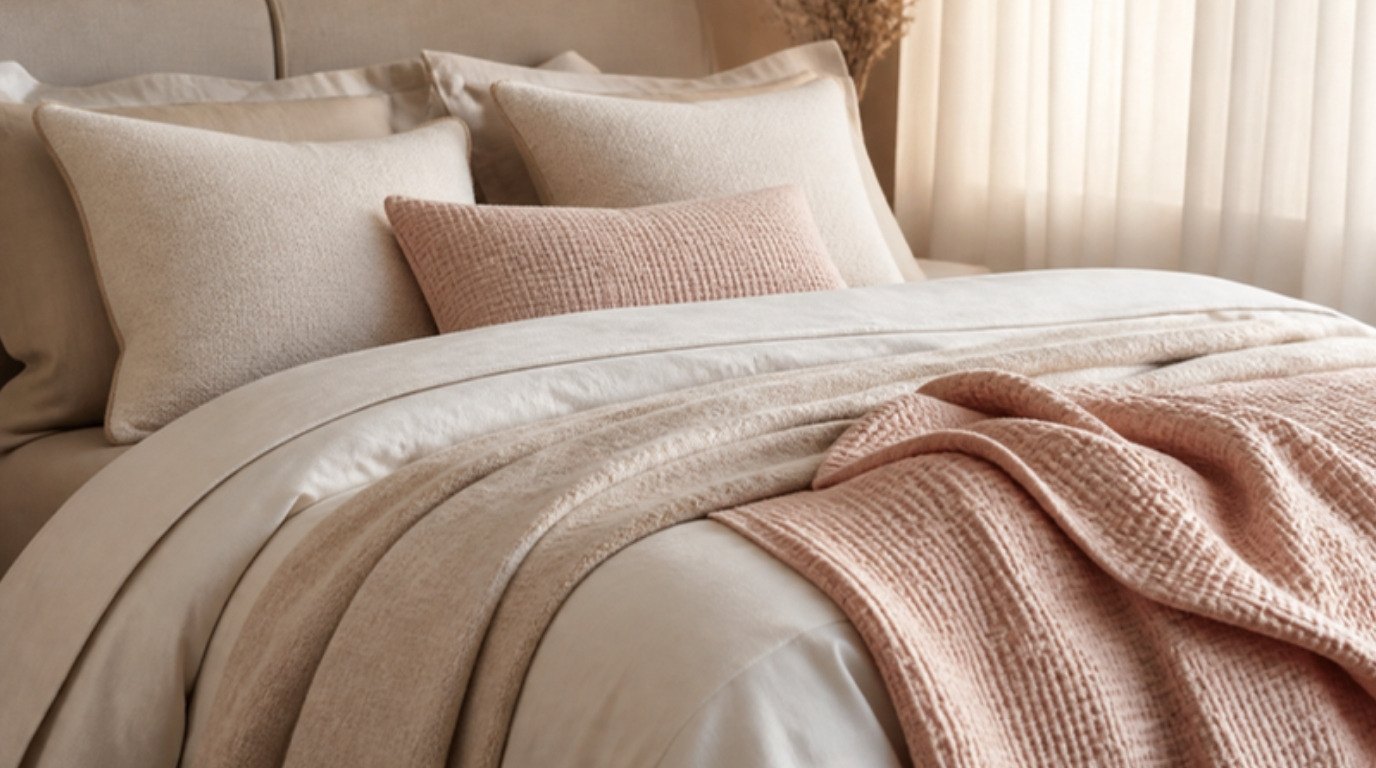
A warm winter bed isn't about piling on the heaviest comforter you can find. It's about layers: a few lighter pieces that trap warm air, breathe well, and can be pushed off or pulled up as the night changes. That's the difference between waking up toasty and waking up at 3 am kicking off a sweaty duvet.
The good news is that you don't need to replace everything. A different sheet, one middle blanket and a smarter layer order can change how your bed feels on the coldest nights of the year.
This guide covers winter bedding from the mattress up: the base layer, which sheets to choose for cold nights (with real numbers to look for), duvet warmth and fill power, the exact layer order, pillows, heated mattress pads and how to use them safely, a sleeper-type table so you can match your bed to how you actually sleep, plus colors, care and storing your summer bedding.
Think of it as building a bed you'll want to crawl into the moment it gets dark at five.
Why Layering Beats One Heavy Comforter
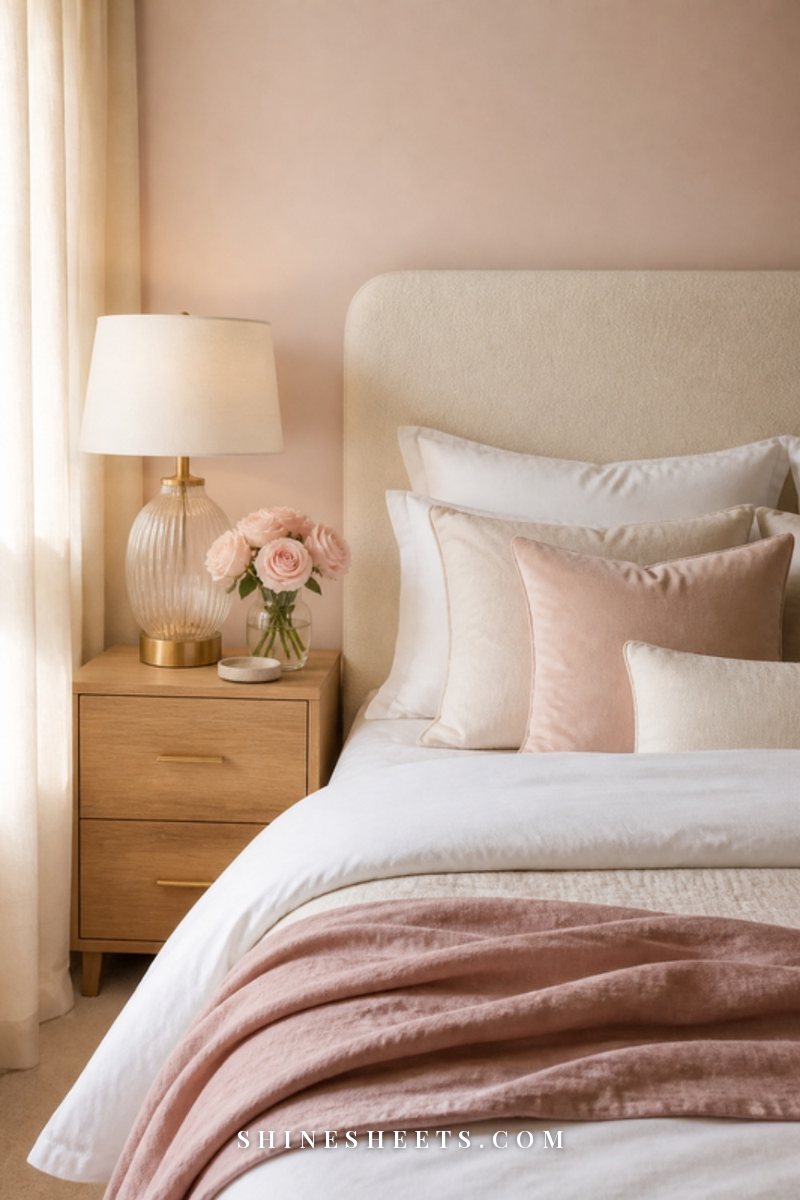
Warmth in bed comes from still, trapped air. Several thinner layers hold more pockets of warm air than one thick one, and they give you options. If you overheat at 2 am, you push off one layer instead of tossing the whole duvet on the floor and freezing an hour later.
Layering also helps with the biggest winter sleep complaint: being cold when you get in and too hot by the middle of the night. Most people sleep best in a cool room (somewhere around the mid-60s Fahrenheit is a common sweet spot), with the warmth coming from the bed itself rather than a cranked-up thermostat.
And a layered bed simply looks more inviting. That soft, hotel-style depth comes from layers, not from one puffy comforter. If you love that look, my guide on how to make your bed look like a hotel bed walks through the styling side step by step.
Start With the Base: Mattress Protector and Topper
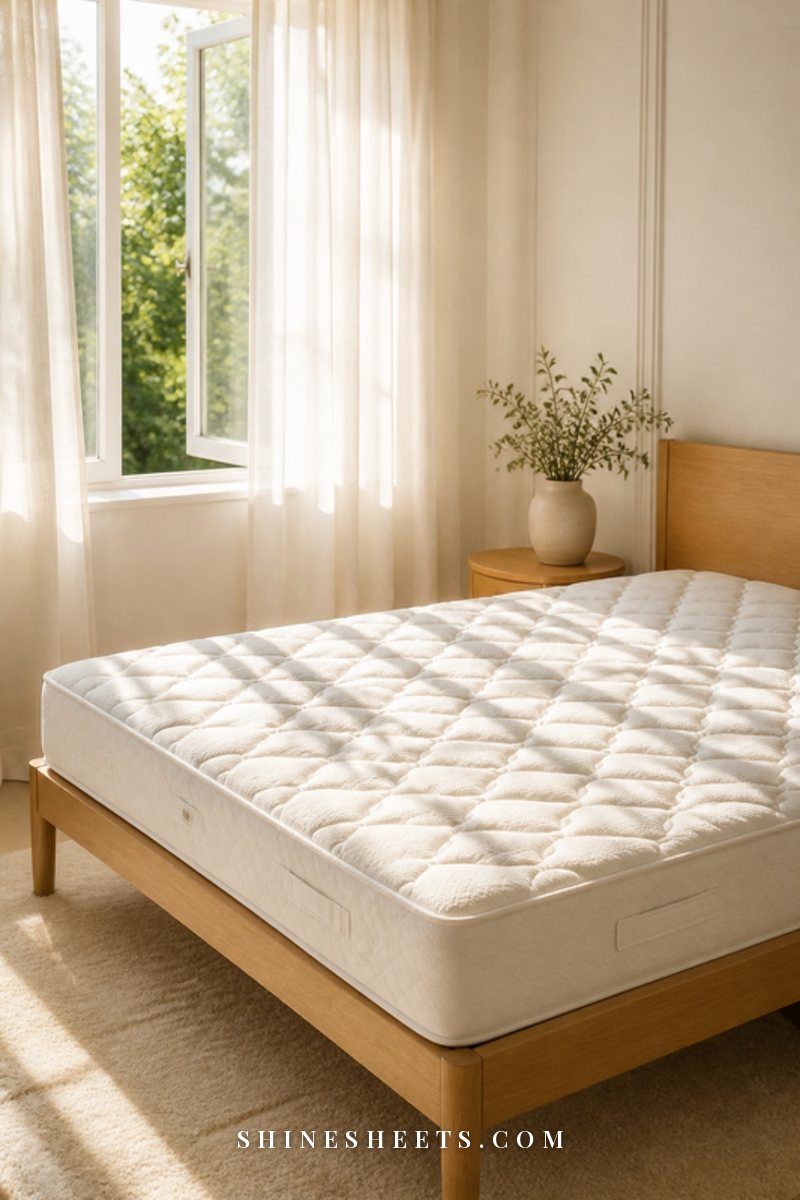
Cold often comes from below, especially on firm or foam mattresses that feel chilly when you first lie down. Two base layers help:
- A quilted mattress protector. You probably have one already. A quilted (rather than thin waterproof-only) version adds a soft layer of insulation and protects your mattress. Wash it every one to two months.
- An optional topper. A wool topper is lovely in winter: it insulates, breathes and wicks moisture, so it feels warm without trapping sweat. A down-alternative topper is a softer, budget-friendly option and a better fit if you have allergies. Two to three inches thick is plenty.
One note: memory foam toppers tend to sleep warm, which can be great if you're always cold and frustrating if you overheat easily. If you're a hot sleeper, choose wool or skip the topper altogether.
The Best Sheets for Cold Nights
Sheets touch your skin, so they have more effect on how warm you feel than almost anything else on the bed. There are three main options for winter, and which one you want depends on how warm you naturally sleep.
Flannel (About 170+ GSM)
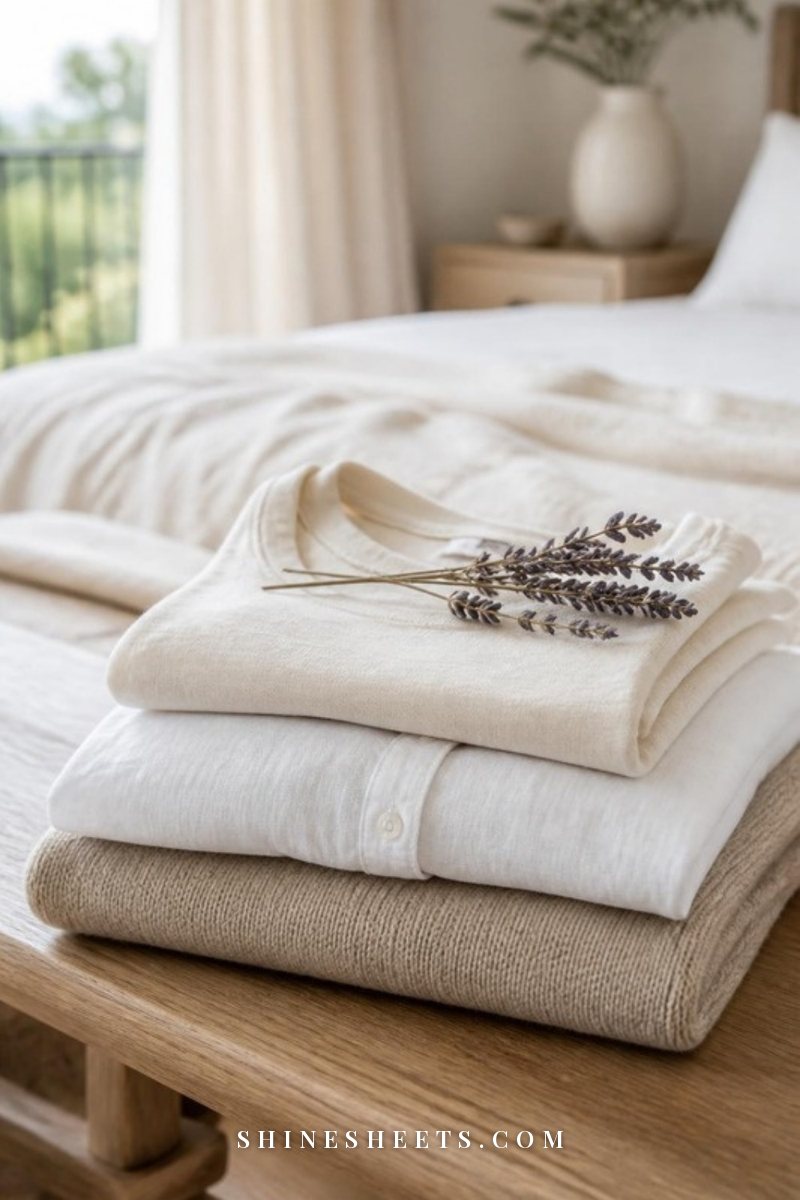
Flannel is cotton that's been brushed to raise soft fibers, which trap warm air against your skin. It feels warm the second you slide in, which is exactly what you want on a frosty night.
Flannel quality is measured in GSM (grams per square meter), not thread count. Look for about 170 GSM or more for sheets that feel substantial and won't pill quickly. Lighter flannels (around 130–150 GSM) are thinner and wear out sooner. A cream flannel sheet set is the easiest winter upgrade if you're often cold, and the soft neutral color works with any blanket you layer on top.
Percale if You Run Hot
If you wake up warm even in December, flannel may be too much. Percale is a crisp, breathable cotton weave that feels cool and airy. In winter, keep percale sheets and get your warmth from the middle and top layers instead. A thread count of around 200 to 400 is the sweet spot for percale.
Brushed Cotton in Between
Brushed cotton (sometimes sold as "peached" cotton) is lightly brushed for a velvety feel but is thinner than flannel. It's the perfect middle ground if flannel feels heavy and percale feels chilly. It's also a great choice if you share a bed with someone who runs warmer or cooler than you.
Duvet Warmth and Fill Power
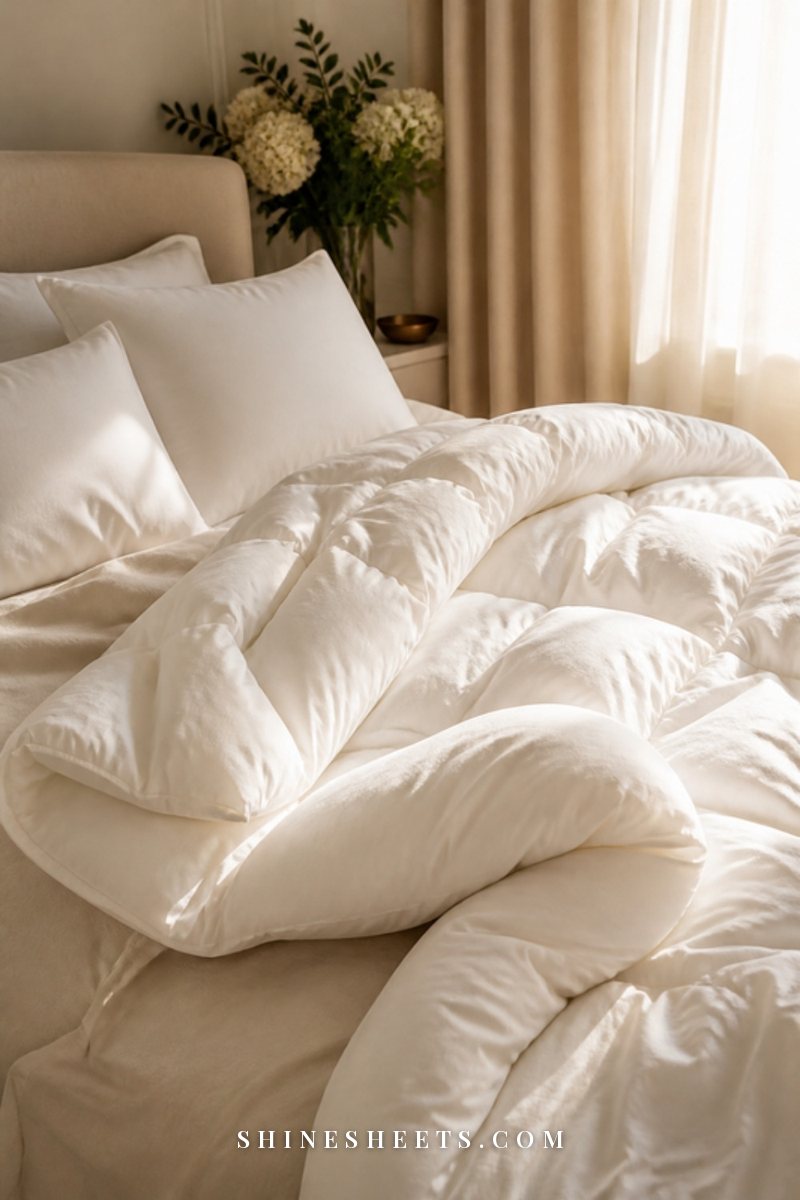
Your duvet or comforter is your main source of warmth, and two details matter most: fill power and fill type.
Fill power describes how lofty (fluffy) down is. Higher fill power means more warmth for less weight. For winter, about 600 to 700 fill power is a lovely range: warm and cloud-like without feeling like a weighted blanket. Above 750 is very warm and best for very cold bedrooms. Duvets are also often labeled by warmth level (light, all-season, winter), which can be easier to compare.
Fill type:
- Down: Light, warm, breathable and long-lasting with good care.
- Down alternative: Synthetic fibers that mimic down. Easier to wash, usually more affordable, and the better choice if you have allergies or prefer an animal-free option.
- Wool: Heavier and flatter, wonderful at regulating temperature, a good pick for people who get both hot and cold during the night.
If you're starting from scratch, I'd choose a down alternative comforter in a medium or winter weight with a soft cover. Look for baffle-box or sewn-through stitching so the fill stays evenly spread and you don't end up with cold spots.
The Winter Bed Layer Order, Step by Step
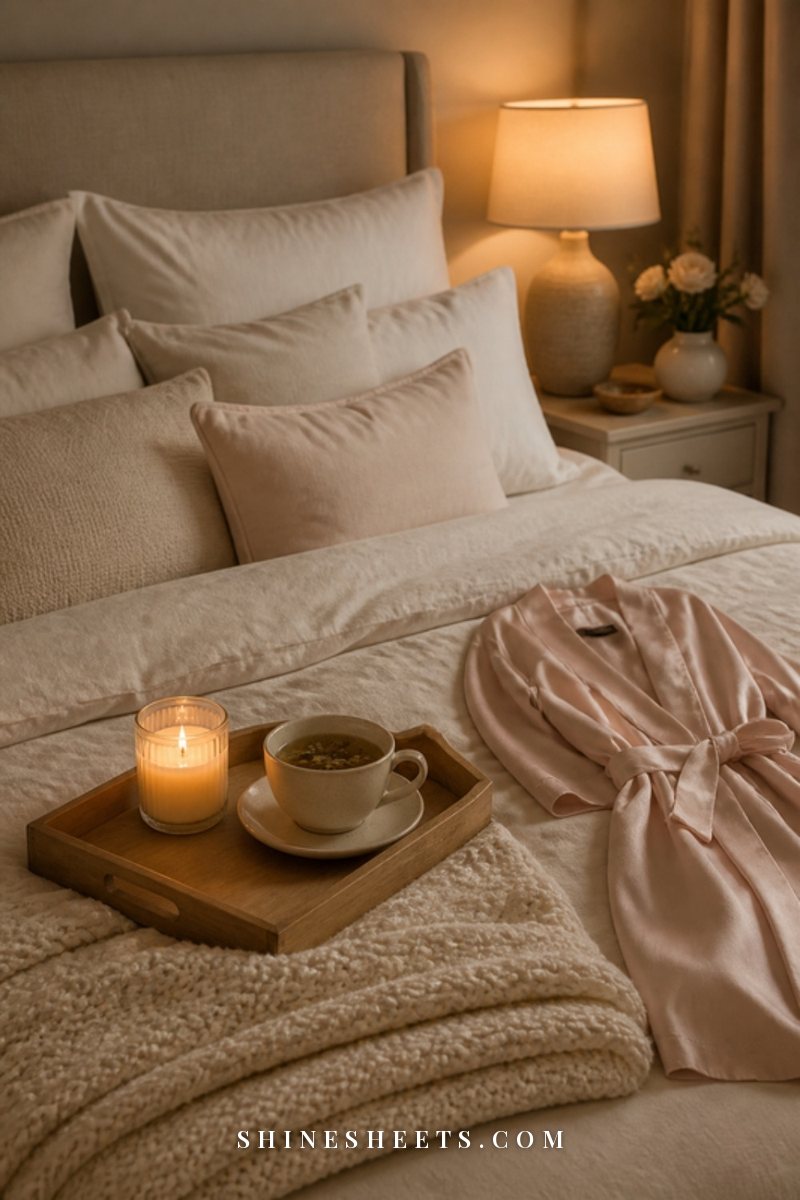
Here's the order I'd follow for a bed that's warm, adjustable and looks beautiful. Six layers sounds like a lot, but each one is thin and has a job:
- Fitted sheet over your protector (and topper, if you use one).
- Flat sheet. It keeps your duvet cover cleaner and adds a light layer you can sleep under alone on milder nights.
- Light blanket. This is the secret middle layer. A wool or wool-blend blanket adds serious warmth without weight. An oatmeal wool-blend blanket is a beautiful neutral that works with cream, blush and sage bedding alike.
- Duvet or comforter. Your main warmth layer, in its cover.
- Pillows at the head (more on these below).
- Throw at the foot. Folded in thirds across the bottom third of the bed. It adds texture and an extra layer for cold feet, and it's easy to pull up when you need it.
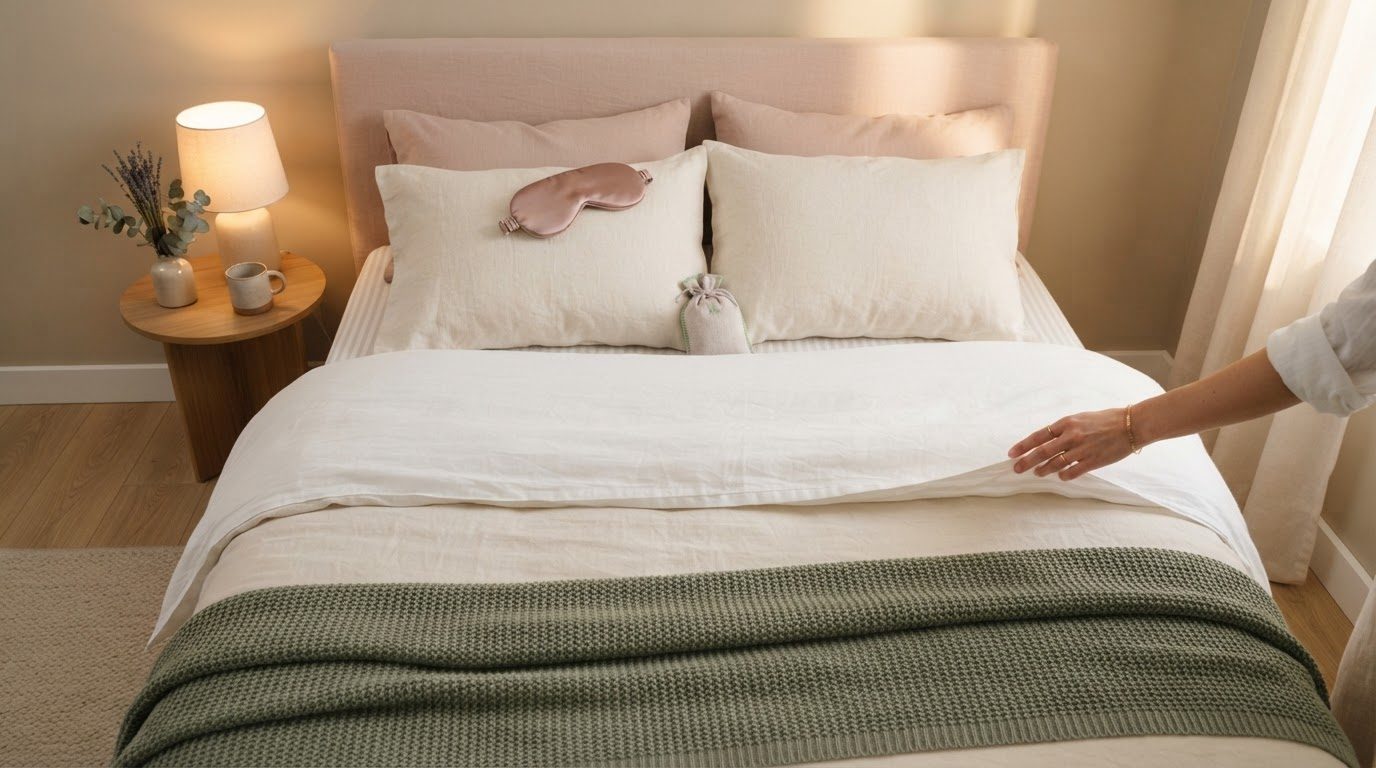
A tip for making the bed: fold the top of the flat sheet and blanket down over the duvet edge by about 12 inches. It creates that layered, finished look and makes it easy to adjust warmth during the night.
Pillows: 2 Sleeping Plus 2 Euro
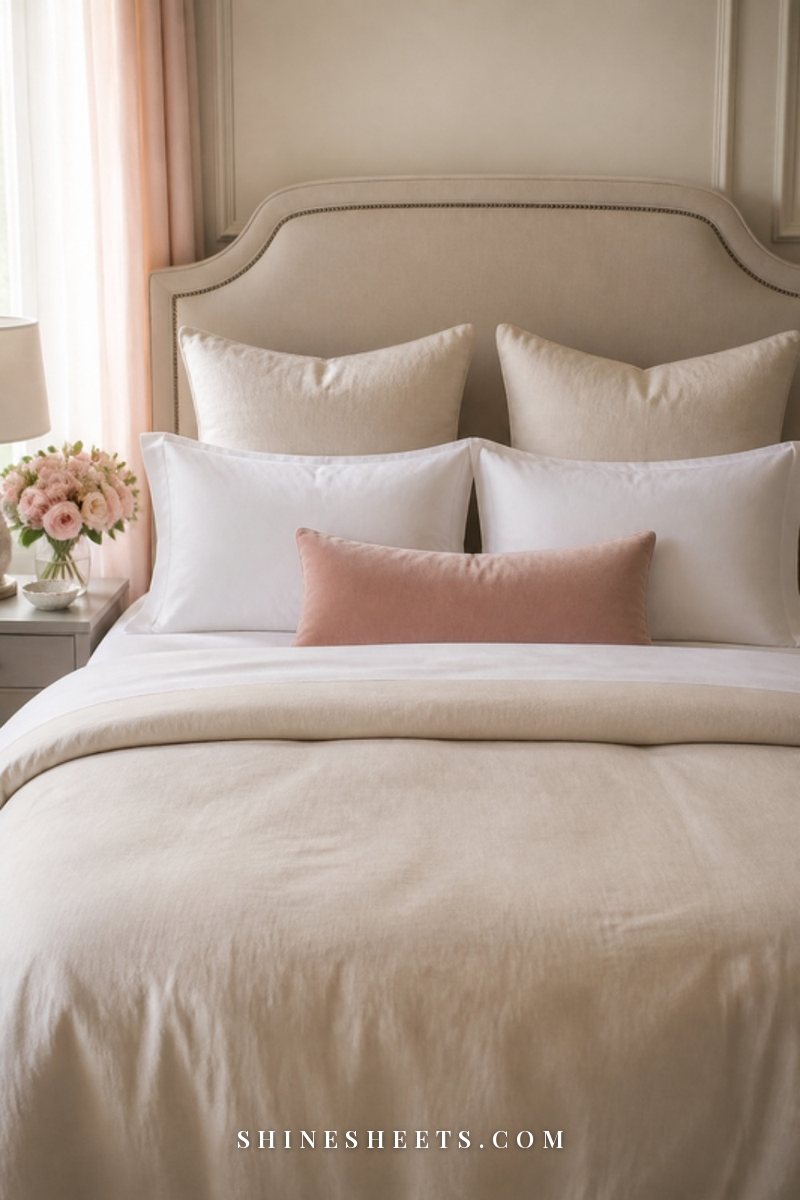
For a full or queen bed, a simple and generous setup is two sleeping pillows in front and two euro pillows (26 by 26 inches) standing behind them against the headboard. A king bed can take three euros across.
The euros do more than look pretty. In winter they block cold air from a chilly wall or window, and they make a soft backrest for reading or journaling in bed with a cup of tea. Cream euro pillow shams in linen or a waffle texture are a lovely way to add depth without adding color.
For your sleeping pillows, flannel or brushed cotton pillowcases feel lovely in winter. If you have combination or sensitive skin like mine, swapping in a fresh pillowcase about twice a week is a small habit that's worth it.
Heated Mattress Pads: Warm and Safe
A heated mattress pad goes under your fitted sheet and warms the bed from below. It's especially helpful in drafty rooms or if you always have cold feet. Many have dual controls, so each side of the bed can have its own setting.
If you'd like one, look for a heated mattress pad with auto-off, several heat settings and a pad that's machine washable once the controller is removed. Then use it carefully:
- Follow the manufacturer's instructions exactly, including where it sits in your layers.
- Never fold, bunch or tuck it while it's on. Folds can concentrate heat.
- Use the auto-off feature, or preheat the bed for 20–30 minutes and switch it off or to the lowest setting when you get in.
- Check the cord and pad before each season for fraying, scorch marks or worn spots, and replace it if you see any damage.
- Don't place heavy items on the bed while it's running, and keep pets from chewing the cord.
- Skip it for babies and young children, and talk to a doctor first if you have diabetes, poor circulation or reduced sensation, since it can be hard to feel when it's too hot.
Most heated pads take about 15 to 30 minutes to warm the bed, so preheating while you make your evening tea or wash your face is a sweet little ritual. Wash the pad only as the label allows (usually on a gentle cycle with the controller detached) and let it dry completely before plugging it in again.
A gentle reminder: a heated pad is meant to warm, not to replace good layers. Used on low with the right bedding, you'll usually be perfectly comfortable.
Winter Bedding by Sleeper Type
Everyone sleeps differently, so here's a quick table to match your layers to how you actually feel at night. Screenshot it before you shop.
| Sleeper Type | Sheets | Middle Layer | Top Layer |
|---|---|---|---|
| Always cold | Flannel, 170+ GSM | Wool or wool-blend blanket | Winter-weight duvet (650–700 fill), throw at the foot, optional heated pad on low |
| Hot sleeper | Percale, 200–400 thread count | None, or a light cotton blanket | All-season or light duvet, throw you can pull up if needed |
| Hot and cold during the night | Brushed cotton | Wool blanket (it regulates temperature) | Wool or 600-fill duvet, throw at the foot |
| Allergy-prone | Tightly woven percale or brushed cotton | Washable cotton waffle blanket | Down-alternative duvet, washed often |
| Couple with different needs | Brushed cotton for both | Separate blanket on the colder side only | All-season duvet, dual-control heated pad if needed |
| Drafty or very cold bedroom | Flannel | Wool blanket | Winter-weight duvet, euro pillows against the cold wall, heavy throw |
If your bedroom itself feels chilly, a few simple fixes like draft stoppers, thicker curtains and a rug can help a lot. My guide on how to make your home warmer in winter has plenty of renter-friendly ideas.
Cozy Textures and Colors for a Winter Bed
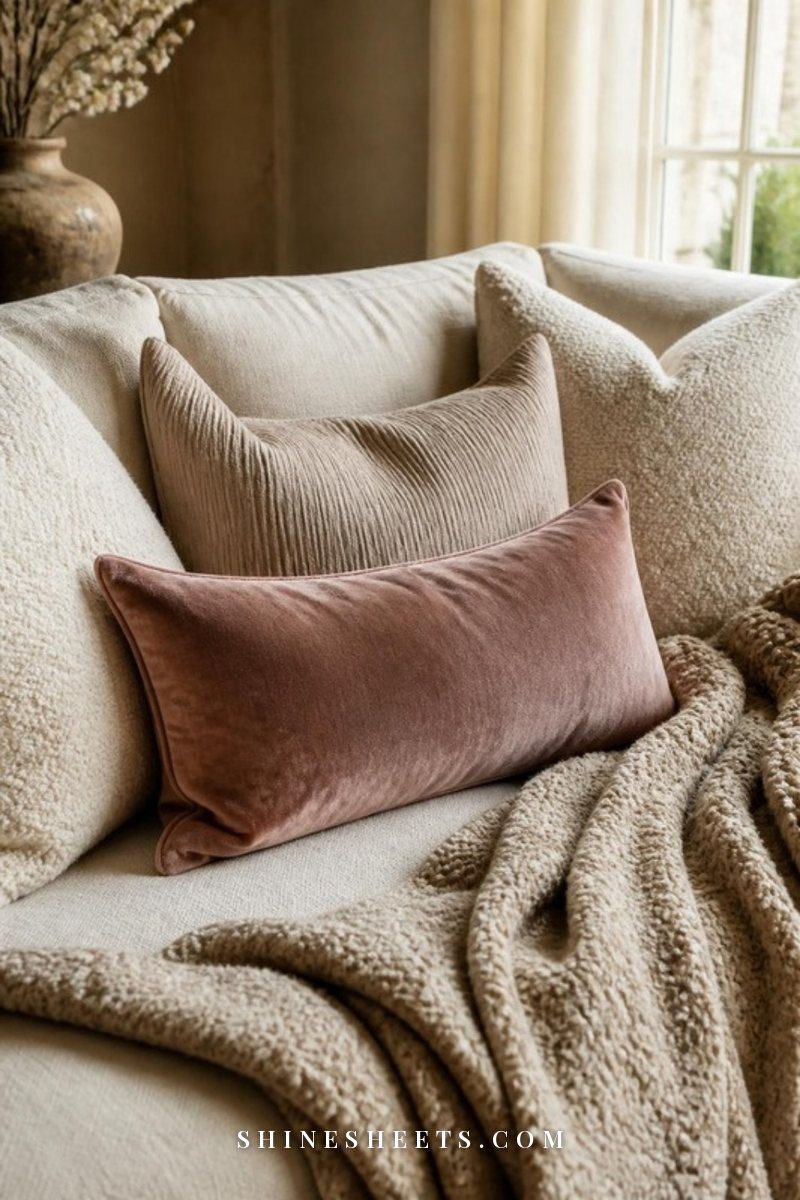
A winter bed should look as warm as it feels. Mixing textures is the secret: when everything is the same smooth fabric, a bed can look flat, even in a lovely color.
- Colors: Cream, oatmeal, warm white, soft blush and muted sage all feel calm and wintry without being dark. Choose two main colors and one accent.
- Wool: Adds weight and a slightly nubby, rustic texture.
- Linen: Its natural crinkle softens the whole look. A linen duvet cover over a warm duvet is beautiful year-round.
- Waffle weave: Light, airy and full of texture. A blush waffle throw at the foot of a cream bed is one of the prettiest winter touches.
- Knits: A chunky knit throw or cushion adds instant softness.
For more ideas on making the whole room feel like a hug, browse my cozy bedroom ideas, and if you'd like to pair your new bed with a calmer evening, my winter sleep routine is a gentle place to start.
5 Common Winter Bedding Mistakes
A few small habits can make even lovely bedding feel colder or stuffier than it should. These are the five I see most often, with an easy fix for each:
- Using one very heavy comforter instead of layers. It traps heat with no way to adjust, so you end up too hot, kick it off and wake up cold. Swap to a medium-weight duvet plus a wool blanket you can fold back.
- Choosing flannel by thread count. Thread count doesn't tell you much about flannel. Check the GSM instead (about 170 or more), and read the fiber content: 100% cotton flannel breathes better than polyester blends, which can feel clammy.
- Turning the thermostat way up. A hot, dry room often leads to restless sleep, a dry throat and dry skin. Keep the room cool and let the bed do the warming. A small humidifier can help if the air feels very dry.
- Forgetting your feet. Cold feet can keep you awake even when the rest of you is warm. The throw at the foot of the bed is there for a reason, and soft bed socks are a simple extra.
- Putting the bed against a cold wall or window without a buffer. If you can, move the bed a few inches away from an outside wall, add euro pillows as a barrier and close heavier curtains at night. If you can't move it, a thicker headboard cushion helps.
Fixing even one of these often makes a bigger difference than buying something new.
How To Care for Winter Bedding
Heavier bedding needs a little more care, but a simple rhythm keeps it fresh:
- Sheets and pillowcases: Wash weekly (pillowcases twice a week if you have breakout-prone skin). Flannel stays softer washed warm rather than hot, and dried on low.
- Duvet cover: Wash weekly with your sheets, or every two weeks if you always use a flat sheet.
- Duvet or comforter itself: Wash two to three times a season, following the care label. Use a large-capacity machine if yours is bulky.
- Wool blankets: Air them out often and wash only when needed, on a wool or delicate cycle in cool water, then dry flat.
- Dry everything fully. Down and down alternative need a long, low tumble with a couple of dryer balls to break up clumps. Any trapped dampness can lead to musty smells.
For step-by-step washing settings, my guide on how to wash sheets and duvets covers temperatures, detergent amounts and drying tips.
Storing Summer Bedding
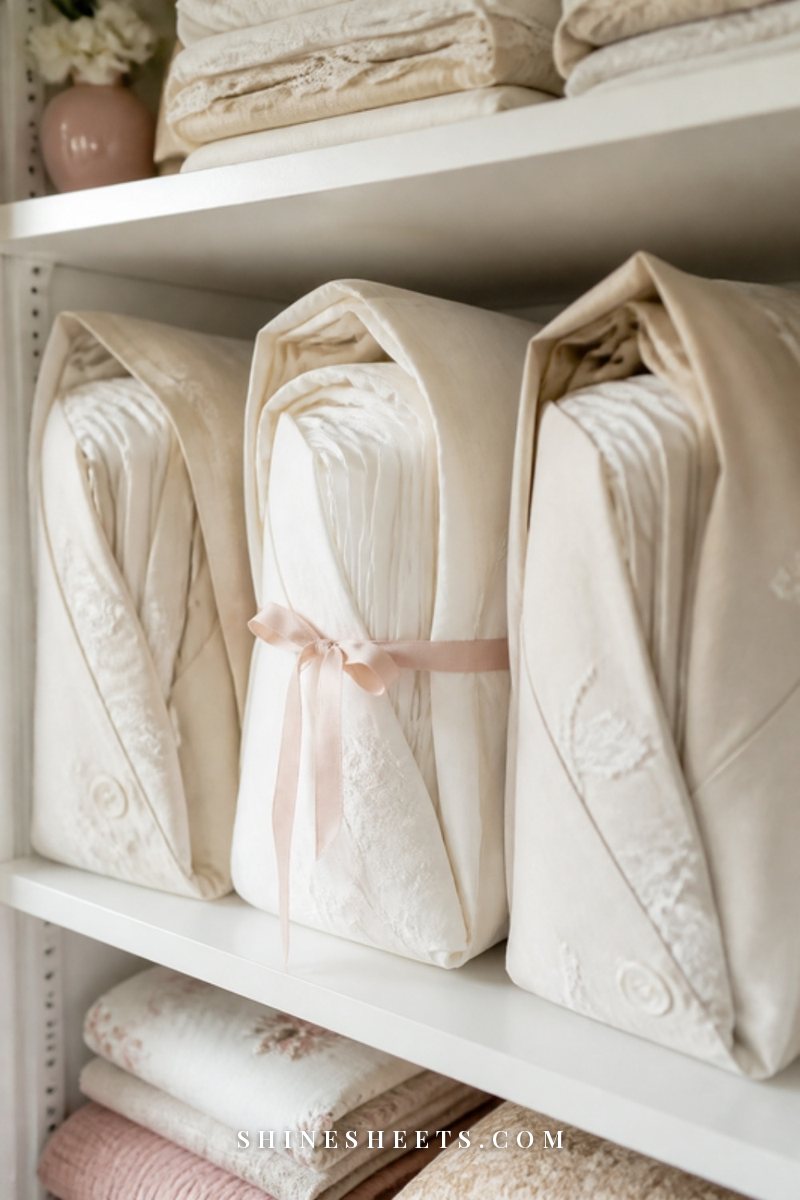
Before you tuck lightweight sheets and summer quilts away, give them a final wash and make sure they're completely dry. Then:
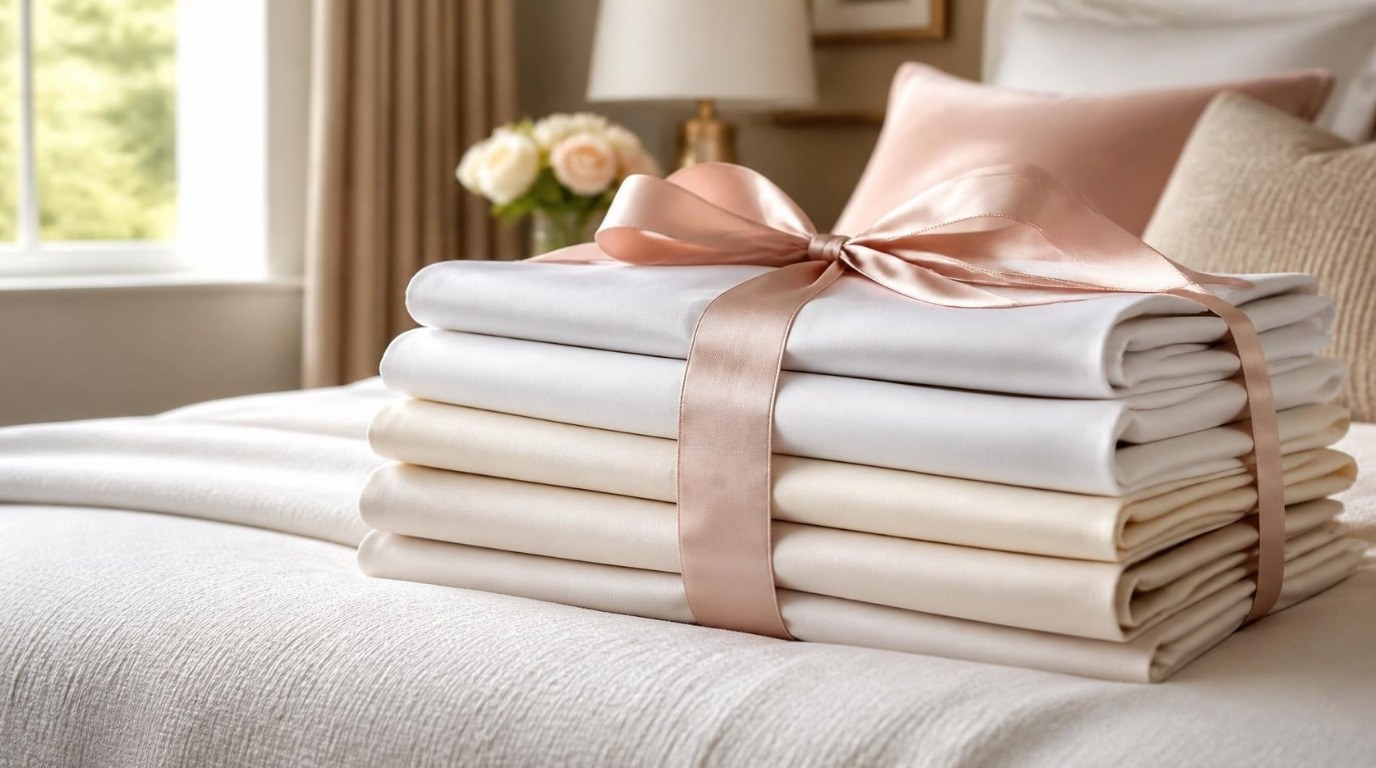
- Fold sets together. Tuck the fitted sheet, flat sheet and one pillowcase inside the second pillowcase so the whole set stays together.
- Use breathable storage. Cotton or canvas bags are better than plastic, which can trap moisture and leave a stale smell.
- Add a little freshness. A cedar block or a lavender sachet keeps things smelling clean.
- Store somewhere dry and cool, like a closet shelf or under the bed, rather than a damp basement.
Before putting anything away, check for small stains on pillowcases or sheet hems and treat them now. Stains that sit for months are much harder to lift later. It also helps to keep a small note on the shelf of what's inside each bag (or simply use different colored ribbons for each set), so you're not unpacking everything to find the right size.
When spring comes, your lighter bedding will be fresh and ready, and your winter layers can go into storage the same way.
Final Thoughts
The coziest winter beds aren't the heaviest ones. They're the ones built in thoughtful layers: the right sheet for how you sleep, a warm middle blanket, a fluffy duvet and a soft throw waiting at the foot.
Start with one change, maybe flannel sheets or a wool blanket, and notice how much warmer the nights feel. You deserve a bed that feels like a warm welcome every single evening this winter.