The kindest hair tie isn't always the softest-looking one. What actually protects your hair comes down to three things: no hard edges for strands to catch on, enough grip that you don't have to wrap it four times, and not putting the same pressure on the same spot every single day.
That's good news, because it means you don't need a drawer full of fancy accessories. You need two or three of the right types, used gently. (It took me an embarrassingly long time to connect the short, frizzy bits around my crown with the tight elastic I grabbed every morning without thinking.)
In this guide to hair ties that don't damage hair, I'm comparing six common types – classic elastics, seamless elastics, silk or satin scrunchies, cotton scrunchies, spiral coils and claw clips – with honest pros, cons and the hair type each one suits best. You'll also find a side-by-side comparison table, the habits that matter even more than the tie itself, how to care for and replace your ties, and when it's worth checking in with a doctor.
Nothing here is about styling. It's purely about keeping the hair you have strong, smooth and comfortable.
Why Some Hair Ties Cause Breakage
Hair is surprisingly strong when it's pulled evenly and gently. It gets into trouble when force is concentrated in one small spot, when something rough rubs against it over and over, or when it's stretched while it's weak. Most hair tie damage comes from one of four sources.
Metal Joints and Rough Seams
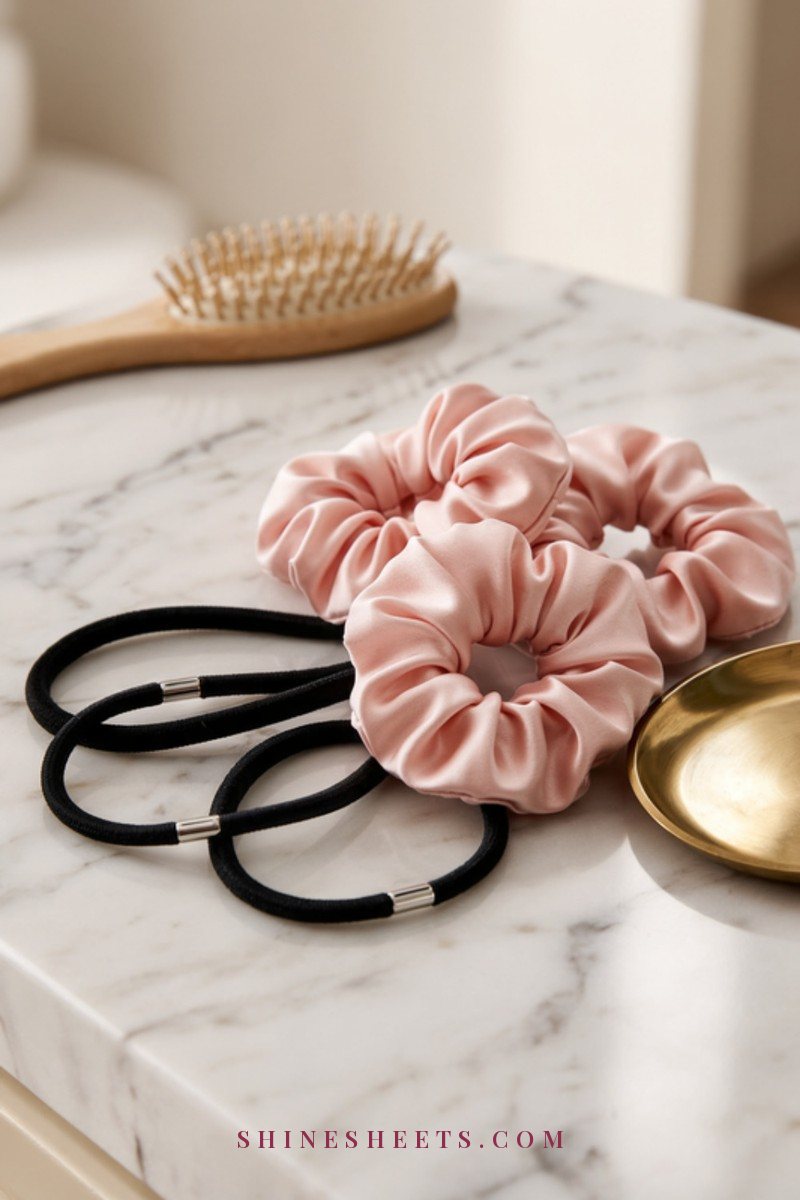
Older elastics were often held together with a tiny metal clamp. That little piece of metal is exactly where strands get caught, twisted and snapped – especially when you pull the tie out. Rough glued seams can do the same thing on a smaller scale. If you run a tie between your fingers and feel a bump or an edge, your hair feels it too, every time you put it in and take it out.
Tight Rubber and Too Much Tension
Thin, tight rubber bands grip by squeezing hard. That squeeze compresses the hair shaft, and constant compression plus friction wears down the outer cuticle layer over time. The result is a band of dull, rough or broken strands right where the tie sits. Tension also pulls on the roots. A tie that leaves your scalp feeling sore or gives you a mild headache by the afternoon is simply too tight, no matter how good it looks.
The Same Spot, Every Single Day
Even a gentle tie becomes a problem if it sits in exactly the same place seven days a week. The same small section of hair takes all the friction and all the pressure, while the rest of your hair barely notices. This is why breakage from hair ties often shows up as a neat line of short pieces, or a visible crease that never quite goes away.
Tying Hair While It's Wet
Wet hair stretches more easily and is more fragile than dry hair. When you tie it back tightly while it's still damp, it stretches, then dries and shrinks inside the tie, which adds even more tension. It also dries with a firm dent. If you often tie your hair up straight out of the shower, this one habit may be doing more harm than any particular tie.
If you're already seeing split pieces and snapped ends, my guide to what causes hair breakage and how to stop it goes deeper into the other common culprits, from heat to brushing.
6 Hair Tie Types Compared
Here are the six types you'll find almost everywhere, with what each one does well, where it falls short, and who it suits. Most people end up with a small mix, and that's exactly how I'd do it.
1. Classic Elastic
This is the fabric-covered elastic band most of us grew up with, sometimes with a metal joint, sometimes without.
- Pros: strong grip, cheap, easy to find, holds even heavy hair securely.
- Cons: grips by squeezing, so it can cause creases and friction breakage; versions with metal joints snag strands; easy to over-wrap.
- Best for: occasional use on thick, coarse or very heavy hair, for workouts or quick tasks where you need a firm hold for an hour or two.
If you keep a few around, pick versions with no metal at all and wrap them only as many times as you truly need. If you're on the third wrap, the tie is too small for your hair.
2. Seamless Elastic
Seamless elastics are made in one continuous loop, so there's no join, clamp or glued seam to catch on your hair. They look almost identical to classic elastics, which is why they're so easy to overlook.
- Pros: much less snagging than classic elastics, still a reliable grip, inexpensive, discreet.
- Cons: still grips with pressure, so tension and creases are possible; thin versions can stretch out quickly.
- Best for: everyday use on medium to thick hair when you want a secure hold without the snag of a seam.
A soft set of seamless elastics in beige is the easiest swap you can make if you love the hold of a classic elastic. Look for a slightly thicker band (it spreads the pressure) and a soft, smooth fabric covering.
3. Silk or Satin Scrunchie
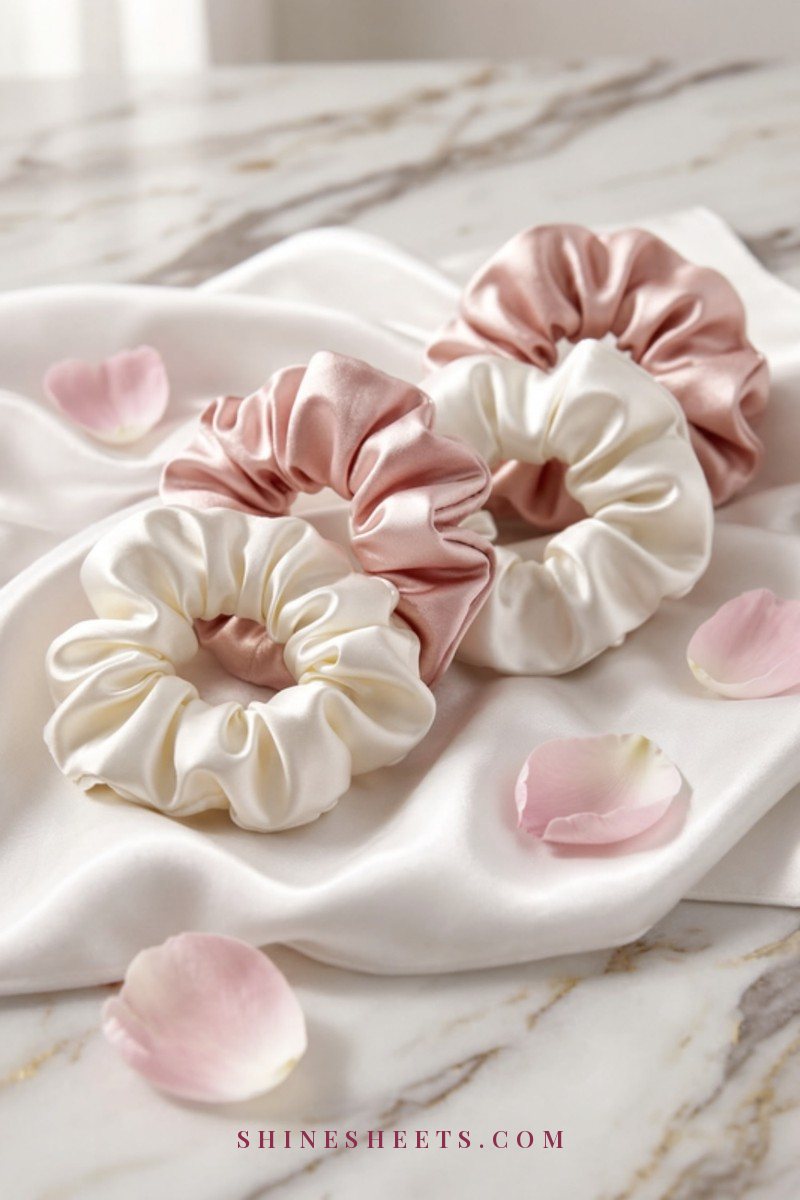
A scrunchie is an elastic wrapped in a gathered tube of fabric. The fabric does two kind things: it cushions the pressure and spreads it over a wider area. Silk and satin go one step further because their smooth surface creates very little friction against the hair.
- Pros: very low friction, fewer creases, gentle on fragile, colored or curly hair, comfortable enough for sleep.
- Cons: can slip on very fine or very silky hair; real silk needs gentle washing; bulkier than an elastic.
- Best for: fine, fragile, color-treated, curly and coily hair, overnight use, and anyone who notices dents from other ties.
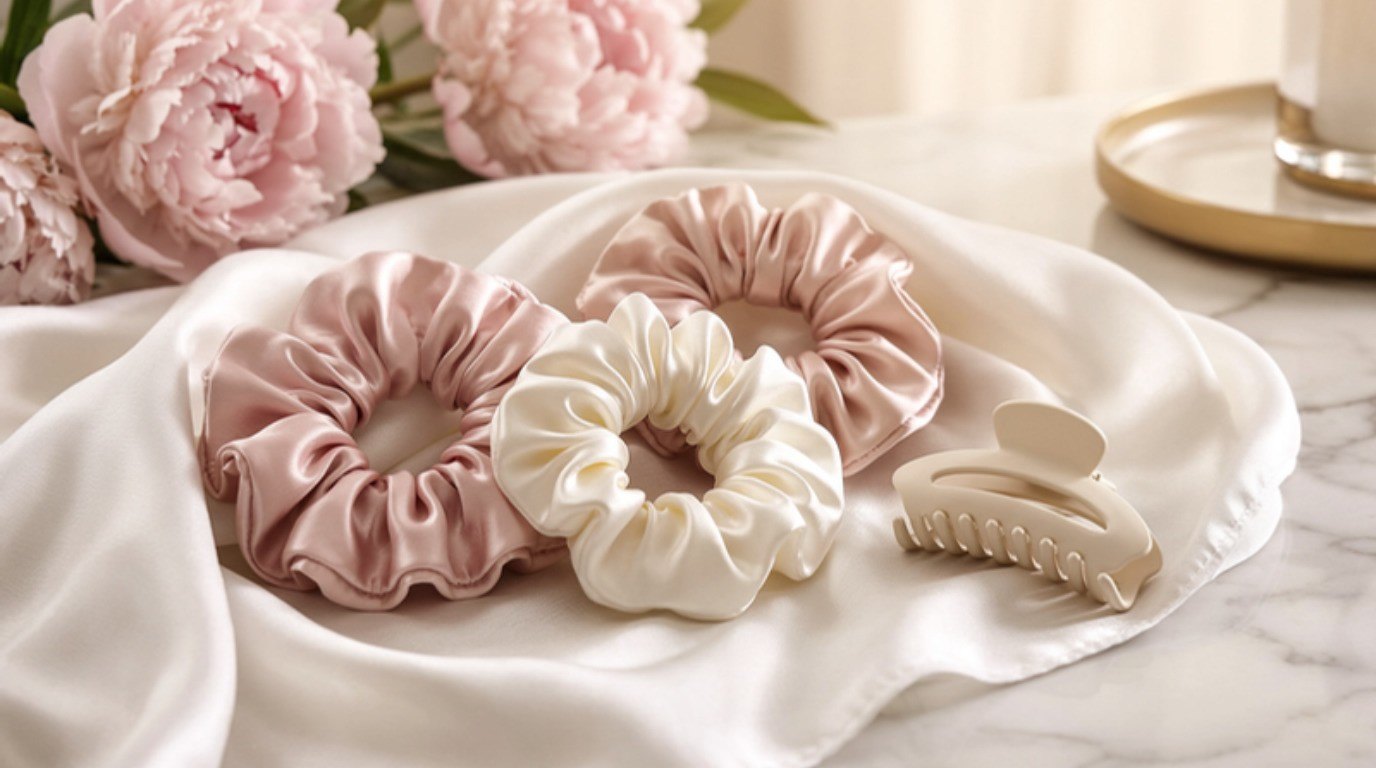
Real silk and satin are not the same thing. Silk is a natural fiber; satin is a weave that's usually made from polyester. Both are smooth, and both are a big step up from rough rubber. If you'd like the real thing, a pick for most people would be mulberry silk scrunchies in blush and ivory. Look for "100% mulberry silk" on the description, a medium width (skinny ones slip, oversized ones get heavy) and a strong elastic inside so it doesn't stretch out after a month.
4. Cotton Scrunchie
Cotton scrunchies have the same cushioned shape but a more textured fabric, usually cotton jersey, linen or a soft knit.
- Pros: more grip than silk, still softer than a bare elastic, washable, breathable for workouts.
- Cons: more friction than silk or satin, can absorb moisture and oils from your hair, can feel rough on very fragile strands.
- Best for: fine or slippery hair that slides out of silk, everyday wear, gym sessions and errands.
Cotton is a lovely middle ground. If silk always slides out of your hair by lunchtime, cotton is probably your answer.
5. Spiral Coil Tie
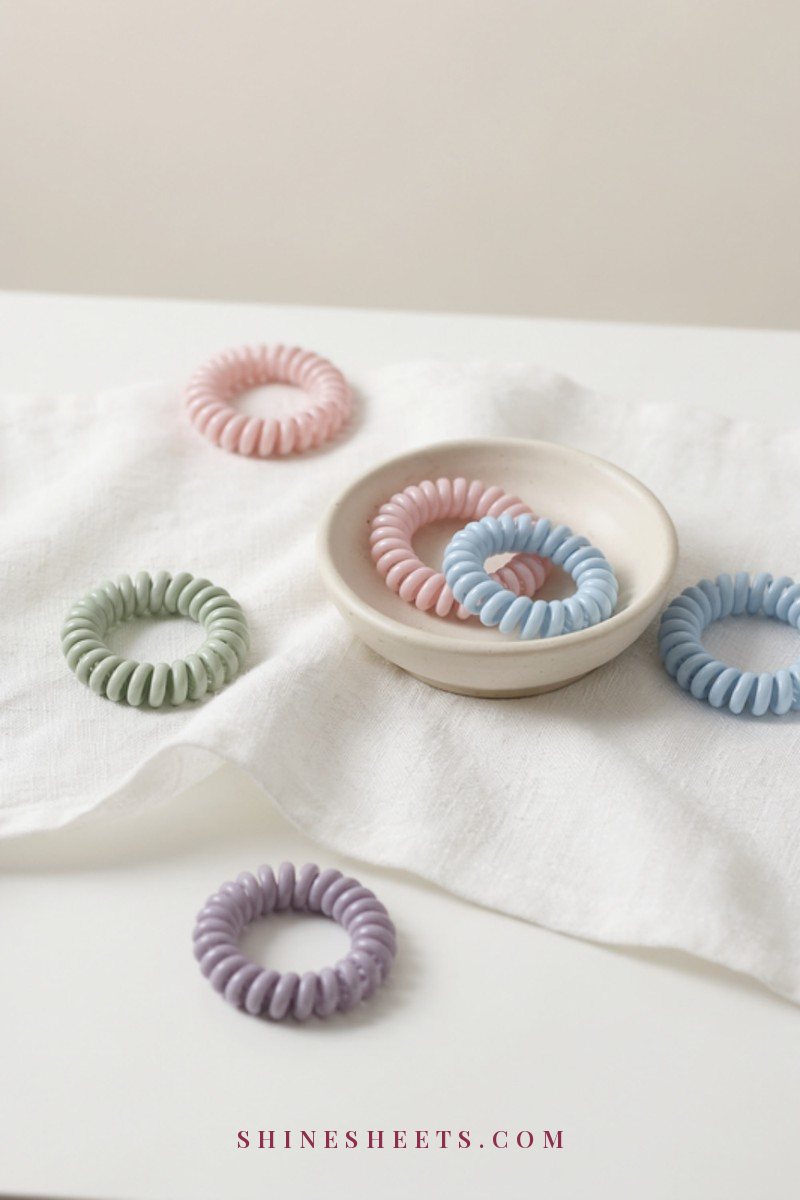
Spiral coils look like little telephone cords. Because they're coiled, they grip the hair at a few points instead of squeezing it evenly all the way around, which means less pressure in a continuous band.
- Pros: fewer dents, less tension on the scalp, waterproof, easy to clean, slide out without tugging.
- Cons: can tangle in very curly or coily hair; stretch out over time (a quick soak in warm water can tighten some); the plastic texture isn't for everyone.
- Best for: straight to wavy hair, people who get headaches from tight ties, swimming, showers and quick ties during the day.
Look for spiral coil hair ties in pastel shades with a smooth, matte finish rather than a sticky glossy one, and a size that fits around your hair in two wraps.
6. Claw Clip
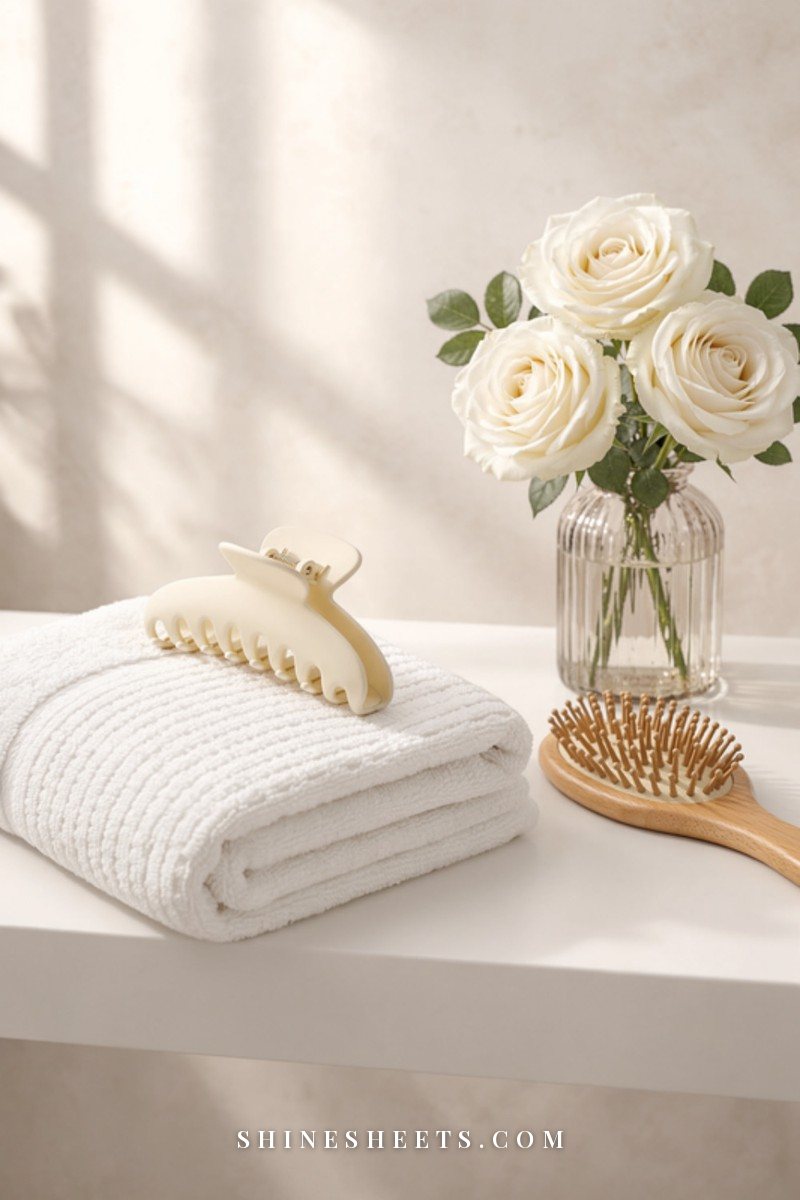
A claw clip holds hair with two sets of interlocking teeth and a spring. There's nothing wrapped around your hair at all, which makes it one of the gentlest ways to get hair off your neck.
- Pros: no squeezing band, no creases, spreads the weight over a wider area, fast to put in and take out.
- Cons: cheap clips can have sharp seams or rough teeth that snag; heavy clips can pull at the scalp; not comfortable to lie down in.
- Best for: medium to thick hair, curly hair, at-home days, and giving your usual tie spot a break.
Run your finger along the teeth before you buy (or as soon as it arrives). They should be smooth and rounded, with no little plastic burrs. I'd choose cream matte claw clips in a size that closes easily around your hair without straining the spring – a clip that's too small pulls, and one that's much too big tends to slide down.
Hair Tie Comparison Table
If you only want the quick answer, this table puts all six side by side. "Damage risk" here means the risk of breakage, creases and tension with normal use – any of them can cause problems if worn too tight, every day, in the same spot.
| Tie type | Grip | Damage risk | Best for |
|---|---|---|---|
| Classic elastic | Very strong | Higher (higher still with a metal joint) | Short-term hold on thick or heavy hair |
| Seamless elastic | Strong | Medium | Everyday hold on medium to thick hair |
| Silk or satin scrunchie | Light to medium | Low | Fine, fragile, colored, curly hair and sleep |
| Cotton scrunchie | Medium | Low to medium | Fine or slippery hair, workouts, errands |
| Spiral coil tie | Medium | Low | Straight to wavy hair, scalp sensitivity, water |
| Claw clip | Medium (depends on size) | Low, if the teeth are smooth | Medium to thick or curly hair, at-home days |
Screenshot it if it helps. The short version: a soft scrunchie and a smooth claw clip cover most days, with a seamless elastic in reserve for when you truly need a firm hold.
Which Hair Tie Is Best for Your Hair Type
The table gives you the overview, but your own hair has the final say. Here's how I'd think about it.
- Fine or thin hair: start with cotton or satin scrunchies and small spiral coils. Silk may slip, so a skinny silk scrunchie is often better than a big fluffy one. Avoid over-wrapping thin elastics – that's where fine hair breaks first.
- Thick or heavy hair: larger claw clips and sturdy scrunchies spread the weight. A seamless elastic is fine for the gym. If you have a lot of hair, my thick hair care routine has more ideas for keeping it soft without constant pulling.
- Curly and coily hair: silk or satin scrunchies and smooth claw clips protect your curl pattern and reduce frizz. Spiral coils can tangle, so test one gently before relying on it.
- Color-treated or bleached hair: treat it like fragile hair. Silk or satin scrunchies first, claw clips second, and keep elastics for rare occasions.
- Hair that's already breaking: give the broken area a rest. Switch to the gentlest tie you have and move it to a new position every day for a few weeks.
5 Habits That Matter More Than the Tie
Here's the honest truth: even the nicest silk scrunchie can cause trouble if it's wound tight and worn in the same spot around the clock. These five habits make a bigger difference than any single product.
1. Vary Where the Tie Sits
Move the tie a little every day – a bit higher one day, lower the next, slightly to the side after that. Even two or three centimeters is enough to spread the friction over different strands. A simple way to remember: change the spot whenever you change your outfit.
2. Keep the Tension Loose
Your hair should feel held, not pulled. A quick test: you should be able to slide a finger between the tie and your hair without forcing it, and you shouldn't feel any pulling at your hairline or temples. If you do, take one wrap off or switch to a larger tie. Loosening it slightly in the afternoon gives your scalp a little break too.
3. Don't Tie Wet Hair Tightly
Let your hair dry at least most of the way before you tie it back. If you really need it off your face while it's damp, use a claw clip or a loose silk scrunchie, and keep it relaxed. Gently detangling before you tie anything helps too – my guide on how to detangle hair without breakage walks through it step by step, and a wide-tooth comb is the gentlest tool for damp hair.
4. Take Ties Out for Sleep (or Use a Silk Scrunchie)
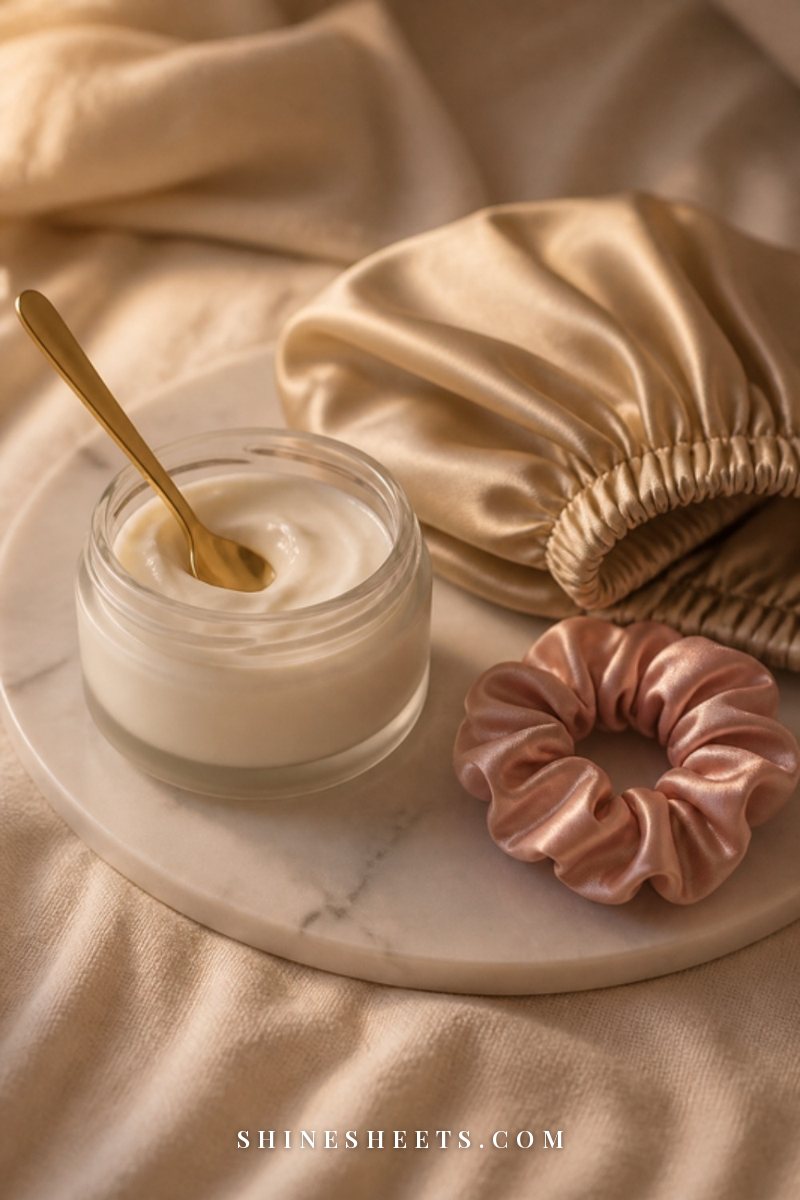
You move around a lot at night, and every turn rubs your hair against the pillow and the tie. The gentlest option is to sleep with your hair loose. If long hair tangles overnight, gather it very loosely with a silk or satin scrunchie near the ends rather than tight at the back of your head. Pairing that with a smooth pillowcase reduces friction even more; I've covered the pros and cons in my post on silk pillowcase benefits.
5. Remove Ties Gently
Never yank a tie straight out. Hold your hair just above the tie with one hand, then unroll or slide the tie off with the other, wrap by wrap. For a scrunchie, stretch it open slightly as you slide it down. For a claw clip, open it fully before pulling it away. It takes five extra seconds and saves so many strands.
How To Care for and Replace Your Hair Ties
Hair ties collect oil, product, sweat and dust surprisingly quickly, and a grimy tie doesn't glide over your hair the way a clean one does. A little care keeps them gentle for longer.
- Silk and satin scrunchies: hand wash every one to two weeks in cool water with a few drops of gentle, pH-neutral wash. Press out the water in a towel (no wringing) and let them air dry flat.
- Cotton scrunchies: machine wash on a gentle cycle in a mesh laundry bag every week or two, then air dry.
- Spiral coils: rinse in warm soapy water, swish, then rinse clean. Dry them on a towel.
- Claw clips: wipe the teeth with a damp cloth and a drop of mild soap every couple of weeks, and dry before storing so the spring doesn't rust.
- Elastics: these are hard to clean well, so it's easier to replace them often.
When to replace them: if an elastic or coil is stretched out so you have to wrap it an extra time, if the fabric is pilling or fraying, if a seam has popped, or if a claw clip has a crack or a rough tooth, it's time to let it go. Rough edges are exactly what snag hair.
Storage matters more than you'd think. Ties thrown loose in a bag pick up crumbs, lint and makeup. A soft satin or silk drawstring pouch keeps a few scrunchies clean in your bag, and at home a small dish or jar on the vanity means you always grab a gentle one instead of the old elastic at the bottom of the drawer. If your collection has quietly taken over, my post on hair accessory organization has easy ways to sort it.
When To See a Doctor or Dermatologist
Some breakage from ties is common and usually improves once you change your habits. But repeated pulling over months or years can lead to a type of hair loss called traction alopecia, and it's much easier to help when it's caught early.
It's worth booking an appointment with your doctor or a dermatologist if you notice:
- Thinning at your hairline, temples or around where you usually wear a tie.
- A sore, tender or itchy scalp that doesn't settle after you loosen your ties.
- Small bumps, redness or flaking where the tension is.
- Patchy hair loss, or shedding much more than usual.
- Any hair change that worries you, even if it seems small.
Hair thinning has many possible causes, from tension to stress to hormones, and a professional can help you figure out which one applies to you. Be kind to yourself here: noticing is the first, best step.
Final Thoughts
Choosing hair ties that don't damage hair is less about finding one perfect accessory and more about being a little gentler, a little more often. Smooth edges, soft fabric, loose tension and a different spot each day add up quietly over months.
Start with one small swap this week – a silk scrunchie for sleep, or a claw clip for at-home days – and let your hair enjoy the break. It's one of the easiest kindnesses you can give it.