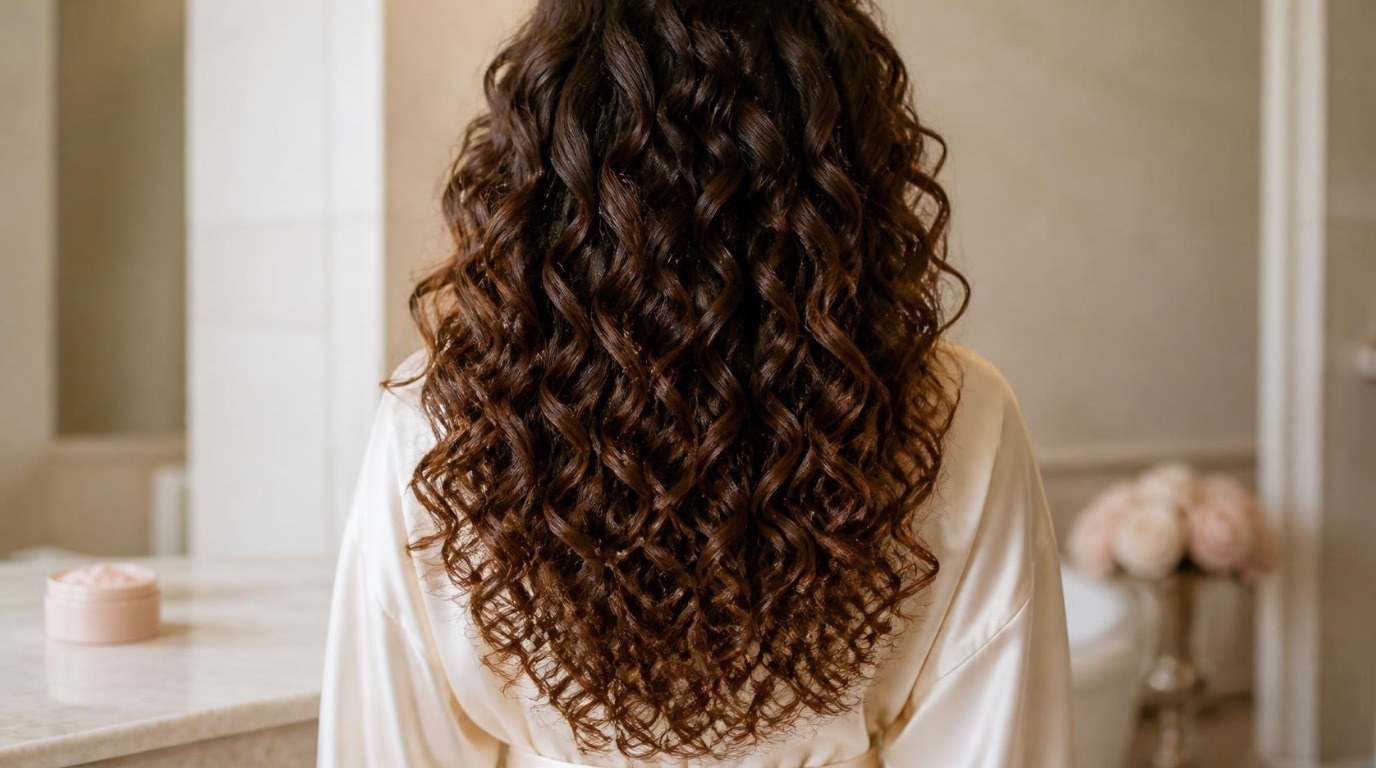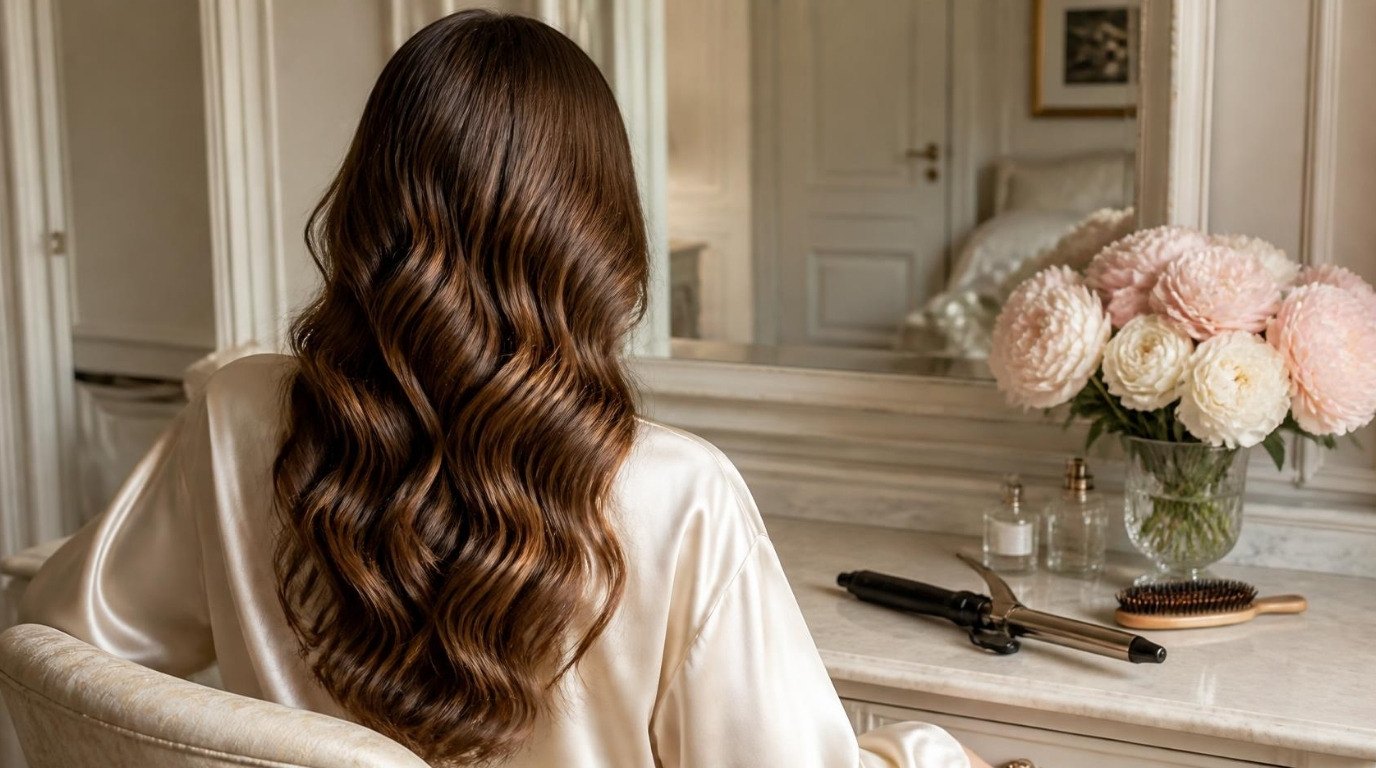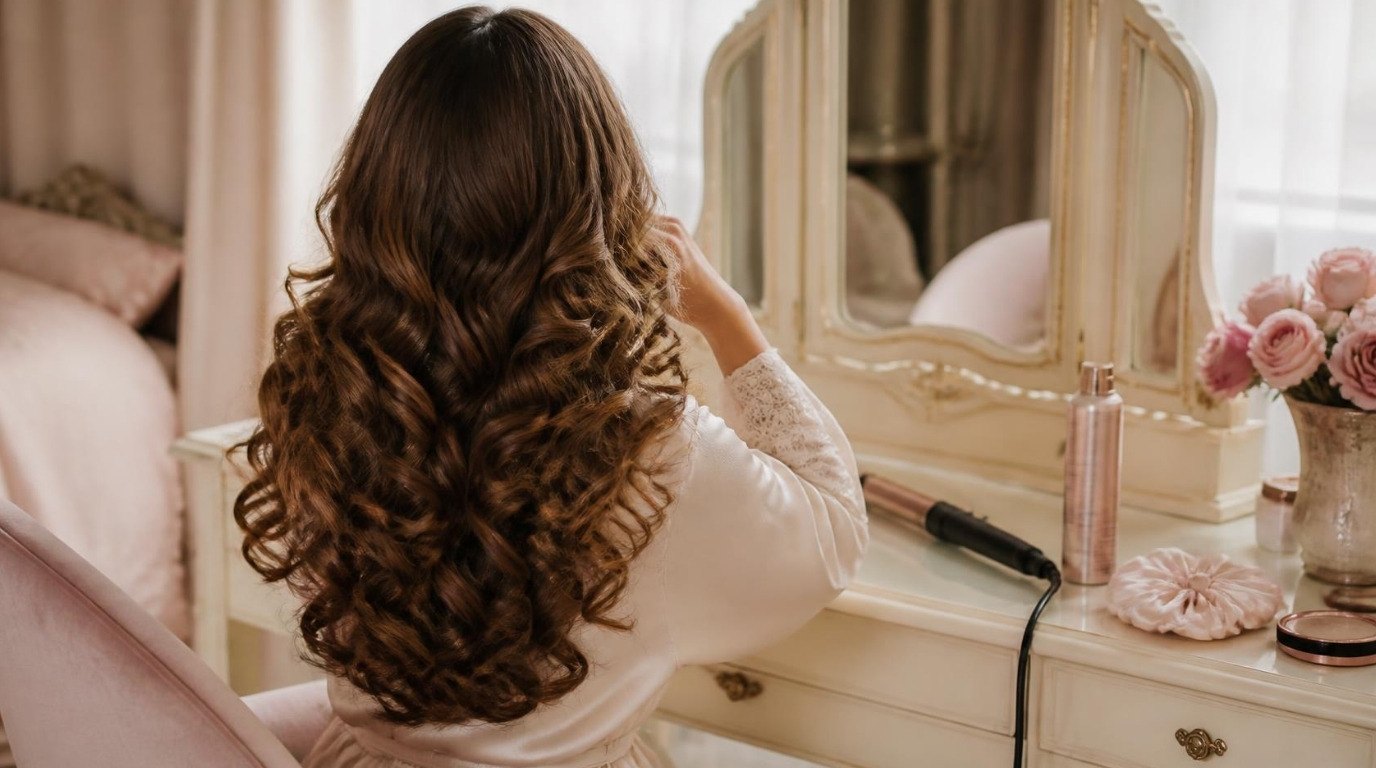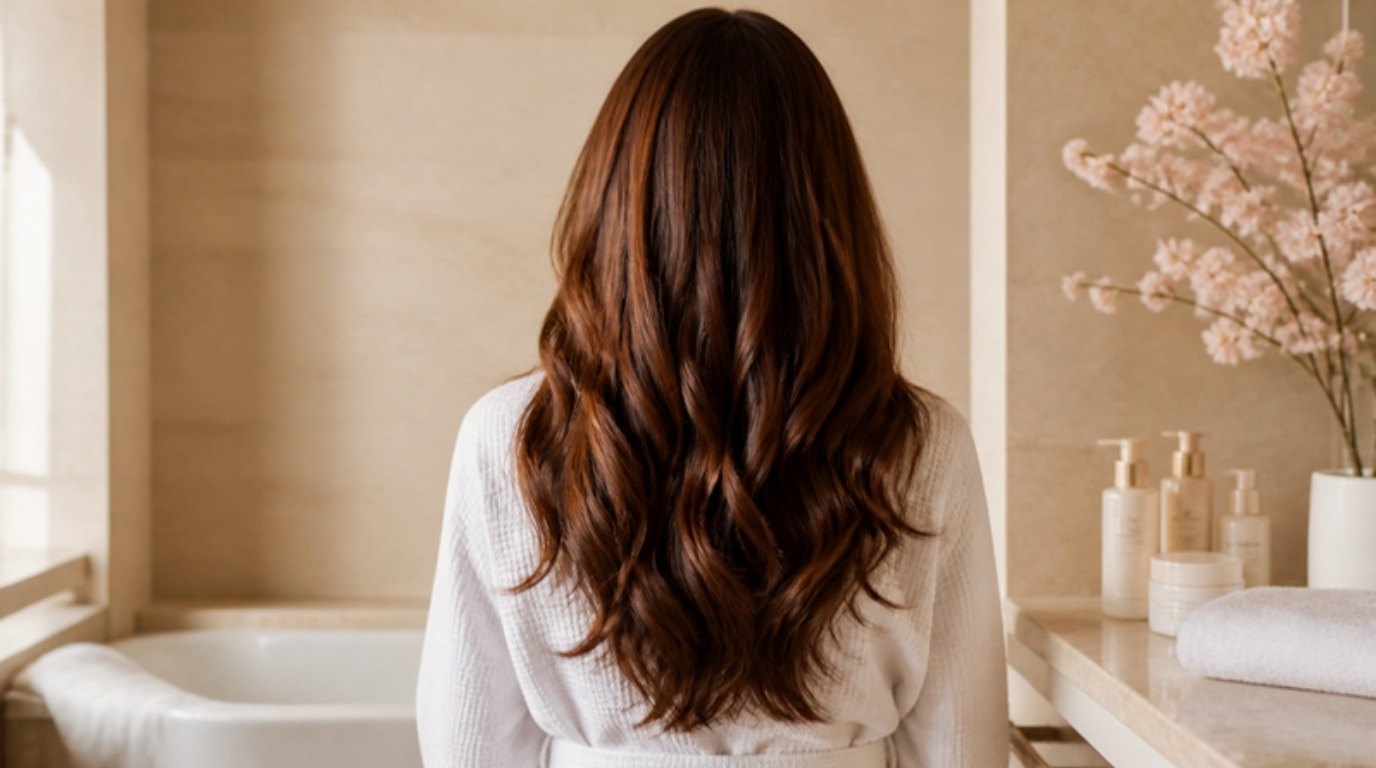
Curls and waves don't usually lose their definition in the shower. They lose it in the hour afterward, while gravity pulls them straight and a rough towel roughs up the cuticle. Hair plopping solves both problems with nothing more than a soft cotton T-shirt or a microfiber towel and a few minutes of patience.
The idea is simple: you lower your wet, product-coated hair onto the fabric, wrap it up and let your curls sit in their shape while extra water soaks away. When you take the wrap off, your pattern has had time to set without being stretched or frizzed, and drying gets quicker too.
This guide covers hair plopping from start to finish: what it is, who it suits, what you need, how to prep your hair first, a 6-step plopping method, how long to leave it, what to do afterward, and a troubleshooting table for flat roots, frizz, dents and hair that feels too heavy. It's written for every wave and curl pattern, from loose S-waves to tight coils.
Your first plop might look a little clumsy (most people's do). That's completely fine. It gets easier on the second or third try, once your hands learn the folds.
What Hair Plopping Actually Is
Plopping means wrapping wet, styled hair in a cotton T-shirt or microfiber towel so it dries in its natural shape with less frizz. You flip your head down, let your hair pile gently onto the fabric (that soft "plop" is where the name comes from), then fold and secure the fabric around your head like a turban.
Unlike regular towel drying, there's no rubbing or squeezing. The fabric simply holds your curls in a compact, scrunched position while it absorbs extra water.
Why It Helps Curls and Waves
- Less stretching. Wet curly hair is heavy. Left hanging, that weight pulls curls longer and looser. Plopping supports them so they keep their spring.
- Less frizz. Regular terry towels have loops that grab and rough up the hair's surface. Smooth cotton and microfiber are much gentler.
- More root lift. Because your hair dries upside down at first, many people get more volume at the crown.
- Faster drying. The fabric pulls out a good amount of water, so air drying or diffusing takes less time afterward.
Plopping won't change your natural pattern or create curls that aren't there. What it does is help your existing waves and curls show up more clearly and last a little longer.
Who Plopping Suits

Plopping is made for hair with some bend in it:
- Wavy hair (2A to 2C) often sees the biggest change, because loose waves are the easiest to drag straight with their own weight. My wavy hair guide pairs well with this one.
- Curly hair (3A to 3C) usually gets more defined clumps and less frizz.
- Coily hair (4A to 4C) can plop too, especially to soak up extra water gently. Some coily textures prefer other drying methods, so treat it as one option rather than a rule.
If your hair is straight, plopping isn't really needed. A soft towel or T-shirt is still a kind way to blot it, but there's no pattern to hold in place.
Not sure which pattern you have? My hair type chart from 1A to 4C helps you figure it out, and it's worth knowing before you choose products, because a loose wave and a tight coil want very different amounts of moisture and hold.
What You Need To Plop Your Hair

You might already own everything on this list:
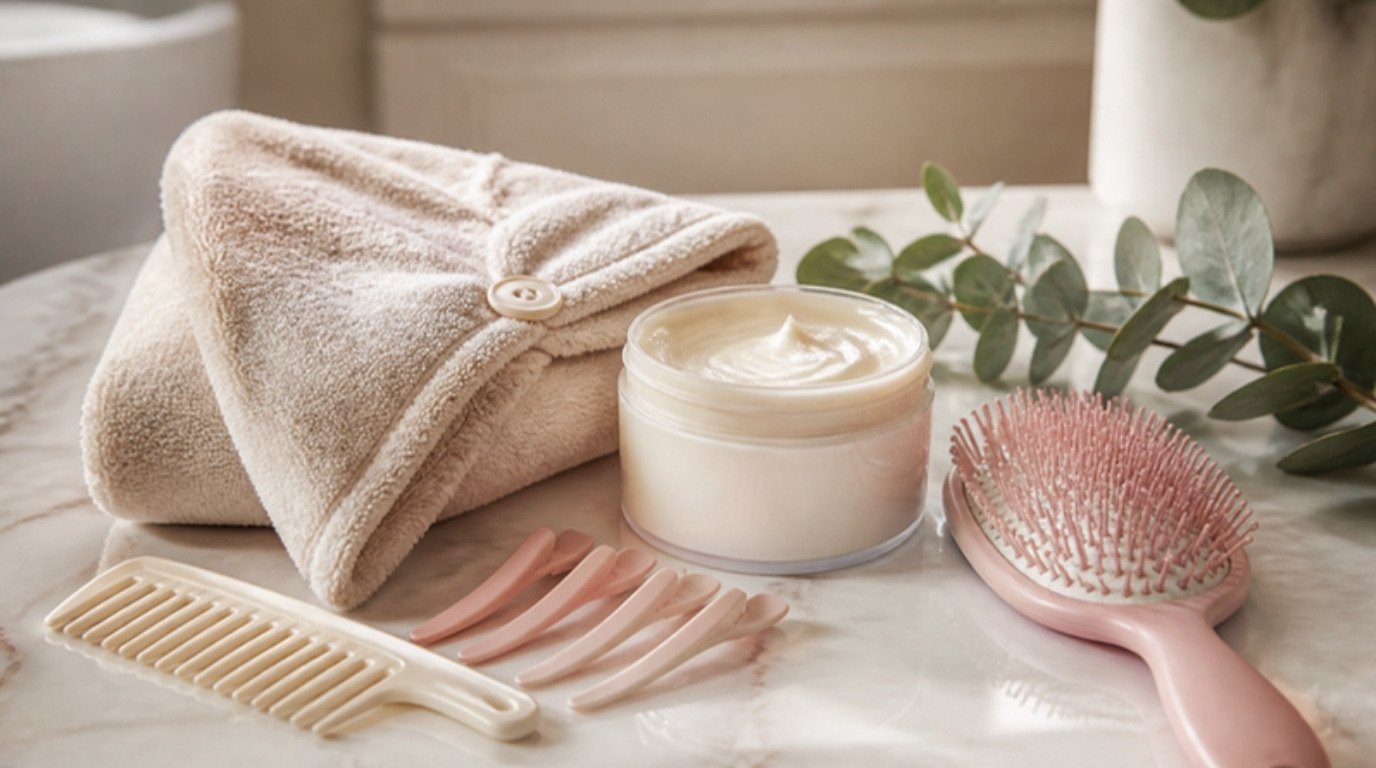
- A long-sleeved or large cotton T-shirt, or a dedicated soft cotton hair-drying wrap. Long sleeves make tying easier. Smooth, thin jersey cotton works best; avoid shirts with big prints, which can feel stiff.
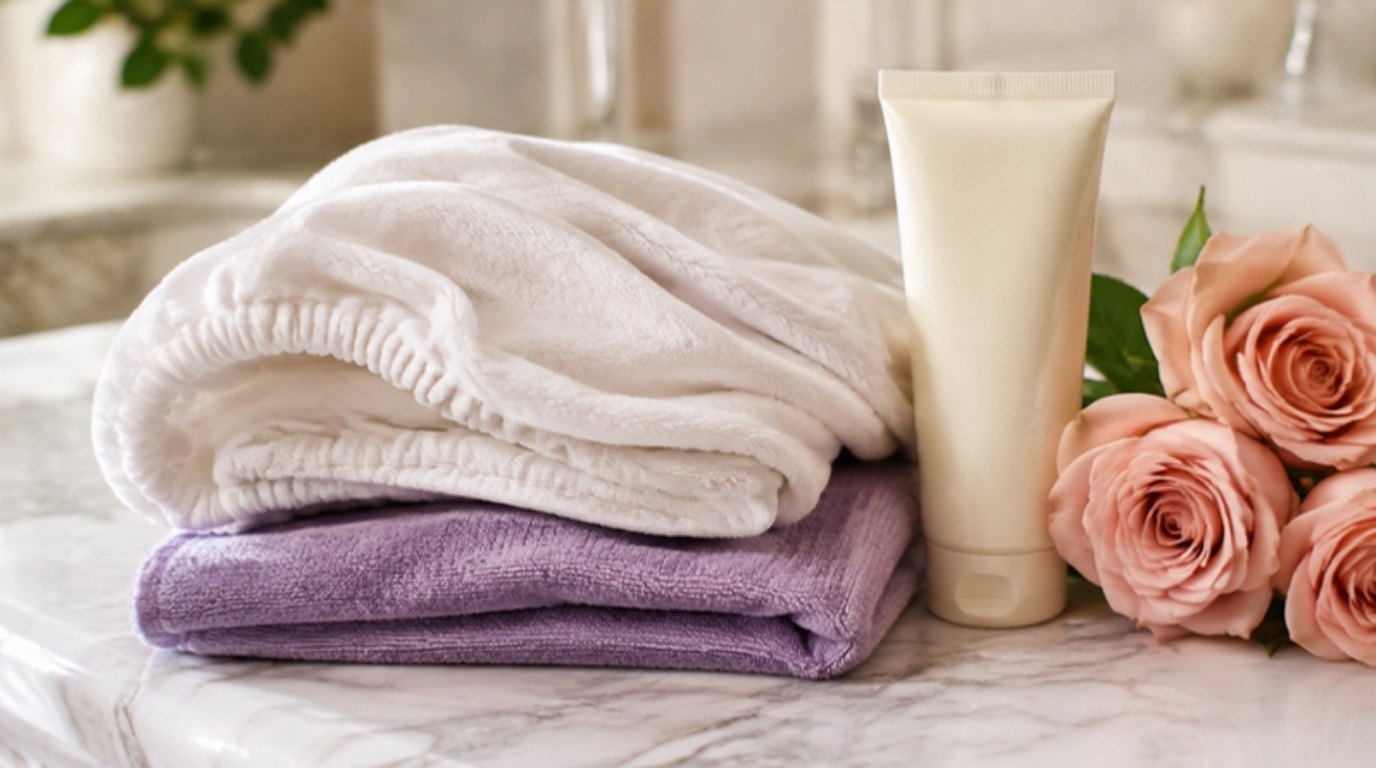
- A microfiber towel as an alternative. A large microfiber hair towel is very absorbent and great for thick or long hair.
- A leave-in conditioner for moisture and slip. A lightweight leave-in conditioner works for most waves and curls without weighing them down.
- A styler for hold, usually a gel or mousse. A curl-defining gel creates the light cast that keeps curls in shape while they dry.
- A soft hair tie or clip if your fabric needs securing. Satin scrunchies are gentle and less likely to leave a dent.
As with any new product, patch test leave-ins and gels on a small area of skin first, especially if your skin is sensitive, and stop using anything that causes itching or redness.
T-Shirt vs Microfiber Towel: Which Is Better?
Both work well, and the best choice depends on your hair:
- A cotton T-shirt is the gentlest option, with no loops to catch the hair and cause frizz. It absorbs moderately, so it's lovely for fine to medium waves and curls that flatten easily under a heavier, wetter fabric.
- A microfiber towel absorbs much more water, so it suits thick, long or high-density hair that takes forever to dry. Look for a smooth, flat weave rather than a fluffy, looped one.
- A dedicated plopping wrap is basically a long, smooth cotton or microfiber piece shaped to tie easily. It's not essential, but it can make the folding step quicker if you plop several times a week.
If you only have a regular terry towel, use it to gently blot excess water before styling, then switch to a T-shirt for the plop itself.
Before You Plop: Prep Your Hair
Plopping works best when the groundwork is done. A good plop can't make up for dry, under-moisturized hair, but it can make a great wash day look even better.
Know Your Pattern
Fine, loose waves usually do best with lighter products and a shorter plop. Thick, tight curls can handle richer products and a longer one. Knowing roughly where you sit saves a lot of trial and error.
Apply Products to Soaking-Wet Hair
Right after rinsing your conditioner, while your hair is still dripping, apply your leave-in, then your gel. Soaking-wet hair spreads product evenly and helps curls clump together, which gives you more definition and less frizz. Work section by section if your hair is thick, and smooth the products over the lengths with flat palms (often called "praying hands").
Use less than you think on fine hair: roughly a coin-sized amount of each for shoulder-length waves, and build up from there. My curly hair routine for beginners walks through a full wash day if you want the whole picture.
Scrunch
Cup your hair in your palms and gently scrunch it up toward your scalp a few times. You might hear a soft squishing sound; that's normal and a good sign the product is well distributed. You can scrunch with the cotton T-shirt too, which removes a little water without disturbing your curls.
How To Plop Your Hair in 6 Steps
Once your hair is prepped, the plop itself takes less than two minutes.
1. Lay the Fabric Flat
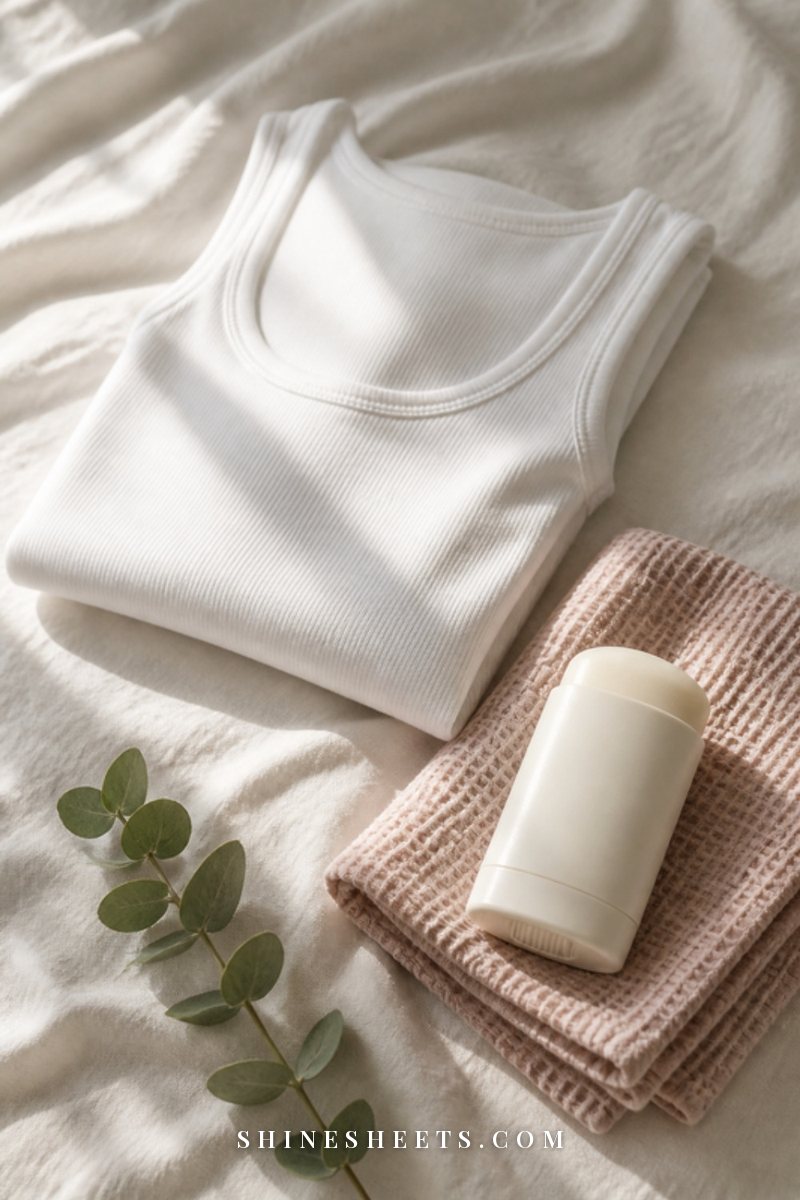
Spread your T-shirt or microfiber towel flat on a counter, chair or bed. If you're using a T-shirt, lay it with the neck hole closest to you and the sleeves out to the sides. Smooth out any wrinkles, because folds in the fabric can press dents into wet curls.
2. Flip Your Head Down
Lean forward over the fabric and let your hair hang down. Keep your movements slow so your curls stay clumped rather than shaking apart.
3. Lower Your Hair Onto the Fabric
Slowly lower your head until your hair settles onto the center of the fabric and coils into a soft pile. Your forehead or the front of your head should almost touch the fabric. Let your hair fold naturally; there's no need to arrange it.
4. Fold the Fabric Over
Take the bottom edge of the fabric (the end farthest from you) and fold it up over the back of your head, all the way to your nape. Your hair is now tucked inside.
5. Twist and Secure at the Nape
Gather the two side sections, or the sleeves, at the back of your neck. Twist each side gently toward the nape, then bring them around to the front and tie them loosely over your forehead, or tuck them in at the back. A soft scrunchie or clip can hold everything in place. Keep it snug but not tight, so nothing pulls at your hairline.
6. Time Your Plop
Leave the wrap on for 10 to 30 minutes for most hair. Fine waves often do best on the shorter end, while thick curls can go longer. Some people plop overnight, which is fine if it's comfortable and your scalp feels happy with it.
How Long Should You Plop?
There's no single right time, but these ranges are a good place to start:
- 10 to 15 minutes for fine or loose waves, which can flatten if the fabric sits on them too long.
- 20 to 30 minutes for medium waves and most curls.
- 30 minutes to a few hours for thick, long or very absorbent curly and coily hair.
- Overnight only if it's comfortable. Some curls love it; others come out squashed.
If you go overnight, a smooth pillowcase is kinder to any hair that slips out of the wrap, so consider a satin pillowcase for those nights. And if your scalp tends to get itchy or irritated when it stays damp for a long time, keep your plops short and let your roots dry fully during the day.
Plopping time is also nice built-in rest. Put the kettle on, make a cup of tea and give your hair a quiet half hour.
After Plopping: Dry and Scrunch Out the Cast

When time's up, untie the fabric carefully, lean forward and let your hair slide out. Then:
- Leave it alone for a moment. Resist touching or fluffing while it's still damp, because that creates frizz.
- Air dry or diffuse. Let your hair finish drying naturally, or use a diffuser on low heat and low speed, cupping sections gently without moving the diffuser around too much. My guide on how to dry hair without damage has more gentle drying tips.
- Scrunch out the cast. Once your hair is completely dry, the gel may leave a slightly stiff, crunchy feel called a cast. Gently scrunch upward with dry hands, or with a drop of lightweight oil on your palms, to soften it. Your curls stay defined but feel soft and touchable.
To keep that definition into day two and three, my article on how to make curls last longer has easy refresh and nighttime ideas.
Plopping Tips by Hair Type
The basic method is the same for everyone, but small adjustments make a real difference:
- Fine or loose waves: keep products light (mousse is often easier than gel), plop for 10 to 15 minutes and tie the wrap loosely so the crown doesn't flatten. Flipping your hair to the opposite side once it's out can add a little lift.
- Medium waves and curls: a leave-in plus a medium-hold gel and 20 to 30 minutes usually hits the sweet spot. Diffusing afterward helps the pattern set before it gets heavy again.
- Thick or long curls: use a large microfiber towel so the fabric doesn't get soaked through, and consider scrunching out extra water with a T-shirt before the plop. Longer plops tend to be fine.
- Coily hair: focus on moisture first, layering products the way your hair likes, and use plopping mainly to absorb extra water gently. If you prefer stretching or other drying methods, that's just as valid.
Can You Plop Every Wash Day?
Yes, for most people plopping is gentle enough to do every time you wash. There's no rubbing, no heat and no tension when it's tied loosely, which makes it one of the kindest drying habits around.
A few small things keep it that way:
- Wash your T-shirt or towel regularly. Product and moisture build up in the fabric, so toss it in the laundry every few uses and let it dry fully between plops.
- Give your scalp air. If you plop overnight often and notice itching or a damp, heavy feeling at the roots, switch to shorter daytime plops for a while.
- Check in with your hair. If it starts feeling coated or limp, the fabric isn't the problem; it's usually product buildup, and a gentle clarifying wash every few weeks resets things.
If your scalp stays itchy, flaky or sore even after you've changed your routine, it's worth checking in with a dermatologist rather than pushing through.
4 Plopping Mistakes To Avoid
- Plopping before applying products. The wrap holds whatever shape your hair is in. Without leave-in and a styler, you'll often get frizzy, undefined waves.
- Waiting until hair is only damp. Products spread less evenly and curls clump less. Style while it's dripping, then plop right away.
- Tying the fabric too tight. A tight knot presses dents into curls and can pull at your hairline. Snug is enough.
- Touching hair the moment it comes out. Fluffing damp curls breaks up the clumps you just created. Wait until it's fully dry before scrunching.
Plopping Troubleshooting: Problems and Fixes

If your plop didn't turn out quite right, it's almost always a small tweak away. Screenshot this table to keep it handy on wash day:
| Problem | Likely cause | Fix |
|---|---|---|
| Flat roots | Plopping too long, or the wrap pressing down on the crown | Shorten the plop to 10 to 15 minutes, tie the fabric looser and clip roots up for lift while they finish drying. |
| Frizz | Products applied to damp instead of soaking-wet hair, or a rough fabric | Apply leave-in and gel while hair is dripping, switch to smooth cotton or microfiber and avoid touching hair while it dries. |
| Kinks or dents from the tie | Tying too tight, or wrinkles and seams in the fabric | Lay the fabric completely smooth, tie loosely and use a soft scrunchie instead of a tight elastic. |
| Hair feels too heavy or stringy | Too much product, or rich products on fine hair | Use less leave-in, switch to a lighter gel or mousse and clarify every few weeks to remove buildup. |
| Curls squashed or uneven | Hair lowered too fast or pushed to one side of the fabric | Lower your head slowly so hair coils in the center, and keep the wrap balanced on both sides. |
| Hair still very wet afterward | Thin fabric or very thick hair | Use a large microfiber towel, scrunch out extra water first or plop a little longer. |
| Cast won't soften | Scrunching before hair is fully dry, or a very strong-hold gel | Wait until hair is 100% dry, then scrunch gently with a tiny drop of oil on your palms. |
Change one thing at a time. If you adjust products, timing and fabric all at once, you won't know which change helped.
Final Thoughts
Hair plopping is one of the simplest, gentlest habits you can add to a wavy or curly wash day: a soft T-shirt, a few folds and a little patience. It won't change your natural texture, but it gives the curls and waves you already have the chance to dry the way they want to.
Be patient with your first few tries, adjust the timing for your hair and enjoy the quiet half hour it gives you. Your curls are worth that little bit of extra care.