The secret to deep cleaning an area rug at home isn't a stronger cleaner – it's knowing what your rug is made of. A wool rug, a cotton flatweave, a synthetic shag and a jute rug all want completely different treatment, and the method that makes one look brand new can leave another shrunken, brown-streaked or smelling musty for weeks.
Once you know the material, the process is refreshingly simple: get the dry dirt out first (there's always far more than you'd expect), treat stains, clean with as little water as the fiber allows, and dry it completely. Most rugs only need this once or twice a year, with gentle care in between.
This guide shows you how to deep clean an area rug at home, step by step: how to check the label and material, shaking and vacuuming, spot testing, the right method for wool, synthetic, cotton and jute, drying without mildew, freshening odors, when to call a professional, and how to keep your rug cleaner for longer. There's also a material-by-material table so you know exactly what to do and what to avoid.
Before You Start: Check the Label and Material
Flip a corner of your rug and look for a care label, usually sewn on the back near an edge. It might say "spot clean only," "professional cleaning recommended," "machine washable" or list the fiber content. Take a photo of it so you have it next time.
No label? You can usually tell the material by feel and look:
- Wool feels soft, springy and slightly lanolin-rich; it often sheds a little when new.
- Cotton is usually a thin flatweave or braided rug, soft and lightweight.
- Synthetic (polypropylene, polyester, nylon) often has a slight sheen and feels smooth or plasticky.
- Jute, sisal and seagrass are rough, plant-based and look like natural rope.
- Silk and viscose are very shiny and silky. Viscose (sometimes sold as "art silk" or "bamboo silk") is especially sensitive to water.
Also check whether the colors bleed: dampen a white cloth with water and press it on a dark area for 30 seconds. If color transfers, skip wet cleaning and call a professional.
What You'll Need
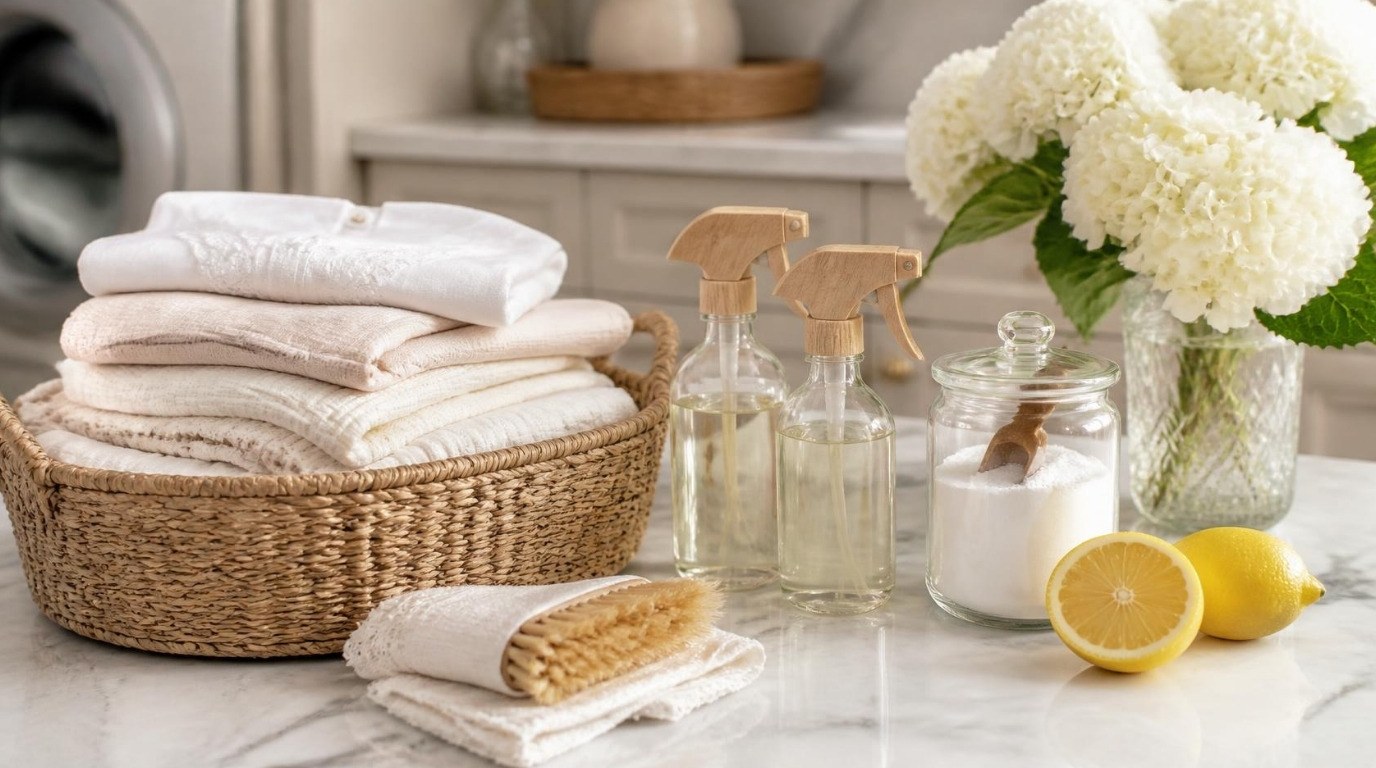
Gather everything before you start, so the rug isn't sitting wet while you hunt for supplies:
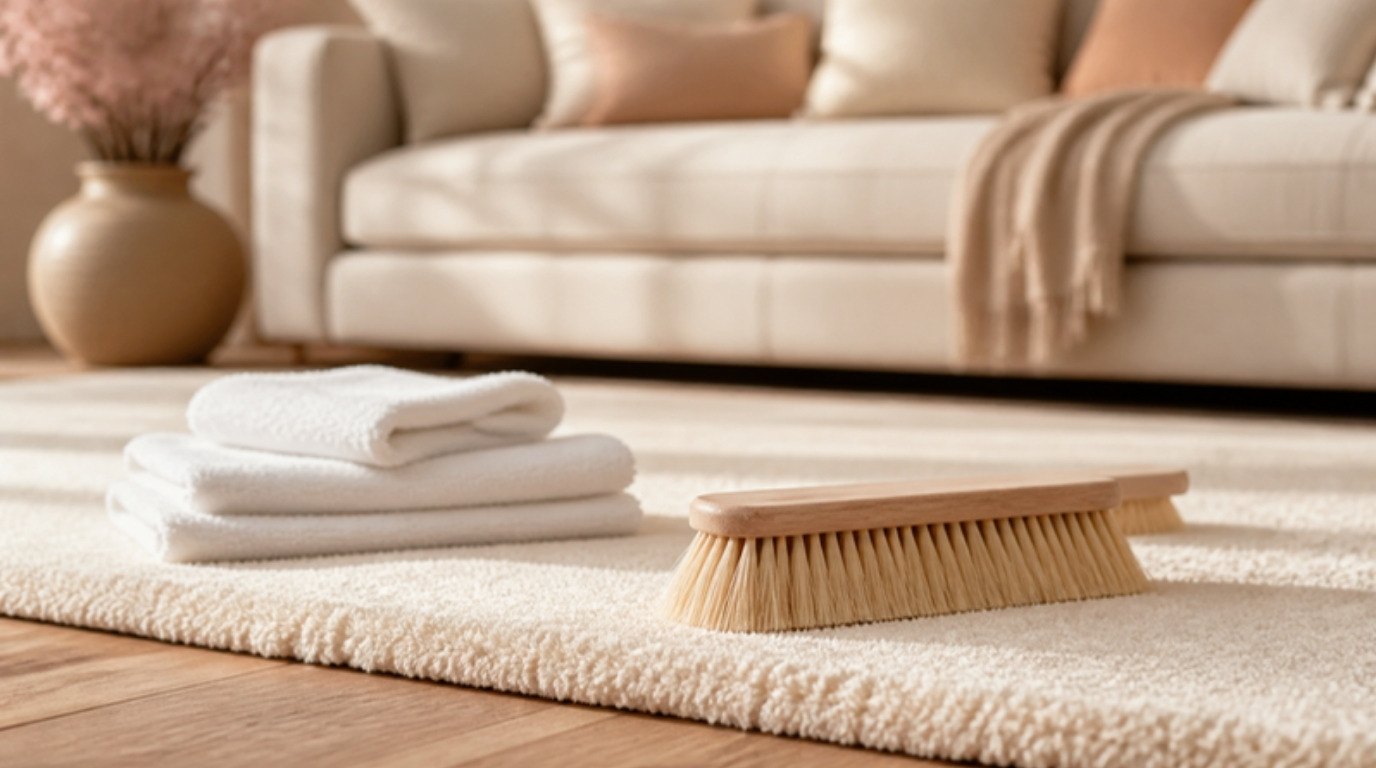
- A vacuum with suction-only or adjustable settings (turn off the beater bar for wool, shag and delicate rugs)
- A soft-bristle cleaning brush for working cleaner gently into the pile
- A wool-safe rug shampoo or a mild, pH-neutral rug cleaner suited to your rug's fiber
- A carpet stain remover spray labeled safe for your rug's material
- A stack of white microfiber cloths (white so you can see dirt lift – and so no dye transfers)
- A bucket, a spray bottle of clean water and a few old towels
- Fans, a dry sunny day, or both
Area Rug Cleaning Guide by Material
Here's the quick version. Find your fiber, follow the method and avoid the things in the last column. Screenshot it for next time.
| Rug material | Best deep-cleaning method | Avoid |
|---|---|---|
| Wool | Shake, vacuum both sides, wool-safe cleaner with minimal water, blot, dry flat quickly | Hot water, soaking, bleach, high-alkaline or enzyme cleaners, beater bars, heavy scrubbing |
| Synthetic (polypropylene, polyester, nylon) | Vacuum, then shampoo with a mild rug cleaner, rinse well, dry fully; many are hose-friendly outdoors | Leaving soap residue, heat drying, oil-based stain removers |
| Cotton | Small rugs: machine wash cold on gentle if the label allows; larger ones: shampoo by hand, rinse, dry flat | Hot water, tumble drying on high, harsh bleach on colors |
| Jute, sisal, seagrass | Dry methods only: shake, vacuum, dry carpet powder, blot spills immediately | Water and steam (can cause brown stains, shrinking, mildew), soaking, scrubbing |
| Silk and viscose | Vacuum gently; leave deep cleaning to a professional rug cleaner | Any home wet cleaning, rubbing, stain sprays |
| Shag (any fiber) | Shake, vacuum with suction only, spot clean, method per fiber | Beater bars, over-wetting the dense pile |
How To Deep Clean an Area Rug Step by Step
These first steps are the same for every rug. Don't skip them – removing dry dirt first makes the actual cleaning far gentler and more effective.
Shake or Beat It Outdoors
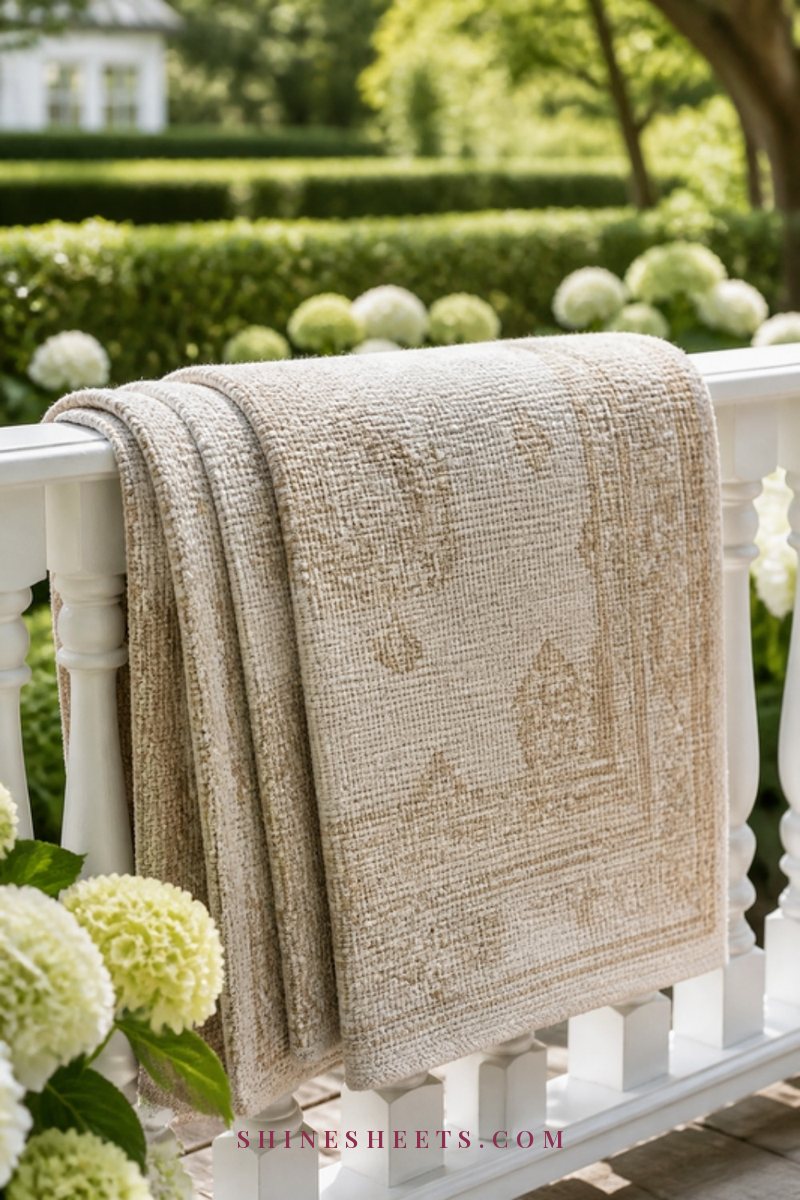
Take smaller rugs outside and shake them hard for a minute. For larger rugs, drape them over a sturdy railing, fence or clothesline and beat the back with a broom handle or rug beater for a few minutes. You'll be amazed (and a little horrified) by how much grit comes out. That grit is what wears down rug fibers over time, so this step alone extends your rug's life.
Vacuum Both Sides
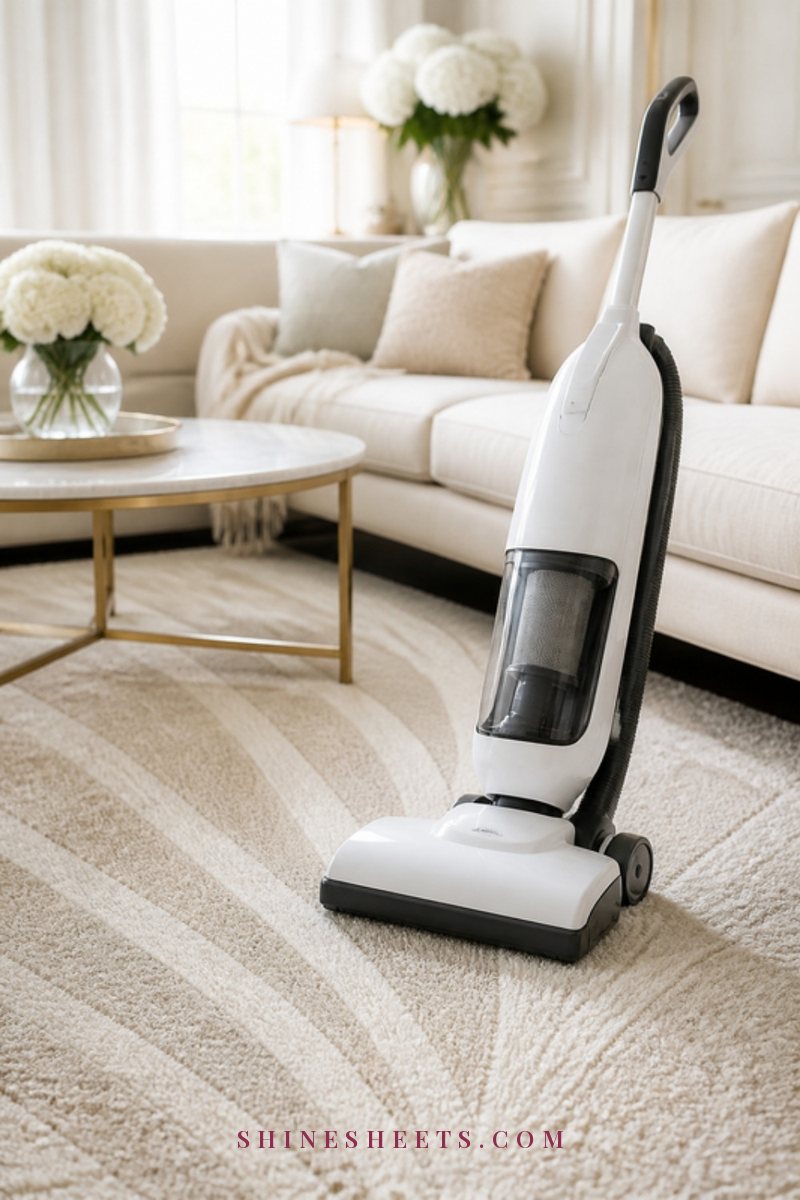
Vacuum the top slowly in overlapping rows, going in the direction of the pile. Then flip the rug and vacuum the back – this loosens deeply trapped dirt, which falls out onto the floor. Vacuum the floor underneath, flip the rug back and vacuum the top once more. On fringe, vacuum from the rug toward the tassels with suction only, so they don't get pulled into the brush.
If the rug sits in a dusty room, my guide on how to reduce dust explains why textiles are such dust magnets and what helps.
Spot Test Your Cleaner
Mix your cleaner according to the label and apply a little to a hidden spot – under where the sofa sits or on a back corner. Blot after the time on the label (usually 5 to 10 minutes) with a white cloth. If the color stays put and the fibers look and feel normal once dry, you're good to go. If anything changes, stop.
Treat Stains First
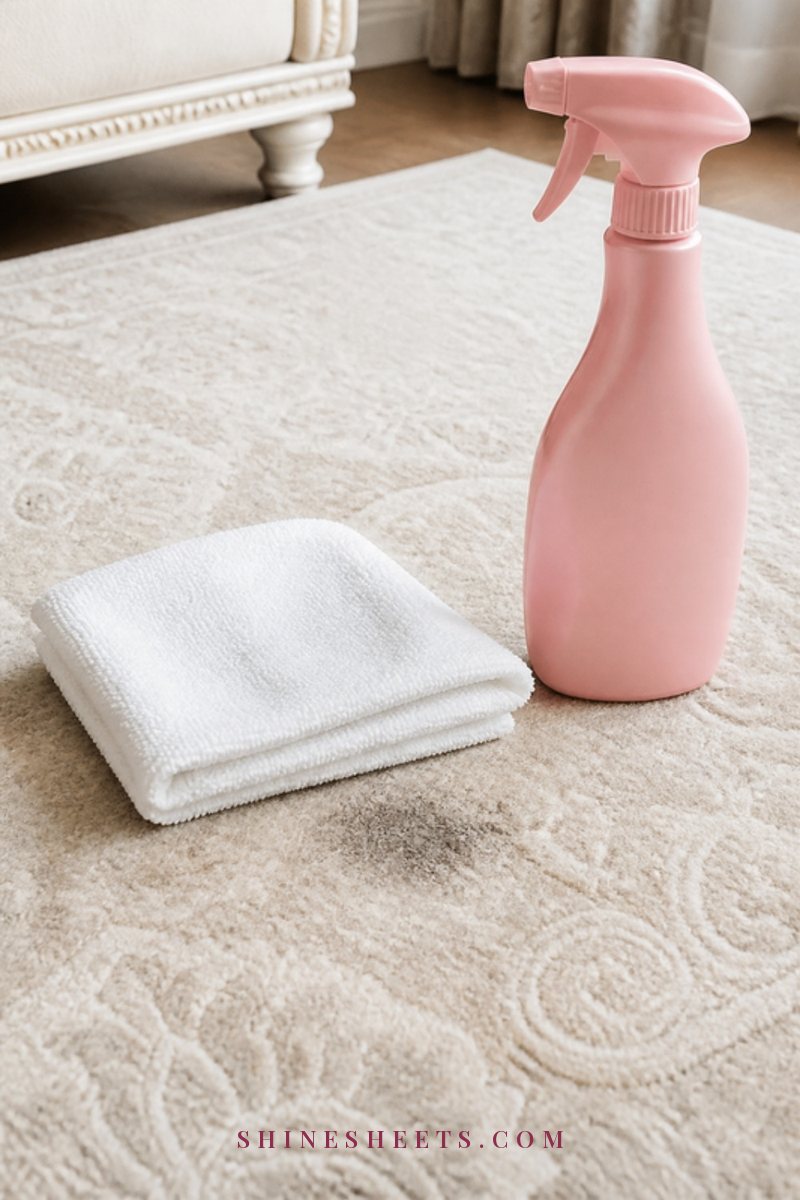
Treat visible spots before cleaning the whole rug. Spray a fiber-safe stain remover onto a white cloth (or lightly on the stain), leave it for the dwell time on the label, then blot from the outside in. Never rub, which frays fibers and spreads the stain. For coffee, wine, makeup or pet accidents, my guide on how to clean carpet stains has stain-by-stain methods that work on most rugs too.
Safety note: use one product at a time, keep the room ventilated, and never mix bleach with vinegar or ammonia – those combinations release dangerous fumes.
How To Clean a Wool Rug
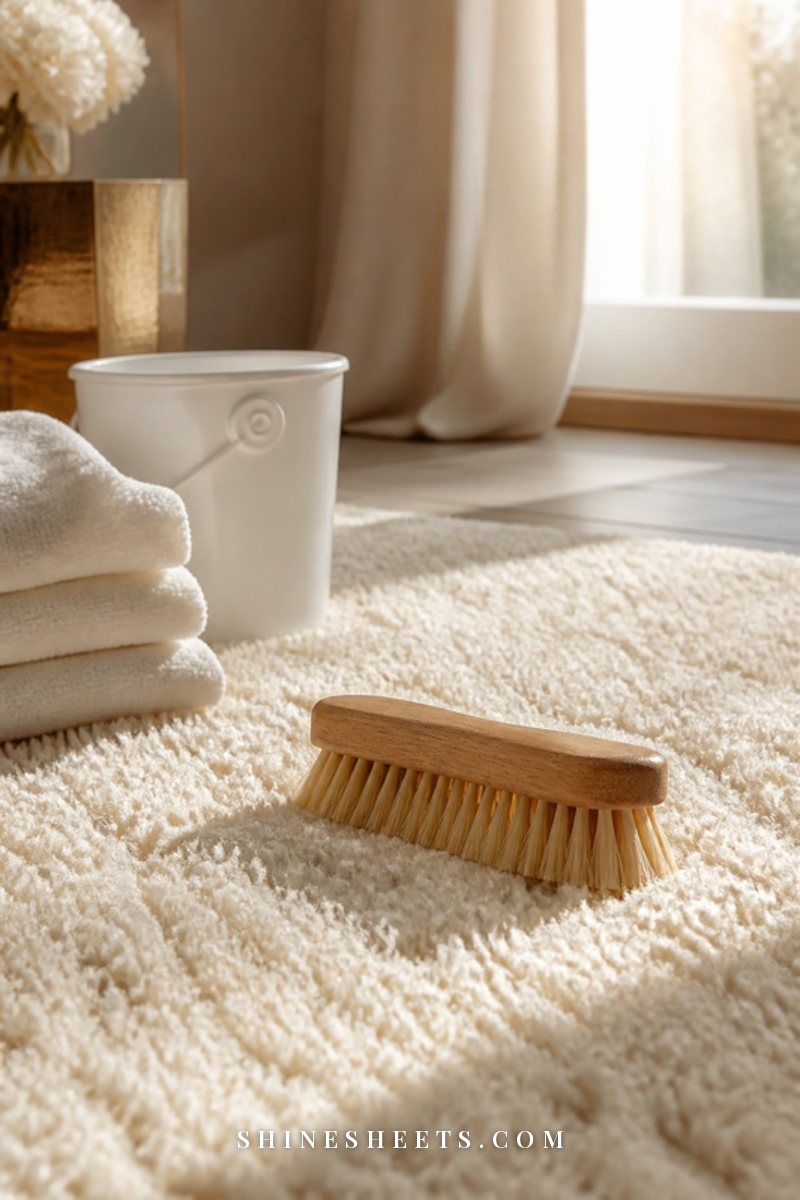
Wool is naturally stain-resistant and forgiving, but it hates heat, harsh chemicals and being soaked. The rule is minimal water and gentle hands.
- Mix a wool-safe cleaner with cool or lukewarm water, following the label exactly.
- Work in small sections of about two by two feet. Dip your soft brush in the solution, tap off the excess and brush gently in the direction of the pile. The rug should feel damp, never wet.
- Leave it for the label's dwell time, usually 5 to 10 minutes.
- Rinse lightly by misting clean water over the section and blotting firmly with a dry towel. Repeat until the towel no longer feels soapy.
- Blot, blot, blot. Press towels into the rug (standing on them works wonderfully) to pull out as much moisture as possible.
- Dry quickly and completely (see the drying section below).
If your wool rug is large, very old, valuable, hand-knotted or has colors that bleed, skip home wet cleaning and book a professional.
How To Clean a Synthetic Rug
Synthetic rugs (polypropylene, polyester and nylon) are the most forgiving at home. Many indoor-outdoor rugs can even be cleaned outside on a clean patio or deck.
- Vacuum thoroughly and pre-treat stains.
- Apply a mild rug shampoo diluted according to the label, working it in with a soft brush.
- Let it sit for 5 to 10 minutes (or as the label says).
- Rinse well. Indoors, mist and blot with clean water; outdoors, a garden hose on a gentle setting works for hose-friendly rugs. Soap left behind attracts dirt quickly, so rinsing matters.
- Squeeze out excess water with a clean squeegee or by pressing with towels, then dry flat or draped over railings in the shade.
How To Clean a Cotton Rug
Small cotton rugs are often machine washable. Check the label, then wash on cold with a gentle cycle and a mild detergent, ideally in a large-capacity machine. Avoid overloading – the rug needs room to move. Air dry flat or over a drying rack; a dryer on high heat can shrink cotton or ruin a rubber backing.
For larger cotton rugs that won't fit in a machine, use the synthetic method above with cool water and a mild cleaner, then rinse and dry thoroughly. Braided cotton rugs can unravel if scrubbed, so brush gently.
How To Clean a Jute or Natural Fiber Rug
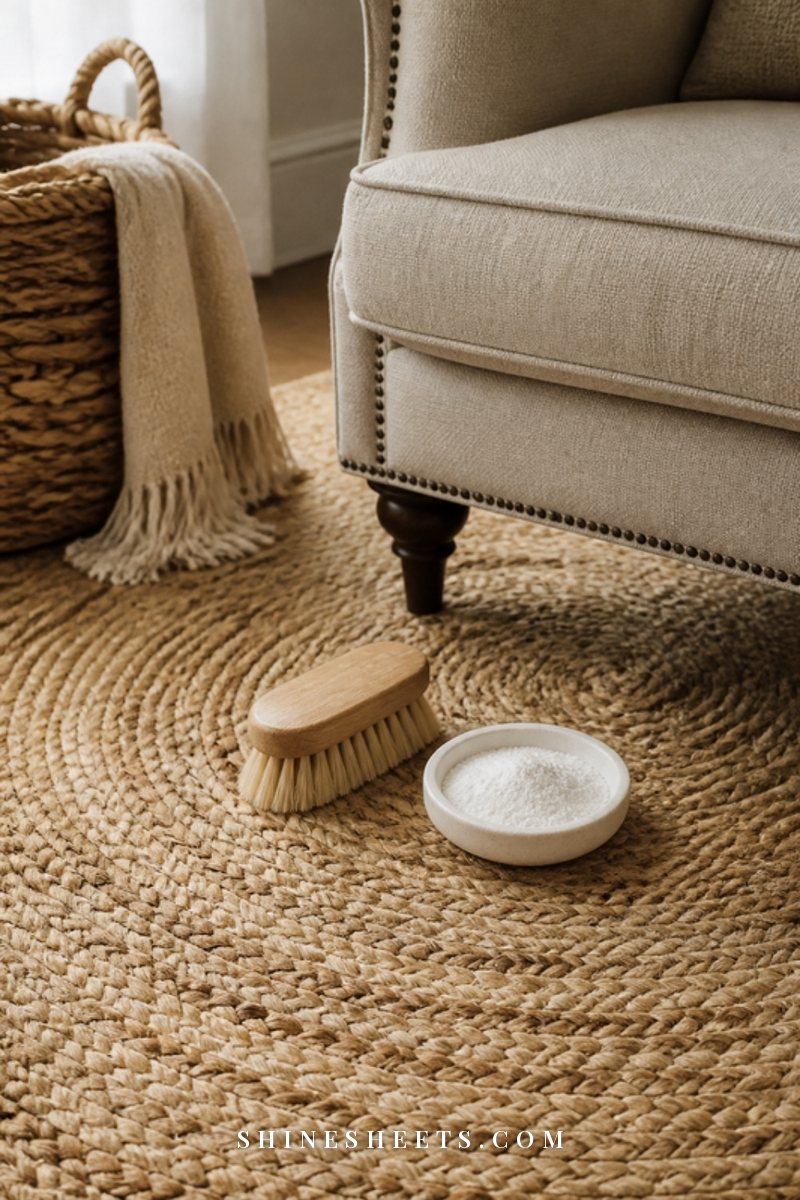
Jute, sisal and seagrass are beautiful but very sensitive to water. Moisture can leave brown marks (called browning), cause shrinking and invite mildew. Stick to dry methods:
- Shake and vacuum often, both sides, with suction only. Natural fibers shed a little – that's normal.
- Use a dry carpet-cleaning powder made for natural fibers: sprinkle it on, brush it in gently, leave it as long as the label says, then vacuum thoroughly.
- Blot spills immediately with a dry cloth, pressing firmly. Then dry the spot fast with a hair dryer on cool or a fan.
- Scrape dried spills gently with a dull knife, then vacuum.
If a jute rug gets soaked or develops a large stain, a professional who works with natural fibers is the safest route.
How To Rinse and Dry Your Rug Completely
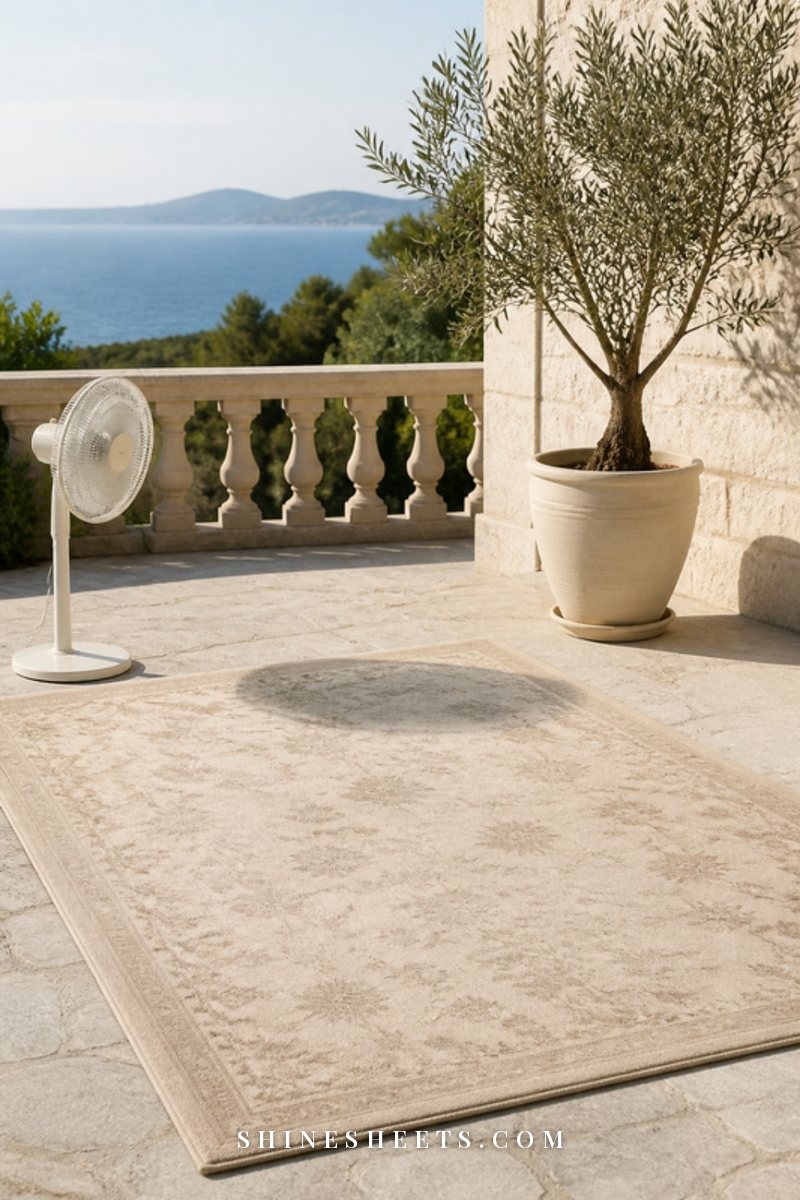
Drying is the step that decides whether your rug comes out fresh or musty. A rug that stays damp for more than a day or so can develop mildew, smells and even damage to the floor beneath it.
- Remove as much water as possible before drying – blot with towels, press with your feet, use a squeegee on synthetics.
- Dry flat or raised so air can reach both sides. Lay it over a few chairs, a railing or a clean drying rack.
- Use airflow. Point one or two fans at the rug, open windows or run a dehumidifier. Outdoors, a breezy, dry day in the shade is ideal (direct strong sun can fade some colors).
- Flip it halfway through so the back dries too.
- Check the backing and base of the pile by pressing a dry paper towel into it. Only put the rug back on the floor when it's completely dry – usually 12 to 48 hours.
How To Freshen a Smelly Rug
Many rug odors come from trapped dust, body oils, pets or dampness. Before reaching for a full wet clean, try dry methods:
- Air it out outdoors on a dry day for a few hours.
- Sprinkle a light layer of baking soda, brush it in gently, leave it overnight and vacuum thoroughly the next morning (test on a hidden spot first on dark or delicate rugs).
- Use a dry rug powder made for your fiber, following the label.
- Find the source if a smell returns – often it's a pet accident that soaked into the pad or a damp floor underneath.
Avoid masking odors with heavy fragrance sprays; they tend to sit on top of the smell rather than remove it.
Rug Cleaning Mistakes To Avoid
A few very common habits cause most rug disasters. Steer clear of these and you're already ahead:
- Using too much water. Over-wetting soaks the backing, slows drying and invites mildew and browning. Damp is enough for almost every rug.
- Skipping the dry dirt removal. Washing a gritty rug turns that grit into mud deep in the pile.
- Too much cleaner. Extra shampoo leaves sticky residue that attracts dirt faster than before. Measure exactly as the label says.
- Scrubbing hard. Aggressive scrubbing frays fibers, fuzzes wool and distorts the pile. Gentle brushing and blotting are kinder and work just as well.
- Using a carpet machine on the wrong rug. Rented carpet cleaners can over-wet wool and are a no for jute, silk and viscose. Read the rug label first.
- Putting the rug back too soon. A slightly damp rug on a wood floor can damage both. Wait until it's dry all the way through.
How Often To Deep Clean an Area Rug
For most homes, a deep clean once or twice a year is plenty, with weekly vacuuming and quick spot cleaning in between. Rugs in entryways, kitchens, dining areas or homes with pets and small children may need a deep clean every three to six months. Rugs in quiet bedrooms or guest rooms can often go a full year.
A few signs that it's time: the colors look dull or grayish, the rug feels slightly gritty or stiff underfoot, there's a lingering smell, or vacuuming no longer seems to make a difference. Spring and early autumn are lovely times for it, because you can dry rugs outdoors or with open windows.
Area Rug Care for Pet Owners
Pets and pretty rugs can live together happily with a few extra habits. Vacuum two or three times a week in shedding season, using a rubber brush or the upholstery tool to lift fur from the pile. Treat accidents immediately: blot as much as possible, then use an enzyme cleaner labeled safe for your rug fiber, following the dwell time on the bottle (check that it's wool-safe before using it on wool). Lift the rug to check whether anything soaked through to the pad or floor. For homes with pets, washable cotton rugs and stain-resistant synthetics are often the most relaxed choice.
When To Call a Professional Rug Cleaner
Home cleaning is wonderful for most everyday rugs, but some situations really do call for a pro:
- Hand-knotted, antique, vintage or very valuable rugs
- Silk, viscose or any rug with a "dry clean only" or "professional only" label
- Colors that bleed in the white cloth test
- Large pet urine areas, flooding or mold
- Very large or heavy wool rugs you can't dry quickly at home
Look for a cleaner who specializes in area rugs and can clean them off-site, rather than a general carpet cleaning service.
How To Keep Your Area Rug Clean Longer
A little weekly care means you'll rarely need a big deep clean:
- Vacuum weekly, and twice a week in busy areas or homes with pets.
- Use a good rug pad. A felt rug pad cushions the fibers, keeps the rug from slipping and lets air circulate. Choose one labeled safe for your floor type.
- Rotate the rug every three to six months so wear and sun fading stay even.
- Take shoes off or keep a doormat at the entry.
- Blot spills immediately – the faster you act, the easier it is.
- Shake small rugs outdoors once a month.
Add your rug to your cleaning schedule so it doesn't get forgotten, and if you're cleaning the living room anyway, my guide on how to clean a couch pairs beautifully with this one. And if you're still choosing a rug for a room, my guide on how to choose a rug covers which fibers are easiest to live with.
Final Thoughts
A clean rug changes how a whole room feels – softer underfoot, brighter in color, and fresh in a way you notice every time you walk in barefoot. The work itself is mostly patience: dry dirt out first, the right cleaner for your fiber, a gentle hand and plenty of drying time.
Choose a dry, breezy day, start with a good shake and a slow vacuum, and let the rest unfold one calm step at a time. Your rug, and your floors beneath it, will be all the better for it.