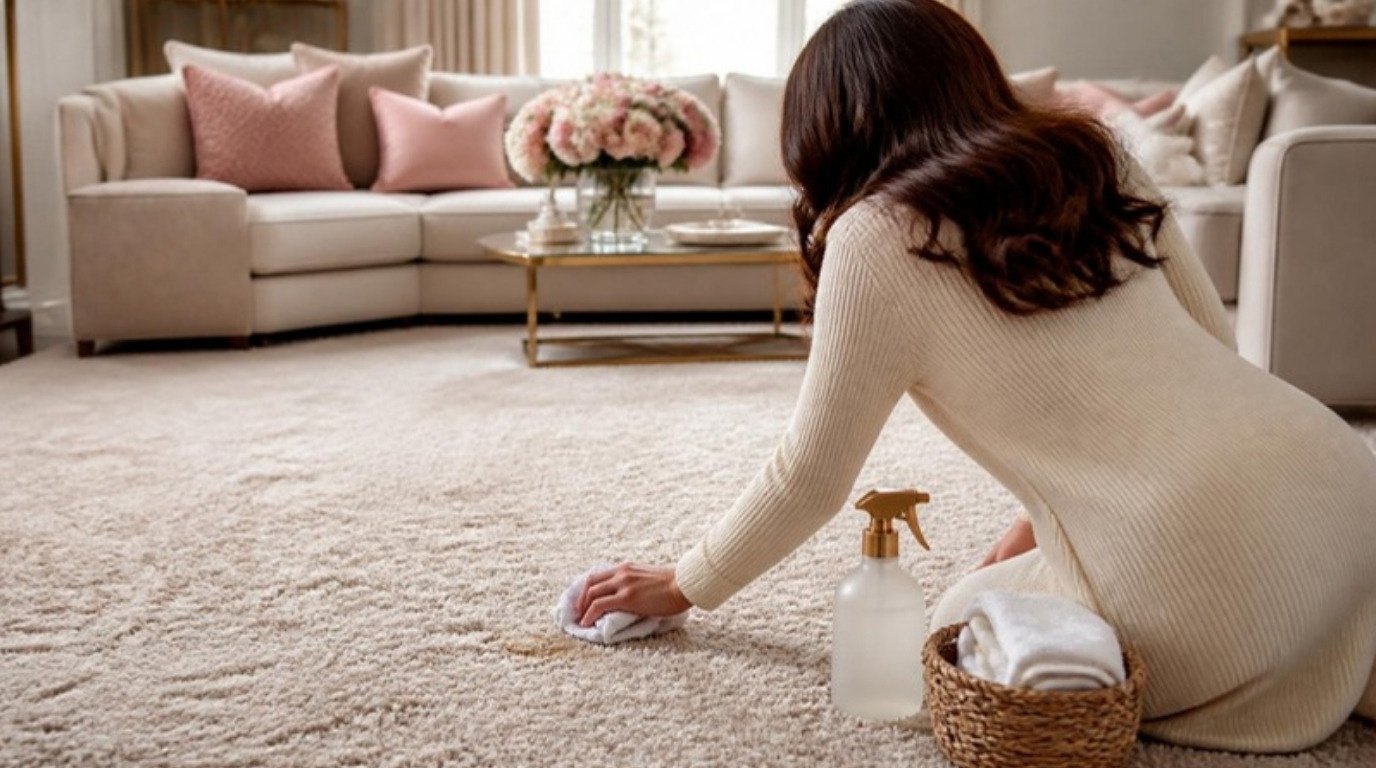
Most carpet stains aren't ruined by the spill itself. They're ruined in the first two minutes after it, when panic kicks in and someone grabs the nearest towel and scrubs as hard as they can. The good news: if you stay calm, blot instead of rub and pick the right cleaner for the right kind of mess, almost every everyday stain can come out (or fade so much that nobody else will ever spot it).
This guide is all about how to clean carpet stains of every type, from your morning coffee to red wine, foundation, grease, mud, pet accidents, candle wax and ink. You'll find the golden rules that work for every spill, a stain rescue table to screenshot, step-by-step methods for each stain, a homemade vs store-bought comparison, the signs it's time to call a pro and a few easy habits that keep your carpet looking fresh.
It took me a while to accept that carpet cleaning is more about patience than strength. Once that clicked, stains stopped feeling like small disasters.
The Golden Rules of Carpet Stain Removal
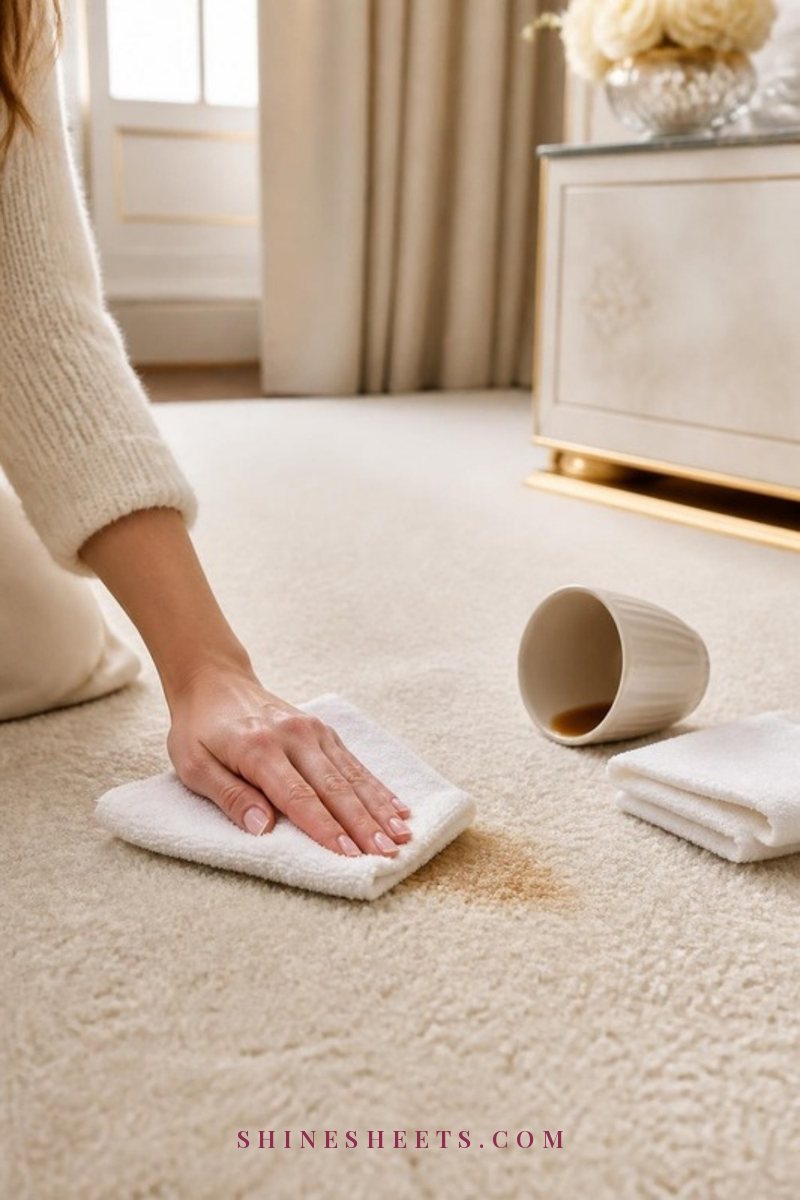
Before we get into specific stains, these rules apply to almost every spill. If you only remember one section, make it this one.
- Act fast, but don't panic. Fresh stains sit on the fibers; old ones soak into them and bond. Even a minute spent blotting right away saves you twenty minutes later.
- Blot, never rub. Rubbing pushes the stain deeper, spreads it wider and frays the carpet pile so it looks fuzzy and dull. Press a clean cloth down firmly, lift, turn to a fresh section and repeat.
- Work from the outside in. Start at the edge of the stain and move toward the center. This keeps the spill from growing a bigger "ring" around it.
- Test in a hidden spot first. Inside a closet, under the sofa or in a corner. Dab a little cleaner on, wait 10 minutes, then blot with a white cloth. If color transfers or the fibers change texture, choose a gentler option.
- Cold water first. Hot water can "cook" protein stains (think blood, milk, pet accidents) and set them for good. Cold or lukewarm water is the safe starting point for almost everything.
- Use less liquid than you think. Soaking the carpet can push the stain into the padding underneath, where it wicks back up later as a mysterious brown shadow. Small amounts, applied with a cloth or spray, then blotted.
- Rinse and dry properly. Soap left in the fibers attracts dirt, so the spot gets darker again in a week. Rinse with a little plain water, blot, then lay a dry towel over the area with something heavy on top for a few hours.
A quick word on white cloths: they matter more than you'd expect. Colored or printed towels can transfer dye onto a wet carpet, and you'd never see it happening until it's too late. A stack of soft white microfiber cleaning cloths kept just for spills makes every rule above easier.
Your Small Carpet Rescue Kit
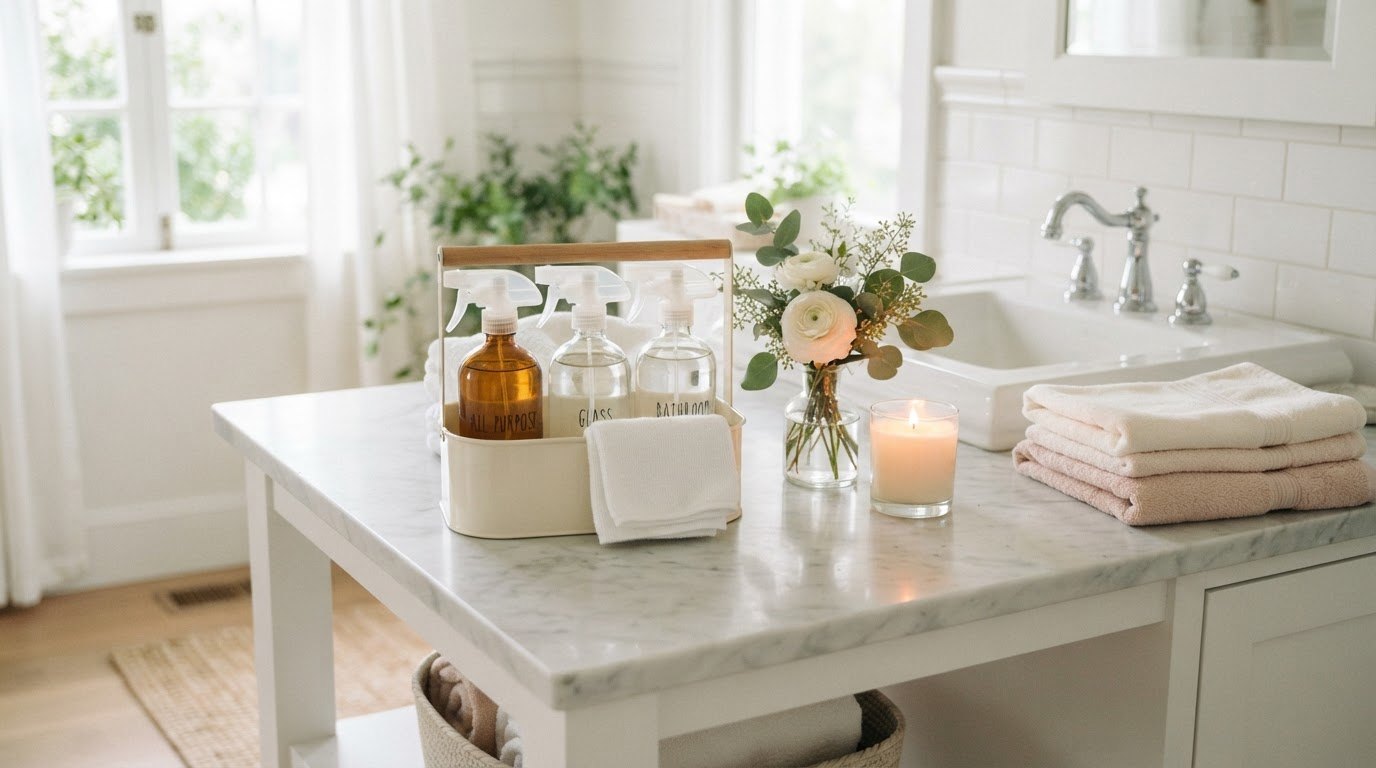
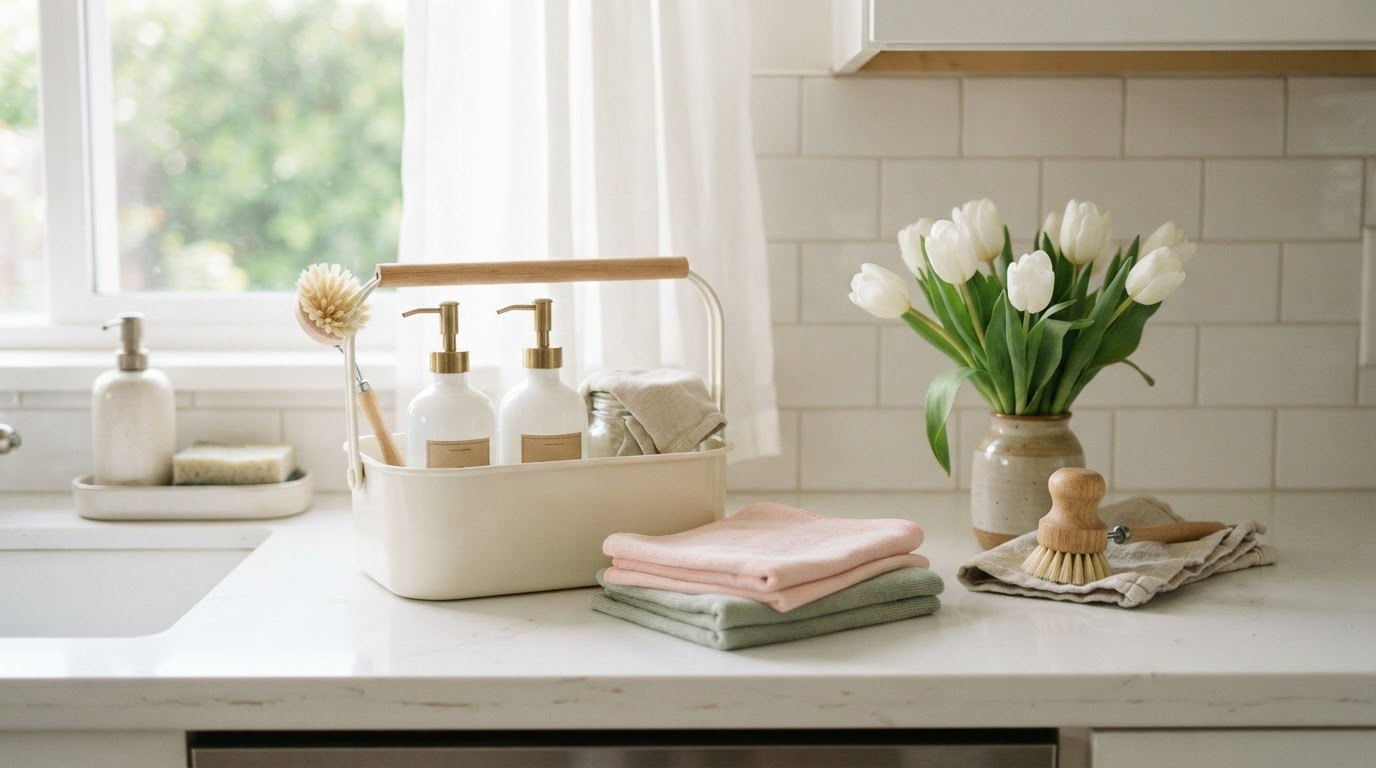
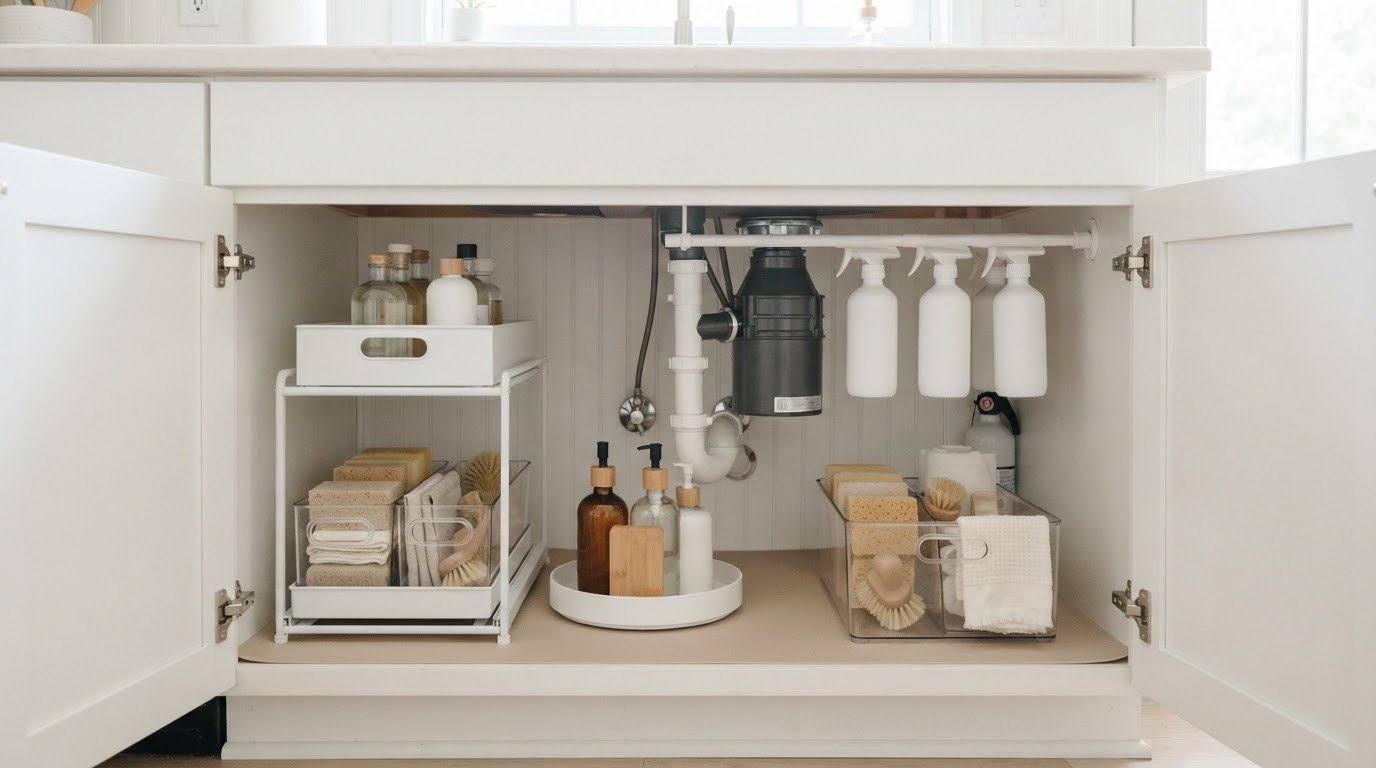
You don't need a cupboard full of products. A tiny kit kept in one basket means you can act in those first few minutes instead of hunting around the house. Here's what I'd keep together:
- White cloths and paper towels for blotting (lots of them).
- A clear, gentle dish soap with no dyes or moisturizers, since colored soap can leave its own tint.
- White vinegar for coffee, tea and general freshening (diluted, never on its own on wool or silk).
- Rubbing alcohol for ink and some makeup stains.
- Baking soda or cornstarch to soak up grease and odors.
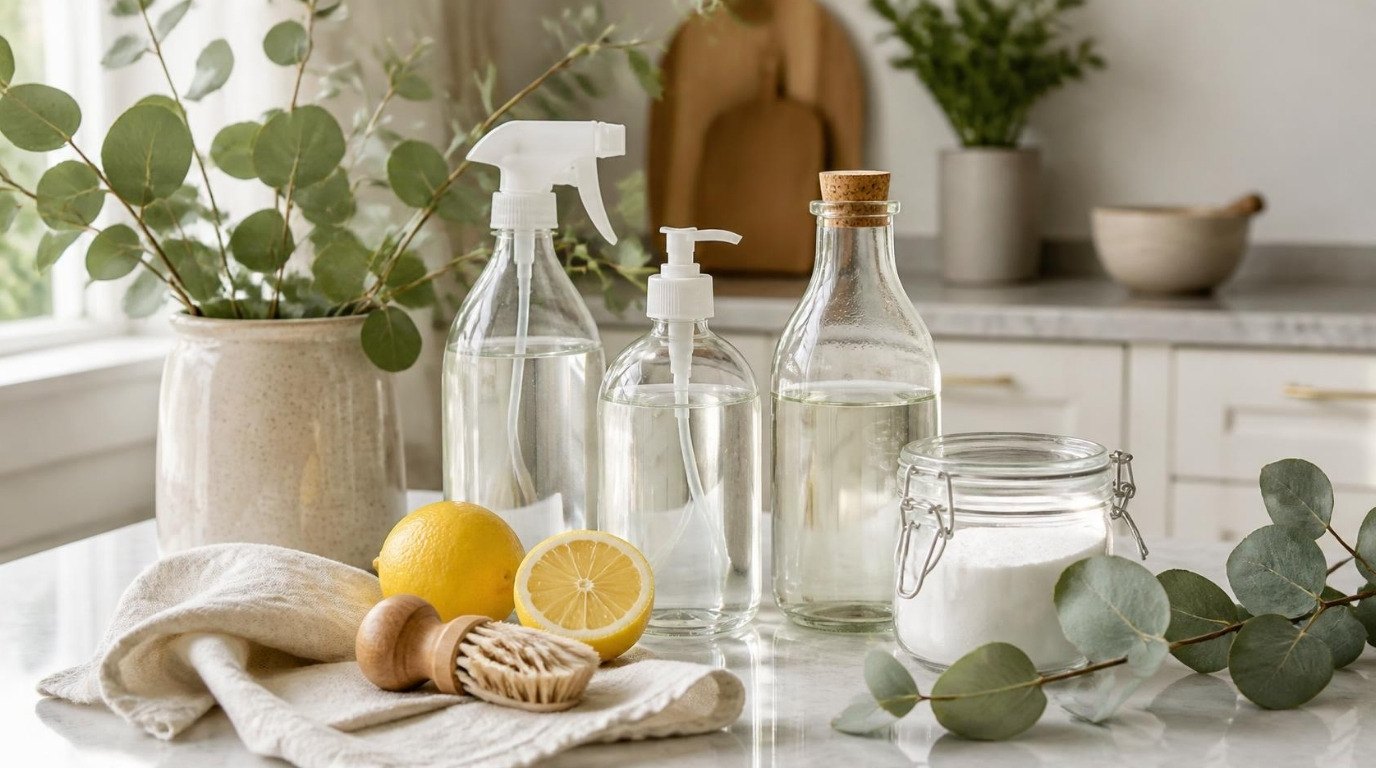
- An empty spray bottle for mixing your homemade solution. A white or frosted glass spray bottle looks lovely under the sink and is easy to label with a little sticker so nobody confuses what's inside.
- A ready-made carpet cleaner for days when you don't want to mix anything. Look for a carpet stain remover spray that says it's safe for your carpet type and has no bleach in it.
- A soft brush to gently lift the pile after cleaning. A soft-bristle scrub brush is perfect, as long as you use it to fluff and loosen, never to scour.
- A dull butter knife or spoon for scraping off solids like wax, mud or lipstick.
The basic homemade solution I'd mix for most water-based stains: 1 tablespoon clear dish soap + 1 tablespoon white vinegar + 2 cups lukewarm water. Shake gently and you're ready.
If you already love keeping your home clean with simple pantry staples, my guide to natural cleaning swaps that actually work covers what each ingredient is good for (and what it can't do).
Stain Rescue Table
This is the one to screenshot and save on your phone. When something spills, glance at the row, do the first step right away, then come back to the detailed method below.
| Stain | First Step | Cleaner | Avoid |
|---|---|---|---|
| Coffee or tea | Blot with a dry white cloth, then dab cold water | Dish soap + white vinegar + water | Hot water, rubbing |
| Red wine | Blot, then dribble cold water and blot again | Dish soap solution; on light carpet only, 3% hydrogen peroxide after a patch test | Peroxide on dark or wool carpet |
| Makeup and foundation | Scrape or vacuum powder, don't wet it | Rubbing alcohol or micellar water, then dish soap | Rubbing a cream product deeper |
| Oil and grease | Sprinkle baking soda or cornstarch, wait 20 minutes | Dish soap solution after vacuuming | Adding water first |
| Mud | Let it dry completely | Vacuum, then dish soap solution | Wiping it while wet |
| Pet accidents | Blot up as much as possible | Enzyme cleaner, left to work | Ammonia, steam or heat |
| Candle wax | Let it harden (an ice cube helps) | Paper towel + low iron; alcohol for leftover dye | Pulling soft wax, a hot iron |
| Ink | Blot without spreading | Rubbing alcohol dabbed on with a cloth | Pouring alcohol directly onto the stain |
One rule sits above every row: never mix bleach with ammonia or vinegar. Those combinations release toxic gases, even in small amounts. It's also wise not to combine hydrogen peroxide and vinegar in the same bottle. Use one cleaner, rinse, then move to the next if you need to.
How To Clean Carpet Stains by Type
Every stain behaves differently, which is why one "miracle" method never works for everything. Here's how to handle the eight most common ones, step by step.
1. Coffee and Tea
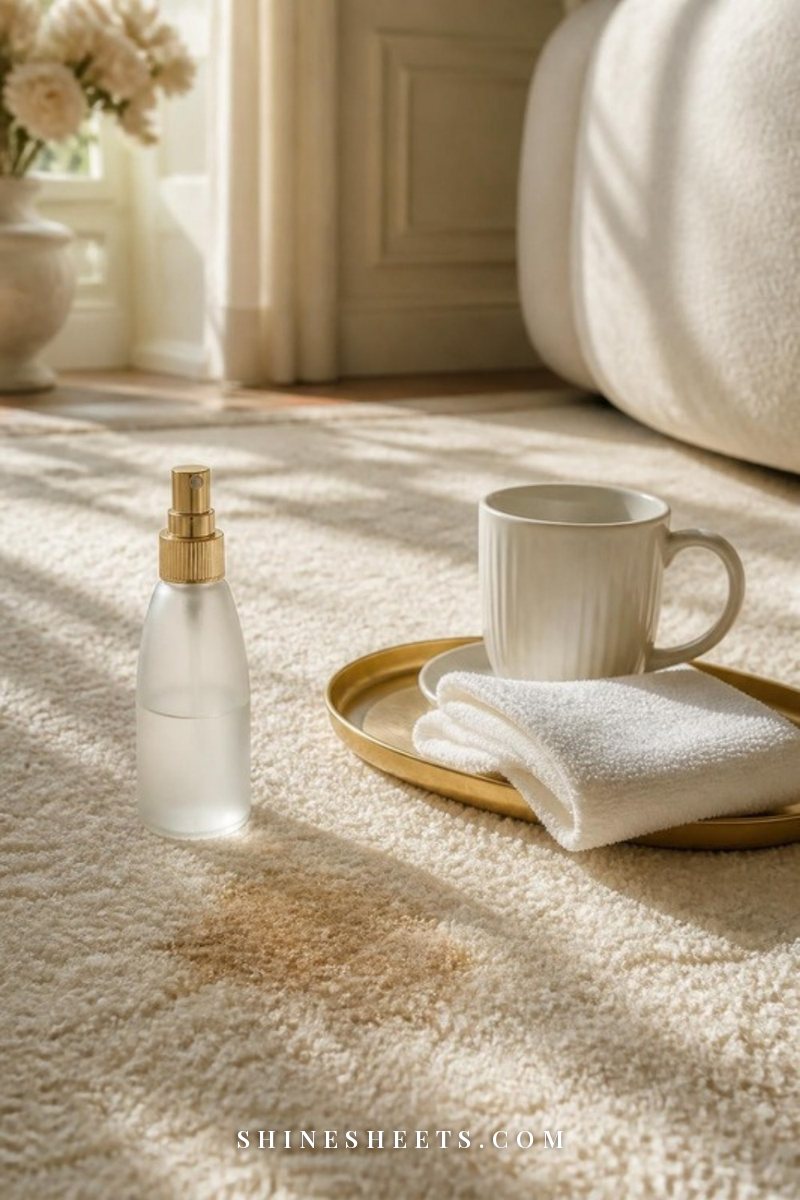
Coffee and tea contain tannins, which are plant dyes. They come out beautifully when fresh and get stubborn once they dry, so speed matters here.
- Blot up as much liquid as possible with a dry white cloth.
- Dab the spot with cold water and blot again. Repeat two or three times.
- Spray or dab the dish soap and vinegar solution lightly onto the stain.
- Wait 5 minutes, then blot from the outside in.
- Rinse with a little cold water, blot dry and weigh down with a towel.
If you take milk in your coffee, finish with a cold-water rinse and skip any heat, since milk is a protein and can leave a faint smell if it sets. Old, dried coffee stains often need two or three rounds, letting the spot dry in between.
2. Red Wine
Red wine has a scary reputation, but it's very fixable when you move quickly. The biggest mistake is panicking and scrubbing.
- Blot immediately with a dry white cloth until no more color comes up.
- Dribble a little cold water onto the stain to dilute it, then blot again. Keep going until the color is noticeably lighter.
- Apply the dish soap solution, wait 5 minutes and blot.
- For a stubborn pink shadow on light, synthetic carpet only: mix 1 teaspoon of clear dish soap with 2 tablespoons of 3% hydrogen peroxide, patch test it first, then dab a small amount on and blot after 10 minutes.
- Rinse with cold water and blot dry.
Hydrogen peroxide is a mild bleach, so never use it on dark, colored or wool carpets. On those, stick with the soap solution and repeat a few times, or reach for a store cleaner made specifically for wine.
3. Makeup and Foundation
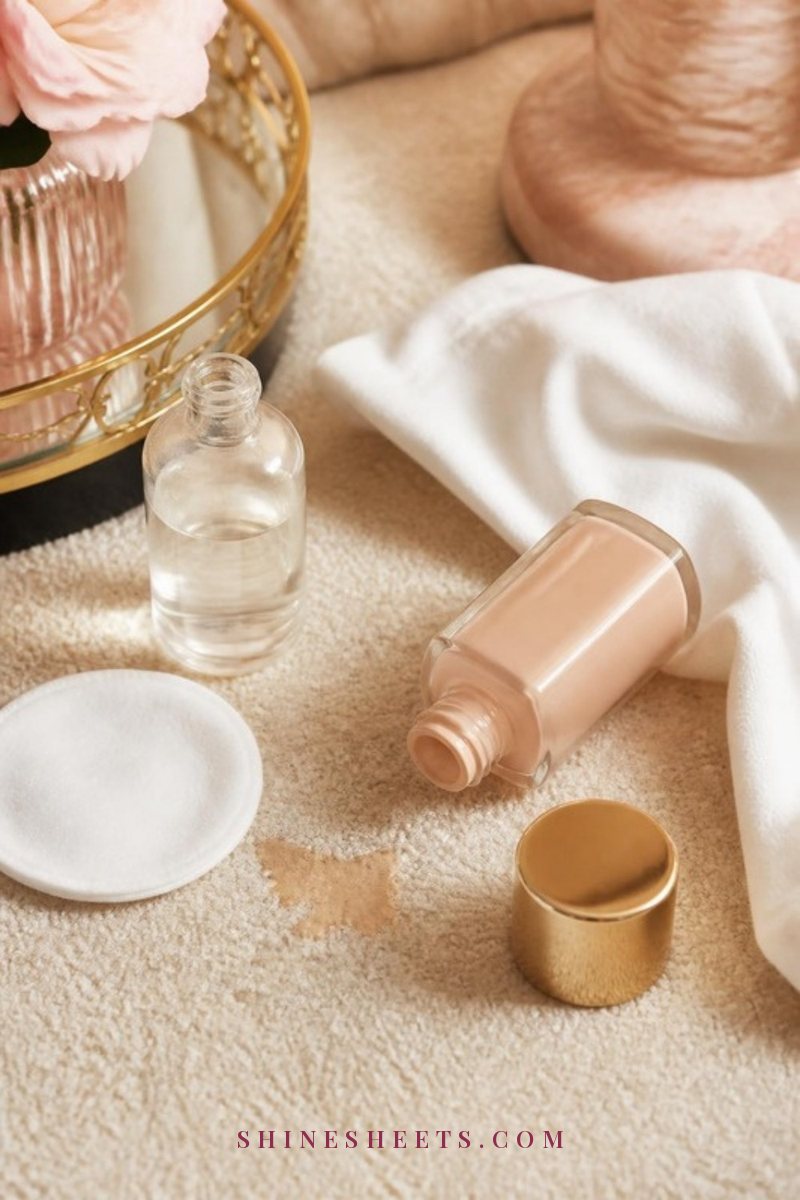
Dropped a foundation bottle or a compact of powder? (It happens in every getting-ready corner eventually.) The method depends on whether the product is dry or creamy.
- Powder (blush, eyeshadow, setting powder): Don't add water first, or the powder turns into paint. Tap the carpet gently to loosen loose pigment, then vacuum with the hose attachment. Treat any leftover tint with a dab of the dish soap solution.
- Liquid foundation and concealer: Scrape off any excess with a spoon. Dab a white cloth with rubbing alcohol or micellar water and press it onto the stain, lifting as the color transfers. Follow with the dish soap solution, then rinse.
- Lipstick and lip gloss: These are waxy and oily. Scrape off what you can, dab with rubbing alcohol on a cloth, then use the dish soap solution to cut through the oil.
- Mascara and eyeliner: Treat like ink (see below) with rubbing alcohol, working in tiny dabs so it doesn't smudge outward.
Patch test the alcohol first. It's safe on most synthetic carpets but can lift dye from some wool and natural fibers.
4. Oil and Grease
Body oil, salad dressing, a buttery snack, a hair serum bottle tipped over. Oil-based stains need to be absorbed before you clean them, because water alone just slides over the top.
- Blot gently with a paper towel to lift any pooling oil.
- Sprinkle a thick layer of baking soda or cornstarch over the stain.
- Leave it for at least 20 minutes (an hour is even better for bigger spills).
- Vacuum it up thoroughly.
- Dab with the dish soap solution, since dish soap is made to break down grease.
- Rinse with a little water and blot dry.
If a dark mark remains, repeat the baking soda step once more before adding any more liquid.
5. Mud
This is the one stain where waiting is the right move. Wet mud smears into every fiber the moment you touch it; dry mud crumbles right out.
- Leave the mud to dry completely, ideally overnight.
- Break up the dried clumps with a butter knife or your soft brush.
- Vacuum slowly from several directions to pull the dirt from the base of the fibers.
- Treat any remaining brown shadow with the dish soap solution, blot, rinse and dry.
A washable mat at every outside door saves you from most mud stains in the first place (more on that in the prevention section).
6. Pet Accidents
Pet stains are a special case, because the real problem is the smell and the proteins you can't see. If they aren't fully broken down, pets can keep returning to the same spot.
- Blot up as much as you can with paper towels, pressing firmly. Stand on a thick wad of towels for a few seconds to pull moisture up from the padding.
- Apply an enzyme cleaner for pet stains and odors generously enough to reach as deep as the accident did.
- Leave it to work for the time on the label (usually 10 to 15 minutes, sometimes longer). Enzymes need time to break down the proteins.
- Blot, then let the area air dry naturally. Don't add heat.
Avoid ammonia-based cleaners, since ammonia smells similar to urine and can encourage a repeat visit. Skip steam cleaners on fresh pet stains too, as heat can set the proteins and the odor. And don't spray other cleaners first, because they can stop the enzymes from working properly.
Vomit and solid accidents get the same approach: scoop up solids gently with a spoon and paper towel, blot, then use the enzyme cleaner.
7. Candle Wax
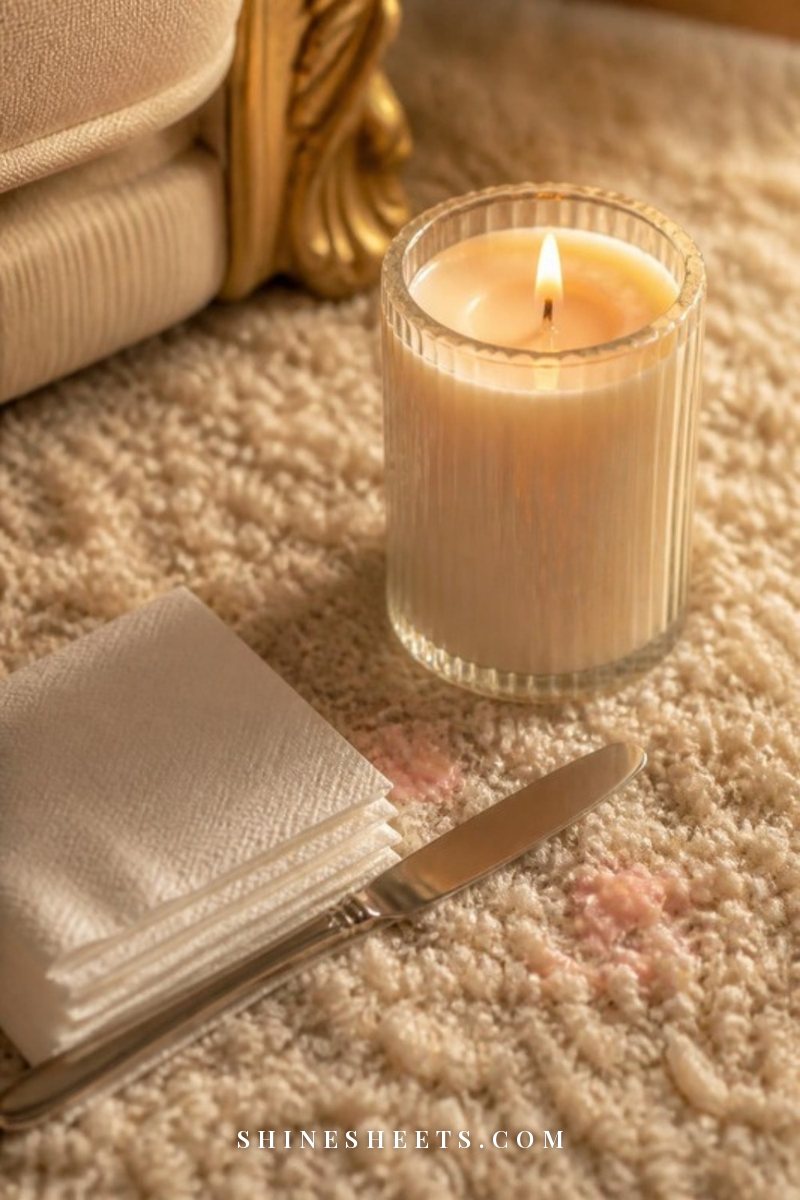
As someone who loves glass candles a little too much, I've accepted that wax drips are part of the deal. Thankfully, they're one of the easiest stains to fix if you resist pulling at soft wax.
- Let the wax harden fully. Holding an ice cube in a zip bag over it for a few minutes speeds this up and makes it brittle.
- Gently scrape and lift off as much hardened wax as you can with a butter knife, then vacuum the flakes.
- Lay a white paper towel (or a plain brown paper bag) over the remaining wax.
- Run an iron set to low, with no steam, over the paper for a few seconds at a time, keeping it moving. The wax melts into the paper.
- Move to a clean section of paper and repeat until no more wax transfers.
- If colored wax left a tint, dab it with rubbing alcohol on a white cloth, then rinse and blot.
Keep the iron low and moving, because many synthetic carpets can melt or go shiny under high heat. If you'd like fewer drips overall, my guide to styling candles beautifully and safely has a few tips on placement.
8. Ink
Ink spreads easily, so the trick is to lift it in tiny, patient dabs.
- Blot any wet ink with a dry paper towel. Don't wipe.
- Dampen a white cloth (not the carpet) with rubbing alcohol.
- Dab the ink, starting from the edges, and lift. Switch to a clean part of the cloth every time color transfers.
- Once the ink stops lifting, use the dish soap solution to remove the alcohol and any leftover tint.
- Rinse with water and blot dry.
Permanent marker and gel pen can be stubborn. A few rounds of alcohol often help, but if the stain hasn't budged after three tries, it's worth asking a professional rather than scrubbing harder.
Homemade vs Store-Bought Carpet Cleaners
Both have a place. Homemade solutions are gentle, cheap and great for fresh, everyday spills. Store-bought cleaners are formulated for specific stains and can save time on tougher jobs. Here's how I'd think about it:
| Homemade Solution | Store-Bought Cleaner | |
|---|---|---|
| Best for | Fresh coffee, tea, mud, light food spills | Wine, old stains, pet accidents, high-traffic spots |
| Cost | Very low, uses pantry basics | Moderate, one bottle lasts a long time |
| Strength | Mild, may need a few rounds | Stronger and more targeted |
| Watch out for | Too much vinegar on wool or silk | Bleach-based formulas, unknown carpet types |
| Patch test | Yes | Yes, always |
If you have light carpet, pets or a busy household, a small portable carpet spot cleaner can be worth it. It sprays a cleaning solution and suctions the dirty water back up, which means less liquid left behind in the padding. Look for one that's light enough to carry up the stairs and has a clear water tank so you can see what's coming out.
When To Call a Professional
Some stains really are bigger than a home kit, and that's okay. Calling a pro early can save a carpet that DIY attempts would damage further. Consider professional help when:
- The stain is larger than a dinner plate or has soaked through to the padding.
- Your carpet or rug is wool, silk, jute, vintage or handmade. These fibers react differently to cleaners and water.
- A pet has used the same area repeatedly and the smell keeps coming back after enzyme treatment.
- You've tried three careful rounds and the stain hasn't changed.
- Bleach or another product has already removed color (a pro may be able to re-dye or patch it).
- There's been water damage or flooding. Damp padding can grow mold, which is a health concern, not just a stain.
- You're moving out of a rental and need the carpet to pass inspection.
Before you book, ask whether they use hot water extraction or low-moisture cleaning, and whether they're comfortable with your carpet's fiber type. If your carpet came with a warranty, check its cleaning requirements first so you don't accidentally void it.
How To Prevent Carpet Stains

The easiest stain to clean is the one that never happens. A few small habits make a surprisingly big difference:
- Create a shoes-off zone. A pretty bench and basket by the door make it feel natural rather than strict.
- Put washable rugs in high-risk spots. A cream washable area rug under the coffee table, beside the bed or in the entryway takes the spills instead of your wall-to-wall carpet, and goes straight into the washing machine.
- Vacuum weekly. Grit and dust grind into the fibers and make every future stain harder to remove. My simple cleaning schedule shows how to fit it in without it taking over your weekend.
- Use trays for drinks and candles. A small tray on the floor near your reading spot or under a candle catches drips and spills.
- Keep the rescue kit within reach. A small basket in a hall closet means you can start blotting within seconds.
- Do your makeup at a table. A towel on your lap or a desk with a tray keeps powder and foundation off the floor.
- Book a deep clean once or twice a year. Professional or DIY with a rented machine, it refreshes the fibers and lifts the dirt you can't see.
Hosting soon? My pre-guest cleaning checklist covers which rooms to focus on (and what you can skip) when you only have an hour. And if your sofa took a hit along with the carpet, the same gentle approach works there too in my guide on how to clean a couch.
Common Carpet Cleaning Mistakes
Even with the best intentions, a few habits make stains worse. Here are the ones I'd watch for:
- Using too much product. More cleaner doesn't mean more clean. It means more residue, which attracts dirt.
- Skipping the rinse. This is why "cleaned" spots often turn gray a week later.
- Mixing cleaners. Beyond being unsafe in some combinations, layering products can react and leave new discoloration.
- Using colored towels. Dye transfer is real, especially when the carpet is wet.
- Adding heat too soon. Hair dryers, hot water and steam can set protein stains permanently.
- Walking on wet carpet. Damp fibers pick up dirt from shoes and socks instantly. Give it a few hours.
And if the whole house feels like it needs attention, not just one spot, my guide on how to clean a messy house fast breaks it into calm, doable steps.
Final Thoughts
Carpet stains feel dramatic in the moment, but most of them are far more forgiving than they look. Blot instead of rub, start with cold water, use a little less liquid than you think and give each method time to work. Keep your small rescue kit ready, save the stain table on your phone and remember that a professional is always an option for the big ones.
Your home is meant to be lived in, coffee, candles, cozy nights and all. A spill is just part of that story, and now you know exactly what to do when it happens.