The right rug is almost never about the prettiest pattern in the shop. It's about size first, placement second and material third, and when you get those three right, even a plain rug makes a room look finished, calm and pulled together. When you get the size wrong, even a beautiful rug ends up looking like a bath mat that wandered off.
The good news is that rug rules are wonderfully specific. There are real numbers (how many inches of floor to leave, how far a rug should reach past your bed, how much room dining chairs need), and once you know them, choosing gets so much easier. It took me a while to accept that the rug I loved in the photo simply wasn't big enough for my room, and that bigger almost always looks better.
This guide covers how to choose a rug for every room: exact sizing for the living room, bedroom, dining room, entry, kitchen and hallway, a rug size cheat sheet you can screenshot before you shop, the main materials compared, pile height for pets and kids, color and pattern that forgive real life, plus rug pads and simple care.
Grab a tape measure and a roll of painter's tape. You'll want both in a minute.
Start Here: Measure and Tape Before You Shop
Before you fall for anything online, measure the room and the furniture that will sit on or around the rug. You need three numbers:
- The room itself. Wall to wall, both directions. In most rooms you want 12–18 inches of bare floor between the rug and the walls (in a small room, 8–10 inches is fine).
- The furniture group. Measure the length of your sofa or bed and the full footprint of the seating or dining area, chairs pulled out.
- Door clearance. The gap between the bottom of any door and the floor. Thick rugs near a door can stop it from opening, which is very annoying with a rug you just paid for.
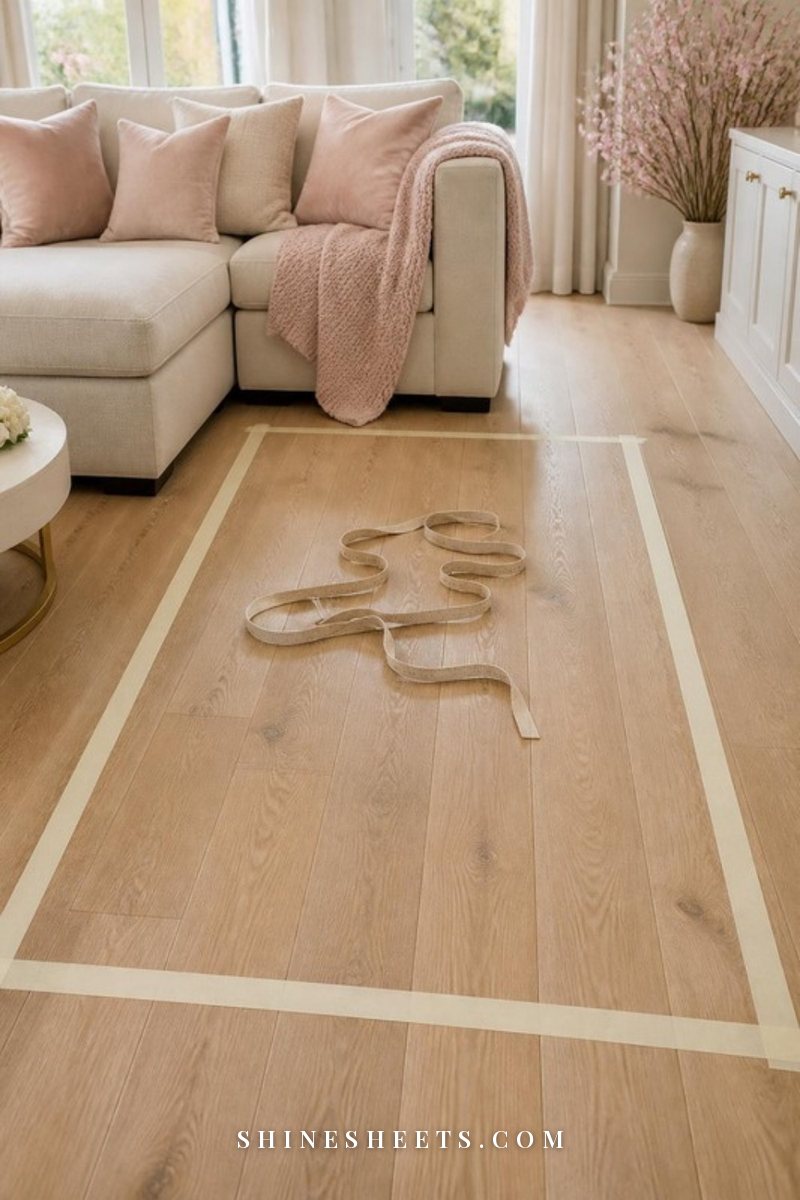
Then mark the rug's outline on the floor with painter's tape and live with it for a day or two. Walk around it, sit on the sofa, open the doors. Tape is the cheapest way to find out that a 5x8 feels like a postage stamp and an 8x10 feels just right.
A few standard sizes to know: 2x3 and 3x5 (accent and entry), 4x6, 5x8, 6x9, 8x10, 9x12 and 10x14. Runners usually come 2–3 feet wide and 6–14 feet long. When you land between two sizes, go up rather than down. A rug that's slightly too big almost always looks more intentional than one that's slightly too small.
Rug Size Cheat Sheet: Room by Room
This is the one to screenshot. Find your room or furniture, check the size, then read the placement rule, because the same rug can look right or wrong depending on where it sits.
| Room / furniture | Recommended rug size | Placement rule |
|---|---|---|
| Small living room (loveseat or apartment sofa) | 5x8 or 6x9 | Front legs of sofa and chairs on the rug; leave 8–12 in of floor at the walls |
| Standard living room (one sofa, two chairs) | 8x10 | Front legs on, or all legs on if the room allows; rug a few inches wider than the sofa on each side |
| Large or open-plan living room | 9x12 or 10x14 | All legs on, so the rug defines the seating "room"; 12–18 in of floor around the edges |
| Twin or full bed | 5x8 or 6x9 | Placed sideways under the lower two-thirds of the bed, extending 18–24 in on each side |
| Queen bed | 8x10 | Sideways under the bed, starting just in front of the nightstands; 18–24 in beyond each side |
| King bed | 9x12 | Sideways, extending 18–24 in on each side and past the foot of the bed |
| Round dining table (4 seats) | 6–8 ft round or 8x8 square | 24–30 in beyond the table edge all the way around |
| Rectangular dining table (6 seats) | 8x10 | 24–30 in beyond every table edge so chairs stay on the rug when pulled out |
| Rectangular dining table (8 seats) | 9x12 or 10x14 | Same 24–30 in rule; measure the table with leaves in if you use them |
| Entryway | 2x3, 3x5 or 4x6 | Centered on the door, at least as wide as the door opening; low pile so the door clears |
| Kitchen | 2x6 or 2.5x8 runner | In front of the sink or stove, 3–6 in from the cabinet base |
| Hallway | 2.5x8 to 2.5x14 runner | 4–6 in of floor visible on each side, 6–12 in at each end |
One more tip: the rug should be roughly proportional to the furniture, not the room. A huge room with a small seating group still needs a rug that fits that group, and you can always add a second rug elsewhere.
How To Choose a Living Room Rug
The living room rug has one job above all: to make your sofa, chairs and coffee table look like they belong together. A rug that floats in the middle, touching nothing, makes furniture look scattered. There are two layouts that work almost every time.
Option 1: All Legs On
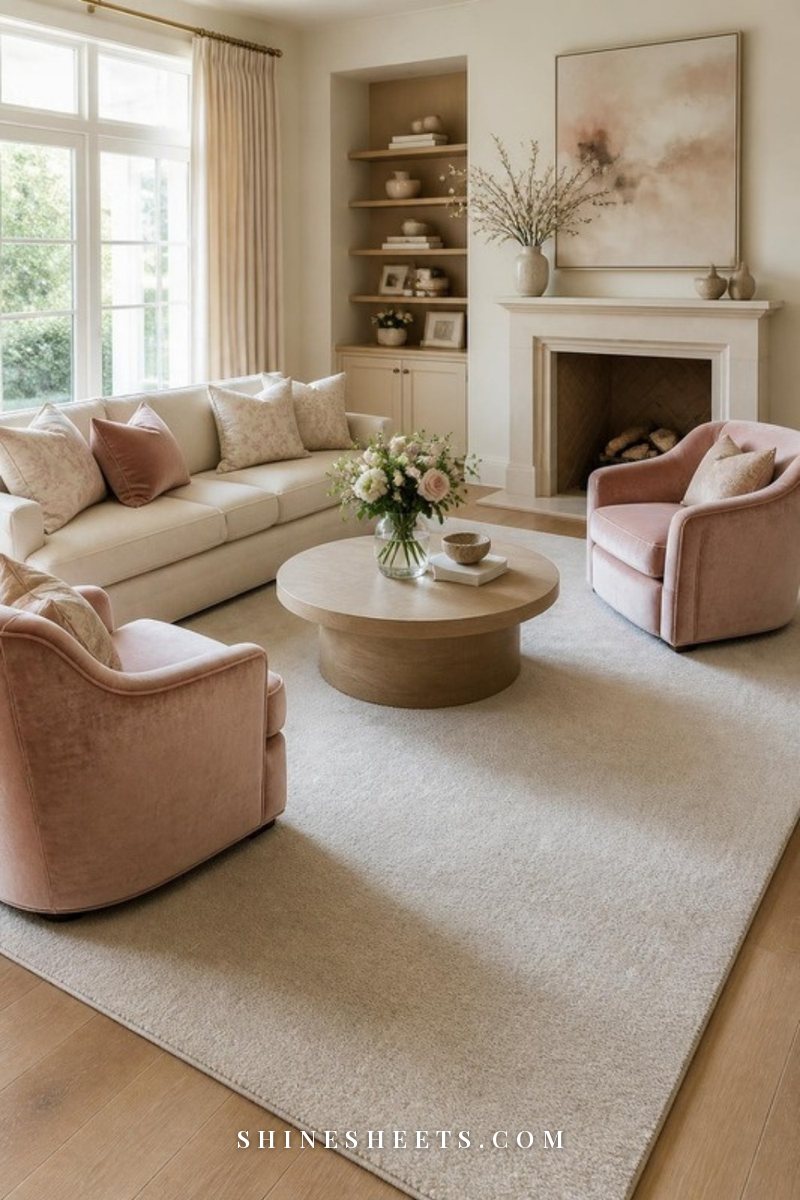
Every leg of the sofa and chairs sits on the rug. This looks the most luxurious and works beautifully in larger or open-plan rooms, because the rug creates a clear "living room" zone. You'll usually need a 9x12 or bigger, and you still want 12–18 inches of floor showing around the edges so the rug doesn't look like wall-to-wall carpet.
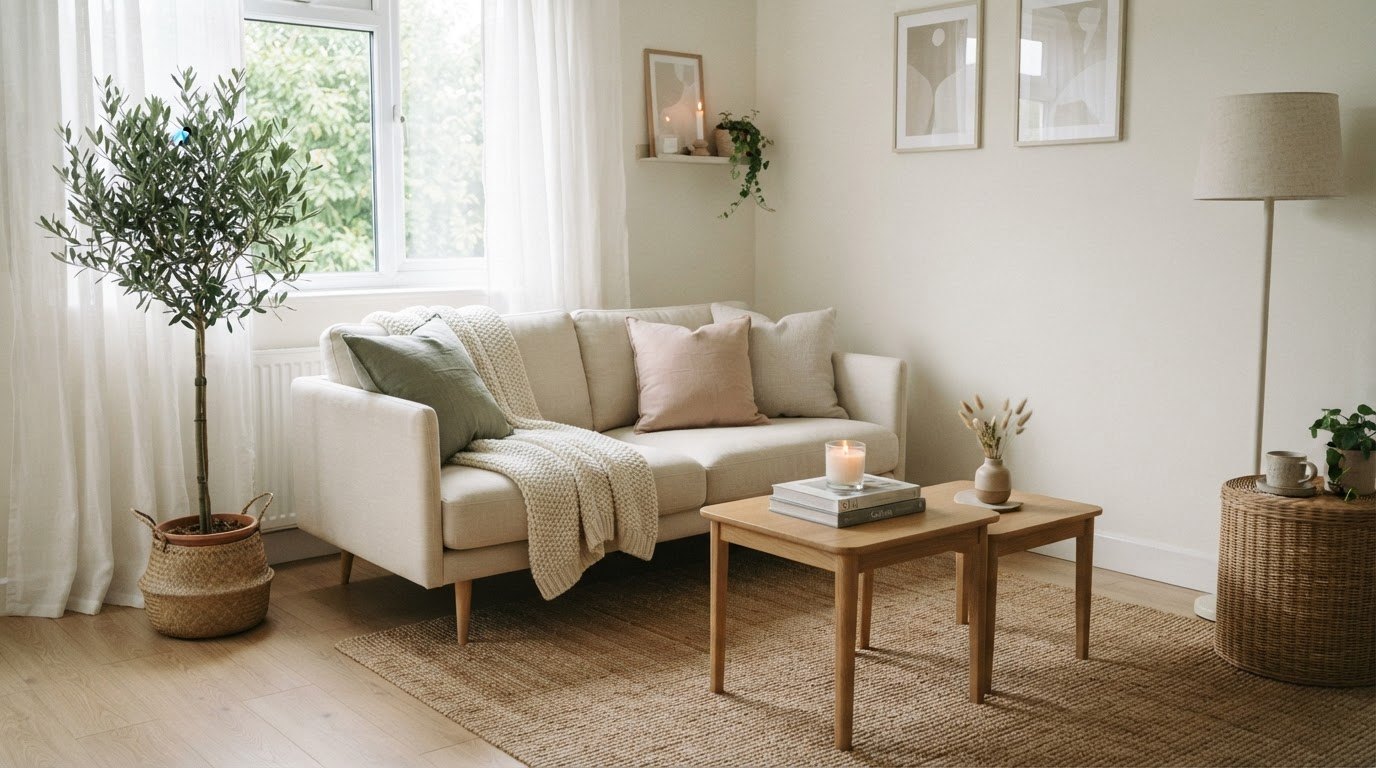
For a soft, high-end look, I'd choose a cream wool area rug with a low to medium pile. Wool feels lovely underfoot, hides wear well and gives a room that quiet, expensive finish.
Option 2: Front Legs On
Only the front legs of the sofa and chairs rest on the rug; the back legs sit on the floor. This is the most common layout, and it's my go-to recommendation for standard rooms because it works with an 8x10 (or a 5x8 or 6x9 in a small room). The rule is that every main seat must touch the rug. If one chair sits completely off it, the group falls apart visually.
Make sure the rug extends at least a few inches past each end of the sofa (6–12 inches looks best). A rug that's shorter than the sofa is the number one sign that it's too small.
If Your Living Room Is Small
Small rooms tempt us to buy small rugs, but a tiny rug actually makes a room look smaller, because it chops the floor into pieces. Go with the biggest rug that still leaves 8–10 inches of floor at the walls, and use the front-legs-on layout. Light, low-pile rugs help too. For more ideas on making a compact space feel open, my guide to small living room ideas has plenty of renter-friendly tricks.
How To Choose a Bedroom Rug
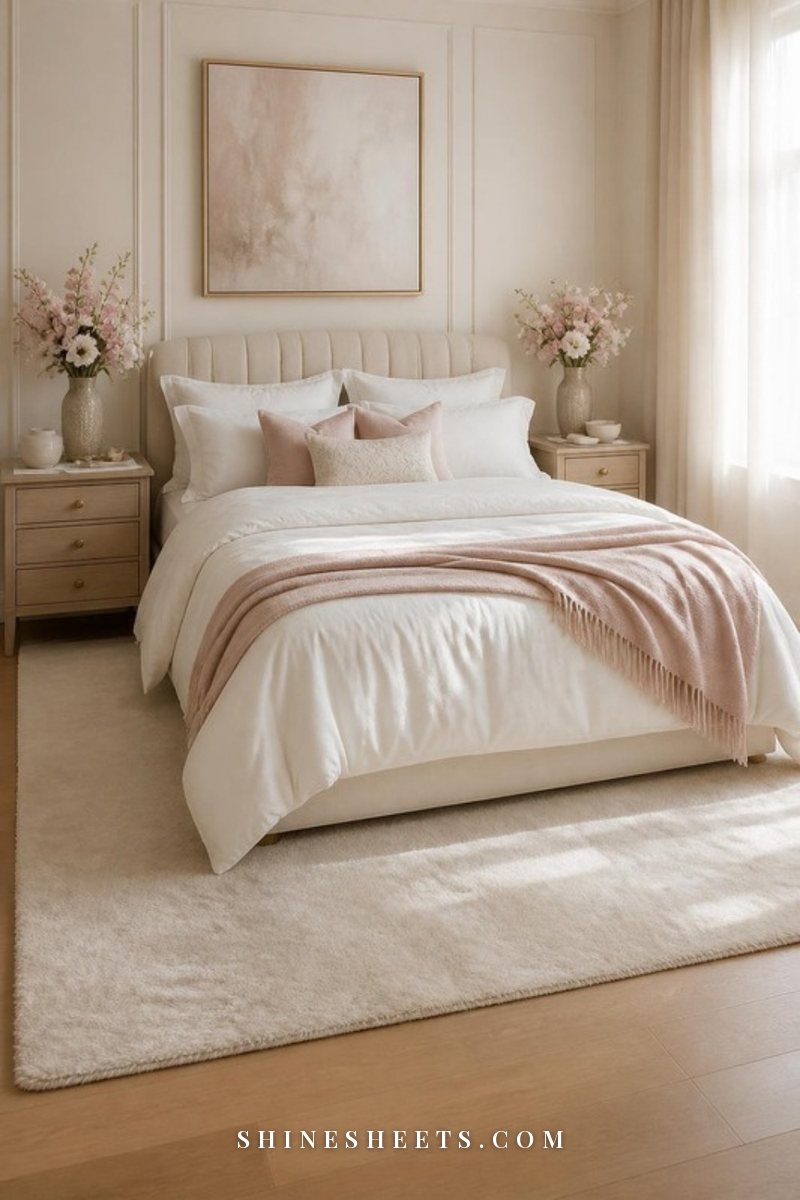
The bedroom rug is the one your bare feet meet first thing in the morning, so the goal is simple: soft floor on both sides of the bed. That's why the bed size, not the room size, decides the rug.
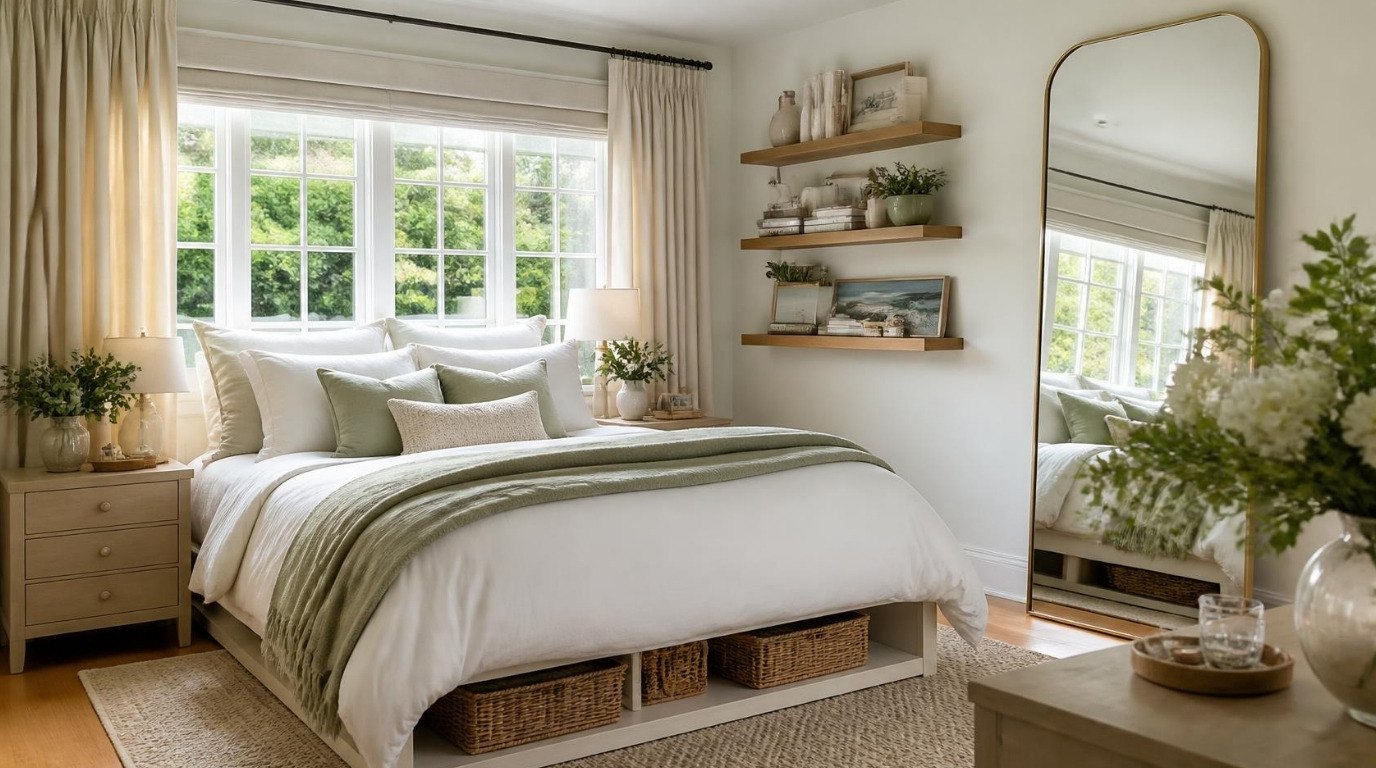
- Queen bed: an 8x10 placed sideways (the 10-foot side running across the bed). Start it just in front of the nightstands so they sit on the bare floor, and let it reach 18–24 inches beyond each side of the bed.
- King bed: a 9x12, same placement. It should extend 18–24 inches on each side and a little past the foot of the bed.
- Twin or full bed: a 5x8 or 6x9 sideways under the lower two-thirds of the bed.
If a big rug isn't in the budget right now, two runners work too: one on each side of the bed, about 2.5x8, starting near the nightstand and running toward the foot. A single runner across the foot of the bed is another pretty option in a narrow room.
Bedrooms are the place to go soft, since there's little foot traffic and no dining chairs. A plush or medium pile in wool or a soft blend feels wonderful. If you're making the whole room feel warmer, my bedroom ideas that feel like a hug pair nicely with this.
How To Choose a Dining Room Rug
Dining rugs follow one rule that matters more than anything else: the chairs must stay on the rug when someone pulls them out to sit down. If the back chair legs catch on the edge, the rug will drive you slightly crazy at every meal (and it's a tripping risk).
Measure your table, then add 24–30 inches on every side. A 6-seat table that's about 3x6 feet needs roughly an 8x10. An 8-seat table usually needs a 9x12. Match the shape to the table where you can: round rugs under round tables, rectangles under rectangles.
Material matters here more than anywhere. Choose a flat-weave or low pile that chairs glide over easily and that crumbs can't sink into. Skip shag and high pile completely. A patterned or mid-tone rug forgives the occasional splash far better than plain white, and a washable rug is honestly worth considering if you eat at your table every day.
Entryway, Kitchen and Hallway Runners
These are the hardest-working rugs in your home, so think of durability and safety before softness.
Entryway. Choose a rug at least as wide as your door opening (wider is better), centered on the door. A 3x5 suits most apartment entries, a 4x6 suits larger ones. Keep the pile low so the door clears it, and pick a dark or patterned design that hides grit. Pair it with a coarse outdoor mat on the other side of the door so the indoor rug stays nicer. My guide to entryway ideas that stay tidy covers the rest of the drop zone.
Kitchen. A runner in front of the sink or stove (2x6 or 2.5x8) catches drips and makes standing more comfortable. Leave 3–6 inches between the rug and the cabinet base so it doesn't look jammed in. Washable or flat-weave rugs are the only real options here.
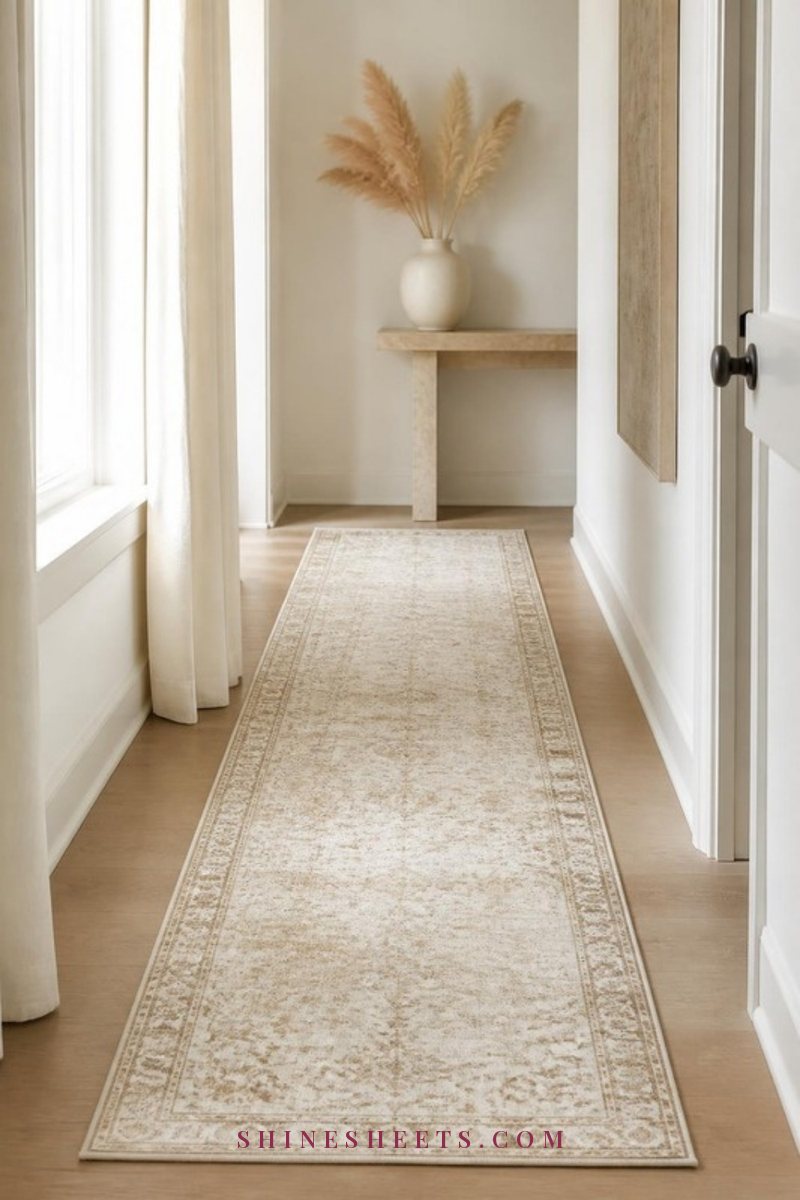
Hallway. Leave 4–6 inches of floor visible on each side and 6–12 inches at each end. If the hallway is very long, use two matching runners with a small gap rather than one that stops short. A beige hallway runner rug with a subtle pattern is a pick for most homes, because it lightens a dark corridor and still hides footprints.
Runners slide and their corners love to curl, which makes them the rug most likely to trip someone. For small rugs and runners that are too narrow for a full pad, look for rug gripper tape for the corners. It keeps edges flat and the rug in place on hard floors.
Rug Materials Compared: 6 Common Options
Material decides how a rug feels, how it wears, how it cleans and how long it lasts. Here's how the most common ones compare.
1. Wool
The gold standard for living rooms and bedrooms. Wool is naturally springy, durable and resistant to stains because its fibers have a natural coating that helps spills bead up for a moment before soaking in. It sheds at first (that's normal for the first few weeks) and costs more, but a good wool rug can last for many years. Best for: living rooms, bedrooms, anywhere you want softness that lasts.
2. Jute and Sisal
Natural plant fibers with a beautiful, textured, relaxed look. They're affordable, sturdy and wonderful for layering. The trade-offs: they're rough underfoot, they don't like water (spills can leave marks), and they shed small fibers. Best for: living rooms, dining rooms, as a base layer under a softer rug. A beige natural jute area rug is one of the easiest ways to add warmth to a neutral room.
3. Cotton Flat-Weave
Light, thin, often reversible and usually affordable. Smaller cotton rugs can often go in the washing machine (always check the label). They wear faster than wool and slide around without a pad. Best for: kitchens, bathrooms, kids' rooms, bedrooms and anywhere you want an easy, casual look.
4. Washable Rugs
Usually a thin polyester or blended rug with a separate grippy backing or pad, designed to go in a home washing machine. Not quite as plush as wool, but for homes with pets, kids or a dining table that gets real use, they're a relief. Check the washed size will fit your machine (most only go up to around 5x7 or 8x10 in large machines). A cream washable area rug is a pick for anyone who wants light colors without the stress.
5. Polyester and Polypropylene
Synthetic fibers that are budget-friendly, colorfast and stain resistant. Polypropylene is also used for indoor-outdoor rugs because it handles moisture. The cons: they can flatten in high-traffic paths, feel less luxurious and may have a chemical smell at first (unroll and air it out for a day or two). Best for: high-traffic areas, kitchens, entries, patios, rentals.
6. Viscose (Art Silk)
Viscose has a gorgeous sheen and feels silky in the shop, which is exactly why it's tempting. But it's a delicate fiber: it can mat in walking paths, water can permanently mark it, and cleaning is tricky. I'd only choose viscose for a low-traffic spot, like a bedroom corner or a formal sitting room. Never in a dining room, kitchen or entry, and not with pets.
Pile Height, Pets and Kids
Pile is the height of the rug's fibers. It changes how the rug feels, how it cleans and where it works best.
- Flat-weave or no pile: thin and easy to clean. Great for dining rooms, kitchens, entries and under doors.
- Low pile (under 1/4 inch): durable and easy to vacuum. Good for living rooms, hallways and homes with pets.
- Medium pile (1/4 to 1/2 inch): softer underfoot while still practical. A nice middle ground for living rooms and bedrooms.
- High pile and shag (over 1/2 inch): plush and lovely for bedrooms, but harder to clean and trap more crumbs, hair and dust.
For pets: choose low pile or flat-weave, avoid loop-pile rugs (claws catch and pull the loops), and pick a mid-tone color close to your pet's fur. Washable rugs are a lifesaver for puppies and older pets who have the occasional accident.
For kids: look for low to medium pile, a forgiving pattern and something you can spot-clean easily. Wool and polypropylene both handle real life well. A soft but not too thick rug is also kinder for little ones who play on the floor.
For allergies: low pile is easier to keep dust-free than shag, and regular vacuuming matters more than the material itself.
Color and Pattern That Forgive Real Life
A rug is often the biggest block of color in a room, so it sets the mood. Choose it early (before paint and pillows if you can), because it's much easier to match a pillow to a rug than the other way around.
- Light solids (cream, ivory, pale beige) look airy and expensive but show every footprint. Keep them for bedrooms and low-traffic rooms, or go washable.
- Mid-tones (oatmeal, soft taupe, warm greige) hide dirt the best. If you're unsure, start here.
- Soft patterns (faded vintage-style, subtle geometric, tone-on-tone) are the most forgiving of all, because small stains disappear into the design.
- Bold patterns work beautifully if the rest of the room is calm. Let the rug be the statement and keep the sofa and walls quiet.
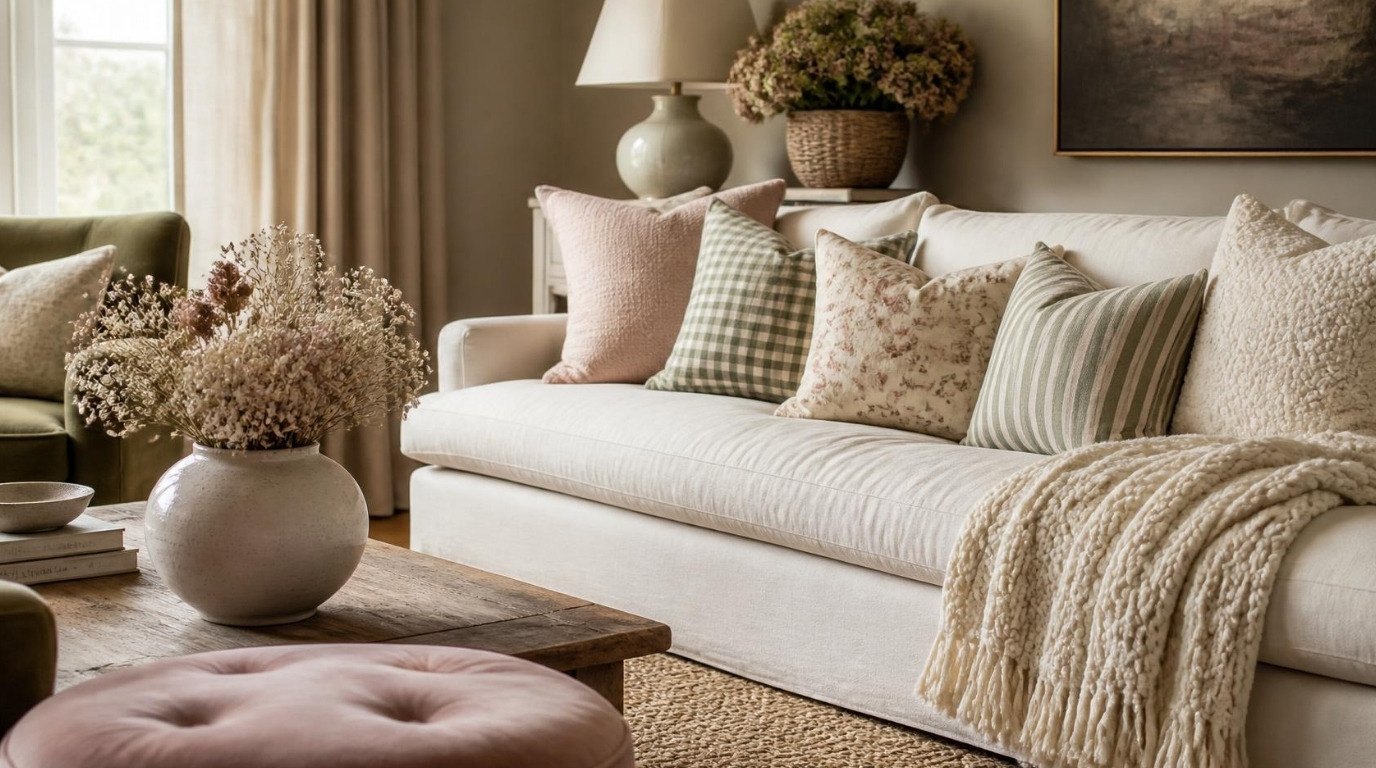
A simple formula I like: pick a rug that repeats one color already in the room (a cushion, a wood tone, a throw) and introduces one new soft shade. If you want a calm, tonal look that still feels interesting, my guide to keeping neutral home decor from feeling bland shows how texture does the work.
How To Layer a Patterned Rug Over Jute
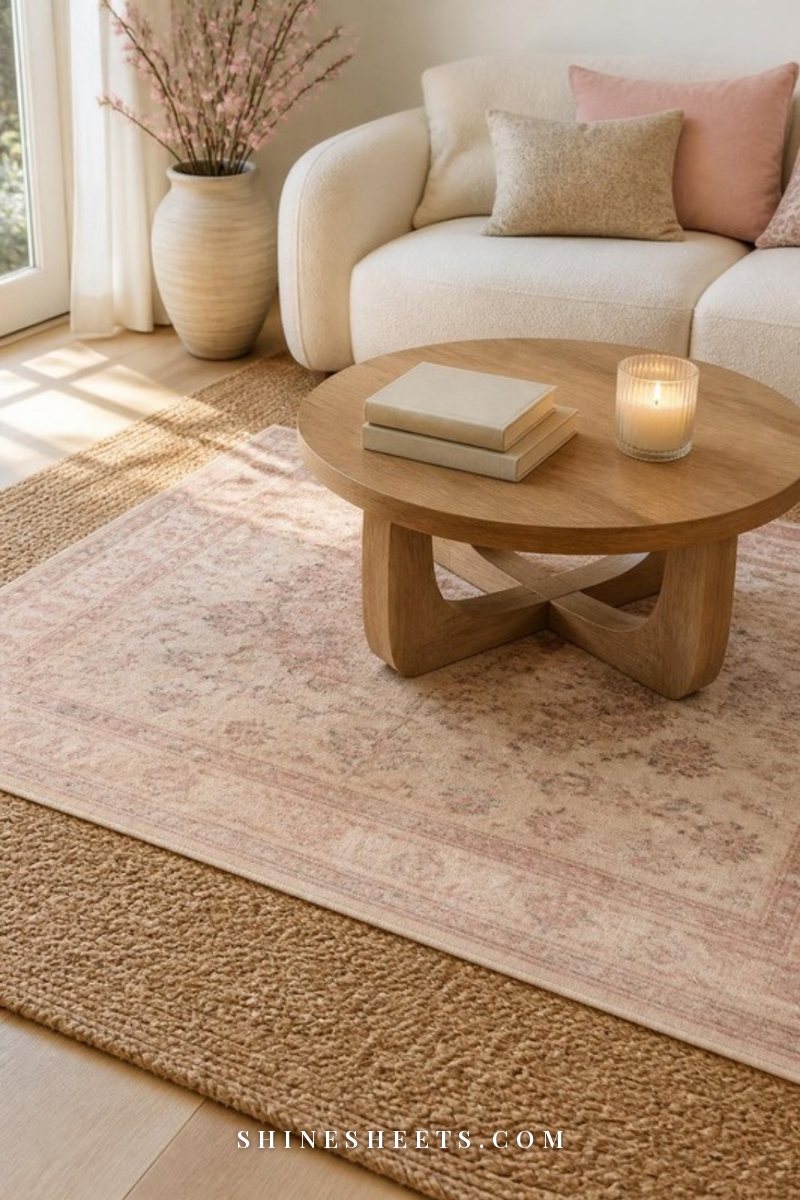
Layering is a clever way to get the right size on a budget. The large, affordable jute rug does the sizing work; the smaller patterned rug brings softness and personality.
- Start with the base. Size the jute rug for the room using the cheat sheet above (often an 8x10 or 9x12).
- Choose the top rug 2–3 feet smaller in each direction, so you see a generous border of jute (about 12–18 inches) all around. A 5x8 on an 8x10 or a 6x9 on a 9x12 works well.
- Center it under the coffee table or slightly off-center toward the sofa, keeping the edges parallel to the base rug.
- Mix textures, not just patterns. Flat, rough jute underneath with a softer, lower pile on top gives the nicest contrast.
- Keep the top rug flat. Rug gripper tape on its corners stops it from shifting and curling over the jute.
If you love the layered look but worry about clashing, my rules for mixing patterns and textures make it much easier to choose.
Rug Pads: Why They Matter
A rug pad sounds like an optional extra, but it's one of the best small purchases for any rug on a hard floor. A good pad:
- stops the rug from slipping, bunching and curling at the edges (which is the main tripping risk),
- adds cushioning so a thin rug feels softer and more expensive,
- reduces wear, because the fibers aren't grinding against the floor,
- protects your floors from scratches and dye transfer,
- helps with airflow under the rug, so vacuuming works better.
Choose a pad about 1 inch smaller than the rug on every side, so it stays hidden. For thin and flat-weave rugs, a felt-and-rubber combination gives grip plus cushion. For thick wool rugs, a thinner, grippy pad is enough. If you have vinyl or delicate wood floors, check that the pad is labeled safe for your floor type. A non-slip felt rug pad is a pick for most living room and bedroom rugs.
A small safety note: rugs on stairs, near the top of a staircase or in a bathroom need extra care. Make sure every edge lies flat, nothing slides when you step on it, and replace pads once they lose their grip. This matters most if anyone at home is older or a little unsteady on their feet.
Rug Care Basics
A little regular care keeps any rug looking newer for longer.
- Vacuum once or twice a week (more in walkways). Turn off the beater bar for wool, high pile, jute and viscose to avoid pulling fibers.
- Rotate the rug every 3–6 months so sunlight and foot traffic wear it evenly.
- Blot spills immediately with a clean white cloth. Never rub, which pushes the stain deeper and roughs up the fibers. My calm guide on how to clean carpet stains walks through every type of spill.
- Shake out small rugs outside every week or two. Wash cotton and washable rugs following the label, and dry them flat or on low.
- Keep jute and sisal dry. Blot spills right away and dry with a hairdryer on cool if needed.
- Book a professional clean for wool and viscose rugs every 12–18 months, or sooner for busy rooms.
5 Rug Mistakes I'd Avoid
- Buying too small. If the sofa is longer than the rug or the bed has no rug on its sides, size up.
- Letting furniture float. Every main seat in the living room should touch the rug, at least with its front legs.
- Choosing material by looks alone. Viscose in a dining room or cream shag in an entry will look tired within months.
- Skipping the pad. It costs a little, but it makes the rug safer, softer and longer-lasting.
- Forgetting the door. Measure door clearance before buying anything thick for an entry, bedroom or bathroom.
Final Thoughts
Choosing a rug feels like a big decision because it is one of the largest things in a room, but it comes down to a few calm steps: measure, tape it out, size up when in doubt, and pick a material that fits how you actually live.
Once the right rug is down, everything else in the room seems to settle into place. Furniture looks like it belongs together, your feet are happier in the morning, and your home feels a little more like you.