Sulfate-free shampoo isn't a miracle and it isn't a gimmick. It's simply a gentler way to clean, and whether it's worth it depends almost entirely on your hair, your scalp and what you put on them during the week.
That's the part most labels skip. A bottle that says "sulfate-free" can be a lovely upgrade for color-treated, curly or dry hair, and a slightly frustrating one for a very oily scalp that loves dry shampoo. Neither reaction means you're doing it wrong. It just means the shampoo has to match the job.
In this guide to sulfate-free shampoo, I'll walk you through what sulfates actually are (in plain words), who tends to love switching, who may not need to, what the first few washes feel like, how to wash well with less lather, how to read a label, and a simple "is it worth it for me?" table so you can decide in about thirty seconds.
Grab your current bottle from the shower if it's nearby. We'll read it together later.
What Sulfates Actually Are
Sulfates are cleansing ingredients called surfactants. A surfactant grabs onto oil and dirt on one end and water on the other, so when you rinse, the oil leaves with the water. That's the whole trick, and every shampoo uses some kind of surfactant to do it.
The two you'll see most often are:
- Sodium lauryl sulfate (SLS) – a strong, very effective cleanser that makes big, fluffy lather.
- Sodium laureth sulfate (SLES) – a close cousin that's usually a bit milder on skin, still with lots of foam.
You may also spot ammonium lauryl sulfate or ammonium laureth sulfate, which behave in a similar way.
Sulfates aren't "toxic" or "bad." They're cheap, reliable and great at removing oil, which is exactly why they've been in shampoo for decades. The catch is that they can be very good at it. On hair that's already dry, porous or color-treated, that strong cleansing can leave strands feeling rough and squeaky, and some sensitive scalps feel tight or itchy afterward.
Sulfate-free shampoos swap in gentler surfactants. They still clean, they just do it more softly and usually with less foam. Think of it like the difference between a foaming face cleanser and a cream cleanser: both get the job done, one simply leaves a little more softness behind.
That softness is the whole point. Hair doesn't repair itself the way skin does, so the lengths you have now have been through every wash, every heat session and every sunny afternoon since they grew in. A gentler cleanse is one way of being kinder to that history.
Why People Switch to Sulfate-Free Shampoo: 5 Common Reasons

Most people don't switch because of a trend. They switch because their hair is telling them something. These are the five situations where a gentler wash tends to make the clearest difference:
- Color-treated hair. Every wash fades color a little, and hot water plus a strong cleanser speeds that up. A gentler shampoo won't make color permanent, but it can help it look fresher for longer between appointments. A color-safe sulfate-free shampoo is the most common first switch for exactly this reason.
- Curly and coily hair. Curls are naturally drier because scalp oil has a harder time traveling down a spiral. Stripping that oil away can mean more frizz and less definition. If that's you, look for a curl-friendly sulfate-free shampoo with a creamy texture, and my curly hair routine for beginners shows how it fits into a full wash day.
- Dry, brittle or bleached hair. Lightened hair is more porous, so it loses moisture quickly. A softer cleanser helps it feel less like straw after washing.
- A sensitive scalp. If your scalp often feels tight, itchy or a little irritated after washing, a milder formula is an easy thing to try first (more on when to see a professional below).
- Keratin or smoothing treatments. Salons almost always recommend sulfate-free aftercare to help these treatments last. Follow your stylist's instructions here, since they know exactly what was used.
Who Might Not Need It
Here's the honest side. Sulfate-free shampoo is not automatically better for everyone, and a few hair types can actually feel worse on it at first.
- Very oily scalps. If your roots look greasy by the next afternoon, a very gentle cleanser might not lift enough oil in one wash.
- Heavy product users. Daily dry shampoo, strong-hold sprays, silicone-rich serums and hair oils build up. Mild surfactants can struggle to remove all of it.
- Fine, flat hair. Some sulfate-free formulas are rich and conditioning, which can weigh fine hair down.
- Swimmers and hard-water homes. Chlorine and minerals cling to hair and often need a deeper clean now and then.
None of this means you have to stay away. It just means you'll probably do best alternating: a sulfate-free shampoo most days, and a gentle clarifying shampoo once every two to four weeks to reset. My guide to when and how to use clarifying shampoo covers that reset wash in detail.
Is It Worth It for Me? A Quick Hair-Type Table
This is the heart of the guide. Find the row that sounds most like you (or two rows, if you're a mix) and take the tip with you. Screenshot it if that helps.
| Your hair and scalp | Verdict | Tip |
|---|---|---|
| Color-treated or highlighted | Worth it | Pair with lukewarm water and wash a little less often to slow fading. |
| Bleached or blonde | Worth it | Choose a moisturizing formula; use a purple shampoo only when brassiness appears. |
| Curly or coily | Worth it | Pick a creamy, low-lather formula and focus it on the scalp only. |
| Dry, frizzy or brittle | Worth it | Follow with a conditioner every single wash, mid-lengths to ends. |
| Sensitive, tight-feeling scalp | Worth trying | Choose fragrance-light formulas and give it two to three weeks. |
| Keratin or smoothing treatment | Worth it | Follow your stylist's aftercare rules first. |
| Normal, healthy, uncolored | Optional | Either works; choose by how your hair feels after washing. |
| Fine and flat | Optional | Look for "volumizing" or "lightweight" sulfate-free options. |
| Very oily scalp | Maybe not alone | Alternate with a clarifying wash every one to two weeks. |
| Daily dry shampoo or lots of styling product | Maybe not alone | Double wash with sulfate-free, and clarify every two to four weeks. |
| Swimmer or hard water | Maybe not alone | Use a clarifying or chelating wash after heavy pool weeks. |
If you're still not sure which category you belong to, my three-step guide on what shampoo you should use helps you narrow it down by scalp first and hair second.
What To Expect When You Switch
Let's set expectations, because this is where most people give up a little too soon.
Less Lather
Big foam is mostly a sulfate thing. Gentler cleansers make a softer, lower lather, and some barely foam at all. Less bubbles doesn't mean less clean. It took me a while to stop adding more and more shampoo just to chase the foam I was used to.
A Short Adjustment Period
Some people notice their hair feels a bit heavier or their roots get oily sooner for the first week or two. You'll sometimes see this called a "detox," but there's nothing toxic leaving your hair. More likely, a milder shampoo simply isn't removing old buildup as quickly, or you're using a little too little product. A single clarifying wash before you switch usually solves it.
Softer Hair (Usually)
After a few washes, many people find their lengths feel smoother, tangle less and need a little less conditioner. Color may look richer for longer. These changes are gradual, so judge after about three weeks, not after one shower.
How To Wash Well With Sulfate-Free Shampoo: 6 Steps
A gentle shampoo needs a slightly better technique to do its best work. These six steps make a real difference, especially if your first few washes felt "not quite clean."
- Wet your hair thoroughly. Spend a full 60 seconds under lukewarm water, lifting sections so water reaches the scalp. Surfactants spread and work far better on fully soaked hair.
- Use the right amount. Start with a coin-sized amount for short hair, a quarter-sized amount for shoulder length and a little more for long or thick hair. Emulsify it between your palms with a splash of water first.
- Focus on the scalp. Apply in three or four spots across the scalp, not on the ends. The lather that rinses down is enough for your lengths.
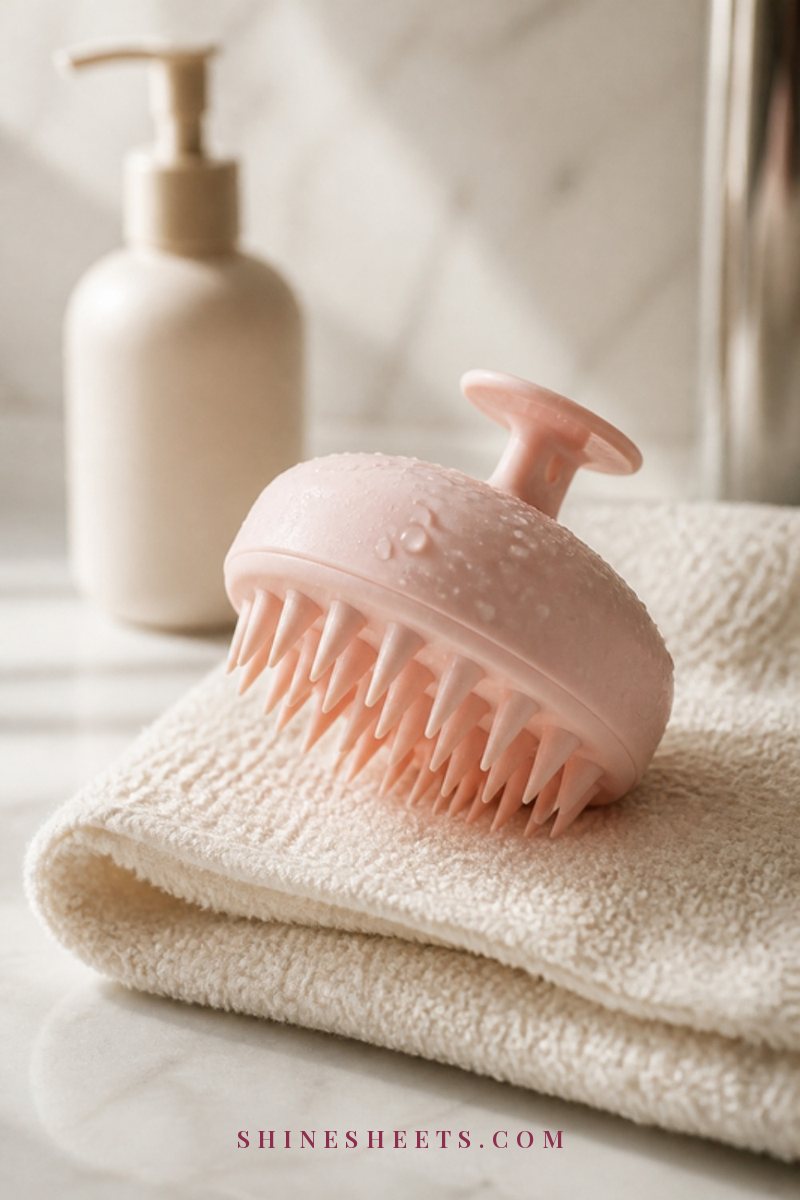
- Massage, don't scrub. Use your fingertips (never nails) in small circles for 60 to 90 seconds. A soft silicone scalp massager brush helps if you have thick hair or use a lot of product. My weekly scalp care routine has more on keeping this step gentle.
- Do two small washes if needed. If you wear dry shampoo, styling products or have an oily scalp, the first wash breaks up oil and the second actually cleans. The second wash will lather noticeably more, which is a nice sign.
- Rinse well, then condition. Rinse for longer than feels necessary, then condition mid-lengths to ends. A matching sulfate-free conditioner keeps the routine gentle from start to finish.
Afterward, squeeze water out and blot with a soft microfiber hair towel instead of rubbing with a rough bath towel. It's a small habit, but it means less frizz and less breakage on hair you're trying to protect.
How To Read the Label
"Sulfate-free" is a marketing phrase, not a regulated promise of gentleness, so a quick look at the ingredient list tells you much more than the front of the bottle.
Names That Mean It Contains Sulfates
Look for the word "sulfate" near the top of the list: sodium lauryl sulfate, sodium laureth sulfate, ammonium lauryl sulfate, ammonium laureth sulfate.
Gentler Cleansers You'll Often See Instead
You don't need to memorize these. Just know they're common in sulfate-free formulas:
- Glucosides (for example decyl glucoside or coco-glucoside) – very mild, often in sensitive-scalp formulas.
- Isethionates (for example sodium cocoyl isethionate) – gentle and creamy, common in "cleansing bars" too.
- Betaines (for example cocamidopropyl betaine) – mild helpers that soften other cleansers.
- Sarcosinates and taurates – gentle, low-foam cleansers.
One Thing To Watch
Some sulfate-free shampoos use "sulfonates" (like sodium C14-16 olefin sulfonate). They're technically not sulfates, but they can clean almost as strongly. That's not bad, it's just good to know if you specifically want the softest possible wash.
If your scalp is sensitive, also check the fragrance level and do a quick patch test on your inner arm for a day or two before using a new formula on your whole head.
Sulfate-Free Shampoo Myths vs Facts
There's a lot of noise around this topic. Here's a calm, plain-words version.
| Myth | Fact |
|---|---|
| Sulfates are dangerous. | They're common, effective cleansers. They can simply be too strong for some hair and scalps. |
| No lather means it isn't cleaning. | Foam isn't the same as cleaning. Gentle cleansers work with less bubbles. |
| Your hair needs to "detox" for weeks. | A short adjustment is usually leftover buildup or using too little product. |
| Sulfate-free shampoo stops hair loss. | Shampoo doesn't treat hair loss. Shedding concerns belong with a dermatologist. |
| Sulfate-free means natural or organic. | It only means one family of cleansers was left out. |
| Once you switch, you can never clarify. | A regular clarifying wash keeps a sulfate-free routine working well. |
5 Mistakes That Make Sulfate-Free Shampoo Feel Like It Isn't Working
If you've tried a gentle shampoo before and decided it "didn't work," one of these was probably the reason. All five are easy to fix.
- Using too little water. A quick rinse leaves dry pockets near the scalp where shampoo can't spread. Soak first, then shampoo.
- Putting it on the ends instead of the roots. Your scalp is where the oil lives. The ends only need the rinse-off and, later, conditioner.
- Skipping the second wash. On a day after dry shampoo or a lot of styling product, one gentle wash often just loosens things. The second one finishes the job.
- Using a heavy conditioner near the roots. A rich, softening conditioner on the scalp can make roots feel greasy by evening. Keep it from the ears down.
- Never clarifying. Even the best sulfate-free routine slowly collects buildup from oils, silicones and hard water. A reset every few weeks keeps hair light and shiny.
It's also worth knowing that the water itself can play a part. If your hair feels coated or dull no matter which shampoo you choose, minerals from hard water may be the reason, and a chelating wash now and then usually helps more than switching bottles again.
And give your scalp a little patience. The first two or three washes on any new routine are rarely the best ones. Keep notes for a couple of weeks (a line in your phone after each wash day is plenty): how your roots feel the next day, how soft your lengths are, whether your scalp feels comfortable. Patterns show up quickly, and they'll tell you far more than the first shower ever could.
Building a Simple Routine Around It
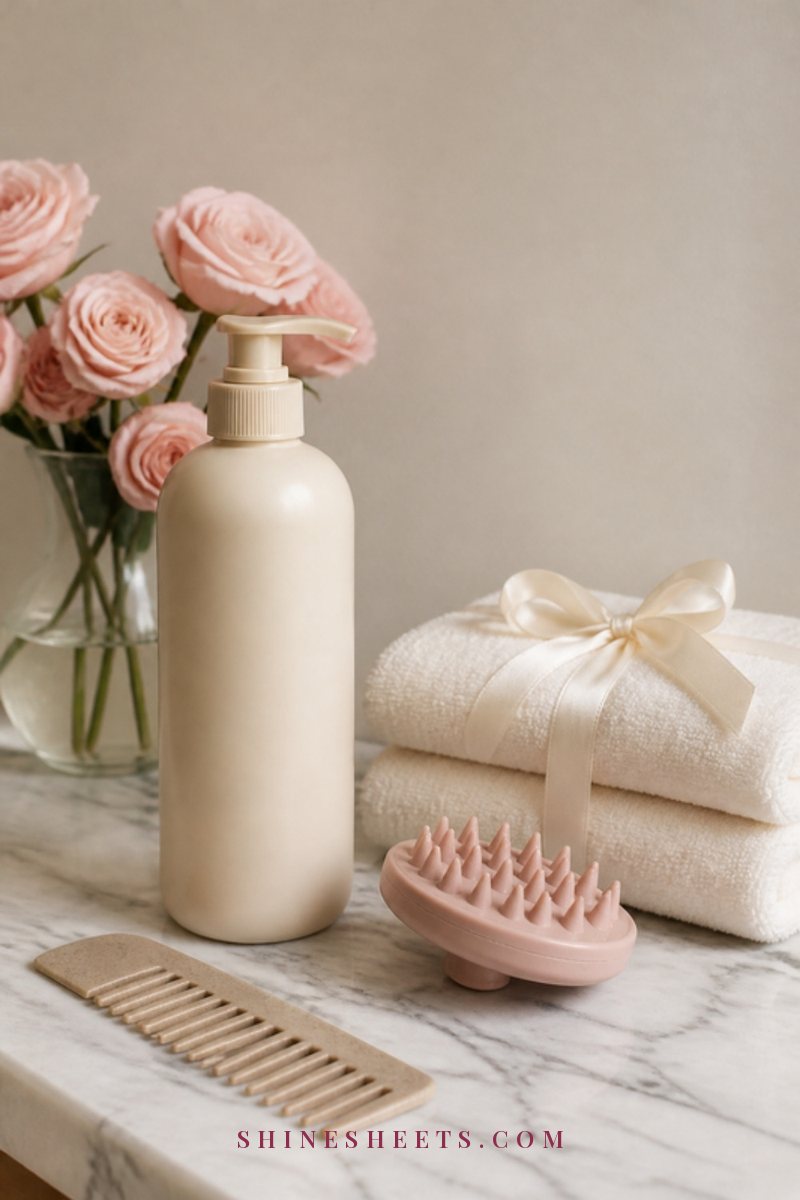
The easiest way to make sulfate-free shampoo work is to give it a supporting cast. Here's a gentle routine that suits most hair types.
Every Wash
- Lukewarm water, scalp-focused sulfate-free shampoo, conditioner on the lengths.
- Blot, don't rub. Comb with a wide-tooth comb from the ends up.
- Heat protectant before any hot tools.
Once a Week
- A hair mask or deep conditioner on the lengths for 10 to 20 minutes.
- A longer scalp massage on wash day.
Every Two to Four Weeks
- One clarifying wash to remove buildup, followed by a generous conditioner.
- Oily scalps and heavy product users can clarify closer to every one to two weeks.
How often you wash matters as much as what you wash with. If you're unsure whether you're washing too often or not enough, my guide on how often to wash your hair based on hair type gives you a starting rhythm.
Budget Tips: 5 Ways To Make It Worth the Money
Sulfate-free shampoos often cost a little more, and they can feel like they run out faster because people over-pour to chase lather. These five habits help:
- Measure your dose. Stick to the coin-to-quarter amounts above. Two small washes still use less than one giant squeeze.
- Buy the bigger size once you know you like it. Liter bottles with a pump almost always cost less per wash.
- Start with drugstore options. Many affordable best-sellers are sulfate-free now. Price doesn't decide gentleness, the ingredient list does.
- Save the expensive bottle for your lengths' sake, not your scalp's. Spend on a good conditioner if you have to choose. Shampoo rinses off in a minute.
- Don't throw out your old shampoo. If it's a sulfate formula, keep it as your occasional deep-clean wash instead of buying a separate clarifying product.
When To Talk to a Dermatologist
Shampoo can make your scalp feel more comfortable, but it isn't a treatment. If you notice persistent flaking, redness, burning, sores, or more shedding than usual for several weeks, please see a dermatologist rather than switching bottles again and again. They can tell you what's actually going on and what your scalp needs.
And if you have lightened hair, my blonde hair care routine pairs nicely with everything here.
Final Thoughts
Sulfate-free shampoo is worth it when it matches your hair, and that's really the whole answer. For color-treated, curly, dry or sensitive hair, it's one of the simplest swaps you can make. For oily or product-heavy hair, it works best with a regular clarifying reset alongside it.
Give any new routine about three weeks, be patient with the softer lather, and let your hair be the judge. A gentle wash, done well, is a small act of care you get to repeat every single week.