Most handbags don't wear out from being carried. They wear out from being stored badly – squashed at the bottom of a closet, hung by a thin strap for months, or zipped into a plastic bin where leather can't breathe. The good news is that the fix is mostly about position and support, not about buying a custom closet.
A bag that stands upright, has something soft inside it and gets a little air will keep its shape for years. A bag that slumps under three others will crease at the corners within a season. Once you see that difference, purse storage gets much simpler.
This guide covers purse storage ideas for every kind of space: shelf displays, clear dividers, dust bags, stuffing, hooks (and when to avoid them), the closet door, under-bed storage for off-season bags, basic leather and suede care, and a few honest declutter questions. There's also a quick "bag type to best storage" table you can screenshot and keep.
The Three Rules of Good Purse Storage
Before you rearrange anything, it helps to know what a bag actually needs. Almost every idea in this guide comes back to three simple rules:
- Upright, not stacked. Bags should stand on their base or lie flat alone. Stacking presses the sides in and leaves dents that can become permanent creases in structured leather.
- Supported from the inside. An empty bag collapses. Something soft and light inside keeps the corners, the top line and the flap in their original shape.
- Breathable and away from heat. Leather and suede need a little air and a stable room temperature. Plastic bins, hot attics and sunny windowsills dry them out or trap moisture.
If a storage idea follows all three, it's a good one, whether it costs nothing or comes from a fancy closet catalog. If you're reworking the whole closet at the same time, my guide on how to organize a closet walks through zones and shelf heights, which makes the bag shelf much easier to plan.
11 Purse Storage Ideas That Keep Bags in Shape
You don't need all of these. Pick the two or three that fit your space and the bags you actually own. A small apartment closet and a walk-in will look very different, and both can work beautifully.
1. Display Bags Upright on an Open Shelf
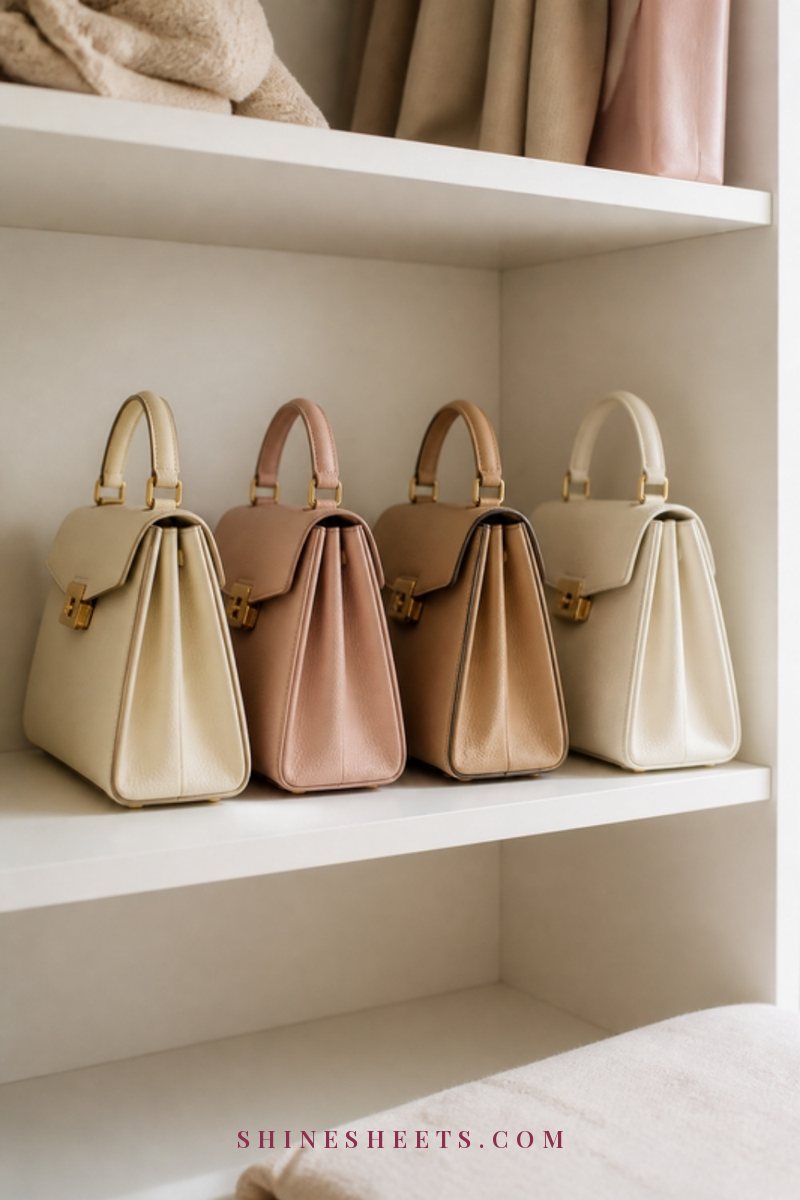
The simplest, kindest way to store a handbag is standing up on a shelf, with a little breathing room on each side. It's how boutiques display bags, and there's a reason: the base carries the weight, the sides stay smooth and you can see every bag at a glance.
A few details make shelf storage work better:
- Leave about two fingers of space between bags so the sides don't press into each other.
- Put the heaviest, most structured bags on the lowest shelf and lighter crossbodies or minis higher up.
- Tuck straps and long chains inside the bag or lay them loosely in front, so they don't hang over the edge and stretch.
- Face handles the same way. It sounds fussy, but it makes the shelf look calm instead of crowded.
Eye level or slightly above is ideal for the bags you use most. The top shelf is fine for special-occasion bags, as long as it isn't right under a hot ceiling light.
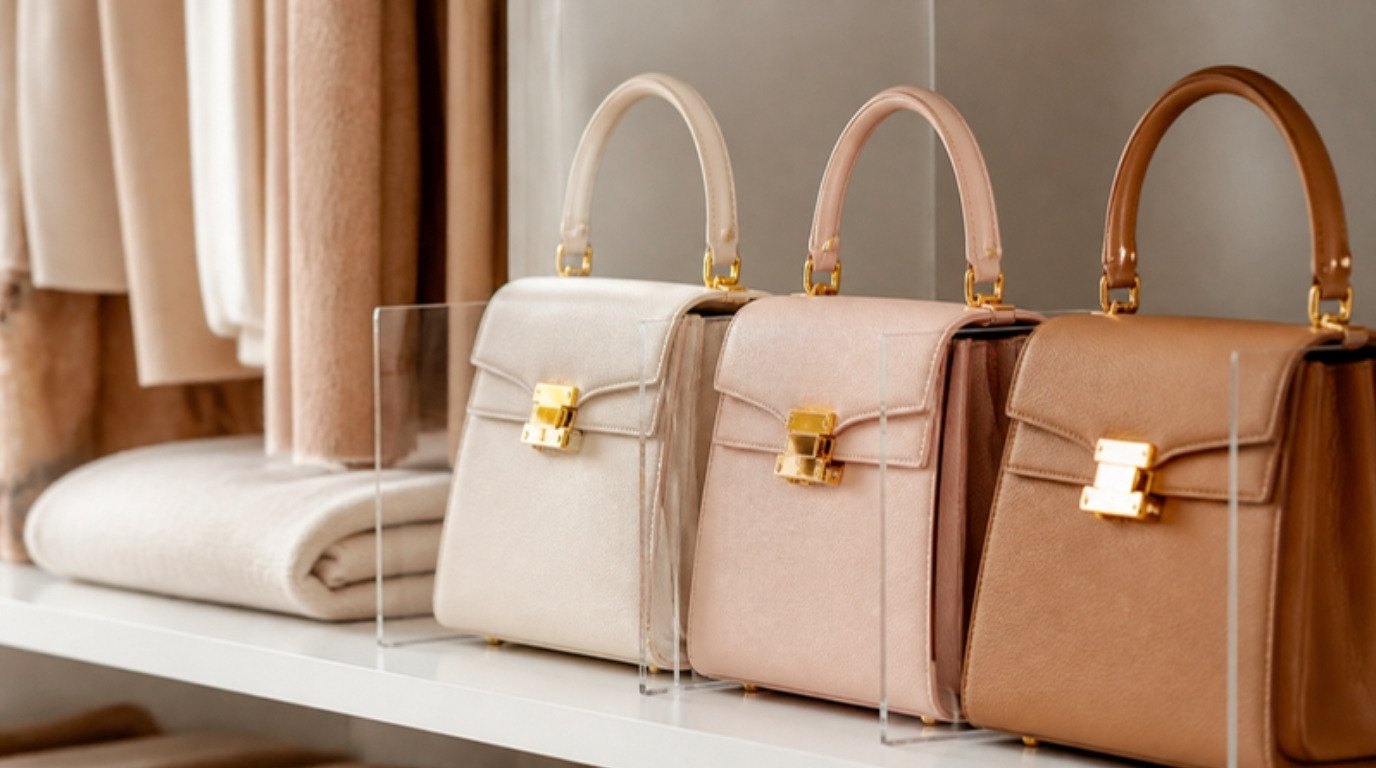
2. Add Clear Shelf Dividers
Shelf dividers are the small upgrade that stops bags from leaning into each other like tired dominoes. They give each bag its own little "room," and they're especially helpful on wide shelves where everything tends to slide toward the middle.
I'd choose clear acrylic shelf dividers that slide over the edge of the shelf without screws. Clear ones disappear visually, so the bags stay the focus, and they work in rentals because nothing gets drilled. Look for dividers at least 10–12 inches tall if you have structured totes, and check the clip fits your shelf thickness before ordering.
A good rhythm is one divider every one or two bags. If you have lots of small clutches, a divider every three works, since they can lean gently on each other without losing shape.
3. Stuff Bags So They Keep Their Shape
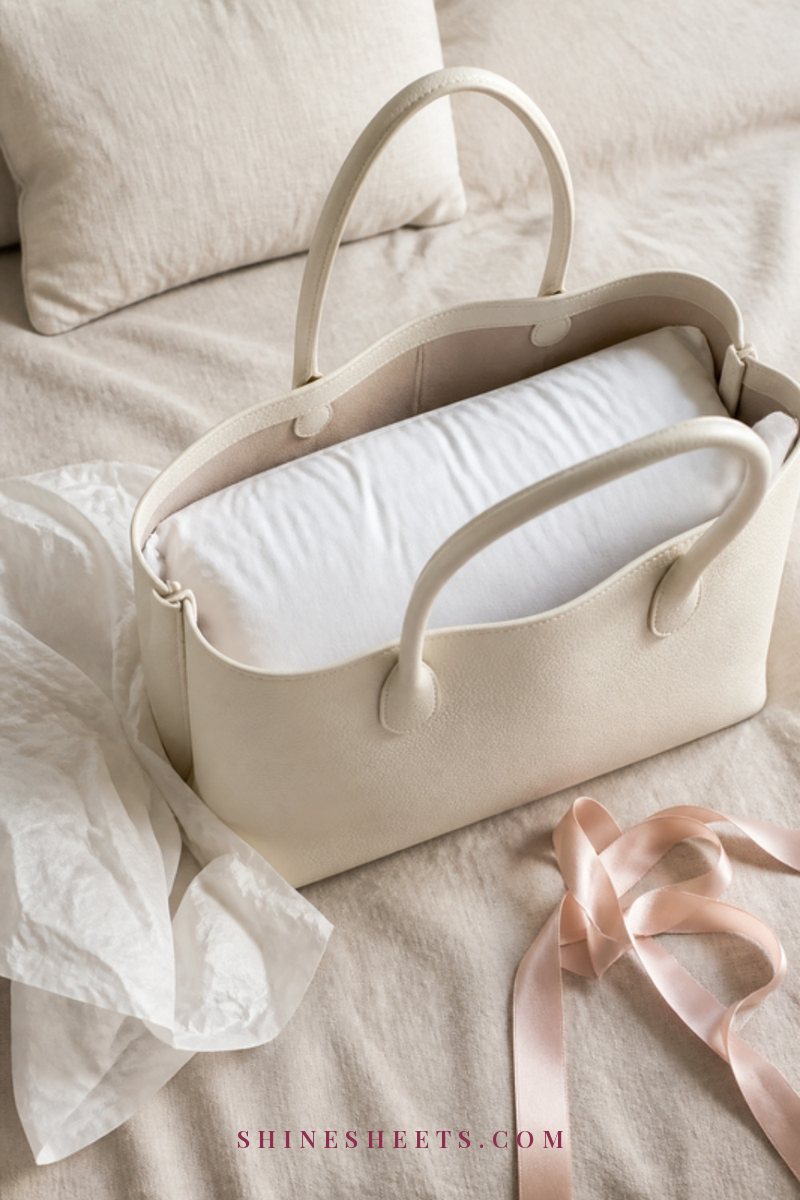
This is the step most people skip, and it's the one that makes the biggest difference. An empty structured bag slowly sinks in at the top and creases at the corners. A stuffed bag keeps its lines.
What to use (and what to avoid):
- Acid-free tissue paper – light, cheap and easy to shape. Crumple it loosely, never pack it tight.
- A soft pillow shaper – a small fabric cushion made exactly for this. You can move it from bag to bag in seconds.
- Old soft T-shirts or scarves – fine in a pinch, as long as they're clean and not brightly dyed (color can transfer onto light linings).
- Avoid newspaper – the ink can rub off onto linings, and it gets heavy and lumpy.
- Avoid overstuffing – the goal is "holds its shape," not "stretched like a balloon." Overfilling can strain seams and zippers.
A handbag pillow shaper is a pick for anyone who owns two or three nicer bags and wants a reusable option instead of rustling tissue every time. Look for one with a smooth cotton or satin cover and a few size options, since a mini bag and a big tote need very different fillings.
4. Keep Dust Bags for Bags You Don't Use Weekly
Dust bags are not just packaging. They protect leather from light, dust and scratches from neighboring hardware, and they let the material breathe in a way plastic never can.
My simple rule: bags you use every week can sit out on the shelf. Bags you use once a month or less go into a dust bag, stuffed, and then back onto the shelf or into a drawer. If you've lost the original dust bags (most of us have), a set of breathable cotton dust bags in a soft neutral works just as well. Look for drawstring tops, 100% cotton or a cotton blend, and a few sizes in one set.
One small tip: slip a little card or tag on the drawstring with the bag's name or color, so you don't have to open five identical cream pouches to find the one you want.
5. Use Hooks Only for Sturdy Bags
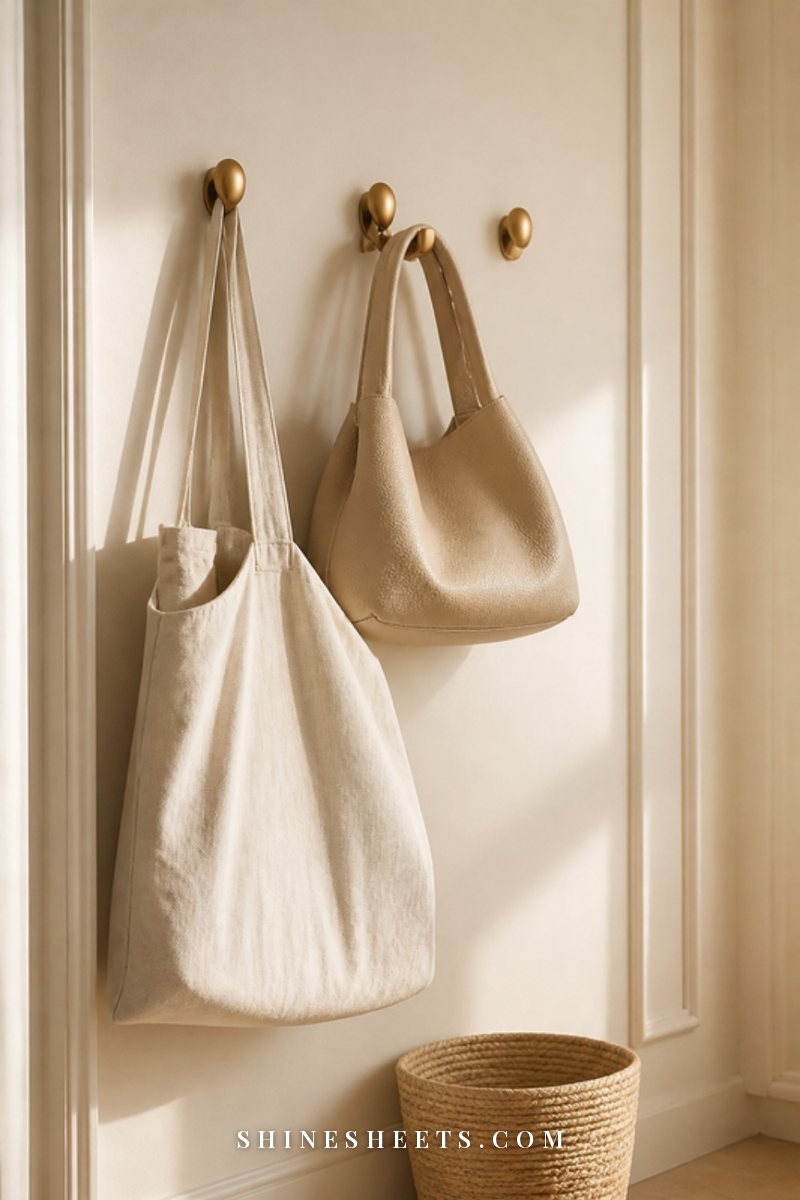
Hooks are tempting because they're quick and look pretty on a wall. But hanging puts all of a bag's weight on its strap or handles, and over months that stretches leather, loosens stitching and can leave a permanent dent where the strap folds over the hook.
Hooks are a good fit for:
- Canvas and cotton totes
- Nylon everyday bags and gym bags
- Bags with thick, short top handles that are built to carry weight
- The one bag you grab daily (since it never hangs long enough to stretch)
Hooks are not a good fit for thin leather straps, chain straps, delicate shoulder bags or anything heavy that you rarely use. If you do hang a nicer bag, empty it first, hang it by the sturdiest handle (never a thin crossbody strap) and use a wide, rounded hook rather than a sharp one. Gold closet shelf hooks that clip under a shelf are a pick for adding a few hanging spots without drilling, and the warm metal looks lovely against white or cream closets.
6. Try a Hanging Organizer on the Closet Rod
If you don't have spare shelves, a hanging organizer turns a few inches of closet rod into bag storage. The best versions have open cubbies, so each bag sits on its base instead of dangling from its strap.
A hanging purse organizer with soft fabric cubbies is a pick for small closets and shared spaces. Look for clear or open fronts so you can see what's inside, a sturdy hook that won't bend under weight and cubbies wide enough for your largest everyday bag. Keep the heaviest bags in the bottom cubbies and clutches or minis at the top.
This works best for soft and medium bags. Very structured, heavy bags are still happier on a real shelf.
7. Use the Back of the Closet Door
The back of a closet or bedroom door is one of the most underused storage spots in any home. For purse storage, it's perfect for lightweight bags: clutches, small crossbodies, evening bags and canvas totes.
- Over-the-door hooks: fine for totes and nylon bags, not for nice leather.
- A clear-pocket door organizer: lovely for clutches and small bags, since each one sits in its own pocket.
- A slim rail with S-hooks: good for everyday bags you rotate often.
Before you add anything, open and close the door a few times with a bag in place. If the door won't close fully or bags swing and knock, choose a slimmer option.
8. Store Off-Season Bags Under the Bed
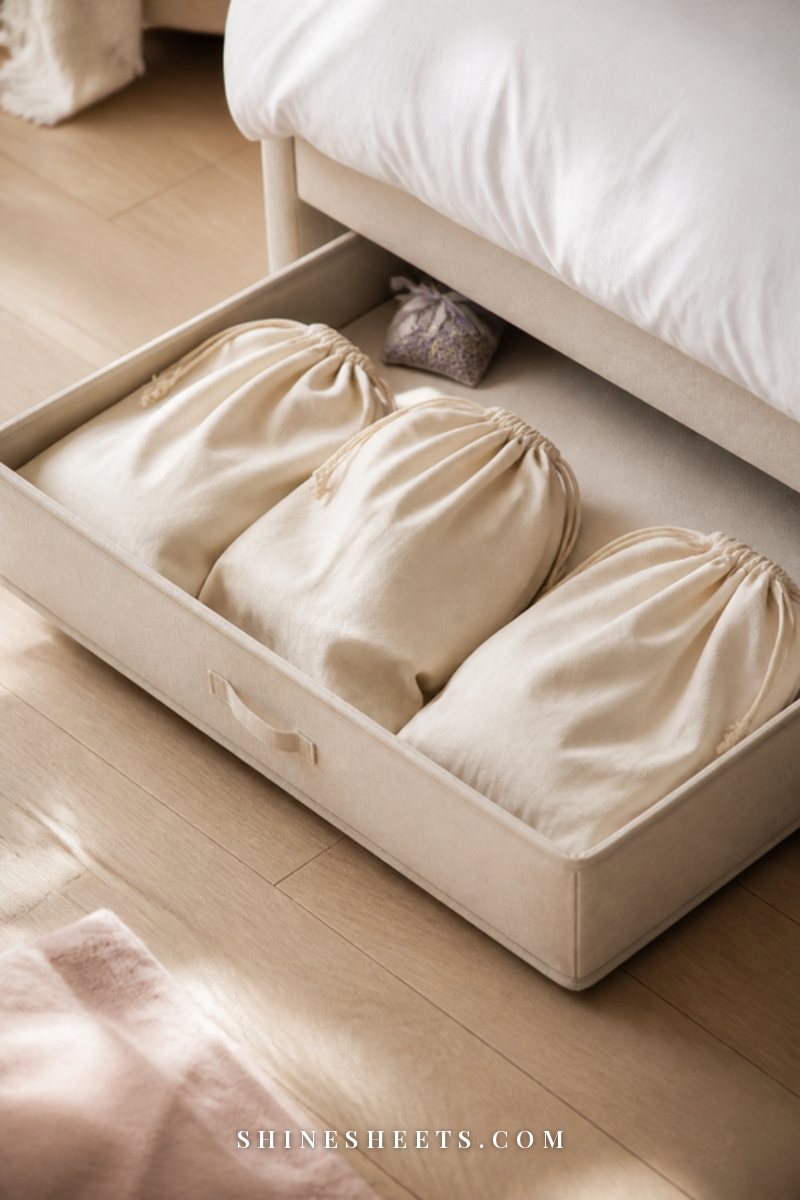
Straw summer totes in winter, heavy leather bags in summer – off-season bags don't need prime shelf space. Under the bed is a great spot, as long as you protect them properly.
How to do it well:
- Empty and wipe each bag, then let it air for an hour.
- Stuff it lightly so it keeps its shape.
- Slip it into a breathable dust bag.
- Lay bags flat in one layer inside a low fabric storage box with a lid. No stacking.
- Add a small cedar block or a lavender sachet to keep things fresh.
- Check the box once when the season changes, and swap bags in and out.
Choose fabric or breathable boxes over sealed plastic for leather and suede. Plastic traps humidity, which can lead to mildew spots and a musty smell that's hard to get rid of.
9. Line Up Clutches Like Books
Clutches and flat evening bags are easy to lose in a pile. The prettiest fix is to store them vertically, like books on a shelf, in a basket, a shallow drawer or between two dividers.
Standing them on their long edge means you can see every one, pull out the one you want without disturbing the rest and avoid the dents that come from stacking. A woven basket or a small open box on a shelf works, and so does a drawer with a simple divider. If you have a dressing table, a few favorite clutches lined up there can look like part of the decor (my guide to vanity area ideas has more ways to make a small corner like that feel pretty and useful).
10. Create a Small Everyday Bag Spot by the Door
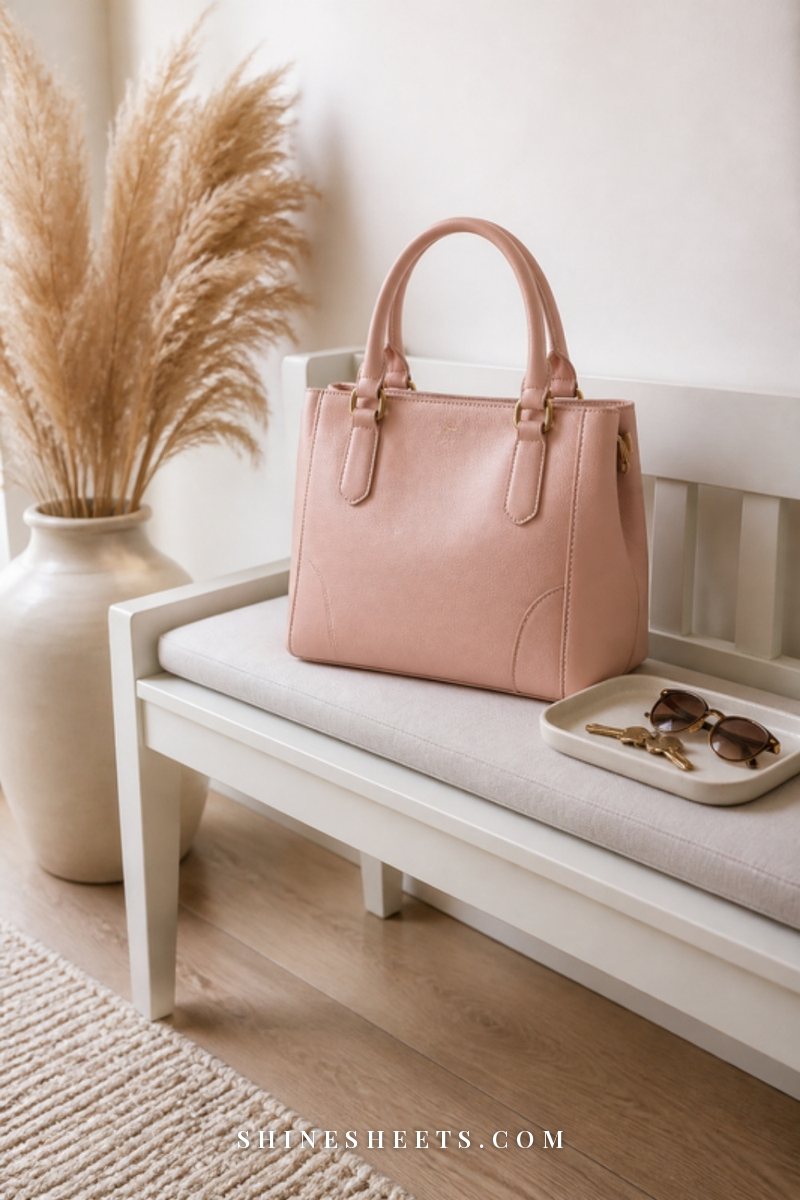
The bag you carry every day deserves its own landing spot, so it doesn't end up on the kitchen chair, the bed or the floor. A small bench, a console shelf, a wide hook or a basket by the front door gives it a home that's easy to keep.
Add a small tray next to it for keys, sunglasses and lip balm, and you have a mini reset station: walk in, set the bag down, empty the receipts and you're done. If your entry is tiny, my entryway ideas guide has plenty of space-saving options that still look calm.
11. Use a Purse Insert to Swap Bags in Seconds
One reason we end up carrying the same slouchy bag for months is that switching feels like a chore. A purse insert solves that: everything you carry lives in the organizer, and you just lift it from one bag to the next.
A felt purse organizer insert is a pick for anyone who rotates between two or three bags. Look for one with a few open pockets, a zip section and a size that matches your most-used bag. As a bonus, the insert helps the bag hold its shape while you carry it and keeps pens and makeup from marking the lining.
Bag Type to Best Storage: A Quick Table
Different bags need different care. Here's a simple way to match each type to its best spot. Screenshot it if it helps.
| Bag type | Best storage | Stuff it? | Hang it? |
|---|---|---|---|
| Structured leather tote or top-handle bag | Upright on a shelf, between dividers, in a dust bag if used rarely | Yes, always | No |
| Soft leather shoulder bag or hobo | Upright on a shelf or in a hanging organizer cubby | Yes, lightly | Only briefly, by the thickest strap |
| Small crossbody | Shelf, drawer or door pocket, strap tucked inside | Yes, lightly | No (thin straps stretch) |
| Clutch or evening bag | Vertical, like books, in a basket or drawer | A little tissue | No |
| Chain-strap bag | Shelf in a dust bag, chain inside or wrapped in tissue | Yes | Never by the chain |
| Suede bag | Shelf in a cotton dust bag, away from light | Yes | No |
| Canvas or nylon tote | Hook, door or folded in a drawer | Optional | Yes |
| Straw or raffia bag | Shelf or under-bed box off-season, never squashed | Yes, to keep the shape | No |
| Everyday bag | Entry bench, wide hook or basket by the door | Not needed | Yes, short term |
Leather, Suede and Fabric Care Basics
Good storage does most of the work, but a few small care habits keep bags looking fresh. None of this needs to be complicated.
Smooth Leather
- Wipe with a soft, dry cloth after use to remove dust and fingerprints.
- Condition two to four times a year with a leather conditioner suited to your bag's finish. Always test on a hidden spot first, like the underside of a flap.
- If it gets rained on, blot it (don't rub) and let it air dry at room temperature, stuffed with tissue. Never use a hair dryer or a radiator.
- Keep pens capped and inside a pouch, since ink marks are very hard to remove.
Suede and Nubuck
- Brush gently with a suede brush in one direction to lift dust and restore the texture.
- Keep suede away from water and direct sun, which can fade the color unevenly.
- Store it in a cotton dust bag rather than out on a bright shelf.
Canvas, Nylon and Straw
- Spot clean canvas and nylon with a damp cloth and a little mild soap, then air dry fully before storing.
- Straw and raffia should be kept dry and never crushed. If one gets bent, stuff it gently and let it rest for a few days.
Hardware and Chains
- Wrap chain straps in tissue so they don't scratch the leather next to them.
- Wipe metal hardware with a dry cloth to keep fingerprints from dulling the shine.
Where Not to Store Your Bags
A few spots look convenient but quietly damage bags over time. If any of your bags live here, consider moving them this week:
- Sealed plastic bins or bags: they trap moisture and can cause mildew or a sticky surface on some finishes.
- Attics, garages and basements: temperature swings and humidity are hard on leather and glue.
- Directly in a sunny window: light fades color and dries out leather, often unevenly.
- Right next to a radiator or heater vent: heat makes leather brittle and can crack the edges.
- At the bottom of a pile: the weight of other bags leaves dents and creases.
- Hanging by a thin strap for months: the strap stretches and the bag sags out of shape.
If a bag has already picked up a musty smell from a damp closet, air it out in a dry, shaded spot for a day or two, stuff it with fresh tissue and keep it out of storage boxes until the smell fades.
Declutter Questions Before You Organize
The easiest bag to store is the one you no longer keep. Before you buy a single divider, take every bag out and ask yourself a few gentle questions. You don't need to be ruthless. You just need to be honest.
- Have I carried this in the last year?
- Does it go with the clothes I actually wear now?
- Is it comfortable on my shoulder or in my hand for a full day out?
- Is it in good condition, or could it be with a simple repair?
- If I saw it in a store today, would I want it?
- Am I keeping it out of guilt (it was a gift, it was expensive) rather than love?
- Do I have three other bags that do exactly the same job?
Bags that get two or more "no" answers can go into a "maybe" box for a month. If you don't miss them, donate, sell or pass them to a friend. A smaller, well-loved collection is easier to care for, and it pairs beautifully with a pared-back wardrobe (my capsule wardrobe guide explains how to build one without feeling restricted).
A 5-Minute Monthly Bag Reset
Bags collect clutter fast: receipts, gum wrappers, three lip balms and a hair tie you forgot about. Once a month, set a timer for five minutes and do this:
- Empty your everyday bag completely onto a clean towel.
- Throw away receipts and wrappers, and put stray items back where they belong.
- Shake out the lining or wipe it with a lint roller.
- Wipe the outside with a dry cloth.
- Restock only the essentials, ideally in a purse insert.
- Glance at your bag shelf: re-stuff any bag that's slumping and fix anything leaning.
It's a small ritual, but it keeps your bags lighter on your shoulder and stops your shelf from slowly turning into a pile. If you like this kind of tiny reset, it pairs nicely with tidying the rest of your closet floor and your shoes at the same time.
Final Thoughts
Purse storage doesn't have to be elaborate to work. Stand your bags up, give them something soft inside, let them breathe and keep the heavy ones off thin straps. Those few habits protect the shape far more than any expensive system.
Start with the bag you love most and give it a proper spot today. Once one shelf feels calm and pretty, the rest of your collection tends to follow, one bag at a time.