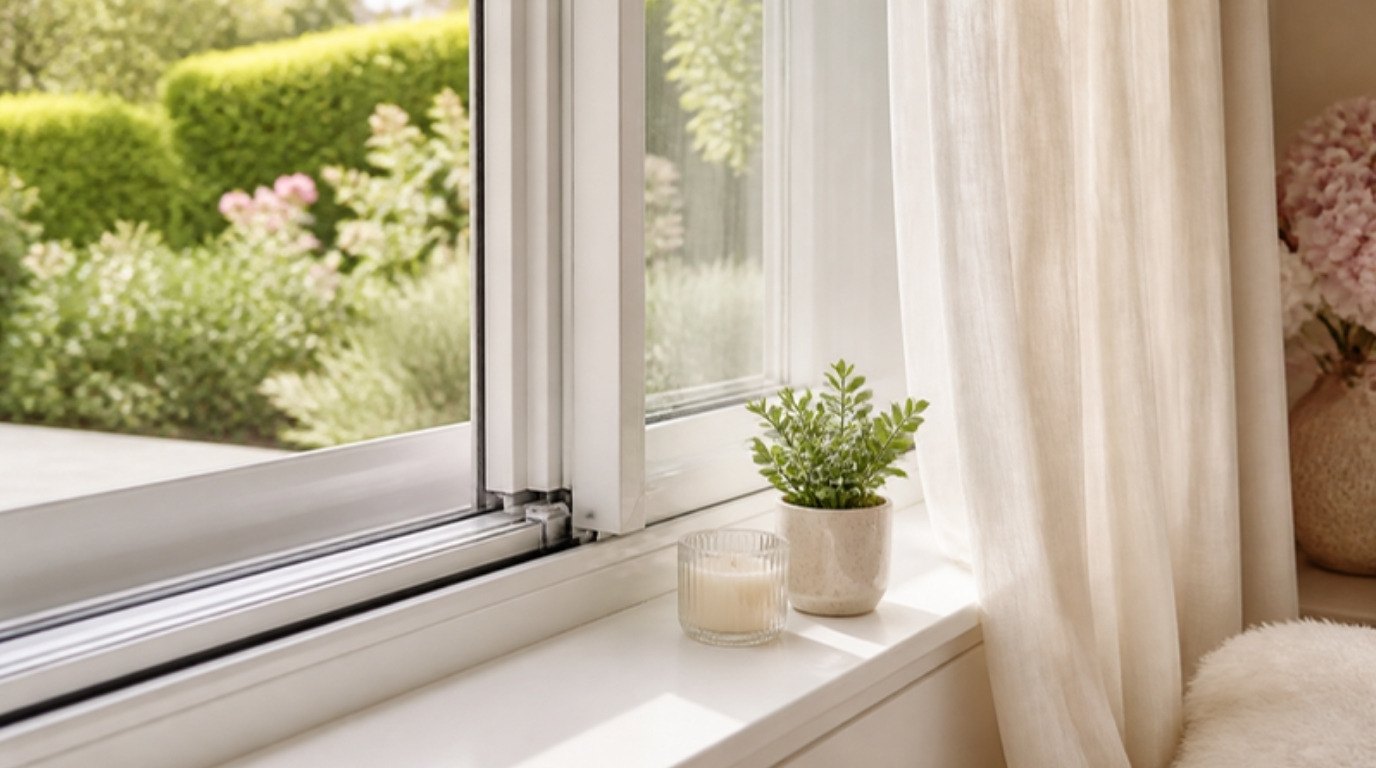
Window tracks are one of those spots that look fine from across the room and slightly alarming up close. The good news is that they don't need hard scrubbing or harsh chemicals. They need the right order: dry dirt out first, a little fizz to loosen the sticky layer, then a skinny tool to reach the grooves. Do it in that order and a filthy track takes about fifteen minutes.
The reason most people give up halfway is that they start with a wet cloth. Water plus dust plus dead bugs turns into a gray paste that you just push from one corner to the other. Skip that step, and the whole job gets easier (and a lot less gross).
This guide walks you through how to clean window tracks and sliding door tracks the easy way: why they get so grimy, a simple kit, a seven-step method, how to get a sticky sliding door gliding again, a quick table that matches the method to your track type and dirt level, and what to do about those little black spots in the corners. Open a window, put the kettle on for later, and let's get those grooves clean.
Why Window Tracks Get So Dirty

Window tracks are basically gutters for your home. Every time you open a window, outdoor dust, pollen and tiny bits of leaves drift in and settle into the lowest point they can find. Indoors, house dust and pet hair fall in from the other side. Then the track does what it was designed to do: it collects water.
That last part is the real culprit. Rain that blows in and condensation that runs down the glass on cold mornings both pool in the track. The moisture glues the dust into a crust, and in damp corners it can feed mildew. Add a few dead insects, and you have the classic gray-black layer that no quick wipe will touch.
Sliding door tracks get it even worse, because people walk over them. Shoes carry grit, sand and crumbs straight into the groove, and the door's rollers grind that grit back and forth every single day. That's why an old sliding door feels heavy and scratchy: often it isn't broken at all, it's just dirty.
Here's my small honest admission: for a long time, I only noticed my window tracks on the first warm day of spring, when I finally opened everything up. A quick clean every season is so much easier than one big rescue mission a year.
What You'll Need
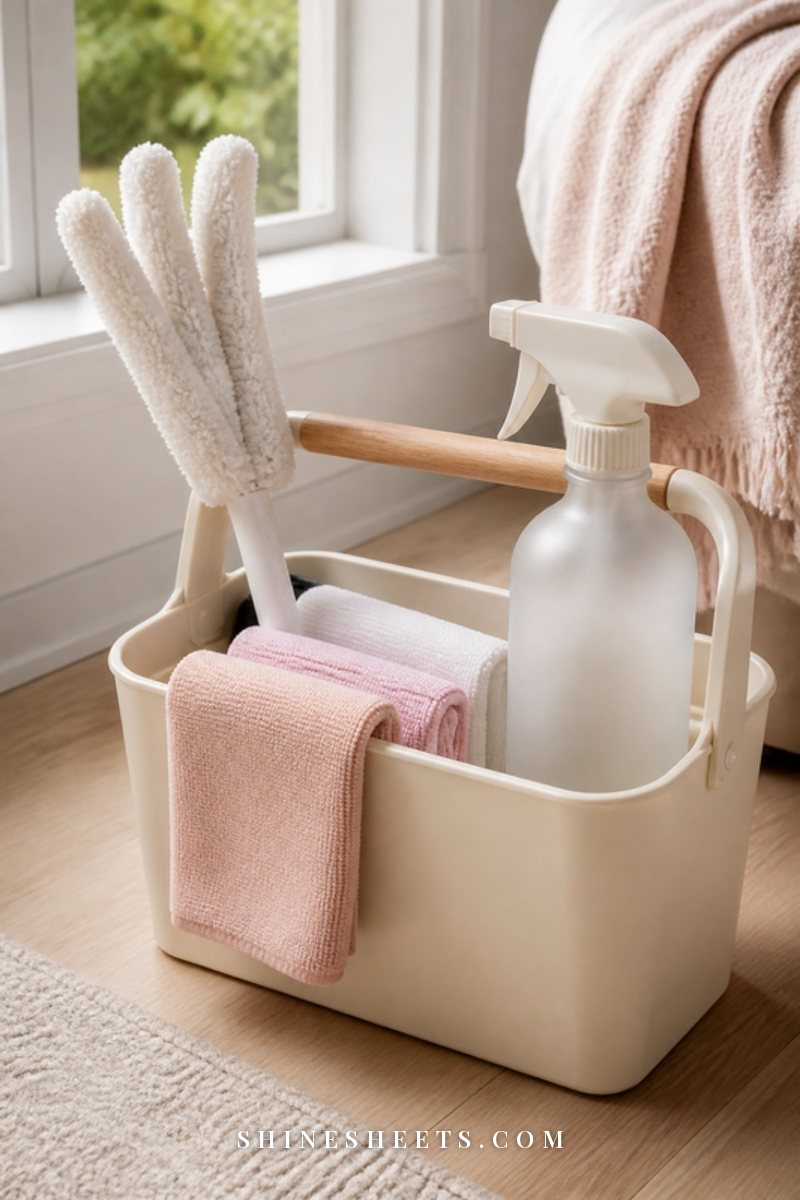
You don't need a special cleaner for this. Most of the kit is probably already under your sink, and the few extras are cheap and useful all over the house. Here are the 8 things I'd gather before starting:
- A vacuum with a crevice tool. Any vacuum works, but a cordless handheld vacuum with a crevice attachment is easiest to hold at window height and quick to grab for touch-ups.
- A slim track brush. A window track cleaning brush set usually comes with an angled brush, a tiny scraper and a crevice brush. An old toothbrush is the backup.
- Baking soda from the pantry, about 2–3 tablespoons per window.
- Distilled white vinegar mixed 1:1 with warm water.
- A spray bottle for the vinegar mix. A set of glass spray bottles is nice to have, so you can keep one labeled (with a marker on masking tape) just for this mix.
- Microfiber cloths and paper towels. A stack of soft microfiber cleaning cloths for wiping, and paper towels for the dirtiest first pass.
- A butter knife or a flat wooden stick to push a cloth into the corners.
- Rubber gloves. Track grime is not something you want under your nails, so a pair of long rubber cleaning gloves makes the whole job more pleasant.
For sliding doors, add a can of dry silicone lubricant spray (more on that below) and an old towel for kneeling on.
How To Clean Window Tracks in 7 Easy Steps
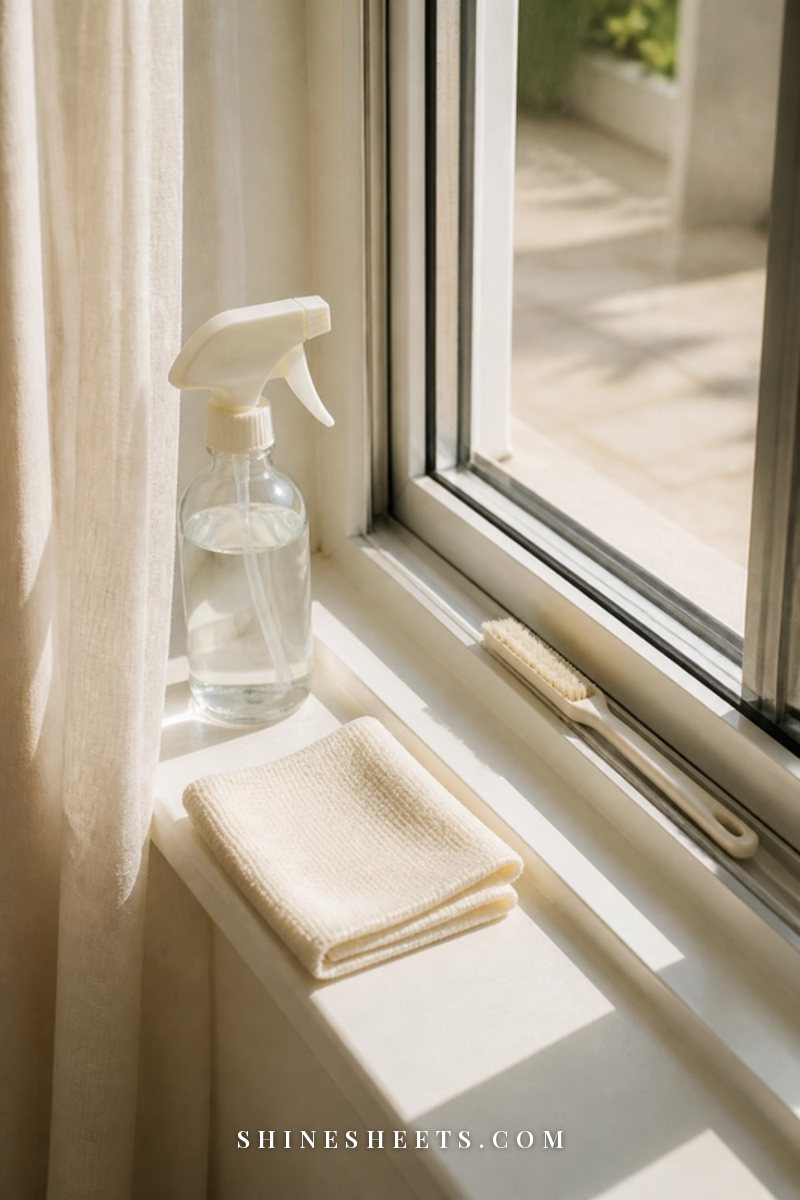
Give yourself about 15 minutes per window for a really dirty track, and 5 minutes for a track you cleaned last season. Work on a dry day if you can, so the track dries quickly afterwards.
1. Open the Window and Clear the Sill
Slide the window fully open so you can reach the whole track, then move anything on the sill: plants, candles, little frames. Pull curtains to the side or tie them up, because damp grime loves to stick to fabric. If your curtains are overdue for a refresh anyway, my guide on how to clean curtains without taking them down pairs nicely with this job.
Lay an old towel or a few paper towels on the floor under the window. Dry flakes of dirt will fall, and it's much nicer to fold them away than to vacuum them out of a rug.
2. Vacuum the Loose Dirt
This is the step that makes everything else easy. Run the crevice tool slowly along every groove, including the corners and the outside edge of the track if you can reach it. Go over each section twice. You want every bit of dry dust, sand, leaf crumbs and insect bits out before anything wet touches the track.
If there's a crusty layer that won't lift, loosen it with the dry track brush first, then vacuum again. Dry brushing for a minute saves you a lot of muddy scrubbing later.
3. Sprinkle Baking Soda
Shake a thin, even line of baking soda along the length of the track, about 2–3 tablespoons for a standard window. Concentrate a little extra in the corners and on any dark, sticky patches. Baking soda is mildly abrasive and helps lift the greasy film that holds dust in place, without scratching vinyl or aluminum.
4. Spray the Vinegar Solution and Wait
Spray your 1:1 vinegar and warm water mix over the baking soda until it's damp all the way along. It will fizz, which is satisfying to watch and also helps loosen grime from the edges. Now leave it alone for 5–10 minutes. Five is enough for light dust; give it the full ten if the track has a dark crust.
A quick safety note: vinegar is acidic, so keep it off natural stone sills like marble or limestone, and test it on a hidden spot of painted or wooden frames first. If your sill is stone, protect it with a folded paper towel or use warm water with a drop of dish soap instead.
5. Scrub the Grooves
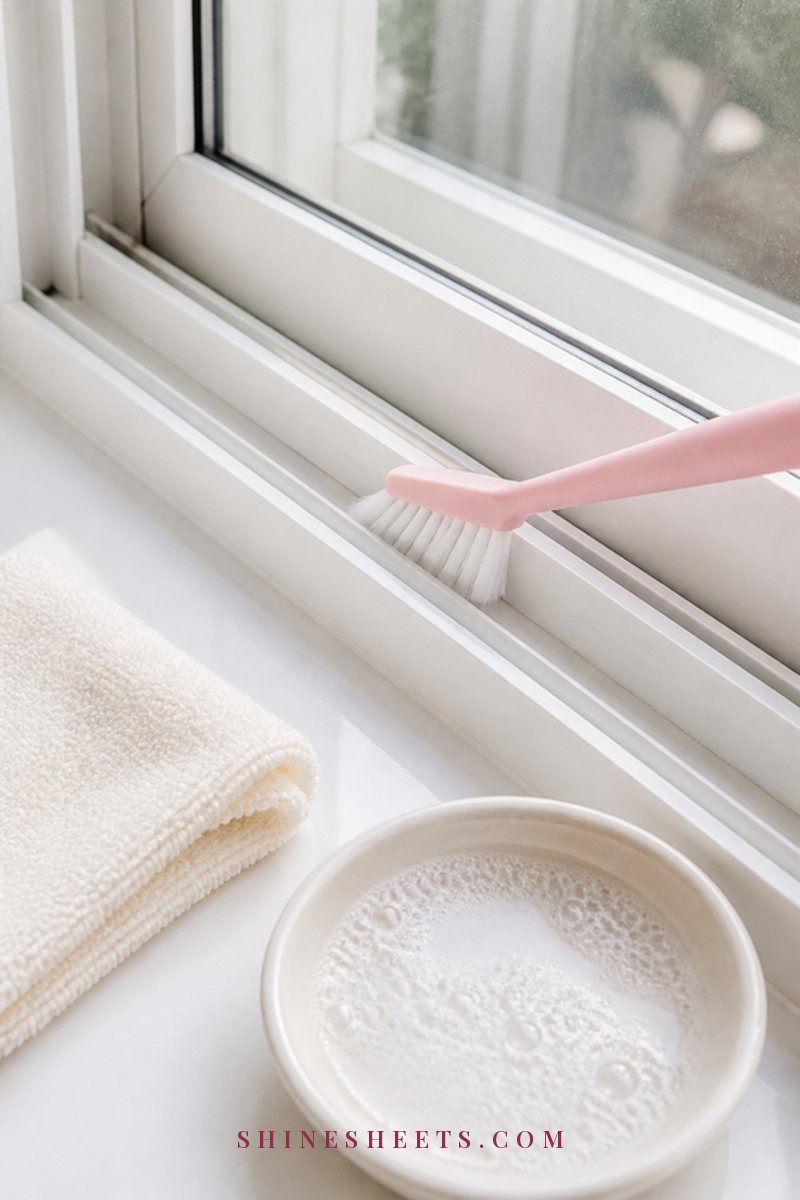
Use the slim track brush (or toothbrush) to scrub along each groove with short back-and-forth strokes. Work from one end to the other so the loosened paste gathers in one place. You'll see the gray layer turn into a soft paste, which is exactly what you want.
For stubborn spots, spray a little more solution, wait two minutes and scrub again. Patience works better than pressure here, especially on vinyl frames, which can scuff if you dig in too hard.
6. Get Into the Corners
Corners are where brushes give up. Wrap a paper towel or a thin microfiber cloth around a butter knife (or a flat wooden stick), spray it lightly and push it right into each corner, twisting as you go. Swap to a clean part of the cloth every few passes. A cotton swab works well for the tiniest gaps around latches.
7. Wipe Dry and Check the Weep Holes
Wipe up the paste with paper towels first, then go over the whole track with a damp microfiber cloth, and finally a dry one. Leaving the track damp undoes some of your work, because moisture is what made the grime stick in the first place.
While you're there, look for the small slots on the outer edge of many vinyl and aluminum tracks. These are weep holes, and they let rainwater drain outside. If they're clogged, water pools in the track. Clear them gently with a pipe cleaner or a thin brush, then pour a small cup of water into the track to check it drains.
Once the tracks are done, the glass will suddenly look dull by comparison (sorry). My guide on how to clean windows streak-free, inside and out takes care of that part.
How To Clean Sliding Door Tracks

Sliding door tracks follow the same basic method, with two extra steps: cleaning the rollers and finishing with the right lubricant. Plan for about 30 minutes per door.
Vacuum and Scrub the Track
Slide the door fully to one side and vacuum the exposed half of the track, then slide it the other way and vacuum the rest. Sliding door tracks hold a surprising amount of sand and grit, so go slowly and do two or three passes.
Then use the same baking soda and 1:1 vinegar method as for windows: sprinkle, spray, wait 5–10 minutes, scrub with the track brush and wipe dry. The raised metal rail the rollers sit on deserves extra attention, because any crumb stuck there is what makes the door jump and scrape.
Clean the Rollers
If the door still feels heavy after the track is clean, the rollers are probably caked in grit. On many doors you can reach them by sliding the door open and looking at the bottom edge from the side. Brush them with a dry toothbrush, then wipe them with a cloth dampened with warm, soapy water and dry them well.
Some doors can be lifted out of the track for a deeper clean, but sliding glass doors are heavy and awkward. Only do this with a second person, and if your door has adjustment screws at the bottom, take a photo before touching anything. If the rollers are cracked or the door still drags after cleaning, a handyman or a door repair service can replace them, which is much cheaper than a new door.
Finish With a Dry Silicone Spray
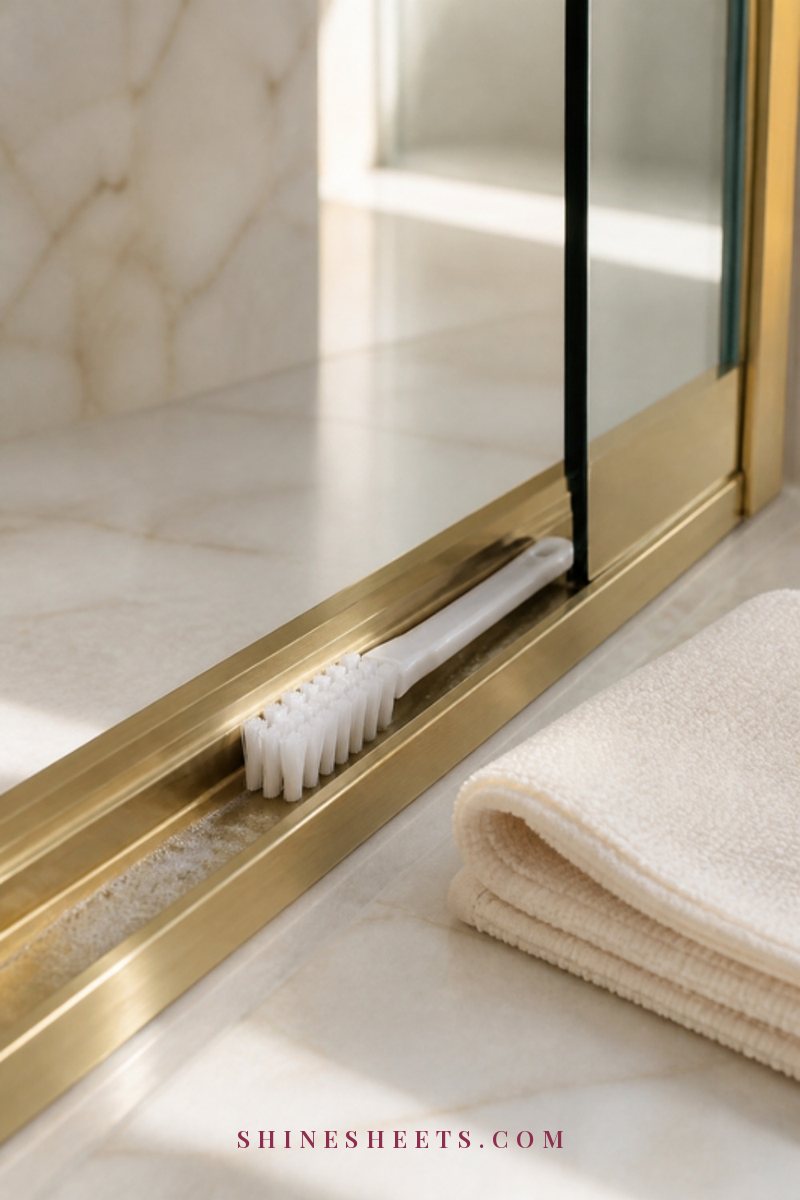
Once everything is clean and completely dry, spray a light coat of dry silicone lubricant spray along the rail, then slide the door back and forth five or six times to spread it. Wipe off any overspray from the floor right away, because it can be slippery.
Look for a spray labeled "dry" silicone or PTFE. Please don't use cooking oil, petroleum jelly or an oily all-purpose lubricant here. Oil feels great for about a week, then it grabs every bit of dust and sand that lands in the track and turns into the same sticky sludge you just cleaned out. A dry lubricant leaves a slick film that dust doesn't cling to.
Window Track Cleaning Table: Method by Track Type
Not every track needs the full routine. Use this table to match the method to what you're looking at. Screenshot it if you'd like it handy for your next seasonal clean.
| Track type | Dirt level | Method | Dwell time | Best tool |
|---|---|---|---|---|
| Vinyl window track | Light dust | Vacuum, then wipe with a damp microfiber cloth | None | Crevice tool + microfiber cloth |
| Vinyl window track | Gray crust, dead bugs | Vacuum, baking soda, 1:1 vinegar spray, scrub, wipe dry | 5–10 minutes | Slim track brush |
| Aluminum window track | Gritty, sandy | Dry brush, vacuum twice, baking soda and vinegar, dry well | 5–10 minutes | Track brush + crevice tool |
| Painted wood track | Light to medium | Vacuum, warm water with a drop of dish soap, dry right away | 2–3 minutes | Soft toothbrush + microfiber cloth |
| Track next to a stone sill | Any | Vacuum, dish soap and warm water only (no vinegar on stone) | 2–3 minutes | Cloth-wrapped butter knife |
| Sliding door track | Sand, grit, sticky glide | Vacuum, baking soda and vinegar, scrub, clean rollers, dry silicone spray | 10 minutes | Track brush + dry silicone spray |
| Any track | Small black spots | Dish soap and water first; diluted bleach alone if needed, with ventilation and gloves | 10 minutes | Toothbrush + gloves |
How To Handle Black Mold Spots Safely

Those little black dots in the corners of a track are usually mildew or mold that grew on damp dust. Small spots are very common, especially on windows that get a lot of condensation, and they're usually easy to deal with.
Start gentle. Mix warm water with a few drops of dish soap, scrub the spots with a toothbrush, wipe and dry thoroughly. This removes most surface mildew from vinyl and aluminum tracks.
If spots remain, you can use a diluted bleach solution, roughly 1 cup of regular household bleach per gallon of water, on non-porous vinyl or aluminum only. Wear gloves, open the window and keep the room ventilated. Apply it with a toothbrush, leave it about 10 minutes, then rinse with a cloth dampened in plain water and dry well. Test it on a hidden spot first, since bleach can discolor some finishes and fabrics.
The important part: use bleach on its own. Never mix bleach with vinegar or with ammonia, and don't use them one right after another in the same track. Bleach and vinegar together release chlorine gas, and bleach and ammonia release chloramine fumes, both of which can seriously hurt your lungs. If you already used the vinegar spray today, rinse the track well with plain water, let it dry and save the bleach step for another day.
If mold keeps coming back, covers a large area, has soaked into wood or the wall around the window, or the room smells musty, it's time to call a professional. The EPA's guidance on mold suggests getting help for areas larger than about 10 square feet, and anyone with asthma or allergies should leave mold cleanup to someone else.
How To Keep Window Tracks Clean Longer

Once your tracks are clean, a few tiny habits keep them that way. Here are 6 that take almost no time:
- Vacuum the tracks every two weeks. Thirty seconds per window with the crevice tool, whenever you vacuum that room anyway. Dry dust never gets the chance to turn into a crust.
- Wipe condensation in the morning. On cold days, run a dry microfiber cloth along the bottom of the glass and the track. If your windows drip every winter, my guide to stopping window condensation explains how to bring indoor humidity down.
- Close windows when it's windy or rainy. Most heavy grime arrives on blustery, wet days.
- Keep dust down around the window. Blinds and curtains shed dust straight into the track below, so clean them on the same day. Here's how to clean blinds quickly, every type.
- Put a doormat on both sides of a sliding door. Less sand on shoes means less grit in the track and a door that glides longer.
- Do a full deep clean once per season. Four times a year, 15 minutes per window, is plenty for most homes.
Tracks are one piece of a bigger dust picture, and if it feels like dust settles everywhere the moment you finish cleaning, these habits to reduce dust at home make a real difference.
Common Mistakes To Avoid
These are the 5 slip-ups that make window track cleaning slower or messier than it needs to be:
- Starting wet. Always vacuum first. Water on dry dust makes mud.
- Rushing the dwell time. Spraying and scrubbing immediately means twice the elbow grease. Let the fizz sit for 5–10 minutes.
- Oiling a sliding door. Oil attracts dirt. Use a dry silicone spray only, on a clean, dry track.
- Mixing cleaners. Never combine bleach with vinegar or ammonia, and don't layer one after the other.
- Leaving the track damp. Always finish with a dry cloth, and leave the window open for a few minutes if the weather allows.
Final Thoughts
Clean window tracks are a quiet kind of satisfying. Nobody else may notice them, but you will, every time a window slides open without a scrape and the morning light hits a sill that's actually clean.
Start with one window this weekend, the one you open most, and treat the rest as a slow, seasonal habit rather than a big project. A little vacuuming now and then, a dry cloth on cold mornings, and those grooves stay fresh all year.