Glass shower doors look stunning for about a week. Then the cloudy film creeps in, the water spots multiply and suddenly the whole bathroom feels a little less fresh, no matter how clean everything else is. The secret is that cloudy glass is rarely about dirt. It is about minerals and soap residue drying onto the surface, layer after layer, and once you know that, cleaning it becomes much easier.
You do not need harsh chemicals or an hour of scrubbing. A simple homemade spray, the right sponge and one tiny daily habit will get your glass sparkling and keep it that way. The trick is to dissolve the buildup instead of fighting it with force, because force is exactly what leaves scratches.
This guide shows you how to clean glass shower doors step by step: why glass gets cloudy, what you need, the easy deep-clean method, how to remove stubborn hard water spots, how to clean the tracks and frames, a simple shower glass cleaning schedule, how to keep it spotless and which products to avoid completely.
Open a window, put on some music and let's make that glass disappear again.
Why Glass Shower Doors Get Cloudy
Understanding what you are cleaning helps you choose the right method. Almost all shower glass grime comes from three things.
Hard Water Minerals
If you live in a hard water area, your water carries dissolved calcium and magnesium. When droplets dry on the glass, the water evaporates and the minerals stay behind as white spots. Over weeks, those spots join into a chalky film that makes the glass look frosted. Minerals are alkaline, which is why mild acids like vinegar dissolve them so well. The same crusty spots show up on faucets and tiles too, and this is how I remove hard water stains around the house.
Soap Scum
Bar soap, body wash and shampoo react with the minerals in water and form a sticky, grayish residue. It clings to the glass, traps more minerals and builds up into a dull layer that water alone will not shift. Dish soap is your friend here, because it cuts through the greasy part.
Body Oils and Products
Conditioner, body oils, shaving cream and even skincare rinse off onto the lower half of the door. They make the film greasier and help everything else stick. This is why the bottom of the door is usually the cloudiest part.
What You'll Need
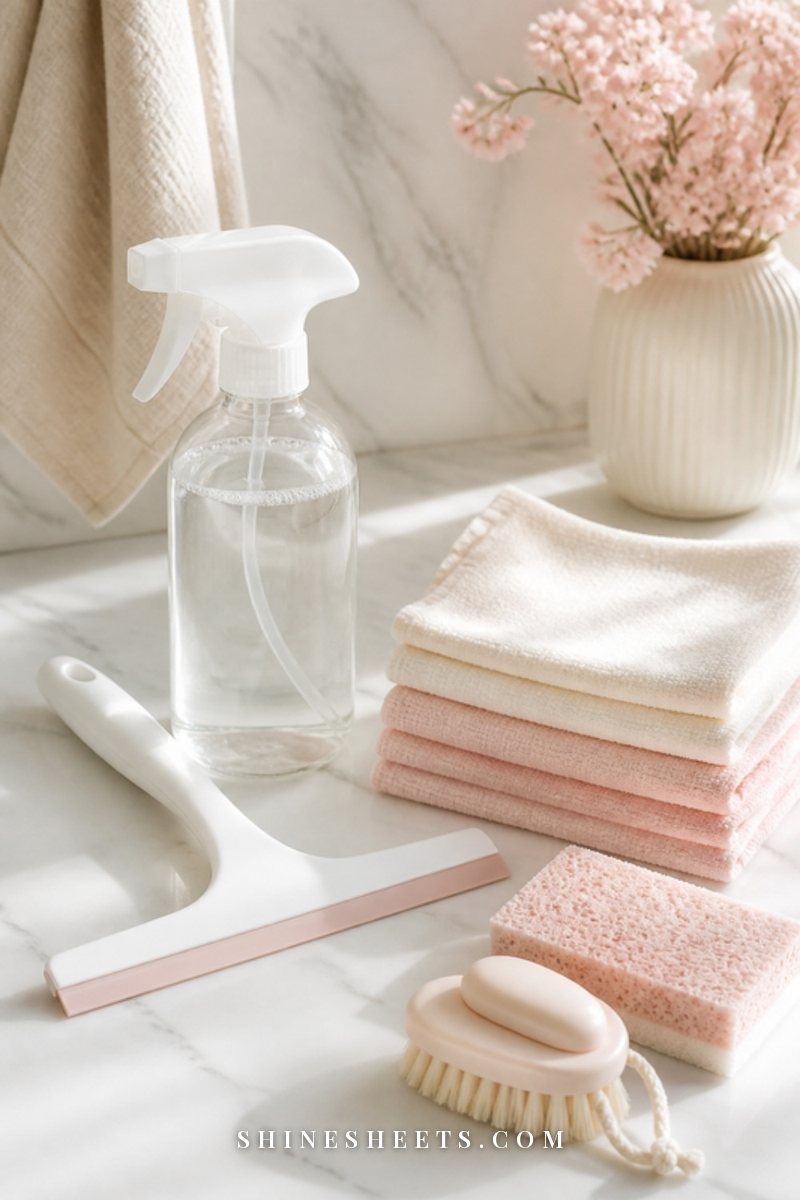
The good news is that you probably have most of this already. Here is the full kit:
- White distilled vinegar
- Gentle dish soap
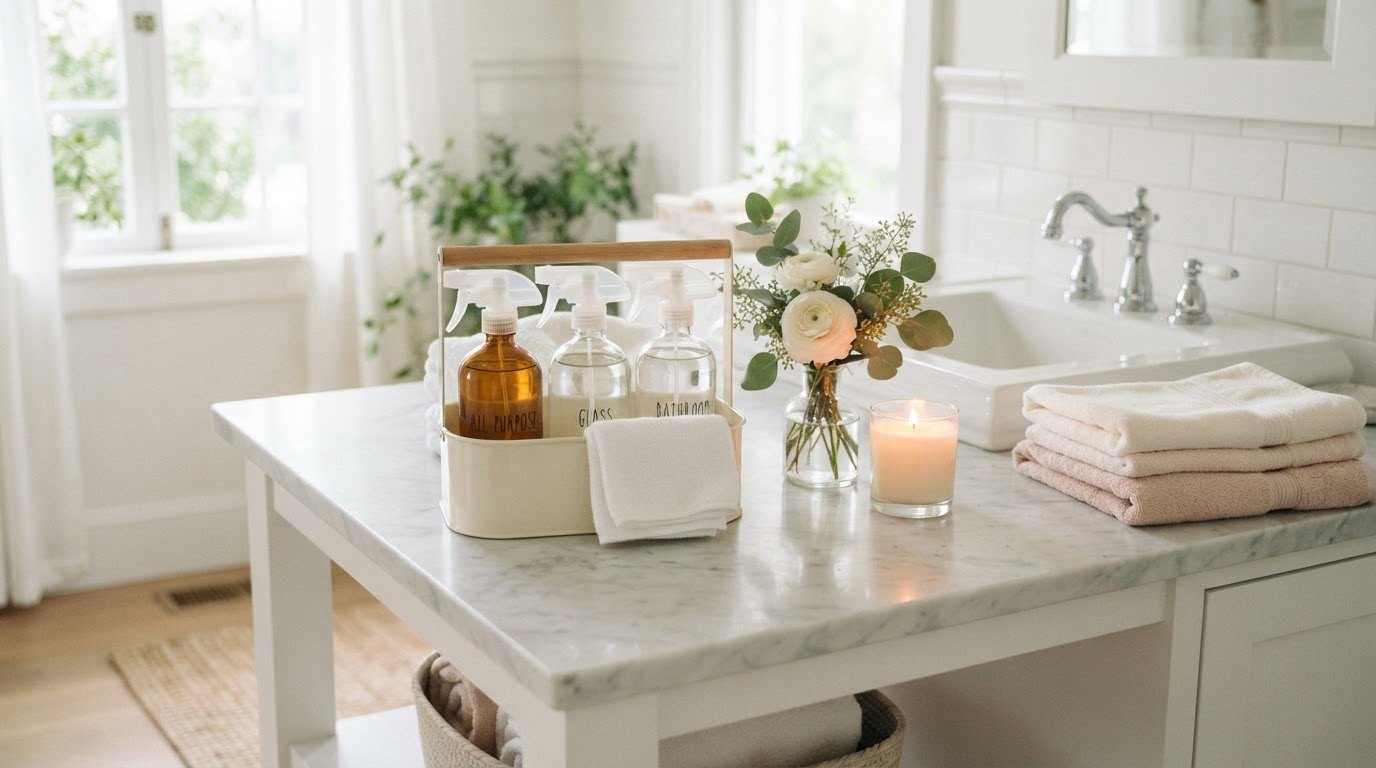
- A glass spray bottle, which holds up well to vinegar and looks much prettier on a shelf than plastic
- Non-scratch scrub sponges (the kind labeled safe for glass and non-stick pans)
- A few soft microfiber cloths for wiping and buffing
- A shower squeegee with a soft rubber blade
- Baking soda for stubborn spots
- A small brush for the tracks, or an old soft toothbrush
- Rubber gloves, if you have sensitive skin
If you like simple, low-tox cleaning, most of this kit doubles for the rest of the house too. My guide to natural cleaning shows all the other jobs vinegar and dish soap can handle.
How To Clean Glass Shower Doors Step by Step
This is the deep-clean method. Do it once to reset your glass, then every week or two depending on your water. It takes about twenty to thirty minutes, most of which is just waiting.
1. Mix Your Cleaning Spray
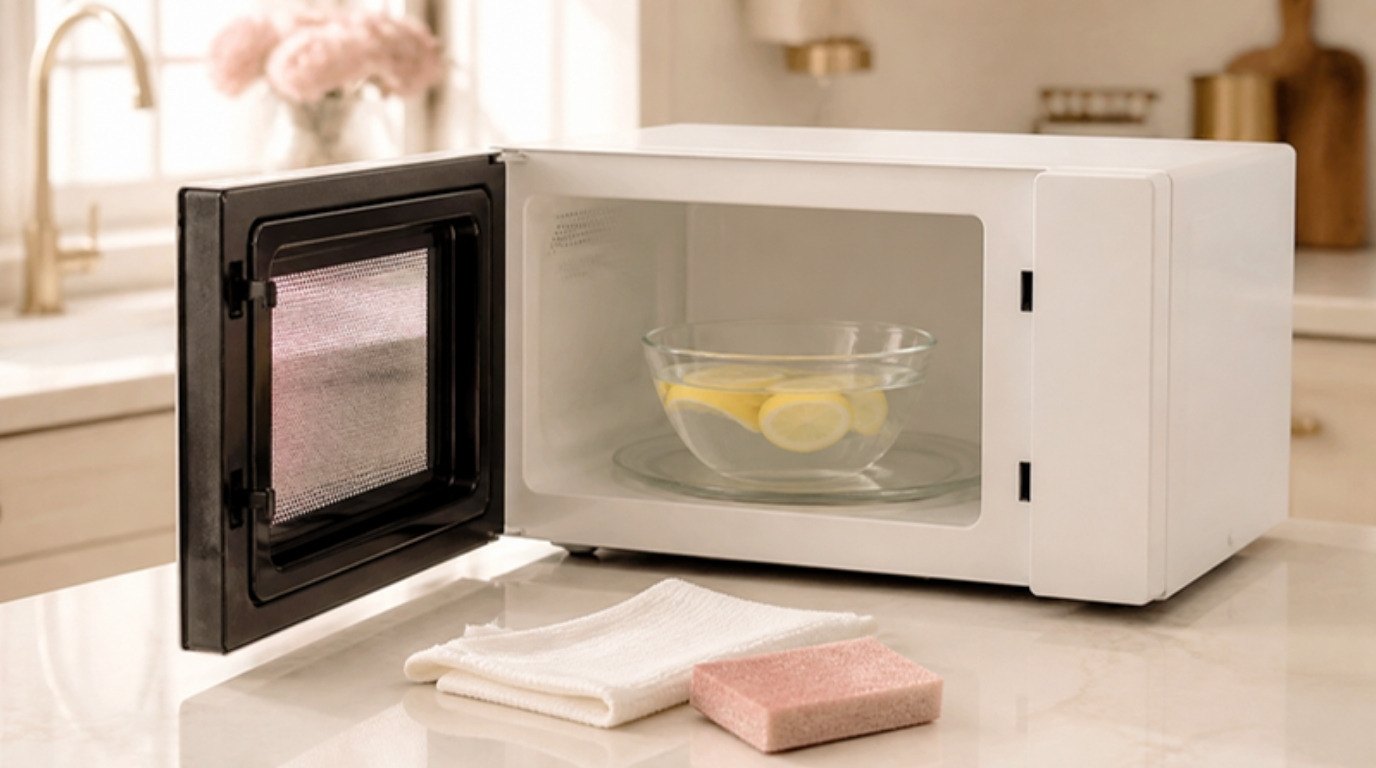
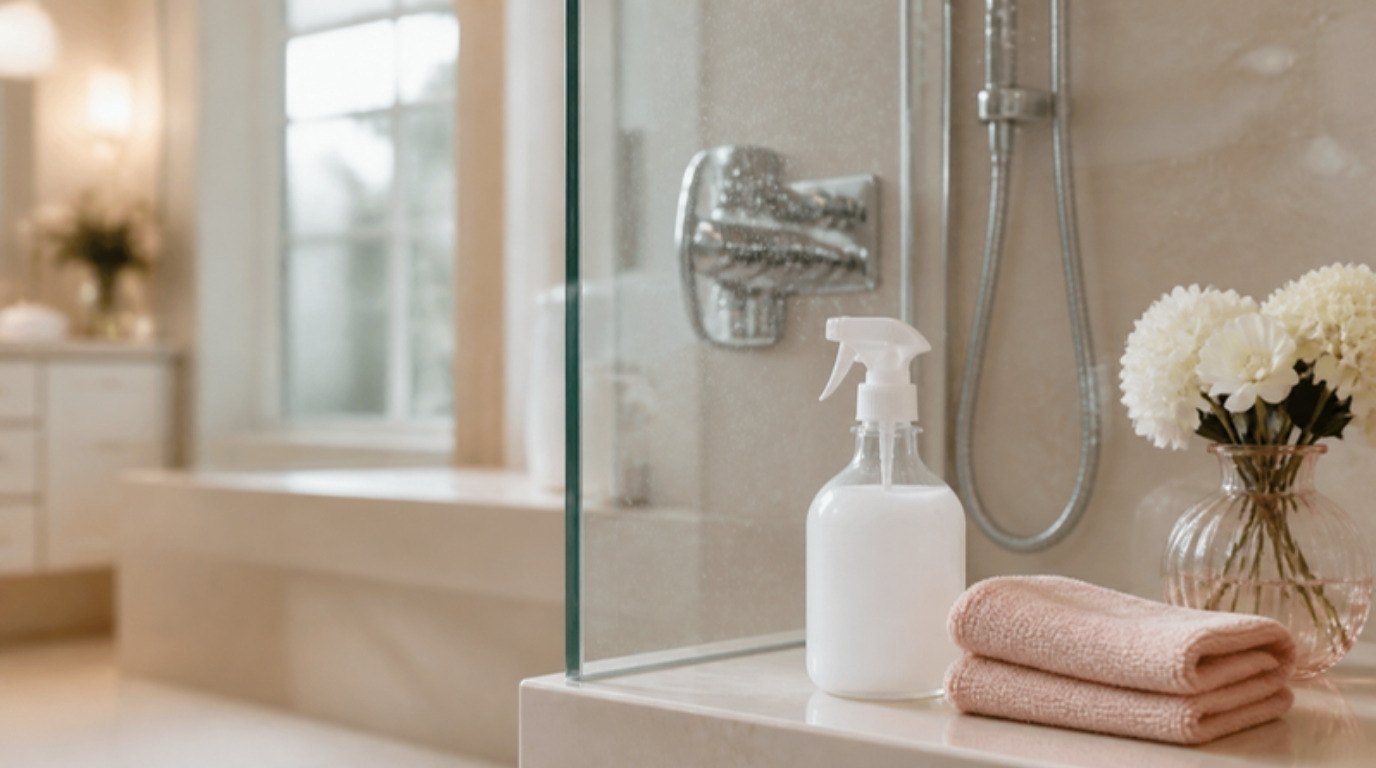
Warm about one cup of white vinegar in the microwave until it is warm, not hot (about thirty to forty-five seconds). Warm vinegar works noticeably faster on mineral buildup. Pour it into your spray bottle, add one cup of water and one tablespoon of dish soap, then swirl gently to combine. Shaking hard creates a lot of foam.
For heavy soap scum, you can make a stronger version with equal parts warm vinegar and dish soap. It is thicker and clings to vertical glass beautifully.
A quick caution: vinegar can etch natural stone like marble, travertine and limestone. If your shower has stone tiles or a stone threshold, spray carefully onto the glass only, or protect the stone with a towel.
2. Spray and Let It Sit

Rinse the glass with warm water first to loosen surface grime. Then spray both sides of the door generously, from top to bottom, making sure the bottom section gets an extra coat. Do not forget the edges and the area around the handle.
Now walk away. Let the spray sit for at least fifteen minutes, or up to thirty for heavy buildup. This is when the real work happens: the vinegar dissolves the minerals and the soap breaks down the greasy film. If the spray starts to dry, mist it again. It needs to stay wet to work.
3. Scrub With a Non-Scratch Sponge
Using the soft scrubbing side of your sponge, work in small circles from the top of the door down. Use gentle, even pressure. You should feel the film loosening and the sponge gliding more smoothly as you go.
Pay extra attention to the lower third of the door and around the handle, where products and splashes collect. If you hit a spot that feels rough, spray again and give it a few more minutes before scrubbing.
4. Rinse Thoroughly
Rinse the glass well with warm water, using your handheld shower head if you have one. Any vinegar or soap left on the glass will dry into streaks, so be generous. Rinse the frame and the bottom track too, since the cleaning spray will have run down there.
5. Squeegee and Buff Dry

Pull your squeegee from top to bottom in straight, slightly overlapping strokes, wiping the blade on a cloth after each pass. Then buff the glass with a dry microfiber cloth in small circles to catch any remaining drips and streaks.
Step back and look at the glass from an angle, ideally with the bathroom light on. Any cloudy patches left are usually stubborn hard water spots, and those get their own treatment below.
How To Remove Stubborn Hard Water Spots
If your glass has not been deep cleaned in a while, a single round of spray may not be enough. These methods work from gentlest to strongest. Always start at the top of this list.
Baking Soda Paste
Mix baking soda with a little water (or your vinegar spray, if you enjoy the fizz) until it forms a thick paste. Spread it over the cloudy patches with your sponge, let it sit for ten to fifteen minutes, then scrub gently in small circles. Baking soda is a very mild abrasive, so it lifts mineral spots without scratching the glass. Rinse well and squeegee.
A Warm Vinegar Compress
For spots that just will not shift, soak a few paper towels or a microfiber cloth in warm undiluted vinegar and press them flat onto the glass. They will cling on their own. Leave them for thirty minutes to an hour, misting with more vinegar if they dry out. This gives the acid long, steady contact with the minerals. Remove, scrub lightly and rinse.
A Melamine Sponge, Very Gently
Melamine foam sponges (often sold as magic eraser-style sponges) can remove leftover film, but they are a fine abrasive. Wet the sponge, squeeze it out and use light pressure only, testing a small corner first. Avoid them on coated or treated glass, as they can wear down the coating.
A Dedicated Hard Water Remover
If you have very hard water and years of buildup, a commercial hard water or limescale remover made for glass is the next step. Follow the instructions carefully, ventilate the bathroom and wear gloves. Never combine it with any other cleaner.
How To Clean Shower Door Tracks and Frames
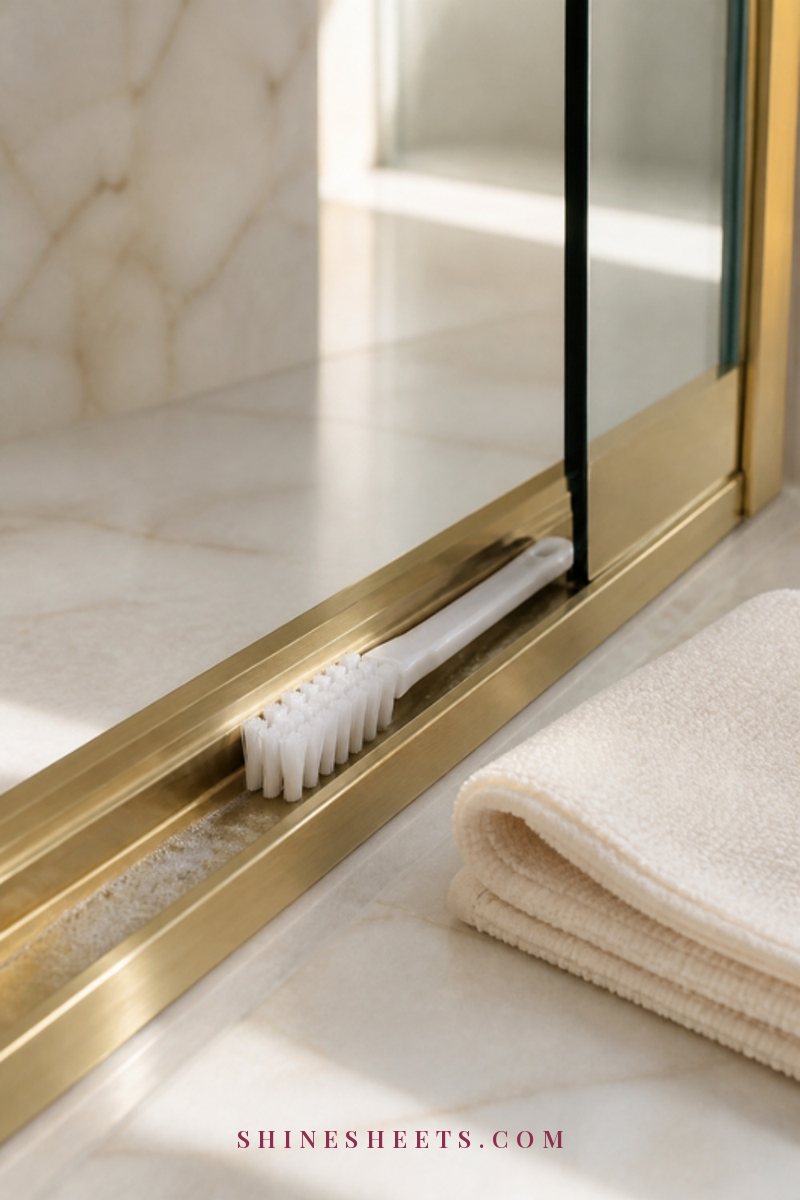
The tracks are where water, soap and hair collect, and if they are neglected they can start to smell musty or grow mildew. Clean them every time you deep clean the glass.
- Pick out any hair and debris with a paper towel.
- Spray the track generously with your vinegar spray and let it sit for ten minutes.
- Scrub along the track and into the corners with a narrow shower door track brush or an old soft toothbrush.
- Rinse with warm water, or pour a little from a cup if the track is hard to reach.
- Wipe completely dry with a microfiber cloth, including the drainage holes.
For metal frames and handles, wipe them with the same spray and a cloth, then buff dry so they do not water spot. If your bathroom still has a lingering damp smell after cleaning, my guide on how to get rid of a musty smell covers the hidden spots that cause it.
Shower Glass Cleaning Schedule
Once your glass is clear, this schedule keeps it that way with very little effort. Screenshot it and keep it handy for the first few weeks until it becomes routine.
| How often | Task | Time needed |
|---|---|---|
| Daily (after every shower) | Squeegee the glass from top to bottom | 30 to 60 seconds |
| Daily | Leave the door slightly open and run the fan to dry the shower | No effort |
| Weekly | Spray with the vinegar and dish soap mix, wait 5 minutes, wipe and squeegee | About 10 minutes |
| Weekly | Wipe the handle and frame, pick hair out of the track | 2 minutes |
| Every 2 to 4 weeks | Full deep clean with soak time and scrubbing | 20 to 30 minutes |
| Monthly | Clean the tracks and drainage holes thoroughly | 10 minutes |
| Every 3 to 6 months | Apply a water-repellent glass coating | 15 minutes |
| Every few months | Wash microfiber cloths and replace the squeegee blade if worn | 5 minutes |
If you like to plan cleaning around the whole house, the shower glass fits neatly into my cleaning schedule, and the weekly wipe-down pairs perfectly with the routine in how to clean your bathroom fast.
How To Keep Glass Shower Doors Spotless

Prevention is where the real magic happens. These small habits mean you will rarely need a deep clean again.
- Squeegee after every shower. This single habit prevents most buildup, because water cannot leave minerals behind if it is not there to dry. Hang the squeegee on a hook inside the shower so it is always within reach.
- Use a water-repellent coating. A glass coating designed for showers makes water bead up and roll off, so far fewer drops dry on the surface. Clean and dry the glass completely before applying, and reapply every few months.
- Switch to liquid body wash. Bar soap tends to create more soap scum than liquid washes, especially in hard water areas.
- Improve ventilation. Run the fan during and for twenty minutes after your shower, or crack a window. A drier bathroom means less buildup and less mildew.
- Keep a spray bottle in the shower. A quick mist of the vinegar mix once or twice a week, followed by your usual squeegee, takes less than a minute.
- Consider a shower filter or water softener. If your water is very hard, reducing minerals at the source helps your glass, your tiles and even your hair.
For more small tricks like these around the house, my collection of cleaning hacks is full of easy wins.
The 5-Minute Weekly Wipe-Down
On the weeks between deep cleans, this quick routine keeps buildup from settling in. It fits easily into the end of a shower, while the glass is still warm and wet.
- Spray the inside of the door lightly with your vinegar and dish soap mix.
- Wait five minutes (washing your face or brushing your teeth fills the time nicely).
- Wipe the glass top to bottom with the soft side of a sponge, focusing on the lower half.
- Rinse with the shower head.
- Squeegee and give the handle a quick wipe with a microfiber cloth.
That is it. Done weekly, this keeps most glass looking clear without ever needing the long soak.
If You Dislike the Smell of Vinegar
Vinegar works beautifully, but not everyone loves the smell. The good news is that it fades within about an hour once the glass is rinsed and the fan is on. A few other ways to make it more pleasant:
- Add a few drops of a fresh essential oil like lemon or eucalyptus to the spray bottle. It will not change how the spray works, but it softens the scent.
- Use citric acid dissolved in warm water instead. It is another mild acid that tackles mineral spots, with almost no smell.
- Choose a plant-based glass and shower cleaner labeled safe for glass, and follow it with your usual squeegee.
- Open a window and run the fan while you clean, and close the bathroom door so the smell does not travel.
Whatever you choose, the method stays the same: dissolve first, scrub gently, rinse well and dry the glass.
Framed vs Frameless Doors
Frameless glass doors are easier to keep clear, because there are fewer edges for water to sit in. Focus on the bottom seal and the hinges, which can trap water and mildew. Wipe the rubber seal with your spray every week and dry it with a cloth.
Framed doors have more corners and seams, so the frame needs as much attention as the glass. Use a soft toothbrush along the seams where glass meets metal, and dry the frame after every deep clean so it does not develop water marks. If your frame has a gold or brushed finish, skip anything abrasive and stick to a soft cloth.
What Not To Use on Shower Glass
Some popular cleaning tools and products do more harm than good on glass. Avoid these:
- Steel wool and abrasive scouring pads. They leave fine scratches that trap even more minerals and make the glass permanently hazy.
- Abrasive powder cleaners. Gritty powders can scratch glass and damage coatings.
- Razor blades on coated glass. Some people scrape spots off with a blade, but on treated glass it can strip the protective coating and void warranties.
- Bleach mixed with vinegar or ammonia. Never mix bleach with vinegar, ammonia or any acidic cleaner. The combination releases toxic fumes. If you use bleach for mildew elsewhere in the shower, rinse thoroughly and wait a day before using vinegar.
- Vinegar on natural stone. Keep acidic sprays away from marble, travertine and limestone, which they can etch.
- Too much product. More cleaner does not mean cleaner glass. Excess soap leaves streaks and residue that attract new buildup.
If your glass has a special coating from the manufacturer, check their care guidelines before trying any new product. Some coatings need pH-neutral cleaners only.
Still Cloudy After Cleaning?
If you have tried everything and your glass still looks hazy, it may be etched rather than dirty. Etching happens when minerals sit on glass for a very long time and actually wear into the surface. A simple test: wet the glass. If the cloudiness disappears while it is wet and comes back as it dries, it is usually buildup and another round of cleaning will help. If it stays cloudy whether wet or dry, the glass may be etched.
Etched glass cannot be cleaned back to clear, but a glass polishing compound or a professional glass restoration service can sometimes improve it. Going forward, a daily squeegee and a water-repellent coating will stop it from getting worse. And honestly, even slightly etched glass looks far better when it is free of fresh spots.
Final Thoughts
Learning how to clean glass shower doors is really about working with chemistry instead of elbow grease. Warm vinegar dissolves the minerals, dish soap cuts the film, and a squeegee keeps it all from coming back. One proper deep clean, then a minute a day, is all it takes.
There is something lovely about stepping into a shower with glass so clear it almost disappears. Keep your squeegee close, your spray bottle filled and enjoy that fresh, spa-like feeling every single morning.