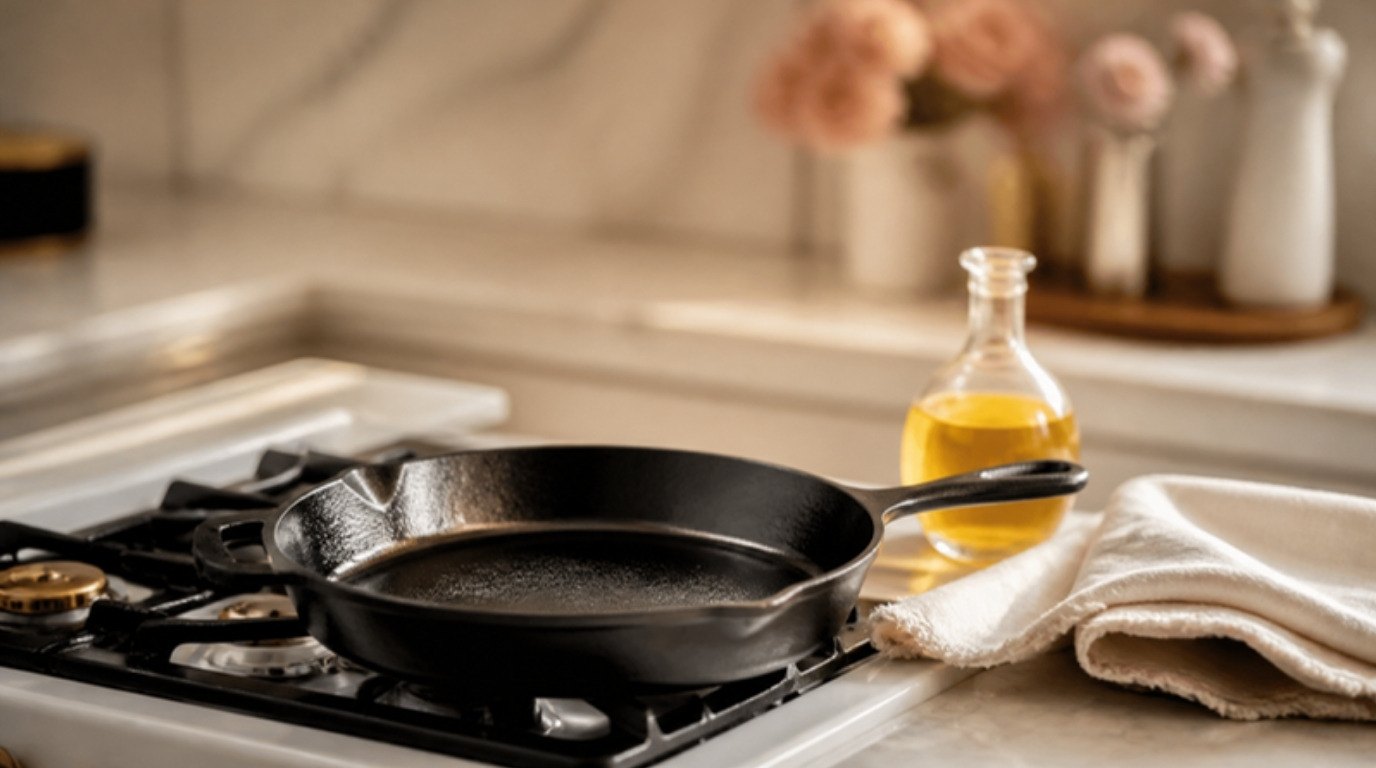
A cast iron skillet is one of the few things in your kitchen that gets better the more you use it. The trick is that the cleaning routine matters more than the pan itself: a few gentle habits keep the surface slick and dark for decades, and a couple of small mistakes (a long soak, a run through the dishwasher, a skillet left to drip-dry) can turn it rusty and sticky in a single night.
The good news is that none of this is fussy. Once you understand what the black coating on your pan actually is, the rules suddenly make sense, and caring for it takes about three minutes after cooking. It took me a while to stop treating cast iron like a delicate antique (and to stop being scared of a drop of dish soap), but the real routine is simpler than most of the warnings online.
This guide covers how to clean a cast iron skillet without ruining the seasoning: the everyday wash, three ways to lift stuck-on food, how to remove rust, how to re-season step by step in the oven, how to store it, and a troubleshooting table you can screenshot for those moments when your pan looks a little off.
What Seasoning Actually Is
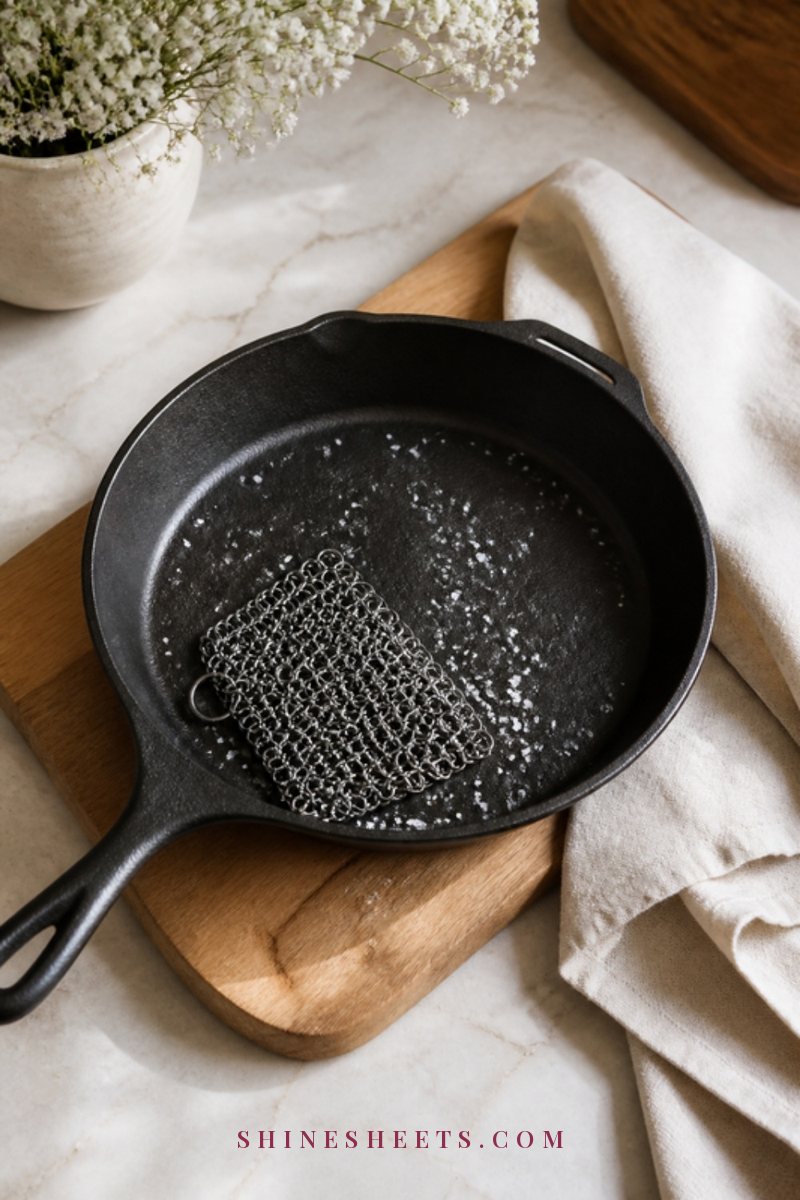
Seasoning isn't a flavor and it isn't a layer of old grease. It's oil that has been heated past its smoke point until it polymerizes, which means it turns into a hard, slightly glossy, plastic-like coating that bonds to the iron. Every time you heat a thin film of oil in the pan, you add a microscopic layer to it.
That coating does two jobs:
- It protects the iron. Bare cast iron rusts quickly when it meets water and air. Seasoning is the barrier between the two.
- It makes the pan naturally slick. A well-seasoned skillet releases food almost like a nonstick pan, without any synthetic coating.
Once you see seasoning as a baked-on finish (rather than a fragile film), the cleaning rules become logical. You want to remove food and excess grease, keep water contact short, and finish with heat and a whisper of oil so the surface stays protected.
A quick note: everything here is for classic bare cast iron. Enameled cast iron (the glossy colored kind with a cream or white interior) doesn't need seasoning at all and should be cleaned like any other enamel pot, with warm soapy water and a non-scratch sponge.
The Big Myths: Soap, Soaking and the Dishwasher
Cast iron has more folklore attached to it than almost any other kitchen item. Here's what actually matters and what you can stop worrying about.
Is Dish Soap Okay on Cast Iron?
Yes, a little mild dish soap is fine on modern cast iron. The old "never use soap" rule comes from a time when soaps contained lye, which really could strip seasoning. Today's gentle dish soaps aren't strong enough to break down polymerized oil. A small drop on a brush, a quick scrub and a rinse won't hurt a properly seasoned pan.
What soap can do is remove the loose, unpolymerized oil sitting on top, which is exactly why you finish with a thin oil wipe afterward.
Why Soaking Is the Real Enemy
Leaving cast iron in the sink overnight is far worse than any soap. Standing water seeps into tiny gaps in the seasoning and starts rust within hours. If you can't clean the pan right away, scrape out the food, wipe it with a paper towel and leave it on the stove until you can give it a proper wash. Never fill it with water and walk away.
Never the Dishwasher
The dishwasher combines a long soak, harsh detergent and heat. It's the fastest way to strip a skillet back to dull gray iron. Even "just this once" usually means a full re-seasoning afterward.
And Air-Drying Isn't Enough
A cast iron skillet left on the drying rack looks dry on the surface but holds moisture in its pores. That's how you get an orange haze by morning. Always dry it with a towel and then with heat (more on that in a moment).
What You Need To Clean Cast Iron
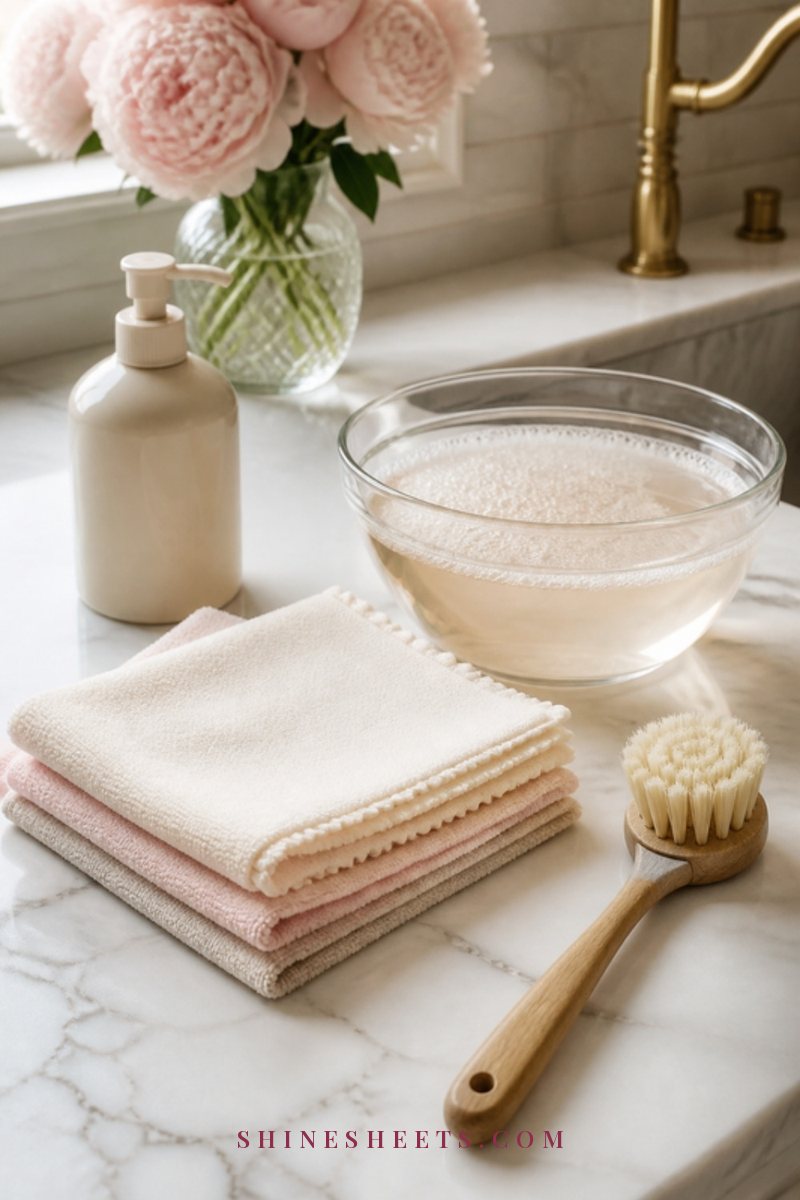
You don't need a special kit, but a few simple tools make the job faster and gentler on the seasoning. Here's what I'd keep in a little caddy next to the stove:
- A stiff brush. Natural or firm nylon bristles get into the textured surface better than a soft sponge. A wooden dish brush with cream bristles looks lovely in a holder by the sink and handles everyday cleaning.
- A pan scraper. Hard plastic scrapers lift stuck-on bits without scratching. A small set of plastic pan scrapers usually comes with different curves for the corners and the flat base.
- A chainmail scrubber. For really stubborn spots, a stainless steel chainmail scrubber removes residue fast but is gentle enough on mature seasoning when used with light pressure.
- Lint-free towels. Dark cast iron can leave faint marks on towels, so keep a few just for the pan. Soft cream cotton kitchen towels dry quickly and don't leave fluff behind.
- An oil for the final wipe. Plain vegetable oil or shortening works perfectly. If you'd like something ready to go, a cast iron conditioning oil comes in a squeeze bottle that makes it easy to use only a few drops.
- Paper towels. For the oil wipe and for buffing off the excess.
Skip anything abrasive and harsh for everyday use: steel wool and oven cleaner strip seasoning, so save steel wool only for rust repair.
How To Clean a Cast Iron Skillet Every Day: 6 Steps

This is the routine for 95% of cooking days. It takes about three minutes and keeps the seasoning building up over time instead of wearing down.
- Clean it while it's still warm. Wait until you can handle it safely (5–10 minutes after cooking), but don't let it cool completely. Food lifts far more easily from a warm pan.
- Rinse with hot water. Hot tap water, not cold. A sudden splash of cold water on a very hot skillet can, in rare cases, crack the iron, so let it cool a little first.
- Add a drop of mild soap and brush. One small drop on your brush is enough. Scrub in circles, including the sides and the pour spouts, for about 30 seconds.
- Rinse and towel-dry right away. Don't let it sit wet. Dry the inside, the outside and the handle.
- Heat-dry on low for 2–3 minutes. Put the skillet back on the burner over low heat until every trace of moisture has evaporated. You'll see the surface turn uniformly matte-dark.
- Wipe in a thin layer of oil. While it's still warm, add about half a teaspoon of oil and rub it over the inside with a paper towel. Then take a clean paper towel and wipe it all off again, as if you made a mistake. The pan should look satin, never wet or shiny.
That last "wipe it off again" step is the secret most people miss. Too much oil doesn't add more protection. It just turns sticky (we'll fix that in the table below).
How To Remove Stuck-On Food
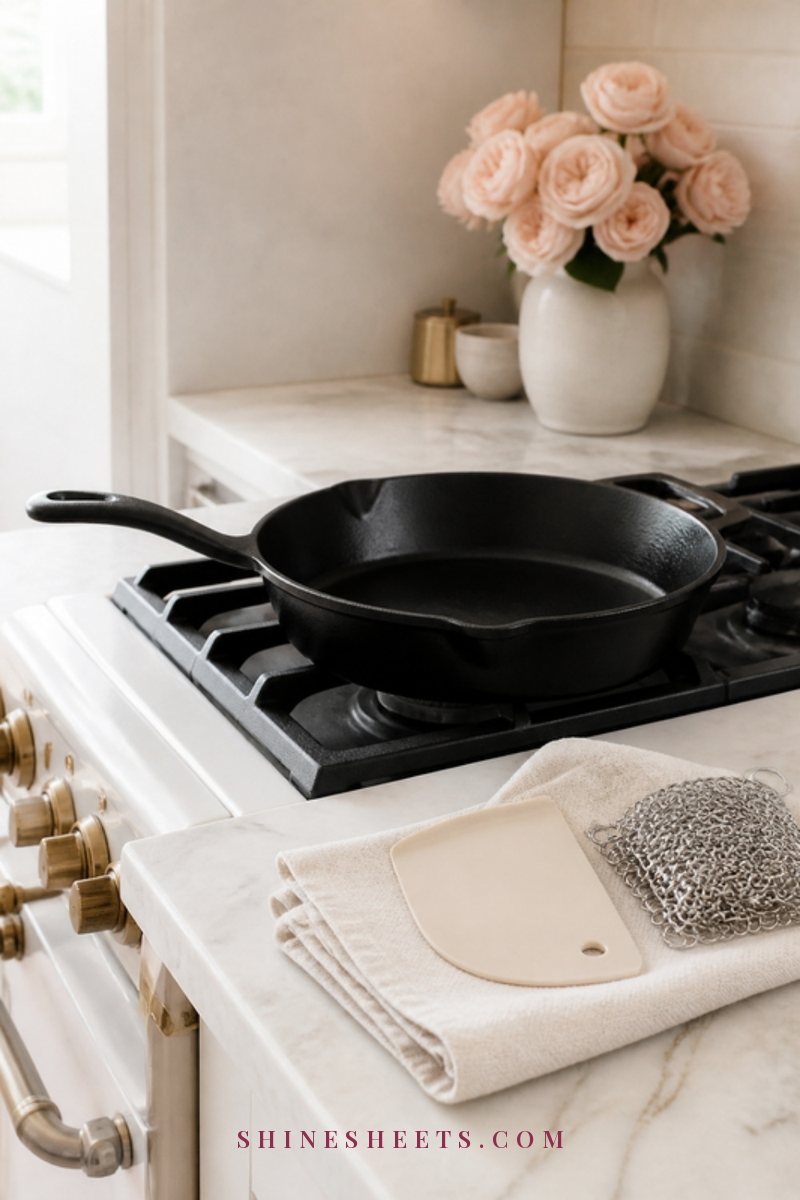
Some days the pan needs a little more help. Start with the gentlest method and only move to the next one if needed.
Method 1: Simmer and Scrape
Add about half an inch of water to the skillet and bring it to a gentle simmer for 3–5 minutes. The heat loosens stuck bits so you can scrape them away with your pan scraper. Pour out the water, then follow the everyday steps above (brush, rinse, dry, heat, oil). This is the method I'd reach for first because it's quick and very kind to the seasoning.
Method 2: Coarse Salt and Oil Scrub
Pour about two tablespoons of coarse kosher salt into the warm pan with a teaspoon of oil. Scrub with a folded paper towel or your brush. The salt acts as a gentle abrasive that dissolves before it can scratch the coating. Tip out the salt, rinse quickly, dry and oil.
Method 3: Chainmail for the Stubborn Bits
For burnt-on residue that survives the first two methods, rinse the pan with hot water and scrub with your chainmail scrubber in small circles. Use light to medium pressure and let the rings do the work. Finish with the full dry-and-oil routine.
If you'd like to clean the rest of the cooking area while you're at it, my guide on how to clean a glass stove top without scratches pairs well with this, since heavy cast iron spends a lot of time on that surface.
How To Remove Rust From Cast Iron
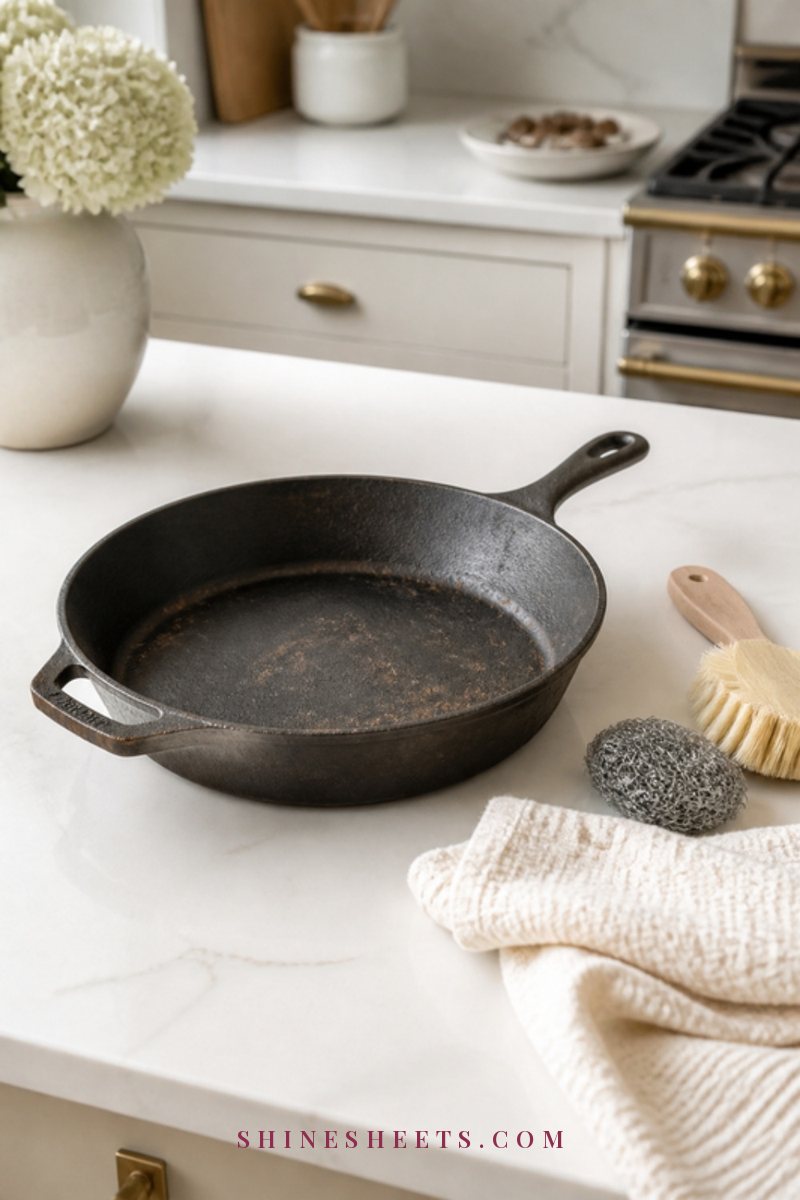
Seeing orange spots on your skillet feels dramatic, but surface rust is very fixable. Cast iron is basically indestructible as long as it isn't cracked or warped.
- Scrub the rust away. Use fine steel wool or a scouring pad and warm water with a drop of soap. Scrub only the rusty areas until you see clean gray or black iron underneath.
- For stubborn rust, a short vinegar bath. Mix equal parts white vinegar and water and submerge only the rusty pan. Check every 15 minutes and take it out as soon as the rust scrubs away easily, no longer than an hour in total. Vinegar keeps working on the iron itself once the rust is gone, so don't forget it.
- Wash and rinse well. A quick wash with mild soap removes the rust residue and any vinegar.
- Dry completely. Towel-dry, then heat on the stove for 3–5 minutes until bone dry. Bare iron starts to flash-rust within minutes when it's wet.
- Re-season. Any spot you scrubbed down to bare metal needs fresh seasoning. Follow the oven method in the next section.
A gentle safety note: never mix bleach with vinegar or ammonia while you're cleaning around the sink. Those combinations release toxic gases. Bleach has no place in cast iron care anyway, so keep it out of this routine entirely.
How To Re-Season a Cast Iron Skillet in the Oven
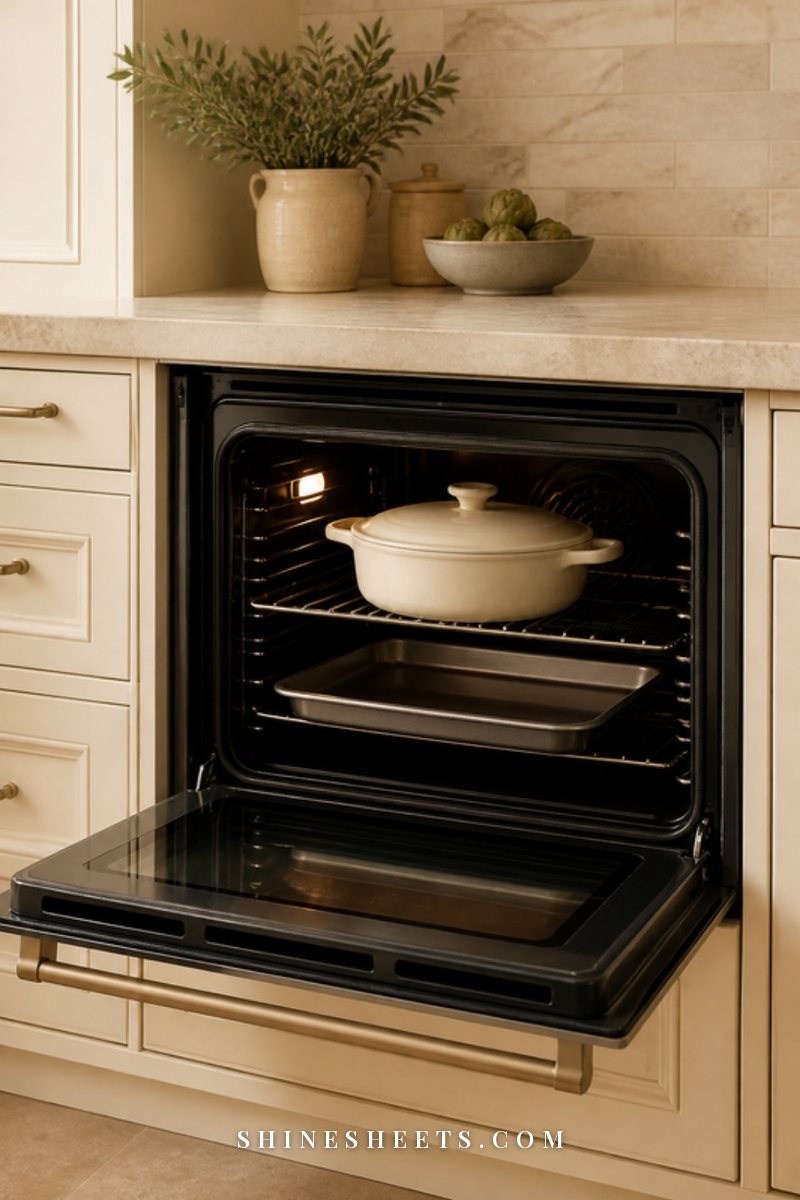
Re-seasoning rebuilds the protective layer after rust removal, after a dishwasher accident, or whenever the surface looks dull, patchy or gray. It's mostly waiting time.
- Start with a clean, completely dry pan. Wash, towel-dry and heat it on the stove for a few minutes.
- Preheat the oven to 230–250 °C (450–500 °F). Place a baking sheet lined with foil on the lower rack to catch any drips.
- Apply a very thin coat of oil everywhere. Use a neutral oil with a high smoke point, such as vegetable oil, canola oil or vegetable shortening. Rub about one teaspoon over the inside, outside and handle.
- Wipe off as much as you can. With a clean paper towel, buff the pan until it looks almost dry. This is the step that decides whether your seasoning ends up hard and smooth or sticky and blotchy.
- Bake upside down for 1 hour. Place the skillet upside down on the middle rack so any excess oil drips away instead of pooling.
- Let it cool in the oven. Turn the oven off and leave the pan inside until it's cool enough to handle.
- Repeat 2–3 times. Each round adds a thin, durable layer. For a lightly dull pan one round is enough. For bare iron after rust removal, do three.
Seasoning produces some smoke, so open a window, turn on the range hood and keep the smoke alarm working (don't disconnect it, just ventilate well). If your oven needs some attention before a long hot bake, my natural oven cleaning guide helps you avoid old residue smoking up the kitchen.
Cast Iron Troubleshooting Table: Problem, Cause, Fix and Time
Here's the table to screenshot. Find the problem you're seeing, check the likely cause and follow the fix.
| Problem | Likely cause | Fix | Time |
|---|---|---|---|
| Sticky, tacky surface | Too much oil, not baked long enough | Bake upside down at 230–250 °C / 450–500 °F for 1 hour; next time wipe off more oil | About 1.5 hours |
| Orange spots or haze | Soaking, air-drying, humid storage | Steel wool scrub, wash, heat-dry, re-season | 2–4 hours |
| Food sticks every time | Thin or young seasoning | Cook with a little more fat for a few weeks, oil wipe after each wash | 2–4 weeks of use |
| Black flakes in the pan | Old carbon buildup or loose seasoning | Chainmail scrub, then one oven seasoning round | About 1.5 hours |
| Dull gray patches | Seasoning worn off (acidic foods, harsh scrubbing) | Thin oil coat and one to two oven rounds | 1.5–3 hours |
| Rancid or stale smell | Oil left on too thick and stored too long | Wash with mild soap, heat-dry, then bake 1 hour | About 1.5 hours |
| Burnt-on residue | High heat with sugar or sauce | Simmer water 3–5 minutes, scrape, chainmail if needed | 10–15 minutes |
| Uneven, blotchy color | Normal for a new or newly seasoned pan | Nothing; keep cooking and oiling, it evens out | A few weeks |
Why Is My Cast Iron Sticky?
This is the most common question and the answer is almost always the same: too much oil. Oil that isn't fully polymerized stays soft and gummy, and it attracts dust. The fix is heat, not scrubbing. Bake the skillet upside down for an hour at the temperatures above and the sticky layer will cure into a hard finish. From then on, think "wipe it off like you made a mistake" every single time you oil.
Is Black Residue on the Paper Towel Normal?
A little gray or black on your paper towel when you oil the pan is normal, especially with a newer skillet. It's usually traces of carbon or loose seasoning. If it's heavy and keeps coming off, give the pan a chainmail scrub and one round of oven seasoning.
How To Store Cast Iron Between Uses
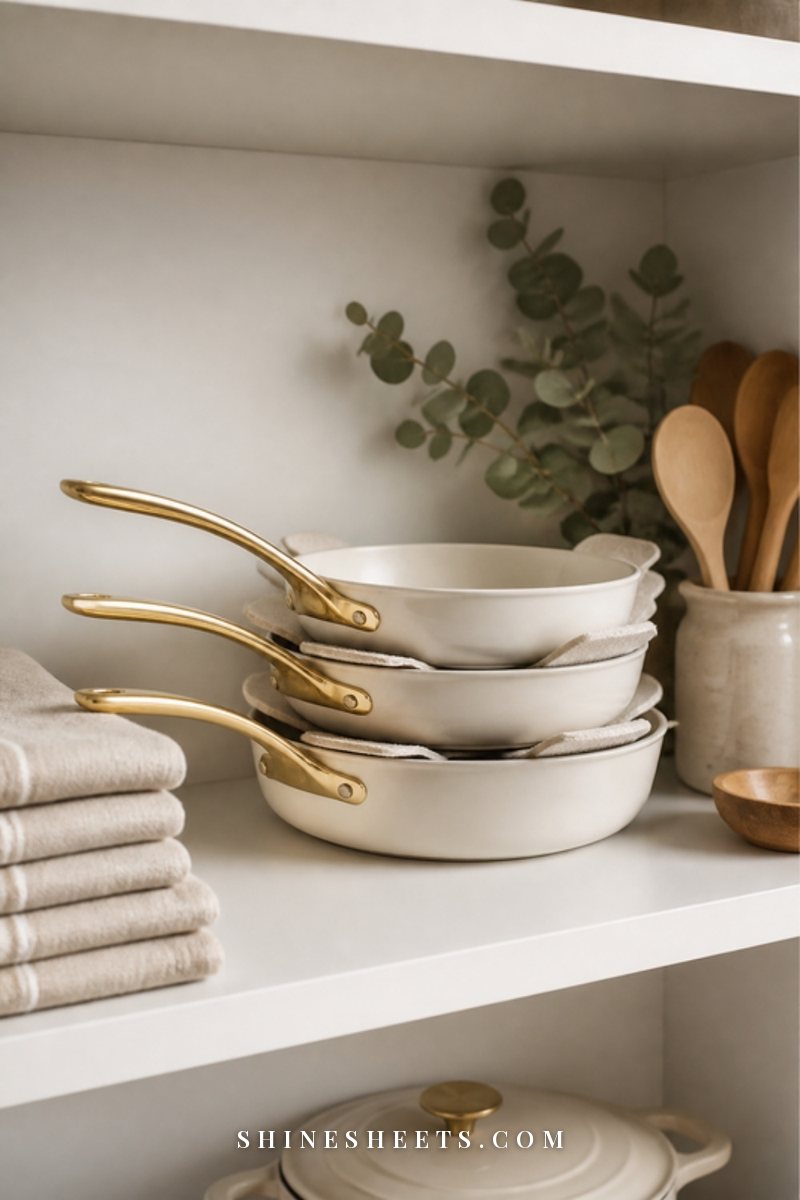
Good storage is the quiet half of cast iron care. Most rust happens in the cupboard, not the sink.
- Store it completely dry. Always after heat-drying and the thin oil wipe, never while it's even slightly damp.
- Keep the lid off. A lid traps humidity. If you want to store them together, set the lid beside the pan or lay a paper towel between them so air can move.
- Protect stacked pans. If you nest skillets, a paper towel or soft felt pan protectors between them prevents scratches and absorbs any stray moisture.
- Choose a dry spot. Avoid the cupboard right under the sink or next to the dishwasher vent. An open shelf, the oven drawer or simply the back burner works beautifully.
- Use it often. Regular cooking is the best maintenance. A skillet that sits for months is more likely to go stale or rusty.
If your cupboards are a bit crowded, my top-to-bottom kitchen deep clean plan is a nice weekend project for making room (and for wiping out the shelf where the skillet lives).
Cleaning the Outside, the Handle and the Bottom
The underside of a skillet collects grease and carbon from the burner, and that buildup can smoke or transfer to your stovetop. You don't need to scrub it daily, but give it attention every few weeks:
- Brush the bottom and outside with hot water and a drop of soap during your normal wash.
- For heavy carbon on the base, use the chainmail scrubber with light pressure, then dry and oil the whole pan including the outside.
- Wipe the handle and the hanging hole too. A light film of oil there keeps rust away.
- If you use a fabric handle cover, wash it regularly, since it absorbs grease and kitchen smells.
And while you're thinking about kitchen hygiene, sponges and brushes need a refresh too. My guide to kitchen sponge hygiene explains how often to clean and replace them, which applies to your cast iron brush as well.
A Simple Cast Iron Care Rhythm

Here's the whole routine boiled down, so it becomes automatic instead of something you have to look up every time:
- After every use (3 minutes): warm rinse, a drop of soap, brush, towel-dry, heat-dry 2–3 minutes, thin oil wipe, buff off.
- When food sticks (10–15 minutes): simmer and scrape, salt scrub or chainmail, then the usual dry and oil.
- Every month or two (5 minutes): check the bottom and handle, scrub off carbon, oil the outside.
- When it looks dull or gray (1–3 hours, mostly waiting): one to three rounds of oven seasoning.
- When you see rust (2–4 hours): scrub, wash, dry, re-season. No panic needed.
One more gentle reminder: cast iron handles get extremely hot, both on the stove and during heat-drying. Keep a thick oven mitt or a handle cover nearby, and let the pan cool on a trivet rather than a wooden counter.
Final Thoughts
A cast iron skillet doesn't need perfect care. It needs consistent, simple care: warm water, a quick scrub, real drying and the thinnest wipe of oil. Even the rusty, sticky moments are completely reversible with a bit of heat and patience.
Treat it this way and your skillet will keep getting smoother, darker and more reliable every year, the kind of pan that quietly becomes a favorite piece of your kitchen and one you can pass on someday.