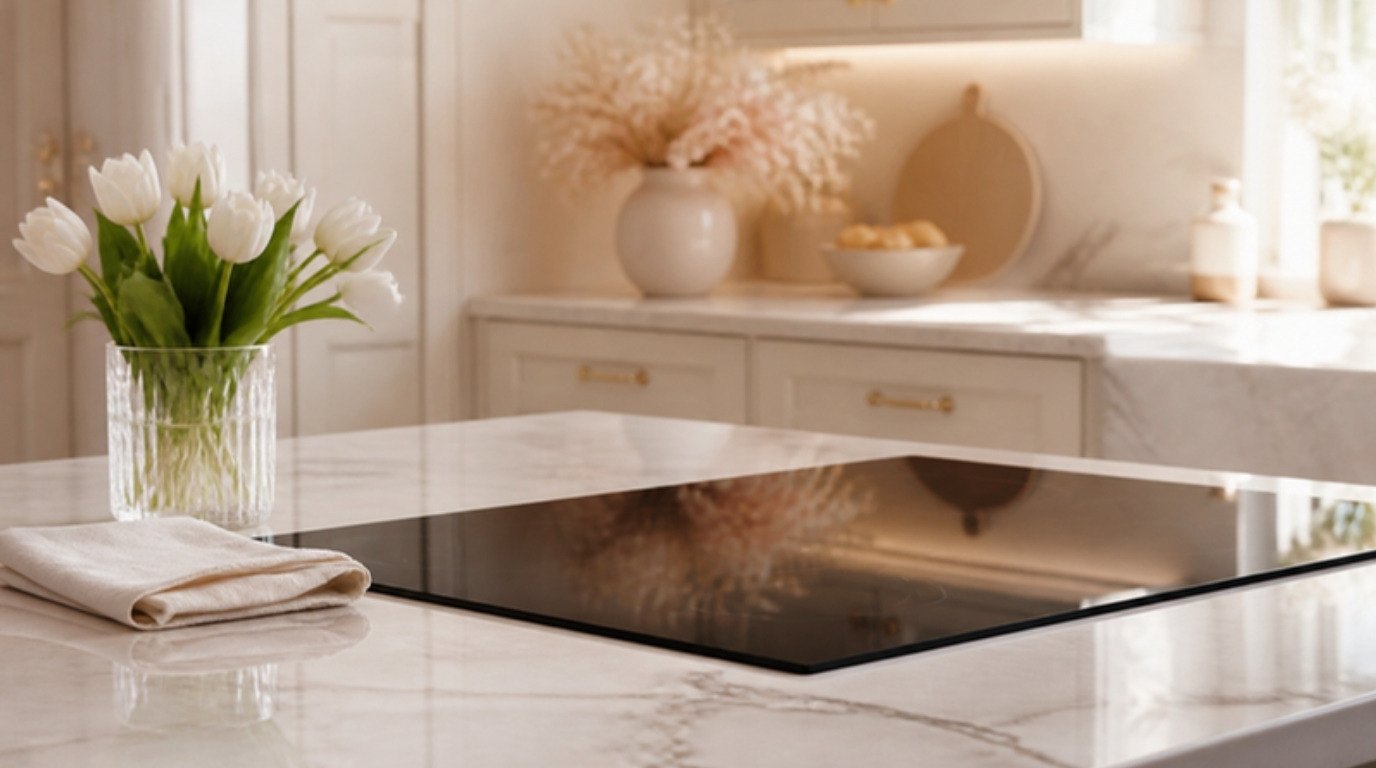
A glass stove top looks its best with less scrubbing, not more. Most of the scratches, swirls and cloudy patches people try to fix were actually caused by cleaning: a green scouring pad, a spray that wasn't meant for glass, or a pot dragged across a gritty surface. The gentle method is faster, and it keeps that dark, glossy finish looking new for years.
The whole routine comes down to three levels: a quick daily wipe, a weekly polish with cooktop cream, and a careful scraper method for the burnt-on spills that refuse to budge. Once you know which level a mess needs, you'll stop reaching for the harsh stuff.
This guide on how to clean a glass stove top walks through each step with exact times, how to use a razor scraper safely, what to avoid, extra notes for induction, and a daily, weekly and burnt-on routine table you can screenshot and stick inside a cabinet door.
Before You Start: Let It Cool Completely
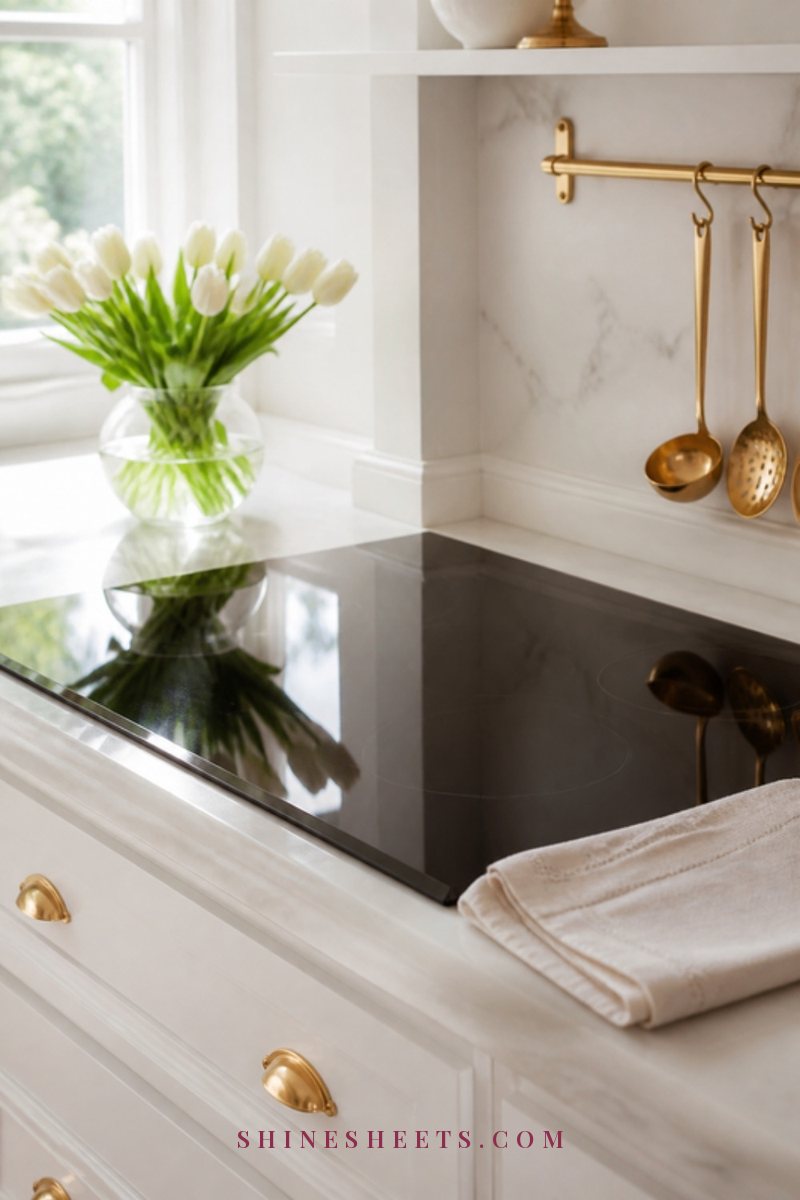
This is the one rule that protects both you and the glass. Turn every element off and wait until the surface is completely cool to the touch, usually 20 to 30 minutes after cooking. Many cooktops have a "hot surface" indicator light that stays on after the elements turn off; wait until it goes out.
Cleaning a hot cooktop can burn your hands, make cleaner bake onto the glass in streaks, and, with some products, release stronger fumes. Cool glass also lets you see exactly where the residue is, so you don't end up scrubbing clean areas by accident.
One quick extra: always check your stove's manual (most are online if you've lost the paper copy). Manufacturers sometimes have specific instructions for their glass, and following them keeps your warranty happy too.
What You'll Need
You don't need a cupboard full of products. A small, dedicated kit covers almost everything:
- A cream cleaner made for glass cooktops. A glass cooktop cleaner cream is designed to lift residue without scratching and often leaves a light protective layer behind.
- Soft microfiber cloths. At least three: one damp for wiping, one for buffing, one spare. A pack of white microfiber cleaning cloths makes it easy to keep a few just for the stove.
- Non-scratch scrub pads. Look for non-scratch scrub pads labeled safe for glass or ceramic cooktops.
- A cooktop razor scraper. A cooktop razor scraper with a holder and replaceable single-edge blades is the safest tool for stubborn burnt-on spots.
- Warm water and a drop of mild dish soap for everyday grease.
A few safety basics before you begin: wear rubber gloves if your skin is sensitive or the cleaner's label suggests it, keep a window cracked or the extractor fan on, and test any new product on a small corner of the glass first. Read the label on every product and never combine different cleaners on the cooktop at the same time. If something isn't working, wipe it away completely before trying the next step.
Keep the cloths and pads separate from your regular kitchen sponges. If you'd like a refresher on keeping those clean too, my guide to kitchen sponge hygiene covers how often to wash and replace them.
The Daily Wipe (2 Minutes)
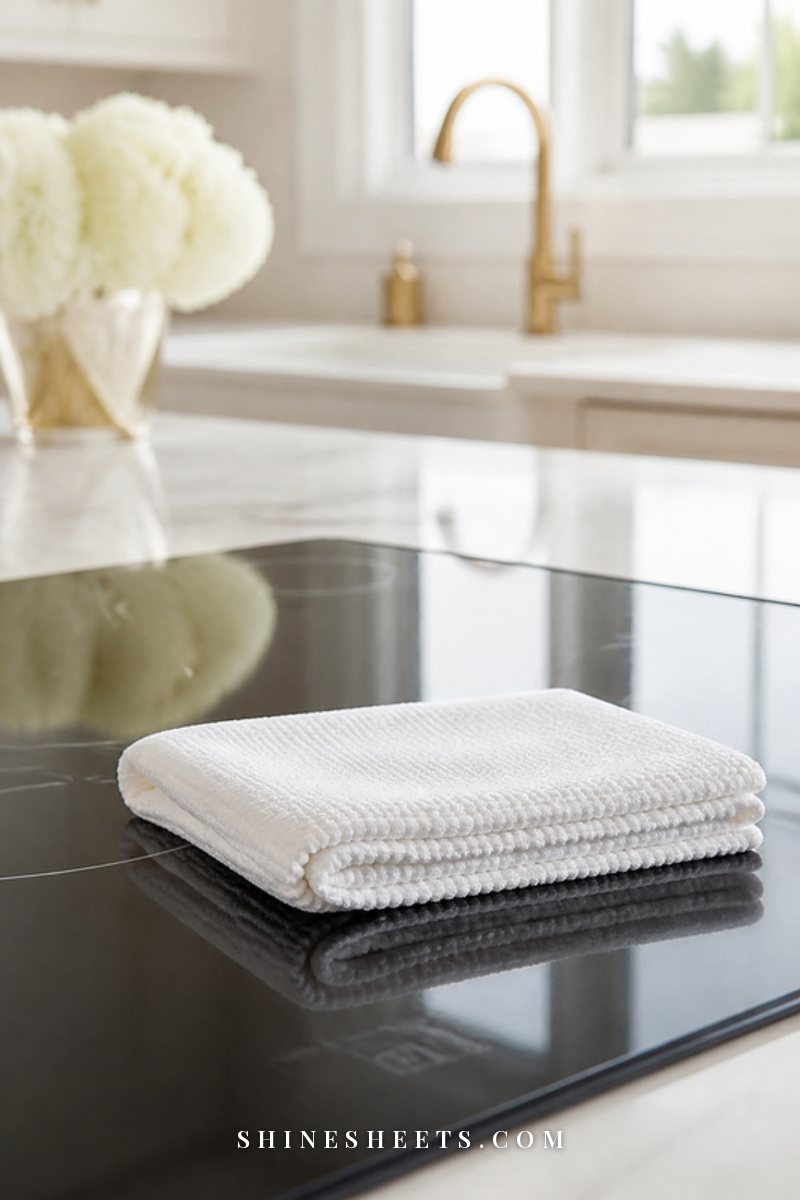
This tiny habit does most of the work. When you wipe the glass every time you cook, spills never get the chance to bake on.
- Once the cooktop is fully cool, dampen a microfiber cloth with warm water and a single drop of dish soap.
- Wipe the whole surface in straight lines, not circles, to lift crumbs and light grease.
- Rinse the cloth in plain water, wring it well and wipe again to remove any soap.
- Dry and buff with a second, dry microfiber cloth.
Wash the cloths after each use, or at least every couple of days, on a warm cycle without fabric softener. Softener coats microfiber and leaves streaks behind, which is the opposite of what you want on glass.
That's it. Two minutes, no special products. Doing this most evenings means your weekly clean takes five minutes instead of twenty.
The Weekly Deep Clean With Cooktop Cream
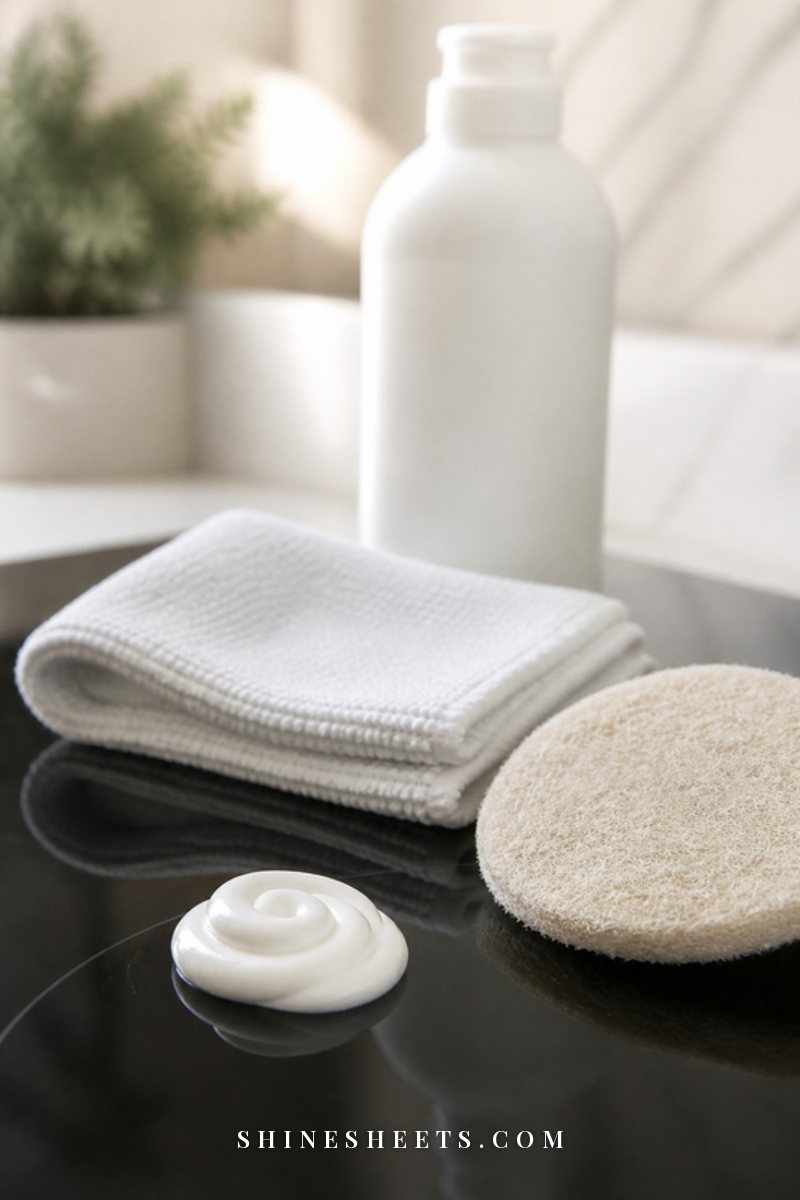
Once a week (or whenever the glass looks hazy), give it a proper polish:
- Wipe off loose debris. Use a damp cloth to remove crumbs and grit first. Grit is what causes most scratches, so never skip this.
- Shake and apply the cream. Shake the bottle well and squeeze a few small dots (roughly a teaspoon in total) onto each dirty area.
- Work it in gently. Use a non-scratch pad or folded paper towel and rub in small circles with light pressure for 30 to 60 seconds per area.
- Let it sit on stubborn spots. For light stains or rings, leave the cream on for 3 to 5 minutes, or as the label recommends, then rub again.
- Wipe away the residue. Use a clean, damp microfiber cloth to remove all the cream. You may need to rinse the cloth two or three times.
- Buff dry. Finish with a dry microfiber cloth in straight lines until the surface is clear and glossy.
Always follow the label on your specific cleaner, since dwell times and directions vary slightly between brands.
How To Remove Burnt-On Spills
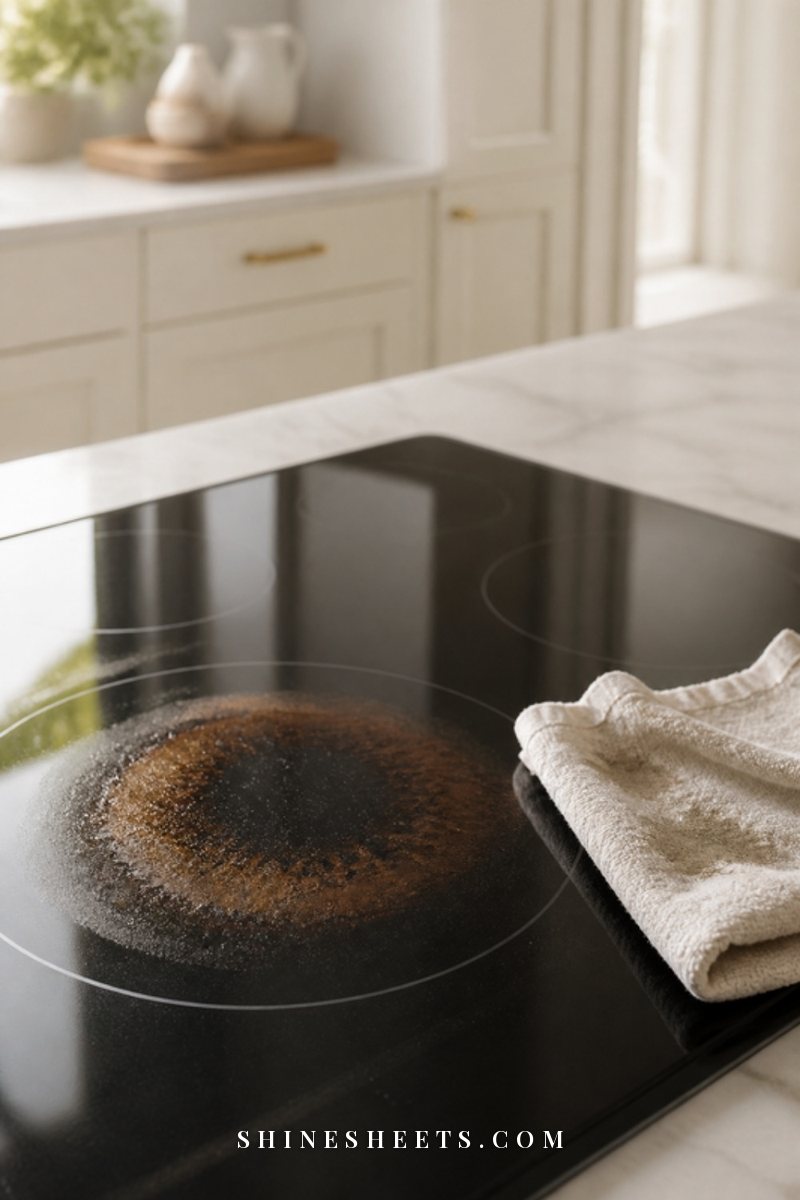
Boil-overs, sauce splatters and that one pot that bubbled while you were looking away: burnt-on spills need a little more patience, but they still don't need force.
Soften First
Start with the cooled glass. Apply a layer of cooktop cream over the burnt area, then lay a warm, damp microfiber cloth or paper towel on top. Leave it for 15 to 30 minutes. The moisture and cream soften the residue so it lifts more easily.
Remove the cloth and rub the area with a non-scratch pad. Many spills come away at this stage. If a thin, hard layer is still left, move to the scraper.
Use a Razor Scraper the Right Way
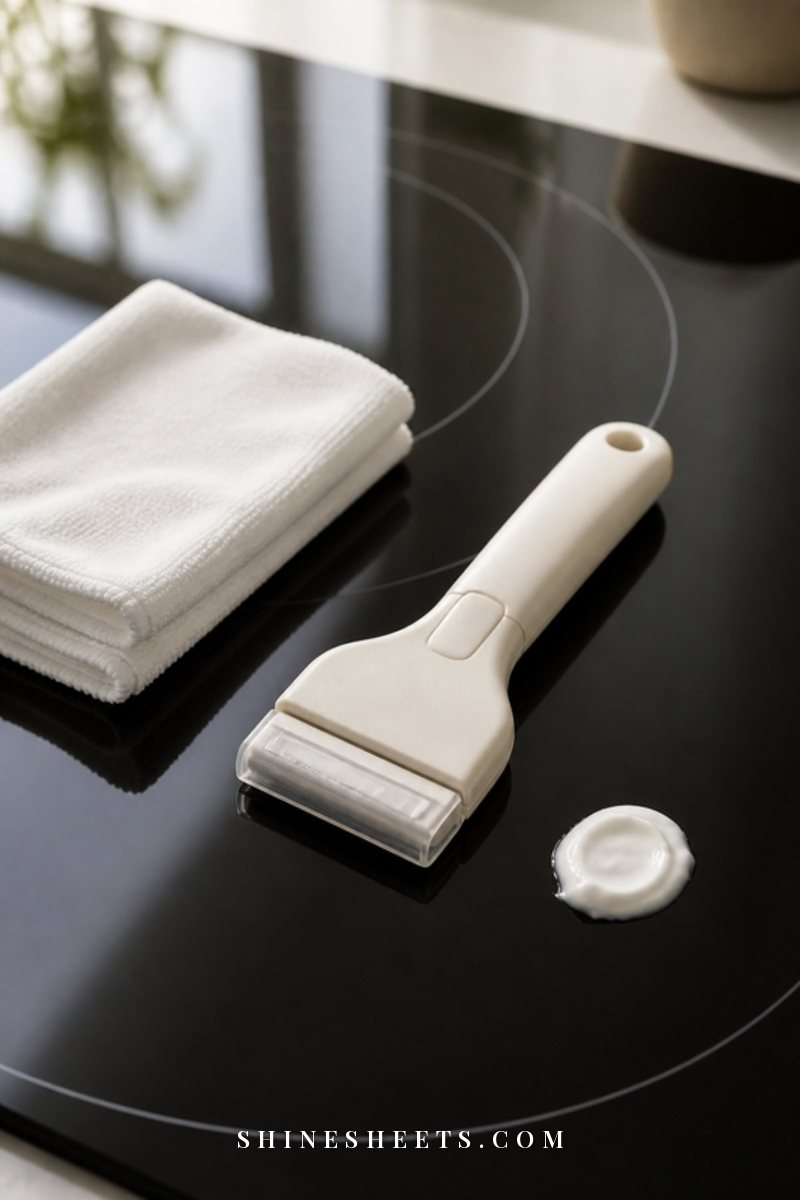
Used properly, a razor scraper is safe on most glass and ceramic cooktops, and many manufacturers recommend it. Used carelessly, it can scratch. Always check your manual first, then:
- Make sure the surface is completely cool. Never use a scraper on a hot or warm cooktop.
- Use a fresh, sharp blade. A nicked or dull blade is far more likely to scratch.
- Keep the area moist. Leave a thin layer of cooktop cream on the spot so the blade glides.
- Hold the scraper at about a 45-degree angle, or the angle your manufacturer recommends, never upright.
- Push gently in short strokes away from you, lifting the residue rather than digging into it.
- Wipe, check and repeat until the spot is gone, then finish with cream and a buff.
Store the scraper with its blade retracted or covered, well away from little hands, and replace the blade as soon as it feels less sharp.
Sugary Spills Are the Exception
Jam, syrup, sugary sauces and melted plastic can bond to glass as they cool and may leave tiny pits. Many manuals say to turn the element off and deal with these quickly, using an oven mitt and a scraper, rather than waiting for the cooktop to cool. Because this involves a hot surface, check your manual's exact instructions first and only do it if your manufacturer specifically recommends it. If you're not sure, move the pan away, switch off the element and contact the manufacturer's support line for advice.
What To Avoid on a Glass Stove Top
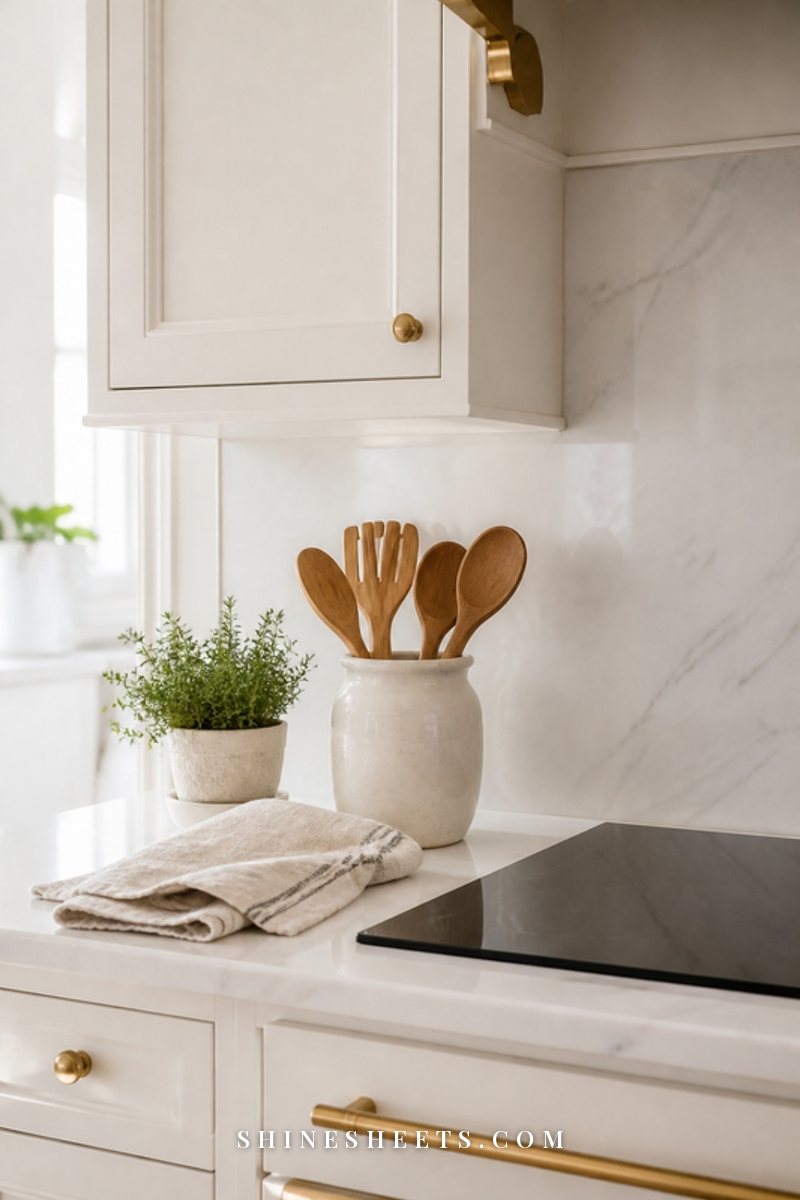
Most damage comes from a few common habits. Skip these and your glass will thank you:
- Abrasive pads and steel wool. Green scouring pads, steel wool and metal scrubbers leave fine scratches that dull the finish over time.
- Ammonia-based glass sprays. Many window cleaners contain ammonia, which can leave streaks and may stain or damage some cooktop surfaces if it gets heated.
- Bleach and harsh mixtures. Never mix bleach with vinegar or ammonia. It creates dangerous fumes. Stick to products made for cooktops and follow their labels.
- Powdered cleansers. Scouring powders are too gritty for glass.
- Dragging heavy pans. Cast iron and stoneware can scratch when slid across the glass. Lift, don't drag.
- Dirty pot bottoms. Residue on the base of a pan burns onto the glass every time you cook. Wipe pan bottoms clean.
- Using it as counter space. Heavy items, a forgotten plastic bag or a cutting board can scratch or melt if a burner is warm.
- Cleaning while hot. Apart from any manufacturer's sugary-spill instructions, always wait until it's cool.
Notes for Induction Cooktops
Induction cooktops have a glass-ceramic surface too, so the same gentle cleaning steps work. There are just a few differences worth knowing:
- The glass stays cooler. Induction heats the pan, not the glass, so spills burn on less often. The glass still gets hot from the pan, though, so wait for it to cool before cleaning.
- Turn on the lock. Many induction hobs have a "lock" or "wipe" mode so you don't accidentally switch on a zone when wiping the touch controls.
- Be gentle with the controls. Wipe touch areas with a damp, well-wrung cloth rather than spraying liquid directly onto them.
- Watch for magnetic-pan marks. Rough or dirty cast-iron bases can leave gray rings. Cooktop cream usually removes them.
Getting a Streak-Free Finish
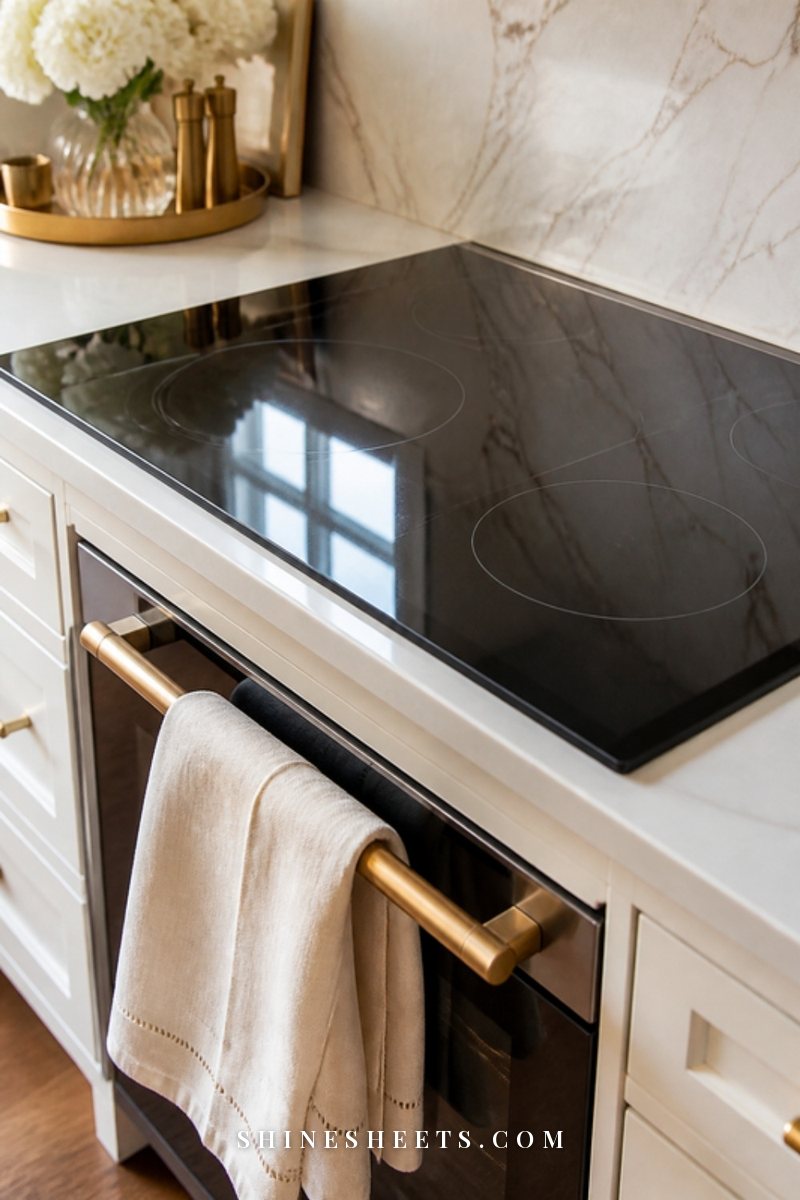
If your cooktop is clean but still looks cloudy or streaky, it's almost always leftover product or soap. Try this finishing routine:
- Rinse a microfiber cloth in plain warm water and wring it until just damp.
- Wipe the whole surface in straight, overlapping lines from back to front.
- Repeat with a freshly rinsed cloth if you still see residue.
- Buff with a completely dry microfiber cloth, again in straight lines.
Look at the glass from a low angle with light coming across it. That's where streaks show up. A last buff in those spots usually does it. If you live in an area with hard water, use filtered or distilled water for this final wipe to avoid mineral spots.
Tricky Marks: Rings, Metal Streaks and Water Spots
Not every mark on a glass cooktop is food. Some of the most stubborn-looking stains come off easily once you know what they are.
Mineral Rings and Hard Water Spots
White, chalky rings usually come from pots boiling over with starchy or hard water. They often look like scratches but sit on top of the glass. Apply cooktop cream, let it sit for 5 minutes, then rub with a non-scratch pad. Repeat once or twice if needed. Drying the bottoms of pots before you set them down prevents most new rings.
Metal Marks From Pans
Silvery or gray streaks are often tiny bits of metal rubbed off aluminum or copper pan bases, especially when pans are slid across the glass. They look alarming, but cooktop cream usually lifts them in one or two rounds of gentle rubbing. Lifting pans instead of sliding them stops them from coming back.
Melted Plastic or Foil
If a plastic bag, wrapper or piece of foil touches a hot burner, turn the element off right away and open a window. Melted plastic and foil can bond to the glass and may damage it. Check your manual for the manufacturer's exact removal advice before you try anything, since methods differ, and contact their support line if you're unsure. Never try to pry it off with a knife or metal tool.
Edges, Trim and Controls
Grease loves to hide along the metal trim and the gap where the glass meets the counter. Once a month, run a damp microfiber cloth wrapped around a finger along every edge, then dry it. For knobs or touch controls, use a barely damp cloth so no water seeps underneath. If your knobs pull off, you can wash them in warm, soapy water, dry them completely and press them back on.
Daily, Weekly and Burnt-On Routine
Here's the whole system on one page. Screenshot it and you'll never have to guess which level of cleaning a mess needs:
| When | What to use | Steps | Time |
|---|---|---|---|
| Daily (after cooking, once cool) | Microfiber cloth, warm water, a drop of dish soap | Wipe in straight lines, rinse-wipe, buff dry | 2 minutes |
| Weekly | Cooktop cream, non-scratch pad, 2–3 microfiber cloths | Remove grit, apply cream, rub 30–60 seconds, let sit 3–5 minutes on stains, wipe off, buff | 5–10 minutes |
| Burnt-on spills | Cream, warm damp cloth, scraper with a fresh blade | Cream plus damp cloth for 15–30 minutes, pad, then scraper at about 45 degrees on cool glass, cream again, buff | 20–40 minutes |
| Sugary spills | Oven mitt, scraper, manual's instructions | Follow your manufacturer's specific advice | As directed |
| Monthly | Cooktop cream | Full polish including edges and controls | 10 minutes |
If you're giving the whole kitchen some love at the same time, my kitchen deep-cleaning guide shows the best order to tackle everything, and my guide on how to clean your oven pairs perfectly with a stovetop reset.
How To Keep It Clean Longer
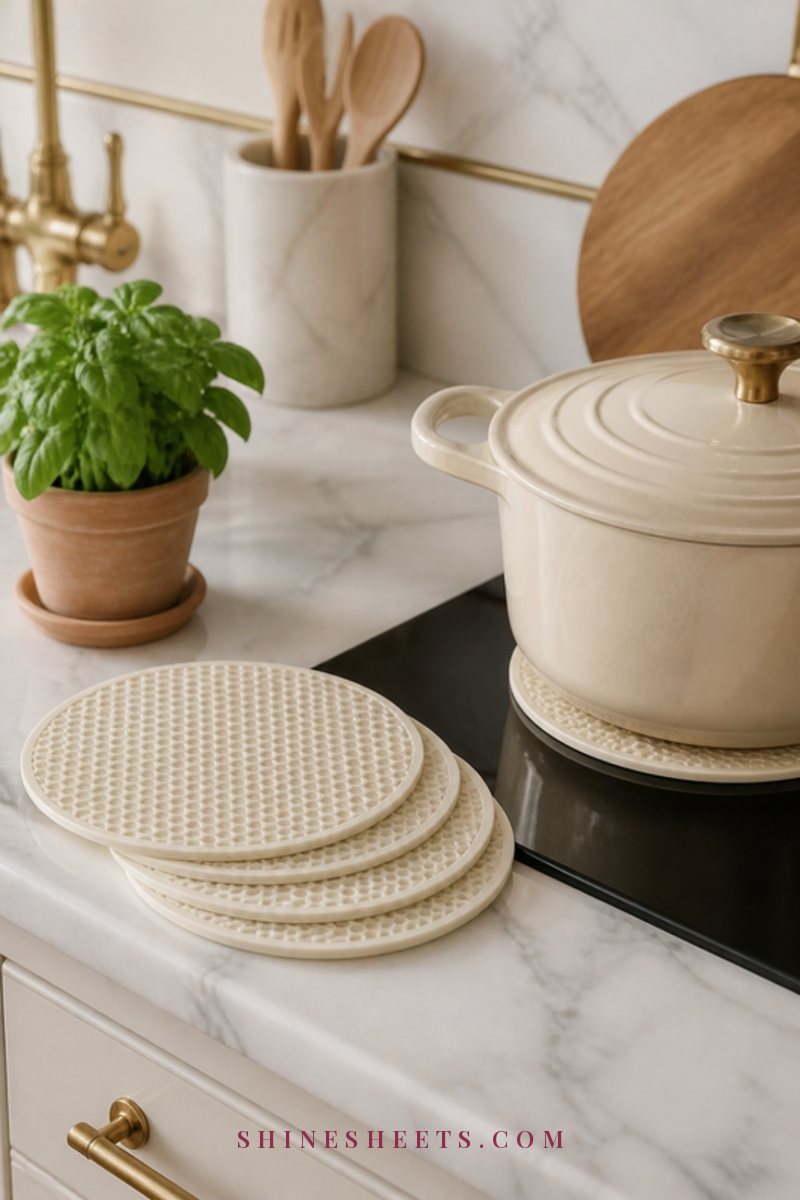
A few small habits make every clean easier:
- Wipe pan bottoms before you put them on the glass.
- Match pan size to the burner so food doesn't drip onto hot glass outside the pan.
- Use lids for anything that splatters, like sauces and frying.
- Lower the heat a little for pasta and soups to avoid boil-overs.
- Keep hot pans off the glass when you're done. Move them onto silicone trivets on the counter instead.
- Do the two-minute wipe nightly as part of closing down the kitchen.
It also helps to fold the cooktop into a short, regular kitchen reset. On the evening you do the weekly polish, wipe down a small appliance or two while the cream sits. If yours gets heavy use, my guide on how to clean an air fryer fits neatly into that same 15-minute window.
The stovetop often looks cleaner when the surfaces around it do too. My guide to cleaning kitchen cabinets tackles the greasy fronts that sit right next to it.
Glass Stove Top FAQs
Can you use dish soap on a glass stove top?
Yes, a drop of mild dish soap in warm water is great for daily cleaning. Just rinse-wipe afterward so it doesn't leave a film.
Why does my glass stove top look cloudy after cleaning?
Usually it's leftover cleaner or soap. A rinse-wipe with plain water and a dry buff almost always fixes it. If the cloudiness doesn't wipe away, it may be etching from old spills, which can be permanent.
Can scratches be removed?
Very light surface marks sometimes fade with regular cooktop cream polishing. Deep scratches are permanent, which is why prevention matters so much. Cracks or chips are a safety issue: stop using the cooktop and contact the manufacturer or a technician.
Is it safe to use a magic eraser on a glass cooktop?
Melamine sponges are mildly abrasive, so many manufacturers don't recommend them for glass. A non-scratch pad and cooktop cream are the safer choice. If you're tempted, check your manual and test on a small corner first.
How often should you use cooktop cream?
Once a week for most kitchens, or whenever the glass looks hazy. Daily use isn't necessary.
Final Thoughts
A gleaming glass stove top isn't about hard scrubbing. It's about cooling first, wiping often, using the right cream and treating the scraper with care. Once those habits click, the whole kitchen feels calmer every time you walk in.
Start with tonight's two-minute wipe. Your future self, standing in front of a glossy, scratch-free cooktop, will be very glad you did.