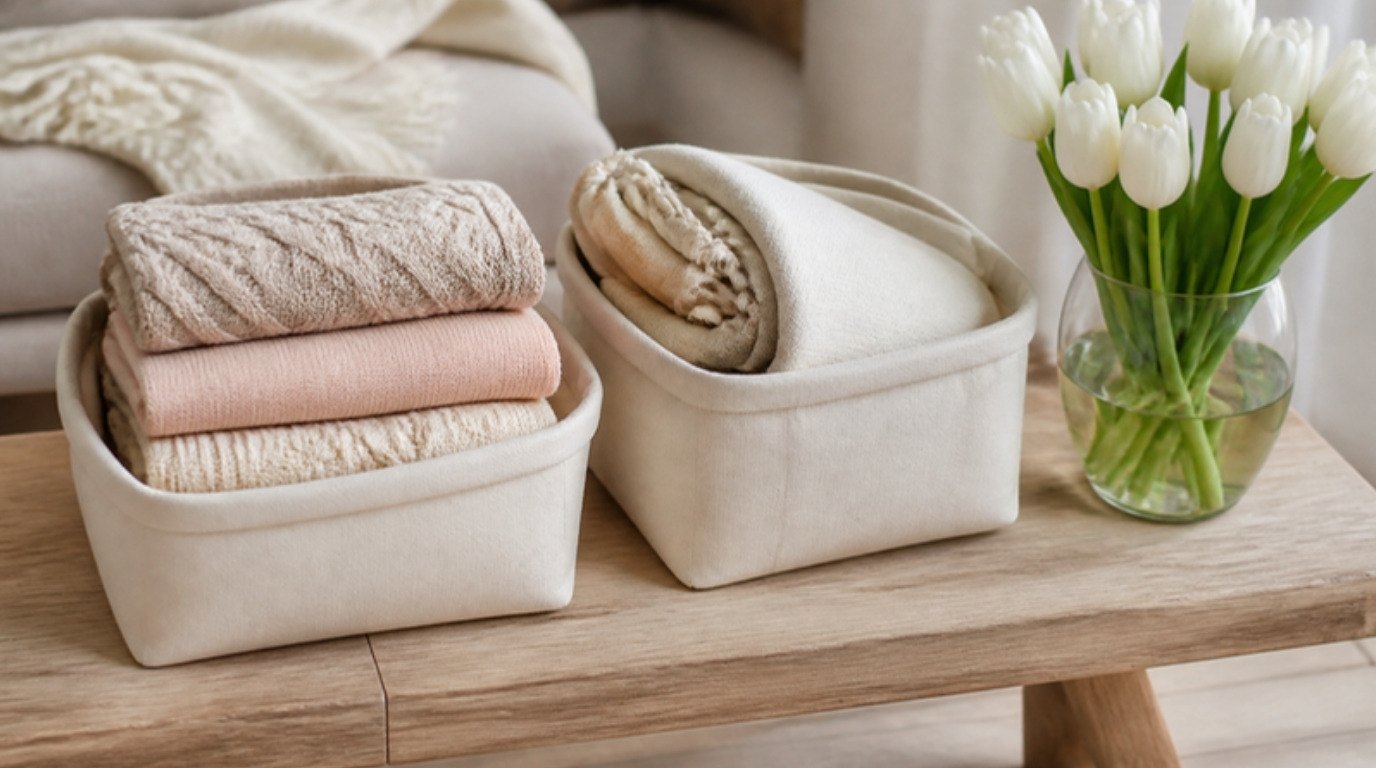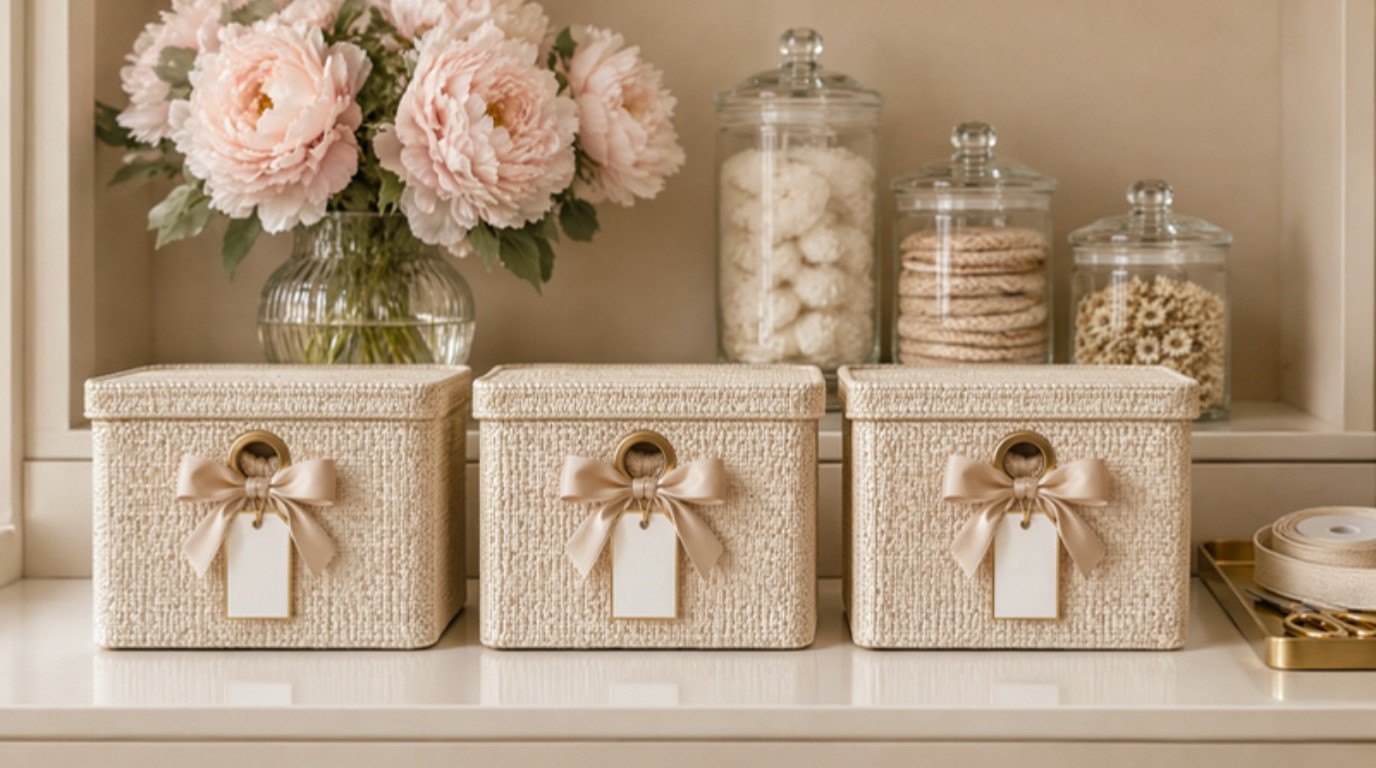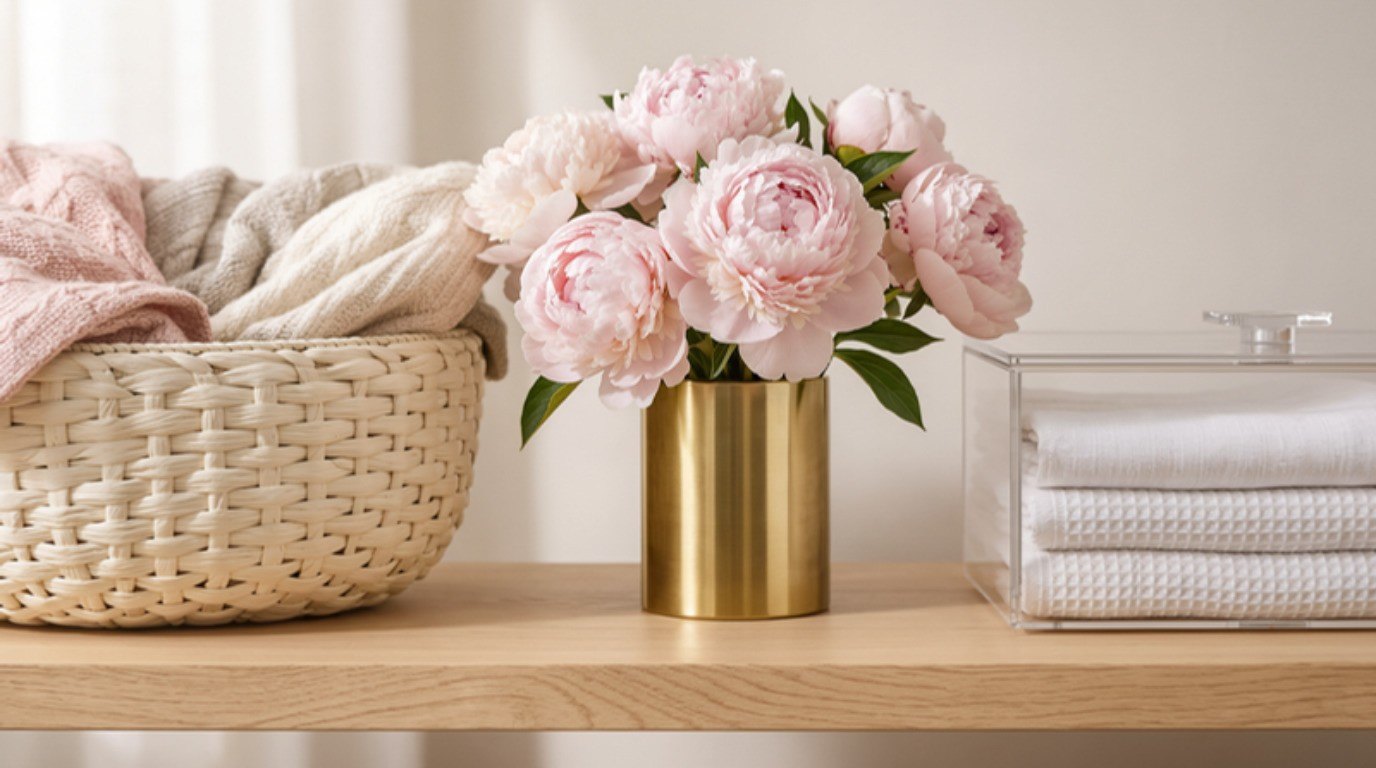
Bins and baskets look like they do the same job, but they behave very differently once you start living with them. A basket is open, soft and easy to reach into. A bin is closed, sturdy and better at keeping things clean and stacked. Pick the wrong one for a spot and you get the classic problem: a pretty basket that turns into a dust-catching jumble, or a sensible bin you never open because the lid is a hassle.
The good news is that choosing between them is not a matter of taste alone. Once you know what each one is good at, the right choice for every shelf, closet and cabinet becomes almost obvious. And you don't need a big budget or a new home to get there. Everything here works in a rental and in small spaces.
This guide covers bins vs baskets in plain terms: the four real differences, one simple rule, an honest look at materials, a room-by-room plan for seven rooms, a table you can screenshot, plus sizing, labeling and color tips. I'll also tell you when not to buy any container at all, because that part saves the most money.
The Real Difference Between Bins and Baskets
People use the words loosely, so here is how I think about them. A basket is usually open at the top, often woven or soft, and a little forgiving in shape. A bin is usually rigid, often lidded, and made to be stacked, wiped or sealed. There are hybrids (lidded baskets, soft bins), but these four differences decide almost every choice.
Closed vs Open
Open containers are faster. You toss something in, you grab something out, no lid in the way. That's exactly why open baskets work for things you use daily. Closed containers protect what's inside from dust, pets, light and curious hands, which is why they suit anything you store for weeks or months.
A tiny honest truth: if a lid stands between you and an everyday item, you will eventually stop putting that item away. Keep lids for things you don't touch often.
Rigid vs Soft
Rigid bins hold their shape, stack safely and keep corners crisp on a shelf. Soft containers (fabric, felt, some woven styles) flex to fit odd spaces, fold flat when empty and feel gentler in a living space. The trade-off: soft sides sag when overfilled and can't carry weight on top.
See-Through vs Hidden
Clear bins let you see what you own at a glance, which is wonderful in a pantry, a deep cabinet or a storage closet. Opaque baskets hide visual clutter, which is wonderful on open shelves where you want the room to look calm. Ask yourself one thing: do I need to find things here, or do I need this spot to look peaceful?
Wipeable vs Breathable
Plastic and coated wire wipe clean in seconds, so they belong anywhere with spills, drips or steam. Natural fibers and fabric breathe, so they suit linens, blankets and clothes that shouldn't sit sealed in plastic for long. Damp areas and natural fibers are not friends, though, and that comes up again in the bathroom section.
The Simple Rule: Grab Daily or Store Away
If you only remember one thing from this guide, make it this:
Baskets for things you grab daily and want to look soft. Bins for things you store, stack or need to keep dust and spills out.
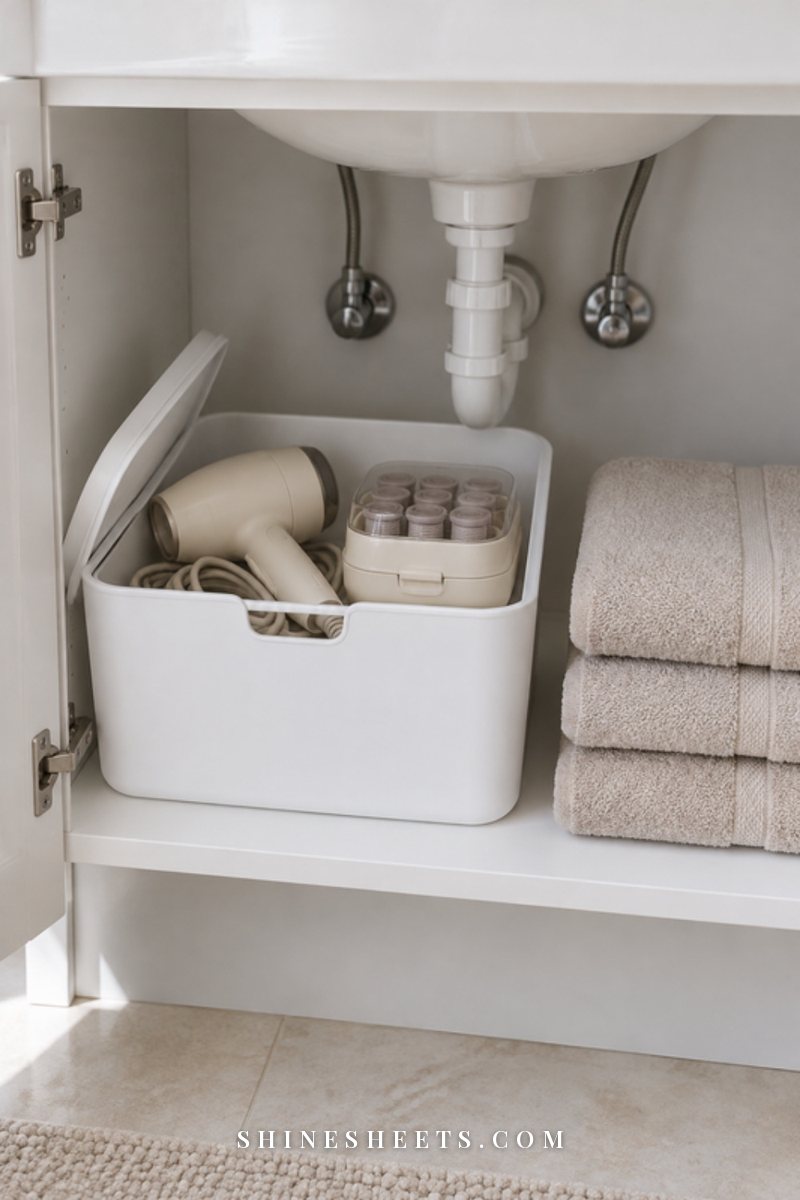
That's it. Throw blankets you reach for every evening go in a basket. Spare bedding for guests twice a year goes in a lidded bin. Hair tools you use every morning go in an open basket under the sink. Backup toiletries go in a clear bin behind them.
When you're standing in the store unsure, run the item through three quick questions:
- How often will I open this? Daily or weekly points to a basket. Monthly or less points to a bin.
- Will it be seen? On display, a basket usually looks warmer. Behind a door, a bin is usually more practical.
- Is there moisture, dust or mess nearby? If yes, choose something wipeable and, ideally, closed.
Two out of three answers usually settle it.
Storage Materials Compared: Honest Pros and Cons
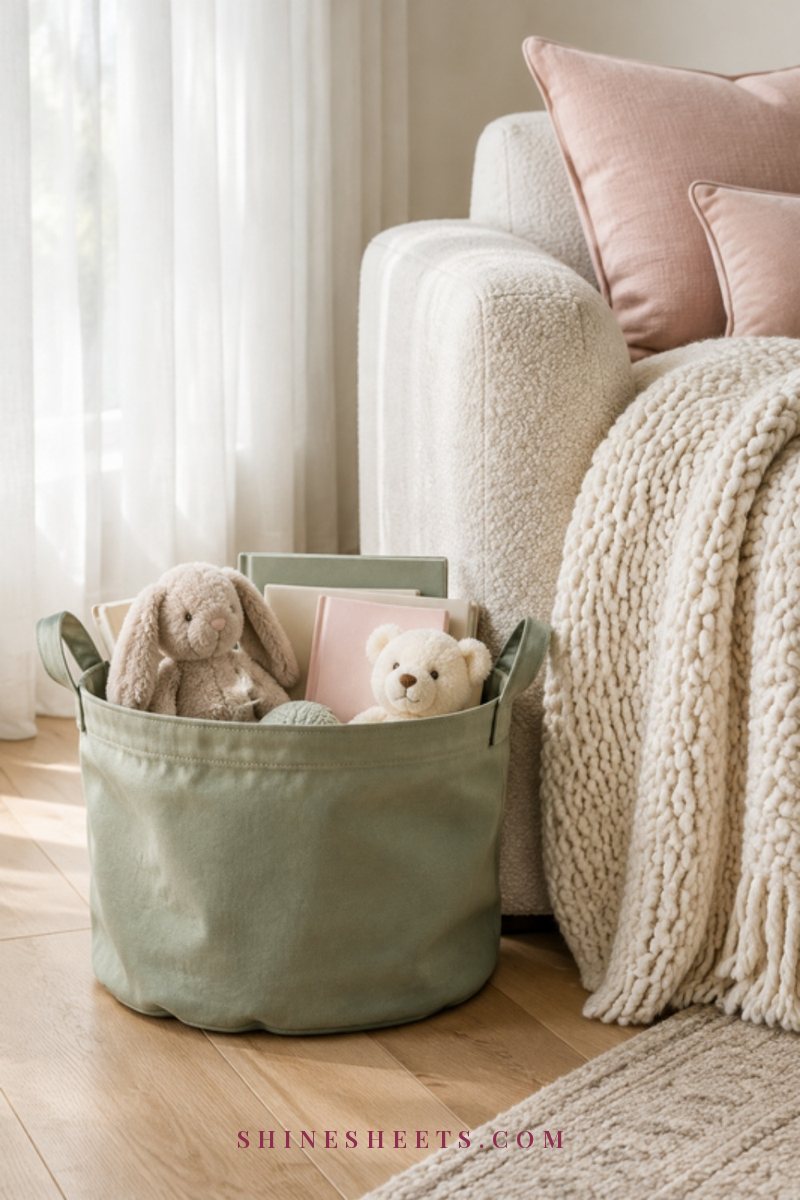
Material matters as much as shape. Here's how the common ones really behave once they're in your home.
Clear Plastic
Good at: visibility, stacking, wiping, keeping out dust and pests. Less good at: looking warm, and cheaper versions can crack or yellow over time.
Clear plastic is the workhorse for pantries, closets, under-sink cabinets and storage shelves. Look for thick walls, lids that click on firmly and corners that nest when stacked. A set of clear stackable bins with lids in two sizes covers most needs, and staying with one product line means everything stacks together.
Fabric and Linen
Good at: softness, folding flat, fitting cube shelving, looking calm. Less good at: heavy items, damp spaces, and they collect dust on the outside.
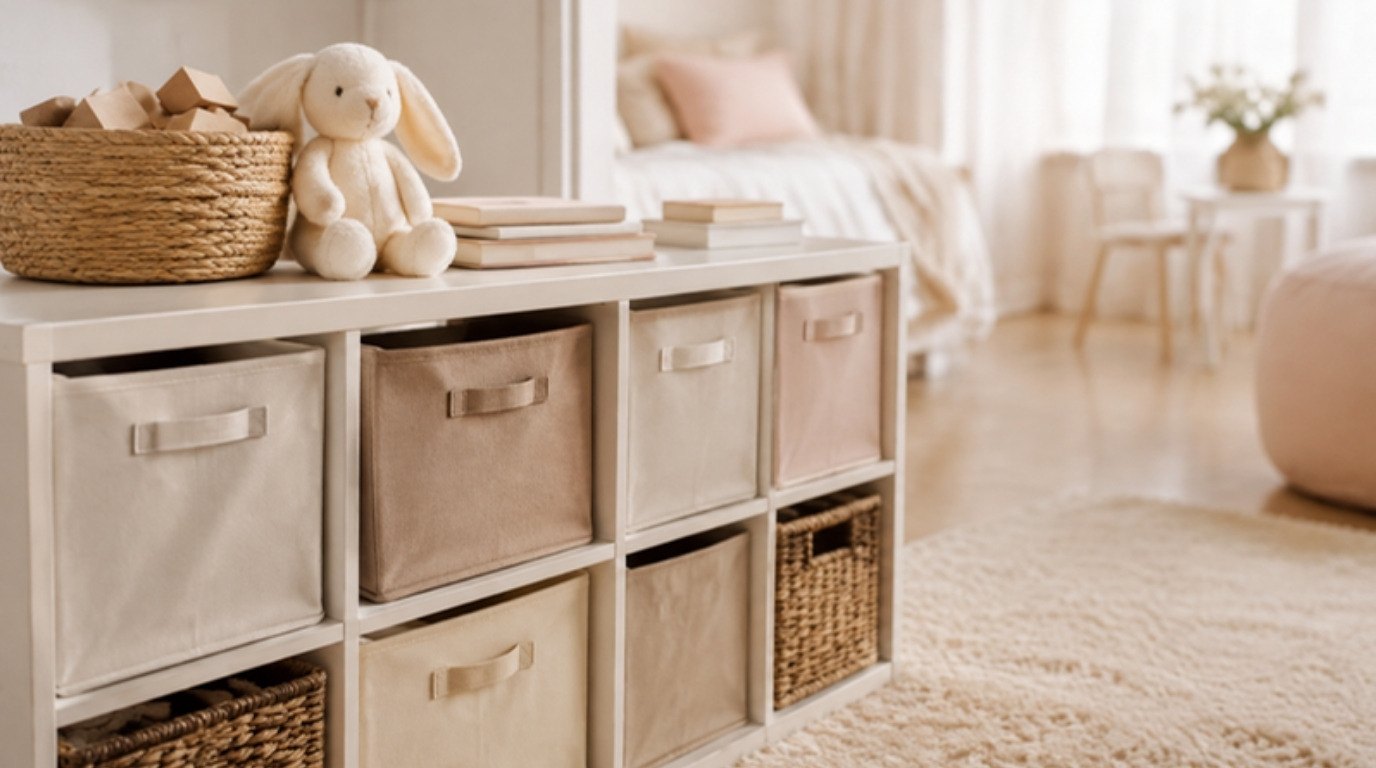
Fabric cubes are made for those square cube shelves so many of us have in living rooms and kids' rooms. A set of beige linen fabric storage cubes with sturdy handles and a firm base insert keeps its shape far better than a floppy one. Check the inside dimensions against your shelf before you buy.
Woven Seagrass, Rattan and Water Hyacinth
Good at: warmth, texture, making open storage look intentional. Less good at: small items (they slip through or get lost), moisture, and they can snag delicate knits.
Woven baskets are the reason open shelves look styled instead of stuffed. For textiles and bigger items, cream woven seagrass baskets with handles are a lovely pick. If you want to store something delicate in one, add a simple fabric liner so nothing catches on the weave.
Wire
Good at: airflow, visibility, durability, a clean modern look. Less good at: small items that fall through the gaps, and bare metal can scratch shelves.
Wire is great for pantry zones, cleaning supplies, rolled towels and anything that should breathe. White wire baskets with a coated finish look crisp and won't rust as quickly. Add felt dots to the bottom corners so they don't mark your shelves.
Felt
Good at: lightness, softness, quiet (no clatter), gentle on surfaces. Less good at: holding shape when overfilled, and lint or pet hair sticks to it.
Felt is underrated for nightstands, desk shelves and kids' toys. Sage felt storage bins bring a soft pop of color without looking busy. They are best for lighter things like chargers, notebooks, scarves or small toys.
Bins vs Baskets Room by Room: 7 Rooms
Here's how the rule plays out in each part of the home. Start with the room that bothers you most, not the one that seems easiest.
1. Entryway
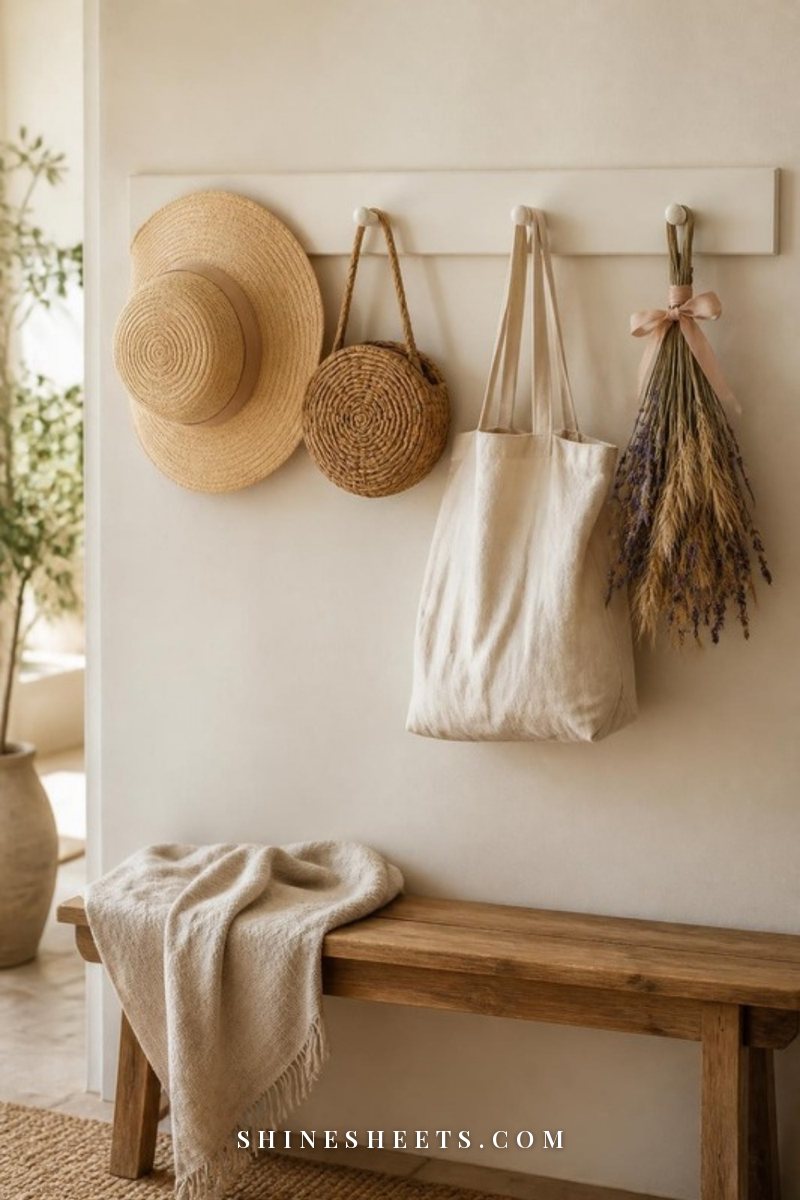
Choose: baskets. The entryway is all about speed. Hats, gloves, dog leashes, sunglasses and tote bags need a place you can drop them in two seconds on the way in. Open baskets on a shelf or under a bench do this beautifully.
Give each person one basket, and keep one extra for "things that need to leave the house" (returns, borrowed items, library books). Keep the baskets shallow enough that nothing gets buried at the bottom. For a full drop-zone setup, my guide to entryway ideas that stay tidy walks you through hooks, trays and shoe spots.
2. Living Room
Choose: baskets for display, lidded bins for hidden storage. A big woven basket by the sofa for throws, a small one on the coffee table shelf for remotes and coasters, and fabric cubes in your shelving for the bits you don't want on show.
If your living room is also a play space or a work corner, a lidded basket or closed fabric cube is the best of both worlds: soft to look at, but it hides the chaos when the lid is on. Aim for no more than three or four visible containers per wall, or the room starts to feel like a store display.
3. Bedroom
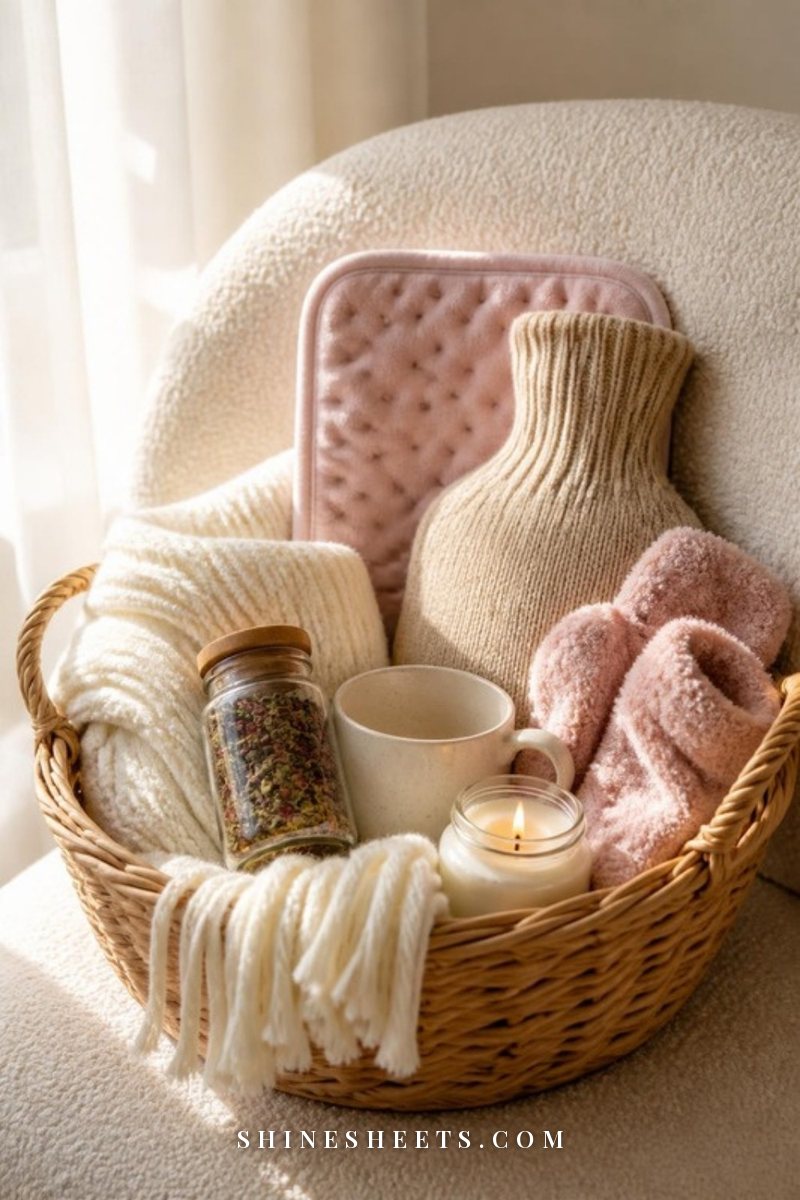
Choose: baskets for the open zones, bins inside furniture. A basket at the foot of the bed for extra blankets, a small felt bin on the nightstand shelf for chargers, lip balm and a book. Inside dresser drawers or on closet shelves, rigid bins keep things from sliding into a heap.
The bedroom should feel restful, so this is the room where soft materials and a calm palette matter most. If space is tight, my list of small bedroom ideas has more ways to make it feel open.
4. Closet
Choose: bins for shelves up high, baskets at eye level. Off-season sweaters, swimwear in winter, spare bags and memory items belong in lidded bins on the top shelf, where dust collects. At eye level and below, open baskets hold the things you rotate weekly: belts, scarves, workout clothes, socks.
A tip that saves your back: put the heaviest bins at waist height or below, never above your head. And if you store knitwear, choose breathable fabric bins or line a basket, rather than sealing wool in plastic for many months.
5. Bathroom
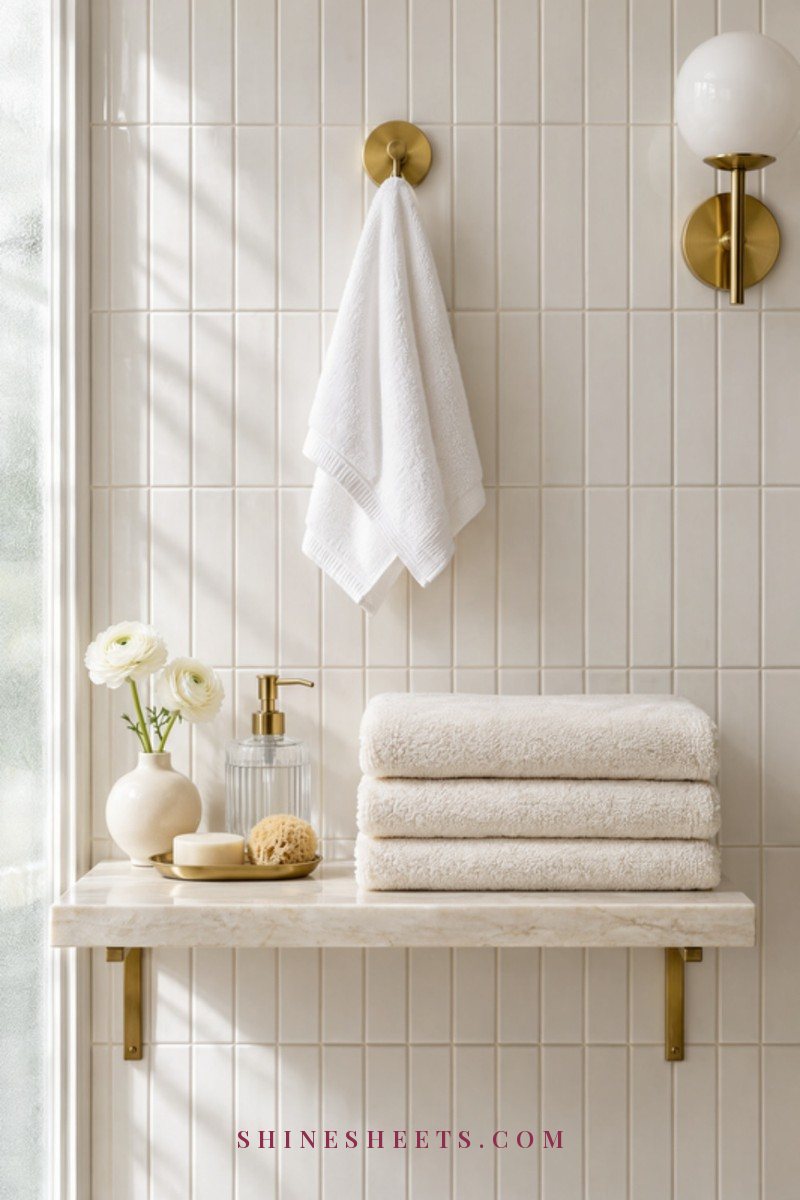
Choose: bins (mostly). Bathrooms have steam, splashes and drips, so wipeable plastic and coated wire win. Clear bins under the sink or in a cabinet for backups, first-aid basics and hair tools; a small lidded bin for cotton pads and swabs on an open shelf.
Woven baskets can work in a bathroom with good ventilation for rolled towels or toilet paper, but keep them away from the shower and tub, and let the room air out after each shower. If you ever see dark spots on a woven basket, that's mildew, and it's time to replace it. For the cabinet itself, my guide to under-sink organization shows how to work around the pipes.
6. Kitchen and Pantry
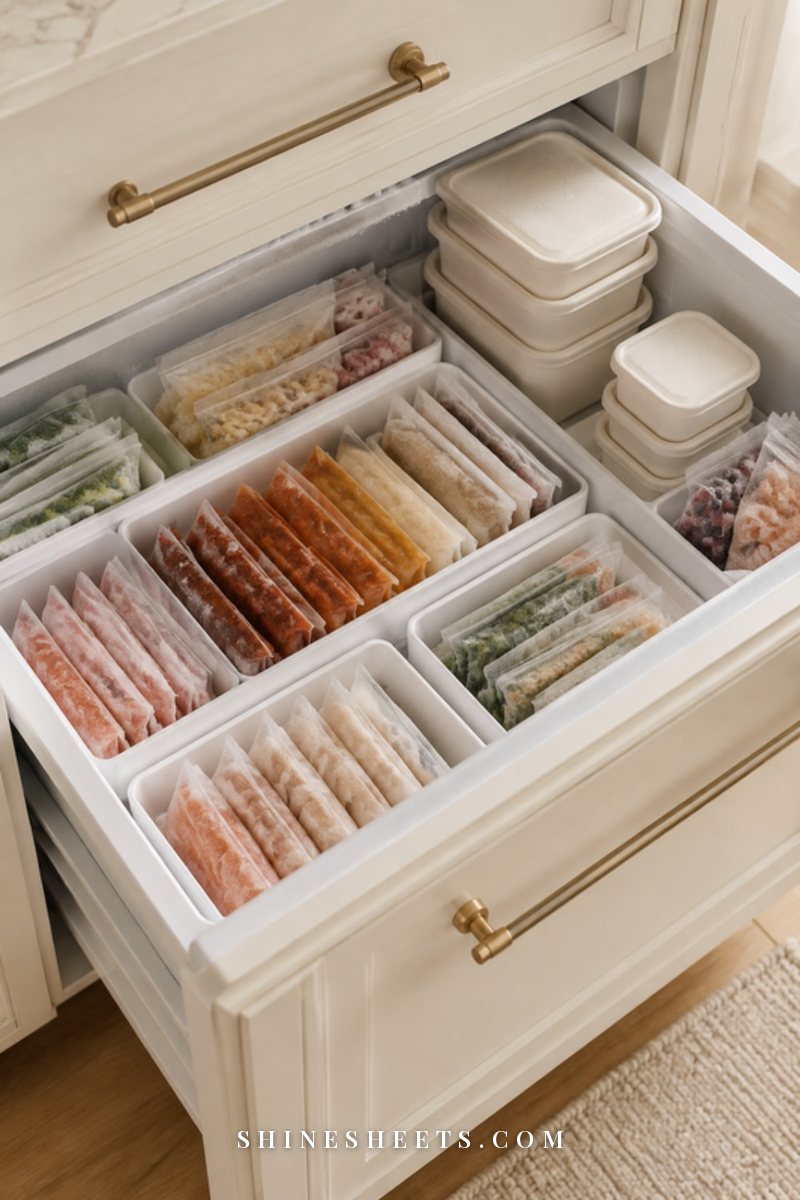
Choose: clear bins. In the kitchen you need to see what you have (so you don't buy a third bag of something), and you need everything to wipe clean. Clear bins group items by type: breakfast, baking, snacks, tea and coffee, cleaning supplies. Wire baskets work well for things that need air, like tea towels or spare sponges.
Save woven baskets for the very top of open shelving, holding light, rarely used things like spare napkins or a picnic blanket. For more layout ideas, my roundup of kitchen organization ideas for small kitchens pairs well with this section.
7. Under the Bed
Choose: lidded bins or zippered bags. Under the bed is dusty by nature, so open baskets are a no here. Low, lidded bins on small wheels slide out easily, and soft cream zippered under-bed storage bags with clear windows are lighter and gentler on floors.
Measure the clearance first (from the floor to the bed frame, not the mattress). Store off-season clothes, spare bedding and gift wrap here, and keep one bin per category so you only pull out what you need.
Room-by-Room Storage Table
Here's the whole plan in one place. Screenshot it before your next store run so you buy only what each spot actually needs.
| Room | Best choice | Why | What to store in it |
|---|---|---|---|
| Entryway | Open woven or fabric baskets | Fast drop-in, looks warm by the door | Hats, gloves, leashes, sunglasses, totes, items to return |
| Living room | Baskets on display, lidded cubes hidden | Soft look with a way to hide mess | Throws, remotes, coasters, chargers, toys |
| Bedroom | Baskets and felt bins outside, rigid bins in drawers | Calm look, no sliding piles | Spare blankets, nightstand bits, socks, accessories |
| Closet | Lidded bins up high, open baskets at eye level | Dust protection for stored items, easy reach for weekly ones | Off-season clothes, bags, belts, scarves, workout wear |
| Bathroom | Clear plastic or coated wire bins | Wipeable and moisture-safe | Backup toiletries, hair tools, cotton pads, first-aid basics |
| Kitchen and pantry | Clear bins, wire baskets for linens | See what you have, wipe spills | Grouped pantry categories, tea and coffee, cleaning supplies, tea towels |
| Under the bed | Low lidded bins or zippered bags | Keeps dust out, slides easily | Off-season clothes, spare bedding, gift wrap |
Notice the pattern: the more often you open it and the more it's on show, the more a basket makes sense. The longer it sits and the messier the area, the more a bin makes sense.
How To Size Containers So They Actually Fit
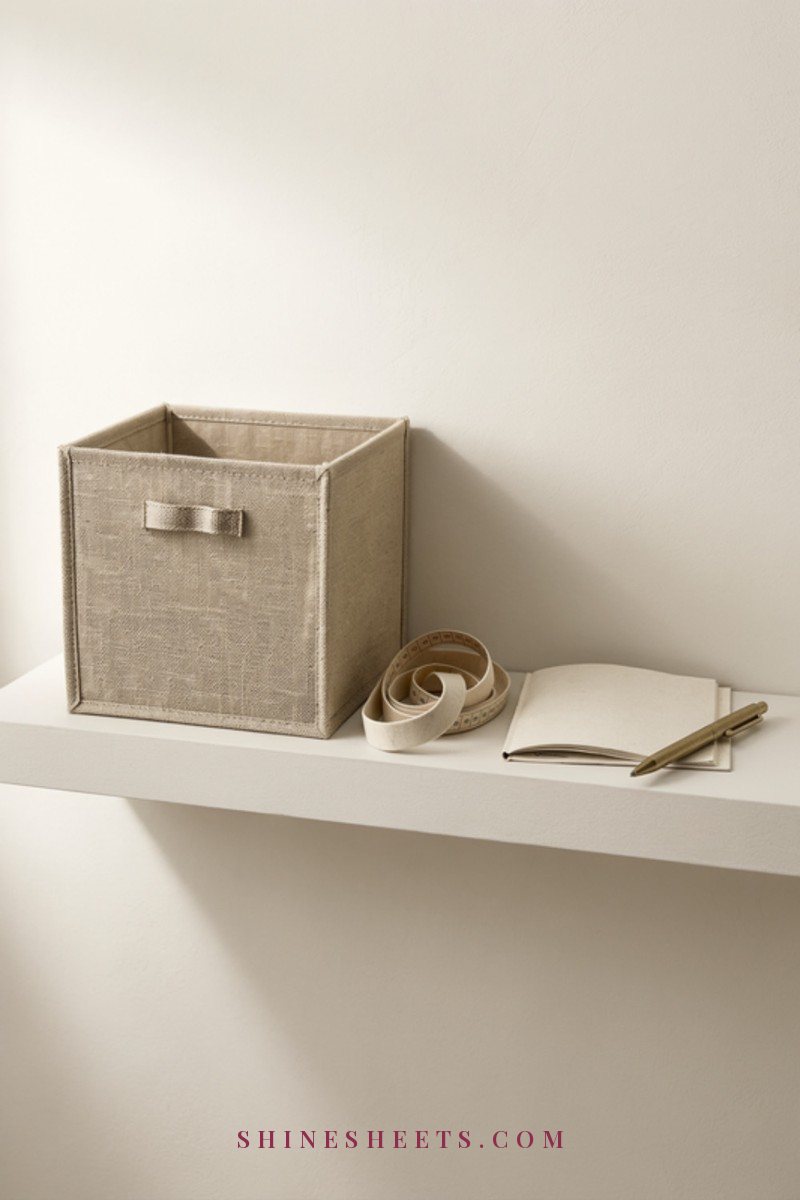
Wrong sizing is the most common storage mistake, and it's completely avoidable. A basket that's an inch too tall won't slide onto the shelf, and one that's too shallow leaves dead space behind it.
- Measure the shelf depth, height and width. Write down all three. For height, measure from the shelf to the underside of the shelf above.
- Subtract a little. Leave about an inch above the container so you can lift it out, and half an inch on each side so it doesn't scrape.
- Check inside dimensions too. Woven and fabric sides are thick, so the usable space is smaller than the listed outer size.
- Buy one to test. Live with a single container for a few days before buying the full set. It's amazing how often the "perfect" size turns out to be slightly off.
- Think in two or three sizes only. A home with ten different container sizes looks busy. A home with two or three looks planned.
Small honest admission: I've returned more than one "perfect" basket because I skipped step one. A soft measuring tape kept in a kitchen drawer has saved me a lot of trips since.
Labeling Without the Fuss
Labels matter more for bins than for baskets. A basket by the door is obvious; a lidded bin on a top shelf is a mystery box three months later.
- Label anything with a lid. If you can't see inside, put a label on the short end that faces out.
- Keep labels broad. "Winter accessories" lasts longer than "gray gloves and the blue scarf".
- Use removable options in rentals. Clip-on tags for baskets, removable vinyl labels or a simple handwritten paper tag in a clip frame for bins.
- Match the style. Same font, same color, same height on every label in a room, so they read as one calm line.
For more ideas, including the pantry and closet, my guide to home labeling ideas goes deeper.
Keep a Matching Color Palette
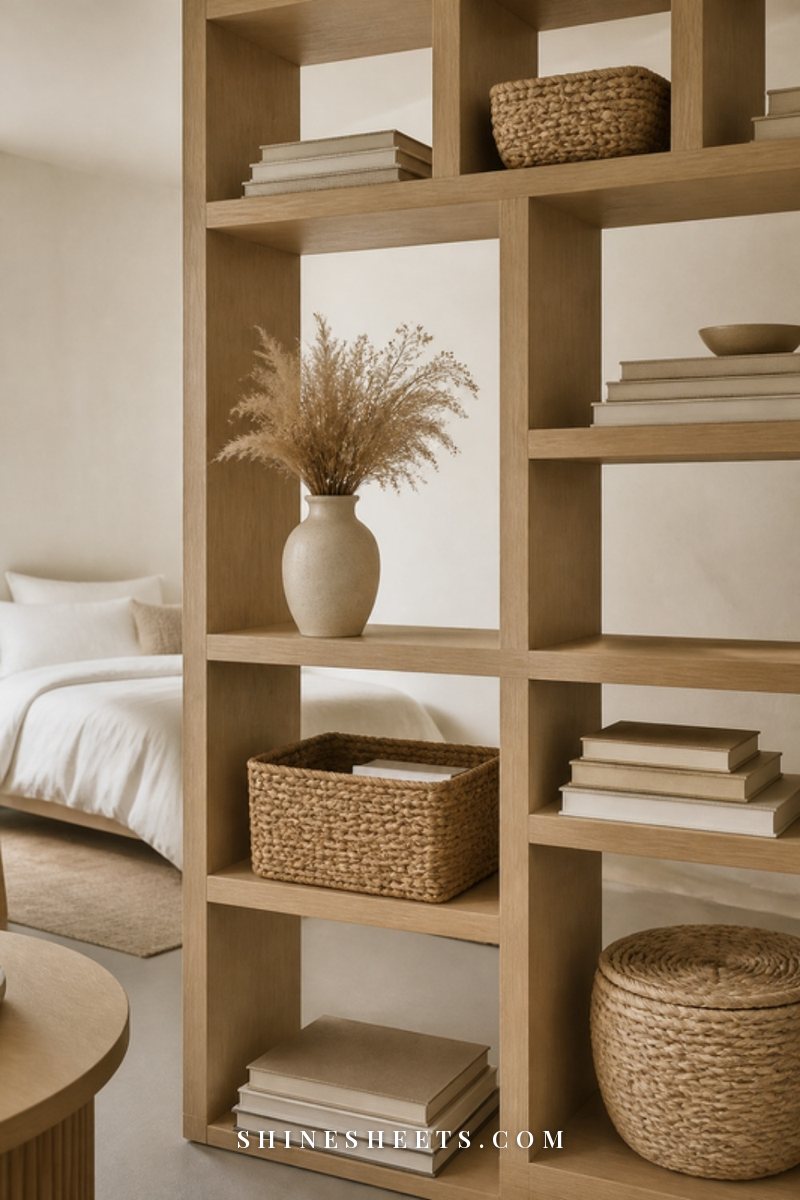
Open shelves look calm when the containers on them share a palette, even if the shapes differ. Pick two or three tones for each room and stick to them: for example cream woven plus white, or beige linen plus sage. Mixing a bright red bin, a gray felt one and a dark rattan basket on one shelf makes even a tidy shelf look cluttered.
- Repeat the same container at least twice on a shelf. Repetition reads as order.
- Keep loud colors behind doors. Bright bins are fine inside cabinets.
- Let one natural texture lead. Woven seagrass, linen or felt, chosen once and repeated, ties a room together.
When Not To Buy Any Container
Here's the part most organizing advice skips: containers don't create space, they only divide it. If a shelf is overflowing, a new bin just makes it a neater kind of overflowing.
Don't buy anything yet if:
- You haven't sorted the area and let go of what you don't use.
- You're buying a container to "deal with it later" (that's a box of postponed decisions).
- You can't say exactly which shelf it will sit on and what will go in it.
- You already own spare containers somewhere in the home. Shop your own cupboards first.
Declutter first, then measure, then buy. In that order, you'll often find you need half as many containers as you thought, and the ones you do buy will fit the things you truly keep.
Final Thoughts
The whole bins vs baskets question comes down to how you live: open and soft for the things you reach for every day, closed and sturdy for the things you put away. Once you see it that way, every shelf gets easier.
Start with one spot that bugs you, measure it, and choose one container that truly fits. A calm, easy home is built one shelf at a time, and yours is already on its way.