Under-sink cabinets aren't messy because you're bad at organizing. They're messy because they're the most awkward space in the house: a big pipe right in the middle, a shelf you can't add, a back corner you can't reach, and a door that never quite shows you what's inside. Regular shelves and bins were never designed for that shape.
The fix is to work with the pipes instead of against them. Once you measure properly, keep only what truly belongs there and choose a few pieces that fit around the plumbing, an under-sink cabinet can go from "close the door quickly" to calm and easy in an afternoon.
It took me a while to understand that the problem is rarely "too much stuff" on its own. It's the wrong stuff in the wrong shape of space.
This guide covers under-sink organization for both the kitchen and the bathroom: how to measure, clear and group, which organizers actually fit around pipes, how to keep things dry, how to store cleaners safely, a "what lives under each sink" table and a measuring guide card to use before you buy anything.
Step 1: Empty Everything Out
I know it's tempting to just push a few things around and add a bin. Don't. You can't organize a space you can't see, and under sinks there are always surprises: three half-empty bottles of the same spray, a sponge from another era, a mystery puddle.
- Put a towel on the floor and take everything out.
- Check for leaks. Look at the pipes, the cabinet floor and the back wall. Water stains, swelling wood or a musty smell are signs to call a plumber before you organize anything.
- Wipe the cabinet. A damp cloth with a little dish soap is enough for most cabinets. If you prefer gentle, low-fuss cleaners, my guide to natural cleaning swaps that work covers simple options.
- Let it dry with the door open for at least an hour, ideally longer.
Step 2: Sort and Decide What Belongs
Now look at the pile with fresh eyes. Sort everything into four groups:
- Keep here: things you use at this sink, at least weekly.
- Move elsewhere: backups, rarely used items and anything that hates moisture.
- Combine: duplicates you can merge (two half bottles of the same cleaner become one).
- Let go: expired products, dried-out sponges, cleaners you never liked. Check your local rules for disposing of household chemicals rather than pouring them down the drain.
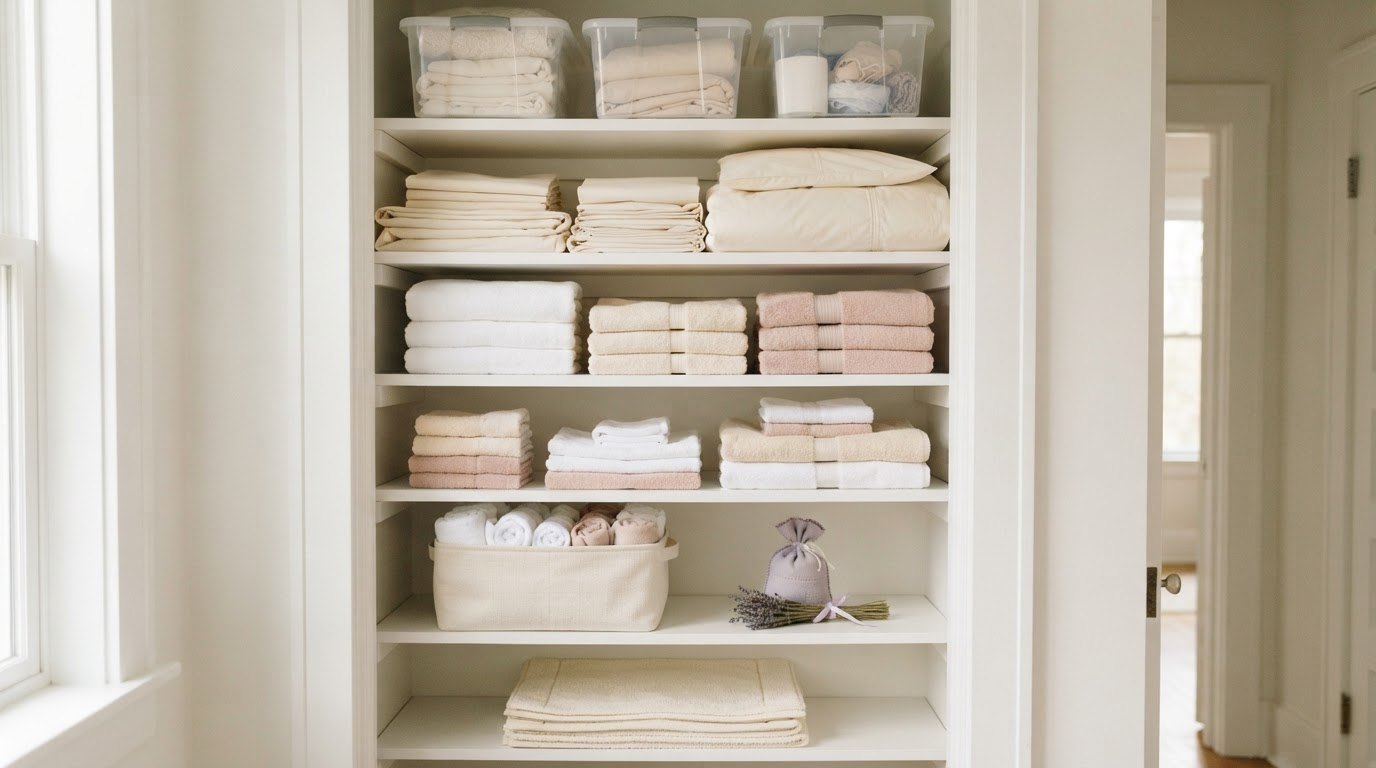
The under-sink cabinet is prime real estate for the things you reach for every day, not long-term storage. Backup toilet paper, spare towels and extra bottles usually live much better in a closet. If yours needs some love too, here's how to set up linen closet organization that stays neat.
What Lives Under Each Sink
This table is the part I'd screenshot. It's a quick way to decide what earns a spot and what should move.
| Sink | Keep Under the Sink | Move Elsewhere |
|---|---|---|
| Kitchen | Dish soap refill, dishwasher tablets, sponges and brushes, all-purpose spray, trash bags, a few microfiber cloths, rubber gloves | Food of any kind, pet food, paper towel backups in bulk, small appliances, anything heavy you rarely use |
| Bathroom | Toilet cleaner and brush caddy (if not by the toilet), one spare toilet roll, hand soap refill, a small cleaning kit, hair tools in a bin (if dry) | Medications, skincare and makeup (they don't like humidity), bulk toilet paper, spare towels, perfume |
| Both | A small flashlight, a leak mat, a little bin for plastic bags or rags | Old paint, pool or garden chemicals, anything flammable |
A gentle note on medications and beauty products: bathrooms get warm and steamy, and that humidity isn't kind to many products. A dry drawer or shelf in your bedroom is usually a better home.
Step 3: Measure Before You Buy
This step saves more money and frustration than any other. Under-sink organizers that "should fit" often don't, because of the pipe, the cabinet lip or the hinges. Grab a tape measure and a note on your phone.
The Measuring Guide Card
Measure these six things and write them down:
- Interior width: wall to wall inside the cabinet, at the narrowest point (often between the hinges).
- Interior depth: from the back wall to the inside of the door frame.
- Height under the pipe: from the cabinet floor to the lowest point of the P-trap (the curved pipe).
- Height beside the pipe: from the floor to the underside of the sink on each side, where the pipe isn't.
- Pipe position: how far the main drain sits from the left wall and the right wall.
- Door opening: the width of the actual opening, which is often smaller than the inside of the cabinet.
The golden rule: subtract about half an inch (1 to 2 cm) from every measurement before you shop, so things slide in and out easily. And always check that a pull-out organizer fits through the door opening, not just inside the cabinet.
Step 4: Choose Organizers That Fit Around Pipes
Here are the pieces that work best in awkward under-sink spaces. You don't need all of them. Two or three, chosen to match your measurements, are usually enough.
Two-Tier Sliding Organizers
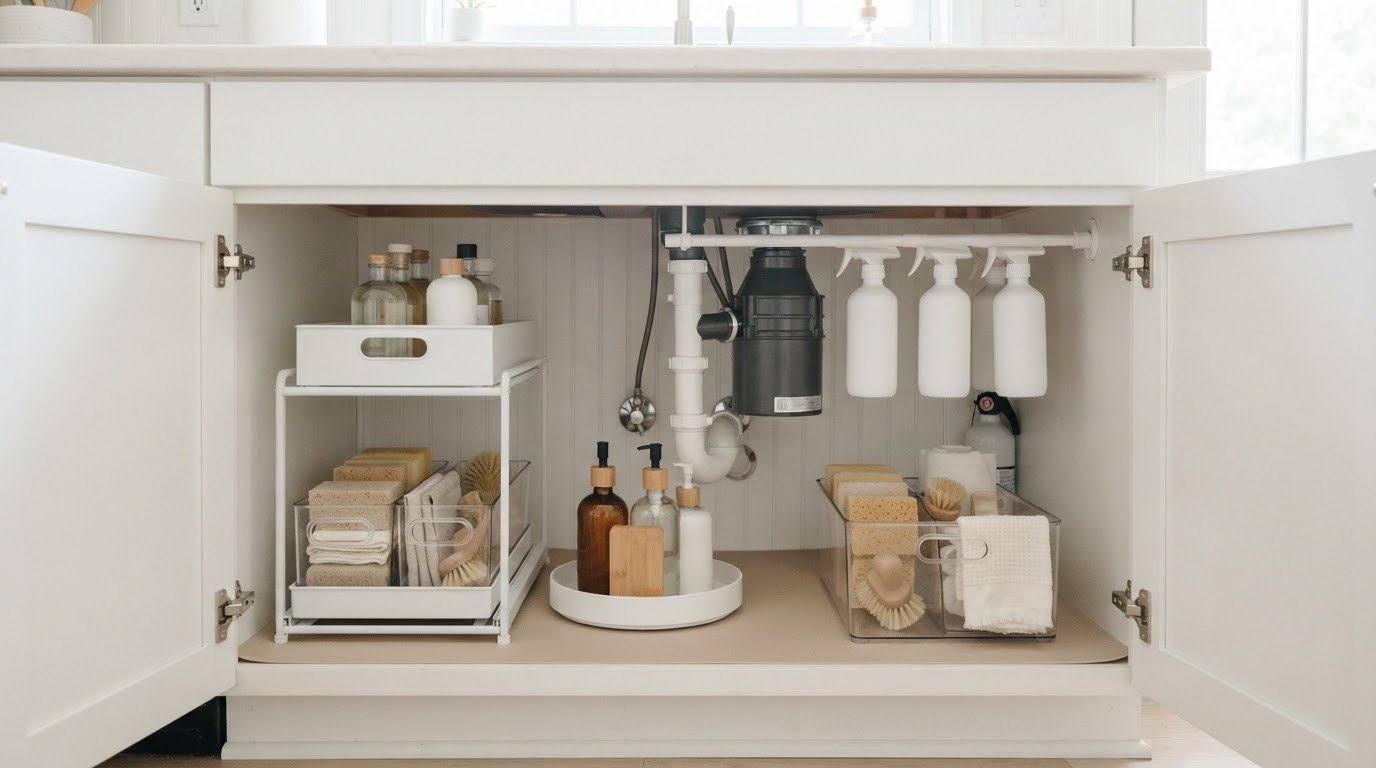
These are the hero of most under-sink makeovers. A white two-tier sliding under-sink organizer sits on one side of the pipe, doubles your usable space vertically and pulls out so you can reach the back. Look for one with adjustable height, a sturdy metal frame and drawers that slide smoothly. Many people use one on each side of the pipe.
Clear Bins With Handles
Bins turn a pile into categories. Clear storage bins with handles let you see what's inside and pull the whole group out at once, like a little drawer. Use them for sponges, refills, trash bags or a bathroom cleaning kit. Choose bins with smooth plastic you can wipe and rinse.
A Tension Rod for Spray Bottles
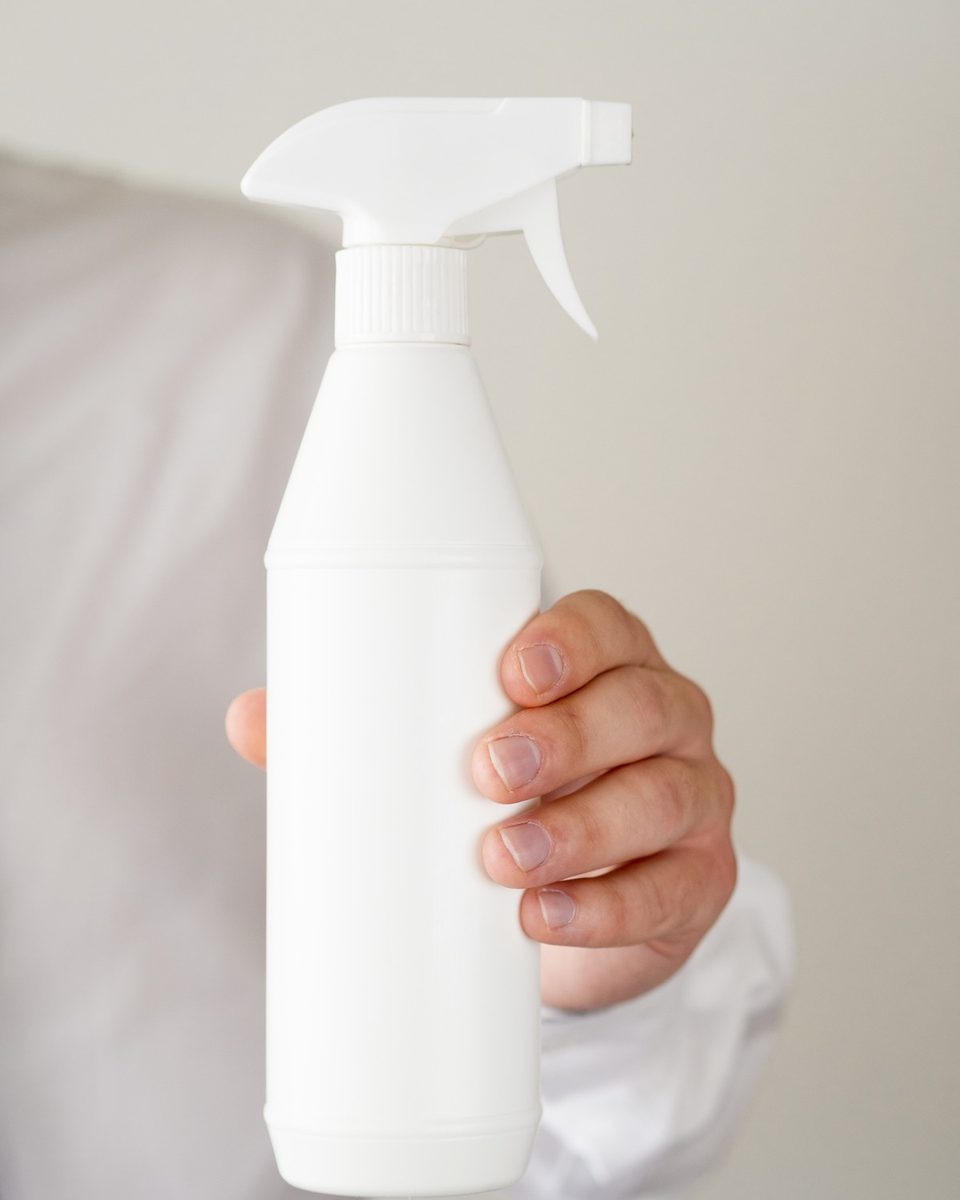
This is the clever one. Place a tension rod across the top of the cabinet, just below the sink, and hang spray bottles from it by their triggers. It frees the whole floor of the cabinet and uses space that's usually wasted. Measure carefully so the bottles clear the pipe.
Door-Mounted Caddies
The inside of the cabinet door is one of the most underused surfaces in the house. An over-the-door cabinet caddy holds sponges, brushes, gloves or a roll of bags. Before buying, check two things: that the door closes without hitting the pipe or the organizers behind it, and whether you want hooks over the top or adhesive mounting (renters usually prefer over-the-door).
Turntables for Deep Corners
The back corners are where things go to be forgotten. A small white lazy susan turntable brings everything to the front with one spin. It's especially good for bathroom cabinets full of bottles of different heights.
Stackable Drawers
In bathroom vanities with more height, small stackable drawers work beautifully for hair ties, cotton pads, spare toothbrushes and travel minis. Just make sure they stay dry.
Step 5: Protect the Cabinet From Leaks
The cabinet floor is the most vulnerable part of an under-sink space. A tiny drip can go unnoticed for weeks and swell the wood underneath.
- Add a mat. A waterproof under-sink mat with raised edges catches drips before they reach the wood and makes cleaning easy. Many can be trimmed to fit around the pipe.
- Leave a little space around the pipe. Don't pack things tightly against it. You want to see and reach it easily.
- Check once a month. Open the door, look at the mat and run your hand along the pipe joints. A dry mat means all is well.
- Keep air moving. Avoid filling every inch. A little breathing room helps the cabinet stay dry.
Kitchen Under-Sink Organization Ideas
Kitchen cabinets get the most daily traffic, so the goal here is speed: everything you need for dishes and quick cleanups within one reach.
- Front and center: dish essentials. Sponges, a brush and dishwasher tablets go in the front bin, so you grab them without bending far.
- One side: the sliding organizer. Top tier for sprays and cloths, bottom tier for refills.
- Tension rod: spray bottles. All-purpose spray and glass cleaner hang right where you can see them.
- Door: gloves and brushes. A caddy keeps damp items off the cabinet floor so they can dry.
- Back: trash bags. Keep the roll in a bin or a dispenser so you can pull one at a time.
- Small bin: microfiber cloths. Folded, ready, and easy to swap out on laundry day.
If the rest of your kitchen could use the same treatment, my kitchen organization ideas for small kitchens cover cabinets, counters and drawers.
Bathroom Under-Sink Organization Ideas
Bathroom vanities are often smaller and more crowded, and they collect a wider mix of things. The trick is clear zones.
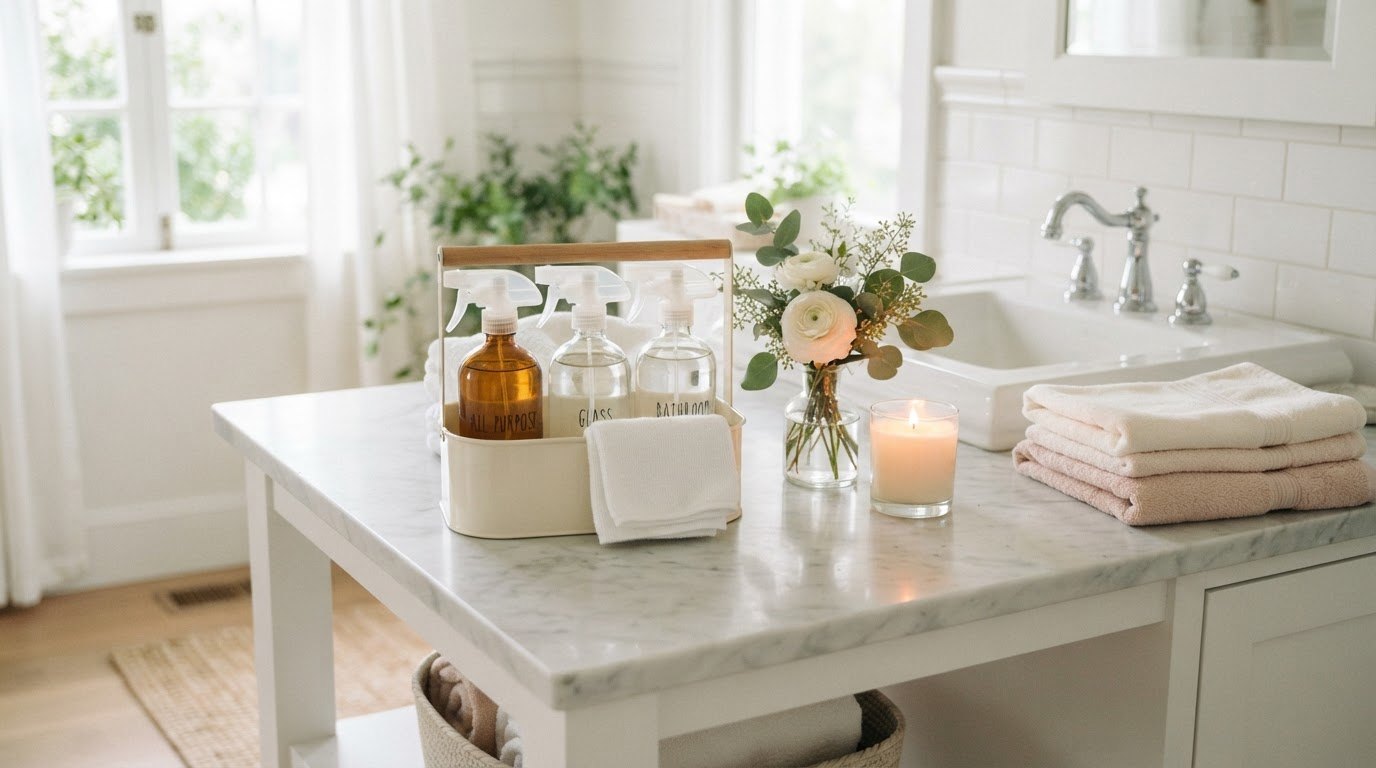
- A cleaning kit in one bin. Toilet cleaner, a small spray, a cloth and gloves in one bin you can carry around the room.
- A daily bin. Hand soap refill, spare toothpaste and one extra roll of toilet paper.
- A hair tools bin. Only if your cabinet stays completely dry, and only once tools have cooled.
- A turntable for bottles. Lotions and body care bottles you use often, so nothing hides at the back.
- The door for small things. A slim caddy for cotton pads, a hair brush or a few small refills.
With everything in one place, cleaning becomes so much quicker. Here's my 20-minute routine to clean your bathroom fast that uses exactly this kind of grab-and-go kit.
Storing Cleaning Products Safely
This part matters more than how pretty the cabinet looks. A few simple habits keep everyone at home safe:
- Use childproof locks if little ones live with you or visit often. Under-sink cabinets are right at a child's height. If you can, store the strongest cleaners up high instead.
- Keep pets in mind too. Curious dogs and cats can nose into low cabinets. A latch helps.
- Keep products in their original containers with the labels on, so you always know what's inside and how to use it.
- Never mix cleaning products. Bleach mixed with ammonia or with acids (like some toilet and vinegar-based cleaners) can release dangerous fumes. Store them in separate bins so they're not accidentally combined.
- Close caps fully and stand bottles upright so nothing leaks onto other products.
- Know who to call. If someone swallows or breathes in a cleaning product, call Poison Control (1-800-222-1222 in the US) or emergency services right away.
Ideas for Small or Awkward Cabinets
Not every under-sink space is a neat rectangle. Here's how to handle the tricky ones:
Very Narrow Bathroom Vanities
Skip wide organizers completely. Use one slim bin on each side of the pipe and let the door do the rest of the work. A pedestal or narrow vanity often fits only the essentials, and that's fine. Everything else lives in a basket on a shelf or in a nearby closet.
Cabinets With a Garbage Disposal
Disposals take up a lot of room in the middle. Treat the space on either side as two separate mini cabinets, each with one tall, narrow organizer. Keep anything you need to reach often toward the front, and leave the area around the disposal clear so it can be checked or serviced easily.
Cabinets With a Water Filter
Filter canisters need to be reachable when it's time to change them. Leave a clear path to the filter and store only light, easy-to-move items in front of it.
Double Sinks
Two sinks usually means two drains and less floor space in the middle. Use the outer sides for sliding organizers and the center for a low, shallow bin of everyday items, like sponges or dishwasher tablets.
Shallow Cabinets
If the cabinet is shallow, think vertical. A white adjustable tension rod for sprays, a door caddy and one stackable drawer give you three layers without needing depth.
Common Under-Sink Organization Mistakes
These are the little missteps that make a freshly organized cabinet fall apart within a month:
- Buying organizers first. Measuring and decluttering first means you buy fewer, better-fitting pieces.
- Filling every inch. A cabinet that's packed to the edges is hard to keep tidy and hard to check for leaks.
- Storing things that hate moisture. Paper goods in bulk, medications and beauty products do much better in a dry spot.
- Forgetting the door has to close. Door caddies can hit tall bottles or sliding drawers. Test with the door closed before you fill everything.
- Keeping every cleaner "just in case." Most homes only need a few: an all-purpose spray, a bathroom cleaner, dish soap and a glass cleaner.
- Skipping labels in a shared home. If other people use the cabinet, labels are what keep the system working when you're not looking.
Make It Pretty (Without Making It Fussy)
An under-sink cabinet doesn't need to be Pinterest-perfect, but a little calm goes a long way when you open that door every day.
- Stick to one or two colors. White, clear and soft beige look clean and calm together.
- Decant only what makes sense. Pouring dish soap into a simple glass or white pump bottle is lovely. Decanting strong cleaners isn't worth the safety risk.
- Label bins simply. "Dishes," "Refills," "Cleaning," "Bags." Labels help everyone in the house put things back.
- Line up the fronts. Turn labels forward and line up bin edges. It takes ten seconds and makes the whole cabinet look intentional.
How To Keep It Organized
The setup is the fun part. Keeping it is where most cabinets slip back into chaos. Three small habits help:
- One in, one out. When you open a new bottle, the empty one leaves the cabinet that same day.
- A monthly two-minute check. Look for leaks, toss empties, straighten bins. If you follow a simple cleaning schedule, add it to your monthly tasks.
- Everything has a bin. If something new doesn't fit a category, it probably belongs somewhere else.
A One-Afternoon Under-Sink Plan
If you'd like to do the whole thing in one go, here's a realistic timeline for one sink:
- First 20 minutes: empty the cabinet, check for leaks, wipe it down and leave the door open to dry.
- Next 20 minutes: sort everything into keep, move, combine and let go. Take the "move" pile to its new home right away.
- Next 10 minutes: measure the six points on the measuring card and write them down.
- Shopping or ordering: choose two or three organizers that match your numbers, minus half an inch.
- Final 30 minutes (once they arrive): lay the mat, set up the organizers, fill the bins, add labels and close the door to test everything fits.
Put on a playlist, make a cup of tea for afterwards and keep it to one sink at a time. Doing the kitchen one weekend and the bathroom the next feels much lighter than tackling both at once.
Final Thoughts
Under-sink organization is one of those small projects that makes your home feel calmer every single day. You open the door, you see what you need, you grab it, you close it. No avalanche of bottles, no digging behind the pipe.
Start with one sink this weekend, measure before you buy and keep only what truly belongs there. A tidy, dry, safe cabinet is a quiet little gift to your future self.