Snail mucin isn't a miracle in a bottle, and it doesn't need to be. Its real strength is much quieter: it gives thirsty, easily stressed skin a soft cushion of hydration that makes everything else in your routine feel kinder. When skin is comfortable, it simply looks better – smoother, bouncier, calmer around the edges.
The internet tends to swing between two extremes with this ingredient. Either it "fixed my whole face" or it's "just slime with good marketing." The truth sits right in the middle, and once you know what it can and can't do, it becomes a really easy ingredient to place in a routine.
This guide covers everything about snail mucin in plain words: what it actually is, the realistic benefits, who it suits best (and who should patch test first), how to use it step by step, essence vs serum vs cream, what to pair it with, the stringy-texture trick, the cruelty-free question and the most common mistakes. There's also a table that shows exactly where snail mucin fits in your routine on regular mornings, regular nights, retinol nights and acid nights – screenshot it and keep it near your sink.
What Is Snail Mucin, Really?
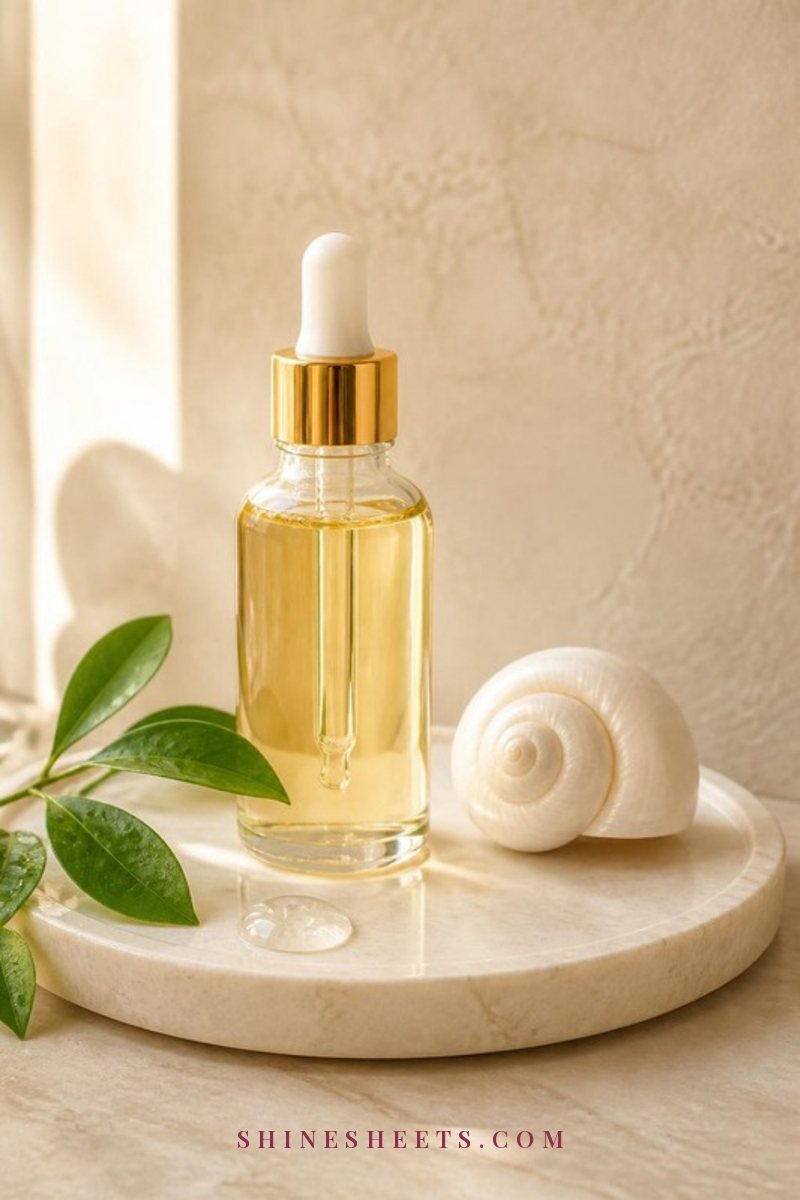
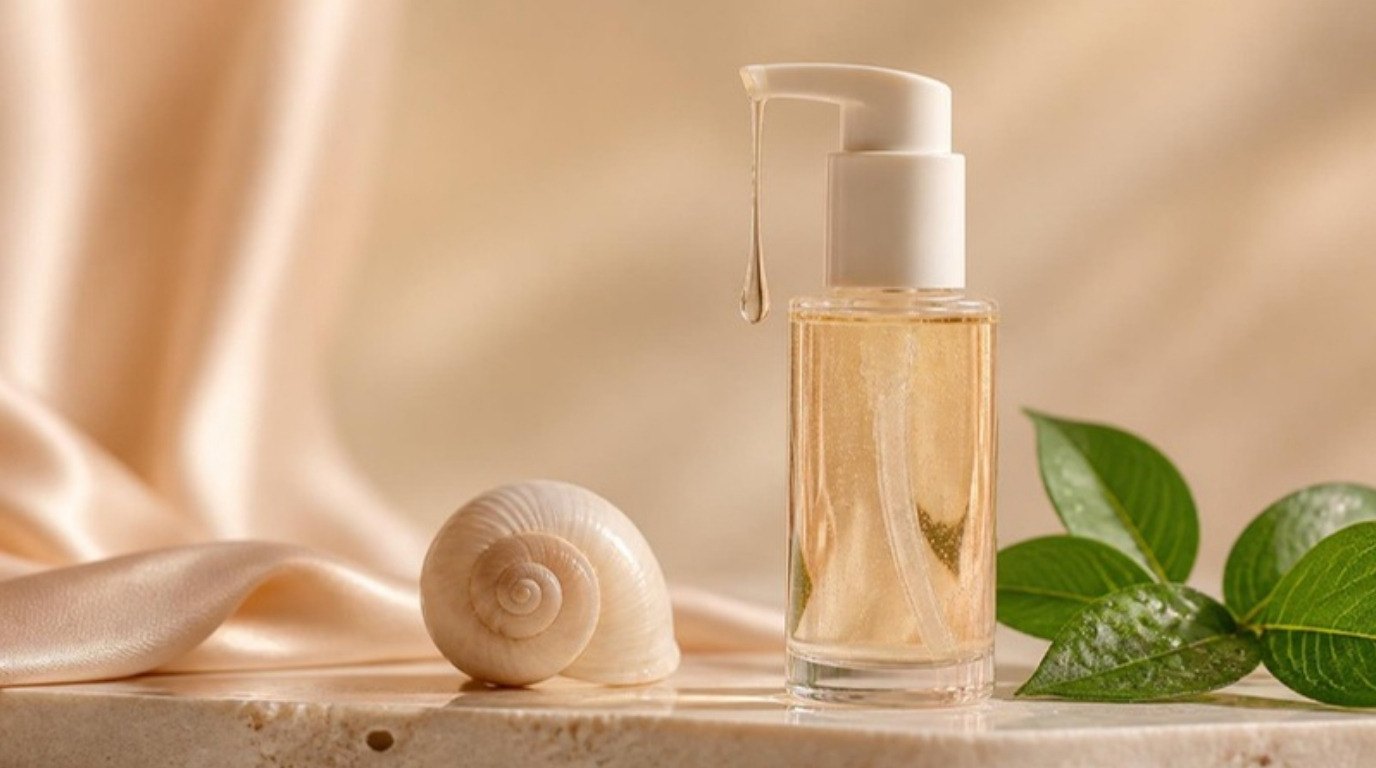
On an ingredient list, snail mucin usually appears as snail secretion filtrate. In simple words, it's the slippery fluid that garden snails naturally produce, collected, filtered and purified until it becomes a clear, slightly thick liquid that can go into skincare.
What makes it interesting is that it isn't one single ingredient. It's a natural mix of several things your skin already likes:
- Glycoproteins and peptides – they help create that soft, cushiony film on the skin.
- A little hyaluronic acid – a humectant that pulls water into the upper layers of the skin.
- Allantoin – a classic soothing ingredient you'll also see in many calming creams.
- Tiny amounts of glycolic acid – far too little to exfoliate like a peel, but part of why texture can look a touch smoother over time.
Most well-known snail essences contain a very high percentage of filtrate, often well over 90 percent, with only a few extra ingredients to keep the formula stable. That's part of the appeal: it's a short, simple formula that does one job well.
It became famous through Korean skincare, where hydration and a healthy, bouncy finish are the goal rather than stripping or "tightening" the skin. If you're curious about that whole philosophy, my guide to what you can learn from a Korean skincare routine is a lovely place to start.
What Snail Mucin Can Realistically Do
Let's be clear about expectations, because that's where most of the disappointment (and most of the hype) comes from. Here's what snail mucin is genuinely good at.
1. Hydration That Lasts
This is its number one job. Snail mucin holds water in the skin and adds a light, flexible layer on top, so your face feels comfortable for hours instead of tight by lunchtime. Dehydrated skin – the kind that looks dull and shows fine lines more on some days than others – usually responds within a week or two.
2. Support for a Stressed Skin Barrier
When your barrier is irritated from over-exfoliating, cold wind or a too-strong active, your skin needs fewer things, not more. Snail mucin is one of those gentle "comfort" layers that makes recovery feel less dramatic. It doesn't rebuild the barrier on its own (ceramides and a good moisturizer do the heavy lifting), but it supports the process. If your skin is stinging and flaky right now, read my guide on how to restore your skin barrier first, then add snail mucin as a calm extra.
3. Soothing Mild Redness and Tightness
Thanks to allantoin and that cushiony texture, many people find their skin feels less reactive after a few weeks. Think "calmer and less tight," not "redness gone."
4. A Plumper, Bouncier Look
Well-hydrated skin reflects light more evenly, and fine dehydration lines soften. That's the famous "glass skin" look in its most realistic form: not poreless, just smooth, supple and fresh.
5. Mild Help With Post-Acne Marks
Some small studies suggest snail secretion may support the skin's natural repair process, which is why it's often recommended for the pink or brown marks that linger after a breakout. Expect slow, subtle help over a couple of months. For stubborn dark spots, a targeted brightening ingredient will do more.
What Snail Mucin Can't Do
This part matters just as much, because it saves you money and frustration:
- It won't erase wrinkles. It can soften the look of fine dehydration lines. Deeper lines need retinoids, sunscreen and time.
- It won't treat active acne. It's gentle enough for acne-prone skin, but it isn't an acne treatment.
- It won't exfoliate. The trace of glycolic acid is far too small to replace a real exfoliant.
- It won't replace your moisturizer. It's a hydrating layer, not a sealing one. You still need a cream on top.
- It won't replace sunscreen. Nothing does.
When you see snail mucin as a supporting player rather than the star, it suddenly makes a lot of sense.
Who Snail Mucin Is For
Snail mucin is one of the most forgiving ingredients out there, but it shines brightest for certain skin types:
- Dry skin: it adds a layer of water before your richer cream locks it in. My skincare routine for dry skin shows exactly where a hydrating layer like this belongs.
- Dehydrated skin of any type: even oily skin can be thirsty underneath, and the light texture won't feel heavy.
- Combination skin: my own skin is combination and sensitive with a shiny T-zone, so I'm always drawn to ingredients that hydrate the dry cheeks without making the forehead feel greasy. Snail mucin is very much in that category.
- Sensitive-ish skin: skin that gets tight and pink easily but isn't allergic to lots of things often likes it.
- Skin that's tired from actives: a buffer for retinol or acid users who still want results without the irritation.
Who Should Patch Test First
A small, kind safety note: snail mucin is an animal-derived ingredient, and anyone can react to anything. Patch test first if you have very reactive skin, eczema, rosacea or a history of allergies – especially known allergies to snails, shellfish or dust mites, since some people with these allergies may react to snail-derived ingredients too. If you have a known allergy, ask your doctor or dermatologist before trying it.
The simplest patch test: apply a small amount along your jawline or just behind your ear once a day for five to seven days. No itching, bumps or burning? You're good to go. If you're sensitive in general, introduce only one new product at a time.
How To Use Snail Mucin: 5 Simple Steps
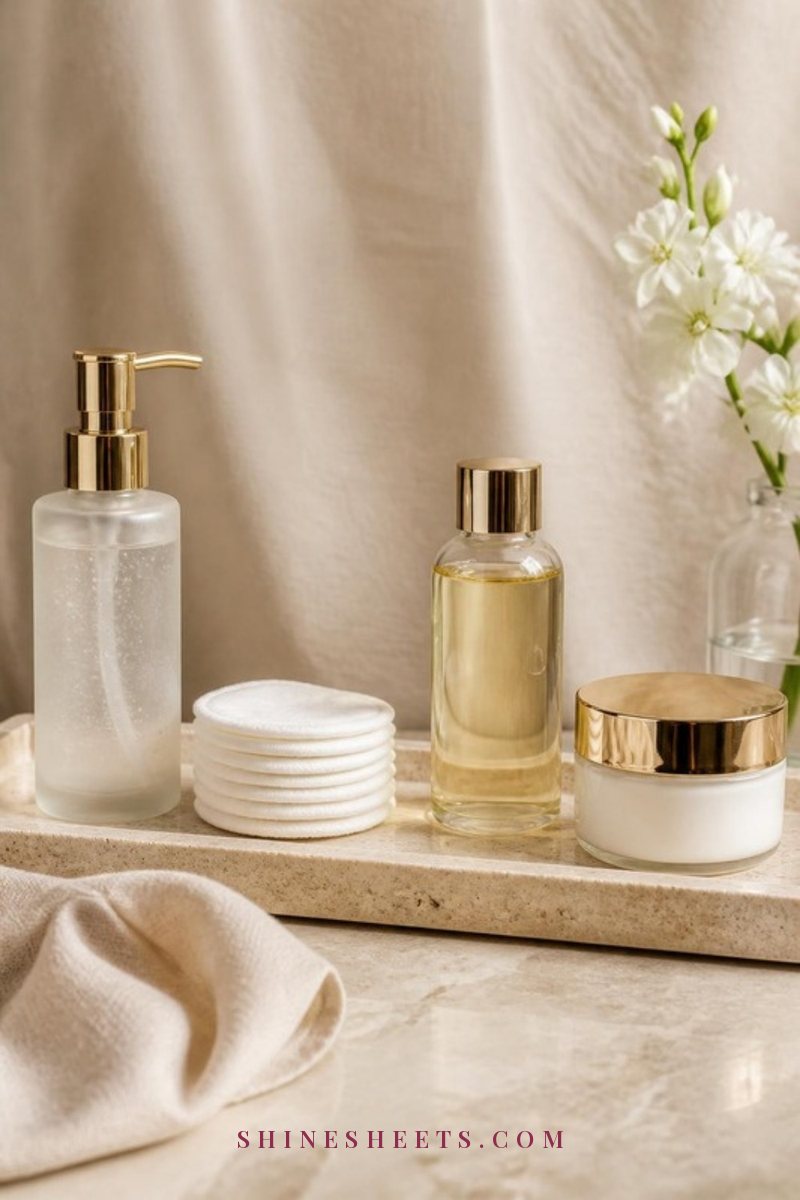
The basic rule: snail mucin goes after cleansing and toner, and before your moisturizer. Thin, watery layers first; thicker, richer layers last.
- Cleanse gently. A harsh, squeaky-clean wash undoes all the hydration you're about to add. A gentle low pH gel cleanser leaves skin soft rather than tight, which is exactly the base you want.
- Apply toner (optional). If you like a hydrating toner, press it in with your hands or swipe it on with reusable white cotton rounds. Leave your skin slightly damp – don't towel it completely dry.
- Apply snail mucin. Use two to three pumps of a snail mucin essence (the famous Korean one with a very high filtrate percentage is a good pick for beginners because the formula is so simple). Warm it between your palms and press it into your face and neck.
- Add any treatment serum. If you use a targeted serum like niacinamide, it can go right after the snail layer (or before it if the serum is more watery – see the layering tip below).
- Seal with moisturizer. Finish with a cream to lock everything in. In the morning, sunscreen is always the very last step.
Morning, evening or both? Both work. Dry skin often loves it twice a day. Combination or oily skin may prefer it only at night, or only in the morning under a light gel cream. Start once a day for the first week, then see how your skin feels.
Quick layering tip: when two products both look watery, apply the thinner one first. If you'd like the full logic of thin-to-thick layering, my guide on how to layer skincare explains it in five easy steps.
Essence vs Serum vs Cream: Which Format To Choose
Snail mucin comes in three main formats, and the right one depends on how much hydration your skin wants and how many steps you're happy to do.
| Format | Texture | Best for | Where it goes |
|---|---|---|---|
| Essence | Thin, slightly stringy, clear | Most skin types, beginners, layering lovers | After toner, before serums or cream |
| Serum / ampoule | A little thicker, often with extra actives | Skin that wants one product to do two jobs | After toner and essence, before cream |
| Cream | Soft gel-cream or rich cream | Dry skin, minimal routines, night time | Last step before sunscreen (AM) or alone at night |
If you'd rather keep your routine short, a snail repair cream lets you get the hydration and the sealing step in one jar. On very dry nights, you can use both: essence first, snail cream on top.
Where Snail Mucin Fits in Your Routine
This is the part most guides skip. Snail mucin is easy on its own, but people get confused when retinol or acids enter the picture. Here's a simple map:
| Routine | Order of steps | Snail mucin tip |
|---|---|---|
| Regular morning | Cleanser → toner → snail mucin → vitamin C or niacinamide (optional) → moisturizer → sunscreen | Two pumps is enough; let it sink in for a minute so sunscreen doesn't pill. |
| Regular night | Cleanser → toner → snail mucin → hydrating serum (optional) → moisturizer | Your most generous layer of the day – three pumps on dry skin. |
| Retinol night | Cleanser → snail mucin → wait until dry → retinol → moisturizer | Acts as a soft buffer. If your skin is very tolerant, you can apply it after retinol instead. |
| Acid night (AHA/BHA) | Cleanser → acid → wait 10–15 minutes → snail mucin → moisturizer | Comes after the acid to calm and rehydrate. Skip retinol on this night. |
| Barrier rescue night | Gentle cleanser → snail mucin → ceramide moisturizer | No actives at all. Just hydrate and seal for a few nights. |
The one rule that never changes: snail mucin sits between your thinnest steps and your moisturizer. Everything else is flexible.
What To Pair Snail Mucin With
Because it's so mild, snail mucin plays well with almost everything. These pairings are especially nice.
Niacinamide
A really balanced duo for combination skin. Niacinamide helps with oil, pores and uneven tone; snail mucin keeps everything hydrated and comfortable. Apply the snail essence first, then a niacinamide serum. My niacinamide guide covers how strong a percentage you actually need.
Hyaluronic Acid
Two hydrators, slightly different jobs. Hyaluronic acid pulls water in; snail mucin adds that cushiony film that helps it stay. A light hyaluronic acid serum on damp skin, followed by snail essence, is a dream on dry winter days. (Just remember the damp skin rule from my hyaluronic acid guide.)
Retinol (on Retinol Nights)
This is where snail mucin really earns its spot. Retinol can leave skin dry and flaky in the first weeks, and a hydrating layer underneath can make the adjustment period gentler. Use it as shown in the routine table above, and always follow with moisturizer.
Exfoliating Acids
Use snail mucin after your acid, never as a reason to exfoliate more often. It calms and rehydrates, but if your skin stings, the answer is fewer acid nights, not more snail.
Ceramides
The classic "hydrate, then seal" pairing. Snail mucin adds water, and a ceramide moisturizer helps hold it in and supports the barrier. If you want one simple, reliable routine for winter, this is it.
Texture Tips: Pat, Don't Rub
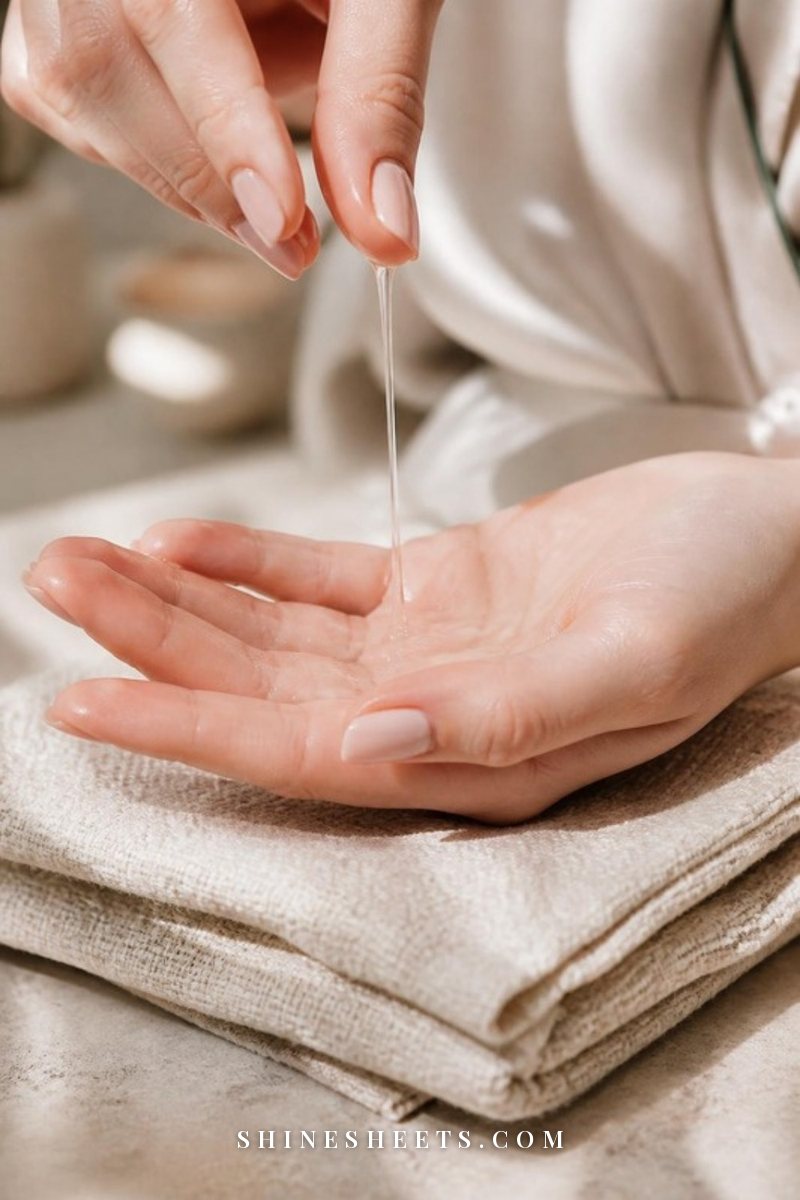
Let's talk about the stringy part, because it surprises almost everyone the first time. Snail essence stretches into thin threads between your fingers. It's completely normal, and once you know how to handle it, it's not weird at all.
- Warm it first. Pump it into your palm and rub your hands together for two seconds. It spreads much more evenly.
- Pat, don't rub. Press your palms onto your cheeks, forehead and chin. Rubbing drags it around and can feel tacky.
- Layer thin. Two or three pumps is plenty. More doesn't mean more hydration – it means more stickiness.
- Give it 30–60 seconds. The slightly sticky feeling disappears as it sinks in. That's your cue for the next step.
- Use the leftovers. Whatever stays on your hands goes on your neck and the backs of your hands.
If your makeup or sunscreen ever pills on top, the usual fix is simply less product and a little more waiting time.
Is Snail Mucin Cruelty-Free?
A very fair question, and the honest answer is: it depends on the brand. Here's the calm version.
Snail mucin is usually collected on dedicated snail farms. Many brands explain that their snails are kept in a quiet, dark, humid environment and allowed to move over a mesh surface, and the secretion is then collected without harming or killing them. Others don't share much detail at all.
Two things are worth knowing:
- Cruelty-free and vegan aren't the same thing. "Cruelty-free" usually refers to animal testing. Snail mucin can come from a cruelty-free brand, but it's never vegan, because it comes from an animal.
- Transparency is the best sign. Look for brands that clearly explain how the mucin is collected. If that matters to you, choose those, or pick a plant-based alternative with similar hydrating ingredients (like hyaluronic acid, panthenol and centella).
There's no wrong choice here. It's simply about what feels right for you.
7 Common Snail Mucin Mistakes
Most "it didn't work for me" stories come down to one of these:
- Expecting overnight results. You may feel more comfortable skin right away, but the bouncier look takes two to four weeks of consistent use.
- Skipping moisturizer. Snail mucin on its own can let water escape as fast as it came in, especially in dry air. Always seal it.
- Applying too much. A thick layer feels sticky and can pill under sunscreen. Two to three pumps for the whole face.
- Rubbing it in. Patting gives a smoother, more even layer with far less tackiness.
- Using it on bone-dry skin. Slightly damp skin helps every hydrating layer work better.
- Adding five new products at once. If you break out or get red, you won't know what caused it. Introduce snail mucin alone, then wait a week or two before anything else.
- Skipping the patch test with known allergies. If you're allergy-prone, those five to seven days of patch testing really are worth it.
A Simple Snail Mucin Starter Plan
If you want a no-thinking way to start, here's a gentle four-week plan:
- Week 1: patch test for five to seven days, then use it once a day (night is easiest) between toner and moisturizer.
- Week 2: if your skin is happy, try it morning and night, or keep it at night only if you have an oily T-zone.
- Week 3: bring back your actives one by one, using the routine table above for retinol and acid nights.
- Week 4: check in. Does your skin feel less tight by the afternoon? Do dehydration lines look softer? If yes, it's earned its place. If you notice nothing, it may simply not be the ingredient your skin needs – and that's okay too.
I like doing this check-in in the evening with a cup of tea, looking at my skin in natural light rather than under harsh bathroom bulbs. Small, honest observations tell you more than any before-and-after photo online.
Final Thoughts
Snail mucin won't transform your face overnight, but it's one of the kindest, easiest ingredients to add to a routine. It hydrates, it soothes, it plays well with your stronger actives, and it makes skin feel comfortable – which is often the first step to skin that looks its best.
Keep it simple: cleanse gently, pat on a thin layer, seal it with moisturizer and give it a few weeks. Your skin will tell you whether it's a keeper, and either way you'll know your skin a little better than before.