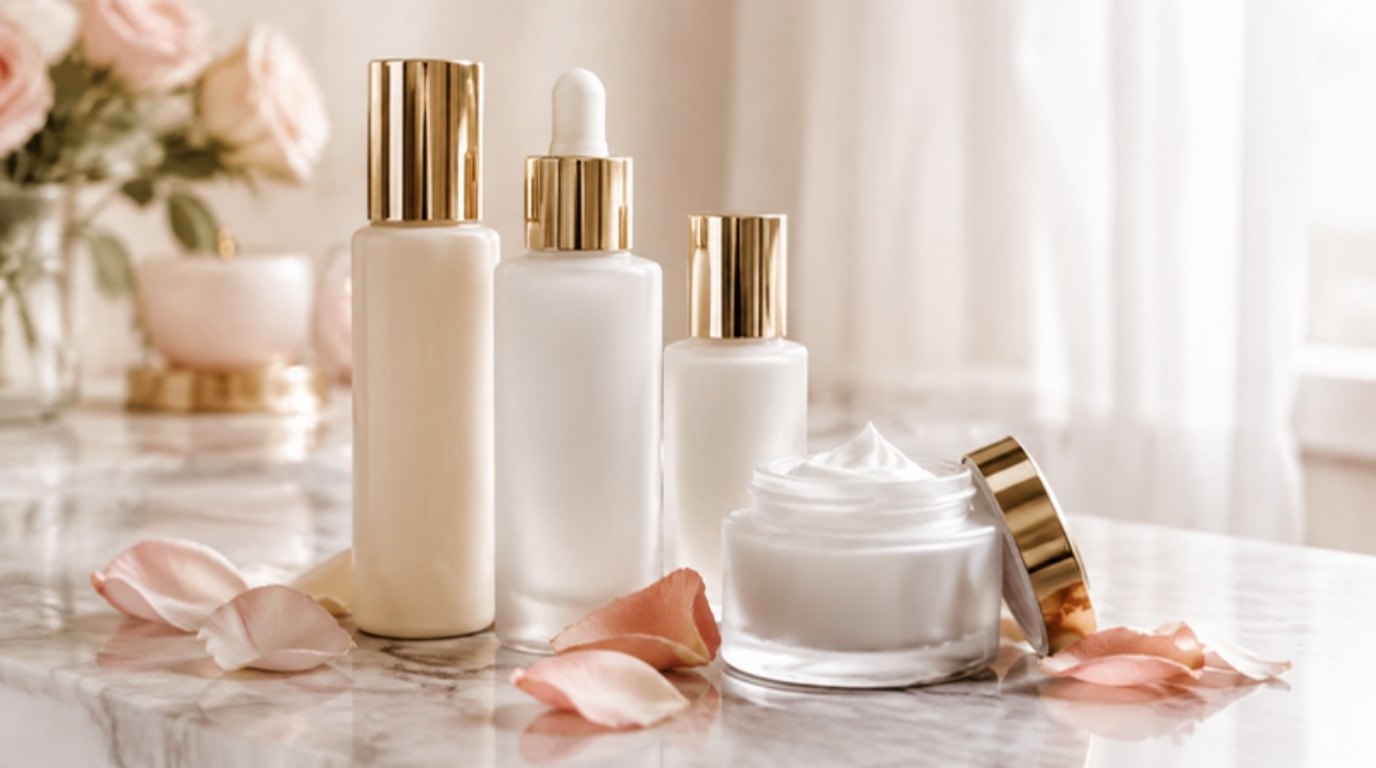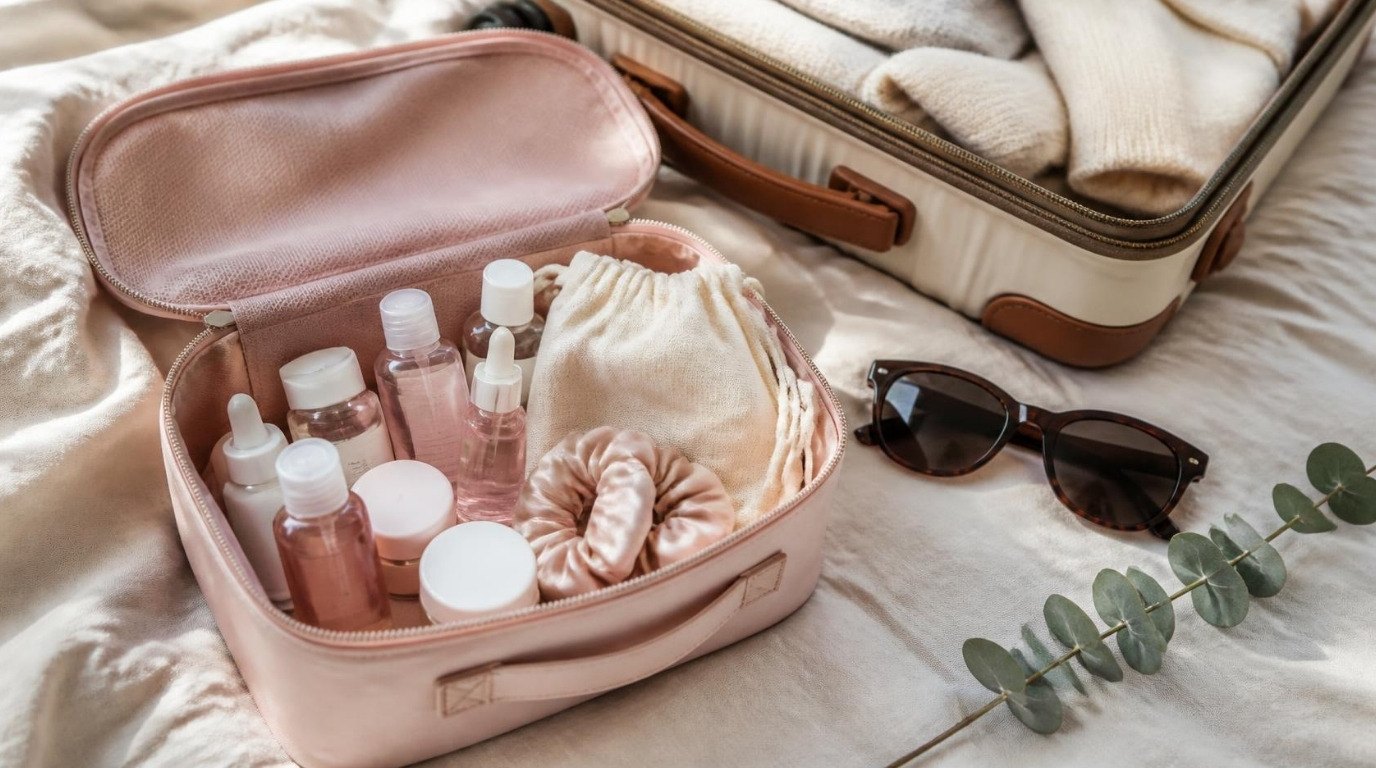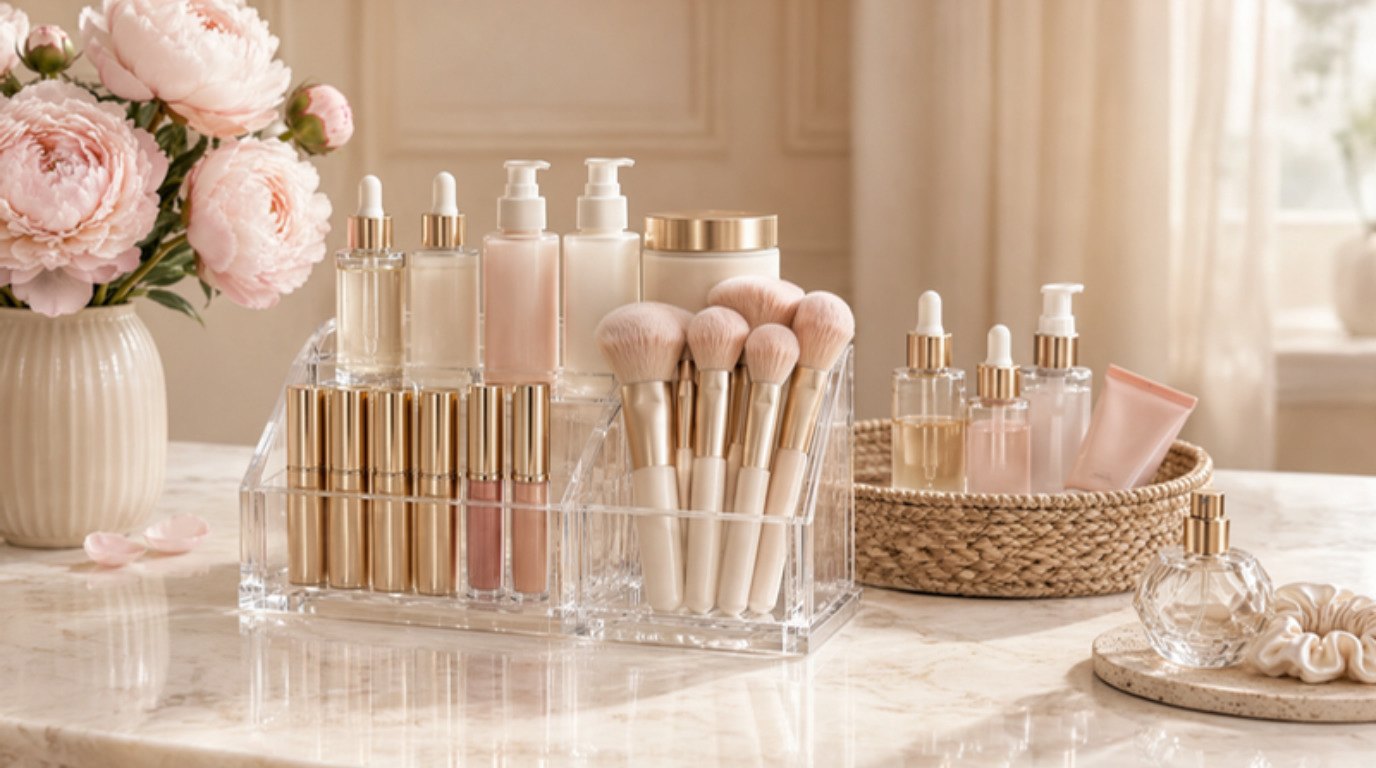
A beauty stash rarely gets out of hand because of one big shopping spree. It grows quietly: a gift set here, a travel mini from a hotel there, a serum you meant to finish, three lip balms in three different bags. By January, after the holidays add a fresh wave of boxed sets and stocking stuffers, most of us are holding far more than we can use before it turns. That isn't a character flaw. It's just what happens when lovely things arrive faster than they get used up.
A calm declutter fixes that in one sitting, and it's one of the most satisfying ways to start the new year. You'll free up drawer space, find the things you forgot you had and stop putting products on your skin that have quietly gone off.
This guide gives you a simple, no-shame beauty stash declutter you can do in a single afternoon: why stashes grow, how to set up the session, the four-pile sort, how to read the little open-jar symbol and batch codes, the six signs a product has turned, a keep-or-toss table by product type, a few hygiene notes and a gentle use-up rule for the months ahead. Put the kettle on. This is going to feel lighter than you think.
Why Beauty Stashes Grow (Without Anyone Meaning To)
Before you sort a single thing, it helps to know why the stash got this big, because the reasons tell you what to watch for later.
- Gift sets. They're thoughtful and pretty, but they often include a shade, scent or formula you'd never pick for yourself.
- Travel minis and samples. They feel too small to matter and too nice to throw away, so they collect in little piles.
- "Just in case" backups. A second moisturizer bought on sale, a spare foundation. Backups are smart, but only if the first one actually gets finished.
- Products that didn't work out. The cleanser that stung a little or the shade that was slightly off. Keeping them feels less wasteful than admitting they're not right.
- Several homes for the same thing. A lip balm in every bag, a hand cream on every surface. Spread out, it's hard to see how much you have.
It took me a while to understand that guilt is what keeps most of these products around. You don't have to feel bad about anything you find. Every item in the stash was bought or given with good intentions, and you're simply giving it a clear next step.
Before You Start: Set Up One Calm Session

A beauty declutter goes well when it has a clear beginning and end. Here's how I'd set it up:
- Block out about 90 minutes. Most stashes take an hour to sort, plus a little time to put things back. If yours is bigger, split it into two sessions: skincare and body care one day, makeup and hair the next.
- Choose a clean, flat surface with good daylight. A dining table or a bed covered with a clean towel works well. Daylight makes it much easier to spot color changes and separation.
- Prepare four landing spots for the four piles: four bags, boxes or towels, labeled on a sticky note if that helps.
- Have the basics nearby: a trash bag, a damp cloth for wiping lids, cotton pads, and a pen and paper for a quick list of what you're running low on.
- Make it pleasant. Evening tea, a glass candle, a playlist. This isn't a punishment, it's a reset.
Step 1: Gather Everything in One Place
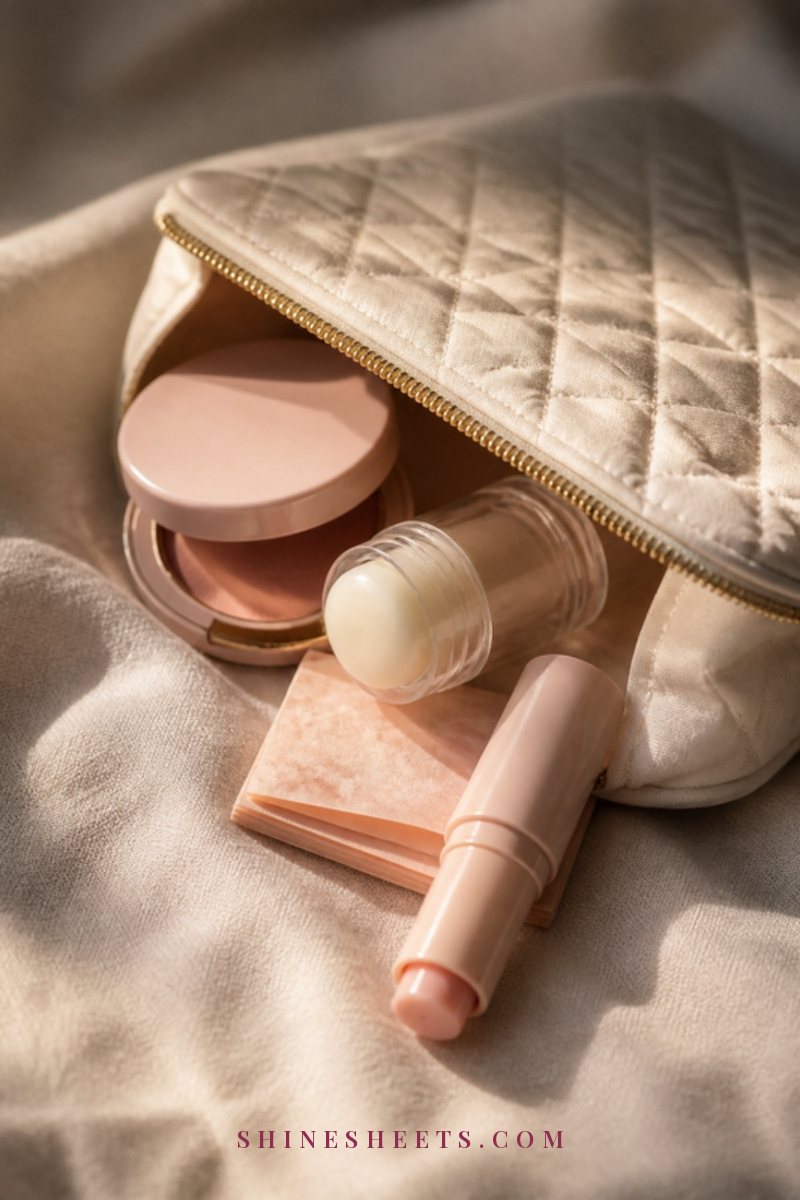
This is the part people skip, and it's the part that changes everything. Collect every beauty product from every corner of your home and bring it to your sorting spot. Check these places:
- Bathroom cabinets, drawers and the shower shelf
- Your vanity and bedside table
- Every handbag, tote, gym bag and coat pocket
- Travel pouches and toiletry bags
- The car, your desk and any "overflow" basket in a closet
- Unopened gift sets still in their boxes
Seeing everything together is often the moment it clicks. Seven lip balms and four nearly-identical moisturizers are much easier to let go of when they're lined up side by side. Group like with like as you go: cleansers together, serums together, lip products together. That way, the sorting feels quick and obvious.
Step 2: Sort Into 4 Piles
Pick up one item at a time and give it a home in one of four piles. Try to decide in about ten seconds per item. If you hesitate longer than that, the answer is usually in the signs and the table further down.
Pile 1: Keep
These are products you like, use regularly and that still look, smell and feel the way they did when you opened them. They're within their open life, they suit your skin, and you'd buy them again. A keep pile doesn't have to be tiny. It just has to be honest.
Wipe the lids and bottles with a damp cloth before they go back. It's a small step that makes your whole stash feel new.
Pile 2: Use Up First
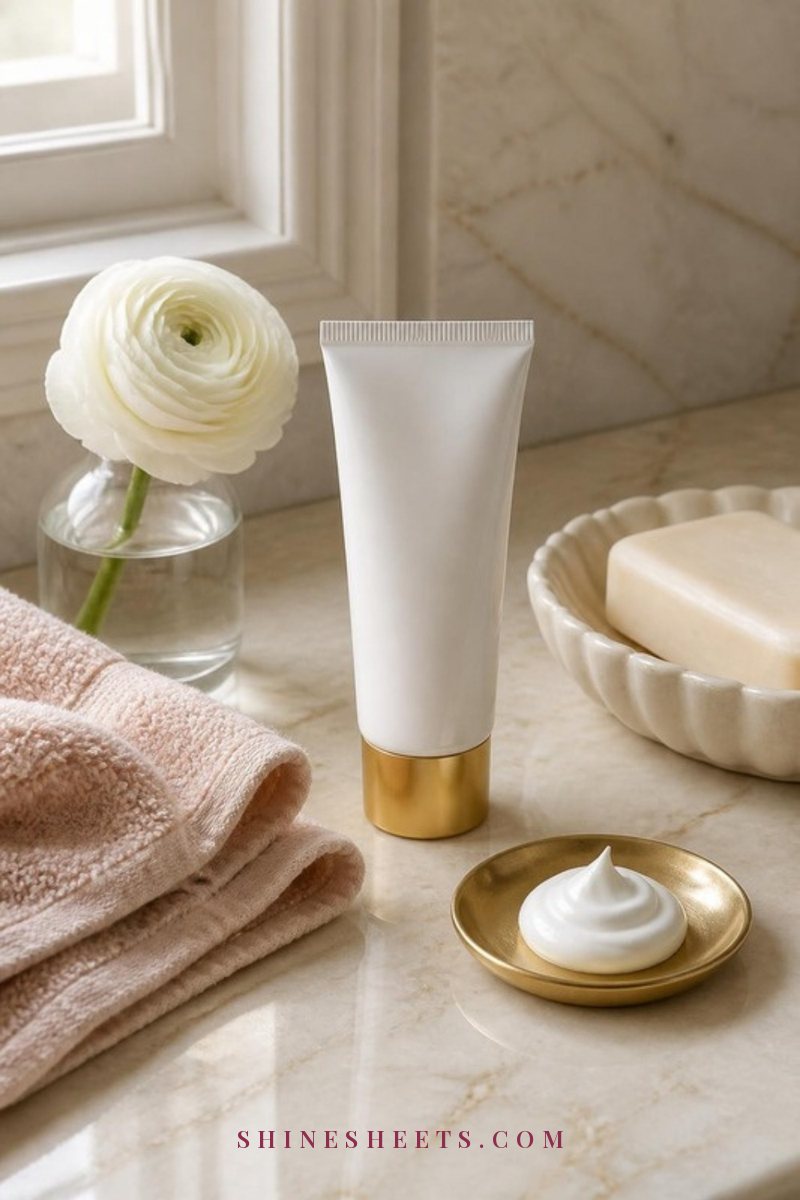
This is the most useful pile in the whole declutter. It holds products that are still good but need to be finished soon: things opened a while ago, half-used bottles, and the duplicates that should be used one at a time.
Put this pile somewhere you'll see it every day, like a small woven basket on your bathroom counter. When you reach for a moisturizer or a body lotion, reach here first. Products in this pile get used before anything new is opened.
Pile 3: Rehome (Sealed Only)
Some products are perfectly fine but simply not for you: a gift set in the wrong shade, an unopened body wash in a scent you don't love. If the item is still sealed and unopened, it can go to a new home. A friend or family member who would actually use it is the easiest option.
Some local shelters and community organizations accept unopened toiletries and beauty products, but rules vary a lot from place to place, so call or check before you drop anything off. Opened products, even barely used ones, shouldn't be donated for hygiene reasons.
Pile 4: Toss
This pile is for anything that has turned, caused a reaction, is past its open life, or is opened and simply never going to be used. It also includes sunscreen past its expiration date. Sunscreen that's past its date may not protect the way it should, so it goes, no matter how full the bottle looks.
Before throwing things out, check your local guidelines for recycling. Many clean plastic and glass containers can be recycled once they're empty and rinsed. Aerosols and nail polish often need special disposal, so check what your area asks for.
How To Read the PAO Symbol and Batch Codes
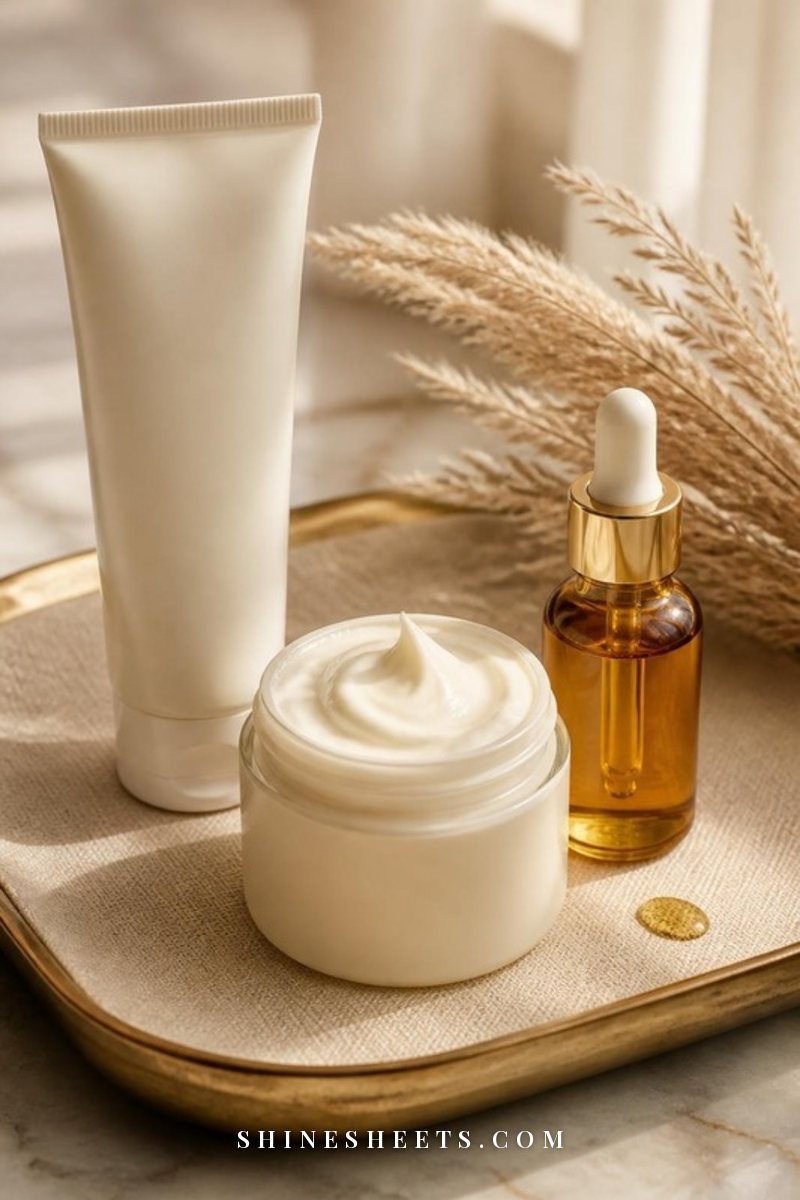
Most beauty products in the US don't have a printed expiry date, so you need a couple of small clues instead.
The PAO symbol (period after opening) is the little drawing of an open jar, usually on the back of the bottle or the box. Inside or next to it you'll see a number followed by an M, like 6M or 12M. That number is how many months the maker suggests using the product after you first open it. A cream marked 12M is meant to be used within about a year of opening, not a year of sitting in your drawer unopened.
A few things to know about PAO:
- It's a guideline, not a promise. A product stored in a hot, steamy bathroom can turn sooner. One kept cool and closed may stay pleasant right to the end.
- It starts the day you open it, which is why it helps to write the opening month on a small sticker or on the bottom with a marker.
- If a product has turned before its PAO is up, trust the signs (below), not the symbol.
Batch codes are the short strings of letters and numbers stamped on the bottom or crimp of the tube. They're the maker's production code, and some brands' codes can be decoded online or by contacting their customer service to find the manufacture date. Unopened products still age, so if you find a sealed bottle that's been in the cabinet for years, a quick batch code check is worth the minute. Products with a printed expiration date, like sunscreen, should follow that date.
For a full list of how long each type of product usually lasts after opening, my guide on how long skincare lasts after opening is a handy reference to keep nearby.
6 Signs a Product Has Turned
Your senses are the best tool you have. Whatever the symbol says, these six signs mean a product has likely gone off and belongs in the toss pile:
- A changed smell. Sour, rancid, crayon-like or simply "off" compared to how it smelled when new. Oils and natural ingredients often go rancid first.
- Separation. Oil sitting on top of a cream or lotion, or a watery layer that won't mix back in after a shake. Some products are meant to separate (bi-phase toners and makeup removers), so check if the label says "shake well."
- A color change. Vitamin C serums that turn dark orange or brown, foundation that has darkened, a white cream gone yellow.
- A texture change. Lumpy, grainy, stringy, sticky, dried out or suddenly much thinner than before. Lipsticks that look "sweaty" with little beads on the surface count too.
- Dry or clumpy mascara. If it's dry, flaky or smells odd, replace it. Mascara is the one product where I'd never stretch the date, since it goes right next to your eyes.
- A sting or rash. If a product you've used comfortably before suddenly stings, burns, itches or causes redness or bumps, stop using it right away.
If you're unsure about something that looks a little changed but not clearly turned, patch test it before going back to regular use: dab a little on your inner arm and wait a day. And if any product causes a reaction that doesn't settle, see a dermatologist. Please don't add water to a dried-out mascara or liquid product to revive it, since that can introduce bacteria.
Beauty Stash Declutter Table: Keep or Toss by Product Type
Here's a quick reference to keep beside you while you sort. The open-life ranges are typical guidelines only; always check your product's own PAO symbol or expiration date first, and trust the signs if something has changed sooner. Screenshot it for next time.
| Product type | Typical PAO after opening | Signs it has turned | Keep or toss |
|---|---|---|---|
| Mascara and liquid eyeliner | Often 3–6 months | Dry, clumpy, flaky, odd smell | Toss if past it or changed; replace after an eye infection |
| Liquid foundation and concealer | Often 6–12 months | Separation, darker color, sour smell | Keep if unchanged; toss if separated for good |
| Powders, blush, eyeshadow | Often 12–24 months | Hard shiny film on top, crumbling, odd smell | Usually keep if clean and dry; toss if wet or moldy |
| Lipstick and lip gloss | Often 12–18 months | Waxy smell, beads on the surface, sticky gloss | Keep if unchanged; toss after a cold sore |
| Cleansers | Often 12 months | Changed smell or texture, thinner consistency | Use up first if opened a while ago |
| Serums (especially vitamin C) | Often 3–12 months | Darkened color, changed smell, stinging | Toss if it turned dark or stings |
| Moisturizers in jars | Often 6–12 months | Separation, yellowing, sour smell | Use up first; toss if changed |
| Sunscreen | Follow the printed expiration date | Separation, grainy texture, changed smell | Toss if past the date or changed |
| Body lotions and body wash | Often 12 months | Changed smell, separation | Use up first; rehome only if sealed |
| Fragrance and body mists | Varies; often several years if kept cool | Sharp or vinegary top note, darker liquid | Keep if it still smells right |
For makeup tools like sponges and brushes, plus a broader look at replacement timing, my guide on how often to replace your makeup and makeup tools fills in the rest.
Quick Hygiene Notes While You're In There
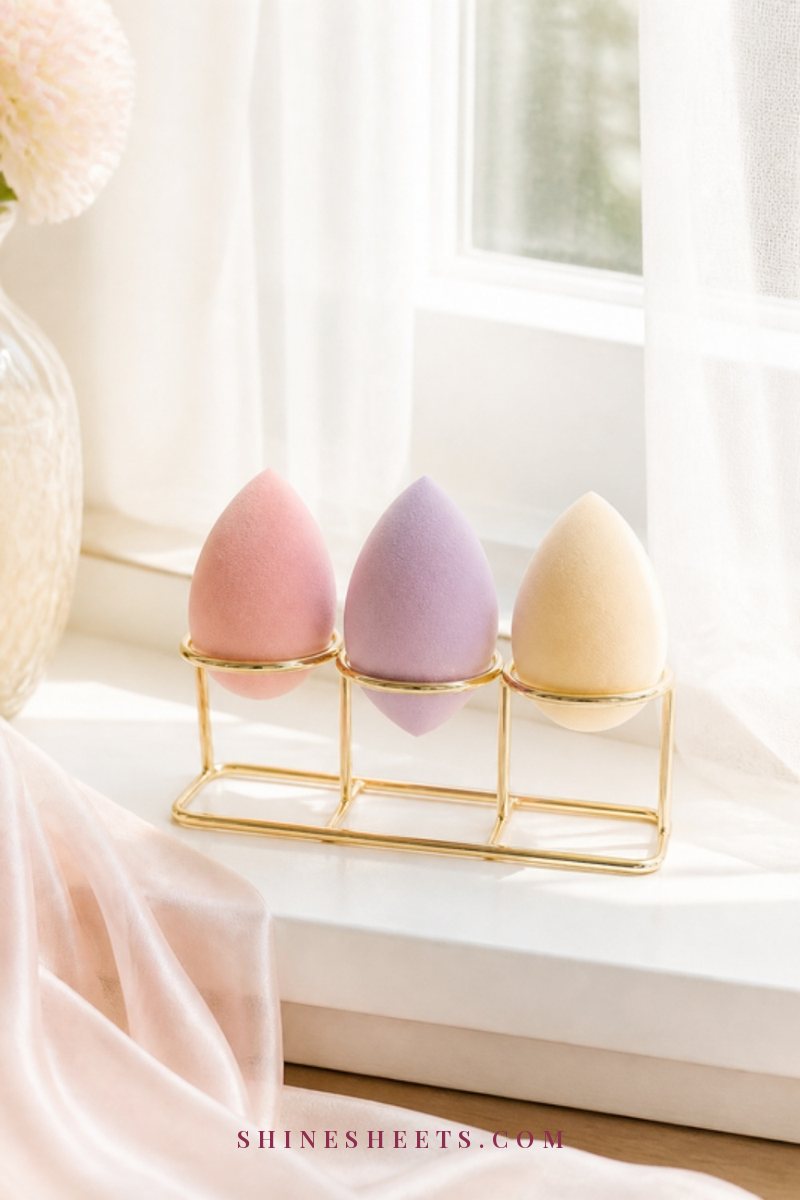
A declutter is the perfect moment for a little cleaning, since everything is already out. These small habits help your keep pile stay fresh longer:
- Wash your brushes and sponges. A blush silicone brush cleaning mat makes it quicker: swirl each brush with a little gentle cleanser on the textured side, rinse until the water runs clear, gently squeeze, and lay them flat or bristles down to dry so water doesn't run into the handle.
- Sharpen pencil liners to reveal a fresh tip, and wipe the sharpener.
- Clean the surface of powders by gently scraping off a hard, shiny layer with a clean spatula, if one has formed.
- Wipe every lid and cap, especially pumps and droppers where product dries.
- Toss anything you used during an eye infection or cold sore, like mascara, eyeliner or lip products, once you're better.
- Clean your makeup bag. Empty it, shake out the crumbs and wash it according to its fabric. My guide on how to clean your makeup bag has the step-by-step.
One more small habit worth keeping: use clean, dry hands or a spatula for jar products. Fingers dipping in and out is one of the quickest ways a cream turns before its time.
Put It Back So It Stays Calm
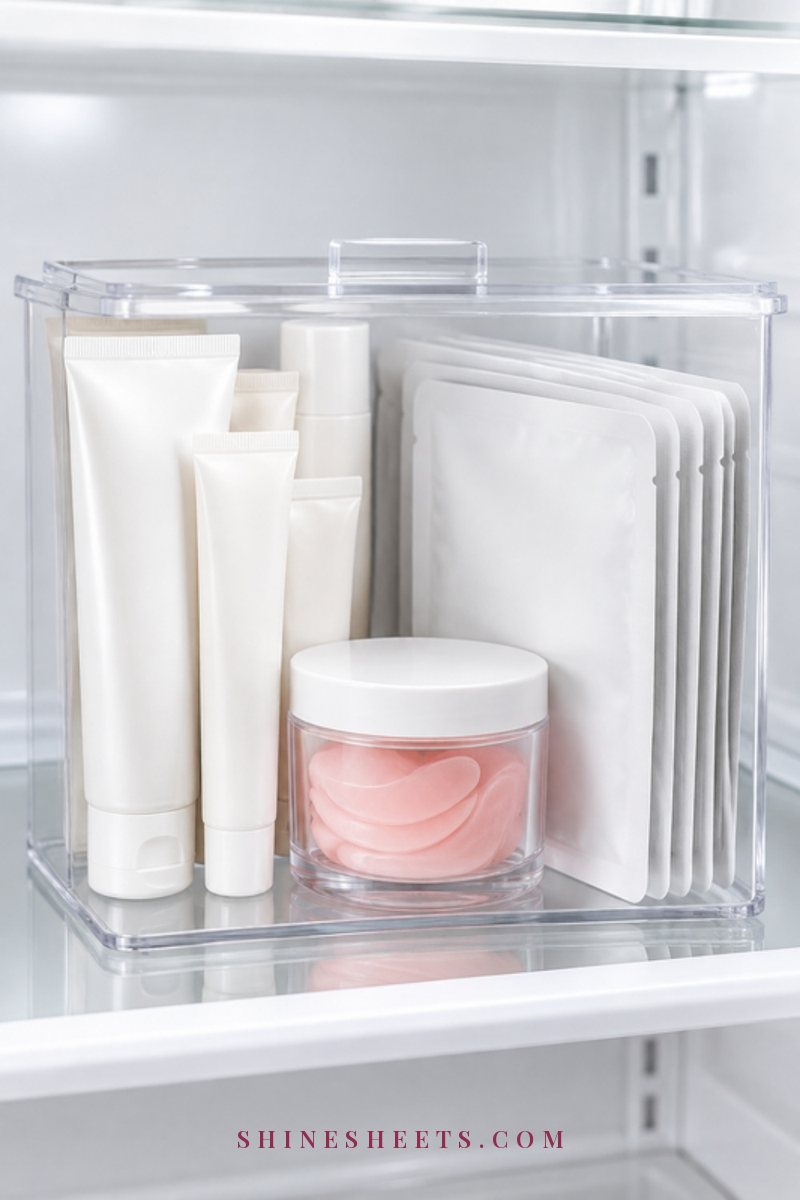
Now the good part: putting a smaller, fresher stash back in a way that makes sense. A few ideas that help it stay that way:
- Store by category and frequency. Daily items at the front and at eye level, occasional products behind or below.
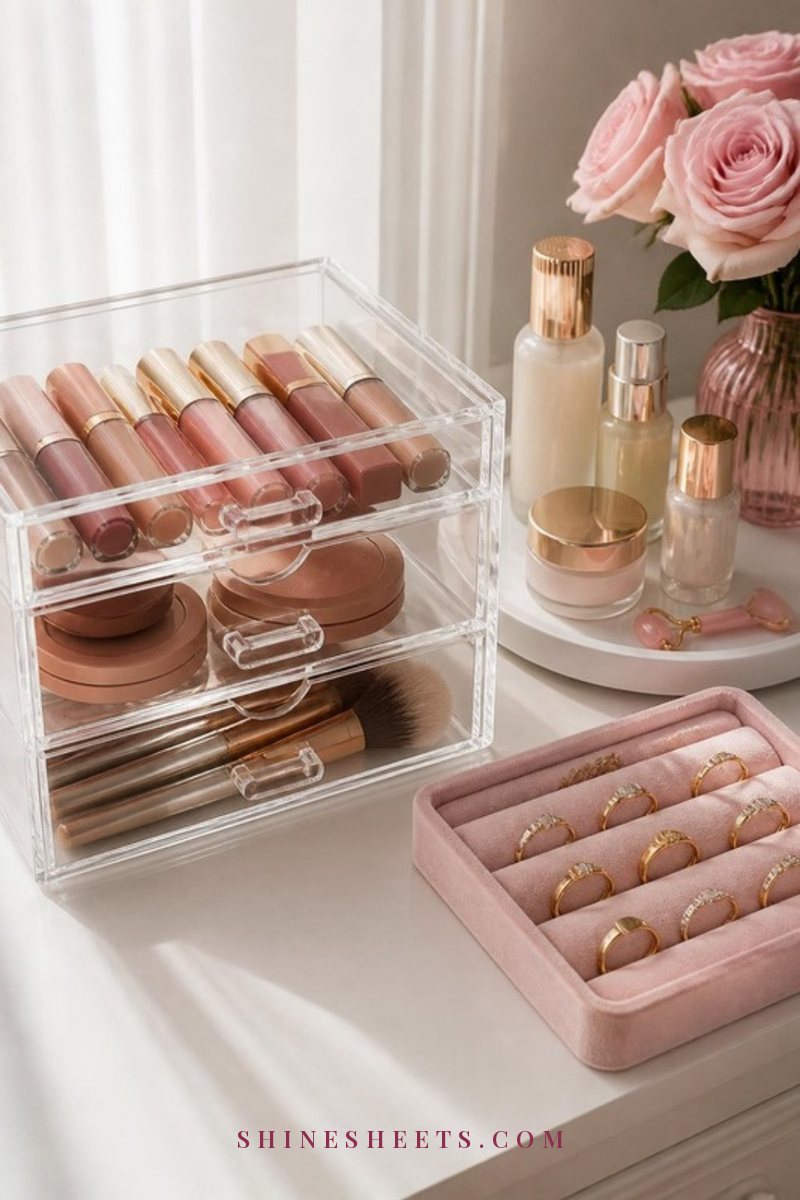
- Use dividers. A clear acrylic drawer organizer keeps lipsticks, compacts and small bottles visible, so nothing gets lost at the back again.
- Give overflow a limited home. A few small storage boxes with lids labeled "backups," "minis" and "body care" work well. When a box is full, that's your sign not to buy more of that category for now.
- Keep heat and steam away. If your bathroom gets very steamy, store skincare and makeup in a cool bedroom drawer or cabinet instead.
- Pack one bag, not five. Choose one cream makeup bag for daily carry with just a lip product, a pressed powder compact and a hand cream, instead of a full kit in every handbag.
If you'd like more storage ideas for a dressing table or bathroom, my roundup of vanity organization ideas has plenty to choose from.
The Use-Up Rule Before You Buy More
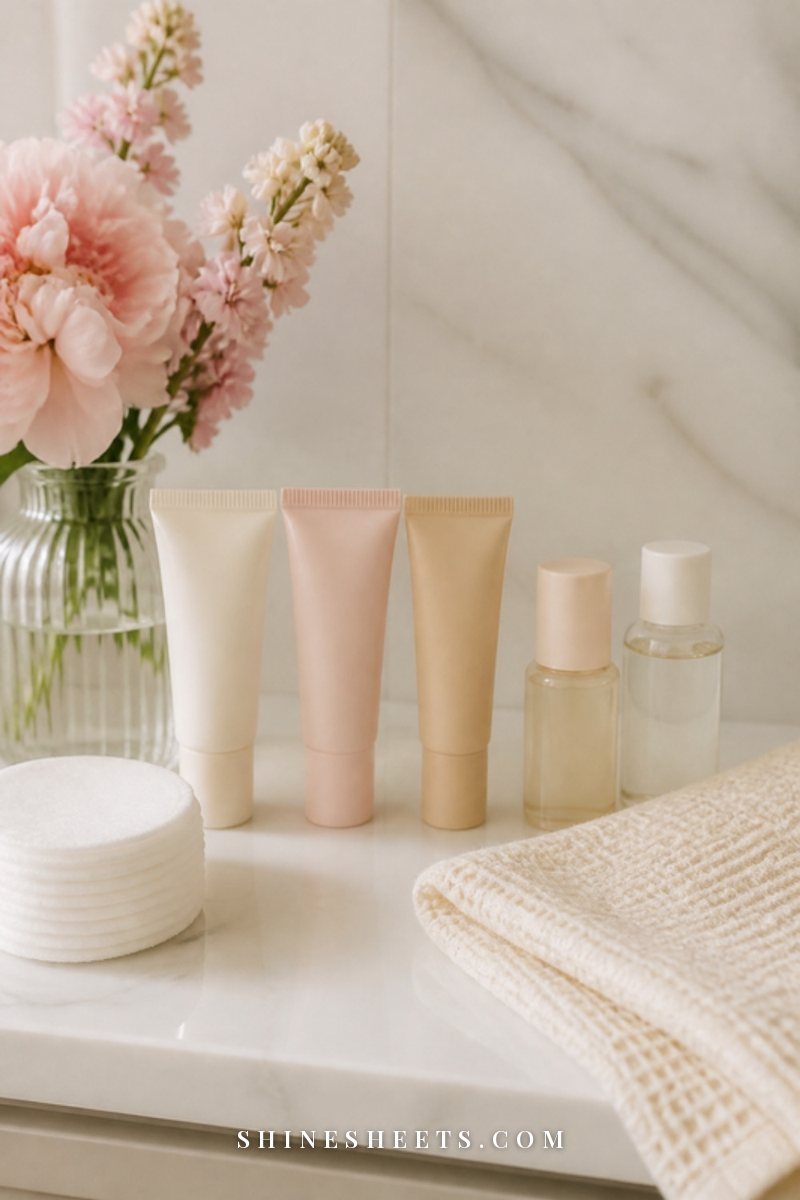
The declutter clears the past. The use-up rule keeps the stash from quietly rebuilding by March. It's simple:
One open, one backup, then finish before you buy. For each product type, you have one open product in use and, at most, one sealed backup. You buy a new one only when the open one is finished and the backup moves into use.
A few ways to make it feel easy rather than strict:
- Shop your use-up basket first. When you think you need something, check whether a version is already waiting there.
- Keep a short "running low" list in your notes or journal. When something is almost done, add it. That's your shopping list, not a whim at the checkout.
- Give new purchases a 48-hour pause. If you still want the product two days later, and it fills a real gap, go for it.
- Finish minis on purpose. Use them for weekends away or the gym bag so they get used instead of saved.
- Do a mini check every three months. A 15-minute look through the use-up basket and backups keeps things from drifting.
The rule isn't about never treating yourself. It's about enjoying the products you already have while they're at their best. And if you'd like to tackle the rest of your vanity in a broader way, my guide on how to declutter makeup and skincare goes product by product.
Final Thoughts
A beauty stash declutter isn't about owning less for the sake of it. It's about opening a drawer and seeing products you love, that work for your skin and that are still fresh enough to do their job. That small moment of calm every morning is worth one afternoon of sorting.
Be gentle with yourself as you go. Nothing in that pile is a mistake, and every item you finish, rehome or let go of makes the new year feel a little lighter and a lot more you.