Most skincare doesn't suddenly "go bad" on a specific day. It slowly loses strength once air, light, warmth and fingers get into it, and the clock starts the moment you open it, not the day you bought it. That's why a serum that's been sitting in a drawer for two years can be perfectly fine, while one you opened last spring might already be past its best.
The good news is that you don't have to guess. Almost every product carries a small clue on the packaging, and once you know how to read it (and what to look and smell for), keeping track becomes easy. I have combination, sensitive skin, so I've learned the hard way that an old product isn't just less effective. It can also be more irritating.
This guide answers how long does skincare last in a simple, practical way: how to read the open-jar symbol and expiry dates, typical lifespans for every product type, a lifespan table you can screenshot, the signs a product has turned, storage habits that help everything last longer, and easy ways to use things up before they go to waste.
Expiry Date vs. Period After Opening
There are two different "clocks" on skincare, and they measure different things.
- Expiry date (or "best before") tells you how long the product stays stable unopened. Most skincare is formulated to last around two to three years sealed, stored properly.
- Period after opening (PAO) tells you how long the product stays at its best once opened. This is usually much shorter, from a few months to a year or two.
Whichever comes first wins. If your moisturizer has a 12-month PAO but the expiry date is next month, the expiry date is the one to follow.
How To Read the PAO Symbol
Look on the back or bottom of the packaging for a tiny drawing of an open jar with its lid lifted. Inside or next to it, you'll see a number followed by the letter M, such as 6M, 12M or 24M. That number is the months the product is meant to last after opening.
A 6M means six months, 12M means one year. It's a guideline, not a hard cutoff, but it's based on stability testing and it's the best starting point you have.
How To Read an Expiry Date
Many products in the US don't carry an expiry date at all, because it isn't required for most cosmetics. Sunscreen is the big exception: it's regulated as an over-the-counter drug, so it should always have a printed expiry date. Products from Europe and Korea often show a clear "EXP" or "best before" date, sometimes printed in tiny letters on the crimp of a tube.
If you see a string of letters and numbers with no clear date, that's usually a batch code. It tells the brand when the product was made, and some brands list how to read it on their website. When there's no date at all, write the purchase month on the product yourself (more on that below).
Why Skincare Goes Off
Understanding what actually happens inside the bottle makes it much easier to protect your products:
- Air (oxidation). Every time you open a product, oxygen gets in. Ingredients like vitamin C, retinol and plant oils break down when exposed to it.
- Light. UV and even bright indoor light can break down sensitive actives, which is why many come in dark or opaque packaging.
- Heat and humidity. Warmth speeds up almost every kind of breakdown, and steamy bathrooms are a perfect environment for bacteria and mold.
- Contamination. Fingers, damp hands and open jars introduce bacteria. Preservatives fight it, but they don't last forever.
The result can be a product that simply doesn't work as well, or one that's more likely to irritate your skin or cause breakouts. Neither is worth it.
How Long Each Product Lasts After Opening
These are typical ranges. Always check the PAO on your own product first, and toss anything that shows signs of turning, even if it's still within the window.
Cleanser
Most cleansers last around 12 months after opening. Gel and foaming cleansers tend to be the most stable. Cleansing balms and oils can last 6 to 12 months, but keep an eye out for a rancid smell, since their oils can go off. Use a clean, dry spatula for balms rather than fingers.
Toner and Essence
Expect 6 to 12 months. Watery products are prone to contamination if the cap is left off or if you pour them into a bowl and back. Toners with exfoliating acids are generally stable, but if one starts to sting more than usual, it may have changed.
Serums
Most serums sit between 6 and 12 months. Hyaluronic acid and niacinamide serums are fairly stable. Peptide serums are usually fine for around a year. Serums with active ingredients that react to light and air need more care.
Vitamin C Serum
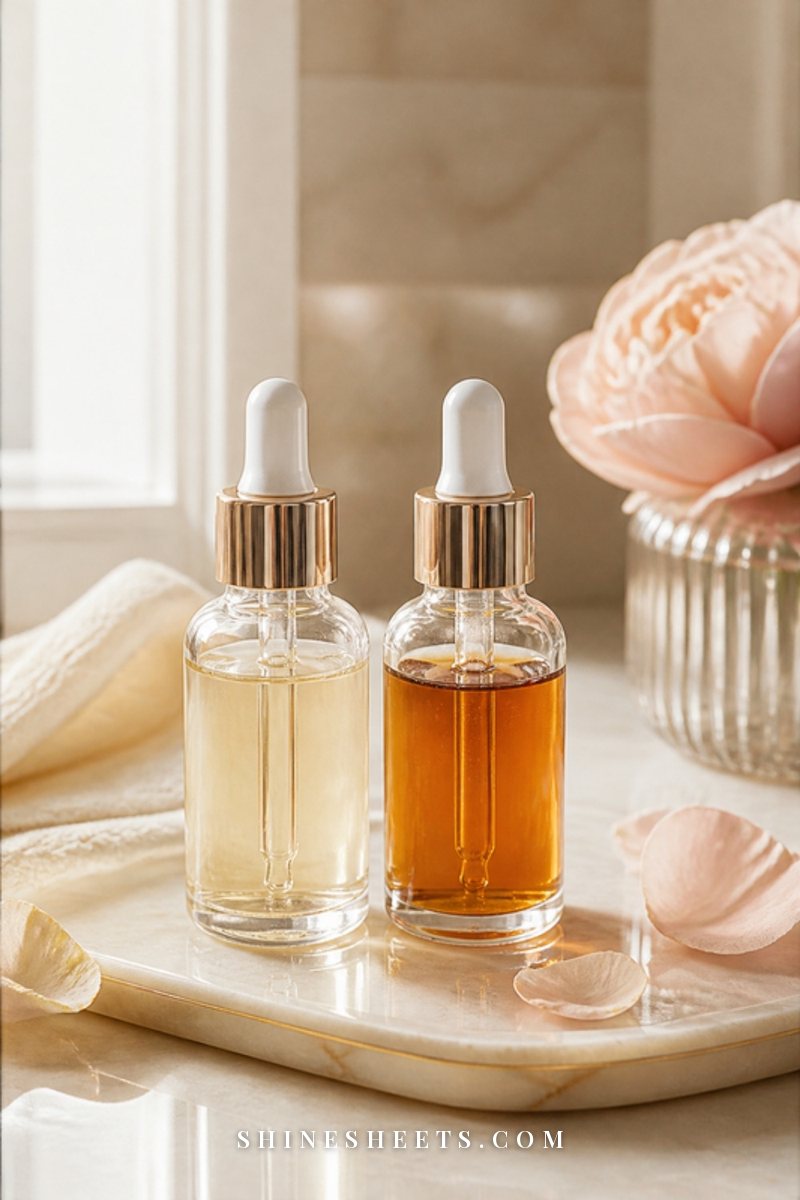
Vitamin C is the fussiest of all. Pure ascorbic acid serums often last only 3 to 6 months after opening, sometimes less if they're stored somewhere warm. The tell-tale sign is color: a fresh serum is usually clear or pale yellow, and it darkens toward orange or brown as it oxidizes.
Once it's noticeably orange, it's lost much of its benefit. If you're new to this ingredient, my guide to vitamin C serum covers how to choose a more stable form and how to use it.
Retinol
Retinol typically lasts 6 to 12 months after opening. It breaks down with light and air, which is why good formulas come in opaque tubes or airless pumps. If yours is in a dropper bottle, close it quickly after every use and keep it in a drawer, not on a sunny shelf. My retinol for beginners guide explains how to start slowly and what to expect.
Moisturizer
Usually 6 to 12 months. Moisturizers in pumps or tubes tend to last toward the longer end, because less air and no fingers get in. Jars are more exposed, so aim for the shorter end and always use a spatula.
Sunscreen
Follow the printed expiry date first. Once opened, most sunscreens are best used within 6 to 12 months, and it's much better to finish a bottle quickly by using enough. Heat is sunscreen's enemy, so never leave it in a hot car or in direct sun at the beach. If the texture has separated or the smell has changed, replace it, because protection you can't rely on isn't protection.
Eye Cream
Expect around 6 to 12 months. Because the skin around the eyes is delicate and eyes themselves are easy to irritate, this is one category where I'd lean toward replacing sooner rather than later.
Face Oils
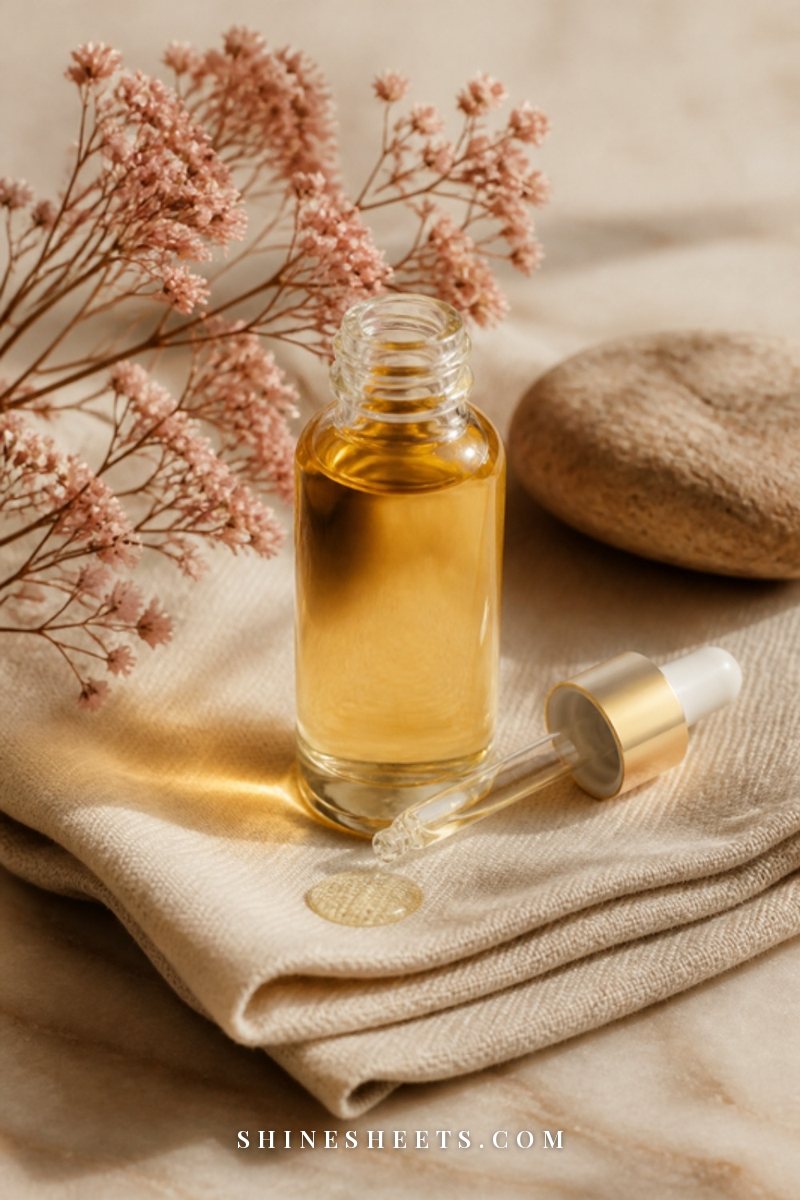
Most face oils last 6 to 12 months, though some delicate plant oils (like rosehip) can turn sooner. Oils don't grow bacteria easily, but they do go rancid. The sign is a smell: stale, crayon-like or slightly like old nuts. If it smells different from when you opened it, it's time.
Masks
Sheet masks are single-use, so open them and use them right away. Clay and wash-off masks usually last around 12 months, though clay can dry out if the lid isn't tight. Overnight or sleeping masks in jars are similar to moisturizers: around 6 to 12 months.
Natural and Preservative-Free Products
These have the shortest lives of all, often just 3 to 6 months, and some need to be kept in the fridge. If a product says "preservative-free" or "store in a cool place", take it seriously, buy small sizes and finish them quickly.
Skincare Lifespan Table
Here's everything in one place. Screenshot it and keep it on your phone for your next vanity clean-out.
| Product | Typical PAO | Signs it's off |
|---|---|---|
| Gel or foam cleanser | 12 months | Separation, sour smell, watery texture |
| Cleansing balm or oil | 6–12 months | Rancid or stale smell, grainy texture |
| Toner or essence | 6–12 months | Cloudiness, floating particles, new smell |
| Hydrating serum | 6–12 months | Color change, separation, stickier feel |
| Vitamin C serum | 3–6 months | Turns orange or brown, metallic smell |
| Retinol | 6–12 months | Yellowing, separation, less effect |
| Moisturizer (pump or tube) | 12 months | Separation, watery layer, sour smell |
| Moisturizer (jar) | 6–12 months | Spots, film on the surface, new smell |
| Sunscreen | Printed expiry date; 6–12 months once opened | Separation, grainy texture, changed smell |
| Eye cream | 6–12 months | Texture change, stinging, smell |
| Face oil | 6–12 months | Stale, crayon-like or nutty smell |
| Clay or wash-off mask | 12 months | Dried-out, cracked or moldy surface |
| Preservative-free or natural | 3–6 months | Any change in smell, color or texture |
For makeup, the timelines are different (and often shorter, especially for mascara). My guide on how often you should replace your makeup covers every product in your bag.
Signs Your Skincare Has Gone Off
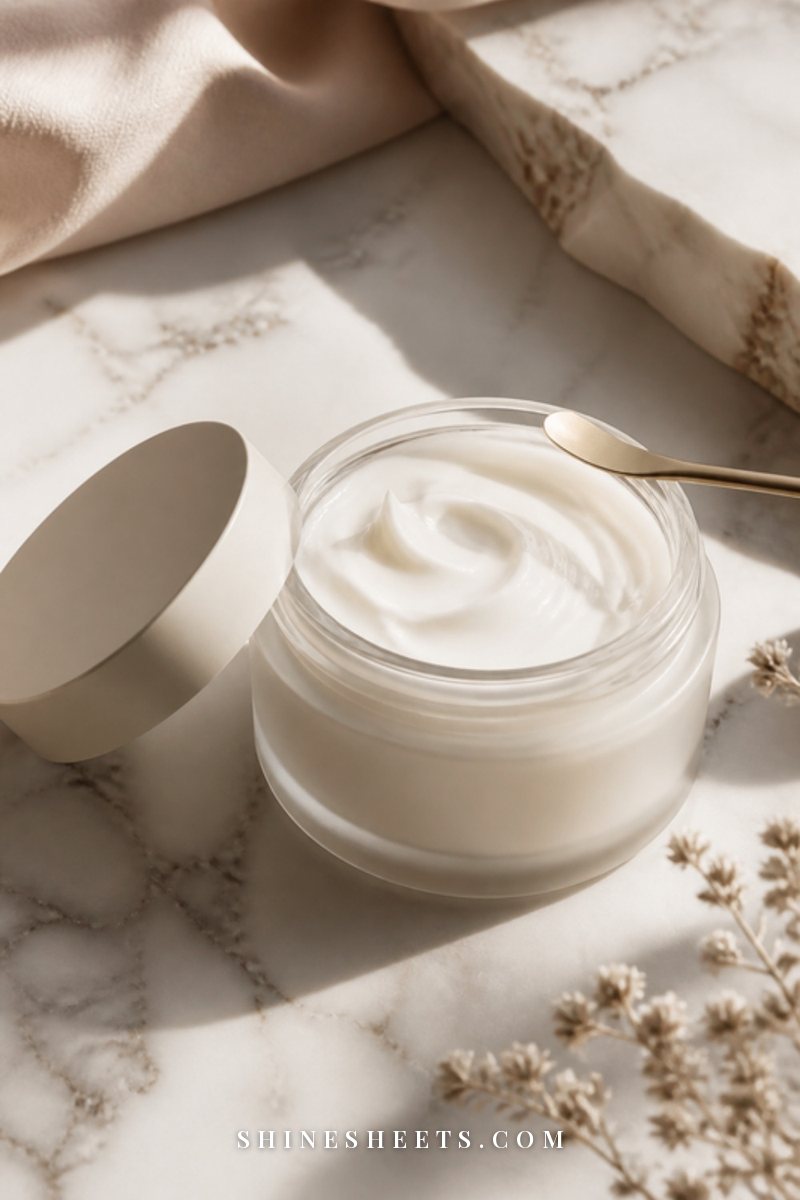
Dates are helpful, but your senses are the final check. Before using an older product, take ten seconds to look, smell and feel:
- Smell. Sour, rancid, musty or simply "different" is the clearest sign. Fresh products smell like they did when you opened them.
- Color. Darkening, yellowing or a new tint, especially in vitamin C, retinol and white creams.
- Separation. Watery layers, oily puddles or curdled bits that don't mix back together when shaken.
- Texture. Grainy, lumpy, runny where it used to be thick, or thick where it used to be runny.
- Spots or film. Any fuzzy spots or a film on the surface of a jar means it goes straight in the trash.
- Skin reaction. Stinging, redness or breakouts from a product you've used happily for months can mean it has changed.
If a product causes a rash, swelling or ongoing irritation, stop using it, and if it doesn't settle within a few days, check in with a doctor or dermatologist.
How To Store Skincare So It Lasts
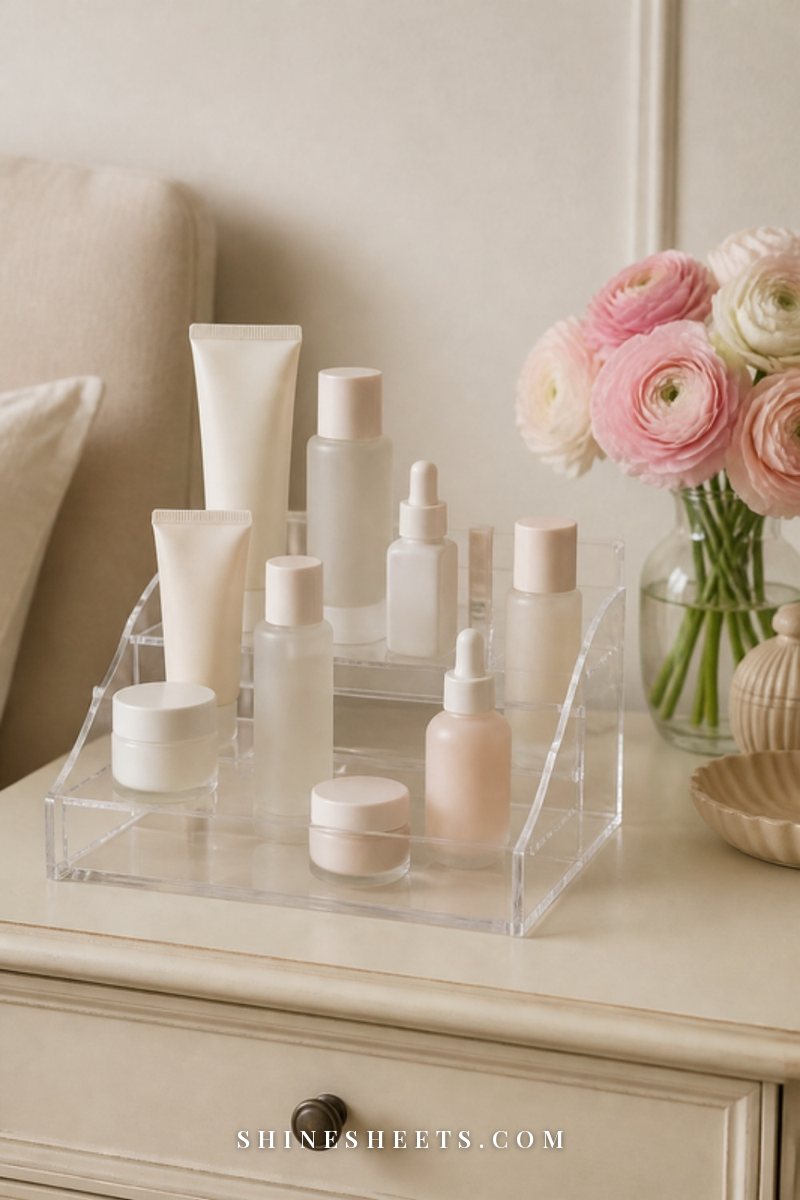
Good storage won't make a product last past its PAO, but it will keep it working well right up to the end. A few simple habits:
- Keep it cool and dark. A drawer or cabinet away from windows, radiators and heaters is ideal.
- Close lids right away. Every minute open lets in more air.
- Use clean, dry hands, or better, a spatula. A set of small cosmetic spatulas keeps fingers out of jars and balms.
- Don't add water. Never let shower water drip into a jar, and don't dilute products in the bottle.
- Keep actives together. A clear acrylic skincare organizer on a dresser or vanity makes it easy to see what you have and use the oldest first, without leaving things on a sunny windowsill.
Pumps vs. Jars
Pumps, tubes and airless bottles protect products from air and fingers, so they generally keep formulas fresher for longer. Jars are lovely to use but expose the whole surface every time you open them. When you have a choice, especially for vitamin C, retinol and rich creams, pumps and tubes are the safer bet.
The Bathroom Problem
The bathroom is the most common place to keep skincare and, unfortunately, one of the worst. Hot showers create heat and humidity several times a day. If you can, keep only your cleanser in the bathroom and move everything else to a bedroom drawer or a vanity. A clear organizer with drawers keeps serums and creams shaded, dust-free and easy to see. My vanity area ideas can help you create a pretty spot for it outside the bathroom.
Is a Skincare Fridge Worth It?
Most products don't need refrigeration, and some (like oils and certain emulsions) can change texture in the cold. But a small white skincare fridge can be a sensible pick if you live somewhere hot, use preservative-free products, or want to keep vitamin C serum stable for longer. Look for one with adjustable temperature and keep it set to cool, not cold. A cool, dark drawer does the job just as well for most routines.
Label the Open Date
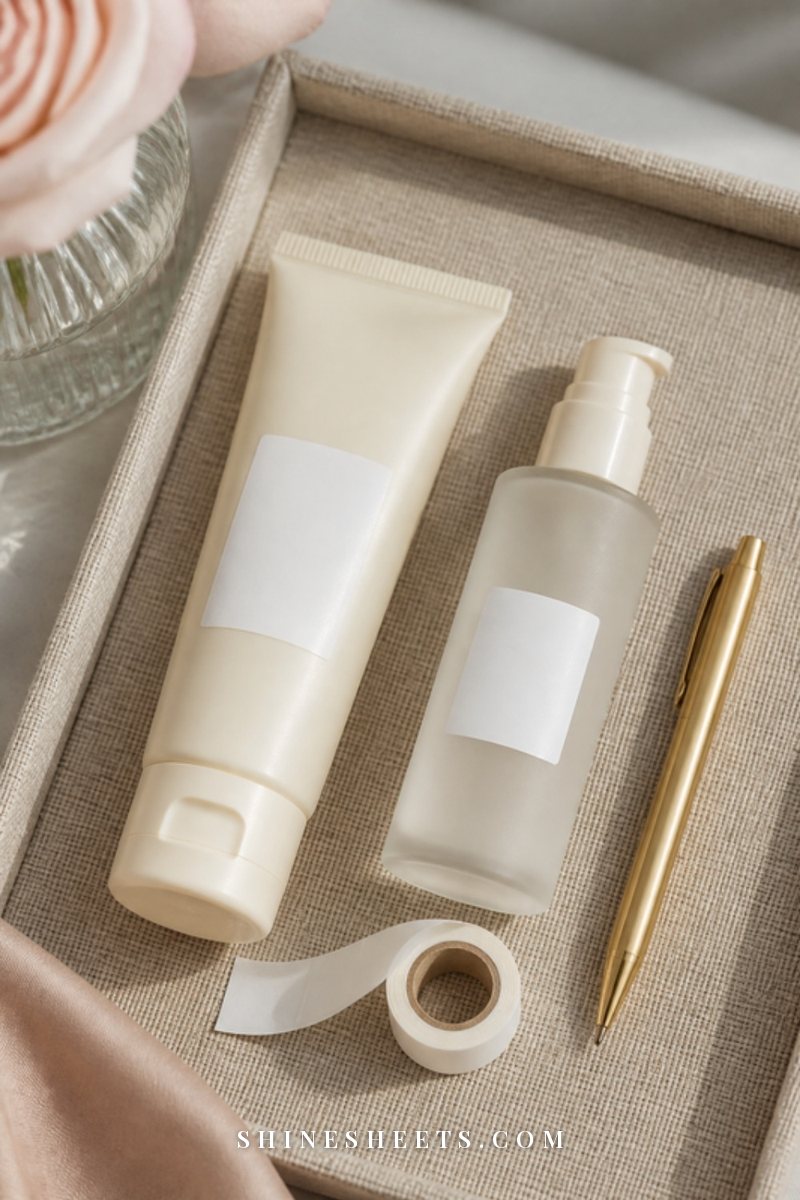
This is the simplest habit in the whole guide and the one that makes everything else easier. When you open a new product, write the month and year on it. You'll never have to wonder "when did I open this?" again.
A small portable label maker makes neat little stickers that look pretty on a vanity, but a fine marker on the bottom of the bottle works just as well. Some people also keep a note on their phone with the open date of each product. Pick whichever you'll actually keep up.
A quick formula: open date + PAO = use-by date. If you open a 6M serum in March, aim to finish it by September.
Using Up Products and Avoiding Waste
Throwing away half a bottle of expensive serum stings. The best way to avoid it is to buy and open less at once:
- Open one of each product type at a time. Two open vitamin C serums means one will likely expire before you finish it.
- Buy smaller sizes of delicate actives. Vitamin C, retinol and preservative-free products are worth buying in the smallest size.
- Do a monthly shelf check. Put anything close to its date at the front so you reach for it first.
- Use enough. Especially with sunscreen, using the full recommended amount means you'll finish the bottle well within its window.
- Repurpose gently. A body lotion that's still fresh but you don't love on your face can move to your hands or legs. Never repurpose anything that has already turned.
- Don't stockpile. Sales are tempting, but a backup that sits unopened for three years can go past its expiry date too.
A 20-Minute Skincare Clean-Out
If you haven't looked closely at your products in a while, set a timer for 20 minutes and work through them in this order:
- Gather everything in one place. Bathroom, bedroom, gym bag, travel pouch, the back of the drawer. Lay it all out on a towel.
- Check sunscreen first. Anything past its printed expiry date goes, no debate.
- Check the actives next. Look at the color of vitamin C and retinol products, and smell your face oils and balms.
- Open every jar. Look for spots, film or separation on the surface.
- Sort into three piles: keep, use up this month, and toss.
- Label the keepers. If you don't know when you opened something, write today's date and a question mark, and plan to finish it soon.
- Put things back in order. The "use up this month" pile goes front and center, everything else behind it.
Repeat this every three or four months and you'll never find a forgotten, separated cream at the back of the cabinet again. If the clean-out leaves you with a very short routine, that's often a good thing. My skincare routine for beginners shows how few products you really need to build a simple, effective routine.
Recycle what you can: rinse glass bottles and jars, separate pumps where your local rules allow, and check whether your area accepts beauty packaging. Pour liquids into the trash rather than the sink when the product is oily or thick.
When To Toss Right Away
Some situations call for no second chances, regardless of the date:
- Any visible mold or fuzzy spots.
- A product you used during an eye infection or a bad breakout flare, especially eye cream.
- Sunscreen past its printed expiry date.
- Anything that's been stored somewhere very hot, like a car in summer, and now looks or smells different.
- Products that suddenly cause stinging, redness or a rash.
When in doubt, throw it out. Your skin will thank you, and it's always cheaper than dealing with an irritated, unhappy complexion.
Final Thoughts
Knowing how long skincare lasts isn't about obsessing over dates. It's about a few small habits: checking the little open-jar symbol, writing the open date on new products, keeping things cool and closed, and trusting your nose when something seems off.
Do one quick clean-out with the table above, label whatever you open next, and you'll always know your routine is fresh, gentle and working as hard as it should. Your skin deserves products at their best, and now you know exactly how to keep them that way.