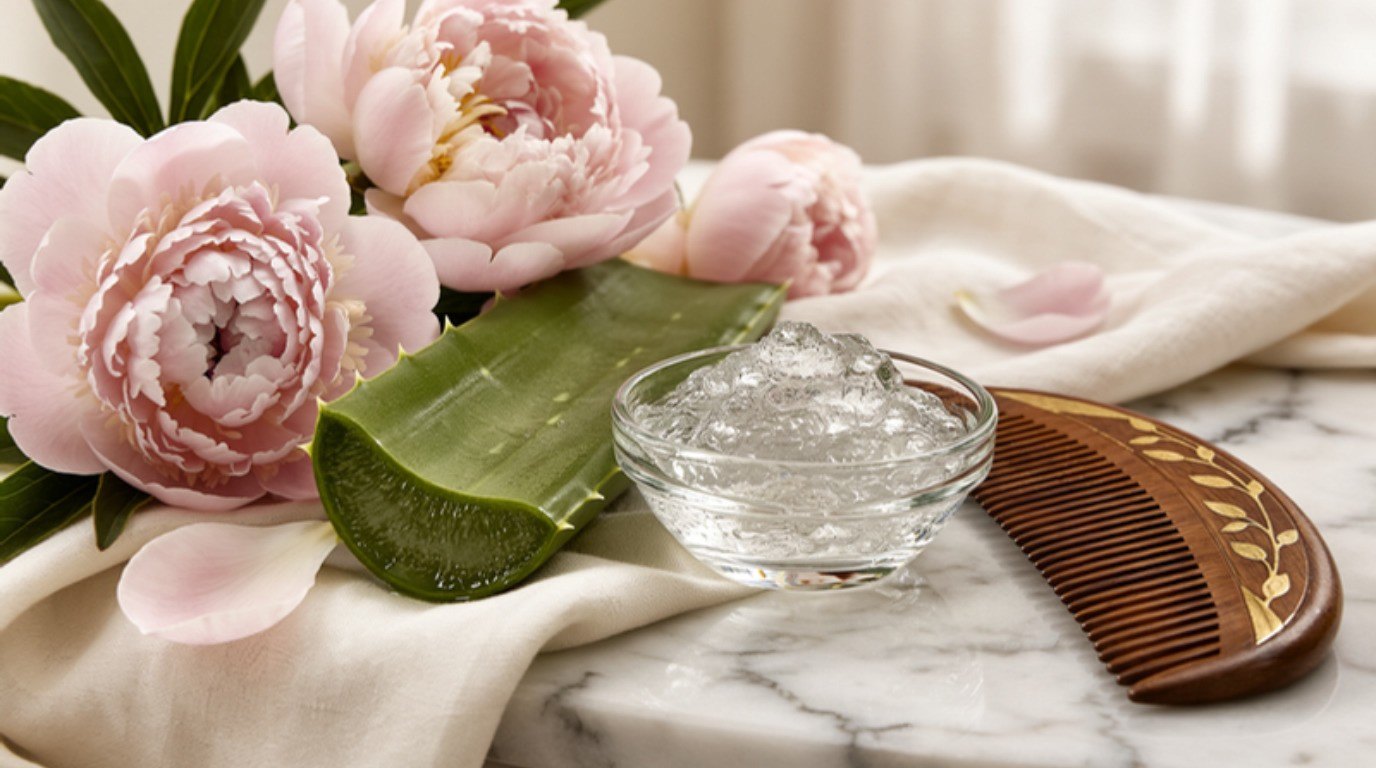
Aloe vera won't transform your hair overnight, and it doesn't need to. What it does well is quieter and, in my opinion, more useful: it calms a tight, itchy-feeling scalp, adds a light drink of moisture without weight, and gives strands a little slip so they detangle and lie smoother. That's a lot of good from one clear, slightly sticky gel.
The trouble is that aloe has picked up a reputation it can't quite live up to. You'll see it called a miracle for hair growth, a cure for dandruff and a replacement for conditioner. The truth is gentler. Most of the research on aloe is small, done in labs or focused on skin rather than hair, so it's best treated as a soothing helper, not a treatment.
This guide covers aloe vera for hair the honest way: what it can realistically do, what is mostly hype, how to choose between fresh leaf gel and store-bought gel, five simple ways to use it, how often, how to rinse it so it doesn't leave flakes, and who should be careful. There's also a quick table near the end you can screenshot for wash day.
What Aloe Vera Can Realistically Do for Your Hair
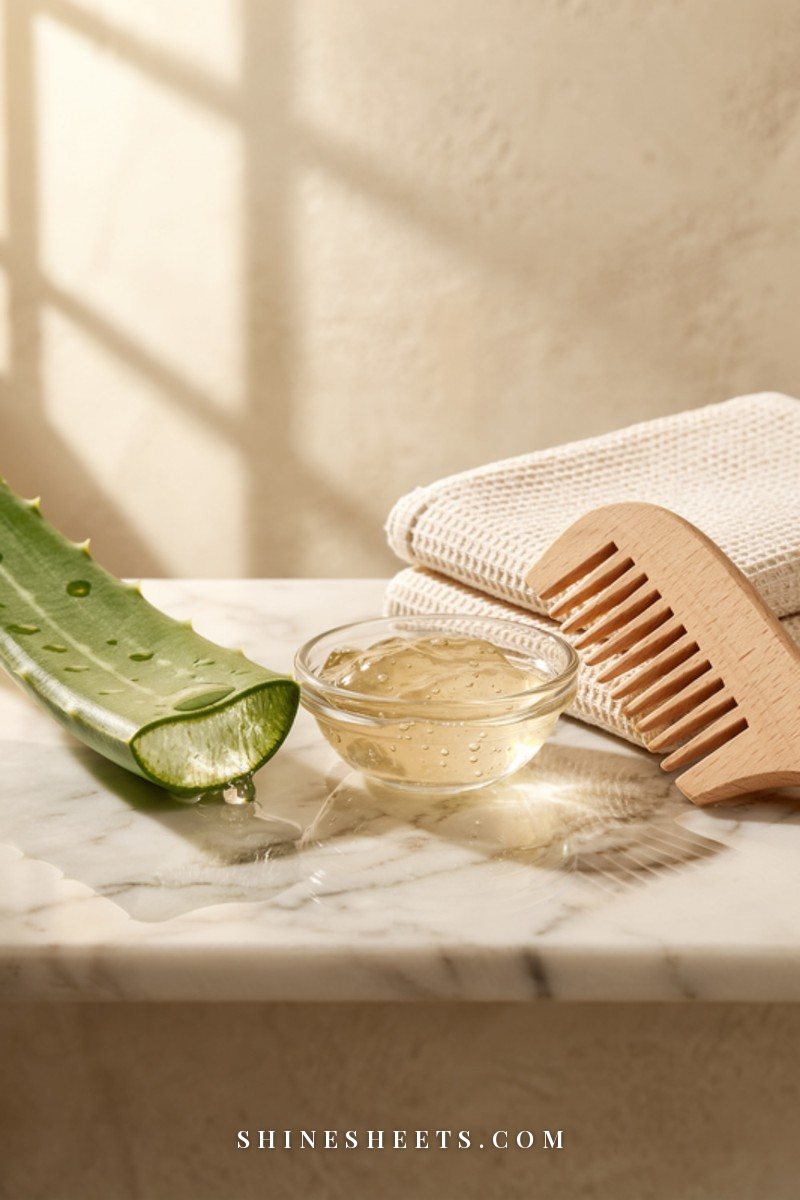
Aloe vera gel is mostly water, with small amounts of sugars (polysaccharides), amino acids, vitamins and enzymes. That makeup explains what it's good at. It's hydrating but light, it forms a thin, flexible film on the hair, and it feels cool and calming on skin.
Here's what you can reasonably expect when you use it well:
- Scalp comfort. Aloe feels soothing on a scalp that feels dry, tight or a little irritated after washing. That cooling feeling is one of the main reasons people love it.
- Light moisture. It adds water-based hydration without the heaviness of oils or butters, which makes it friendly for fine hair that collapses under rich products.
- Slip. A thin layer on damp hair helps a comb glide through, so you tug less and break fewer strands.
- Frizz control. That light film helps smooth the outer layer of the hair, so flyaways settle down a bit, especially on waves and curls.
- Soft hold. On curls and waves, aloe can give a gentle, touchable definition, similar to a very light gel.
If your hair tends to puff up the moment the air turns humid, my guide to smoothing frizzy hair pairs nicely with everything here, because aloe works best as one part of a calm routine rather than the whole plan.
What's Mostly Hype (and What the Research Says)
This is the part I wish more articles said plainly. You'll often read that aloe "regrows hair," "stops hair loss" or "doubles hair growth." There's no good human evidence for that. The studies people point to are mostly lab or animal studies, small trials, or research on aloe for skin and wound care that gets stretched to cover hair.
A few other claims to take with a pinch of salt:
- "Aloe cures dandruff." It may make a flaky, itchy scalp feel calmer for a while, but persistent dandruff usually needs a proper anti-dandruff shampoo or a dermatologist's advice.
- "Aloe repairs split ends." Nothing truly repairs a split end except a trim. Aloe can smooth the look of ends for a day or two, and that's it.
- "Aloe replaces conditioner." It doesn't have the conditioning agents that a real conditioner has. Think of it as a light extra, not a swap.
None of this makes aloe useless. It just means you get to enjoy it for what it is: a gentle, inexpensive comfort step. When your expectations match reality, you'll actually notice how nice it feels instead of waiting for a miracle that was never coming.
Fresh Leaf Gel vs Store-Bought Gel
Both can work. The right choice mostly depends on how much fuss you want and how sensitive your skin is.
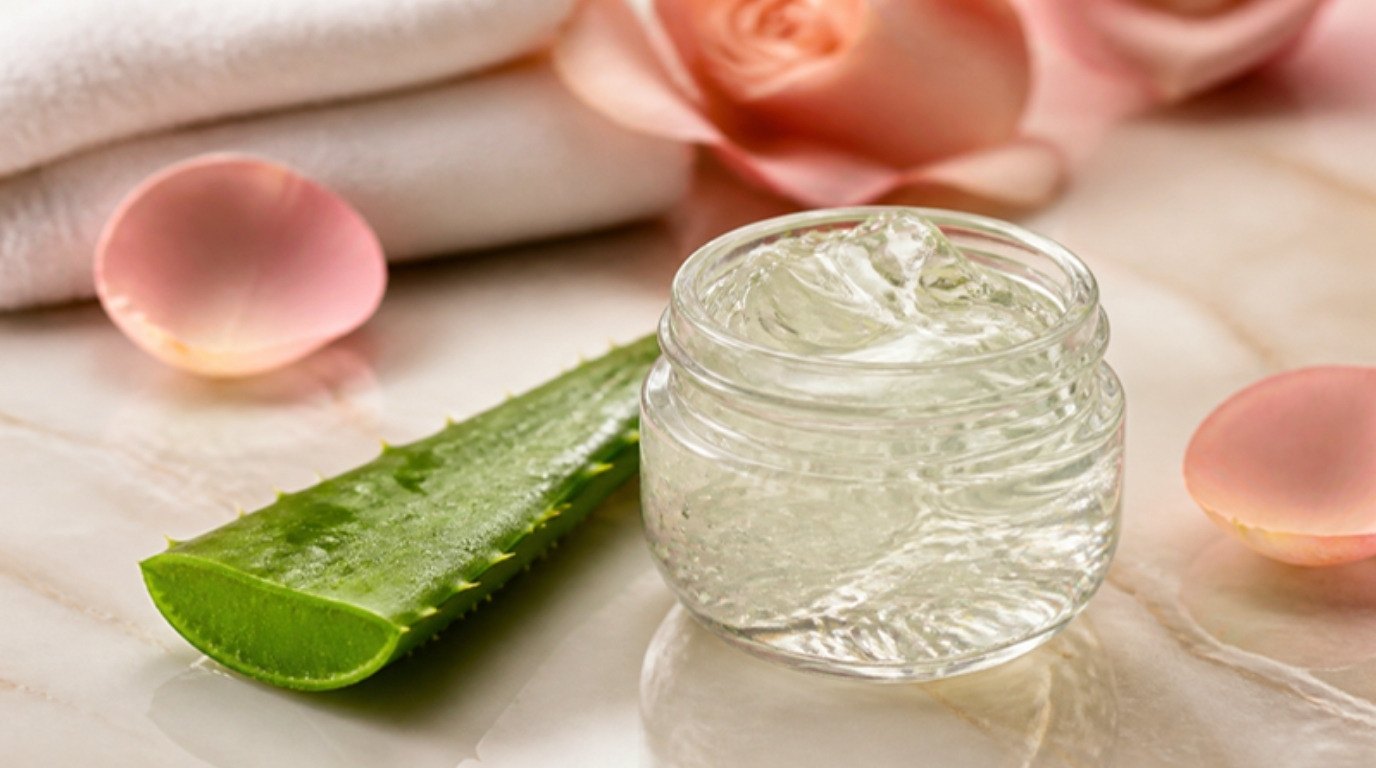
Fresh leaf gel comes straight from the plant. If you have an aloe on your windowsill, cut a thick outer leaf, stand it cut-side down in a glass for about 10 minutes so the yellow sap (called latex or aloin) drains out, then slice off the skin and scoop the clear inner gel. Blend it briefly or mash it with a fork, and strain out any lumps. That yellow sap can irritate skin, so draining it really matters. Fresh gel keeps only a few days in the fridge and can be stringy, which makes it harder to rinse.
Store-bought gel is smoother, lasts for months and is far easier to spread evenly. The catch is that some gels sold as "aloe" are mostly water, thickeners, color and fragrance with a splash of aloe added.
What To Look For on the Label
Turn the bottle around and check these things before you buy:
- Aloe first. Aloe barbadensis leaf juice (or gel) should be the first ingredient, ideally with a high stated aloe percentage.
- No drying alcohol high up. Avoid alcohol denat. or SD alcohol near the top of the list. (Fatty alcohols like cetyl or cetearyl alcohol are a different thing and are fine.)
- No added color. Real aloe gel is clear or very faintly cloudy, never bright green.
- Light or no fragrance. Especially if your scalp is sensitive.
- A short ingredient list. A preservative is normal and keeps the gel safe; a long list of extras is not needed.
If you'd rather skip the plant prep, look for a pure aloe vera gel in a clear bottle with a short ingredient list and aloe listed first. I'd choose an unscented one for hair, because you'll be putting it right on your scalp.
Patch Test First (Please Don't Skip This)
Aloe is gentle for most people, but not for everyone. Some people react to it, especially if they're allergic to plants in the lily family (like onions, garlic or tulips). I have sensitive, easily annoyed skin, so I'm a firm believer in testing anything new before it goes on my whole head.
Here's the simple way to do it:
- Dab a coin-sized amount of gel behind your ear or on your inner forearm.
- Leave it for 24 hours without washing the spot.
- Check for redness, itching, burning, bumps or swelling.
If anything looks or feels off, don't use it on your scalp. And if you notice redness or itching later, even after a good patch test, rinse it out and stop. Topical aloe can cause irritation or an allergic reaction in some people, so a one-day test is always worth the wait.
5 Ways To Use Aloe Vera for Hair
These are deliberately simple. No complicated kitchen mixes, no ten-ingredient masks. Pick the one that fits your hair, try it for two or three weeks, and see how your hair and scalp feel.
1. Pre-Wash Scalp Soother
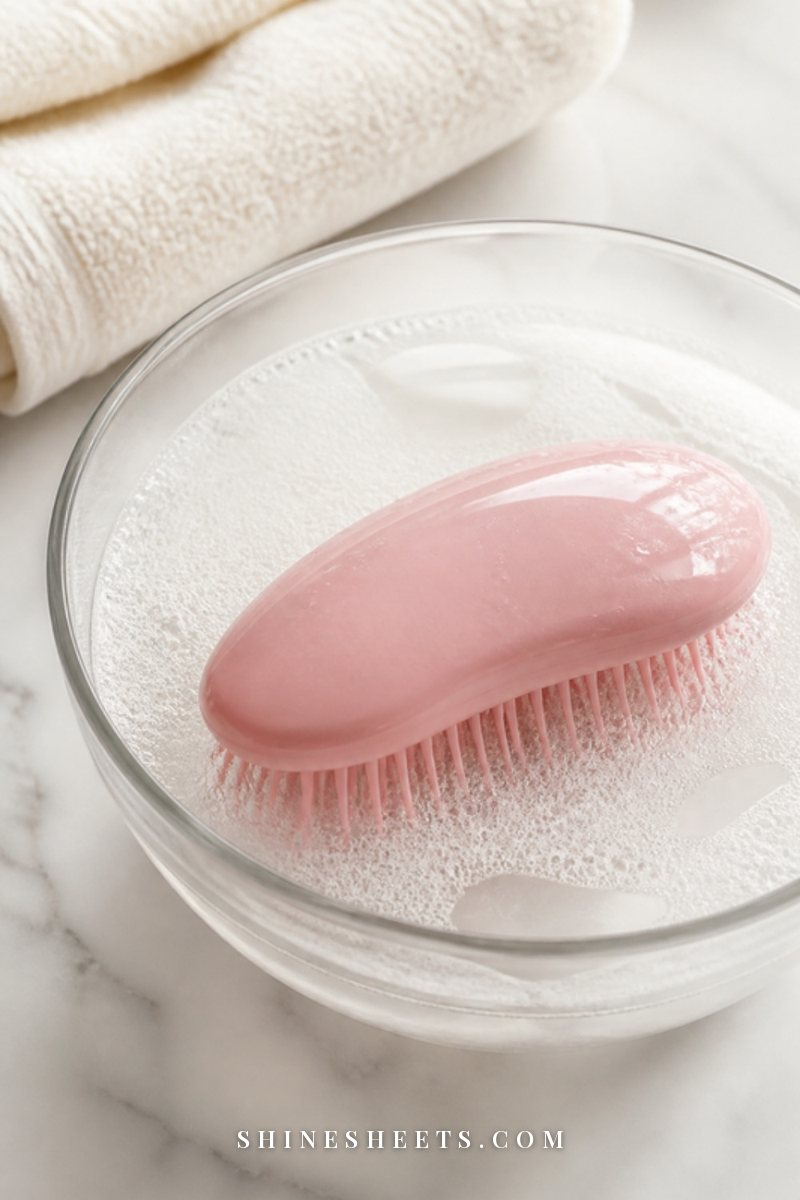
This is my favorite way to use aloe because it plays to its biggest strength: comfort.
- What you need: about 1–2 tablespoons of gel, depending on how much scalp you're covering.
- How: Part dry or slightly damp hair into four sections. Apply gel along the parts with your fingertips, then massage gently in small circles for 2–3 minutes. A soft silicone scalp massager brush in sage helps spread it without scratching, as long as you keep the pressure light.
- Leave on: 15–30 minutes, then shampoo as usual.
It's a lovely little pause before wash day, a bit like a mini scalp facial. If you want a full weekly plan around it, my weekly scalp care routine shows where a soothing step like this fits.
2. Light Leave-In on Damp Ends
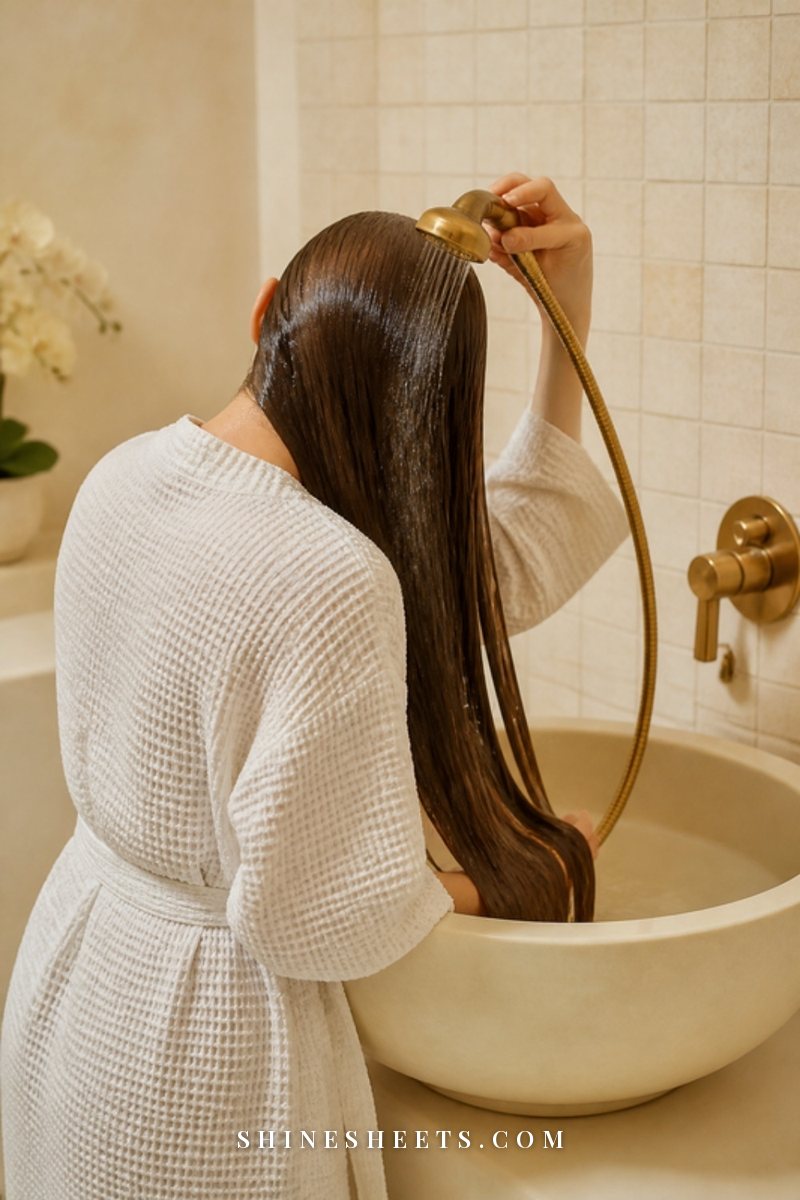
For fine or normal hair that hates heavy products, a tiny bit of aloe on the ends can be enough to soften them and calm frizz.
- Amount: a pea-sized to dime-sized dot for shoulder-length hair; a little more for long hair.
- How: After washing, gently squeeze out water with a soft cream microfiber hair towel (it's kinder than rubbing with a rough bath towel). Rub the gel between your palms and smooth it over the lower half of your hair only, keeping it away from the roots.
- Leave on: yes, until your next wash.
If your ends still feel dry, aloe probably isn't enough on its own. A proper leave-in will do more, and my guide to using leave-in conditioner explains how to layer one with a light gel like this.
3. Simple Overnight Treatment
This one is for dry, thirsty lengths that need a bit of extra softness, and for evenings when you want to do something kind for your hair without much effort.
- Amount: 2–4 tablespoons, depending on length.
- How: On dry or slightly damp hair, work the gel through the mid-lengths and ends. You can mix in a few drops of your usual conditioner to make it easier to rinse. Loosely gather your hair and cover it with a soft cotton or satin cap, and put an old towel over your pillowcase.
- Leave on: overnight, then shampoo and condition in the morning.
Keep this to the lengths rather than your whole scalp, especially the first few times. If you love the idea of a weekly treatment, a richer mask might suit you better on some weeks, and my guide to choosing the right hair mask helps you decide which one your hair actually needs.
4. Curl and Wave Definition Helper
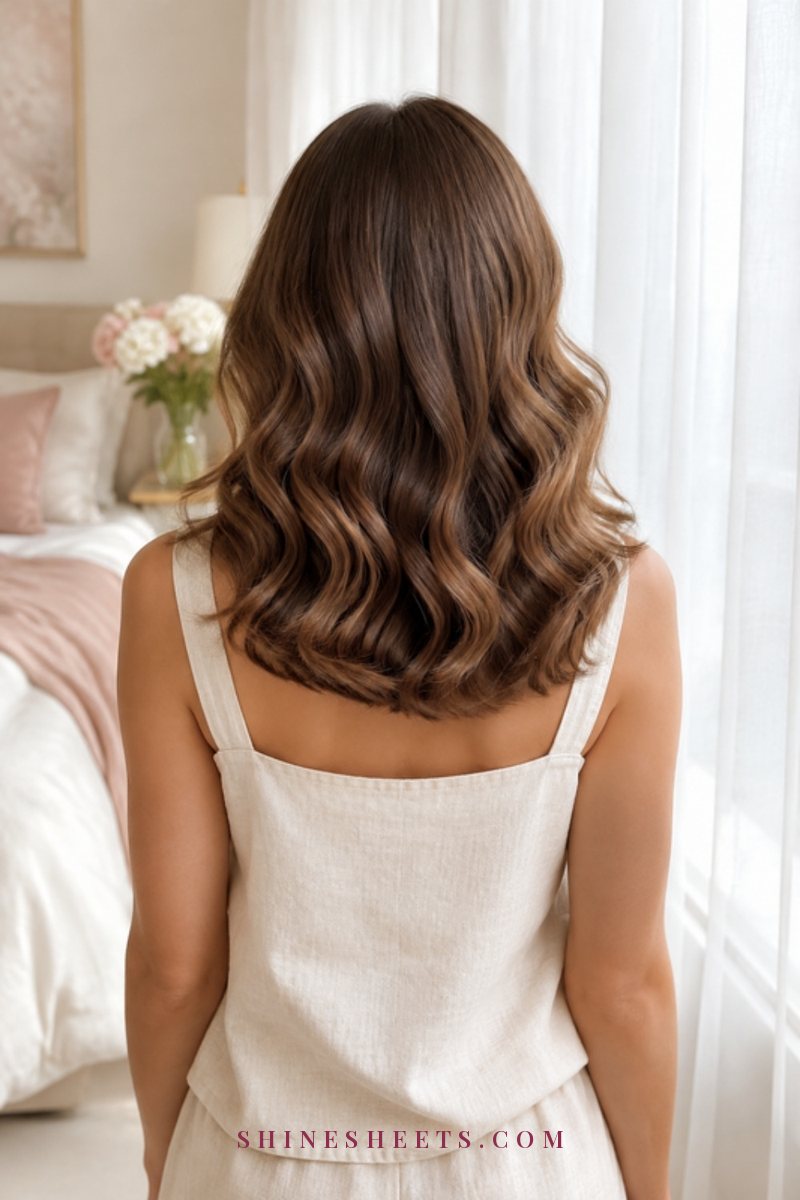
Aloe makes a surprisingly nice light gel for waves and loose curls. It won't give the firm cast of a strong styling gel, but it gives soft, touchable definition and helps clumps form.
- Amount: 1–2 teaspoons for shoulder-length waves; up to a tablespoon for long, thick curls.
- How: On soaking wet hair, after your leave-in, rake the gel through with your fingers or a wide-tooth detangling comb, then scrunch upward gently. Let it air-dry or diffuse on low, and avoid touching it until it's fully dry.
- Leave on: until your next wash.
If your hair feels crunchy once dry, scrunch it softly with your hands to break the light film. And if it feels a bit stiff, use less next time. Aloe on its own can feel tacky in very humid weather, so on those days a dot less is usually better.
5. Refresher Mist Diluted With Water
A refresher mist is the easiest way to bring a little life back to second- or third-day hair.
- Ratio: roughly 1 part aloe gel (or aloe juice) to 3 parts water.
- How: Mix in a clean fine-mist spray bottle, shake well, and spritz lightly over the lengths from about 8 inches away. Scrunch waves or smooth straight hair with your palms.
- Storage: make a small batch, keep it in the fridge and use it within a week. Throw it out sooner if it smells off or looks cloudy, because water-based mixes without a preservative don't keep long.
A fine mist matters here. A coarse spray soaks one spot and leaves the rest dry, while a fine one lays down an even veil.
Aloe Vera for Hair at a Glance
Here's everything above in one place. Screenshot it, save it in your phone's photo folder, and glance at it before wash day.
| Use | How to apply | Best for hair type | Leave-on time |
|---|---|---|---|
| Pre-wash scalp soother | 1–2 tbsp along sections of the scalp, light massage for 2–3 minutes | All types, especially dry or tight-feeling scalps | 15–30 minutes, then shampoo |
| Light leave-in | Pea- to dime-sized amount on damp ends only | Fine, straight or wavy hair that hates heavy products | Until next wash |
| Overnight treatment | 2–4 tbsp through mid-lengths and ends, covered with a soft cap | Dry, thick or coarse lengths | Overnight, then shampoo and condition |
| Curl and wave helper | 1 tsp to 1 tbsp raked through soaking wet hair, then scrunched | Wavy and curly hair | Until next wash |
| Refresher mist | 1 part aloe to 3 parts water, misted lightly over lengths | Second- or third-day waves, curls or dull straight hair | Until next wash |
How Often To Use Aloe Vera on Your Hair
There's no strict rule, but here is a gentle starting point:
- Scalp soother: once a week, or up to twice a week if your scalp feels dry and likes it.
- Overnight treatment: once a week at most. Every other week is plenty for many people.
- Leave-in, curl helper or mist: as part of your normal wash routine, as long as you don't notice buildup.
Watch for the signs that you're using too much: hair that feels stiff or coated, a dull look, white flakes on your shoulders, or roots that get limp faster than usual. If that happens, cut back and wash with a clarifying shampoo once to reset. More aloe isn't better aloe. The sweet spot is usually less than you'd expect.
Give any new routine three to four weeks before you decide how it's working. Hair changes slowly, and your first try is rarely your best one.
How To Rinse Aloe So It Doesn't Leave Flakes
The most common complaint about aloe is white, papery flakes once hair dries. They're usually just dried gel, not dandruff, and they're easy to avoid.
- Use a thin layer. Most flaking comes from too much product. Start smaller than you think.
- Apply to damp, not dry, hair for styling and leave-in uses, so the gel spreads thinly instead of sitting in clumps.
- Strain fresh gel well. Stringy bits from the leaf are the biggest flake-makers. Blend briefly and strain through a fine sieve or cloth.
- Rinse with lukewarm water first. Before shampoo, rinse for a full minute and run your fingers through your scalp to loosen the gel.
- Shampoo the scalp twice after a scalp soother or overnight treatment. The first wash lifts the gel, the second actually cleans.
- Don't layer it over heavy creams. Aloe on top of a rich styler can ball up and flake. Use one or the other, or a very light leave-in under it.
If you still see flakes after all that, and your scalp is itchy too, it may not be the aloe at all. My guide to calming a dry, itchy scalp can help you work out what's really going on.
Who Should Be Careful With Aloe
For most people, aloe gel on the hair is very low-risk. Still, a few people should go slowly or skip it:
- Anyone allergic to lily-family plants (such as onions, garlic or tulips), since aloe is related and reactions are more likely.
- People with very sensitive or reactive skin. Patch test every new gel, even if you've used aloe before, because the extras in each formula differ.
- Anyone with broken skin, open scratches or a flare of a scalp condition. Let it heal first and ask your doctor before putting anything new on it.
- Anyone with a persistent scalp problem, such as ongoing flaking, redness, patches or noticeable hair shedding. Aloe isn't a treatment for these, and a dermatologist can find out what's behind them.
And one gentle note: if your hair is thinning or shedding more than usual, that's worth a proper check with a doctor rather than another home remedy. You deserve real answers, not just a nice-smelling gel.
Final Thoughts
Aloe vera is at its best when you let it be what it is: a calm, light, inexpensive helper that makes your scalp feel soothed and your hair a little softer and smoother. It isn't a growth miracle, and it doesn't have to be.
Start with one way that fits your hair, patch test first, use a thin layer and give it a few weeks. That small, steady kind of care is often what makes hair feel its best, and you're already doing the most important part by being gentle with it.