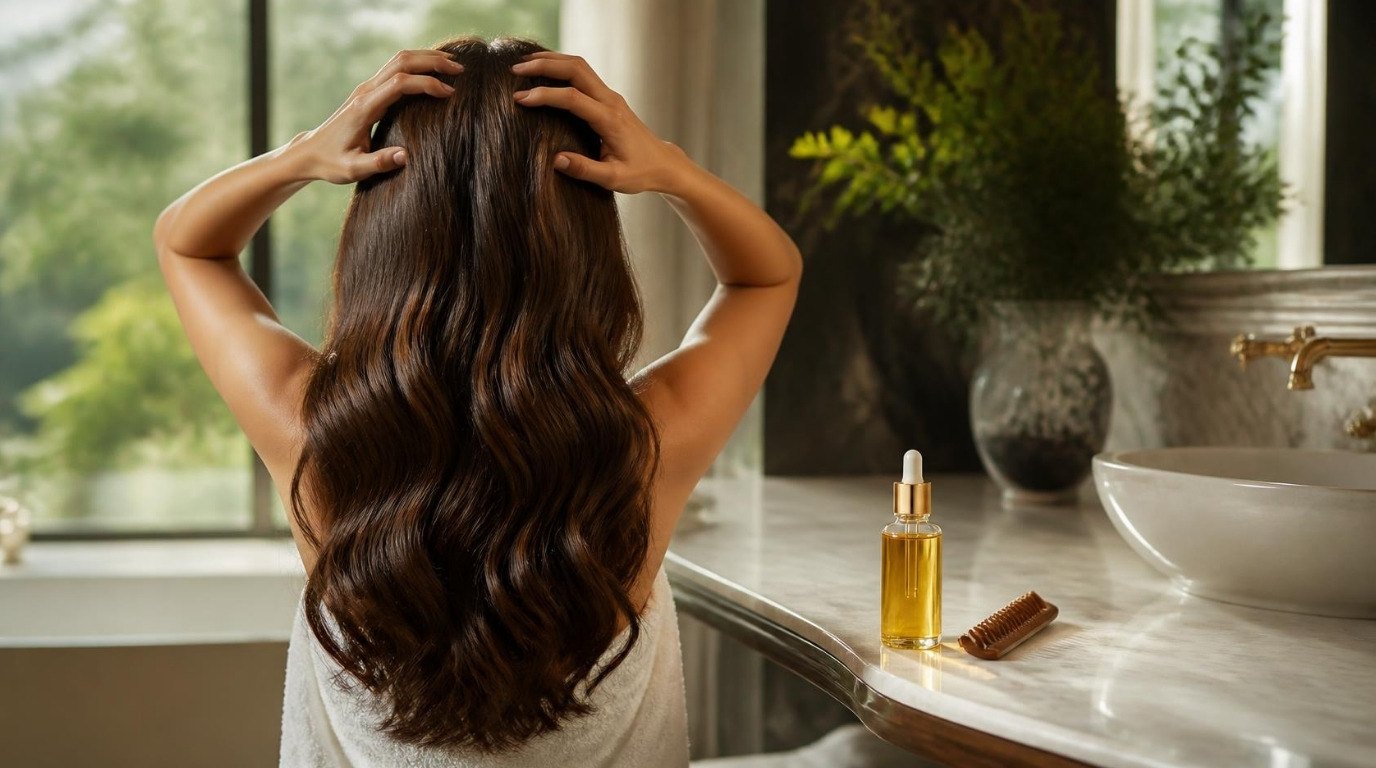
Scalp massage is one of the few hair habits that feels as good as it sounds. A few minutes of slow, firm circles can loosen tension you didn't know you were holding in your head, help products spread more evenly and turn a rushed hair wash into something closer to a spa moment. Whether it makes hair grow is a more complicated question, and you deserve an honest answer to it.
Here's the truthful version: scalp massage may support circulation and relaxation, and there's some early, limited research suggesting it could help hair look a little thicker over time. But it isn't a miracle cure for hair loss, and it works best as one calm part of a healthy scalp routine rather than the whole plan. I find that knowing this actually makes the habit more enjoyable, because there's no pressure on it to perform miracles.
This guide is all about scalp massage for hair growth and scalp health. You'll find what it can and can't do, a step-by-step fingertip technique, how to use a scalp massager brush in the shower, whether to add oil, how often to do it, adjustments for dry and oily scalps, a 5-minute routine table and the signs that hair loss needs a doctor rather than a massage.
Let's start with the honest part, so everything after it makes sense.
What Scalp Massage Can and Can't Do
Your scalp is skin, with blood vessels, nerves and muscles beneath it, and around each hair follicle there's a tiny support system that delivers what the hair needs to grow. Massage stimulates that area, and that's where most of the hopeful theories come from.
Here's what scalp massage may realistically help with:
- Relaxation. Many people carry tension in the scalp, temples and the base of the skull. Massage can ease that tight feeling and feel genuinely calming at the end of a long day.
- Circulation in the scalp. Gentle pressure increases blood flow to the area for a short time. Whether that alone makes a meaningful difference to hair growth isn't clear yet.
- Possibly thicker-looking hair over time. One small study found that a few minutes of daily standardized scalp massage over about six months was linked to thicker hair strands in a handful of men. It's interesting, but it's a tiny study, so treat it as a maybe, not a promise.
- Better product distribution. Massaging shampoo, scalp serum or oil spreads it evenly instead of leaving it in one spot.
- Loosening flakes and buildup before you shampoo, which helps your scalp feel cleaner.
And here's what it can't do:
- Reverse genetic hair thinning or regrow hair on its own.
- Fix hair loss caused by hormones, thyroid issues, low iron, stress, medications or other health reasons.
- Replace medical treatment when you need it.
- Show dramatic results in a few weeks.
If you think of scalp massage as scalp care that feels lovely and might give your hair a small helping hand, you'll enjoy it much more than if you're anxiously checking your hairline every morning. For the bigger picture, my scalp care routine covers cleansing, exfoliating and protecting your scalp week to week.
How To Massage Your Scalp With Your Fingertips
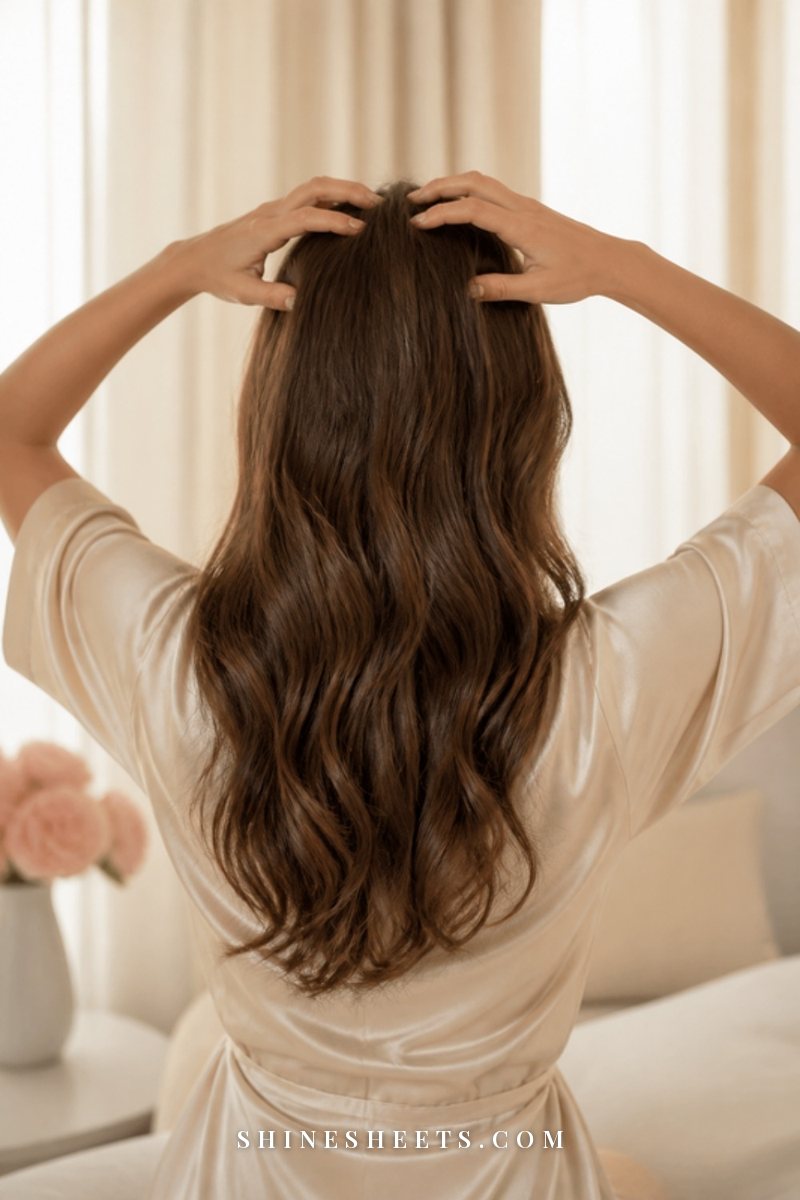
You don't need any tools to start. Your fingertips are perfectly designed for this, and you can do it on dry hair, on damp hair or while shampooing. Here's the basic technique:
- Sit or stand comfortably with your shoulders relaxed and dropped away from your ears. Take one slow breath out.
- Place the pads of your fingertips (not your nails) on your scalp. Spread your fingers slightly, as if you were holding a ball.
- Press gently but firmly, enough to move the skin of your scalp over the bone underneath. You should feel the skin shifting, not your fingers sliding over hair.
- Make small, slow circles, about the size of a coin, for 5 to 10 seconds in one spot.
- Lift and move your fingers about 2–3 cm (an inch) to a new spot and repeat. Don't drag your fingers through your hair, which can cause tangles and breakage.
- Cover the whole scalp in sections: hairline, temples, crown, sides, behind the ears and the base of the skull.
- Finish slowly with a few gentle presses along the hairline and a slow breath.
How Much Pressure To Use
Aim for the pressure you'd use to knead soft dough: firm enough to move the scalp, never so hard that it hurts. If your scalp feels sore or looks red afterward, ease up. Massage should never feel like scrubbing. Gentle, consistent pressure is far more useful (and kinder to the hair follicles) than intensity.
Which Direction To Move
Small circles are the classic movement, but you can also use gentle back-and-forth motions or slow presses where you hold for a few seconds and release. There's no single "correct" direction. A nice, simple flow is to start at the front hairline and work back toward the nape, because it naturally follows the way most people hold tension, and it ends at the base of the skull, which feels especially relaxing.
Your 5-Minute Scalp Massage Routine
Here's a simple routine to follow when you want a little structure. It takes five minutes and covers the whole scalp. Screenshot it and keep it near your shower or bed until it becomes automatic.
| Minute | Area | Movement |
|---|---|---|
| 0:00–1:00 | Front hairline and forehead edge | Small, slow circles with fingertips, moving from the center out toward the temples |
| 1:00–2:00 | Temples and above the ears | Gentle circles, then 3 slow presses and releases on each side |
| 2:00–3:00 | Crown and top of the head | Fingers spread, move the scalp in circles, lift and shift every 10 seconds |
| 3:00–4:00 | Sides and behind the ears | Small circles, slightly lighter pressure, covering the area in sections |
| 4:00–5:00 | Base of the skull and nape | Slow circles along the bony ridge, finish with 3 long, slow breaths |
If five minutes feels like too much on busy days, one or two minutes still counts. Consistency matters more than length.
Using a Scalp Massager Brush in the Shower
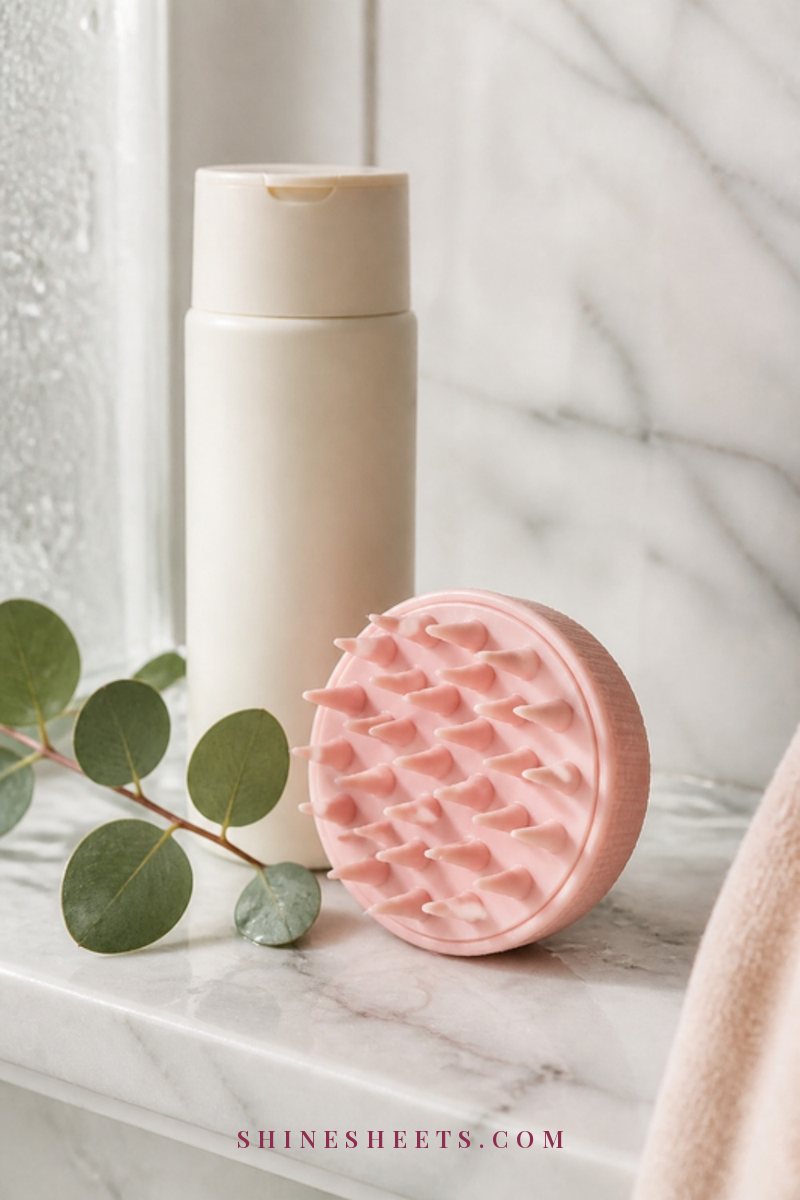
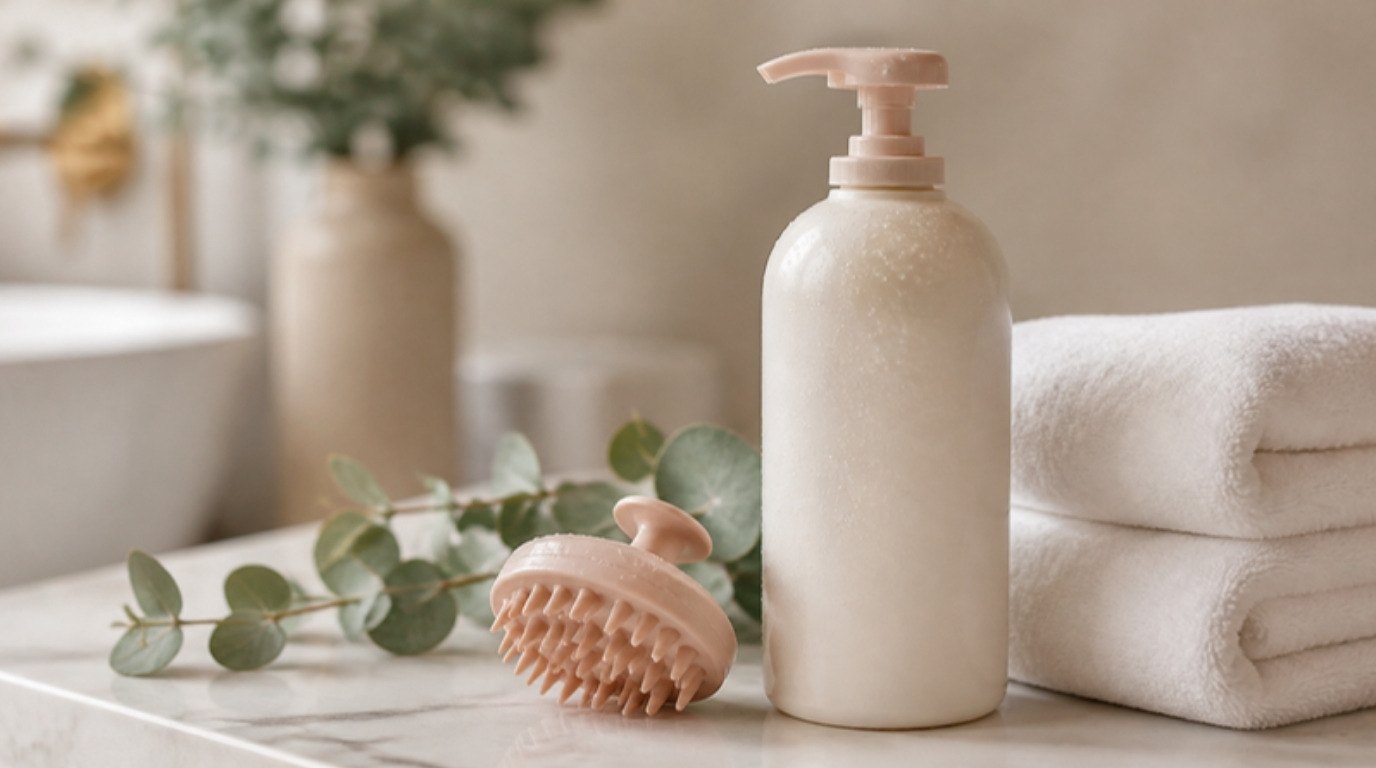
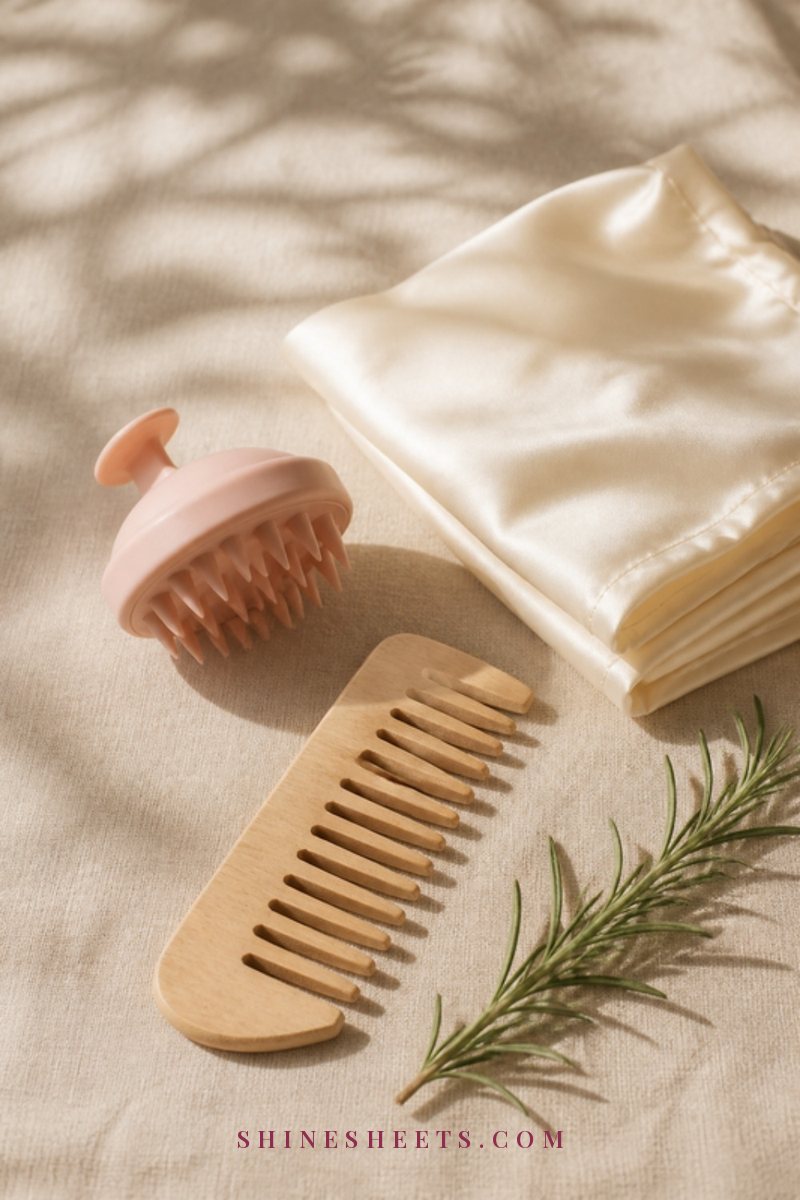
A silicone scalp massager shampoo brush is a small handheld brush with soft, flexible bristles. It fits in your palm and makes shampooing feel like a mini massage. It's also a nice option if you have long nails or your hands get tired easily.
How to use it:
- Wet your hair thoroughly and apply shampoo to your scalp, not your lengths.
- Hold the brush flat against your scalp and make small circles, the same way you would with fingertips.
- Work in sections from front to back for 1–2 minutes.
- Use light pressure. The bristles do the work, so there's no need to press hard.
- Rinse well, then rinse the brush and let it dry upright.
Choose soft silicone bristles rather than hard plastic, especially if your scalp is sensitive. Avoid using the brush on very tangled or curly lengths, because it's designed for the scalp, not for detangling. Clean it weekly with a little shampoo and warm water.
Are Electric Scalp Massagers Worth It?
An electric scalp massager uses rotating or vibrating heads to do the circles for you. They can feel wonderful, especially at the end of a tense day, and they're helpful if your hands or wrists tire quickly.
They're not essential, though. There's no evidence that an electric device works better than your own fingertips for hair, so think of it as a comfort purchase rather than a hair growth tool. If you choose one, look for soft silicone nodes, a waterproof design if you want to use it in the shower, and a gentle setting. Keep sessions to a few minutes, and don't use it on irritated or broken skin.
Scalp Massage With or Without Oil
You can massage your scalp completely dry, with damp hair, with shampoo or with a little oil. Each has its place:
- Dry massage: easiest for daily relaxation, no wash needed.
- During shampoo: the most convenient way to build the habit.
- With oil: best for a weekly pre-wash treatment, especially for a dry scalp.
- With a scalp serum: a lighter option if you don't want to wash afterward.
Choosing a Light Oil
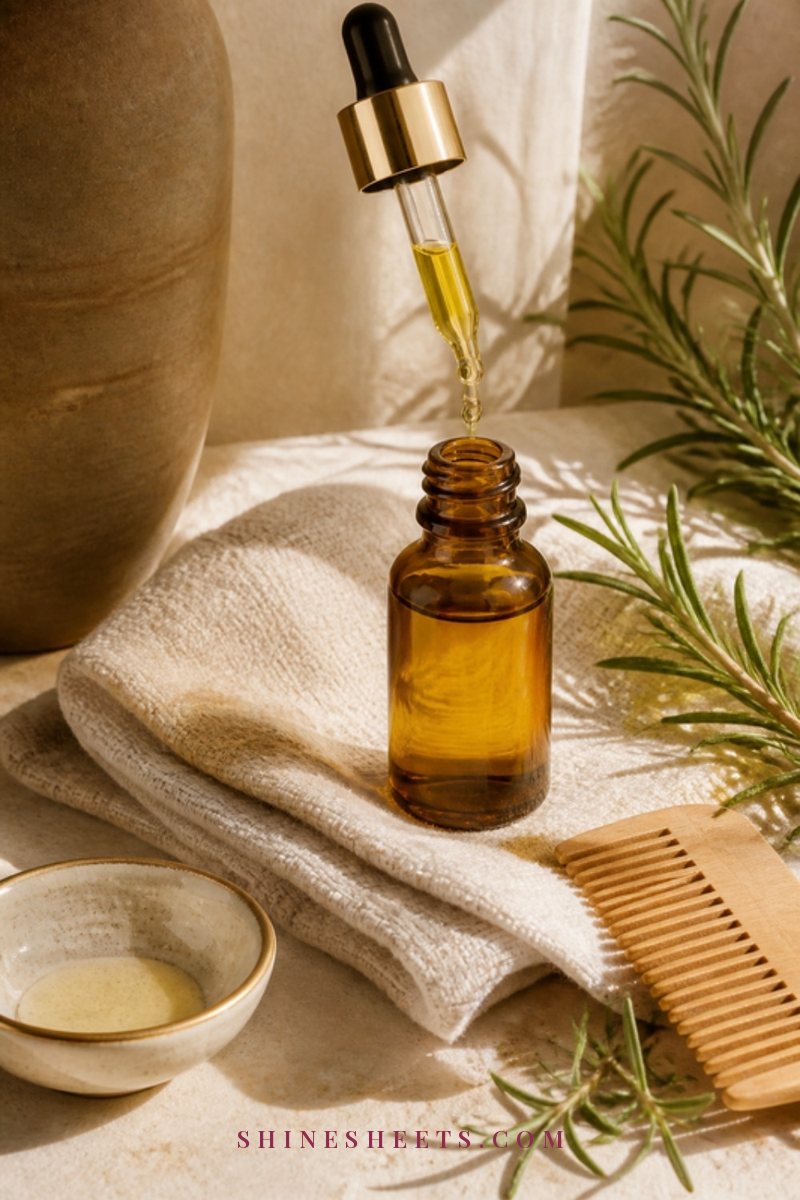
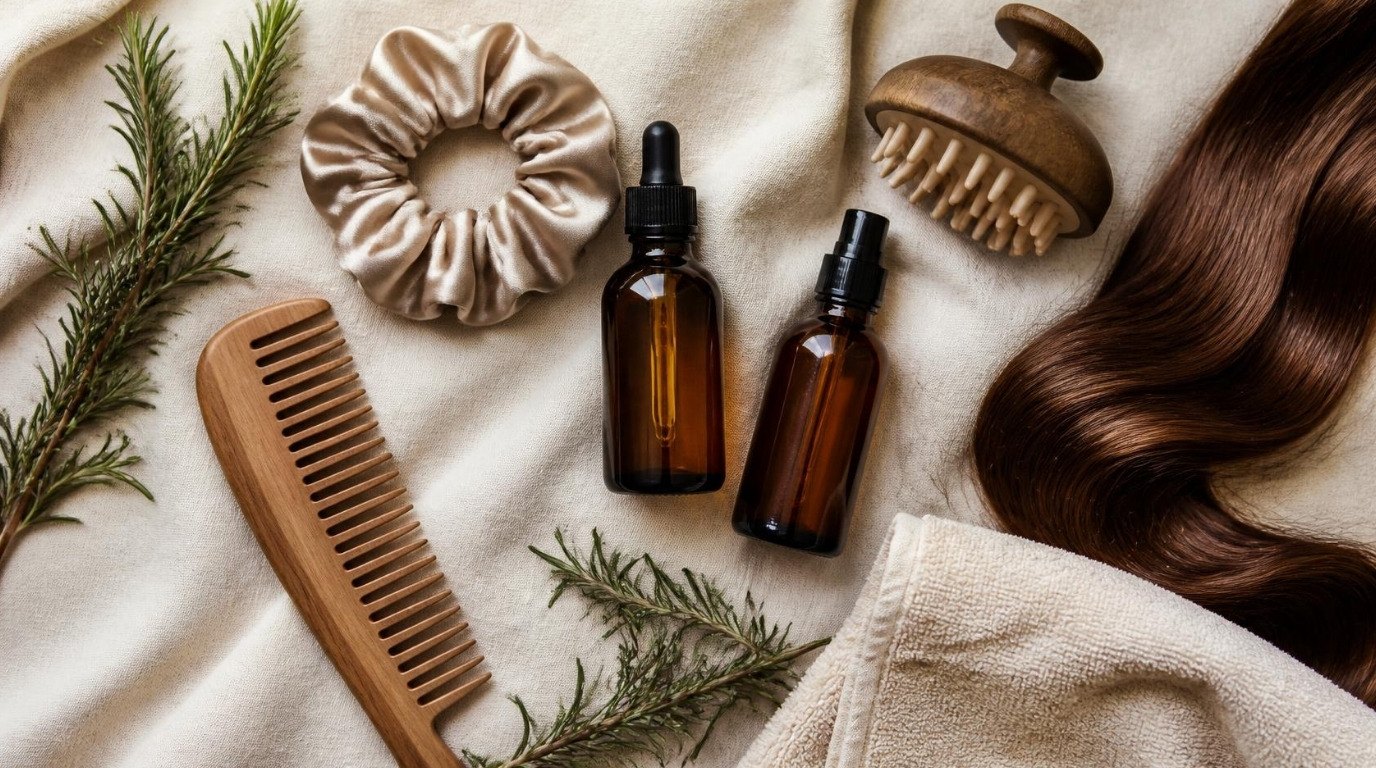
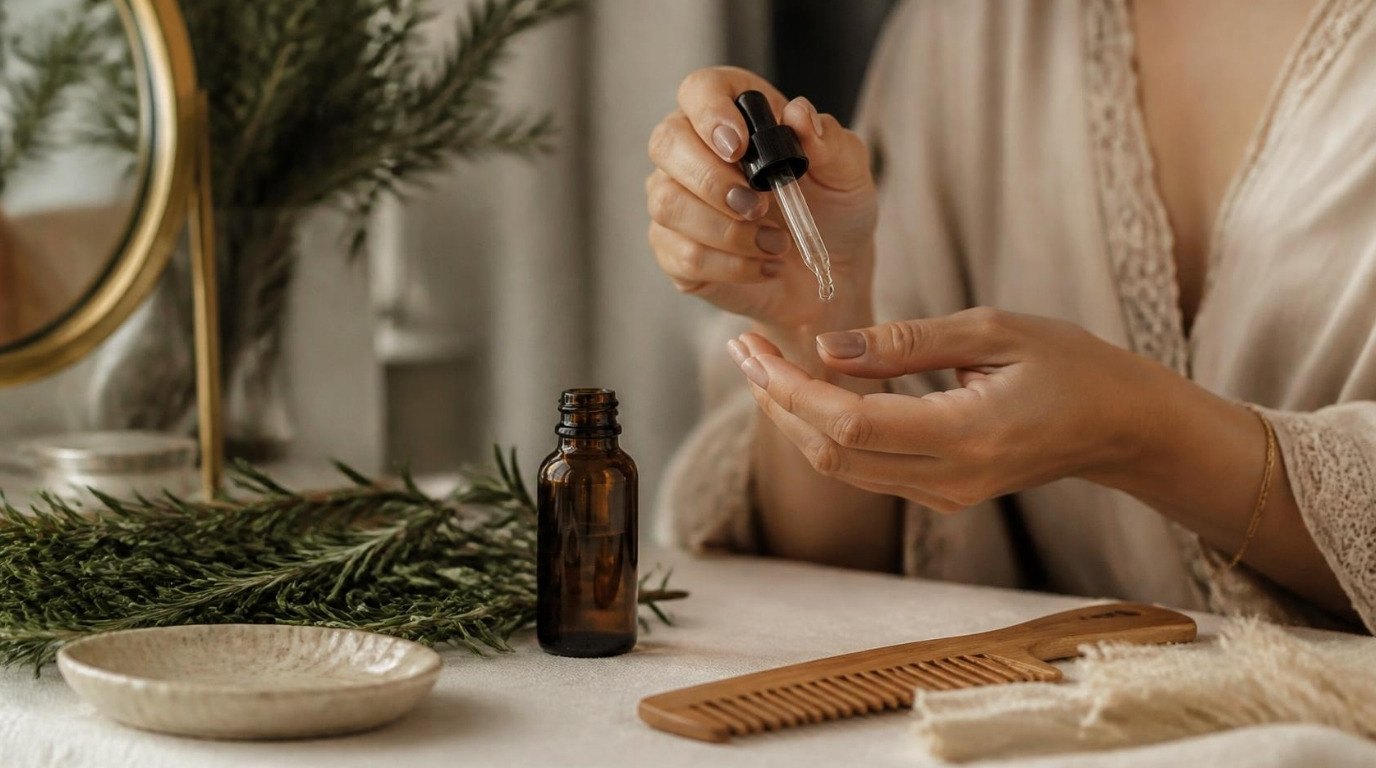
For scalp massage, lighter oils are easier to wash out and less likely to feel heavy. Jojoba, grapeseed, sweet almond and argan oil are all good options. Use about half a teaspoon, applied with a dropper directly onto your parting in a few lines, then massage in.
Rosemary oil is popular for scalp massage right now, and a ready-blended rosemary hair oil is much easier than mixing your own. The research on rosemary is still early, so enjoy it for the ritual and the scent rather than expecting dramatic results. My guide on how to use rosemary oil for hair growth explains it in more detail.
A few rules keep oil massage gentle:
- Patch test first. Apply a little behind your ear and wait 24–48 hours, especially with essential oil blends.
- Never use undiluted essential oils on your scalp.
- Less is more. Too much oil is hard to wash out and can leave buildup.
If you want a lighter option for between washes, a lightweight scalp serum can be massaged in without needing to shampoo afterward. If you love oil treatments, my guide to hair oiling covers lengths as well as the scalp.
How To Wash It Out
Leave oil on for 20 minutes to a couple of hours, not for days. Before wetting your hair, apply shampoo directly to your oily scalp and massage it in. Shampoo grips oil better when hair is dry. Then add water, lather and rinse. Shampoo a second time if your scalp still feels slick. Follow with conditioner on your lengths only.
How Often To Massage Your Scalp
For most people, a few minutes daily or most days is ideal. Here's a simple guide:
- Dry fingertip massage: 3–5 minutes daily, any time of day. Many people like it before bed.
- Shower massage with fingertips or a brush: every time you shampoo, for 1–2 minutes.
- Oil massage: once a week, or once every 1–2 weeks if your scalp tends to be oily.
- Electric massager: a few minutes, a few times a week.
If you're hoping it will support hair thickness, the research that exists used daily massage over many months. So the honest advice is to choose a routine you'll genuinely enjoy, because consistency is the whole point.
Scalp Massage for Dry vs Oily Scalp
Your scalp type changes how you approach massage. Here's how to adjust.
If Your Scalp Is Dry
A dry scalp often feels tight and itchy and may flake. Weekly oil massage before washing can feel soothing. Use a gentle shampoo, lukewarm water and light pressure, and avoid scrubbing with your nails. If flakes are a regular problem, a gentle weekly scalp exfoliation can help, but keep it to once a week and never on the same day as a vigorous massage.
If Your Scalp Is Oily
Massage can stimulate the scalp, and some people with oily scalps find vigorous massage makes their roots feel greasier faster. Keep it light, focus on massage during shampooing rather than dry massage between washes, and skip heavy oils. A water-light scalp serum or a simple dry massage before washing is enough. Wash your scalp massager brush regularly so you're not reintroducing oil and buildup.
Making It a Relaxing Ritual
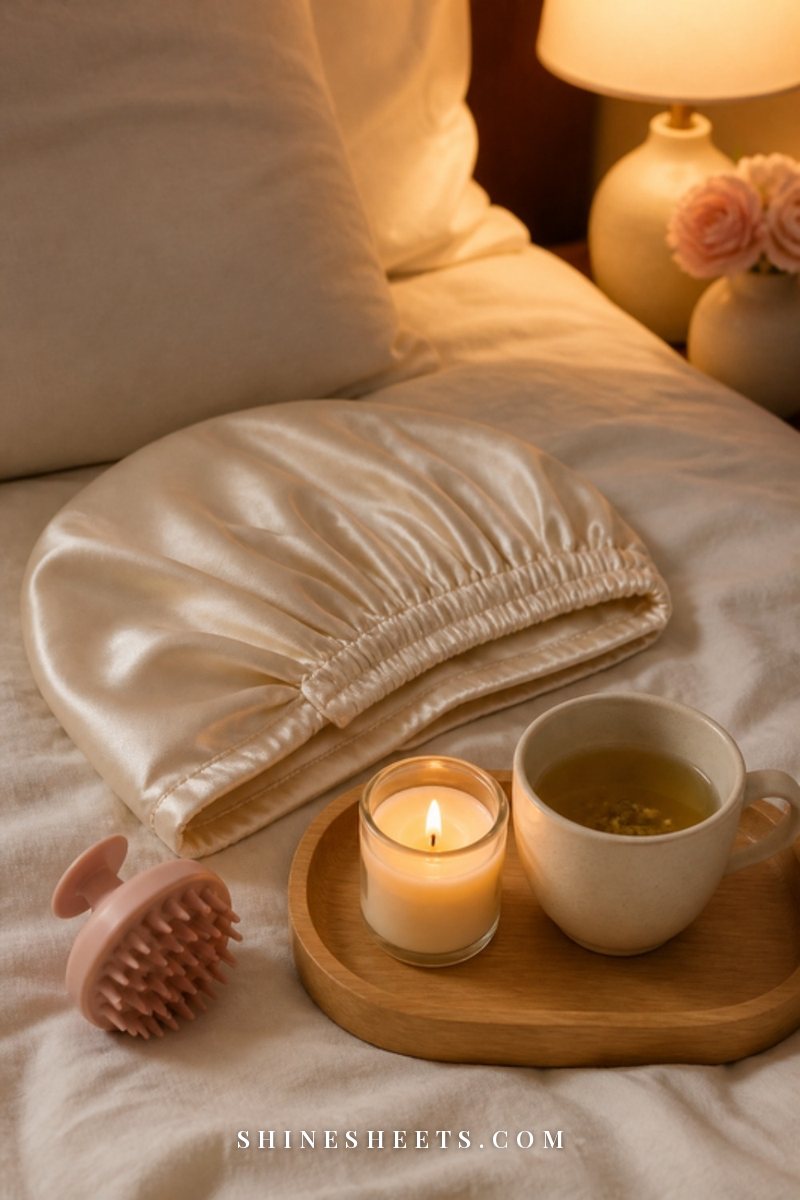
Scalp massage is most likely to become a habit when it feels like something you look forward to. A few ideas:
- Pair it with your evening tea. A few minutes of dry massage while your tea cools is a gentle signal to your body that the day is winding down.
- Light a candle and do it before journaling or reading.
- Use it to breathe. Match one slow breath to each section of your scalp.
- Wrap your hair afterward. After an oil treatment or a wash, a satin hair towel wrap absorbs water gently and reduces friction compared with rubbing hair with a rough towel.
For someone like me who's prone to anxiety, those few minutes at the end of the day are often the most valuable part. Whether or not it changes my hair, it reliably changes how my shoulders feel.
The Best Time for a Scalp Massage
There's no wrong time, but each moment of the day suits a slightly different purpose:
- In the morning: a quick one-minute dry massage can feel energizing and helps lift flat roots before styling. Keep it light if you've just washed and dried your hair.
- In the shower: the easiest way to build the habit, because you're already there and your hands are already on your scalp. Two minutes while shampooing is plenty.
- Before bed: the most relaxing option. A slow five-minute routine on dry hair can help you unwind, and it pairs naturally with an evening tea or a few pages of a book.
- Before a wash day: the best moment for an oil massage, since you'll be shampooing it out a little later anyway.
Pick one anchor moment rather than trying to fit massage in everywhere. A habit tied to something you already do, like brushing your teeth at night, sticks far more easily.
Scalp Massage Mistakes To Avoid
Scalp massage is simple, but a few common habits can make it less pleasant or even irritate your scalp:
- Using your nails. Scratching can leave tiny abrasions on the scalp and make itching worse. Always use the soft pads of your fingertips.
- Pressing too hard. More pressure doesn't mean more benefit. Sore, red or tender skin is a sign to ease off.
- Rubbing hair instead of moving the scalp. Sliding your fingers back and forth through your hair causes tangles, friction and breakage, especially on long or fine hair.
- Using too much oil. A heavy layer is hard to wash out, can weigh roots down and may leave buildup that makes your scalp feel itchy.
- Massaging irritated or broken skin. If your scalp is inflamed, has sores or a rash, let it rest and get it checked.
- Expecting fast results. Checking your hairline daily only adds stress. Give it months, not days.
- Forgetting to clean your tools. A scalp brush that's never washed collects oil, product and dead skin.
Who Should Go Gently
Scalp massage is safe for most people, but a little extra care makes sense if you have a very sensitive scalp, an active flare of dandruff or another scalp condition, a recent hair treatment like bleaching or a perm, or a sunburned scalp. In those cases, keep the pressure very light, skip oils and tools, and stop if anything stings or burns. If you've had scalp surgery or a cosmetic procedure, ask your doctor first. And if your hair is shedding heavily, gentle is better: you'll lose a few hairs during massage either way (those were already on their way out), but there's no need to add extra friction.
What To Expect and When
Here's a realistic timeline:
- Right away: a relaxed, tingly feeling and often less tension in the head and neck.
- After a few weeks: a cleaner-feeling scalp, fewer flakes if you're gentle, and an easy habit.
- After 3–6 months: if scalp massage helps your hair at all, this is when you might notice it. Hair grows slowly, roughly 1 cm (about half an inch) a month, so changes take time.
Take a photo of your part in the same light today and again in three months, rather than checking every day. It's a much calmer way to notice any difference.
When Hair Loss Needs a Doctor
Scalp massage is a lovely habit, but some hair changes deserve medical attention. Please see a doctor or dermatologist if you notice:
- Sudden or heavy shedding, especially in clumps.
- Round or patchy bald spots.
- A widening part or noticeably thinner ponytail over a few months.
- Scalp pain, burning, redness, scaling or sores.
- Hair loss along with fatigue, weight changes or other symptoms.
- Hair loss after starting a new medication, after illness or after giving birth that doesn't improve.
Many causes of hair loss are treatable, and the sooner you get checked, the more options you'll have. My guide on how to stop hair loss covers the common causes and what a doctor might look at. Scalp massage can keep going alongside any treatment, as long as your doctor is happy with it.
Final Thoughts
Scalp massage won't promise you a new head of hair, and that's okay. What it offers is a few quiet minutes of care, a cleaner, calmer scalp and maybe, over many months, a small helping hand for your hair.
Start with your fingertips and five minutes before bed or in the shower. Be gentle, be consistent and let it be something that feels good, because the habits we enjoy are the ones we keep.