A window seat doesn't need a carpenter, a renovation budget or a perfect bay window. It needs three things: a seat that fits the space, something soft to lean against and a way to keep the draft from sneaking down your neck. Get those right and even a plain, deep windowsill turns into the spot everyone in the house quietly fights over.
The tricky part is that windows are awkward. Bays have angles, radiators sit exactly where you want a bench, and the light that looks so dreamy at noon can feel chilly by evening. That's why this guide starts with the window itself, not with pillows.
Below you'll find my favorite window seat ideas for bay windows and any deep window: how to measure, no-build seating options that work for renters, a quick table to match your window type with the right seat, ten soft touches that make the nook inviting, and the comfort and safety basics (damp, cords, radiators) that most pretty photos never mention.
Grab a tape measure and a cup of tea. This is going to be a lovely little project.
Start by Measuring Your Window Seat Space
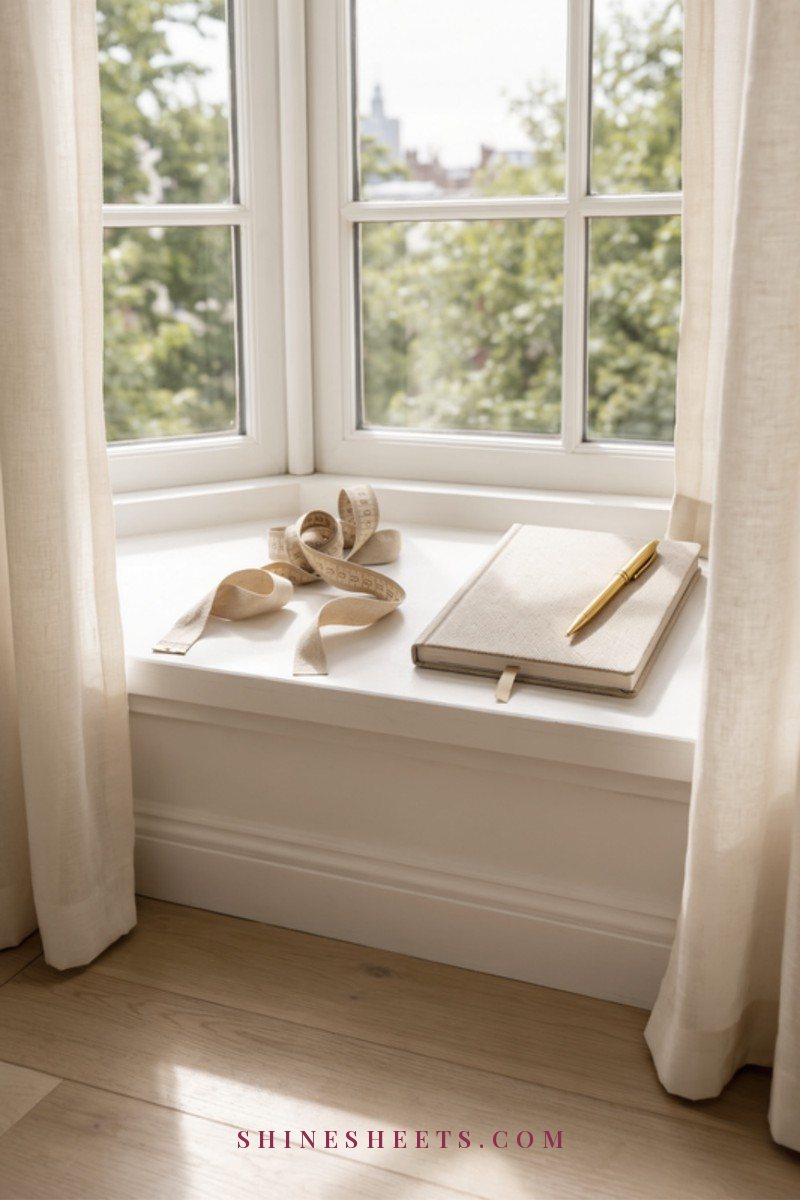
Measuring takes ten minutes and saves you from the most common window seat heartbreak: a bench that's two inches too wide to slide into the bay. Write these numbers down (a sticky note on the fridge is fine):
- Depth. Measure from the wall under the window to where the seat could reasonably end. For sitting upright, 16–20 inches is comfortable. For curling up with your legs tucked, 20–24 inches is better. Anything over 28 inches starts to feel like a daybed, which can be wonderful too.
- Width. In a straight window, measure wall to wall (or side trim to side trim). In a bay, measure the center panel and each angled side separately, then measure the straight line across the front of the bay at seat height. That front line is often the number that decides what fits.
- Seat height. A standard chair seat sits around 17–19 inches off the floor, including the cushion. Measure from the floor to the bottom of the window frame, too. If the frame is low, your seat (plus cushion) should stay a few inches below it so your back rests against the wall, not the glass.
- Obstacles. Note radiators, vents, outlets, the swing of any window that opens inward, and the height of the sill. These shape everything else.
One little trick: lay painter's tape on the floor in the shape of the seat you're imagining and leave it there for a day. If you keep stepping on it or it blocks the path to the window latch, you'll know before you buy anything.
Window Seat Options That Need No Building
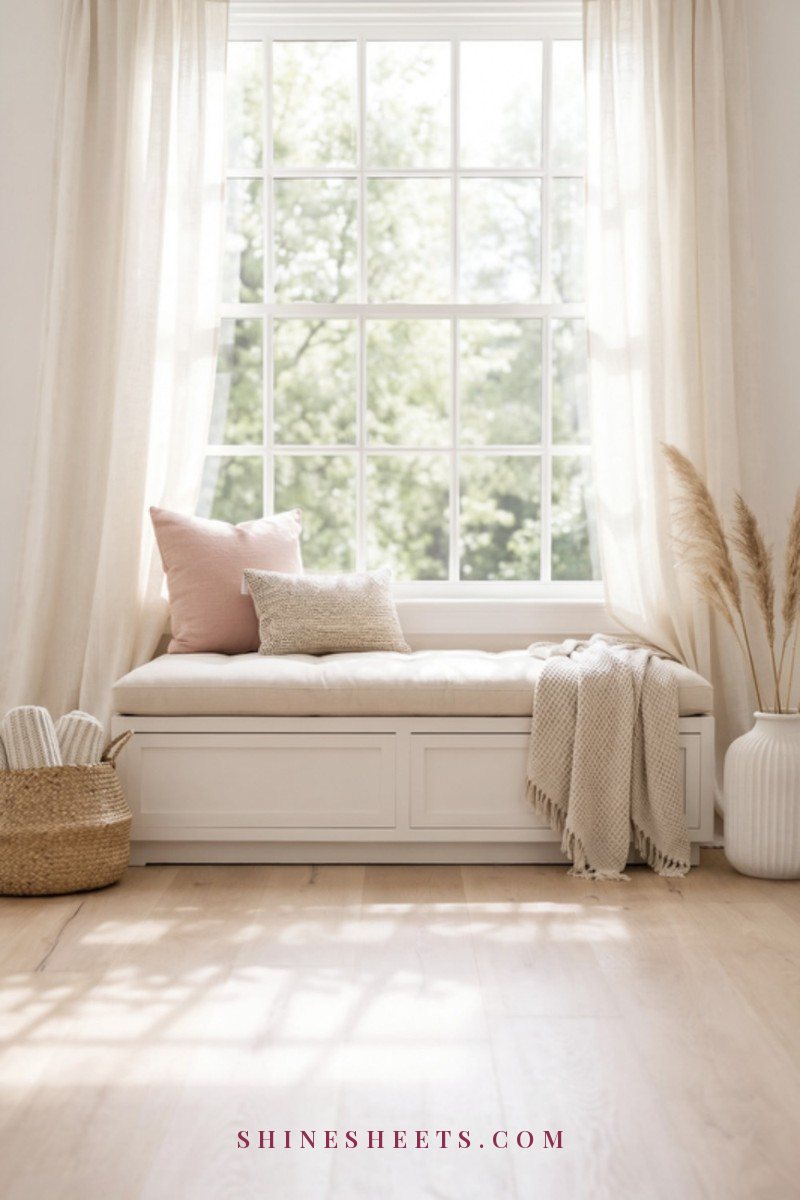
If you rent, or you simply don't want to build anything, you have more choices than you'd think. Each of these can move with you when you leave.
A Cushioned Bench
The simplest option. Look for a sturdy bench in your measured width (or slightly narrower) and a height of about 16–17 inches, so a 2–3 inch cushion brings it to normal seat height. Wood or upholstered both work. A slim bench leaves space for baskets underneath, which you'll see in the ideas below.
A Storage Bench
A lift-top or cubby-style storage bench gives you a seat and a home for blankets, books and spare pillows in one piece. Check that the lid can open fully under the windowsill (some hit the frame), and choose one with ventilation holes or open cubbies if your window gets condensation.
A Small Daybed
For a wide bay or a deep window wall, a twin-size daybed can become a true lounging nook. It's the most generous option and also the bulkiest, so measure the room path carefully. A daybed with a low back and sides works best; a tall frame can block the light you're trying to enjoy.
Floor Cushions on a Low Platform
If your window sits very low, skip the bench and go down instead. A low wooden platform (even a sturdy pallet-style base or two low benches pushed together) topped with a thick floor cushion and a stack of pillows feels relaxed and playful. Keep it at least 6 inches off the floor if the room is prone to damp, so air can move underneath.
Window Seat Options at a Glance
Use this table to match your window to a seat. Screenshot it before you go shopping, and you'll walk past the wrong benches without a second thought.
| Window type | Best seating option | Renter-friendly? | Best soft touch |
|---|---|---|---|
| Classic bay (three angled panels) | A bench across the front, or a small daybed if deep enough | Yes | Custom-fit cushion plus pillows in the angled corners |
| Box bay or bow window | A daybed or two benches meeting at the center | Yes | A long throw folded along the full length |
| Deep straight window with a wide sill | A slim cushioned bench pushed against the wall | Yes | Lumbar pillow and a side shelf |
| Window with a radiator underneath | A bench placed beside, not over, the radiator, or a seat with a raised open base | Yes | Curtains that stop just above the radiator |
| Low window close to the floor | Floor cushions on a low platform | Yes | A soft rug and a tea tray |
| Dormer or attic window | A low storage bench under the slope | Yes | A plug-in wall lamp for evenings |
| Built-in seat that already exists | Keep the base, refresh the top | Yes, if you only change the soft pieces | New cushion cover and ivory curtains |
Notice that every row says yes? That's the point. Almost every window seat look comes from the soft pieces, not the carpentry.
10 Window Seat Ideas To Make the Nook Feel Inviting
Once your seat is in place, these are the details that make it the spot you actually choose at the end of a long day. You don't need all ten. Pick the three or four that solve your window's quirks, then add more slowly.
1. A Custom-Fit Foam Cushion
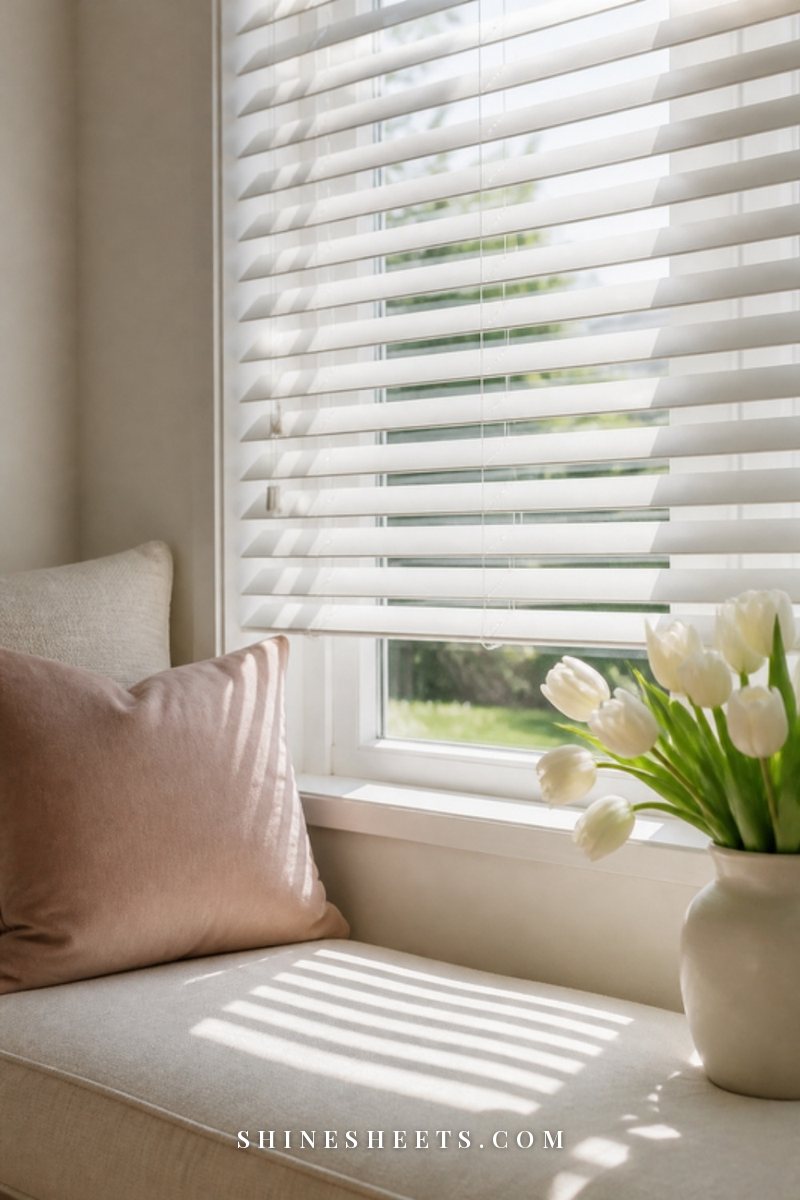
A cushion that fits edge to edge is the single biggest upgrade. A loose chair pad slides around and looks temporary; a fitted cushion looks intentional. For a straight bench, a ready-made cream bench cushion in your exact length is often enough. For a bay with angles, many shops will cut foam to a paper pattern you trace yourself.
How to get it right:
- Choose high-density foam, 3–4 inches thick, so it doesn't flatten in a month.
- Pick a removable, washable cover with a zipper. Light colors are lovely, but you'll want to wash them every couple of months.
- Trace the shape with kraft paper pressed into the corners, then cut and test the paper before ordering.
- Leave a quarter inch of breathing room on each side so the cover is easy to slip off.
2. Layered Throw Pillows
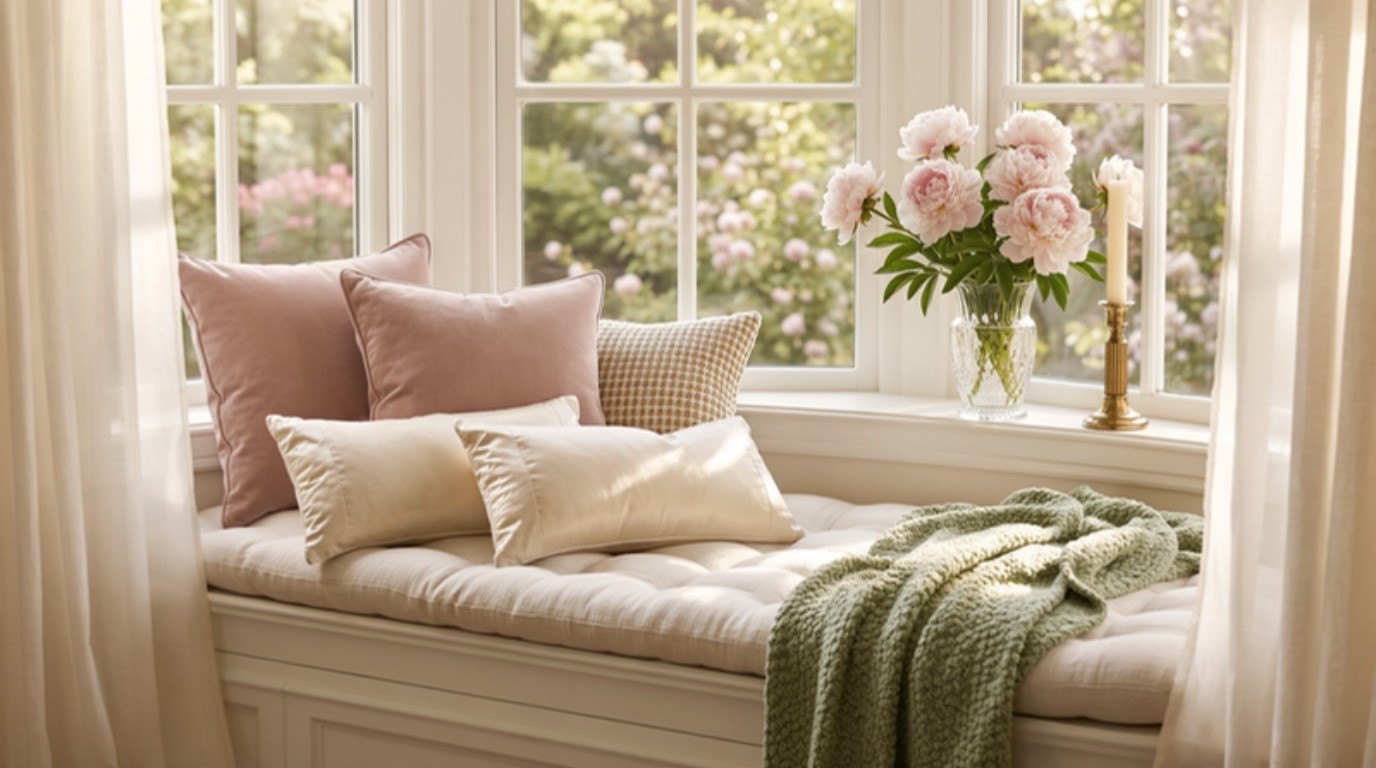
Pillows are what make a seat feel like a nook. Prop two larger ones against the side walls (or the angled corners of a bay) and one smaller lumbar pillow in the middle where your lower back lands. A set of soft blush throw pillows mixed with cream and one textured knit is an easy formula that looks pulled together.
A simple rule: 20–22 inch squares at the ends, a 12×20 inch lumbar in front, and no more than five pillows total, or you'll spend more time moving them than sitting. If you'd like more combinations, my guide to easy throw pillow combinations works for window seats just as well as sofas.
3. Baskets Under the Seat
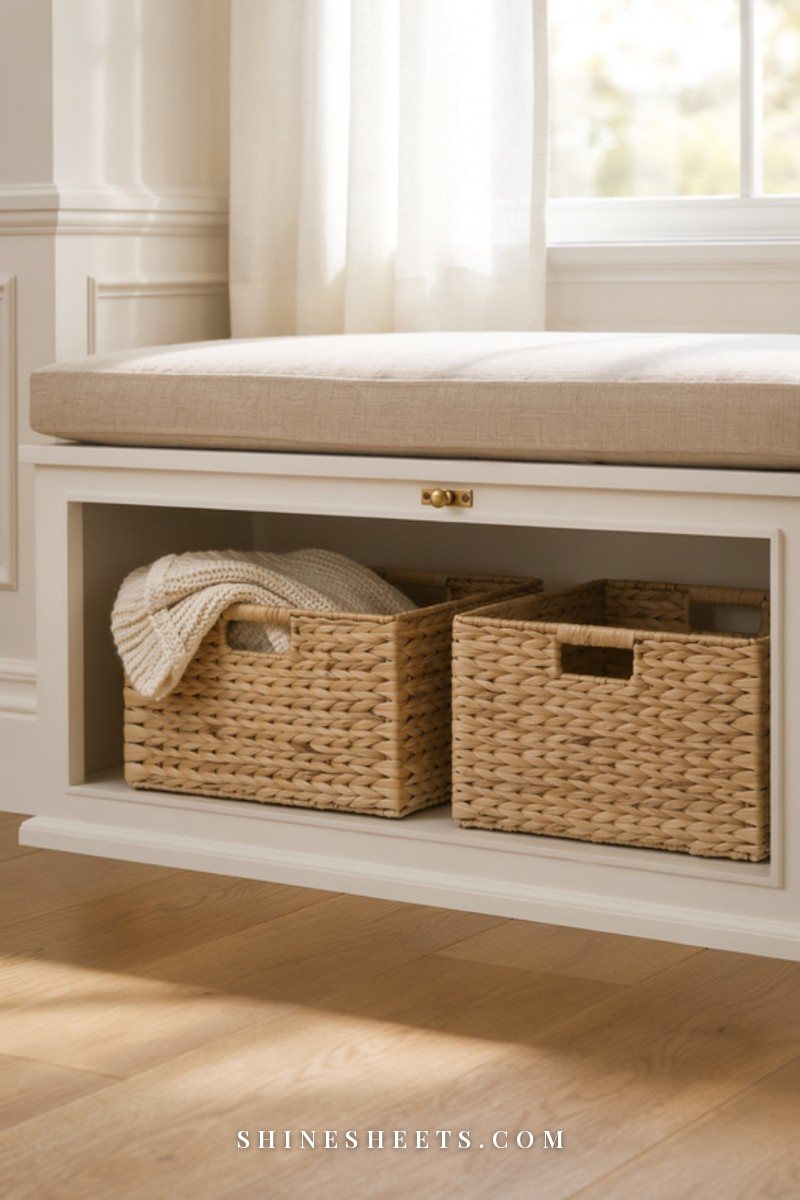
The space under a bench is prime storage, and baskets keep it soft instead of cluttered. Two or three woven storage baskets sized to the gap (measure the height under the bench and subtract an inch) hold books, slippers, a journal or spare blankets.
Keep one basket for things you reach for every time you sit (a book, reading glasses, lip balm) and the others for overflow. Pull them out every few weeks to dust and check for damp along the wall, especially in winter.
4. Soft Curtains That Close the Nook
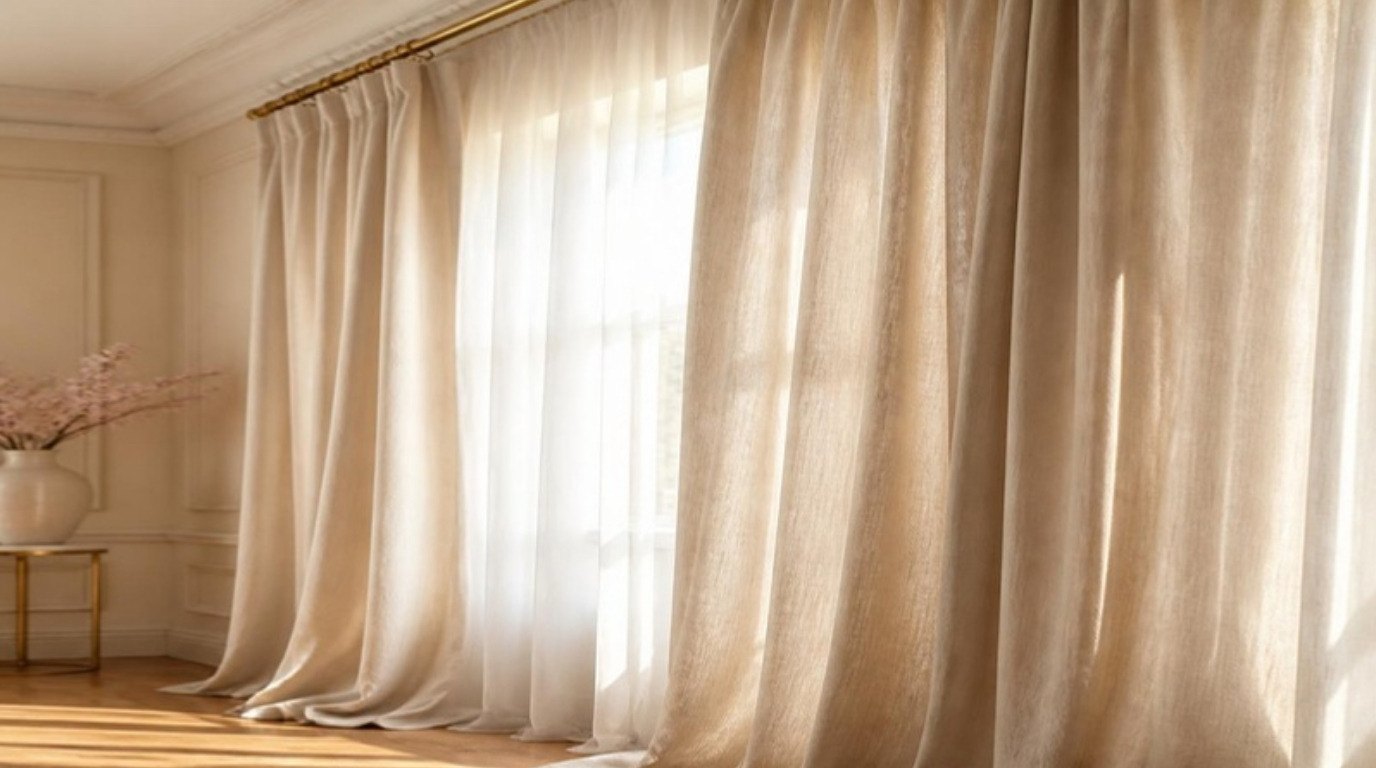
Curtains hung in front of the seat (not just on the window) turn the whole area into a little room within a room. Close them halfway and the nook feels private; pull them back and it's part of the space again. Sheer or lightweight ivory linen curtains keep the daylight and soften everything.
For renters, a tension rod across the front of a bay or a ceiling track with removable mounts does the job without drilling into the window frame. Hang the panels high and let them just kiss the floor. My post on how to choose and hang curtains has the exact heights and widths if you want them to look tailored.
5. A Small Side Shelf
Every reading spot needs a landing place for a mug. If there's room at one end of the bench, a narrow side table or a small wall shelf at elbow height is perfect. Aim for a surface about 2–4 inches higher than the seat cushion, so your hand finds it without looking.
No room at the ends? A wide windowsill can be the shelf. Just keep anything heavy away from the glass and anything precious out of direct afternoon sun.
6. A Plug-In Wall Lamp
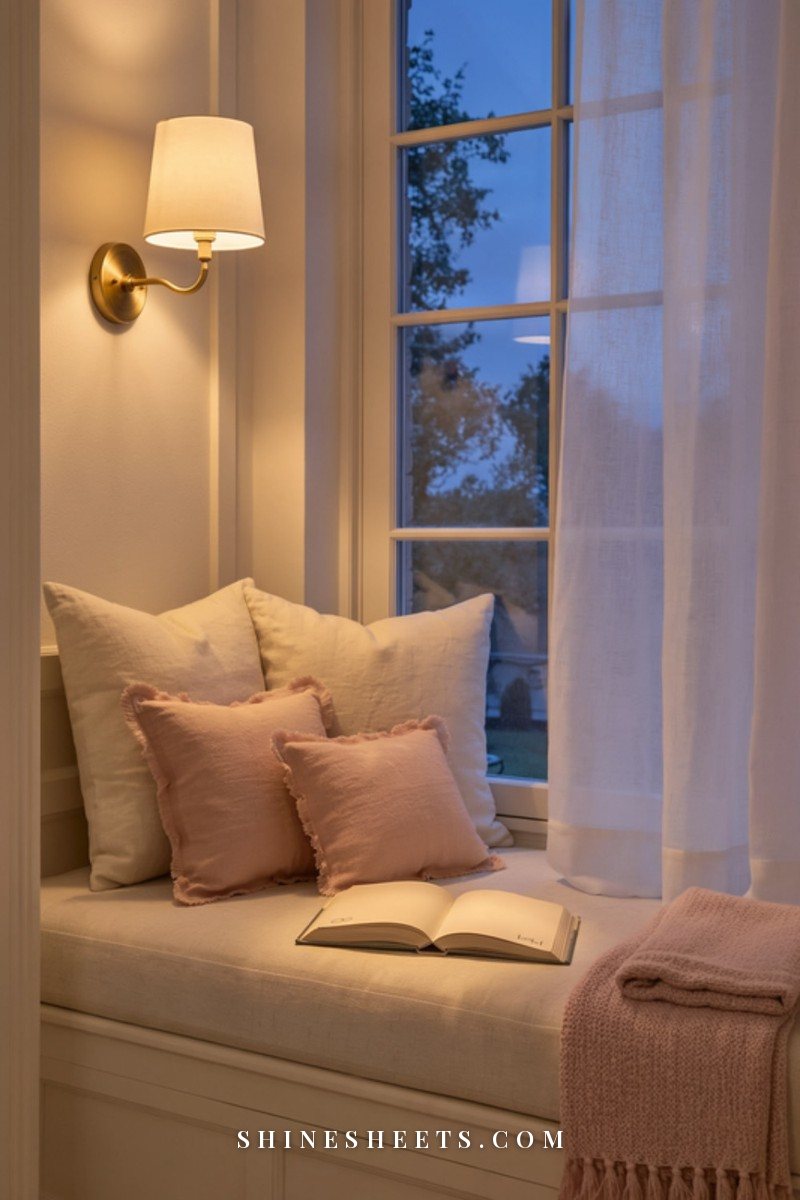
Daylight is the reason you made a window seat, but evenings need a lamp. A plug-in wall sconce mounted beside the window gives focused light for reading without a floor lamp taking up space. Choose a warm white bulb (around 2700K) and a shade that directs light down onto your book.
Run the cord along the wall edge with clear clips or a paintable cord cover, and use removable mounting where your lease requires it. If you're not sure how to tidy that cord, my guide on how to hide cords in a renter-friendly way walks through it.
7. A Plant Ledge
A window seat with one or two plants feels alive. Place them on the sill at one end, on a small shelf or on a low stool beside the bench, never where you'll knock them with your elbow. A pothos, a snake plant or a small fern handles most windows, and a trailing plant softens the hard edge of the frame.
Keep pots on saucers so water never reaches the cushion, and turn them a quarter every week so they grow evenly toward the light.
8. A Throw Basket Within Reach
Windows lose heat, so even a sunny nook can feel cool after an hour. Keep a blanket folded at one end or in a basket on the floor, close enough to pull over your knees without getting up. A chunky sage knit throw adds color and texture and looks lovely draped over the edge of the seat.
Wash it every two to three weeks if you use it daily, and give it a shake outside in between.
9. A Tray for Tea
A small tray turns the seat into a ritual instead of just a place. It catches drips, keeps a mug from wobbling on a soft cushion and makes the nook look styled even when you're not in it. A wooden tray with handles in a light finish is easy to carry from the kitchen and back.
My little setup for evenings: a mug of tea, a glass candle that stays on the tray (well away from curtains and pillows, and blown out before I leave the room), my journal and one book. That's it. A tray full of things stops being calming.
10. A Cream-and-Sage Palette
Window seats look calmest when they borrow colors from the view. Cream, ivory and soft sage echo daylight and greenery, so the seat feels connected to the outdoors instead of fighting it. Start with a cream base (the cushion and curtains), add sage in one or two pieces (the throw, a pillow) and finish with a single warmer accent like blush or a touch of gold.
Mix textures rather than colors: linen, knit, a woven basket, a smooth ceramic mug. That's what keeps a soft palette from looking flat. My guide to mixing patterns and textures has simple rules for layering them.
Dealing With Light and Drafts
A window seat is only lovely if you can actually sit in it, and light and drafts are what usually drive people out.
- Too bright at midday? Sheer curtains or a light-filtering shade soften the glare without making the nook dark. Hang them so you can adjust them while sitting.
- Too cold? Check the window seals first. Self-adhesive weather stripping and removable draft snakes along the sill help a lot and come off cleanly. Thermal-lined curtains closed at dusk hold the warmth in.
- Too hot in summer? A light-colored blind or a reflective lining on the curtain keeps the cushion from baking. Fabrics fade quickly in strong sun, so flip and rotate the cushion every couple of weeks.
- Glass against your back? Add a long pillow or a bolster between you and the glass. It's warmer, and it protects the window too.
It took me a few chilly seasons to accept that a window nook needs a little winter plan. A rolled-up throw against the sill and curtains closed at sunset make all the difference.
Comfort and Safety Basics
These aren't the most exciting part, but they're what make the nook easy to keep for years.
- Choose cord-free blinds or secure the cords. Dangling loops on blinds are a real strangulation risk for young children and pets. Pick cordless blinds, or wrap and fix cords high out of reach with a cleat.
- Keep window locks on. If little ones might climb onto the seat, keep windows locked or fitted with window guards or stops, and don't place the seat where a climb leads straight to an open window.
- Leave airflow under cushions. Cold glass and warm rooms create condensation, and a cushion pressed against a damp sill can grow mildew. A slatted bench, a breathable cushion cover and lifting the cushion to air it once a week all help. Wipe condensation off the sill in the morning.
- Never block radiators or vents. A bench or cushion pushed against a radiator traps heat, wastes energy and can scorch fabric. Leave several inches of space, keep curtains above or beside the radiator and never cover it with cushions or throws.
- Anchor tall pieces. A bookshelf next to the seat should be fixed to the wall with an anti-tip strap, especially if anyone might lean on it.
- Keep candles off the cushion. Flames and soft fabrics don't mix. Use a stable tray, keep candles away from curtains and blow them out before you walk away.
How To Fit a Window Seat Into a Small Room
Small rooms often have the best windows for a seat, because the nook doubles as extra seating without stealing floor space. A few things make it work:
- Choose a bench with legs or an open base, so the floor stays visible and the room feels larger.
- Keep the cushion and curtains in the same light color as the walls for a seamless look.
- Let the seat do two jobs: reading spot by day, extra seats for guests in the evening.
- Skip the side table and use the sill as your shelf.
If you're working with a compact space overall, my roundup of small living room ideas has more renter-friendly tricks, and if you'd rather build a nook somewhere other than a window, the reading nook ideas guide covers corners, closets and spots under the stairs.
Final Thoughts
The best window seat isn't the most expensive or the most photographed. It's the one that fits your window, keeps you warm and has a place for your mug. Start with the measurements, choose a seat you can take with you, then layer in the soft touches one at a time.
Before long, you'll have a little corner of light that feels entirely yours, the place you sit with tea, a book and nowhere else you need to be.