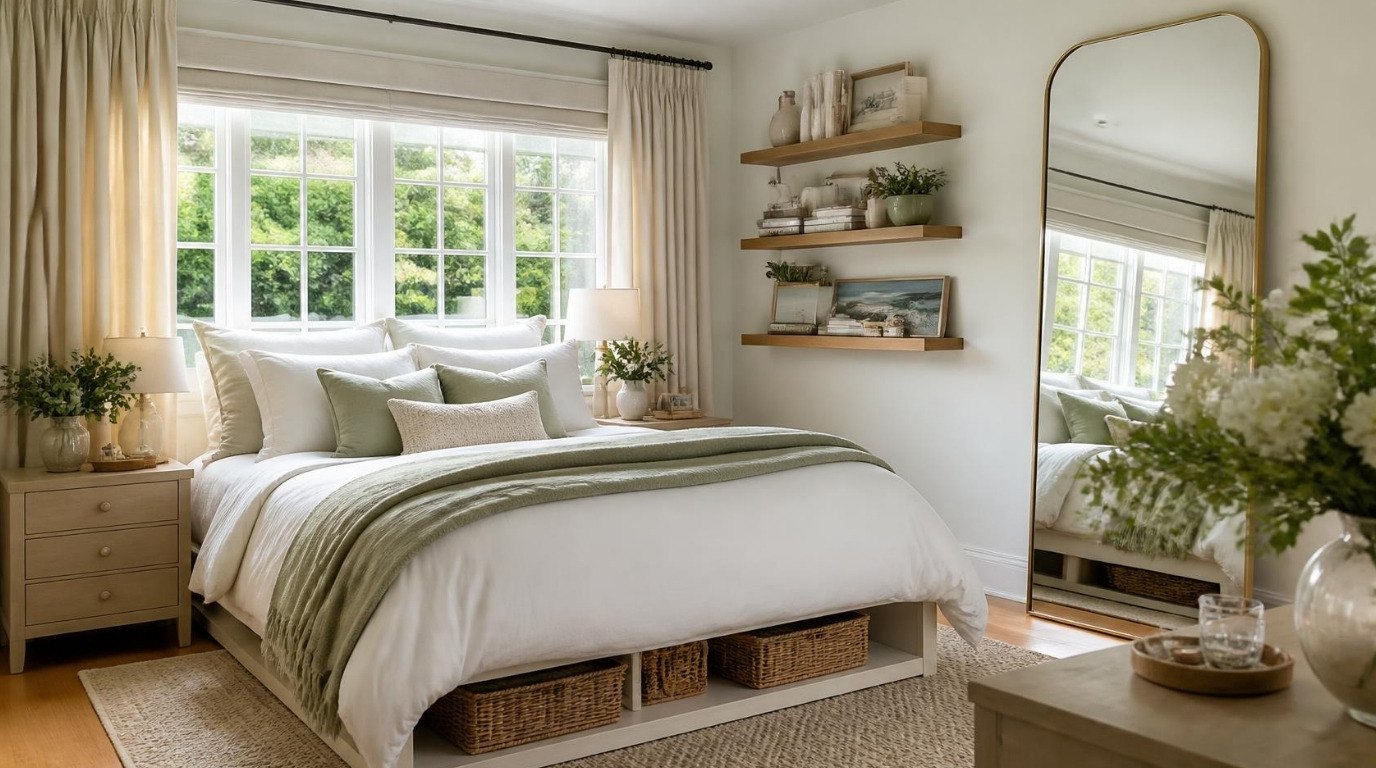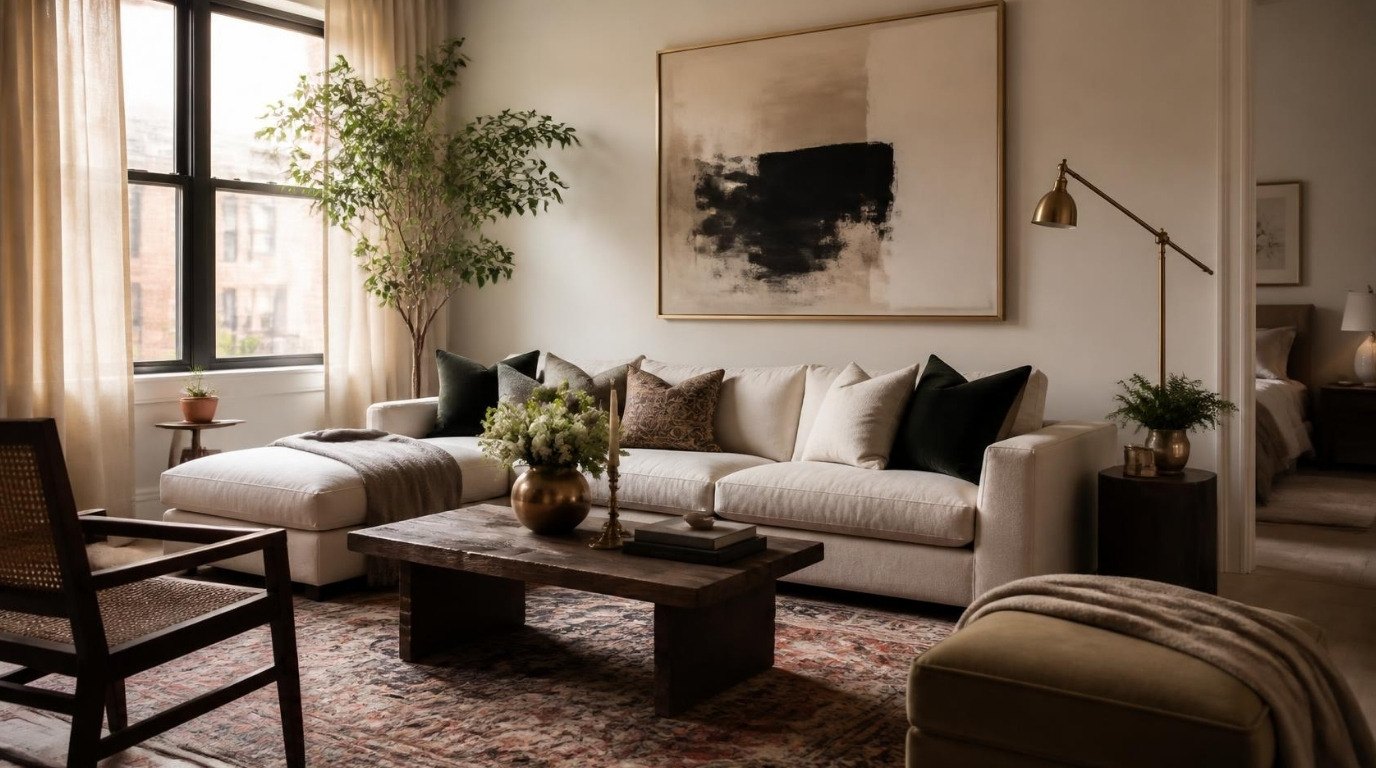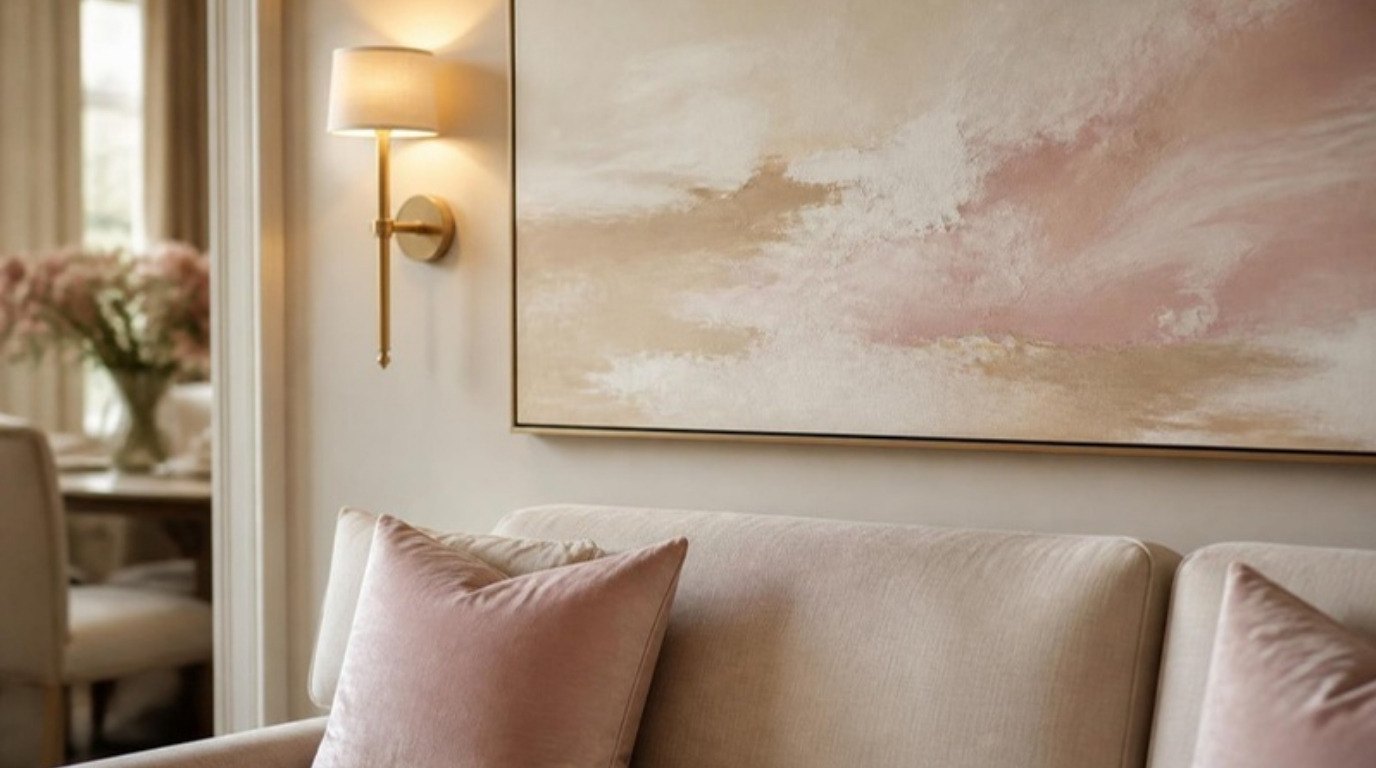
Bare walls rarely need more stuff. They need the right size, the right height and one clear idea per wall. Most rooms that feel unfinished aren't missing decor at all. They have a tiny frame floating too high above a big sofa, or five small things scattered where one confident piece would do.
The good news is that this is one of the easiest parts of a home to fix, and it doesn't have to involve a hammer, a big budget or a weekend of patching holes. A lot of my favorite wall ideas are renter-friendly, and some of them cost little more than a can of paint or a roll of peel-and-stick paper.
This guide gathers 20 wall decor ideas that go beyond the classic gallery wall: oversized art, framed textiles, plate walls, picture ledges, molding, arches, sconces and more. You'll also find the simple sizing rules I always come back to, a wall decor size and height cheat sheet you can screenshot before you shop, and the renter-friendly hanging methods that keep your deposit safe.
The Three Sizing Rules That Make Any Wall Look Finished
Before we get to the ideas, here are the three rules that do most of the work. If a wall has always felt "off" to you, one of these is usually the reason.
- Two-thirds of the furniture below. Art (or a grouping of art) above a sofa, bed, dresser or console should be about two-thirds of that piece's width. Anywhere between 60 and 75 percent looks intentional. Much smaller and it looks lost; wider and it feels top-heavy.
- Center at 57 to 60 inches. On an open wall with no furniture under it, the center of the art (or the center of the whole grouping) should sit 57 to 60 inches from the floor. That's roughly eye level for most people, and it's the standard galleries use.
- Close to the furniture, not floating. When art hangs above furniture, the bottom edge should sit 6 to 10 inches above the top of it. This connects the two so they read as one composition instead of two strangers sharing a wall.
A small honest admission: for years I hung everything too high, because it felt "safer." It took me a while to understand that low and grounded almost always looks more expensive than high and floaty.
Wall Decor Size and Height Cheat Sheet
Here's the table I wish I'd had years ago. Measure your furniture, find the row, and you'll know exactly what size to shop for and where the nail (or strip) goes. Screenshot it before you head out.
| Wall or furniture | Ideal art width | Hanging height | Renter-friendly method |
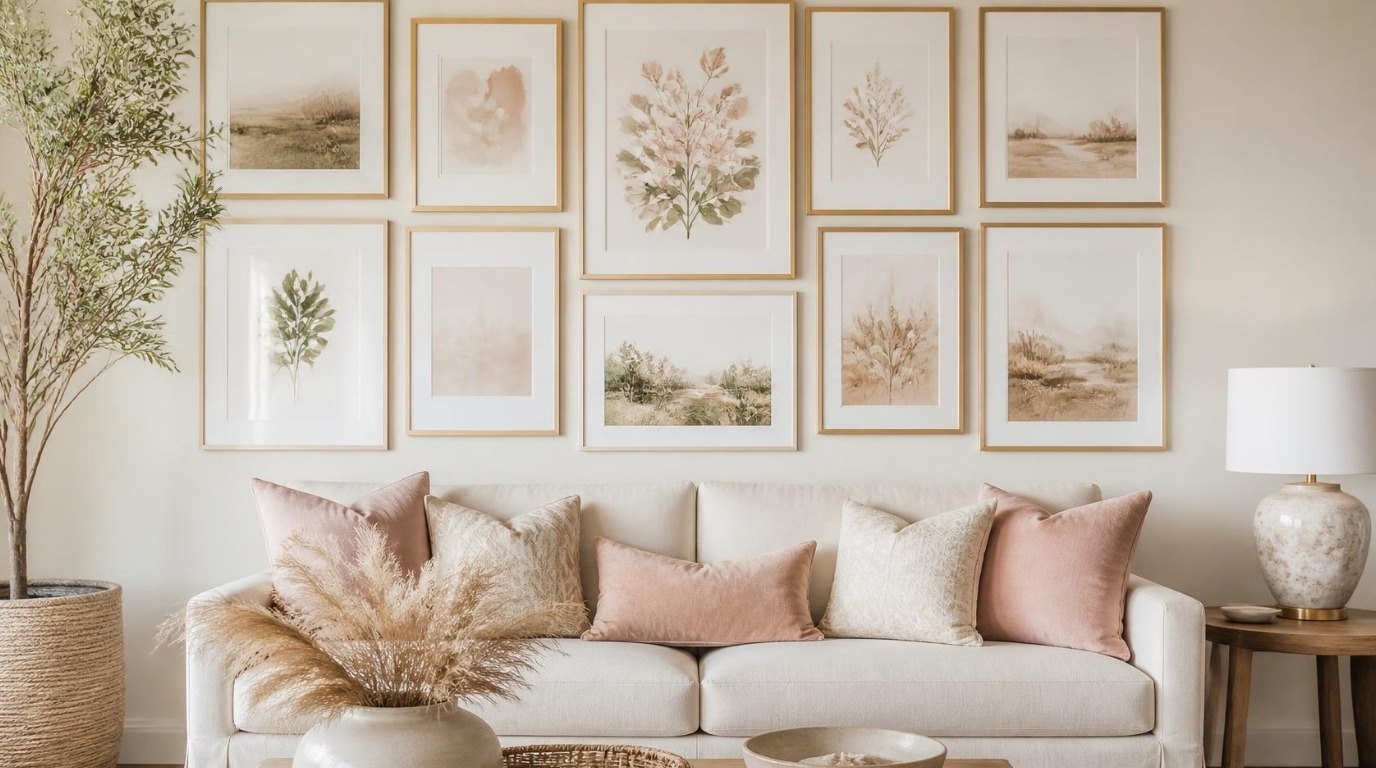
|---|---|---|---|
| Sofa, 84 inches | About 56 inches (one large piece or a pair) | Bottom edge 8–10 inches above the sofa back | Lightweight canvas on removable strips; framed glass on a single small nail |
| Loveseat, 60 inches | About 40 inches | Bottom edge 8–10 inches above the back | Removable strips rated for the weight, or a picture ledge |
| Queen bed, 60 inches | About 40 inches | Bottom edge 6–10 inches above the headboard | Unframed canvas or framed print without glass; secure with a nail, not strips |
| King bed, 76 inches | About 50 inches, or two 24-inch pieces | Bottom edge 6–10 inches above the headboard | Two lighter pieces instead of one heavy one |
| Dresser, 60 inches | About 40 inches | Bottom edge 6–8 inches above the top | Lean art on the dresser itself and skip hanging altogether |
| Console or entry table, 48 inches | About 32 inches | Bottom edge 6–8 inches above the top | Lean a large piece against the wall, layered with a smaller frame |
| Open wall, no furniture | Fill about 60–75 percent of the open width | Center at 57–60 inches from the floor | Removable strips for lightweight frames |
| Narrow wall or hallway | One vertical piece, 16–24 inches wide | Center at 57–60 inches from the floor | Removable hooks or strips |
| Grouping of small frames | Treat the whole group as one piece using the rules above | 2–3 inches between frames | Strips on each frame, laid out on paper first |
One gentle safety note: anything heavy or framed with glass should never hang over a bed or a sofa on adhesive alone. Check the weight rating on the package, and for heavier pieces use a proper nail or a wall anchor (one tiny hole is easy to fill when you move out).
20 Wall Decor Ideas To Dress Up Bare Walls
These are grouped loosely from the simplest to the more involved. Pick one idea per wall. That's honestly the biggest secret: one clear idea, done at the right scale.
1. Hang One Oversized Art Piece
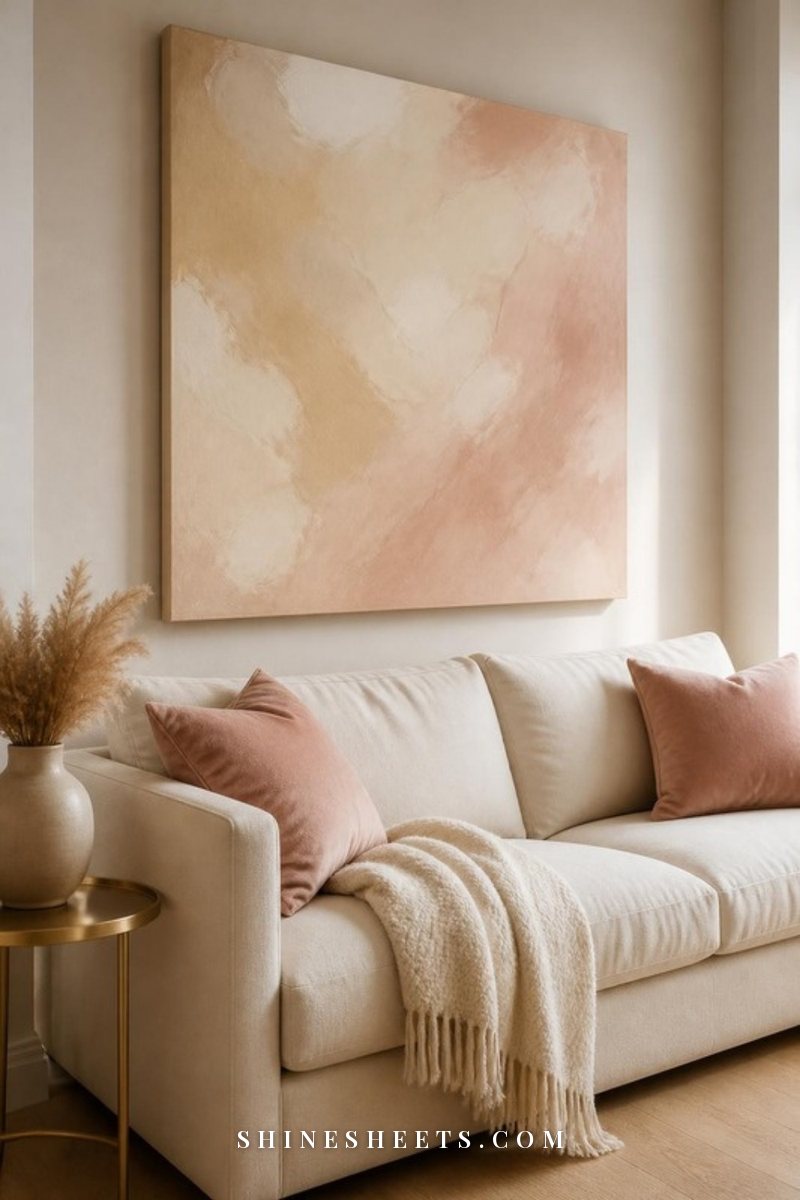
If you only do one thing from this list, make it this. A single large piece above a sofa or bed instantly makes a room look designed, and it's far less fiddly than arranging ten frames. Use the two-thirds rule: for an 84-inch sofa, look for something around 48 to 56 inches wide.
A large neutral abstract canvas is the easiest place to start. Look for soft, layered brushstrokes in cream, beige, sand or blush, a gallery-wrapped edge (so it looks finished without a frame) and a light weight, which makes renter-friendly hanging much easier.
2. Frame a Beautiful Textile or Silk Scarf
A vintage silk scarf, a piece of embroidered linen or a scrap of block-printed fabric becomes real art the moment it goes into a frame. It adds softness and pattern in a way paper prints can't.
Iron the fabric on low, then wrap it around a piece of foam board and secure it at the back with acid-free tape (or a few stitches). A deep box frame with a wide white or cream mat gives it room to breathe. Square scarves look especially elegant hung as a pair.
3. Build a Plate Wall
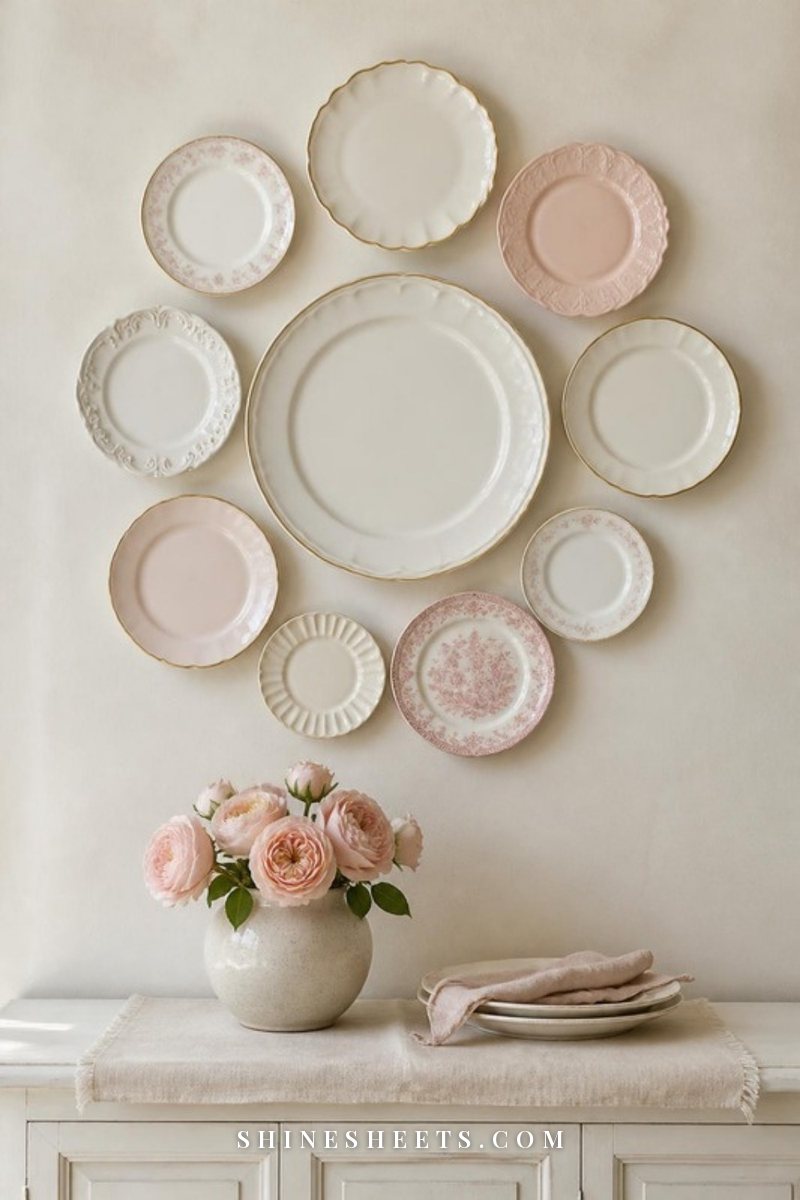
A plate wall has that charming, collected look of an old French kitchen or a country dining room. It works beautifully in a dining nook, above a sideboard or on a narrow wall between two windows.
Choose a loose palette (cream, white and one accent like blush or soft blue) and mix sizes and edges: scalloped, gold-rimmed, embossed. Trace each plate on paper, cut out the shapes and tape them to the wall to test the layout. Start with your largest plate in the center and work outward, keeping 2 to 3 inches between plates. Adhesive plate hangers are the renter-friendly way to do it.
4. Layer Frames on a Picture Ledge
A picture ledge is my favorite answer for anyone who changes her mind a lot. You hang one shelf, and then you can swap, overlap and rearrange frames forever without a single new hole.
A slim white picture ledge shelf about two-thirds the width of the furniture below is perfect. Look for one with a front lip so frames can't slide off. Layer from back to front: a tall piece at the back, a medium frame overlapping it, then something small (a postcard, a tiny print) in front. Odd numbers, varied heights, and leave some ledge empty.
5. Hang a Woven or Fabric Wall Hanging
Macrame, woven tapestries and fabric hangings soften a room instantly, and they're one of the most forgiving options for renters because most weigh almost nothing. A single small nail or a removable hook holds them.
For a calm, grown-up look, skip anything too busy and choose natural cotton, wool or jute in cream and oatmeal tones. A wide, low hanging over a bed reads as almost headboard-like; a long, narrow one works well on a skinny wall beside a window.
6. Style a Few Wall-Mounted Shelves
Floating shelves turn a blank wall into a little display, which is perfect for the things you love but have nowhere to put. Two or three shelves staggered on one wall usually look better than a long row.
Style each shelf with a mix: one upright stack of books, one vase or small sculpture, one framed print leaning at the back and plenty of empty space. The empty space is what makes it look styled instead of crowded.
7. Add Plug-In Wall Sconces
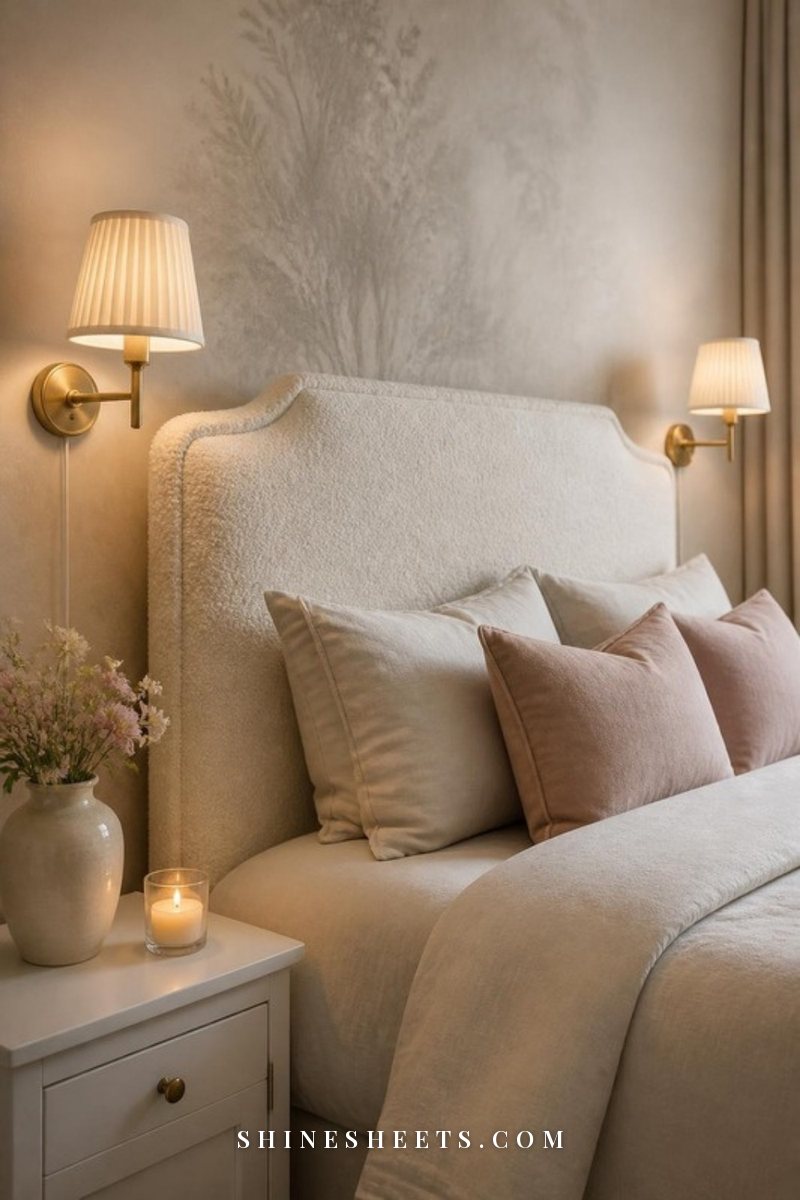
Sconces are wall decor and lighting at the same time, and they make a room feel like a boutique hotel. You don't need an electrician: plug-in versions run their cord down the wall to an outlet.
A brass plug-in wall sconce with a fabric or frosted glass shade is the most flattering choice. Look for a warm bulb (2700K), an on-cord switch and a cord cover in your wall color to hide the cable. Hang them about 60 inches from the floor in a living room, or about 24 to 30 inches above the top of the nightstand beside a bed. For more ways to warm up a room with light, see my lighting ideas.
8. Add Picture Frame Molding
Picture frame molding (thin rectangles of trim applied directly to the wall) gives a plain room that Parisian apartment feel. It's subtle, it's architectural, and it makes even a builder-grade wall look intentional.
Pre-primed lightweight trim is easy to cut with a miter box. Plan the boxes on paper first, keep the spacing between them equal (about 3 to 4 inches), and paint the trim the same color as the wall for a quiet, high-end look. Renters can use lightweight foam molding attached with removable mounting tape.
9. Try Paneling on Half the Wall
Board and batten, beadboard or fluted panels on the lower third or half of a wall add texture and make a room feel finished. They're especially lovely in bedrooms, dining nooks and entryways.
The rule of thumb: stop paneling at about one-third of the ceiling height (or at chair-rail height, around 32 to 36 inches) for a classic look, or go up to two-thirds for something more dramatic. Paint it a shade or two deeper than the wall above, like warm greige under soft cream.
10. Paint an Arch
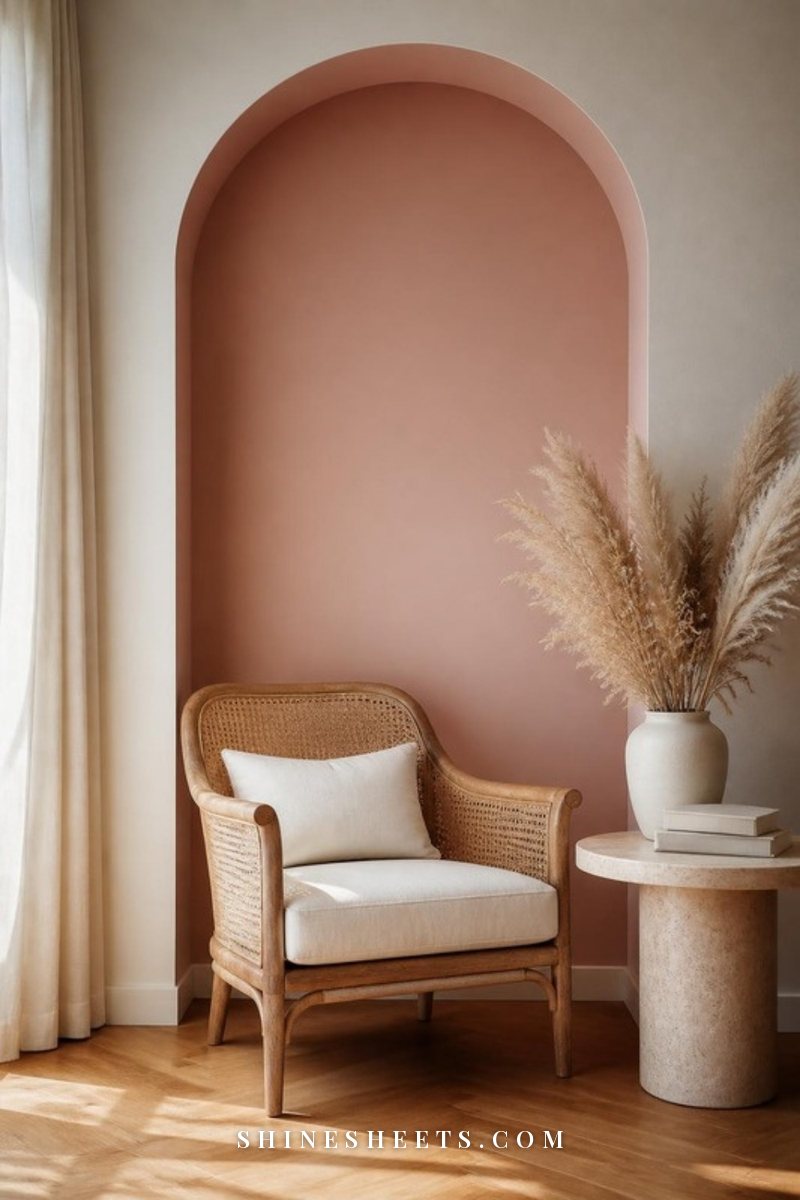
A painted arch is one of the cheapest ways to create a focal point, and it's completely reversible with a coat of the original color. Use it behind a bed in place of a headboard, around a desk, or to frame a reading chair.
Tie a pencil to a piece of string, pin the other end where the center of the curve should be, and draw your half circle. Tape off the straight sides, then paint. A soft blush, warm terracotta or sage against cream is very pretty. My guide on how to choose paint colors can help you pick a shade that looks right in your light.
11. Create a Peel-and-Stick Wallpaper Accent
Wallpaper used to be a big commitment. Peel-and-stick versions mean you can try a pattern on one wall, the back of a bookcase or the inside of a closet, then remove it when you move.
A beige peel-and-stick wallpaper with a soft texture (grasscloth, linen or a faint stripe) is the safest, most elegant choice. Look for a thicker, matte finish, which hides small wall bumps, and buy one extra roll in case you need to match the pattern. Always test a small piece in a hidden corner first, and smooth from the center outward.
12. Go Big With Botanical Prints
Large-scale botanical prints (an oversized fern, a single magnolia branch, a vintage-style seed illustration) bring a garden feeling indoors and pair well with almost every style.
Choose either one very large print or a set of two or three in matching frames hung in a neat row. For a set, keep the spacing tight, about 2 inches, so they read as one piece. Thin wood or cream frames with a wide mat keep the look fresh rather than fussy.
13. Use a Mirror To Bounce the Light
A mirror is technically decor, but it's also a trick for making a dark room brighter. Hang one opposite or beside a window and it doubles your daylight.
A tall arched or oversized round mirror makes the biggest impact. Heavy mirrors are the one thing I'd always hang properly with anchors (or lean securely against the wall on a dresser), never on adhesive strips.
14. Hang a Collection of Small Vintage Frames
A cluster of small vintage frames feels personal and collected over time, even if you found half of them in one weekend. It's a quieter cousin of the full gallery wall, perfect for a narrow wall or a spot beside a doorway.
A set of gold picture frames in mixed sizes is an easy way to get a matching base, and you can mix in a few thrifted oval or ornate ones. Fill them with tiny landscapes, pressed flowers, old postcards or small portraits, and keep 2 inches between frames. If you'd like to go bigger later, my gallery wall ideas cover layouts and spacing in detail.
15. Make a Wall of Hats or Baskets
Woven baskets or straw hats grouped on a wall add warmth and texture for very little money. It's a lovely idea for a hallway, a dining room or a bedroom with lots of plain white paint.
Mix three or four sizes and shapes, keep the palette natural (wicker, rattan, seagrass), and arrange them in a loose cluster, overlapping slightly. Each one weighs almost nothing, so small removable hooks work perfectly.
16. Build a Statement Headboard Wall
In a bedroom, the wall behind the bed is the most important one. Instead of art, you can make the wall itself the headboard: an upholstered panel, a painted rectangle, a fabric drape or a wide band of wallpaper.
For a painted version, mark a rectangle a little wider than the bed and about 50 to 60 inches tall, then paint it a soft, deeper tone than the rest of the wall. It looks custom, costs almost nothing and makes the bed feel anchored.
17. Hang a Matching Pair
Two matching prints side by side feel calm and balanced in a way a single piece sometimes doesn't, especially above a king bed or a long sofa. It's the classic hotel-room trick for a reason.
Use the two-thirds rule for the pair as a whole, with 3 to 4 inches between frames. Choose two prints that "talk" to each other: a matching series, mirror-image botanicals or two abstracts in the same palette.
18. Add a Peg Rail
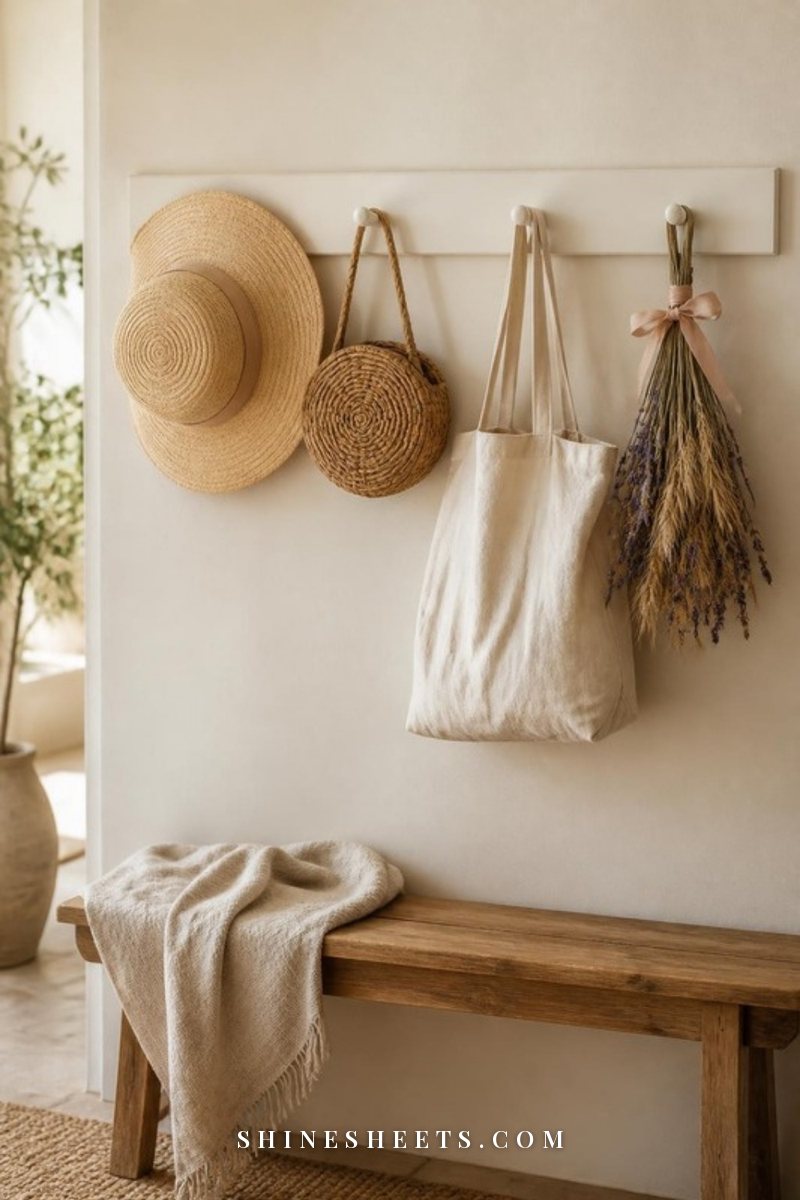
A Shaker-style peg rail runs along the wall at about 60 to 66 inches high and holds whatever you want to show off: a straw hat, a linen tote, a woven basket, a bundle of dried flowers. It's practical and decorative at once, which makes it perfect for small spaces.
Paint it the same color as the wall for a soft, built-in look, or leave it natural wood for contrast. Hang only a few things at a time, with space between them, so it looks styled rather than like a coat rack.
19. Color-Block a Section of the Wall
A painted block of color (a rectangle behind a desk, a wide horizontal band at the bottom of the wall or a "half-painted" wall that stops at 40 inches) creates a focal point with no decor at all.
Use painter's tape and a level, and press the tape edges down firmly with a credit card to avoid bleeding. Soft, tonal pairings look the most elegant: cream with sand, white with sage, ivory with blush. This also works beautifully with the calmer palettes in my neutral home decor guide.
20. Frame Something Personal
Some of the most beautiful walls have nothing to do with "art" in the traditional sense. A handwritten letter, a pressed flower from a special day, a map of a city you love, a ticket stub or a sketch from a friend all become meaningful decor in a simple frame.
Use a floating frame (two panes of glass) for pressed flowers and thin paper, so the wall shows through around the edges. Grouping two or three personal pieces near a bed or desk makes a space feel truly yours.
Renter-Friendly Ways To Hang Wall Decor
Renting doesn't mean living with bare walls. Here are the methods I'd reach for, from the gentlest to the sturdiest:
- Removable picture hanging strips. Removable picture hanging strips are ideal for lightweight frames and canvases. Clean the wall with rubbing alcohol first, press each strip for 30 seconds, and wait an hour before hanging. Always stay under the weight limit on the package.
- Adhesive hooks. Great for wall hangings, baskets, hats and lightweight wreaths.
- Leaning instead of hanging. A large piece leaning on a dresser, console or the floor (for very tall art) looks relaxed and requires no hardware at all.
- Picture ledges. Two or three screws, then endless rearranging without new holes.
- One small nail. Many leases allow a few small nail holes, and they fill in seconds with a dab of spackle. It's often safer than adhesive for anything with glass.
- Tension rods and easels. For an alcove or a deep window, a tension rod can hold a fabric hanging, and a tabletop easel shows off art without touching the wall.
For more ways to make a rental feel like home without losing your deposit, my apartment decor on a budget guide has plenty of ideas.
Common Wall Decor Mistakes (and Easy Fixes)
- Art that's too small. Fix: go bigger than feels comfortable, or group several pieces and treat them as one.
- Hanging too high. Fix: lower it to a 57 to 60 inch center, or 6 to 10 inches above the furniture.
- Too many ideas on one wall. Fix: one concept per wall (a ledge, or a plate wall, or one big piece), not all three.
- Every wall decorated. Fix: leave at least one wall in each room calm and empty so the others can shine.
- Ignoring the furniture. Fix: plan art around what sits below it, not the wall in isolation.
And if your budget is tight right now, you don't need to buy anything new to start. My list of cheap and free ways to decorate your home is full of ideas that use what you already have.
Final Thoughts
Bare walls aren't a problem to solve all at once. Start with the wall you see most often, choose one idea that makes you happy, and hang it at the right size and height. That single change can make a whole room feel calmer, warmer and more like you.
Give yourself permission to go slowly, move things around and let your walls grow with you. A home that's collected bit by bit always feels more personal than one finished in a weekend.