A walking workout doesn't need a treadmill, a sunny day or a long free afternoon. It needs about two square meters of floor, a pair of supportive shoes and thirty minutes where you keep your feet moving with a little more purpose than usual. That's honestly it. Walking indoors counts, and when you add a few simple moves like knee lifts, side steps and a grapevine, it turns into a real, heart-warming session you can do in your living room.
What makes indoor walking so friendly is that it meets you exactly where you are. You can go slow on a heavy day and brisk on a good one, you can do it in leggings and an old sweater, and nobody is watching. It took me a while to stop thinking a workout had to leave me breathless to "count." A steady half hour you actually repeat beats a hard session you dread.
This guide gives you a complete walking workout for beginners: a 30-minute indoor plan, minute by minute, with every move described step by step. You'll also find how hard it should feel, easier and harder versions, how often to do it, how to track your progress and a few safety basics so your joints stay happy.
What You Need for an Indoor Walking Workout

The short answer is: almost nothing. The longer answer is a few small things that make the half hour more comfortable and more likely to become a habit.
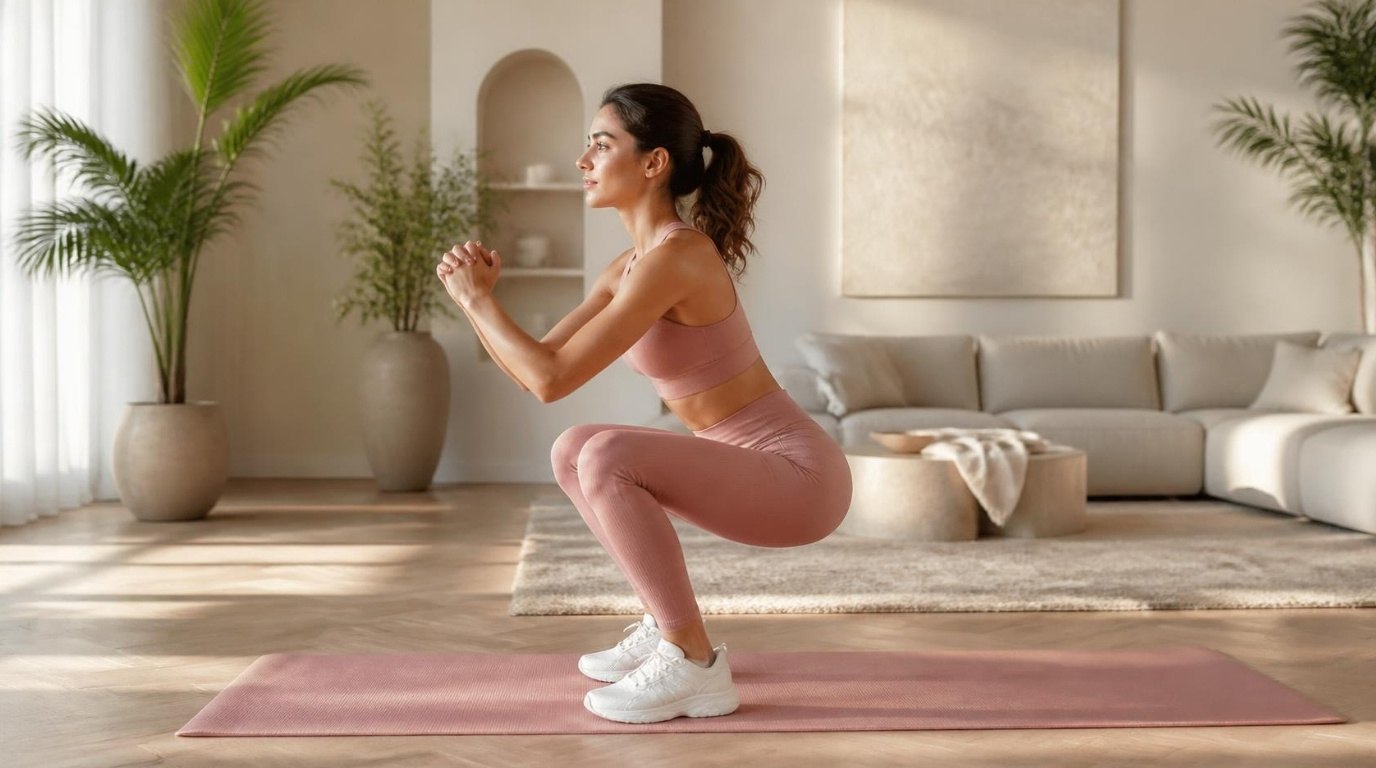
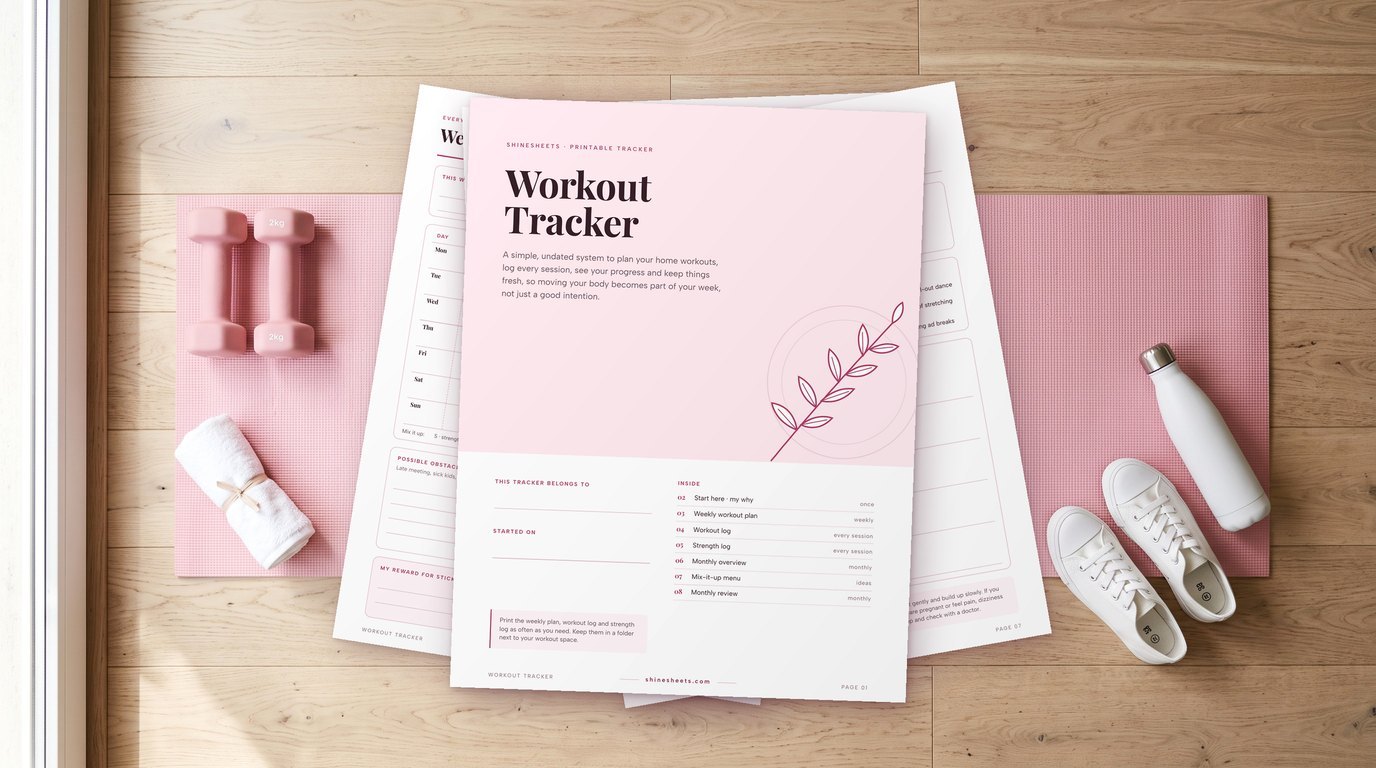
- Supportive shoes. This is the one thing I wouldn't skip. Socks on a wooden floor are slippery, and bare feet get sore after a few hundred steps. Look for lightweight white walking sneakers for women with a cushioned sole, a flexible front and a heel that doesn't slide around. Keep them as your "indoor pair" so they stay clean for the rug.
- A clear patch of floor. About two arm spans wide and a few steps deep is enough. Move the coffee table, roll up a loose rug corner and check there's nothing at foot level you could catch a toe on.
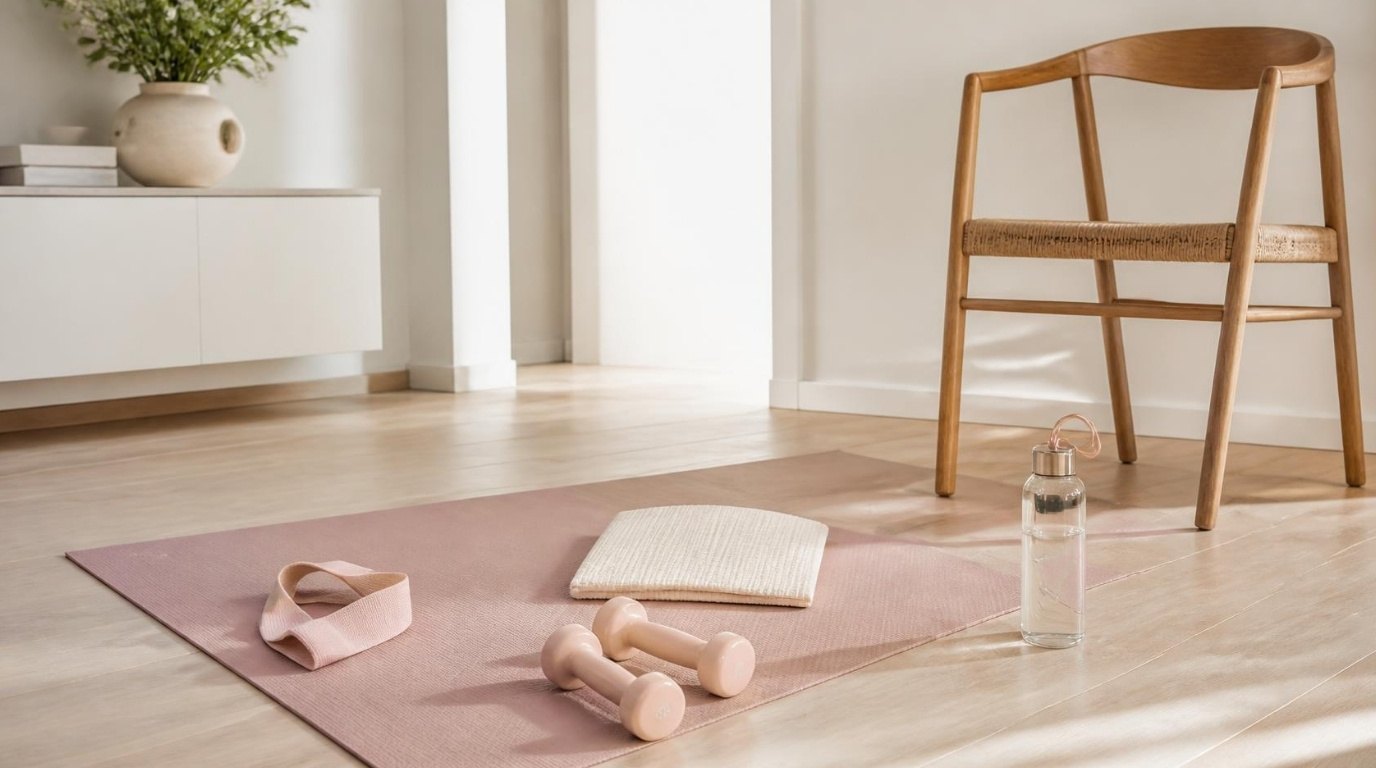
- Something soft for the cool-down. A non-slip yoga mat in a soft neutral shade is a nice spot for the final stretches, and it gives the workout a little "start here" signal.
- Water within reach. A pastel water bottle with time markers is a cute nudge to sip through the day, not just during the workout.
- Optional: light weights. Once the moves feel easy, a pair of pastel 2 lb dumbbells adds a gentle challenge for your arms and shoulders. Two pounds sounds tiny. Hold them up for two minutes and you'll see why it's plenty.
- Optional: a walking pad. If you love walking and want to add steps while you watch a show, a slim under-desk walking pad is a lovely extra. It's not needed for this workout at all, but it's a pick for anyone who wants more casual steps on busy days.
Put on a playlist with a steady beat (somewhere around 110 to 130 beats per minute feels natural for brisk walking), open a window if the air feels stuffy and you're ready.
How Hard Should a Walking Workout Feel?
This is the part most beginners get wrong in one of two directions: either they stroll so gently it feels like waiting for the kettle, or they push so hard they're done after ten minutes. The sweet spot is in between, and you can find it without a single gadget.
The Talk Test
Try saying a full sentence out loud while you move. Something like "I'm walking in my living room and it's going well."
- You could sing a song easily: pick up the pace a little.
- You can talk in full sentences but singing would be hard: perfect, that's moderate intensity, where you want to spend most of the workout.
- You can only get out two or three words: slow down. You're working harder than this plan needs.
The 1 to 10 Effort Scale
Think of 1 as lying on the sofa and 10 as sprinting for a bus. Warm-ups and cool-downs sit around 3. The main part of the walking workout sits around 5 to 6: warm, a little breathy, slightly pink in the face, but in control. You'll see these numbers in the plan below, so you always know what to aim for.
A small honest admission: on anxious days, I keep everything at a 4. Steady movement helps me settle, but pushing hard when my nervous system is already buzzing just feels like more buzz. You're allowed to choose the gentler version whenever you need it.
The 30-Minute Walking Workout Plan (Minute by Minute)
Here's the whole session at a glance. Screenshot it, prop your phone on a shelf and follow along. Each block is short, so the time moves faster than you'd expect, and the moves repeat in a slightly harder second round once you're warm.
| Time | Move | Effort (1–10) | Easier swap |
|---|---|---|---|
| 0:00–4:00 | Warm-up walk in place, arms relaxed | 3 | Smaller steps, slower pace |
| 4:00–7:00 | March with arm swings | 4 | Keep arms low at your sides |
| 7:00–9:00 | Side steps (step touch) | 4–5 | Narrower steps |
| 9:00–11:00 | Knee lifts | 5 | Lift knees to hip height only halfway |
| 11:00–13:00 | Brisk walk in place | 5 | Regular march |
| 13:00–15:00 | Kick backs | 5 | Hold a chair back for balance |
| 15:00–17:00 | Grapevine | 5 | Side steps instead |
| 17:00–19:00 | Walking with bicep curls | 5–6 | No weights, just fists |
| 19:00–21:00 | Side steps with overhead reach | 5–6 | Reach to shoulder height |
| 21:00–23:00 | Knee lifts and kick backs, alternating every 30 seconds | 6 | Knee lifts only, slower |
| 23:00–25:00 | Walking with forward punches and shoulder presses | 6 | Punches only |
| 25:00–27:00 | Slow walk in place, long breaths | 3 | Same |
| 27:00–30:00 | Cool-down stretch: calves, hamstrings, quads, chest | 2 | Stretch holding a chair |
If you want to go a bit further, minutes 11 to 25 are the "working" part. Shorten them to fit a 20-minute day, or repeat them once for a longer session on the weekend.
The 8 Walking Workout Moves, Step by Step
Every move in the plan comes from these eight. Read through them once before your first session, and try each for ten seconds so your body knows what's coming. Keep your posture tall throughout: ribs stacked over hips, shoulders soft and down, eyes looking forward rather than at your feet.
1. Warm-Up Walk in Place
Stand with your feet hip-width apart. Start walking in place at a relaxed pace, rolling through each foot from heel to toe as if you were actually going somewhere. Let your arms hang and swing naturally at your sides.
- How long: 4 minutes.
- Focus: loose shoulders, soft knees, easy breathing through your nose if you can.
- Tip: in the last minute, step a touch faster so you finish the warm-up feeling slightly warmer than when you started.
2. March with Arm Swings
Lift your knees a little higher than in the warm-up, to roughly a third of the way to hip height. Bend your elbows to about 90 degrees and swing your arms forward and back from the shoulder, opposite arm to opposite leg, the way you would on a brisk outdoor walk.
- How long: 3 minutes.
- Focus: keep your hands loose, as if holding a teacup, not clenched into fists.
- Tip: land softly. If your downstairs neighbors could hear you, lighten your steps.
3. Side Steps (Step Touch)
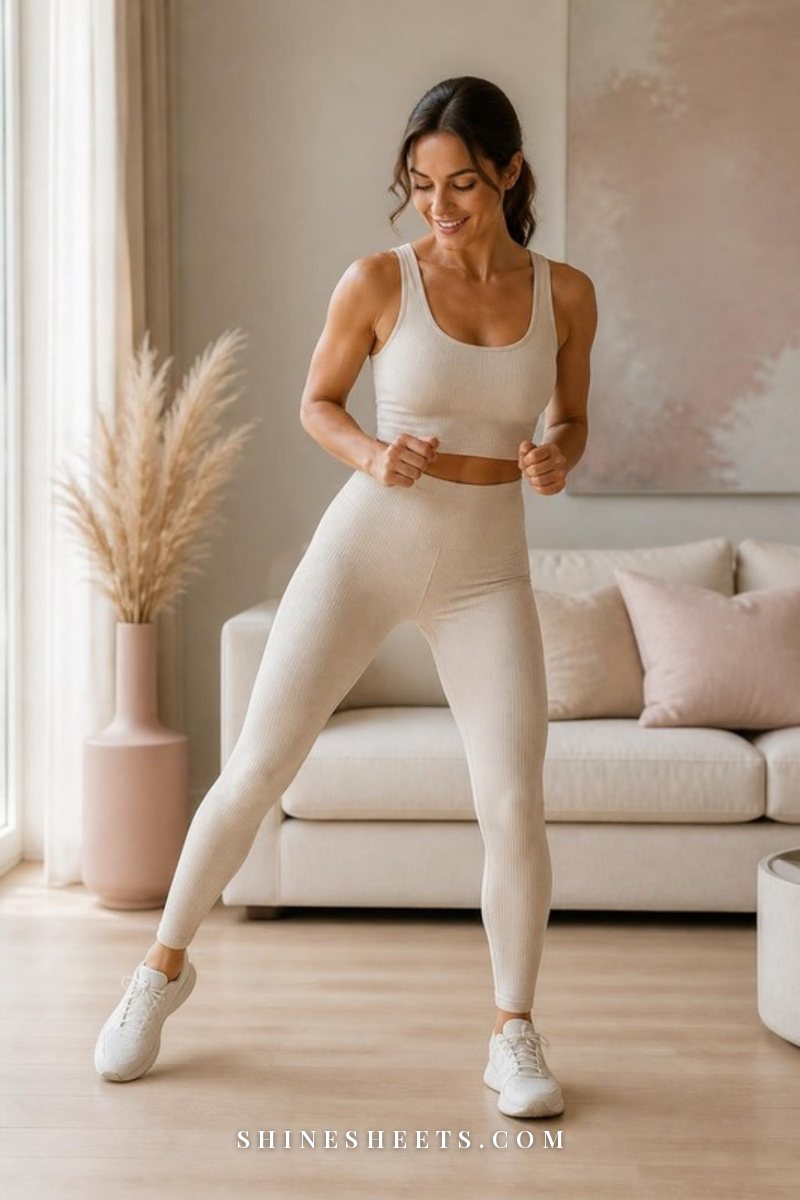
Step your right foot out to the side about shoulder-width, then bring your left foot in to tap next to it. Step your left foot out to the left and bring the right in to tap. Keep a gentle bend in your knees and sway naturally from side to side.
- How long: 2 minutes in the first round.
- Focus: push off the outside foot so you feel the sides of your hips working.
- Second-round version: as you step out, reach both arms overhead; bring them down to shoulder height as your feet come together.
4. Knee Lifts
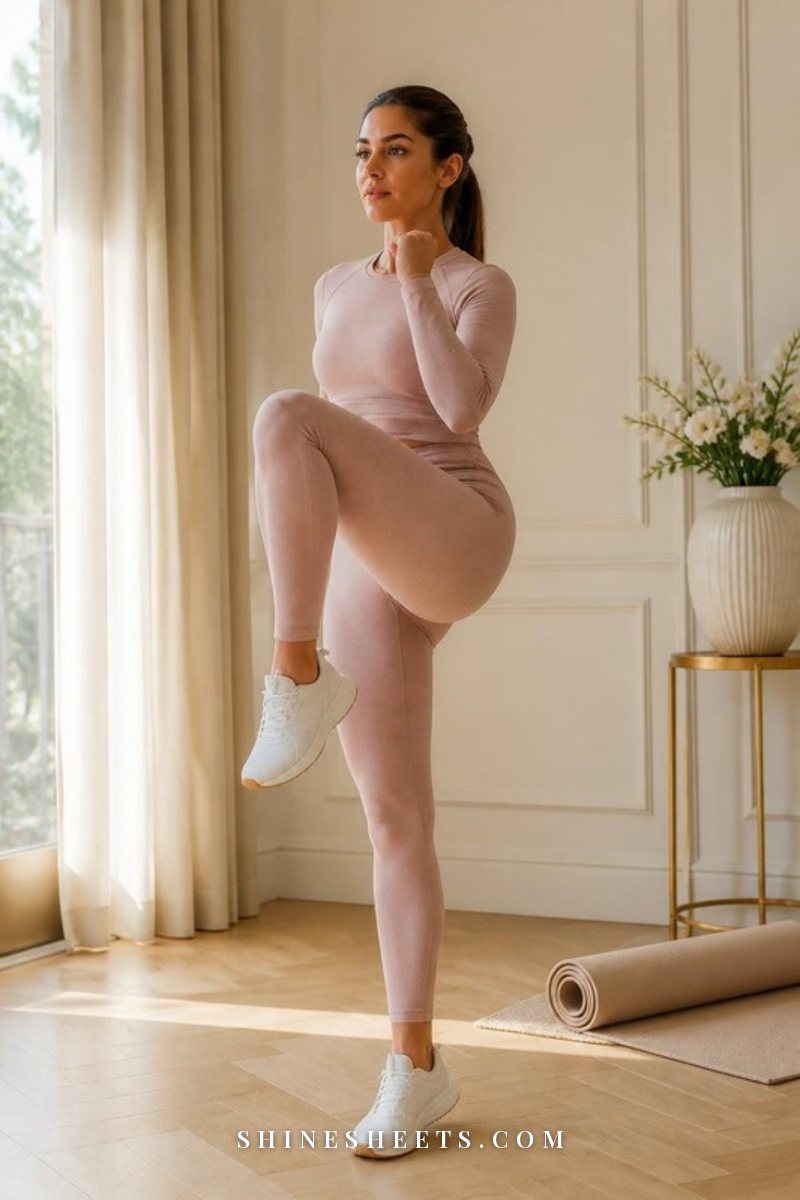
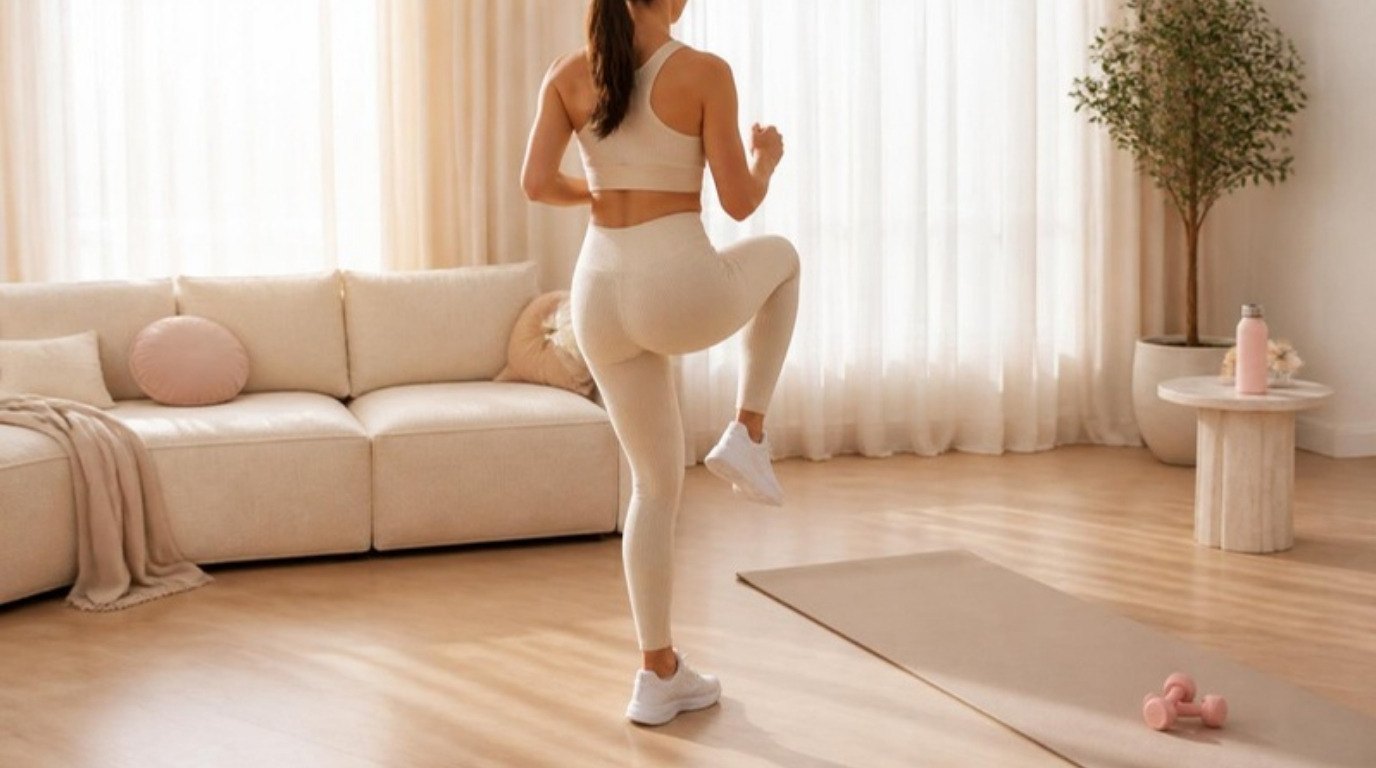
Standing tall, lift your right knee up toward hip height, then lower it and lift your left knee. Keep the movement controlled rather than bouncy. For a little extra core work, bring the opposite elbow down toward the lifting knee without rounding your back too much.
- How long: 2 minutes.
- Focus: brace your belly lightly, like you're zipping up a snug pair of jeans.
- Easier option: lift each knee only halfway and keep your hands on your hips.
5. Kick Backs
Step your feet hip-width apart. Bend your right knee and lift your heel back toward your bottom, then put it down and repeat with the left, as if you were walking in place but kicking your heels behind you instead of lifting your knees in front. Pull your arms gently back as each heel lifts, squeezing your shoulder blades slightly.
- How long: 2 minutes.
- Focus: keep your knees pointing down at the floor, not flaring out.
- Balance help: rest one hand on the back of a sturdy chair.
6. Grapevine
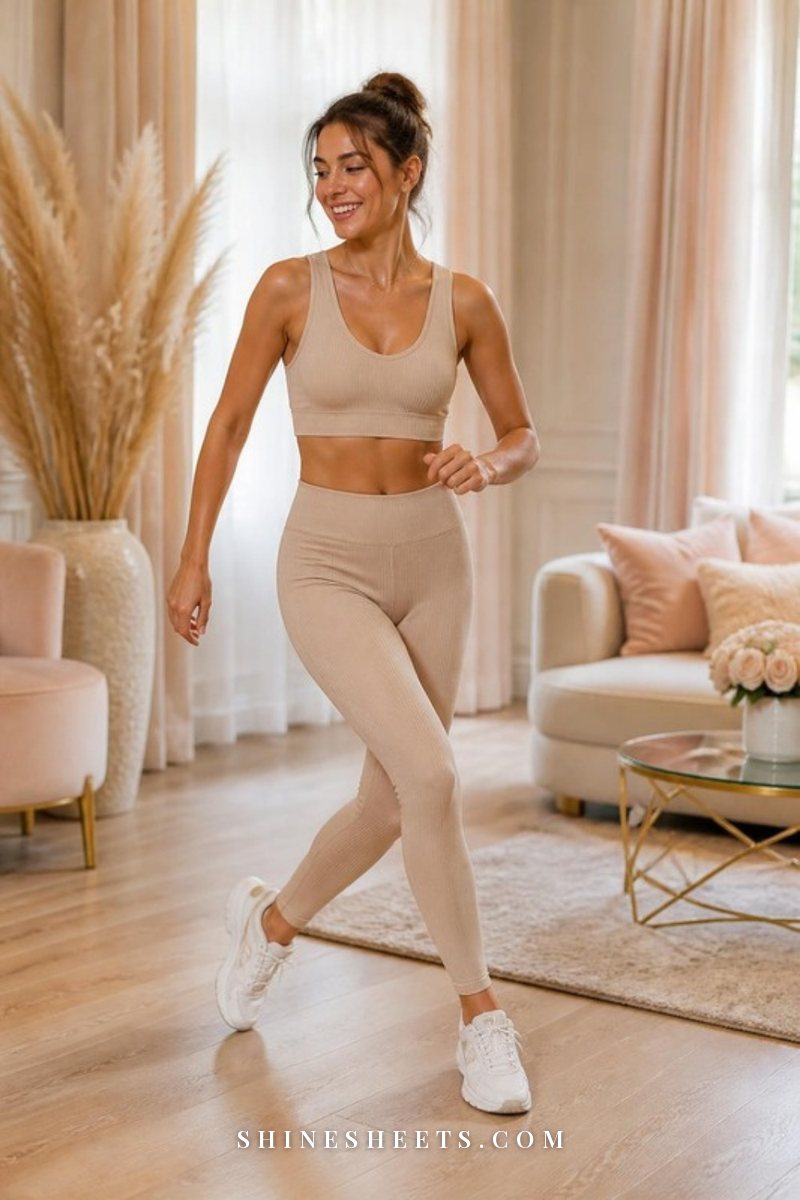
This one sounds like a dance class, but it's simply a traveling side step. Step your right foot to the right. Cross your left foot behind your right. Step your right foot to the right again. Tap your left foot beside it. Now repeat the whole pattern to the left: left foot out, right foot behind, left foot out, right tap.
- How long: 2 minutes.
- Space needed: about three steps each way.
- Easier option: if crossing behind feels wobbly, do wide side steps for the same time. The grapevine will click after a few sessions.
7. Walking with Light Arm Moves
This is where the arms join in properly. March in place at a brisk pace and add one arm move per block:
- Bicep curls: elbows tucked to your sides, palms facing up, curl your hands toward your shoulders and lower slowly.
- Forward punches: alternate soft punches straight out at chest height, rotating slightly through your upper body.
- Shoulder presses: start with hands at shoulder height, palms forward, and press up overhead, then lower back to your shoulders.
Do them with no weights at first. Once you can finish the 4 arm minutes without your shoulders burning, try light dumbbells, and keep your elbows soft rather than locking them.
8. Cool-Down Stretch
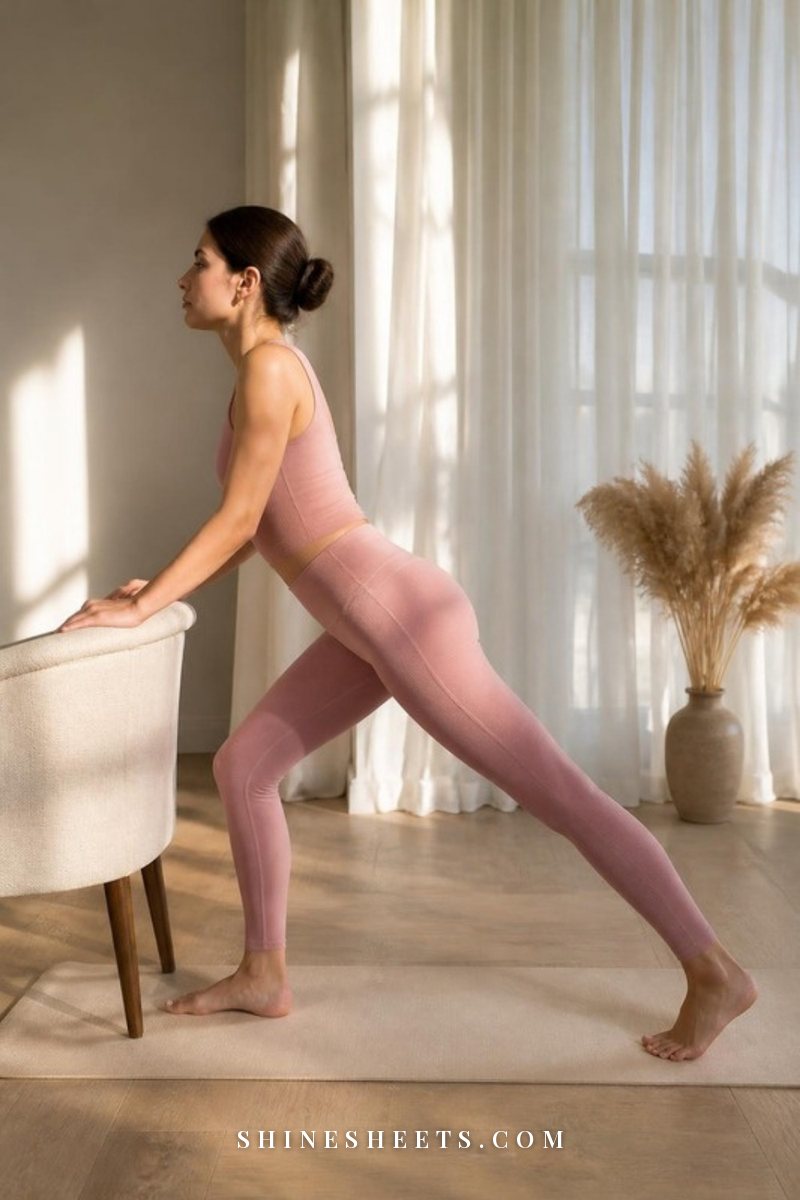
First, walk slowly in place for 2 minutes and let your breathing come back down. Then move to your mat and hold each of these stretches for about 30 seconds per side:
- Calf stretch: hands on a chair back or wall, step one foot back, press the back heel into the floor and keep that leg straight.
- Hamstring stretch: put one heel slightly forward with toes lifted, bend your back knee and hinge forward from the hips with a flat back.
- Quad stretch: holding a chair, bend one knee and hold your ankle behind you, knees side by side.
- Chest opener: clasp your hands behind your back, roll your shoulders down and gently lift your chest.
If you'd like a longer wind-down afterward, my 10-minute morning stretch routine works just as well at the end of a walk.
Beginner and Intermediate Options
The plan above sits right in the middle, so it's easy to make it gentler or a bit tougher without changing the structure.
If You're Brand New
- Start with 15 minutes: the 4-minute warm-up, minutes 4 to 13 of the plan, then a 2-minute slow walk and the stretches.
- Skip the arm moves for the first week and just let your arms swing.
- Keep every move at an effort of 4 and use the easier swaps from the table freely.
- Add 5 minutes per week until you reach the full 30.
If even 15 minutes feels like a lot right now, my lazy girl workouts you can do on the couch are a sweet starting point, and you can graduate to this plan whenever you feel ready.
If You Want More Challenge
- Use light dumbbells for every arm block, not just the curls.
- Lift knees fully to hip height and make your side steps wider and deeper, with a slight squat.
- Add a 30-second "power walk" (fastest controlled march you can manage) at the end of minutes 13, 19 and 23.
- Repeat minutes 11 to 25 once more for a 45-minute session.
Avoid jumping as a way to make it harder. The beauty of a walking workout is that one foot is always on the floor, which keeps it kind to knees, ankles and the floor below you. For more joint-friendly ideas in the same spirit, my 25-minute low-impact workout at home pairs nicely with this one.
How Often To Do Your Walking Workout
For most beginners, three to five times a week is a lovely rhythm. Walking is gentle enough that you don't need full rest days in between, but your body still appreciates variety.
Here's a simple week that works for a lot of people:
- Monday: 30-minute walking workout.
- Tuesday: a short outdoor walk or gentle stretching.
- Wednesday: 30-minute walking workout.
- Thursday: rest or something playful (dancing in the kitchen absolutely counts).
- Friday: 30-minute walking workout.
- Weekend: one longer walk outside if the weather allows, plus a real rest day.
If you'd rather walk outdoors on some days, my morning walk routine covers how to actually make that a habit. And if you like a bit of structure and a finish line, the 14-day walking challenge is a nice next step once this indoor plan feels comfortable.
Time of day matters less than consistency. Morning walks can wake you up better than a second coffee (which, for me, is a gamble between perky and jittery anyway). Evening walks are wonderful for shaking off a long day. Pick the slot you can protect most weeks.
How To Track Your Progress
Walking progress is quiet. You won't always see it in the mirror, but you'll feel it if you know where to look. Choose one or two of these and jot them in a notebook after each session:
- Effort at the same moves: if knee lifts felt like a 6 in week one and a 4 in week three, you're fitter. That's real progress.
- Talk test recovery: how quickly can you speak comfortably again during the slow walk at minute 25?
- Total minutes per week: aim to gently build toward about 150 minutes of moderate movement across the week, which is the general guideline for adults. Every walking workout gets you 30 minutes closer.
- Which version you did: beginner, standard or with weights. Moving up a level is worth celebrating.
- How you felt afterward: calmer, sleepier at night, less stiff in the mornings. These are the changes that keep you going.
A tiny tracking habit that works well: draw a small circle in your planner for every workout and fill it in when it's done. At the end of the month, a page of filled circles feels surprisingly good. If you want to understand what all those minutes are doing behind the scenes, I wrote about the benefits of walking for your health in more detail.
Safety Tips for Walking at Home
Walking is one of the gentlest ways to move, but a few basics keep it that way:
- Wear shoes with grip. Socks on wooden floors and loose rugs are the most common way indoor workouts go wrong.
- Clear the floor. Cables, pet toys, the edge of a rug: move anything at foot level before you start, especially before the grapevine.
- Keep a pace you can talk at. If you're gasping, slow down. Moderate is the goal, not maximum.
- Keep a chair nearby. It's there for balance during kick backs and stretches, and there's no shame in holding it.
- Stop if something hurts. Muscles feeling warm and a little tired is normal. Sharp pain, dizziness, chest discomfort or unusual shortness of breath means stop and rest, and check in with a doctor.
- Talk to your doctor first if you're pregnant, recovering from an injury or surgery, or living with a heart, lung or joint condition. A walking workout is usually a wonderful fit, but your doctor can tell you which moves and pace are right for you.
5 Common Walking Workout Mistakes
These are small, but fixing them makes the half hour feel better almost instantly.
1. Looking at Your Feet
It pulls your head forward and rounds your shoulders. Pick a spot on the wall at eye level and keep your gaze there. Imagine a string gently lifting the crown of your head, and let your shoulders slide down away from your ears.
2. Stomping
Heavy landings jar your knees and make the workout feel harder than it is. Think "quiet feet": land softly and roll through the whole foot.
3. Going Too Hard Too Soon
The first session should feel almost suspiciously doable. That's the point. Finishing with energy left is what makes you want to come back on Wednesday.
4. Skipping the Cool-Down
Those last five minutes bring your heart rate down gently and keep calves from feeling tight the next day. They're also the most pleasant part, so let yourself enjoy them.
5. Waiting for the "Right" Time
You don't need a perfectly free evening or a fresh outfit. A 15-minute version in whatever you're wearing (plus shoes) still counts. Done beats perfect, every time.
Final Thoughts
A walking workout is proof that movement doesn't have to be dramatic to make a difference. Thirty minutes of marching, side steps and a slightly wobbly grapevine in your own living room is real exercise, and doing it a few times a week adds up to stronger legs, a happier heart and calmer evenings.
Start with the version that feels easy, keep a pace you can chat at and let it become one of those small, steady habits you look forward to. Your living room floor is all the gym you need right now.