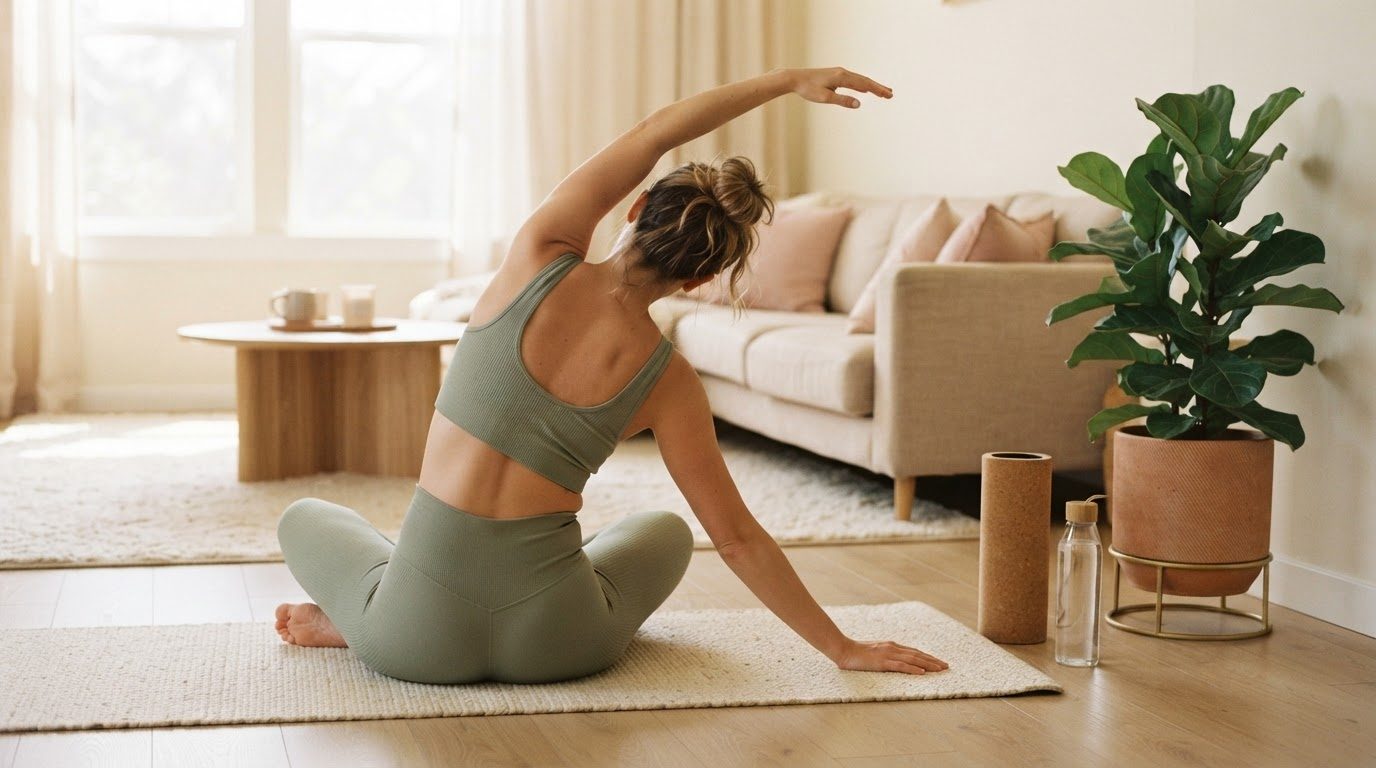
A good workout doesn't have to be loud, sweaty and full of jumping. Low-impact movement keeps at least one foot on the ground at all times, which means less pounding on your knees, hips and ankles – and a lot less noise for the neighbors downstairs. You still build strength, still raise your heart rate and still walk away feeling better than when you started.
Low-impact also means low-pressure. It's the kind of workout you can do on a sleepy morning, in a tiny living room, or on a day when your body simply isn't in the mood for anything intense.
This guide gives you a complete low-impact workout you can do at home: a gentle 25-minute plan with a warm-up, three short circuits and a cool-down, easier and harder options for every move, a "how often" weekly schedule and simple ways to progress. It's about strength, energy and feeling at home in your body, not about weight loss or punishing yourself.
What Does Low-Impact Actually Mean?
"Low-impact" describes how much force goes through your joints, not how easy a workout is. High-impact moves have a moment where both feet leave the floor (jumping jacks, burpees, running), and every landing sends a jolt through your body. Low-impact moves skip that moment entirely.
That doesn't make them gentle by default. A slow squat with a pause at the bottom can be surprisingly hard. The difference is that you control the effort, and your joints aren't absorbing repeated landings.
A few things low-impact workouts are especially lovely for:
- Beginners who want to build strength and confidence before trying anything more intense.
- Apartment living, where jumping is noisy and space is small.
- Tired or stressful seasons, when a hard workout feels like one more demand but some movement would still help.
- Achy joints or coming back to exercise after a break (with your doctor's okay).
- Anyone who simply prefers movement that feels calm instead of chaotic.
Why a Gentle Workout Still Counts
It's easy to believe a workout only "works" if you're drenched and exhausted afterward. I'd love for you to let that idea go. Regular, moderate movement supports strong muscles and bones, steadier energy, better sleep and a calmer mind – and you're far more likely to keep doing something that feels good.
As someone prone to anxiety, I find that a steady, rhythmic workout settles my nervous system in a way intense sessions sometimes don't. If you've ever finished a hard class feeling more wired than when you started, you know what I mean. If you also tend to feel guilty when you choose the gentler option, my post on how to stop feeling guilty for resting is a soft reminder that easy days are part of the plan, not a failure of it.
What You Need
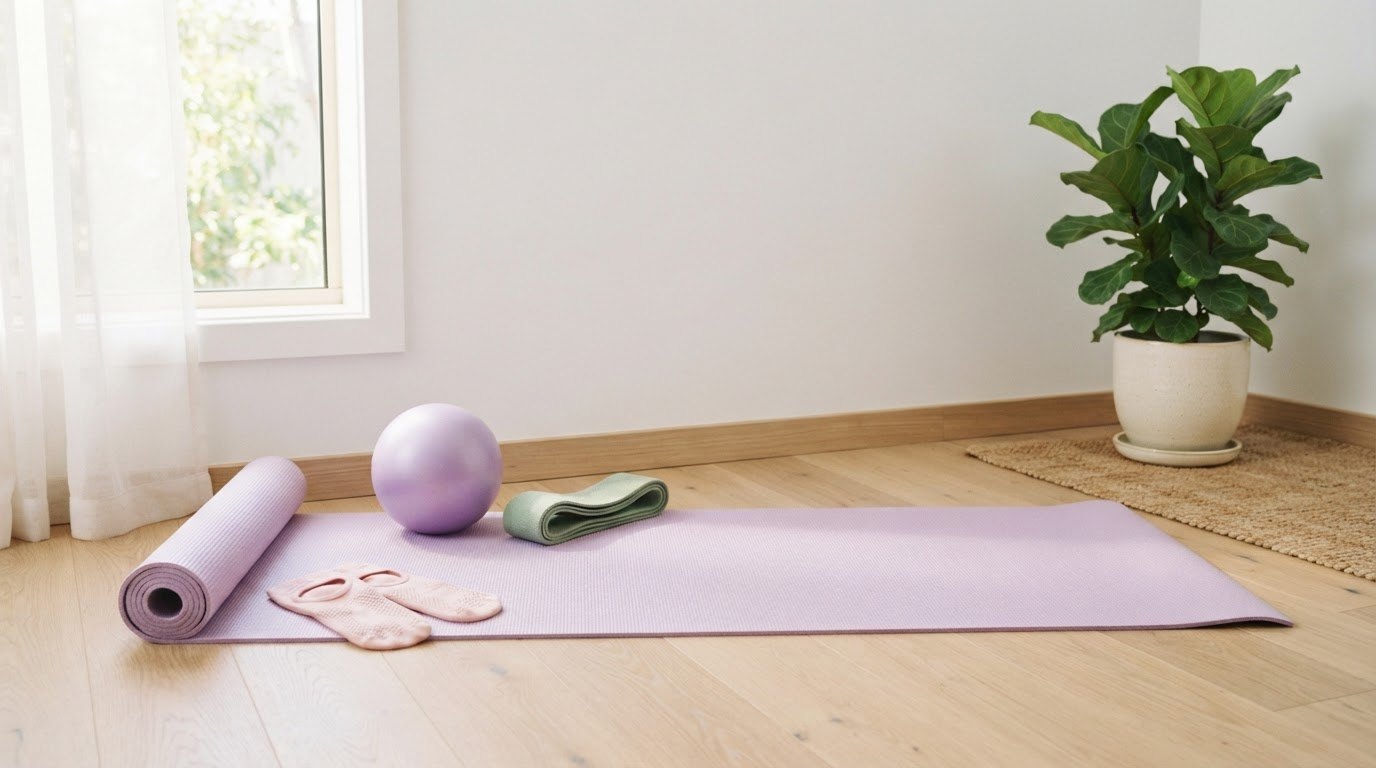
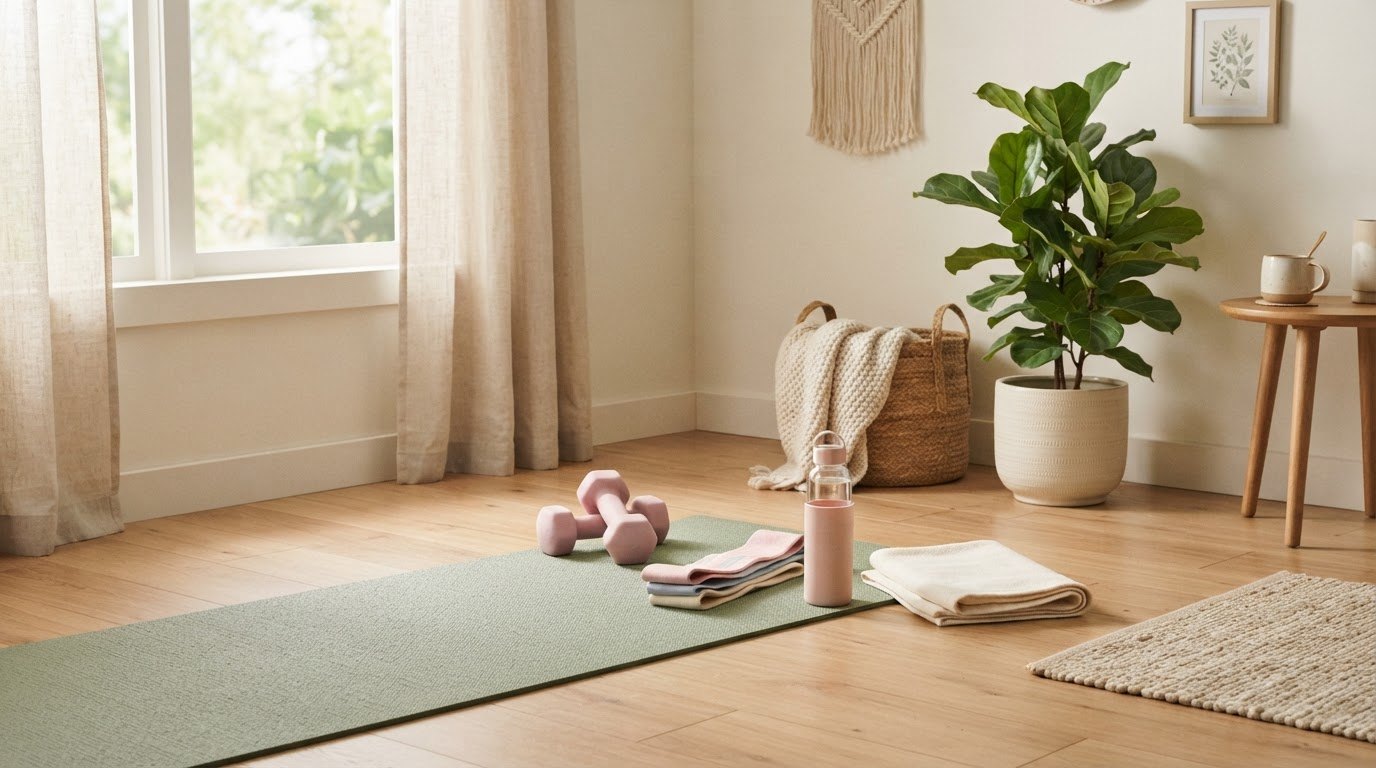
You can do this whole workout with nothing but your body and a bit of floor. If you'd like to make it comfier, or add challenge later, here's what I'd look for:
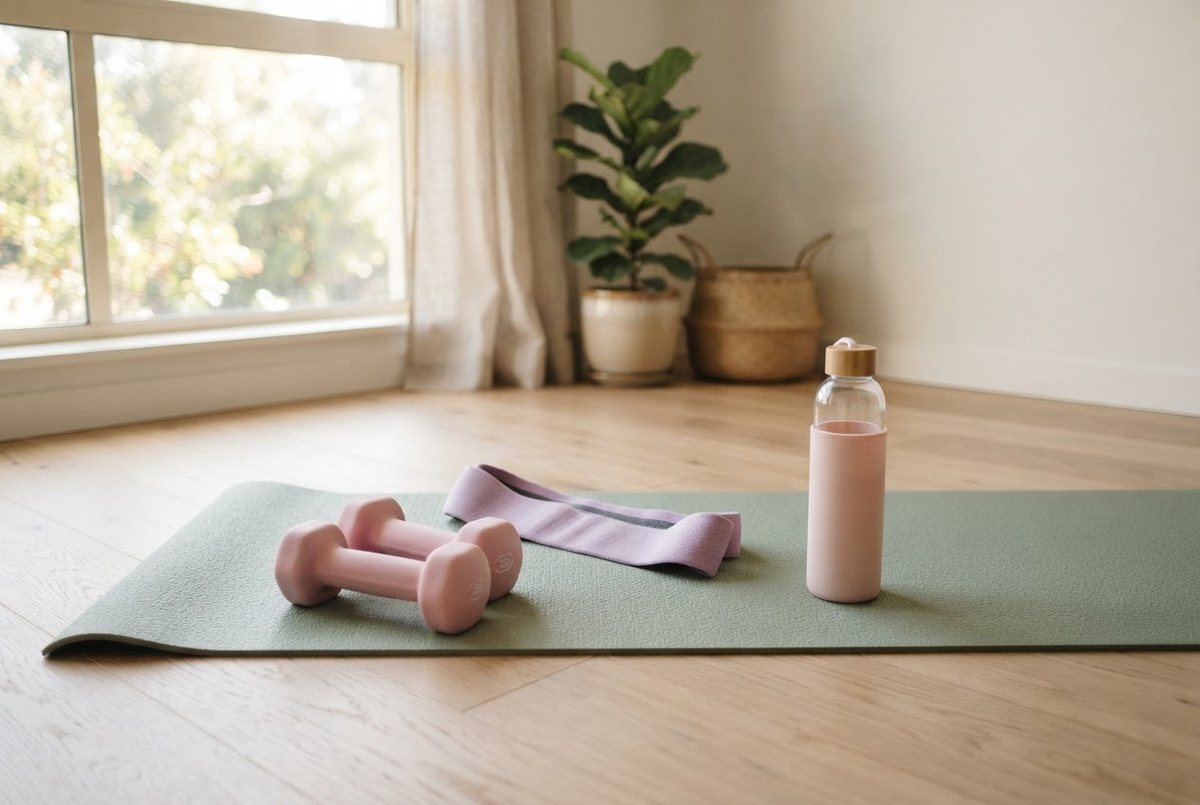
- A cushioned mat. Your knees and spine will thank you during floor moves. I'd choose a thick, non-slip yoga mat in soft sage that doesn't bunch up when you step back and forth.
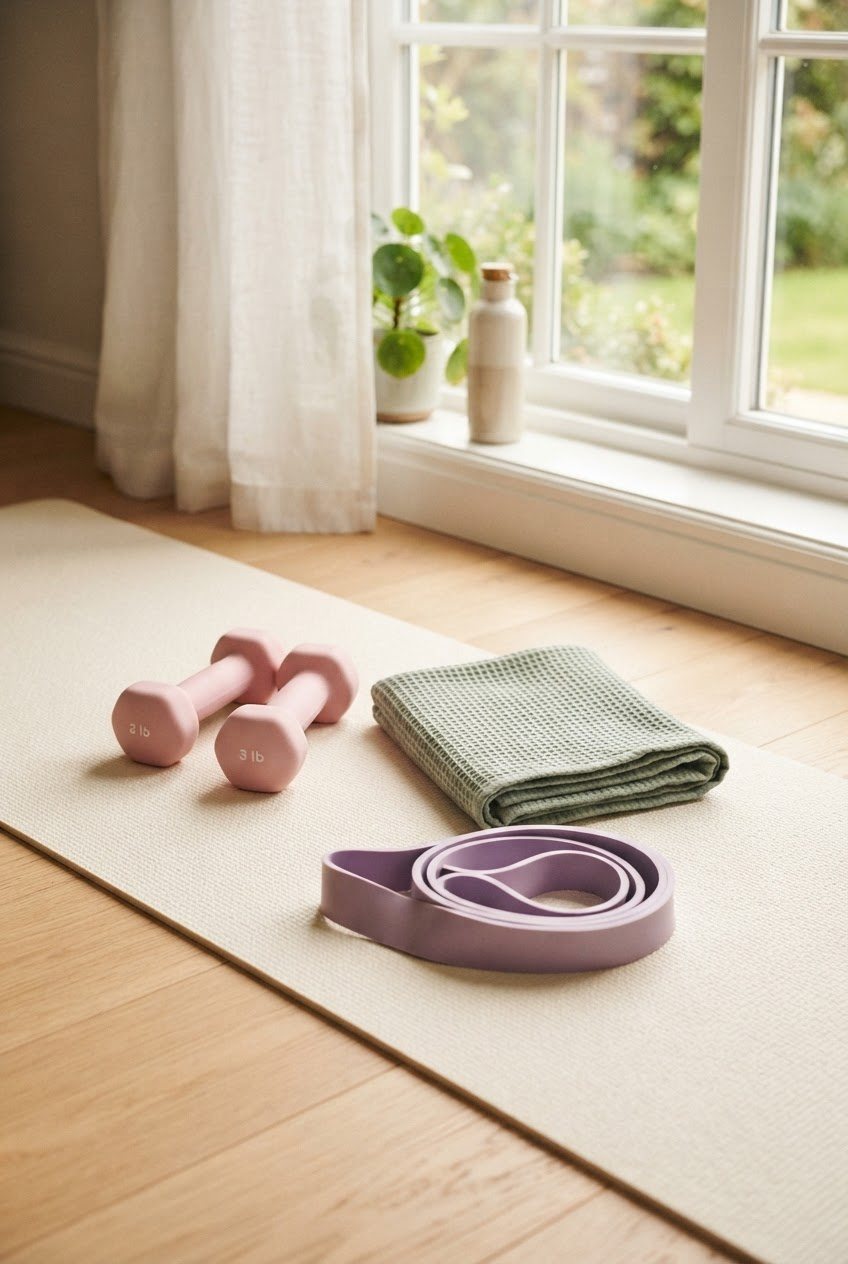
- Light dumbbells. Two to five pounds is plenty for beginners. A pair of neoprene-coated dumbbells in pastel pink is easy to grip and won't scuff your floor.
- Resistance bands. A set of fabric resistance bands in pastel shades gives you three or more levels of challenge for glute and leg moves, and fabric bands stay put better than thin rubber ones.
- Water within reach. A glass water bottle with a soft blush sleeve near your mat makes it easy to sip between circuits. For more easy hydration tricks, see how to drink more water.
- Supportive shoes or grip socks. For standing moves, either works. Just avoid slippery socks on hard floors.
A Kind Safety Note Before You Begin
- Talk to your doctor first if you're pregnant or postpartum, recovering from an injury or surgery, managing a heart, lung or joint condition, or new to exercise.
- Stop if you feel sharp pain, dizziness, chest discomfort or unusual shortness of breath. Mild muscle effort is normal; pain is a signal to stop.
- Use the "talk test." During the circuits, you should be able to speak in short sentences. If you can't, slow down or take the easier option.
- Your range is your range. Shallow squats and small movements are completely valid.
This article shares general wellness information and isn't a substitute for personal medical advice.
The Gentle 25-Minute Low-Impact Workout Plan
Here's the full plan. Do each circuit twice through, resting about 20 seconds between moves and 40 seconds between rounds. Screenshot the table so you can glance at it while you move.
| Part | Move | Time | Easier option | Harder option |
|---|---|---|---|---|
| Warm-up (4 min) | March in place with arm swings | 1 min | Slow march, arms by sides | Higher knees, bigger arm circles |
| Warm-up | Hip circles and shoulder rolls | 1 min | Smaller circles | Add gentle torso twists |
| Warm-up | Step touch side to side | 1 min | Small steps | Wider steps, reach arms overhead |
| Warm-up | Bodyweight good mornings | 1 min | Small hinge, hands on thighs | Deeper hinge, slower pace |
| Circuit 1: Legs (2 rounds) | Chair squat | 40 sec | Sit fully on chair each rep | Hold dumbbells, pause at bottom |
| Circuit 1 | Reverse lunge | 40 sec | Hold a chair, shorter step | Hold dumbbells, alternate slowly |
| Circuit 1 | Standing calf raises | 40 sec | Hold a wall | Single leg, pause at top |
| Circuit 2: Upper body (2 rounds) | Incline push-up on a counter or sturdy table | 40 sec | Push-up against the wall | Lower surface, like a step or the floor on knees |
| Circuit 2 | Bent-over row | 40 sec | No weights, squeeze shoulder blades | Heavier dumbbells, 2-second lower |
| Circuit 2 | Overhead press | 40 sec | Seated, no weights | Standing, dumbbells, slow tempo |
| Circuit 3: Core and glutes (2 rounds) | Glute bridge | 40 sec | Smaller lift | Band above knees or single leg |
| Circuit 3 | Bird dog | 40 sec | Move arm only or leg only | Pause 3 seconds at full reach |
| Circuit 3 | Side-lying clamshell | 40 sec (20 each side) | No band | Band above knees |
| Cool-down (4 min) | Standing quad and hamstring stretch | 1 min | Hold a wall for balance | Longer, slower hold |
| Cool-down | Child's pose | 1 min | Pillow under hips or chest | Walk hands side to side |
| Cool-down | Figure-four stretch on your back | 1 min | Keep foot on floor | Gently draw knee toward chest |
| Cool-down | Slow breathing lying down | 1 min | Knees bent, feet flat | Add a body scan from toes to head |
With rests, the warm-up takes about 4 minutes, each circuit about 6 minutes and the cool-down 4 minutes, so the whole plan lands at roughly 25 minutes.
How To Do the Moves
A few form notes for the moves that matter most. Go slowly, especially in your first week, and remember that control beats speed every time.
Warm-Up Moves
March in place: Lift one knee at a time to a comfortable height, swinging your arms naturally. Hip circles and shoulder rolls: Hands on hips, draw big slow circles with your pelvis, then roll your shoulders back ten times. Step touch: Step right, bring the left foot to meet it, step left, repeat. Good mornings: Hands behind your head or on your thighs, soften your knees and hinge forward from your hips with a long flat back, then stand tall again.
Chair Squat
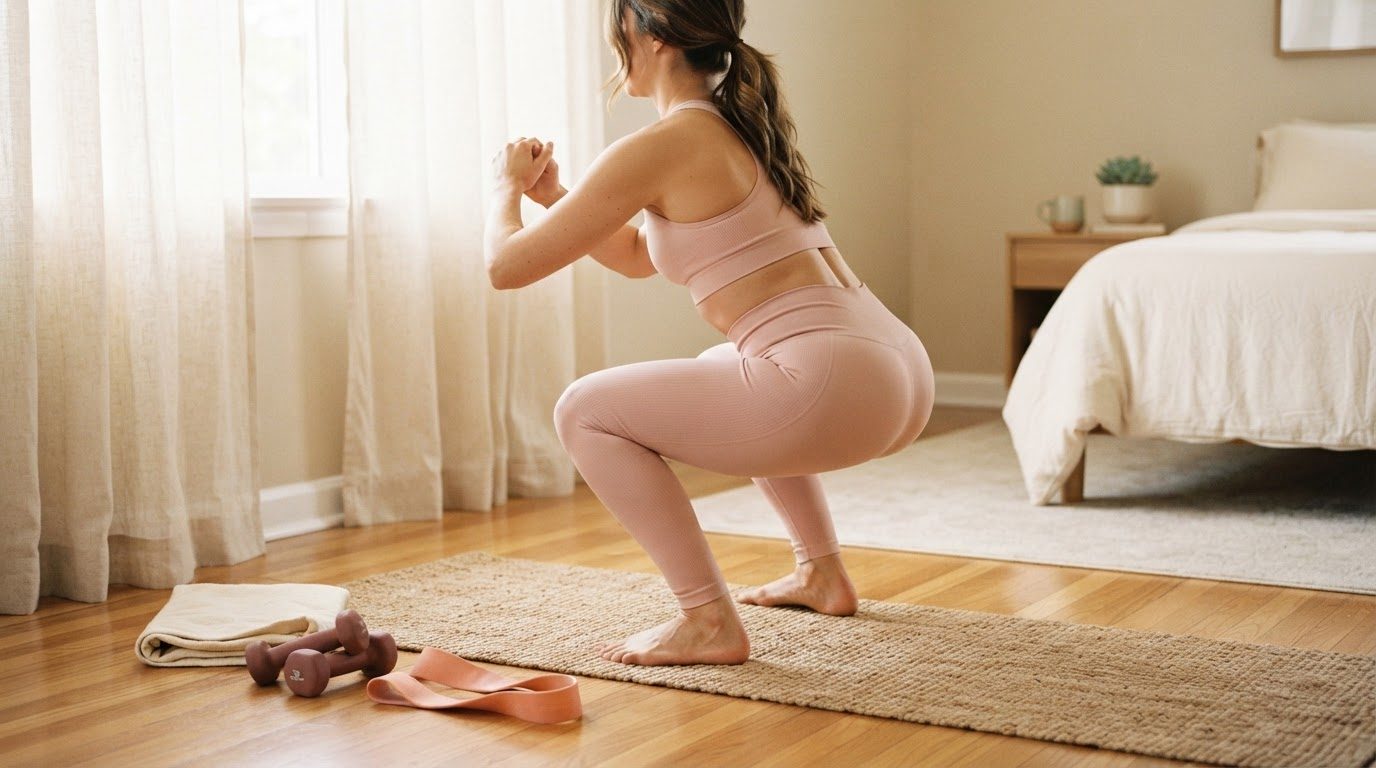
Stand in front of a sturdy chair, feet hip-width apart. Push your hips back as if you're about to sit, bending your knees, and lightly tap the chair with your seat before standing up again. Keep your chest lifted and your knees tracking over your toes. The chair is your safety net and your depth guide.
Reverse Lunge
From standing, step one foot back and lower both knees toward a gentle bend, then press through your front heel to return. Stepping backward is much kinder to your knees than stepping forward. Hold a chair or counter for balance if you need it – there's no prize for wobbling.
Incline Push-Up
Place your hands on a kitchen counter or a sturdy table, a little wider than your shoulders. Walk your feet back until your body is one straight line. Lower your chest toward the edge, then press away. The higher the surface, the easier it is.
Bent-Over Row
Hold a dumbbell in each hand, soften your knees and hinge forward to about a 45-degree angle with a flat back. Pull the weights toward your lower ribs, squeezing your shoulder blades together, then lower slowly. This is a beautiful counter-move for hunched desk shoulders – and if those are a daily problem, my posture exercises are worth adding on rest days.
Glute Bridge and Clamshell
For the bridge, lie on your back with knees bent and feet flat, then press through your heels to lift your hips and squeeze your glutes at the top. For clamshells, lie on your side with knees bent and stacked, keep your feet together and lift your top knee like a shell opening. Both get noticeably stronger with a band above your knees once you're ready.
Bird Dog
Start on hands and knees. Reach your right arm forward and left leg back at the same time, keeping your hips level (imagine balancing a cup of tea on your lower back). Pause, return, switch sides. Slow is the whole point. If kneeling bothers you, a thick yoga knee pad in cream under your knees makes a big difference.
Cool-Down Stretches
Hold each stretch without bouncing and breathe into it. For the quad stretch, hold one ankle behind you with a hand on the wall. For the hamstring stretch, place one heel slightly forward and hinge over it. Child's pose and the figure-four stretch (one ankle crossed over the opposite knee while lying on your back) release your hips and lower back. If you'd like a longer stretch session on its own, my 10-minute morning stretches flow nicely with this plan.
How Often Card: A Gentle Weekly Schedule
Here's a simple way to fit the plan into a normal week. Choose the version that matches your energy right now, and move up only when it feels easy.
| Level | Full 25-minute plan | Light movement | Full rest |
|---|---|---|---|
| Just starting | 2 days (e.g. Tue and Sat) | 2 days of a 10–15 minute walk | 3 days |
| Building | 3 days (e.g. Mon, Wed, Fri) | 2 days of walking or stretching | 2 days |
| Feeling strong | 3–4 days, using harder options | 2 days of walking, stretching or wall pilates | 1–2 days |
A few rules that go with the card:
- Leave at least one day between full sessions so your muscles can recover and get stronger.
- Stay at each level for at least two to three weeks before moving up.
- If you're sick, very sore or running on no sleep, drop a level for that week. That's smart training, not quitting.
- On days when even 25 minutes feels like too much, a few lazy girl workouts still count as moving your body.
How To Progress Without Adding Impact
When the plan starts to feel easy, you don't need to start jumping. Pick one of these and change it for a week or two before trying another:
- Slow the tempo. Three seconds down, one second up. Slower reps mean more time under tension.
- Add a pause. Hold the bottom of the squat or the top of the bridge for two seconds.
- Add weight. Hold dumbbells for squats and lunges, or move up a pound or two for rows and presses.
- Add a band. Bridges, clamshells and squats all get tougher with a band above your knees.
- Add a third round. Repeat one circuit three times instead of two, which turns the plan into roughly 30 minutes.
5 Low-Impact Workout Mistakes To Avoid
- Skipping the warm-up. Four minutes feels optional when you're short on time, but cold muscles and stiff joints are exactly how small tweaks happen. If you have to cut something, cut a round of a circuit, not the warm-up.
- Turning "low-impact" into "low-attention." Because the moves are simple, it's tempting to rush through them while thinking about your to-do list. Slow, focused reps build far more strength than fast, distracted ones.
- Locking your knees and elbows. In squats, presses and push-ups, keep a tiny softness in your joints at the top of every rep so your muscles, not your joints, hold the weight.
- Holding your breath. Exhale on the hardest part of the move (standing up from the squat, pressing away from the counter), inhale on the easier part. If you can't breathe steadily, take the easier option.
- Doing the plan every single day. More isn't better when you're starting out. Muscles get stronger during rest, so the rest days on the schedule card are doing real work too.
Fitting It Into a Real Day
The best time to work out is simply the time you'll actually do it. A few options that tend to work well:
- Morning: Do the plan before you check your phone. It wakes you up gently and the rest of the day feels a little more yours. On mornings when coffee makes me jittery instead of awake, a few minutes of movement does a nicer job.
- Lunch break: Working from home? The warm-up plus one circuit plus the cool-down fits into about 14 minutes and breaks up a long sitting stretch.
- After work: A steady circuit is a lovely way to shake off the day before dinner. Keep the cool-down slow so you don't feel wired at bedtime.
- Split it up: Do the warm-up and circuit 1 in the morning, circuits 2 and 3 plus the cool-down in the evening. Your muscles don't know the difference, and it all still counts.
Whatever time you choose, write it into your week like any other appointment. A workout with a time slot is much more likely to happen than one that waits for "later."
Little Ways To Keep Going
- Lay out your mat the night before. Waking up to it already waiting removes one small excuse.
- Use a playlist as your timer. Four songs for the circuits, one slow song for the cool-down.
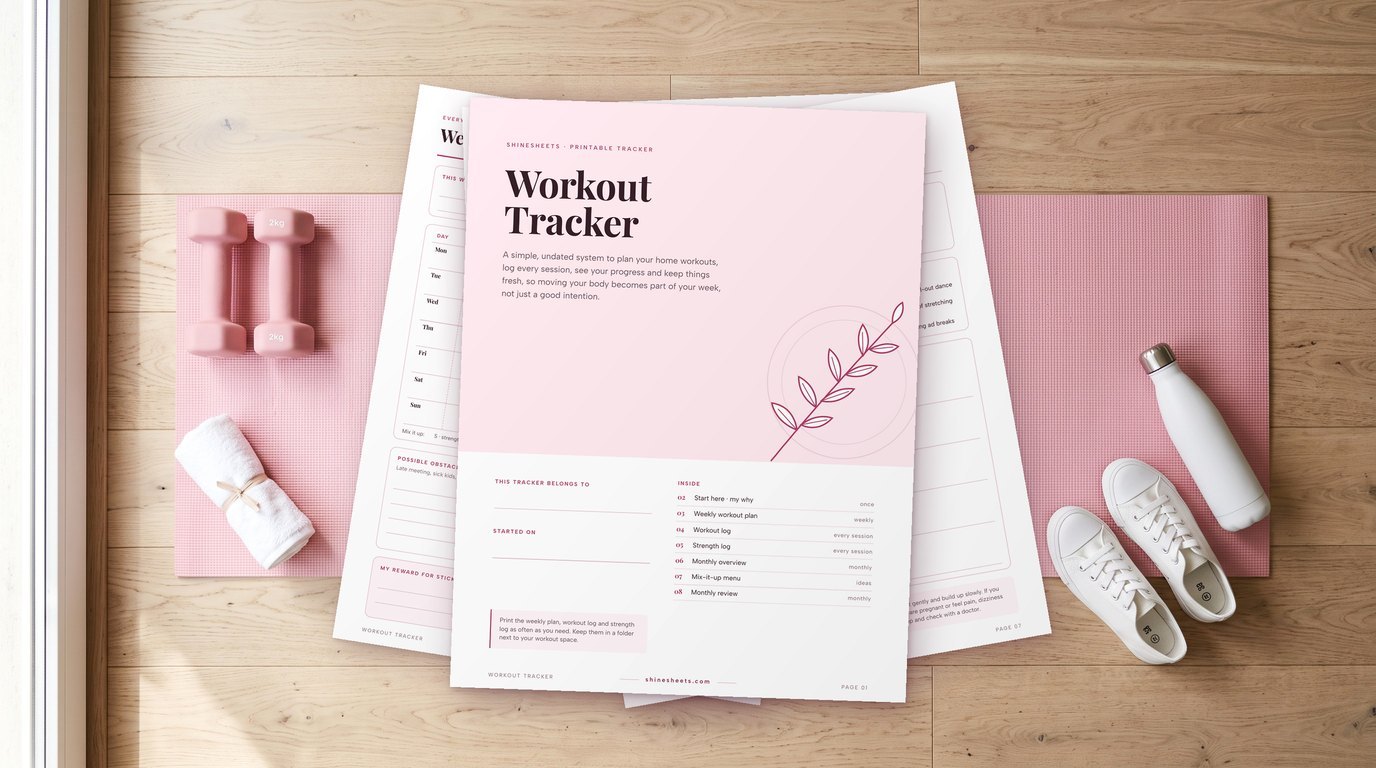
- Track how you feel, not how you look. A quick note after each session ("more energy," "shoulders looser," "slept better") is far more motivating than the mirror.
- Plan for imperfect weeks. Decide now that a 10-minute version (warm-up, one circuit, cool-down) still counts.
- Celebrate small wins. Your first full push-up on the counter, a lunge without holding the chair, three weeks in a row. These matter.
Final Thoughts
A low-impact workout is proof that strength can be quiet. Twenty-five gentle minutes, a mat and maybe a pair of light dumbbells are enough to help you feel steadier, stronger and more at home in your body.
Start with the easier options, keep your sessions kind and give it a few weeks. The goal isn't to exhaust yourself – it's to keep showing up for a body you're on the same team with.