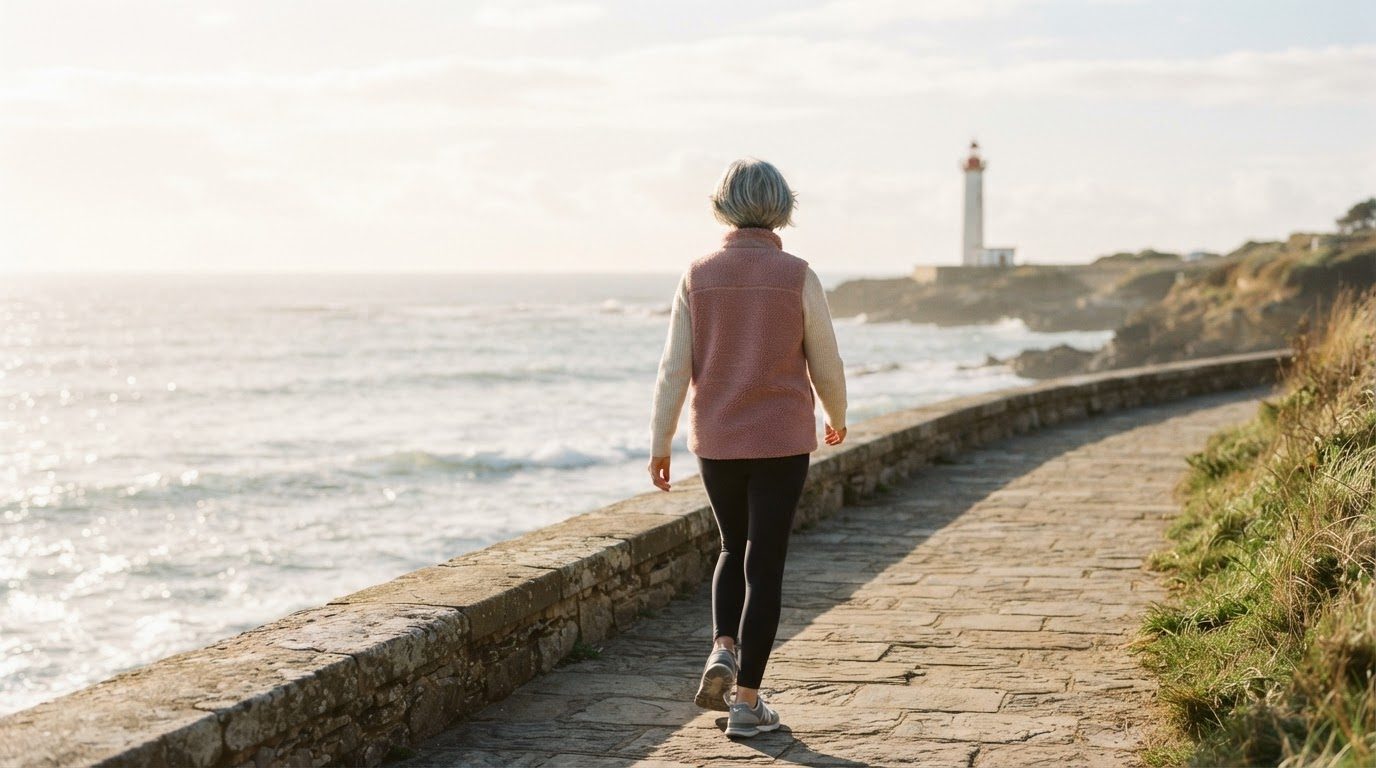
A morning walk doesn't have to be long, fast or impressive to be worth it. Ten easy minutes outside, at roughly the same time each day, already gives you three things most mornings are missing: daylight on your face, gentle movement for a body that has been still all night, and a few quiet minutes before the day starts asking things of you.
The hard part isn't the walking. It's the getting out the door – the cold air, the warm bed, the voice that says you'll go tomorrow. That's why a good morning walk routine is mostly about making the start ridiculously easy, and only later about distance or pace.
In this guide you'll find why a morning walk can feel so good (without any big promises), how to actually start with just ten minutes, what to wear in every kind of weather, whether to walk with a playlist, a podcast or in silence, a quick posture check, and a simple 4-week plan with a bad weather backup list for the days you really can't go out.
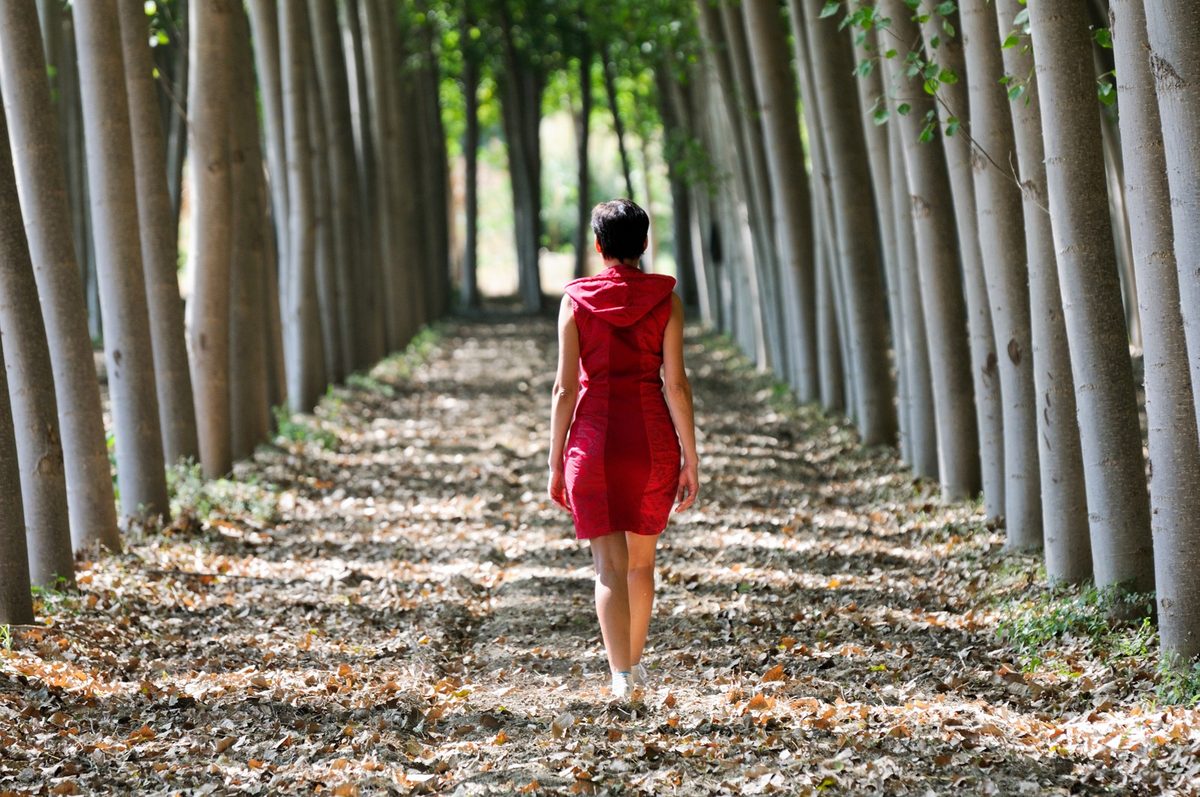
Why a Morning Walk Feels So Good
I want to be careful here, because walking gets sold as a cure for everything. It isn't. But there are some very real, very ordinary reasons a morning walk tends to make the rest of the day feel smoother.
Morning Light
Natural light early in the day is one of the signals your body uses to tell morning from night. Even on a cloudy day, outdoor light is much brighter than the lamp in your kitchen. Many people find that getting outside soon after waking helps them feel more awake in the morning and sleepier at a sensible hour at night. If your sleep has felt a bit off lately, my sleep hygiene checklist pairs nicely with this habit.
Gentle Movement
After a night of lying still, your body often feels stiff and slow. Walking is the friendliest kind of movement there is: no equipment, no special skills, easy on the joints. It warms you up, gets your legs and arms swinging and loosens the hips and shoulders that tightened up overnight.
A Calmer Start for Your Mind
Here's my small honest admission: I'm prone to anxiety, and the mornings I skip straight to my to-do list are usually the mornings my thoughts start racing first. A walk puts a buffer between waking up and doing. Your mind gets to wander, sort, settle. It's not therapy, and it won't fix a hard season on its own, but it's a kind way to begin.
A Habit That Carries Others
Once you're up, dressed and outside, other small habits tend to follow: drinking a glass of water before you leave, eating breakfast at a calmer pace, stretching when you get back. The walk becomes an anchor for the whole morning.
A gentle note: if you have a heart condition, joint pain, are pregnant, recovering from an injury or haven't moved much in a while, check with your doctor before starting a new exercise habit, and stop if anything hurts, feels dizzy or just feels wrong.
How To Actually Start a Morning Walk Routine
Most walking habits fall apart in the first week because they start too big. Here's how to make it small enough that it survives your busiest, sleepiest mornings.
Start With 10 Minutes
Ten minutes is short enough that you can't really argue with it. Walk five minutes away from your door, turn around and walk five minutes back. That's the whole thing. If you want to keep going on a good day, wonderful, but the promise you make to yourself is only ten.
It might feel almost too easy. That's the point. You're not training your legs yet – you're training the habit of getting out the door.
Pick the Same Time Every Day
A walk that happens "sometime in the morning" tends not to happen. Attach it to something that already exists: right after you brush your teeth, right after your first glass of water, right before you make coffee. The same cue every day means you stop having to decide.
If your mornings vary a lot, choose a time window instead of a fixed time: "within 30 minutes of getting up."
Prepare Everything the Night Before
This is the single biggest trick. Before bed, lay out your walking clothes, socks and shoes by the door or on a chair. Fill your water bottle and put it in the fridge. Put your keys and headband in the same spot. In the morning, you're not making decisions half-asleep – you're just putting on what's waiting for you.
A simple beige crossbody belt bag helps here too: keys, lip balm, a tissue and your phone go in once and stay there, so you're never hunting for things at the door.
Make the Route Boring (In a Good Way)
Choose one easy loop close to home and walk it every day for the first two weeks. A familiar route means no planning and no getting lost. Later you can add a park, a longer street or a new neighborhood, but at the beginning, boring is your friend.
Lower the Bar on Hard Days
On days you really don't feel like it, give yourself permission to walk to the end of the street and back. Two minutes counts. Most of the time you'll keep going once you're outside, and on the days you don't, you still kept the habit alive.
What To Wear on Your Morning Walk
The right clothes make a big difference to how often you'll actually go. Being cold, wet or rubbing in the wrong places is the fastest way to start skipping walks.
Shoes First
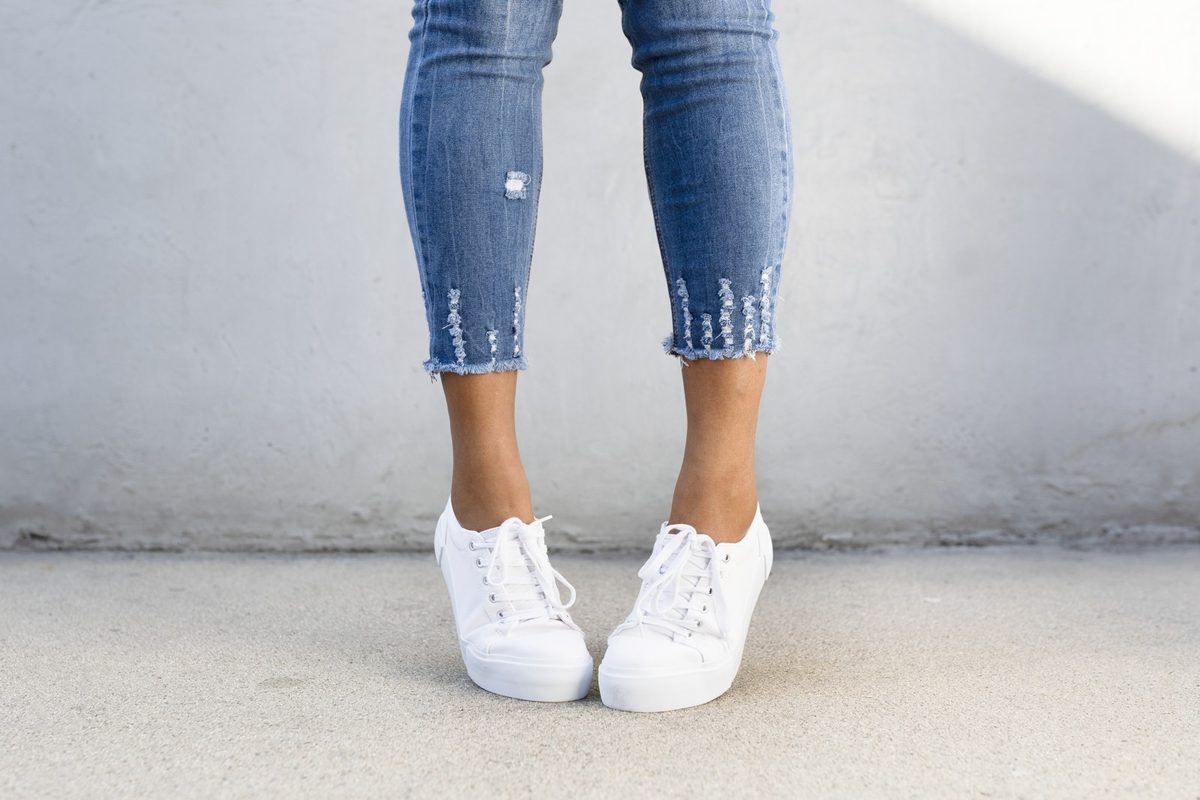
You don't need running shoes, but you do want something cushioned, flexible at the toes and comfortable for at least 30 minutes. A pick for most walkers: cushioned white walking sneakers with a supportive sole and a roomy toe box. Look for a light, breathable upper and try them on later in the day, when your feet are slightly larger.
Socks matter more than you'd think. Choose breathable, seamless ones, and in cold weather switch to soft wool socks that keep your toes warm without bunching.
Dressing by Weather
| Weather | What To Wear | Small Extra |
|---|---|---|
| Warm and sunny | Light leggings or shorts, breathable tee | Cap or sunglasses, sunscreen on face and neck |
| Mild and fresh | Leggings, long-sleeve top, light zip jacket | A jacket you can tie around your waist |
| Cold | Thermal leggings, base layer, fleece, warm coat | Headband over the ears, gloves |
| Rainy | Quick-dry leggings, waterproof layer | A hood or cap to keep rain off your face |
| Dark mornings | Light-colored layers | Reflective details or a small clip-on light |
For cold mornings, a soft fleece ear warmer headband is one of the smallest, most useful things you can own. Ears get cold first, and a headband is easier to stuff in a pocket than a hat when you warm up.
For drizzly days, I'd choose a lightweight pastel rain jacket with a hood that packs down small. Light colors also make you easier to see on gray mornings.
The Layering Rule
Dress as if it's about 10 degrees warmer than it actually is outside. You'll feel slightly cool for the first five minutes, then just right for the rest of the walk. If you start out perfectly warm, you'll be sweating by the end of the block.
Playlist, Podcast or Silent Walk
There's no right answer here, only what gets you out the door and what you need that day. Here's how I think about each option.
A Playlist for Energy
Upbeat music naturally lifts your pace, which is lovely on sleepy mornings. Make one short "morning walk" playlist so you don't waste time choosing. Keep the volume low enough that you can still hear traffic, bikes and people around you.
A Podcast for Company
A favorite podcast can be the thing you look forward to. Some people save one particular show only for walks, so they genuinely want to go. The downside: it keeps your mind busy, so you might miss the quiet benefit of the walk.
A Silent Walk for Calm
Walking without anything in your ears can feel strange at first, almost too quiet. But silent walks are often where the best ideas, the clearest decisions and the softest feelings show up. Try one silent walk a week and see how it feels.
A simple mindful prompt for silent walks: notice five things you can see, four things you can hear, three things you can feel (the air, your feet, your sleeves), two things you can smell and one thing you're looking forward to today. It's grounding, especially on anxious mornings.
A Mix
My favorite approach is a little of both: silent for the first five minutes while the world wakes up, then music on the way home. You get the calm and the energy.
A Quick Posture Check While You Walk
You don't need to overthink your form, but a few small cues make walking feel lighter and kinder to your neck and back. Check in with these every few minutes:
- Head up, eyes forward. Look about 10 to 20 feet ahead, not down at your shoes or your phone.
- Shoulders soft and down. Lift them up toward your ears, then let them drop. That's where they belong.
- Arms swinging naturally. Bend your elbows slightly and let your arms move with your opposite leg.
- Belly gently engaged. Not sucked in, just lightly awake, as if you're zipping up a pair of jeans.
- Heel to toe. Land softly on your heel, roll through your foot and push off from your toes.
- Comfortable steps. Shorter, quicker steps feel better than long, stretched-out strides.
If your upper back and neck tend to feel tight from screens, my gentle posture exercises for long desk days are a nice match for your walking days.
Before and After Your Walk
A few small rituals turn a walk into a real routine.
Before You Go
- Drink a glass of water. You've gone all night without one. A cream insulated water bottle filled the night before makes it easy to sip before and after.
- Do one minute of easy movement. Roll your shoulders, circle your ankles, march on the spot.
- Check the weather once. Then dress accordingly and stop checking.
When You Come Back
- Stretch for five minutes. Calves, hamstrings, hips and chest feel lovely after a walk. My 10-minute morning stretches are a perfect add-on when you have time.
- Take a slow breath at the door. Notice how you feel compared to when you left.
- Move into your morning calmly. A walk sets up a gentle start beautifully. If you'd like to build a whole unhurried morning around it, here's how to create a slow morning routine.
Your 4-Week Morning Walk Plan
This is the heart of the guide. The plan grows slowly on purpose, so it never feels like a big jump. Screenshot it and keep it on your phone, or copy it into your journal.
| Week | Minutes | Days | Focus |
|---|---|---|---|
| Week 1 | 10 | 4 days | Just get out the door. Same time, same route, no pace goals. |
| Week 2 | 15 | 5 days | Practice the posture check. Try one silent walk. |
| Week 3 | 20 | 5 days | Add a new route once a week. Walk a little briskly for the middle 5 minutes. |
| Week 4 | 25–30 | 5–6 days | Mix it up: one longer weekend walk, one gentle recovery walk, the rest at a comfortable brisk pace. |
A few notes to make the plan work for you:
- Repeat a week whenever you want. If week two felt like a lot, do it again. There's no prize for finishing in exactly 28 days.
- "Brisk" means you can talk but not sing. You should feel warm and a little out of breath, never gasping.
- Rest days are part of the plan. Two quiet days a week let your legs recover and keep the habit from feeling like a chore.
- Track it simply. A small tick on a calendar or in your journal is enough. Watching the ticks add up is surprisingly motivating.
After four weeks, most people find the walk has become something they miss on the days they skip it. From there, you can keep it at 20 to 30 minutes, add a hill, or walk with a friend on weekends.
Bad Weather Backup List
Some mornings are genuinely not for walking: icy pavements, thunderstorms, heavy wind, extreme heat or a very dark, unsafe street. On those days, safety comes first, and you can keep the habit going indoors instead. Here are 7 backup options:
- Walk in place for 10 minutes. Put on your walking playlist and march, swinging your arms. It sounds silly and works beautifully.
- Do a hallway or stair loop. If you live in a building with safe stairs or long corridors, a few slow laps count.
- Try a gentle indoor workout. My low-impact workout at home is easy on the joints and done in under half an hour.
- Stand by a bright window. Open the curtains wide and drink your water by the window to get as much daylight as you can.
- Stretch for 10 minutes. Slow, full-body stretches keep the "morning movement" part of the habit alive.
- Dance to three songs. No choreography needed. Just move.
- Take a short walk later. If the weather clears by lunch, a 10-minute walk then still counts.
The goal on bad weather days isn't to replace the walk perfectly. It's simply to keep the thread: same time, a little movement, a little light.
Staying Safe on Early Walks
A few simple habits keep morning walks relaxed rather than stressful:
- Be visible. In the dark or at dawn, wear light colors and reflective details, and walk facing oncoming traffic where there's no sidewalk.
- Keep one ear free. If you listen to something, keep the volume low or use only one earbud.
- Share your route. Let someone know your usual loop, especially if you walk alone in quiet areas.
- Choose well-lit routes. Stick to streets and paths you know, particularly on darker winter mornings.
- Watch your footing. Wet leaves, frost and uneven pavements are the most common trip hazards. Slow down and shorten your steps.
- Listen to your body. Mild tiredness is normal. Sharp pain, chest discomfort or dizziness is a sign to stop and get checked.
Common Morning Walk Mistakes
These are the little things that quietly make a walking habit harder than it needs to be:
- Starting with 45 minutes. It feels great on day one and impossible by day four. Start small.
- Waiting to "feel like it." Motivation usually shows up a few minutes after you start, not before.
- Checking your phone before you leave. Emails and messages are the fastest way to lose your walking window. Walk first, messages later.
- Wearing the wrong shoes. Flat fashion sneakers or worn-out soles can make your feet ache. Comfortable shoes keep you going.
- Turning it into a punishment. If you're only walking to "make up" for something, it'll feel heavy. Walk because it feels good to be outside.
- Quitting after one missed day. Missing a day is normal. Just walk the next morning. The habit is in coming back, not in never missing.
Final Thoughts
A morning walk is one of the simplest kind things you can do for yourself: a little light, a little movement and a few quiet minutes that belong only to you. You don't need the perfect shoes, the perfect weather or the perfect route to begin. You only need ten minutes and the shoes waiting by the door.
Start tomorrow with the smallest version, and let it grow at its own pace. The mornings you go will slowly start to outnumber the mornings you don't, and that's exactly how a routine becomes yours.