Most skincare layers do not need a long wait. They need a moment. Once the last product no longer feels wet or slippery on your skin, you can usually move on, and for most steps that takes about a minute. The routines that call for five or ten minutes between every bottle are making skincare harder than it has to be.
That said, there are a handful of steps where a short pause genuinely helps your skin: it can mean less stinging with strong actives, sunscreen that stays even, and a moisturizer that sinks in instead of rolling into little balls. It took me a while (and a lot of pilled sunscreen on my shiny T-zone) to figure out which pauses matter and which are just habit.
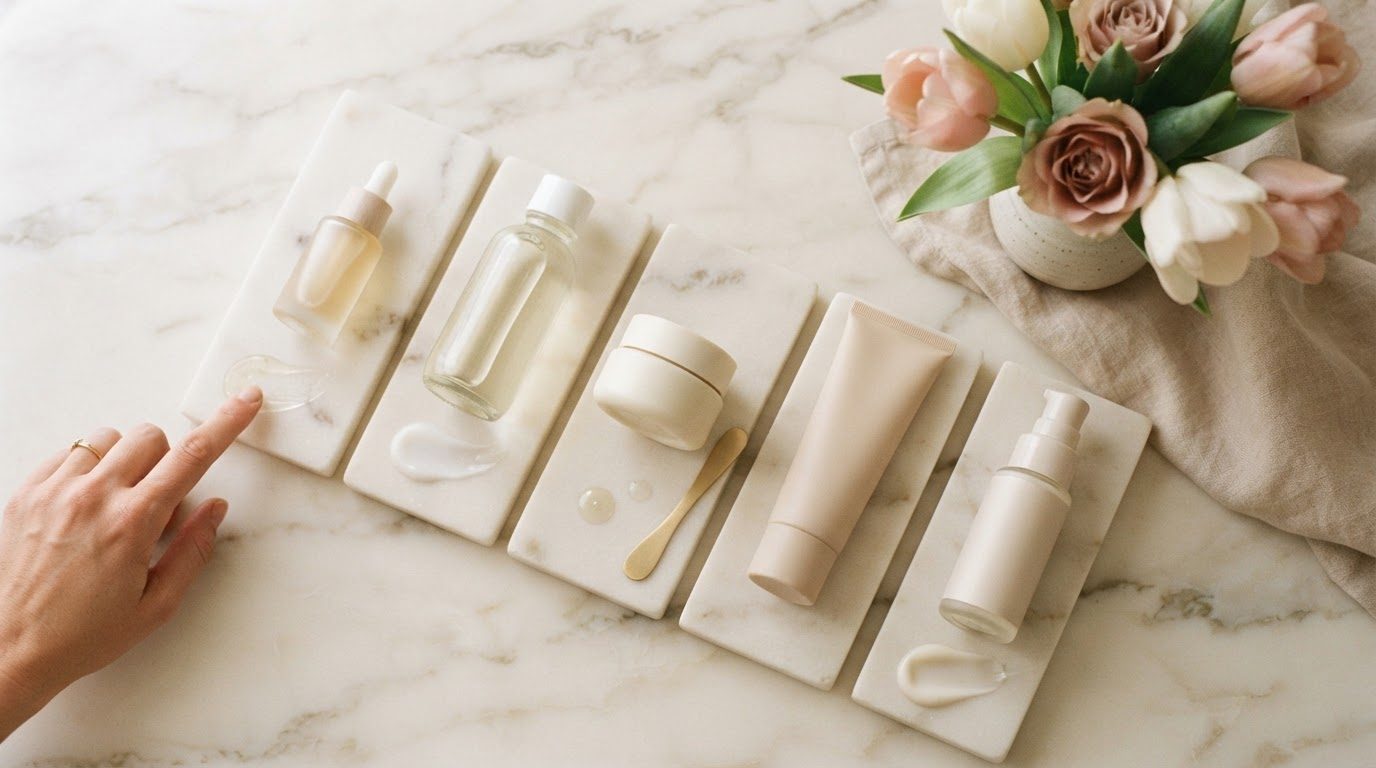
This guide is only about timing. If you want to know which product goes first, our guide to layering skincare in the right order covers that. Here you will find realistic skincare wait times: the myth vs the reality, damp vs dry skin, the five steps where timing matters most, how to tell a layer is ready, the signs you are going too fast, and a simple table you can screenshot. Keep a little gold-accent vanity tray by the sink with your products in order, and the whole routine becomes almost automatic.
The Short Answer: Most Layers Need About a Minute
For everyday layers like toner, a hydrating serum and moisturizer, a good rule of thumb is: wait until the previous layer no longer feels wet. On most skin that is somewhere between 30 seconds and 2 minutes. Thin, watery products disappear faster; richer creams and thicker serums take a little longer.
You are not waiting for a product to "fully absorb" into deep layers of skin. Most skincare works on the surface and upper layers anyway. You are waiting for the water in it to evaporate a little so the next product does not slide around, dilute it or mix with it into a patchy film.
A useful way to think about it: the wait is mostly about texture and comfort, and only occasionally about how an ingredient behaves. That is why the five steps later in this guide are the exceptions, not the rule.
Myth vs Reality
A few timing ideas get repeated so often they start to sound like rules. Here is the calmer version:
- Myth: you must wait 10–20 minutes between every product. Reality: for most layers, about a minute is plenty. Long waits between every step mostly make people skip their routine altogether.
- Myth: the longer you wait, the better a product works. Reality: a serum does not get stronger by sitting alone. It just gets drier, which matters for texture, not for results.
- Myth: waiting is the same for everyone. Reality: dry skin drinks up layers quickly, oily or combination skin can stay slick longer, and a humid bathroom slows everything down.
- Myth: you need a timer. Reality: your fingertips are a better guide than a clock (more on the touch test below).
Damp Skin vs Dry Skin
Whether your skin is damp or dry when you apply something changes how it behaves, and this is where timing quietly matters most.
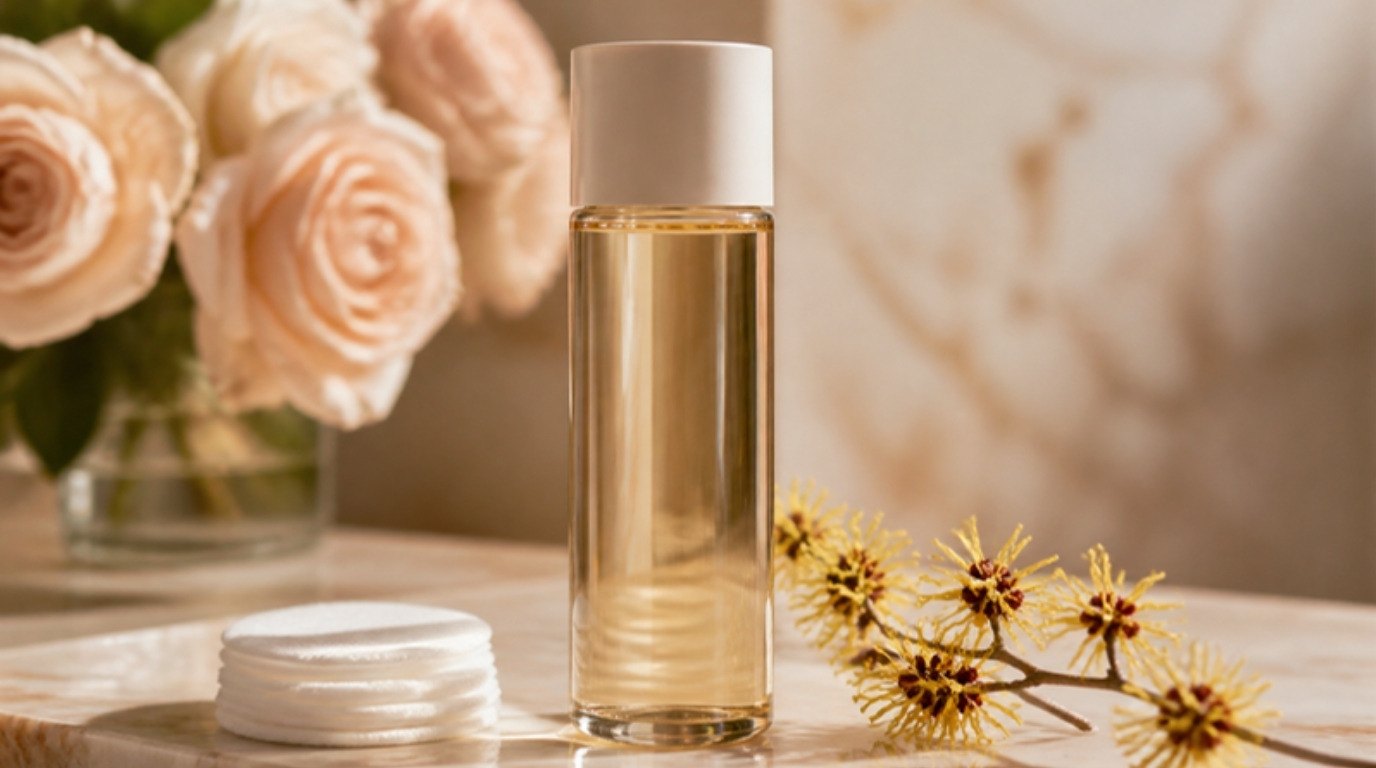
Damp skin helps hydrating products spread and feel comfortable. A hydrating toner, an essence or a hyaluronic acid serum often feels nicer on slightly damp skin, straight after patting your face with a towel. A Korean-style hydrating toner pressed in with your palms (or with a soft blush cotton pad if you prefer) is a lovely first layer here.
Dry skin is the better canvas for strong actives. Water can help some ingredients penetrate more quickly and evenly, which sounds good but often means more stinging and redness for sensitive skin. That is why many dermatologists suggest applying retinoids and strong exfoliating acids to fully dry skin, a little while after cleansing.
In short: hydrating layers love damp skin, strong actives prefer dry skin. If you remember only one line from this guide, let it be that one.
Water-Based Serums and Why Moisturizer Pills
Pilling, those little rolls of product that appear when you rub your face, is the most common sign that timing (or quantity) is off. It usually happens when a water-based serum is still wet and a cream or sunscreen goes on top, or when several silicone- and polymer-rich products meet in thick layers.
A few things help:
- Give water-based serums about a minute before moisturizer, until your skin feels smooth rather than slippery.
- Use less. One or two pumps of serum is usually enough for the whole face. Extra product just sits on top.
- Press, don't rub. Pat moisturizer in with flat fingers instead of massaging back and forth, which is what rolls products up.
- Thinnest to thickest. Watery layers first, creams last, so nothing heavy traps a wet layer underneath.
For the moisturizer itself, a cream ceramide moisturizer is a classic barrier-friendly pick: look for a short ingredient list, ceramides and glycerin, and a texture that feels comfortable rather than greasy on your T-zone.
What Changes How Long a Layer Takes
The same serum can feel ready in 30 seconds one day and two minutes the next. That is normal, and it usually comes down to a few things:
- Your skin type. Dry skin tends to take in watery layers quickly. Oily and combination skin can stay slick longer, especially across the forehead and nose.
- Texture. Watery toners and essences settle fast; gel serums are in the middle; rich creams, balms and mineral sunscreens take longest.
- How much you use. A generous layer of anything takes longer to settle. Often the quickest way to speed up a routine is simply using the right amount.
- Your bathroom. A steamy room after a hot shower slows drying, while a heated, dry room speeds it up. Doing skincare a few minutes after you step out of the shower can make layers behave better.
- The season. In humid weather layers stay tacky longer; in cold, dry air they disappear quickly and skin may want an extra hydrating step.
Do Vitamin C, Niacinamide and Eye Cream Need a Wait?
These come up a lot, so here is the calm version.
Vitamin C serums are usually applied in the morning after cleansing and before moisturizer and sunscreen. Some very acidic vitamin C formulas can tingle, and those may feel more comfortable on dry skin, but for most people letting the serum dry down for about a minute is enough. If it stings every time, a gentler formula or a lower strength may suit you better than a longer pause.
Niacinamide is easygoing and layers well with most products. The old idea that you must wait a long time between niacinamide and vitamin C is not something you need to worry about with everyday products; if the combination ever makes you flush, simply use them at different times of day.
Eye cream can go on before or after moisturizer, whichever your routine prefers. Pat a tiny amount on with your ring finger and give it a moment before concealer, so it does not crease or slide.
5 Steps Where Timing Matters Most
These are the steps where a pause is more than a matter of texture. Everything else in your routine can follow the "about a minute" rule.
1. After Cleansing, Before Strong Actives
If you use a strong active (a retinoid, a high-strength acid, or anything your skin finds a bit spicy), let your face dry completely after cleansing first. For many people that means a few minutes; if your skin is sensitive, waiting 10–20 minutes after washing can noticeably reduce stinging. Hydrating, gentle products do not need this wait at all.
2. After Exfoliating Acids
After an AHA, BHA or PHA toner or serum, wait until it has dried down, usually 1–2 minutes, before your next layer. Some people like a longer pause, but for most leave-on acids that are meant to be followed by moisturizer, a long wait is rarely needed. If an acid stings, that is a sign to use it less often or choose a gentler one, not to wait longer.
3. Before and After Retinoids
Retinoids (retinol, retinal and prescription retinoids) are where timing and sensitive skin meet. On dry skin, after cleansing, they tend to be gentler. If your skin is easily irritated, you can also buffer: apply a thin layer of moisturizer first, wait a minute, add your retinoid, then follow with more moisturizer. Our guide to the retinol sandwich method for sensitive skin walks through it step by step.
After your retinoid, giving it a few minutes before a rich cream is usually comfortable, but there is no need to wait half an hour. Follow the product instructions, especially for prescription retinoids.
4. Letting Sunscreen Set Before Makeup
Sunscreen is the step where a short wait pays off most visibly. Apply it as the last step of your morning skincare, then give it time to settle and form an even film before makeup. A good guide is at least 5 minutes, and up to 10–15 minutes if your sunscreen is rich or you are going straight outdoors. Many sunscreen labels also say to apply it 15 minutes before sun exposure.
A lightweight daily sunscreen fluid sets faster than a thick cream and is easier under foundation. Apply the full amount (about two finger lengths for face and neck) rather than a thin smear, because waiting will not fix too little sunscreen. For touch-ups later in the day, see our guide on reapplying sunscreen over makeup.
5. After a Prescription Treatment
If a doctor or dermatologist has prescribed a cream or gel, how long to wait before and after it is part of the treatment, not a styling choice. Follow the leaflet, the label or what your pharmacist tells you. Some prescription products ask for clean, dry skin and a set wait before anything else goes on; others are meant to be layered with moisturizer. When in doubt, ask the pharmacist, because they know that exact product.
Skincare Wait Times at a Glance
Here is the whole guide in one table. Screenshot it and keep it near your sink until it becomes second nature.
| Step | Typical wait | Why | Sign it is ready |
|---|---|---|---|
| Cleanser → hydrating toner or essence | None (apply to damp skin) | Damp skin helps hydrating layers spread | Skin is still slightly damp |
| Cleanser → strong active | Until fully dry; 10–20 min for sensitive skin | Dry skin can mean less stinging | No coolness or dampness at all |
| Toner → serum | 30–60 seconds | Lets the toner settle so the serum is not diluted | Skin feels tacky, not wet |
| Exfoliating acid → next layer | 1–2 minutes | Lets the acid dry down | No slip under your fingertips |
| Water-based serum → moisturizer | About 1 minute | Helps prevent pilling | Smooth, not slippery |
| Retinoid → moisturizer | A few minutes (or buffer instead) | Comfort for sensitive skin | Retinoid feels dry |
| Moisturizer → sunscreen | 1–2 minutes | Sunscreen spreads evenly on a settled base | No shine or slip |
| Sunscreen → makeup | 5–15 minutes | Lets sunscreen form an even film | Touch feels dry or lightly tacky |
| Prescription treatment | As your label or pharmacist advises | Part of the treatment itself | Follow the instructions |
How To Tell a Layer Is Ready
You don't need a timer. Three quick checks work for almost every product:
- The touch test. Lightly press a clean fingertip to your cheek. If it comes away wet or glides, wait a little longer. If it feels dry or barely tacky, move on.
- The no-slip test. Gently slide a finger across your forehead. Slipping means there is still water or product on top; a soft drag means the layer has settled.
- The no-shine test. Look at your face in normal light. A wet, glassy shine (especially on the T-zone) means the layer is still sitting on the surface; a soft, even sheen means it is ready.
A little honest admission: on my combination skin, the cheeks are ready long before my nose and forehead. I simply finish the cheeks first, then come back to the T-zone. Skin is allowed to work at different speeds.
Signs You Are Layering Too Fast
Your skin will tell you when timing is off. Watch for these:
- Pilling: little balls of product when you apply moisturizer, sunscreen or foundation.
- Stinging or burning right after an active goes on, especially near the nose, mouth and eyes.
- Patchy sunscreen or makeup: streaks, separation or foundation that clings to some areas and slides off others.
- A greasy, never-quite-dry feeling that lasts long after your routine.
- Makeup that breaks up by midday on the same spots every time.
If you see these, try slowing down a little, using less product, or dropping a layer. Often the fix is simply one fewer step.
A Calm Morning and Evening Timeline

Here is how the waits fit into a real routine. If you want to rethink which products belong in the morning and which at night, our guide to morning vs night skincare pairs well with this one.
Morning (about 10–15 minutes, including the sunscreen pause)
- Rinse or cleanse gently, pat dry, leave skin slightly damp.
- Hydrating toner, pressed in. No wait needed.
- Serum, then wait about a minute.
- Moisturizer, then wait 1–2 minutes.
- Sunscreen, then wait 5–15 minutes. This is a nice moment to make tea or get dressed.
- Makeup, if you wear it.
Evening with a retinoid (about 15–25 minutes, mostly waiting)
- Cleanse and pat your face completely dry.
- Wait until skin is fully dry (10–20 minutes if you are sensitive). Use the time for teeth, tidying or a few lines in your journal.
- Retinoid, a pea-sized amount for the whole face.
- Wait a few minutes, then moisturizer (or buffer before and after if you prefer).
On nights without actives, you can skip the long pause completely: cleanse, hydrate, moisturize, done.
Safety Notes: Patch Test, Go Slowly, Wear Sunscreen
Timing helps comfort, but it cannot make an unsuitable product suitable. A few barrier-first habits matter far more:
- Patch test new actives for a few days before using them on your whole face. Our guide on how to patch test skincare explains the simple method.
- Introduce one new product at a time, and give it a couple of weeks before adding another, so you know what your skin is reacting to.
- Do not stack several strong actives in one routine (for example a retinoid and a strong acid on the same night) unless a dermatologist has suggested it.
- Wear sunscreen every morning, especially if you use retinoids or acids, which can make skin more sensitive to the sun.
- Persistent redness, burning, peeling or irritation deserves a dermatologist, not a longer wait. Waiting times are a comfort tool, not a treatment.
Final Thoughts
Skincare does not have to be a long ritual of standing at the sink. Most layers only need a moment, a few steps deserve a real pause, and your fingertips can tell you which is which.
Give your strong actives dry skin, give your sunscreen a few minutes to set, and let the rest flow. A calm, simple routine you actually keep will always do more for your skin than a perfect one you skip.