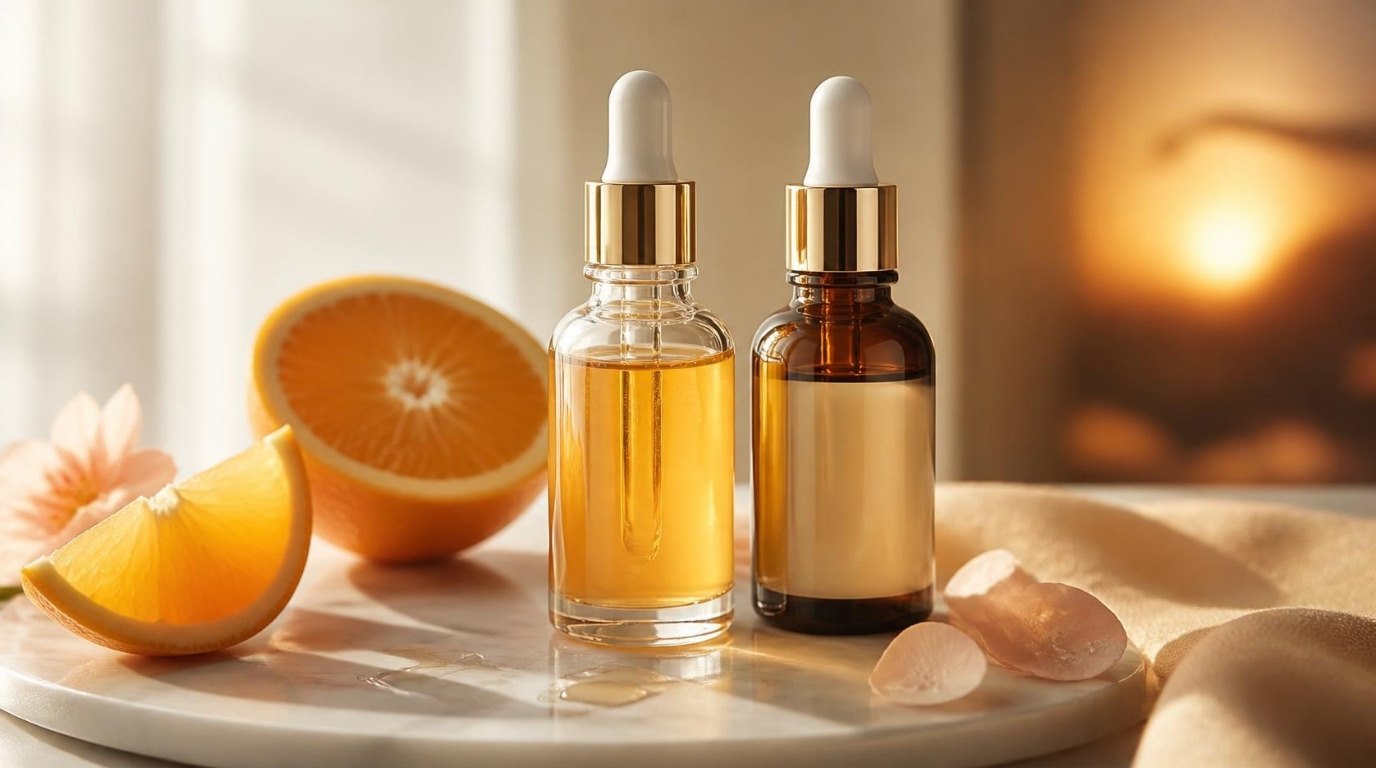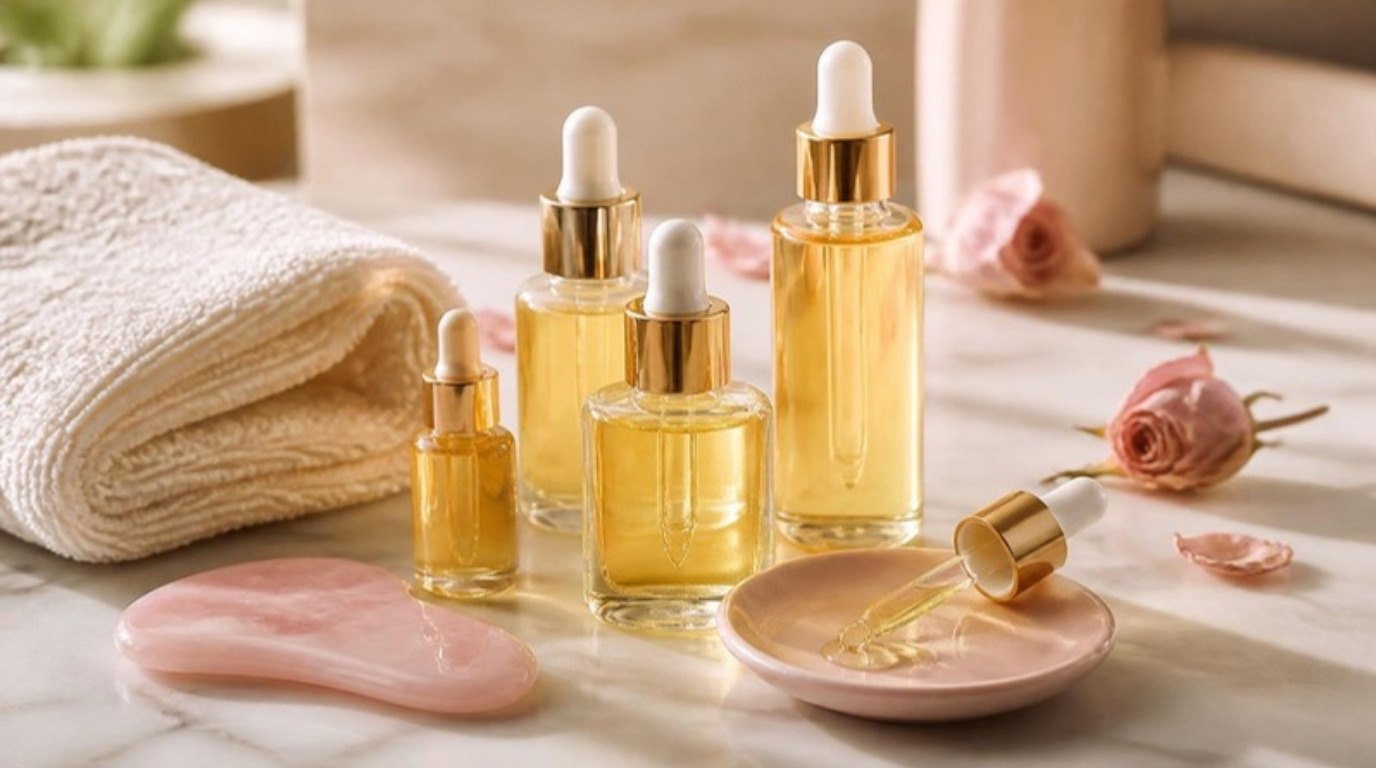
A facial oil won't hydrate your skin on its own, and that's exactly why so many people give up on oils too soon. Oils don't add water. What they do beautifully is soften, smooth and seal in the water your toner, serum and moisturizer already gave you. Use one in the right spot, in the right amount, and your skin looks calmer and more cushioned by morning. Use the wrong one, or too much of it, and you get a slick pillowcase and maybe a few clogged pores.
The good news is that choosing well is mostly about matching. Some oils are light and fast-sinking, some are rich and slow, some lean toward clogging pores and some almost never do. Once you know which family suits your skin, the whole category gets much less confusing.
This guide covers facial oils from the ground up: what they actually do, four simple ways to use them, a facial oil matching table you can screenshot, the best oils for dry, oily, sensitive, combination and mature skin, the myths worth letting go of and how to patch test a new bottle safely.
What Facial Oils Actually Do (and What They Don't)
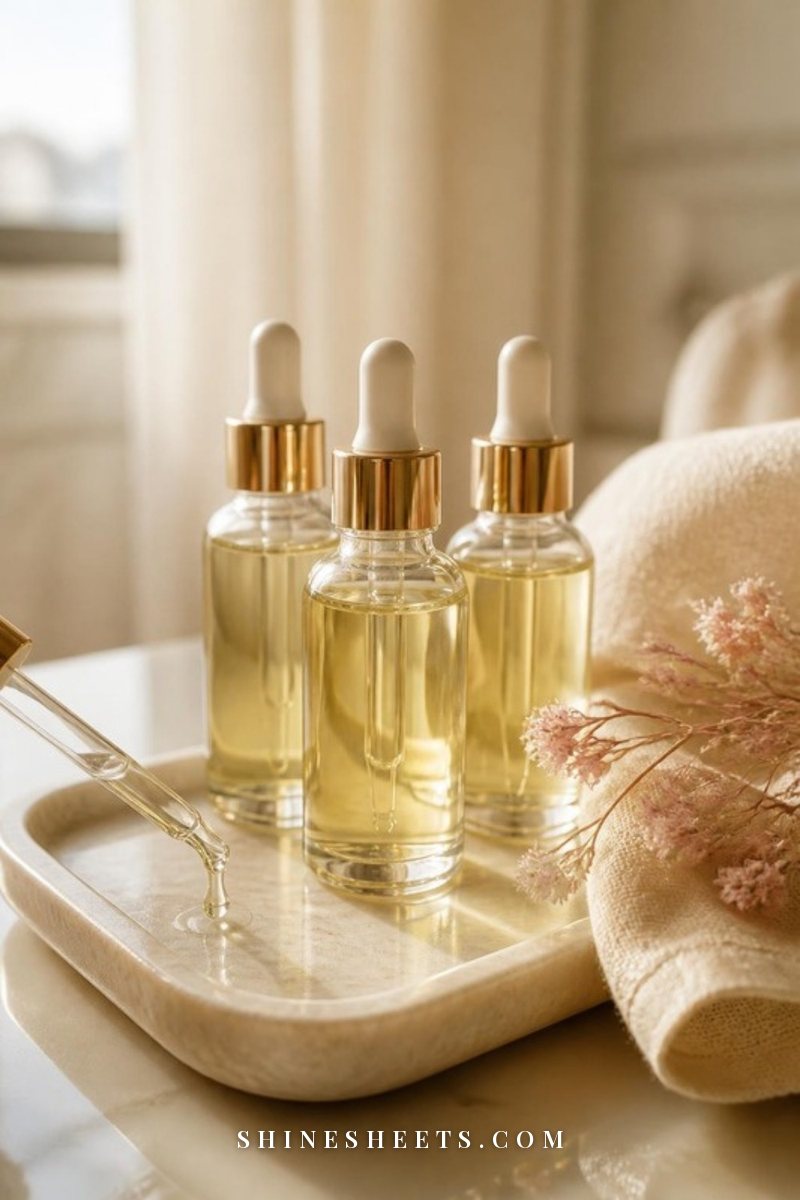
Your skin barrier is made partly of lipids, the fatty "mortar" between your skin cells. When that mortar runs low (cold weather, harsh cleansers, too much exfoliating), water escapes more easily and your skin feels tight, rough or flaky. A facial oil adds lipids back on top, which helps in three ways:
- It seals. A thin film of oil slows down water loss from the skin, so the hydration underneath lasts longer.
- It softens. Oils fill in the tiny gaps between dry, lifted skin cells, which is why skin feels smoother and looks less dull right away.
- It cushions. On windy or heated-air days, that extra layer makes skin feel less raw and reactive.
What an oil can't do is replace water. If your skin is dehydrated (tight, crepey, but maybe still shiny), oil alone just sits on top of thirsty skin. You need a water-based layer first, like a hydrating toner or a hyaluronic acid serum on damp skin, and then the oil to lock it in.
It also can't replace sunscreen, and most oils don't play well under it. I keep facial oils mostly for the evening, and I'd suggest you start there too.
Facial Oil vs. Serum vs. Moisturizer
These three get blurred together on store shelves, so here's the simple version:
- Serum: mostly water-based, thin, carries active ingredients (vitamin C, niacinamide, peptides). It goes on early, right after cleansing and toner.
- Moisturizer: a blend of water and oils, so it hydrates and seals at the same time. For many people, this alone is enough.
- Facial oil: no water at all, pure lipids. It's a finishing layer that seals and softens. Optional for some skin types, wonderful for others.
The general rule of thumb is thinnest to thickest. Oils are usually the thickest in feel, so they go last at night. (Some people press oil in before a rich cream, and that works too, but if you're new to oils, last is the safest and simplest spot.)
How To Use Facial Oil: 4 Simple Ways
There's no single right method. These four cover almost every skin type and season, and you can switch between them as your skin changes.
1. Press 2–4 Drops In as Your Last Step at Night
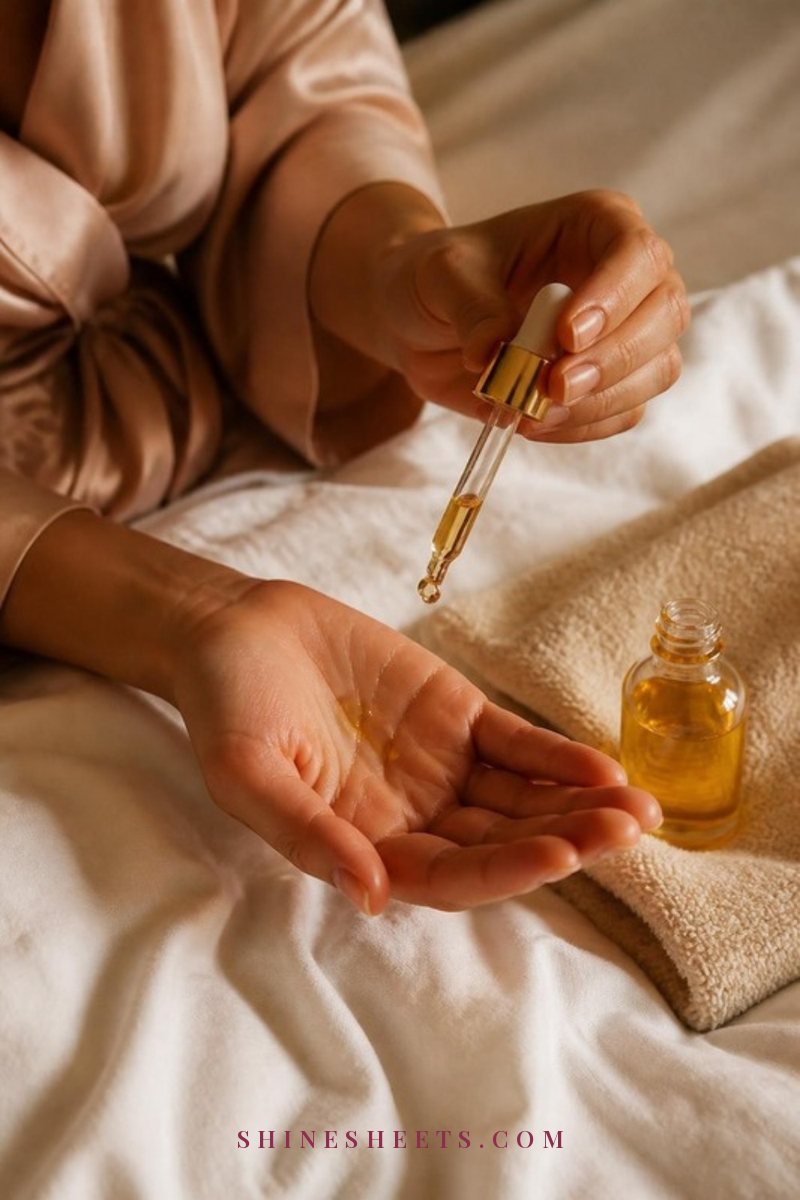
This is the classic way and my favorite place to start. After your serum and moisturizer, put 2 to 4 drops in your palm, rub your hands together for a few seconds to warm the oil, then gently press your palms onto your cheeks, forehead, chin and neck. Hold each spot for a breath or two.
Pressing instead of rubbing spreads a thinner, more even layer and avoids tugging. Start with 2 drops. If your skin still feels tight in the morning, go to 3. Four is usually the ceiling for a whole face and neck.
2. Mix a Drop Into Your Moisturizer
If straight oil feels like too much (or you have a shiny T-zone like mine), mix 1 drop into your usual pea-sized amount of moisturizer, blend it on your fingertips and apply as normal. You get a slightly richer cream without a separate greasy layer.
This is also the easiest way to add an oil to your morning routine in the colder months. One drop, mixed in, then give it a few minutes before sunscreen.
3. Use It as Slip for a Face Massage
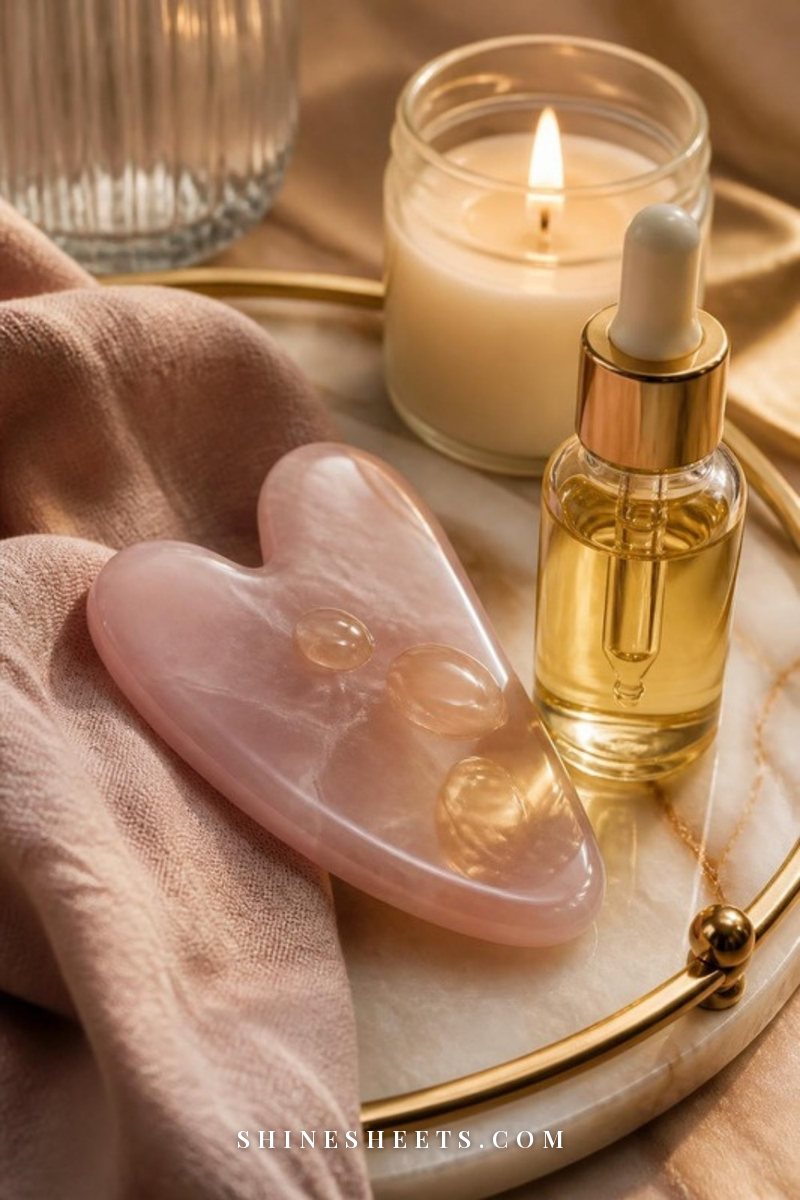
Massage tools and fingers both need slip, or they drag on the skin. Smooth 3 to 4 drops over clean, moisturized skin, then glide outward and upward in slow strokes for 3 to 5 minutes. A rose quartz gua sha stone is a pretty pick, but clean fingertips work just as well. Always use light pressure and never scrape.
If you want the full technique, my lymphatic drainage face massage routine walks you through each stroke, and it pairs perfectly with an evening oil. (This is my favorite way to unwind after tea, honestly. Five slow minutes and my jaw finally unclenches.)
4. Spot-Apply Just Where You Need It
You don't have to oil your whole face. Dry patches around the nose, flaky eyebrows, the corners of the mouth or the outer cheeks can get a single drop, tapped in with your ring finger, while your oilier zones get nothing.
This is the smartest method for combination skin and for anyone nervous about breakouts. It's also lovely on the backs of hands and cuticle area at night (one drop goes surprisingly far).
Facial Oil Matching Table
Here's the heart of this guide: the most common facial oils side by side. "Comedogenic risk" means how likely an oil is to clog pores. These ratings come from older lab tests, so treat them as a rough guide, not a guarantee. Your own skin is the final judge.
| Oil | Best for | Texture | Comedogenic risk | Tip |
|---|---|---|---|---|
| Squalane (plant-derived) | All skin types, especially oily, sensitive, combination | Very light, almost dry, sinks in fast | Very low | The safest first oil. Works mixed into moisturizer or alone. |
| Jojoba | Oily, acne-prone, combination | Light, silky | Low | Technically a wax ester, close to skin's own sebum. Good for balancing. |
| Rosehip seed | Dry, dull, mature, uneven tone | Light to medium | Low | Rich in linoleic acid. Keep it cool and use it within a few months. |
| Argan | Dry, normal, mature | Medium, soft finish | Low | Nice all-rounder for dry cheeks in winter. |
| Marula | Very dry, mature | Medium to rich | Moderate | Lovely on dry skin, but go slow if you clog easily. |
| Hemp seed | Oily, acne-prone | Light | Very low | High in linoleic acid, which oily skin often lacks. |
| Grapeseed | Oily, combination | Very light | Low | Fast-absorbing. Can go rancid quickly, so buy small. |
| Oat (oat kernel oil) | Sensitive, reactive, dry | Medium, soothing | Low to moderate | Often found blended into calming creams rather than sold alone. |
| Sea buckthorn | Dull, dry, mature | Medium | Low | Bright orange and can tint skin. Use 1 drop mixed into another oil. |
| Coconut | Body, hands, very dry elbows (not faces) | Rich, solid when cool | High | Skip it on the face if you're oily or acne-prone. |
A quick pattern to notice: oils high in linoleic acid (rosehip, hemp seed, grapeseed) tend to feel lighter and suit oilier skin, while oils high in oleic acid (marula, olive, avocado) feel richer and suit dry skin better. You don't need to memorize the chemistry. Just remember "light for oily, rich for dry."
The Best Facial Oil for Your Skin Type
If you're not sure of your skin type, wash your face with a gentle cleanser, apply nothing and check after an hour. Tight everywhere means dry. Shiny everywhere means oily. Shiny T-zone with normal or dry cheeks means combination. Stinging, flushing or itching with many products means sensitive (which can overlap with any of the others).
Facial Oils for Dry Skin
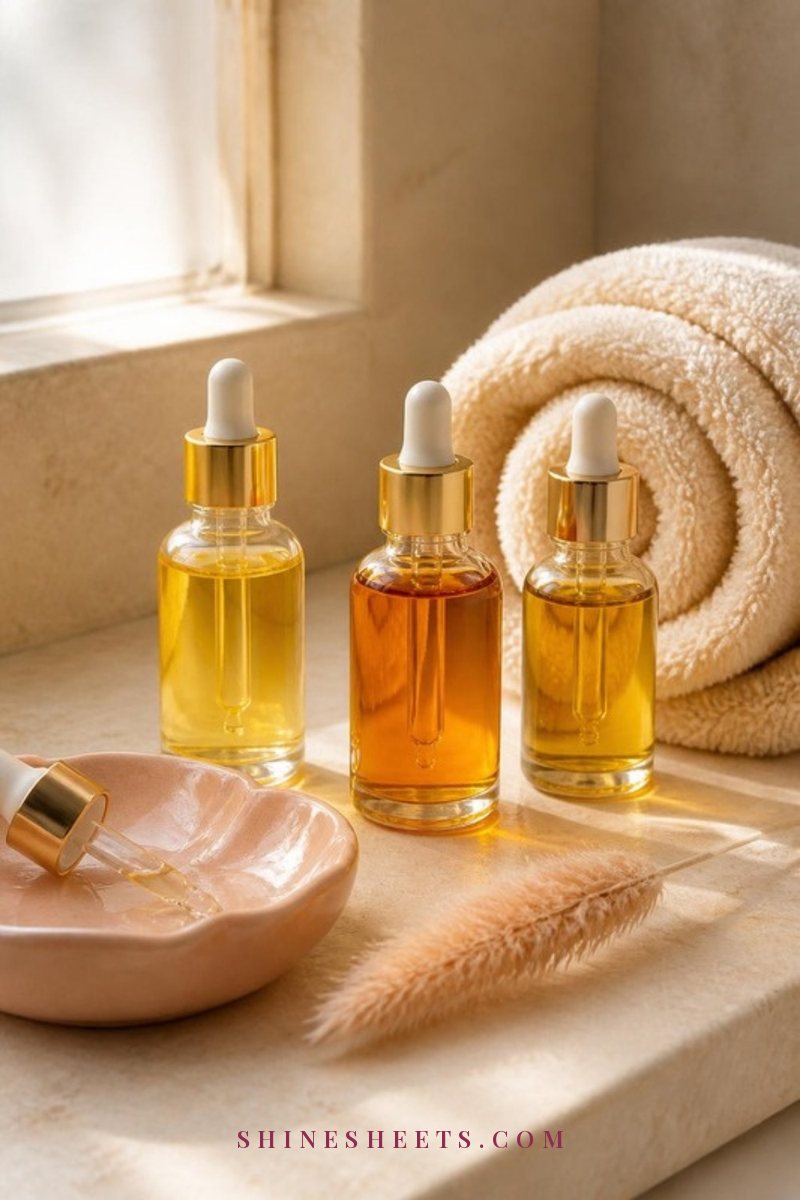
Dry skin has the most to gain from oils, because it simply makes less of its own. Look at argan for an everyday softener, marula for very dry winter skin and rosehip if dullness and uneven tone bother you too.
A pure cold-pressed rosehip seed oil is a classic pick here. Look for a dark or opaque bottle, a short ingredient list (just the oil, maybe vitamin E) and a small size, since rosehip is delicate and loses freshness faster than most.
The key for dry skin is layering: hydrating serum on damp skin, then a cream, then 3 to 4 drops of oil pressed on top. If you want the full order, my skincare routine for dry skin lays it out step by step.
Facial Oils for Oily and Acne-Prone Skin
It sounds backwards, but oily skin can do well with the right oil. Often it's dehydrated underneath, and some oily skin is low in linoleic acid, which makes sebum thicker and stickier. A light oil can help skin feel more balanced.
Stick to squalane, jojoba and hemp seed. Use 1 to 2 drops only, or mix one into a gel moisturizer. Avoid coconut oil on the face, and be careful with heavy, oleic-rich oils like marula or avocado.
An organic, unrefined jojoba oil is an easy place to start: light, inexpensive and very close in structure to the oil your skin makes naturally. If breakouts are your main concern, read my older guide to the best oils for oily and acne-prone skin and introduce one product at a time so you can tell what's helping. A kind note: if you have persistent or painful acne, a dermatologist is worth seeing before you add anything new.
Facial Oils for Sensitive Skin
Sensitive skin is the type where "natural" can go wrong fastest. Many face oil blends contain essential oils (lavender, citrus, rose, tea tree) and fragrance, which are common triggers for redness and itching.
The gentlest choice is plain squalane: no scent, very stable, very low irritation risk. Oat-based products are another calming option, though oat oil is more often blended into creams than sold alone. A fragrance-free squalane oil is the one I'd choose first for reactive skin. Look for "100% squalane" (plant-derived from olive or sugarcane) and nothing else on the label.
I have sensitive skin myself, and the lesson took a while to sink in: the prettier a face oil smells, the more carefully I read its ingredient list.
Facial Oils for Combination Skin
Combination skin needs two strategies at once, and that's completely fine. My own skin is combination and sensitive, with a shiny T-zone that clearly does not want extra oil, while my cheeks get tight by evening, especially in winter.
The simplest approach is squalane on the cheeks only. Put 1 to 2 drops on your fingertips, press them across your cheeks and the outer edges of your face, and leave your forehead, nose and chin alone. In summer, mixing a drop into your moisturizer may be all you need. In winter, your cheeks might want a little argan instead.
For the whole picture, my skincare routine for combination skin shows how to treat the two zones differently without doubling your products.
Facial Oils for Mature Skin
As skin changes over time, it often produces less oil and the barrier becomes slower to bounce back. That's when an oil can make the biggest visible difference in softness and that healthy, cushioned look.
Rosehip is the classic pick for mature skin because it's light enough to wear often and naturally contains small amounts of vitamin A-related compounds and fatty acids that support a smoother look. Argan, marula and a drop of sea buckthorn mixed in are lovely too.
If you use retinol, a facial oil pressed on afterward can soften the dryness that often comes with it. Give the retinol 10 to 20 minutes, then add your moisturizer and oil. (If you are new to retinol, start it slowly, two or three nights a week.)
Facial Oil Myths, Gently Debunked
Oils come with more myths than almost any other skincare step. Here are the five I hear most.
- "Oily skin should never use oil." Light, low-clogging oils like squalane and jojoba often suit oily skin well. It's about choosing the right oil and the right amount, not avoiding the whole category.
- "Facial oil is a moisturizer." It's half of one. Oils seal and soften, but they don't add water. Without a hydrating layer underneath, skin can still feel tight.
- "More drops means more glow." Past 3 or 4 drops, the extra oil just sits on the surface, ends up on your pillowcase and can clog pores. Less really is more here.
- "Natural oils are always gentle." Plant oils can still irritate, and essential oils in blends are frequent troublemakers for sensitive skin. Natural and gentle are not the same word.
- "Oils go bad never." They do. Plant oils oxidize with light, heat and air. A rancid oil smells like crayons or old nuts and can irritate skin. Most are best used within 6 to 12 months of opening, and delicate ones like rosehip sooner.
How To Store Facial Oils So They Stay Fresh
Because oils are so sensitive to light and air, a few small habits keep them fresh much longer:
- Keep the cap tight and the bottle away from the window. A cupboard or drawer is better than a sunny bathroom shelf.
- Avoid the steamiest spot. Right next to the shower is the warmest, most humid place in your home. A bedroom dresser works beautifully.
- Write the opening date on the bottom with a small sticker so you know when it's time to finish it up.
- Decant if you buy big. A set of small glass dropper bottles lets you keep a little oil out for daily use while the larger bottle stays sealed and cool. Clean, dry bottles only.
- Use the smell test. Fresh oils smell mild, nutty or of almost nothing. Sharp, stale or crayon-like means it's time to replace it.
How To Patch Test a New Facial Oil
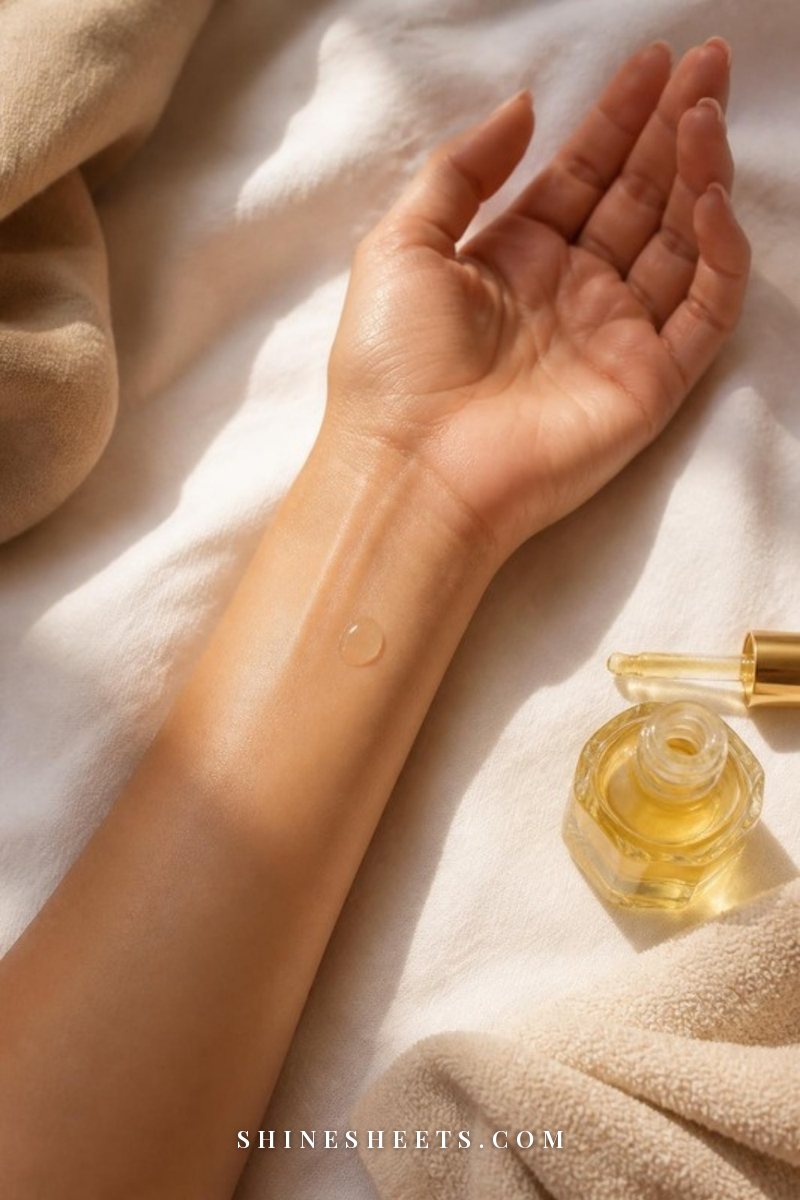
Even the gentlest oil can disagree with your skin, and it's much easier to find that out on a small patch than on your whole face. This is the simple routine I'd follow every time:
- Pick a quiet spot. Use the skin just below your ear along the jawline, or your inner forearm.
- Apply a small amount. One drop, rubbed into a coin-sized area, once in the evening.
- Repeat for 5 to 7 days. Some reactions, especially clogged pores, take a few days to show up.
- Check for changes. Look for redness, itching, burning, tiny bumps or a rash.
- Start slowly on the face. If all is calm, use it every other night for the first week, then every night if your skin is happy.
A kind safety note: if you notice stinging, swelling, hives or a spreading rash, wash the area with a gentle cleanser and stop using the oil. If the reaction is strong or doesn't settle in a day or two, check in with a doctor or dermatologist. And if you have a nut allergy, be careful with oils from nuts and kernels (like marula, argan or sweet almond) and ask your doctor first.
A Simple Evening Routine With Facial Oil
If you'd like to see where everything fits, here's an easy evening order that works for most skin types:
- Cleanse. If you wear sunscreen or makeup, a double cleanse removes it gently. Pat dry, leaving skin slightly damp.
- Hydrate. A hydrating toner or serum while skin is still damp.
- Treat (optional). Any targeted serum or retinol, following its instructions.
- Moisturize. Your usual cream or gel cream.
- Seal with oil. 2 to 4 drops pressed in, or a drop on the dry areas only.
Pull your hair back first with a soft cream terry spa headband so oil doesn't end up in your hairline, and give everything 15 minutes to settle before you lie down. Once the cold season arrives, my winter skincare routine shows how to adjust this order when the heating comes on and your skin needs a little more.
A small, honest admission: for a long time I thought the oil step was purely a luxury. Then I noticed that the nights I skipped it were the nights my cheeks felt tight by breakfast. Now it's the step that tells my skin, and my brain, that the day is done.
Final Thoughts
Facial oils aren't magic, and they aren't scary. They're simply a soft, sealing layer that helps your skin hold on to everything else you give it. Start with one light oil, a couple of drops and a patch test, then let your skin show you what it likes.
Whether your perfect match turns out to be a few drops of squalane on your cheeks or a rich rosehip blend all over, you now know how to choose it with confidence. Your skin will thank you with softer, calmer mornings.