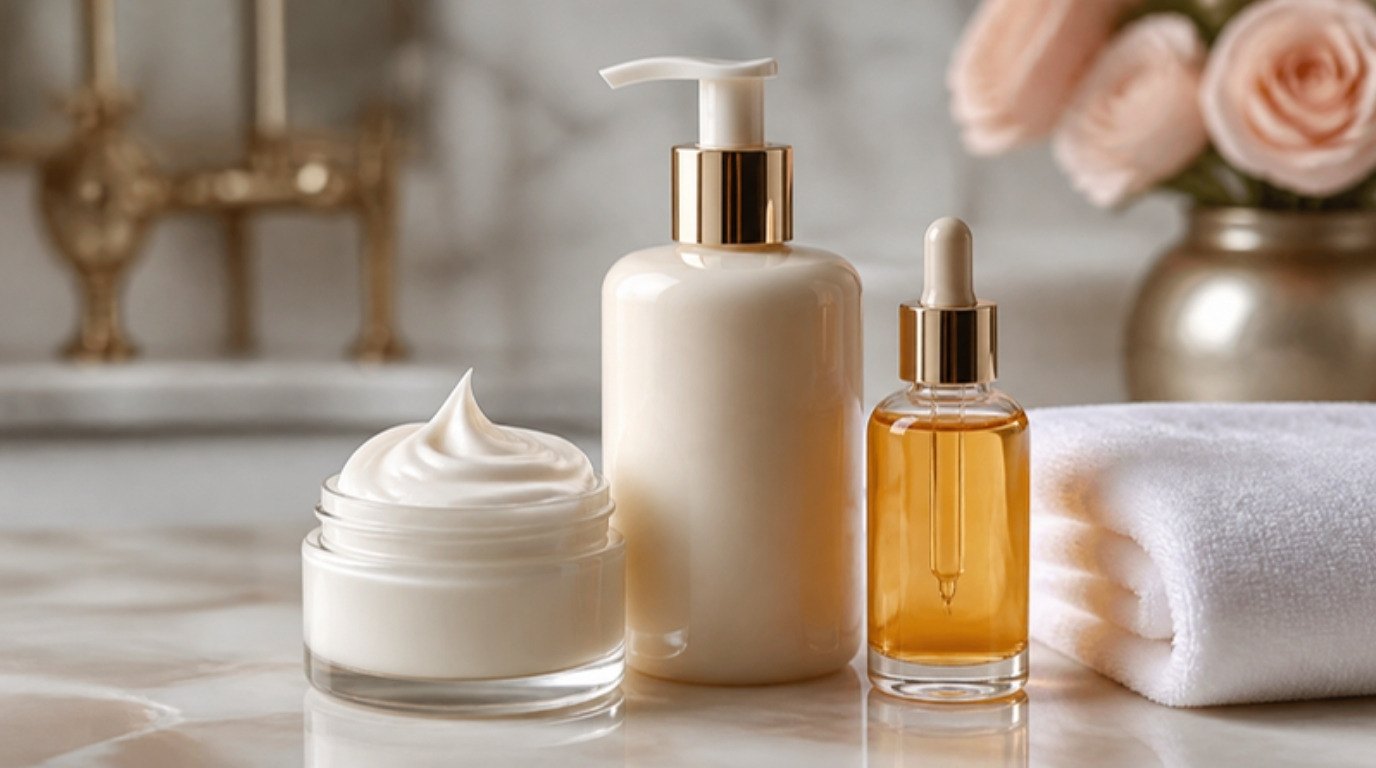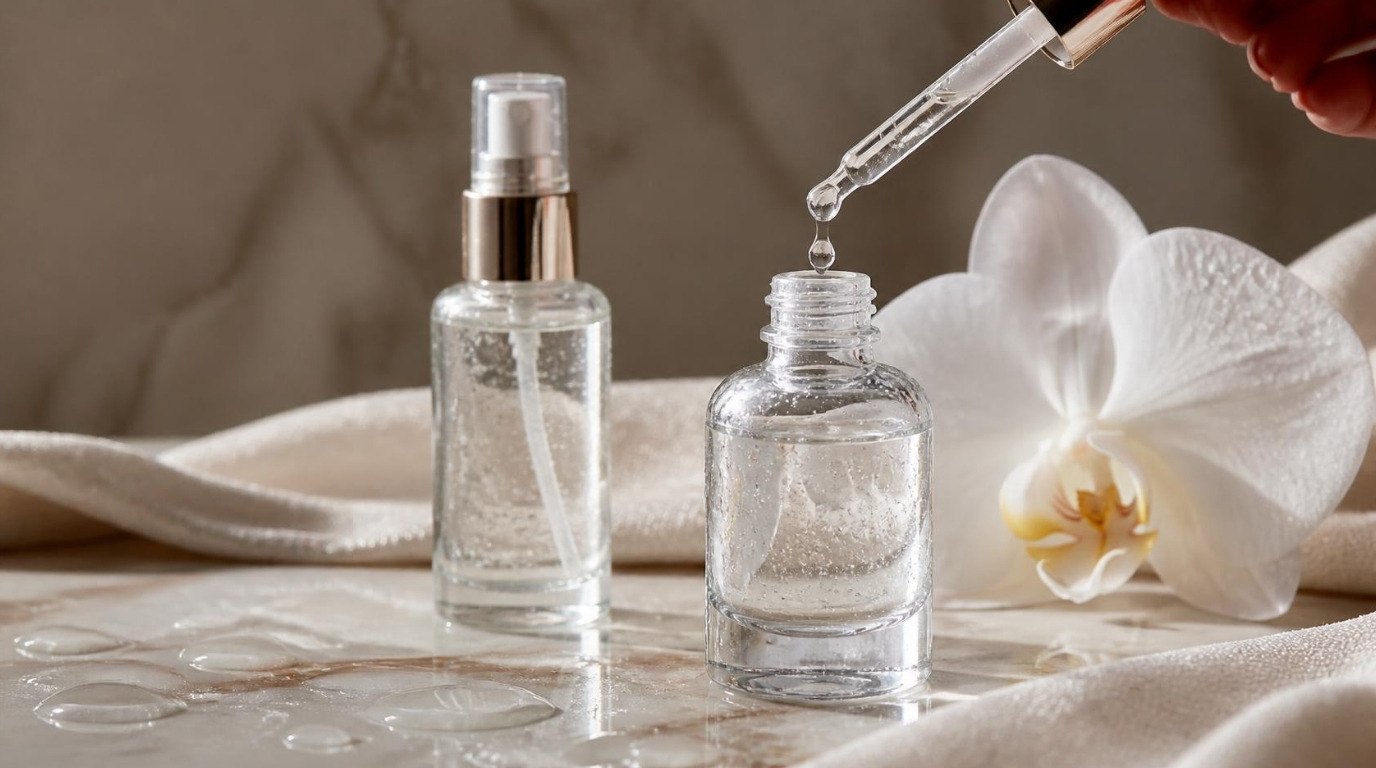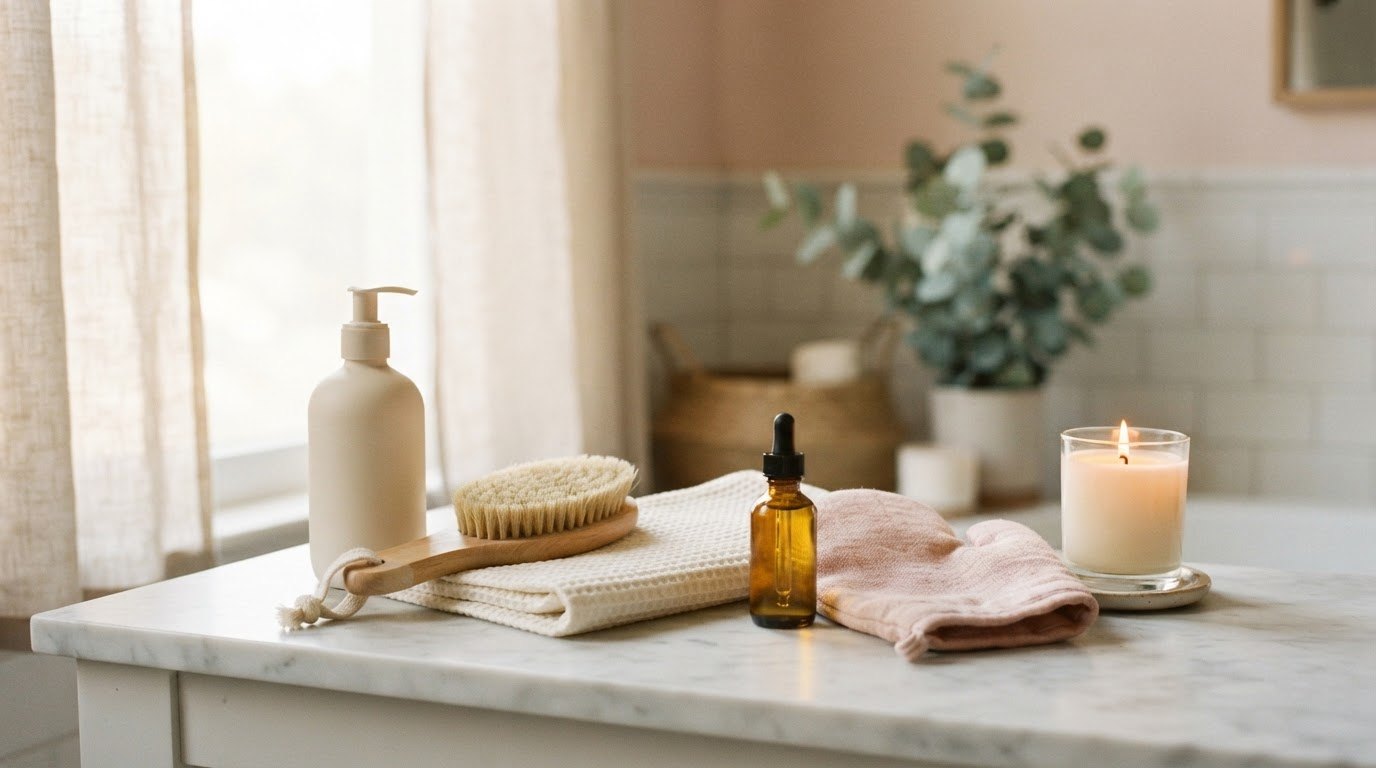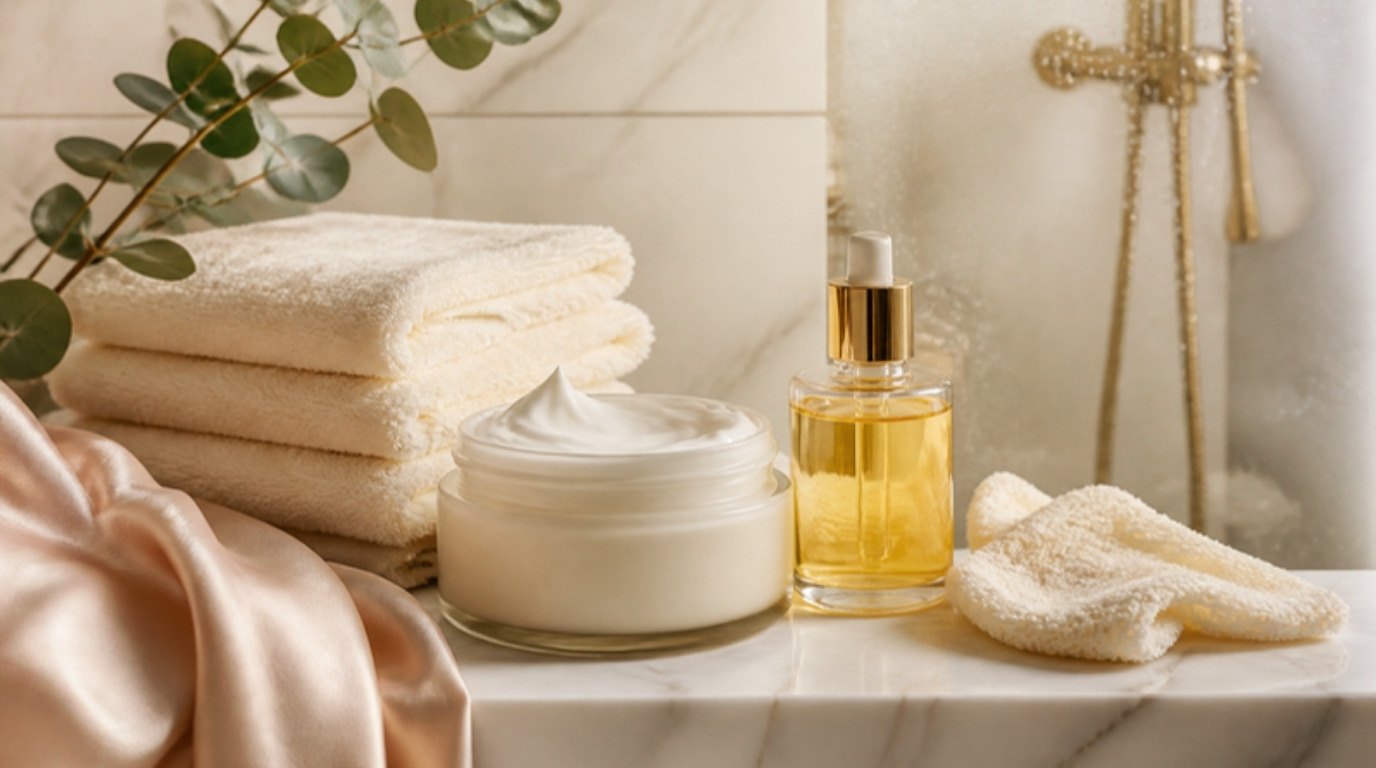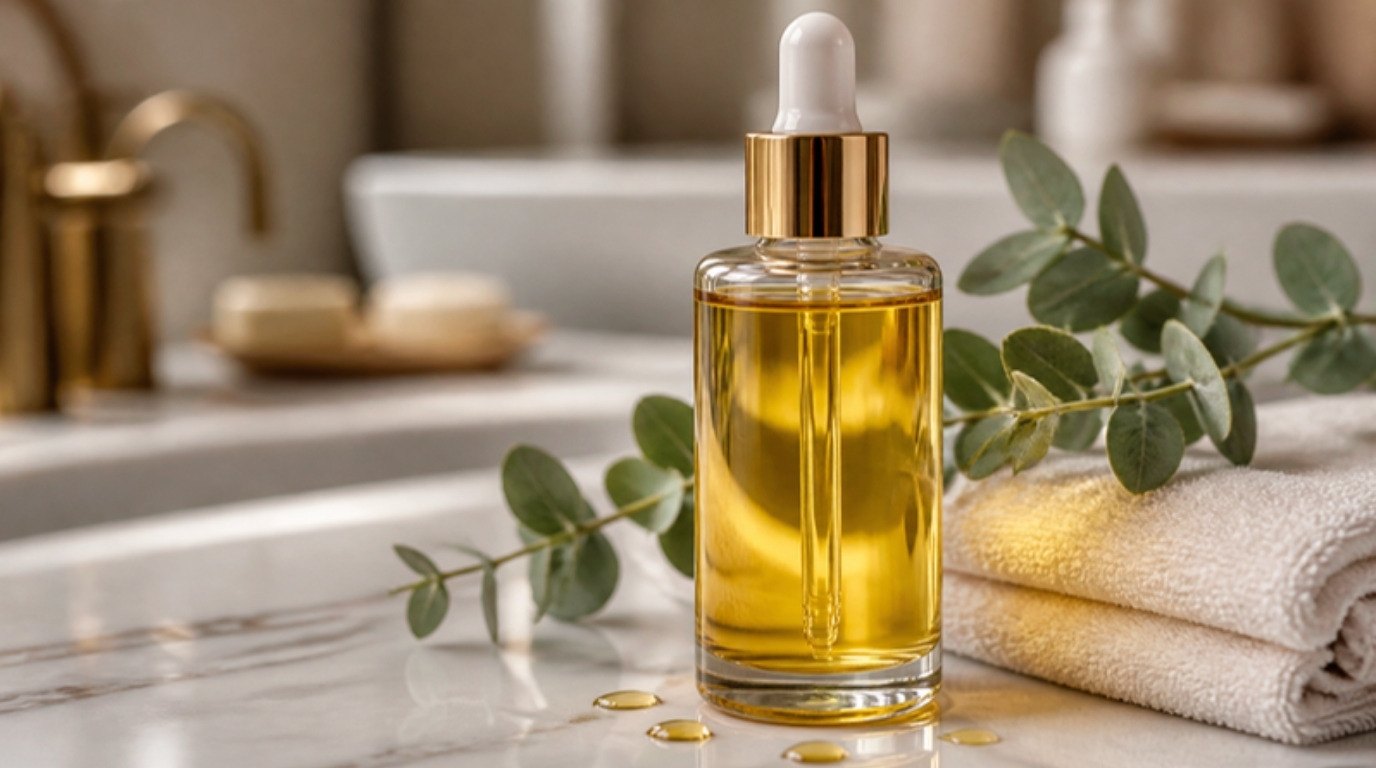
Body oil works best when it isn't asked to do the whole job alone. It's brilliant at sealing moisture into your skin, softening rough patches and giving that silky, polished finish, but it can't add water to skin that's already dry. Pair it with a few drops of water (or a layer of lotion) and the timing right, and it suddenly makes sense why so many people swear by it.
The good news is that the rules are simple. When you put it on matters more than which bottle you buy, and a little goes much further than you'd think. Most of the "my body oil just sits on top and ruins my pajamas" frustration comes down to two small things: applying it to bone-dry skin and using too much.
This guide covers how to use body oil from start to finish: body oil vs lotion, the one step that changes everything, how much to use, how to layer it, the main oil types in plain words, a body-oil-by-skin-need table, evening shimmer, hands and cuticles, and the little mistakes (slippery floors, stained sheets) that are easy to avoid.
Keep a soft towel nearby and let's start with the question I hear most often.
Body Oil vs Lotion: What Each One Actually Does
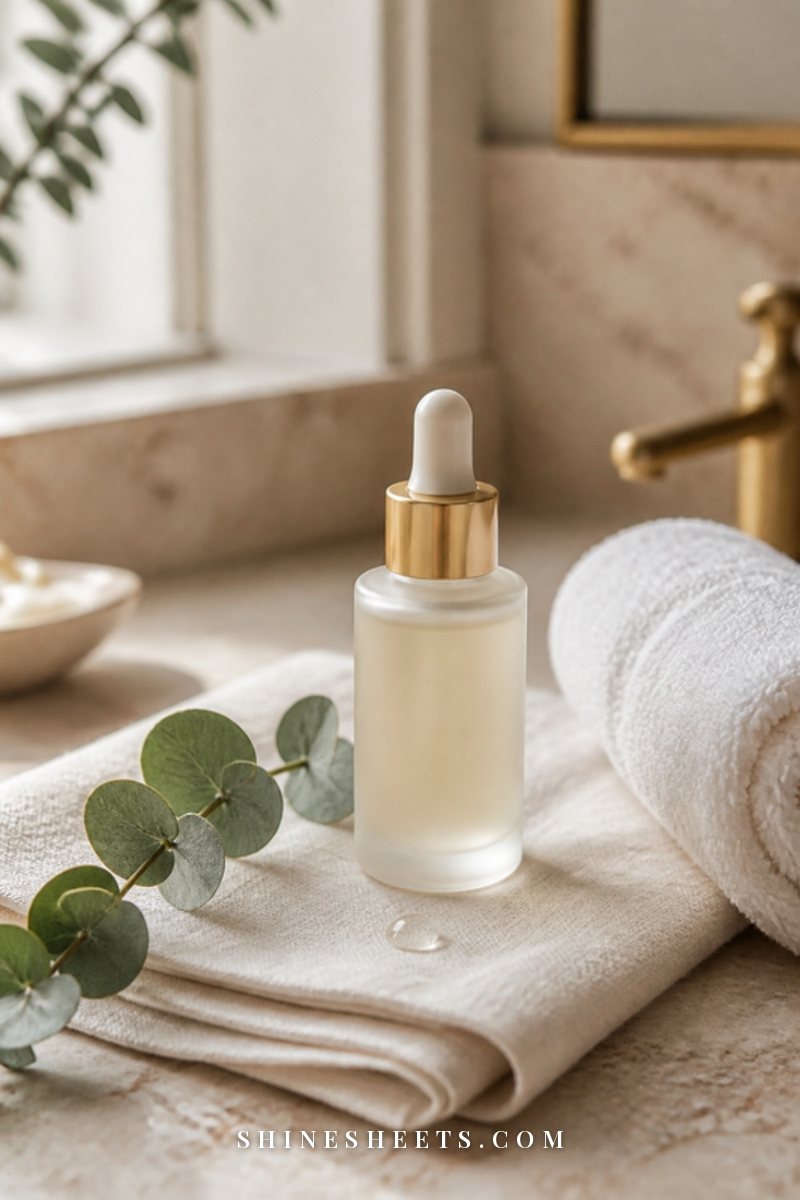
Lotions and creams are mostly water mixed with oils and humectants (ingredients like glycerin that pull water into the skin). They add moisture. Body oils contain no water at all, so on their own they don't hydrate in the same way. What they do beautifully is seal: they form a thin, flexible layer that slows down how fast water evaporates from your skin and makes the surface feel smoother right away.
That's why the two aren't really rivals. Think of lotion as the drink of water and oil as the lid on the glass. On normal skin in mild weather, oil on damp skin can be enough. On dry skin, in cold months or after long hot showers, lotion plus oil is usually the most comfortable combination.
If you're still choosing a moisturizer, my body lotion guide explains lotions, creams and butters in the same plain way, so you can pick a partner for your oil.
| Body lotion | Body oil | |
|---|---|---|
| Main job | Adds water and softness | Seals moisture in, smooths the surface |
| Contains water | Yes | No |
| Best on | Damp or dry skin | Damp skin |
| Finish | Soft, usually matte | Silky, light sheen |
| Best together? | Yes – lotion first, oil second (or mixed) | |
The Key Step: Apply Body Oil on Damp Skin

If you remember one thing from this guide, make it this: put body oil on while your skin is still damp. Not dripping, not dry. Damp.
Right after a shower or bath, your skin is holding a little extra water on the surface. When you press oil over it, you trap some of that water in, and the oil spreads more easily, so you need less. On dry skin, the same amount of oil tends to drag, sit on top and feel greasy for much longer.
Here's the simplest timing formula:
- Within 1–3 minutes of turning off the water.
- Pat, don't rub – press a towel over your skin two or three times so you're left with a dewy surface, not droplets.
- Oil before you get cold – if the bathroom is chilly, do your legs first while you're still standing in the warm steam.
A soft microfiber body towel is lovely here because it absorbs gently and makes it easy to stop at "damp" rather than rubbing your skin bone-dry. If your showers tend to leave you tight and itchy no matter what, my list of shower habits that cause dry skin is worth a look before you buy anything new.
How To Use Body Oil Step by Step
Here is the whole routine in seven steps. Once you've done it a few times, it takes about three minutes.
- Shower in warm, not hot, water. Very hot water strips the natural oils you're trying to support. Keep it to around 10 minutes if you can.
- Turn off the water and step onto a bath mat. Never oil up while standing in the tub or shower tray (more on that safety point later).
- Pat your skin until it's damp. A few presses of the towel, especially on arms and legs.
- Warm the oil in your palms. Pump or pour a few drops, rub your hands together for two seconds, then press.
- Press and glide. Press your palms onto the skin first, then smooth in long upward strokes. Pressing distributes the oil evenly before you spread it.
- Add lotion if you need it. If your skin is dry, apply lotion first and oil on top, or mix both in your palm (see the layering section).
- Wait 5–10 minutes before dressing. Put on a robe, brush your teeth, do your skincare. This little pause is what protects your clothes and sheets.
If you'd like to fold this into a bigger routine, my everything shower routine shows where body oil fits after cleansing, exfoliating and shaving.
How Much Body Oil To Use
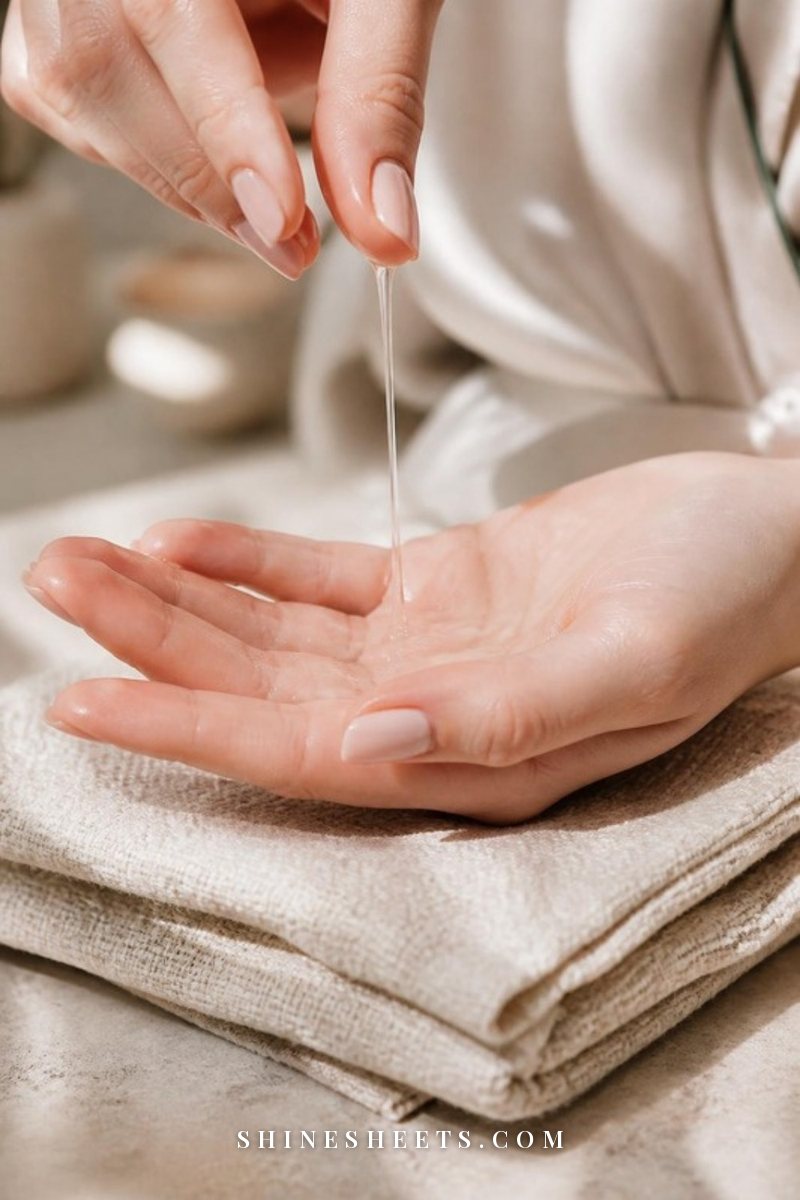
Much less than you think. Oil spreads far, especially on damp skin, and most "greasy" complaints are really "too much" complaints.
A good starting point:
- Each leg: 3–4 drops (or one small pump)
- Each arm: 2–3 drops
- Chest and shoulders: 2 drops
- Belly and hips: 2–3 drops
- Back you can reach: 2 drops
That adds up to roughly a teaspoon for the whole body, sometimes less. If your skin still feels slick after 10 minutes, cut the amount by a third next time. If it feels tight again within an hour, add a drop or two to the driest areas only (shins, elbows and knees are usually the thirsty ones).
With a spray oil, it's two or three spritzes per leg from about 15 cm away, then a quick press with your palms to spread it.
How To Layer Body Oil and Lotion
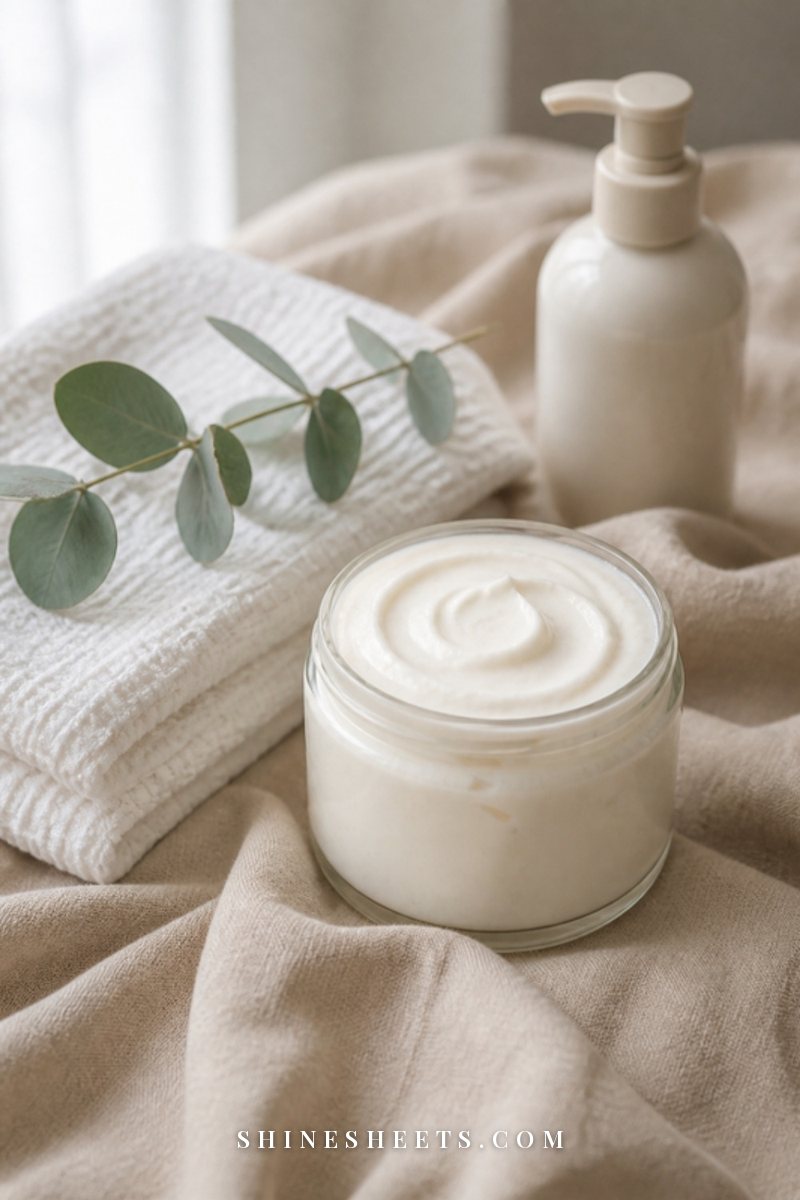
There's no single right order, but there is a logic: water-based products go on first, oils go on last, because oil slows down what can get through underneath it. Pick the option that suits your skin and your patience.
Option 1: Lotion First, Then Oil
Best for very dry skin and cold weather. Apply your lotion to damp skin, wait about a minute until it's mostly absorbed, then press a few drops of oil over the top. The lotion hydrates and the oil locks it in. A rich body lotion for dry skin with ceramides or glycerin makes a lovely base for this.
Option 2: Mix Oil Into Your Lotion
Best for busy mornings. Put your usual amount of lotion in your palm, add 2–3 drops of oil, rub your hands together and apply in one go. You get a softer, silkier lotion that absorbs fast. This is my favorite trick when I don't have time to wait between layers.
Option 3: Oil Alone on Damp Skin
Best for normal skin and warmer weather. Skip the lotion and press oil straight onto damp skin. The water on your skin acts as the "hydrating" layer. If you notice tightness by the afternoon, switch to option 1 or 2.
Body Oil Types in Plain Words
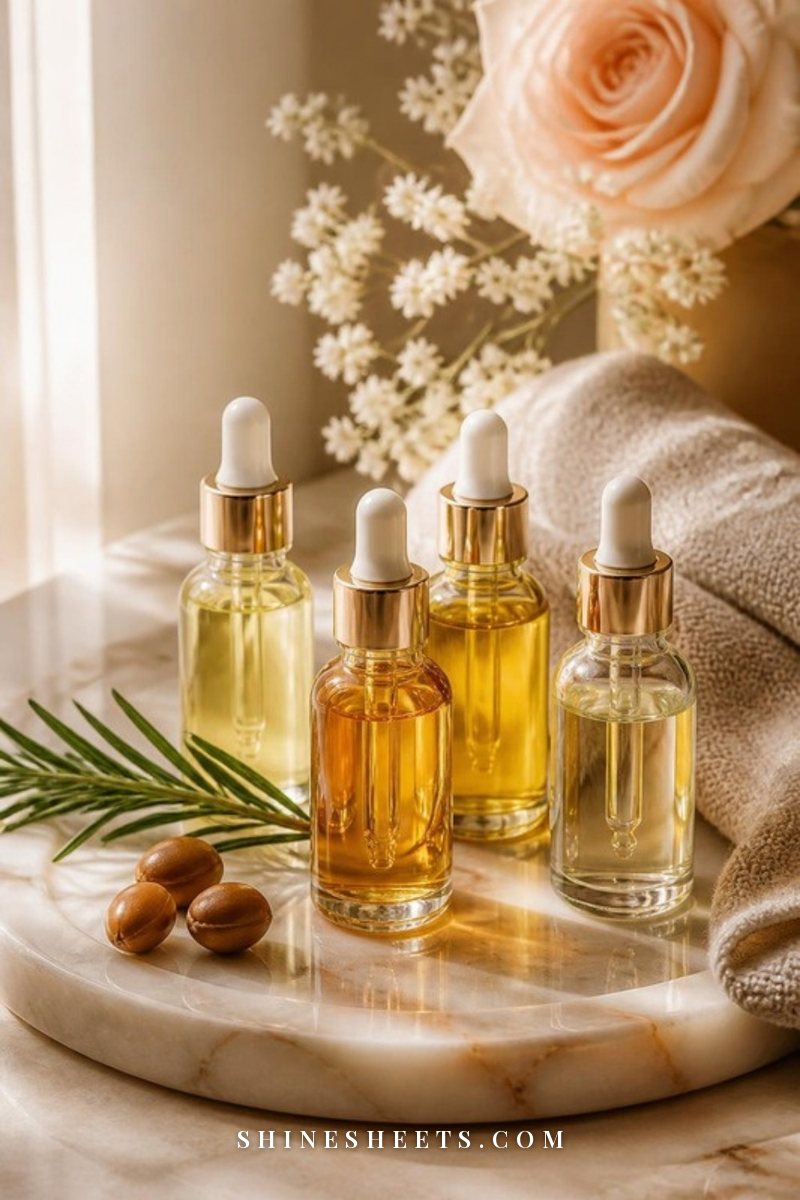
Ingredient lists can look intimidating, but most body oils are built around a handful of familiar oils. Here's what they feel like, without the chemistry lesson.
- Jojoba oil. Technically a liquid wax, and quite similar to the oil your skin makes naturally. It's light, sinks in well and suits most skin types. A bottle of pure jojoba oil is one of the most versatile things you can keep in your bathroom.
- Sweet almond oil. Soft, slightly richer and very soothing-feeling on dry skin. Skip it completely if you have a nut allergy.
- Squalane. A very light, stable oil that feels almost weightless and rarely leaves a film. A squalane body oil is a good pick if you dislike any greasy feeling at all. (If you're curious about it on your face, my guide to squalane goes deeper.)
- Argan oil. Medium weight, rich in fatty acids, with a satin finish. Lovely for elbows, knees and shins.
- Dry oil sprays. Blends designed to absorb quickly and leave skin silky rather than shiny. A best-selling dry body oil spray is the easiest place to start if you've never liked body oil before.
- Shimmer oils. A light oil with fine reflective particles for a soft evening sheen. More on these below.
Look for short ingredient lists, a bottle that blocks light (or store it in a cupboard) and a scent level you can actually live with. If your skin is sensitive, fragrance-free is the safer choice.
Body Oil by Skin Need: A Simple Table
This is the table I wish I'd had when I first stood in front of a shelf of identical-looking bottles. Find your main skin need, then follow the row. Screenshot it if it helps.
| Your skin need | Oil type to look for | When to apply | Amount | Pair it with |
|---|---|---|---|---|
| Very dry, tight, flaky | Richer oils: sweet almond, argan, oil blends with shea | Right after shower, every day | 4 drops per leg, 3 per arm | Rich lotion or cream underneath |
| Normal, just wants softness | Light dry oils, jojoba | After shower, 3–5 times a week | 2–3 drops per limb | Nothing, or a light lotion |
| Acne-prone back and chest | Very light, non-comedogenic options: squalane, jojoba | Limbs only at first; test back/chest slowly | 1–2 drops per area | A gentle, oil-free lotion |
| Sensitive or reactive | Fragrance-free jojoba or squalane | After a patch test, then 3 times a week | 2 drops per limb | Fragrance-free lotion |
| Rough elbows, knees, heels | Argan or a richer blend | Night, after lotion | 1–2 drops per spot | Thick cream, cotton socks for heels |
| Dull-looking legs for an event | Shimmer body oil | After getting dressed (on bare areas) | 1–2 drops, blended well | A matte lotion underneath |
If your skin changes a lot with the seasons, you can simply move rows: lighter oil in summer, the "very dry" row in winter. My body care routine guide shows how to adjust the rest of your steps around it.
How To Use Body Oil for Your Skin Type
The table gives you the quick answer. Here's a little more detail for each skin type.
Dry Skin
Dry skin loves the lotion-then-oil method every single day, especially from late autumn through early spring. Choose a richer oil or a blend, and give extra attention to shins, elbows, knees and the backs of your arms. If your skin feels itchy at night, a second, smaller layer of oil before bed (one drop per shin) can make a noticeable difference in comfort.
Gentle body exfoliation once a week also helps oil sink in better, because there's less dry buildup sitting on top. Keep it soft: no scrubbing raw skin.
Normal Skin
Normal skin can be relaxed about it. A light dry oil on damp skin three to five times a week usually keeps everything soft and comfortable. Many people with normal skin find they like oil in place of lotion in summer and both together in winter.
Acne-Prone Back and Chest
If you get breakouts on your back or chest, start with your arms and legs only. Once you know how your skin reacts, try a very light, non-comedogenic oil like squalane or jojoba on the back or chest, a couple of times a week, and watch for two to three weeks. Keep the amount tiny and make sure the oil is fully absorbed before you put on a tight top or sports bra. If you notice more bumps, stop and go back to a light oil-free lotion in those areas.
Evening Sheen: How To Use Shimmer Body Oil
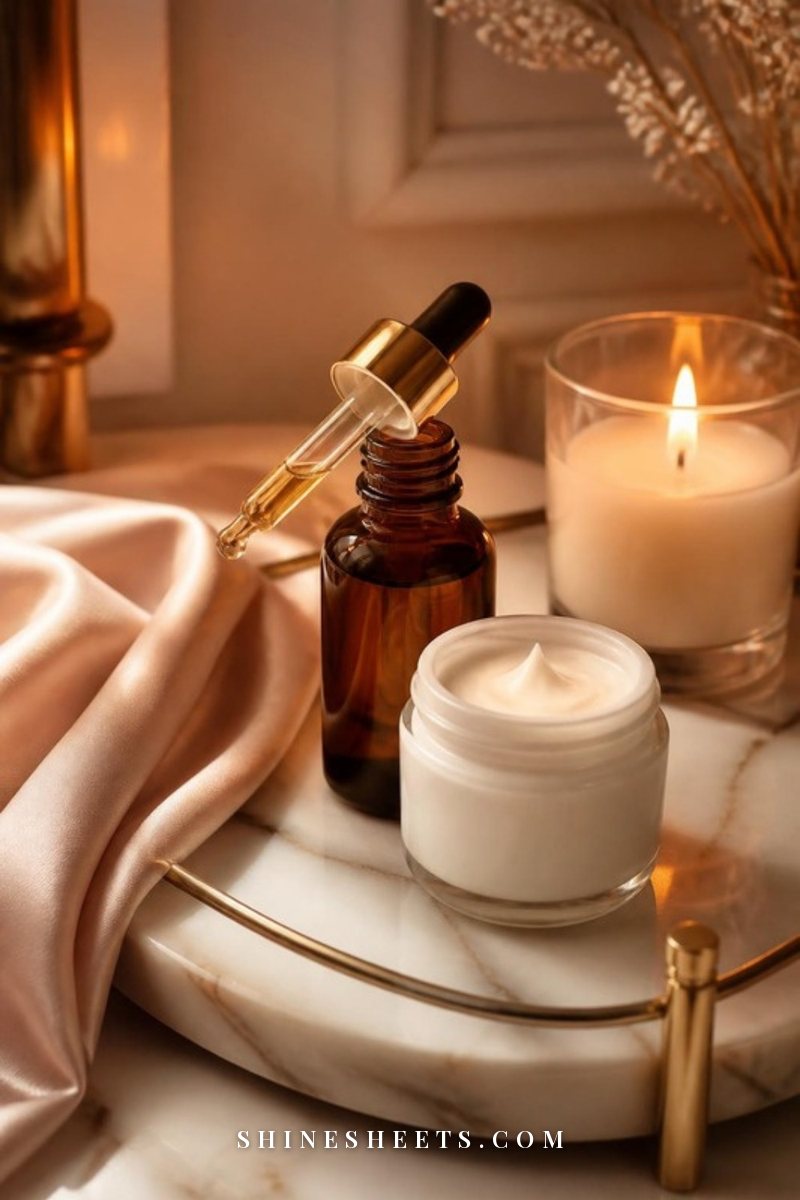
Shimmer body oil is the Old Hollywood part of this guide, and I love it for that reason. A soft sheen on the collarbones, shoulders and shins looks expensive and effortless when it's done lightly. Done heavily, it looks like glitter and transfers onto everything.
How to use it well:
- Apply after you're dressed, only to the skin that will show. That way it doesn't rub onto the inside of your clothes.
- Use 1–2 drops per area. Warm it between your fingertips and press it onto the high points: collarbones, the tops of the shoulders, down the front of the shins.
- Blend the edges with a clean palm so there's no visible line.
- Put a matte lotion underneath if your skin is dry, so the shimmer sits evenly instead of clinging to flaky spots.
A gold shimmer body oil suits most skin tones and looks warm in candlelight. Keep it away from your face and eyes, and wash it off before bed so it doesn't end up on your pillowcase.
Body Oil for Hands, Nails and Cuticles
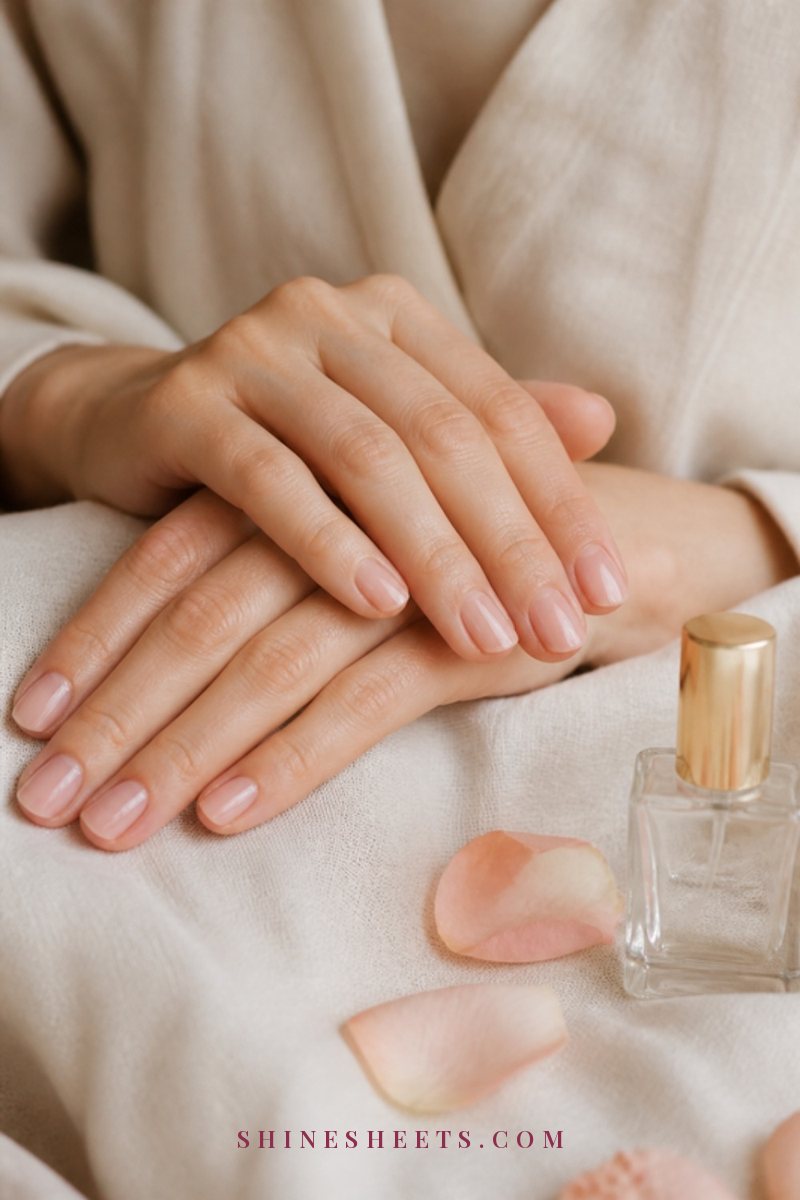
Your body oil can double as a cuticle oil, which is one of the nicest little bonuses of keeping a bottle by the bed.
- Cuticles: one drop per hand at night. Massage it into the cuticles and the skin around each nail for about 30 seconds.
- Nails: rub what's left over the nail surface. It helps nails look smooth and feel less brittle.
- Backs of hands: after hand cream, press a final drop over the knuckles, which tend to crack first in winter.
Jojoba is especially nice here because it's light and absorbs fast. For more on basic nail care, my cuticle care guide walks through gentle pushing, trimming and everyday habits.
Common Body Oil Mistakes (and Easy Fixes)
Most body oil frustrations come from a handful of small habits. Here are the five I see most often.
1. Oiling Up Inside the Shower
Some oils are designed for use in the shower, but any oil on a tub or tray floor turns it slippery. Apply body oil on a bath mat, not in the shower itself. If oil does land on the floor, wipe it with a little dish soap and warm water and rinse before the next shower. This one is a real safety issue, so please take it seriously.
2. Getting Dressed Too Soon
Oil that hasn't absorbed will transfer onto fabric, and some oils can leave marks on silk or light-colored clothes. Give it 5–10 minutes in a robe first. If you oil at night, wear older pajamas and wash sheets as usual (oil can build up on pillowcases and fitted sheets over time).
3. Using Oil on Freshly Shaved, Irritated Skin
Right after shaving, skin can be a little raw. If an oil stings, wipe it off and wait until the next day, or use a plain fragrance-free lotion that evening instead. Fragranced oils are the most likely to sting.
4. Applying to Completely Dry Skin
This is the number one reason oil "sits on top." If you're applying later in the day, mist your skin with a little water first, or apply over a thin layer of lotion.
5. Too Much, Too Often
More oil doesn't mean more softness. Start small, adjust slowly, and remember that a light sheen that disappears in 10 minutes is exactly what you want.
Safety Notes Before You Start
Body oil is gentle for most people, but a few precautions are worth it:
- Patch test first. Apply a small amount to your inner forearm once a day for a few days. If you notice redness, itching or bumps, don't use it.
- Nut allergies: skip sweet almond oil and check labels for other nut oils.
- Essential oils and fragrance can irritate sensitive skin. Fragrance-free is the safer place to start.
- Store bottles away from heat and light and replace any oil that smells off or stale.
- See a dermatologist or doctor if your skin is cracked, very itchy, inflamed or doesn't improve, so they can check what's going on and recommend what suits you.
Final Thoughts
Body oil doesn't need to be complicated or messy. Damp skin, a few drops, a gentle press and a few minutes in a robe are really all it asks for.
Start with the row in the table that matches your skin, give it two weeks and adjust from there. Your skin will tell you what it likes, and soon this little three-minute ritual will feel like one of the nicest parts of your day.