If your hair suddenly feels dry, rough and dull even though you haven't changed a single product, the culprit might be coming out of your shower head. Hard water is full of dissolved minerals, and every time you wash, a tiny layer of them settles onto your strands and scalp. One wash won't matter. Months of washes absolutely can.
The frustrating part is that hard water hair looks a lot like damaged hair, so it's easy to blame your blow-dryer, your color or yourself and start buying richer and richer masks that never seem to sink in. The kinder truth is that your hair is often perfectly healthy underneath. It just needs the minerals lifted off and a routine that stops them from piling up again.
This guide covers everything about hard water hair: what hard water is, exactly what it does to your hair and scalp, how to tell if you have it at home, eight easy fixes (from a shower filter to a simple rinse), a symptom-to-fix table you can screenshot, and a weekly routine that keeps your hair soft and shiny even if you can't change your water.
What Hard Water Actually Is
Water becomes "hard" when it picks up minerals, mainly calcium and magnesium, as it moves through rock and soil before it reaches your home. Iron and copper can join in too, depending on your pipes and your area. The more minerals, the harder the water.
Hard water isn't dirty or unsafe to drink. It's simply mineral-rich, and in many regions it's the norm. The trouble is that those minerals don't rinse away cleanly. They react with soap and shampoo to form a film, and they cling to surfaces, which is why hard water also leaves white spots on glass, crusty scale on taps and a chalky ring in your kettle. If you're fighting those at home too, my guide on how to remove hard water stains covers the bathroom side of things.
Your hair is basically another surface. Each strand is covered in tiny overlapping cuticle scales, and minerals settle between and on top of them, roughening the surface and blocking moisture from getting in.
What Hard Water Does to Your Hair
Mineral buildup shows up in a few typical ways. You may notice one or several:
- Dullness. A rough, mineral-coated cuticle scatters light instead of reflecting it, so hair loses its shine.
- Dryness and a straw-like feel. Minerals sit on the surface and make it harder for conditioner and moisture to penetrate.
- Tangles and frizz. A roughened cuticle catches on neighboring strands, so hair knots more easily and puffs up in humidity.
- Brassy, orange or greenish tones. Iron can warm up blonde and gray hair, and copper (often from pipes or pools) can leave a greenish cast on light hair.
- Faster color fading. Minerals can interfere with color and toner, making shades look flat or muddy.
- A flaky or itchy scalp. Mineral and soap residue can leave the scalp feeling tight, and flakes that look like dandruff are sometimes just buildup.
- Shampoo that barely lathers. Hard water reacts with cleansing agents, so you use more and more product for the same suds.
- Hair that feels thinner or weaker. Coated, brittle strands can be more prone to breakage, which can make hair look less full.
The encouraging part: most of these are surface problems. Remove the minerals and protect your hair, and the shine and softness usually come back within a few washes.
How To Tell If You Have Hard Water
You don't need a lab. A few clues around your home usually tell the story:
- White spots on glasses and shower doors that come back right after cleaning.
- Chalky scale on faucets, shower heads and inside the kettle.
- Soap scum that builds up quickly on tiles and the tub.
- Weak lather from shampoo, body wash and hand soap.
- Stiff, dull laundry and towels that feel scratchy even with softener.
- Your hair and skin feel better when you travel or stay somewhere else for a few days.
For a clear answer, check your local water utility's annual water quality report (most publish one online and list hardness in mg/L or grains per gallon), or pick up inexpensive water hardness test strips. As a rough guide, water above about 120 mg/L is considered hard, and above 180 mg/L very hard. If you rent, your landlord or building manager may already know the answer.
8 Easy Fixes for Hard Water Hair
You don't need to do all eight. Most people see a big difference with a filter, a chelating wash every couple of weeks and a good weekly mask. Add the others as your hair needs them.
1. Install a Shower Head Filter
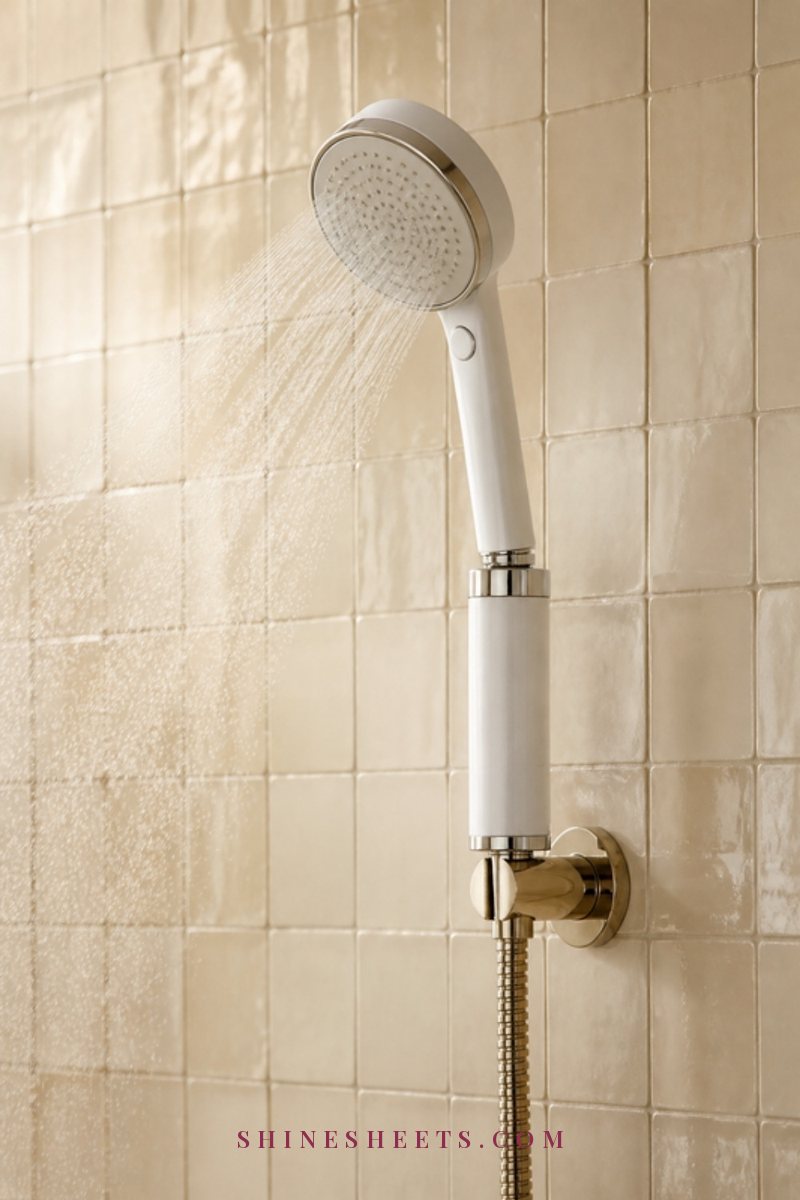
A filtered shower head is the easiest long-term change, especially for renters, because it screws onto your existing pipe in about ten minutes with no tools beyond a little plumber's tape.
A small honest note: most shower filters are best at reducing chlorine and some metals like iron, and they reduce minerals only partly. They won't turn very hard water fully soft (only a whole-home softener does that). Many people still notice softer, shinier hair, especially if chlorine or iron are part of the problem. Replace the cartridge as often as the instructions say, usually every three to six months, or it stops working quietly.
2. Use a Chelating or Clarifying Shampoo
This is the fix that actually removes the minerals already on your hair. A chelating shampoo for hard water contains ingredients (often EDTA, sodium phytate or citric acid) that bind to calcium, magnesium and metals so they rinse away. A regular clarifying shampoo removes product and oil buildup, and some also chelate.
Use it every one to four weeks depending on how hard your water is and how your hair feels. Focus on the scalp and roots, massage for a minute, rinse thoroughly and always follow with conditioner or a mask. My full guide to clarifying shampoo explains the difference between the two types and how often to use each by hair type.
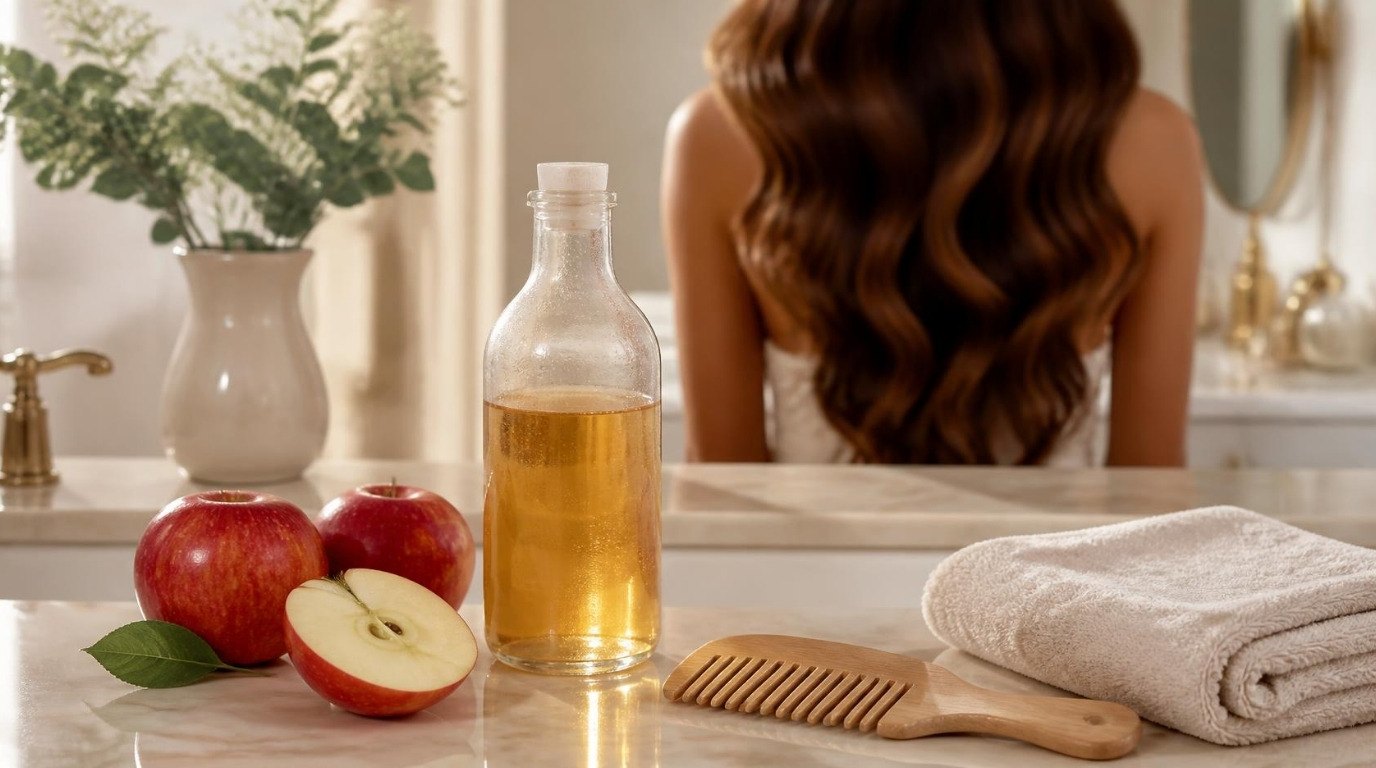
3. Try a Diluted Apple Cider Vinegar Rinse
A mildly acidic rinse can help loosen light mineral residue and smooth the cuticle, which adds shine. Keep it simple and gentle:
- Mix about 1 to 2 tablespoons of apple cider vinegar into a cup (about 250 ml) of cool water.
- After shampooing, pour it slowly over your lengths and scalp.
- Leave it for 1 to 3 minutes.
- Rinse thoroughly with water, then condition as usual.
Patch test on a small area of skin behind your ear first, keep it away from your eyes and skip it if your scalp is irritated, broken or very sensitive. Once every week or two is plenty. Stronger is not better here; too much acid can leave your scalp dry and tight.
4. Deep Condition Every Week
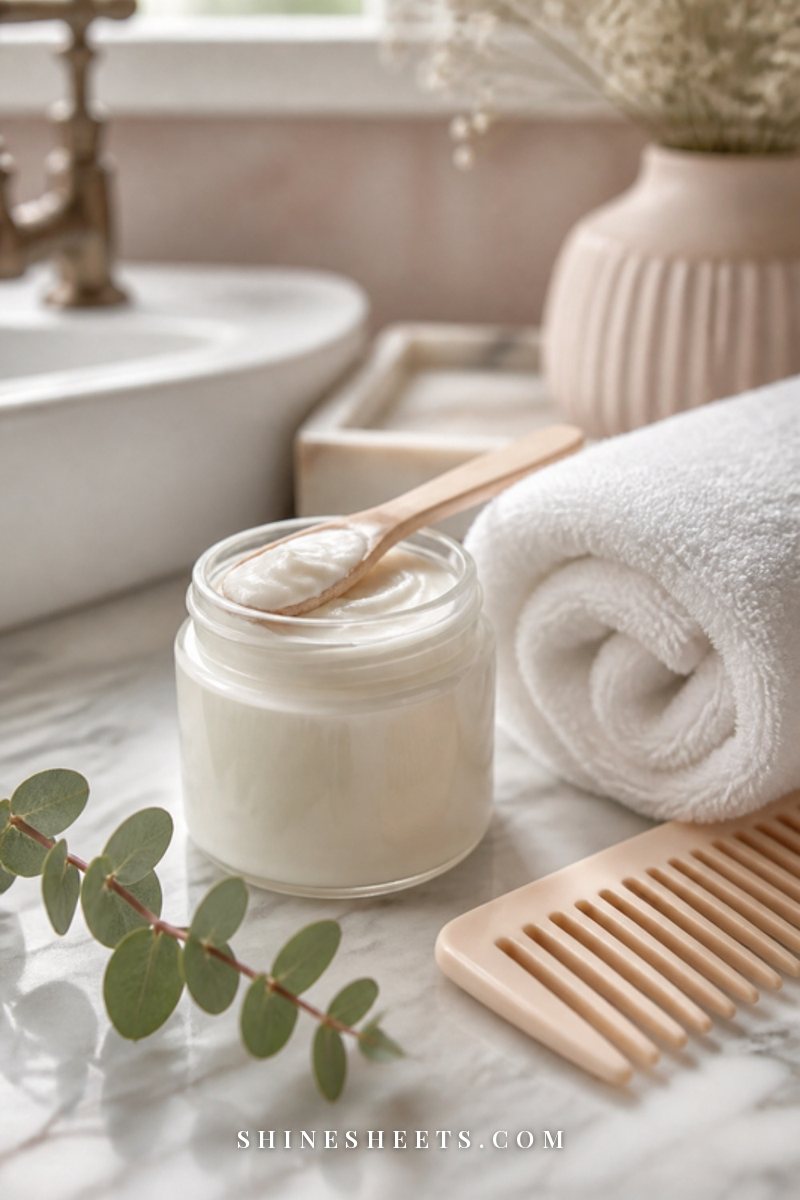
Once the minerals are lifted, your hair needs moisture back. A rich hydrating hair mask once a week smooths the cuticle, softens dryness and helps hair resist the next layer of minerals.
Apply it to damp (not dripping) hair from mid-lengths to ends, comb it through, then wrap your hair in a warm towel for 10 to 20 minutes. The warmth helps the mask spread evenly and absorb better. The best timing is straight after a chelating wash, when your hair is clean and ready to take everything in.
5. Do a Final Rinse With Filtered Water
If you can't change your shower water, you can change the last thing that touches your hair. Keep a large jug or a clean watering can of filtered water (from a pitcher filter) or bottled water in the bathroom and pour it over your hair as a final rinse after conditioning.
It sounds small, but it means the last layer on your strands is clean water rather than mineral-rich tap water. It's especially helpful before a color appointment, on wash days when your hair already feels coated, and for anyone with blonde, gray or very porous hair.
6. Protect Your Color
Hard water and color are not friends. Minerals can make toner fade faster and leave blondes brassy and brunettes flat. A few habits help:
- Use a chelating shampoo a few days before your color appointment, not right after.
- Wash with cooler water, which is gentler on the cuticle.
- Choose color-safe, sulfate-free everyday shampoos.
- Use a purple or blue toning shampoo once a week if brassiness creeps in (and a chelating wash before it, so the toner can actually reach your hair).
- Tell your colorist you have hard water; many will add a mineral-removing treatment before coloring.
Blondes feel hard water the most, and my blonde hair care guide has a full routine for keeping light shades bright. For every other shade, see how to make hair color last.
7. Care for Your Scalp
Mineral residue can leave your scalp tight, itchy or flaky, and an unhappy scalp makes hair look worse too. Massage your scalp properly during every wash (fingertips, small circles, a full minute), rinse longer than you think you need to, and use a gentle scalp scrub or exfoliating treatment every week or two. If flakes stay around or your scalp feels sore, my guide to dry, itchy scalp walks through what might be going on.
8. Use a Leave-In Conditioner and Dry Gently
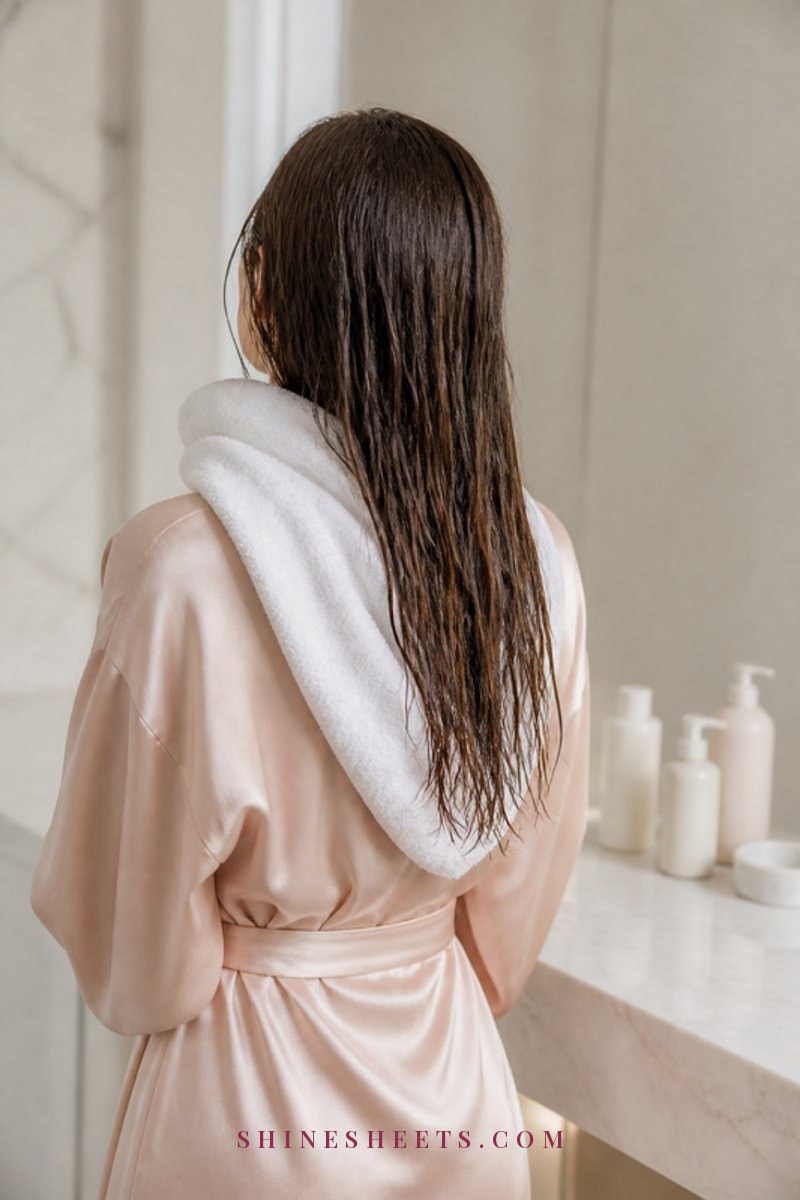
Hard water hair tangles easily and loses moisture fast, so the steps after the shower matter. Squeeze out water gently, then wrap your hair in a microfiber hair towel for 10 minutes instead of rubbing it with a rough bath towel, which roughens the cuticle further.
While hair is still damp, spray or smooth in a leave-in conditioner from mid-lengths to ends and detangle slowly with a wide-tooth comb, starting from the ends and working up. A leave-in adds a protective layer that helps your hair stay smooth and soft until the next wash.
Hard Water Hair Symptom and Fix Table
Here's a quick way to match what you're seeing to what will help most. Screenshot it and keep it for wash day.
| What you notice | Likely cause | What helps most |
|---|---|---|
| Dull hair with no shine | Minerals roughening the cuticle | Chelating wash, then a mask; cool final rinse |
| Dry, straw-like texture | Minerals blocking moisture | Weekly deep conditioning; leave-in conditioner |
| Tangles and frizz | Rough, coated cuticle | Leave-in, wide-tooth comb, microfiber towel |
| Brassy or orange tones | Iron and minerals on light hair | Chelating wash, then a purple toning shampoo |
| Greenish tint on blonde hair | Copper from pipes or pools | Chelating shampoo; pre-wet hair before swimming |
| Color fading fast | Minerals interfering with dye | Chelate before appointments; color-safe shampoo; filtered final rinse |
| Flaky, tight or itchy scalp | Mineral and soap residue | Longer rinse, scalp scrub, gentle shampoo |
| Shampoo barely lathers | Minerals reacting with cleansers | Shower filter; double wash with less product |
| Hair feels heavy and coated | Minerals plus product buildup | Clarifying or chelating wash every 1 to 4 weeks |
| Breakage and split ends | Brittle, coated strands | Masks, gentle detangling, a trim |
A Simple Weekly Routine for Hard Water Hair
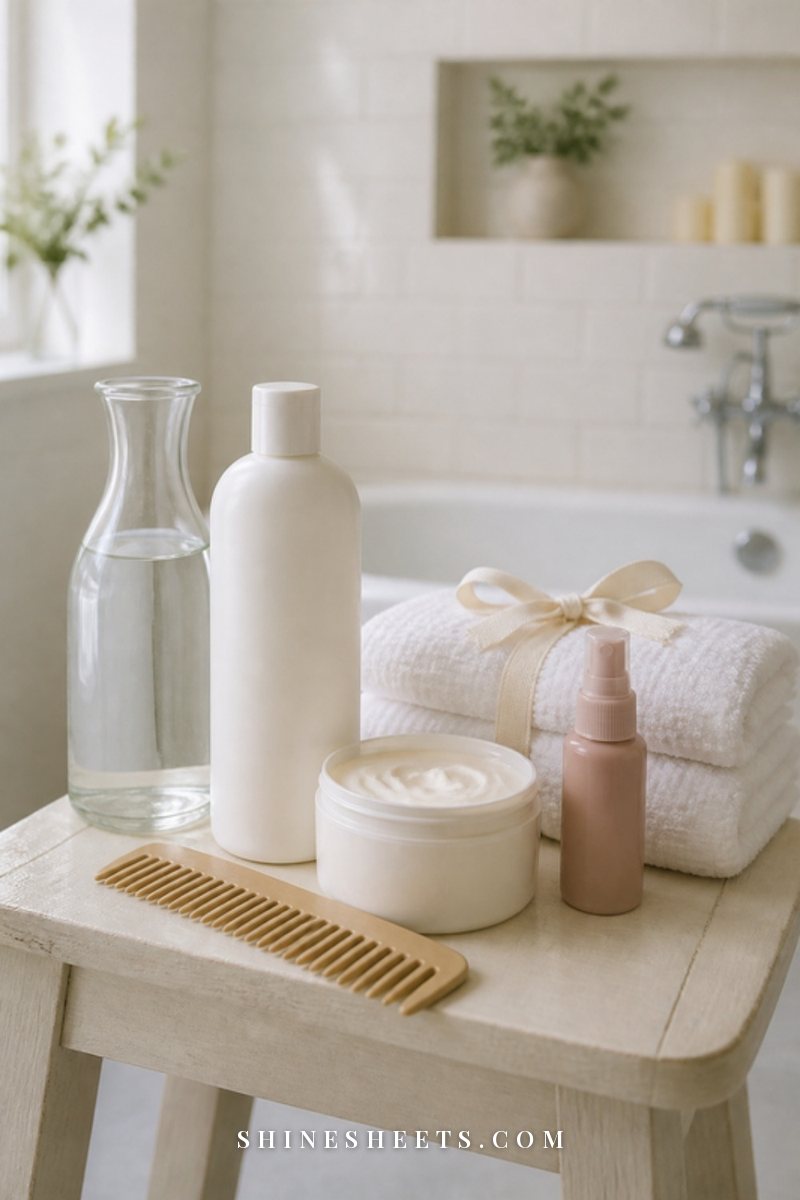
If you'd like everything in one easy rhythm, here's a routine that works for most hair types:
- Regular wash days: gentle sulfate-free shampoo, conditioner on the lengths, cool rinse, leave-in, microfiber towel.
- Once a week: deep conditioning mask for 10 to 20 minutes under a warm towel.
- Every 1 to 4 weeks: chelating shampoo, focused on the scalp, followed by your mask.
- Every 1 to 2 weeks (optional): diluted apple cider vinegar rinse after shampoo.
- Every wash, if you can: a final rinse with a jug of filtered water.
- Every 3 to 6 months: replace your shower filter cartridge.
Start with the chelating wash and mask; they bring the fastest visible change. Then add the rest as habits rather than all at once.
Hard Water Tips by Hair Type
Blonde, Gray and Highlighted Hair
Light, porous hair picks up mineral tones fastest. Chelate every one to two weeks, follow with a mask, and use a toning shampoo only after chelating so it actually works. Pre-wet your hair with clean water before swimming to reduce chlorine and copper absorption.
Curly and Coily Hair
Curls are naturally drier, and hard water can make them frizzy and undefined. Chelate every three to four weeks (not more), always follow with a rich mask, and layer a leave-in under your styler. A filtered final rinse can noticeably improve definition.
Fine Hair
Fine hair goes flat under any buildup. Use a lightweight leave-in only on the ends, chelate every one to two weeks, and choose a lighter conditioner so you aren't adding weight on top of minerals.
Thick or Coarse Hair
Thick hair can hide a lot of mineral buildup close to the scalp, where water and shampoo struggle to reach. Wash in sections, give your rinse a full extra minute and work your chelating shampoo in with your fingertips section by section. A richer mask on the lengths keeps coarse hair from feeling rough afterwards.
What To Expect in Your First Few Washes
Buildup took months to form, so it can take a few washes to lift completely. Here's what most people notice:
- First chelating wash: hair feels very clean, sometimes a bit squeaky before conditioning. After a mask, it's usually lighter and moves more freely.
- After one to two weeks: shine starts coming back, tangling eases and your usual products work better with less.
- After three to four weeks: with a filter, a weekly mask and a regular chelating wash, the straw-like feel usually softens and color looks clearer.
If your hair feels drier after chelating instead of better, you may be using it too often or skipping the mask. Pull back to once every three or four weeks and see how your hair responds. It's a gentle balancing act, not a race.
Hard Water, Pools and Travel
Swimming pools add chlorine and sometimes copper to the mix, which is why swimmers with light hair can notice a green tint. Before you swim, wet your hair with clean shower water and smooth in a little conditioner or leave-in, so your strands absorb less pool water. Rinse right after swimming and use a chelating shampoo at least once a week during swimming season.
Travel can go either way. Some places have much softer water than home (and your hair suddenly behaves beautifully), others much harder. If you're away for more than a few days, a travel-size chelating shampoo and a small leave-in are worth packing.
Is a Water Softener Worth It?
A whole-home water softener removes calcium and magnesium before the water reaches any tap, so it's the most complete fix. It also protects your kettle, dishwasher, washing machine and shower glass. The trade-offs are cost, installation and maintenance (most need salt refills), and it's usually not an option for renters.
If you own your home and your water is very hard, it's worth getting a quote and checking your water report first. If not, a shower filter plus the hair care steps above will take you most of the way there.
Mistakes To Avoid
- Piling on heavier products. More oil and cream on mineral-coated hair often makes it feel greasier and duller, not softer.
- Chelating too often. It's a treatment, not a daily shampoo. Overdoing it can leave hair dry.
- Using very hot water. Hot water roughens the cuticle further.
- Strong or undiluted vinegar. It can irritate the scalp. Keep it gentle and rinse it out.
- Forgetting the filter cartridge. An old filter does very little.
- Rubbing hair dry. Squeeze and wrap instead.
When To See a Professional
If your hair is breaking a lot, shedding much more than usual, or your scalp is red, painful or flaking heavily despite these changes, it's worth talking to a dermatologist. Hard water can make hair feel worse, but sudden shedding or scalp problems usually have other causes that deserve proper attention. A trusted hairstylist can also help with a professional mineral-removing treatment before coloring.
Final Thoughts
Hard water hair is one of the most common reasons good hair suddenly feels bad, and one of the easiest to fix once you know what's going on. A filter, a chelating wash every few weeks and a weekly mask are often all it takes to bring the softness and shine back.
Be patient for a few washes while the old buildup lifts away. Your hair hasn't stopped being healthy. It's just been carrying a little extra weight from the water, and now you know exactly how to take it off.