A small apartment rarely has a space problem. It has a job problem. Every room is quietly being asked to do three or four things at once (sleep, work, host, store, eat), and most furniture is only built to do one of them. The fix isn't a bigger home. It's pieces that pull double duty, so the room can switch roles without you tripping over it.
This guide walks you through multifunctional furniture ideas that actually earn their floor space: how to choose them, 10 pieces worth considering, a quick table that shows which piece fits which room and budget, plus the quality and safety checks that save you from a wobbly, squeaky regret. Everything here is renter-friendly and budget-minded, and nothing needs power tools.
It took me a while to stop buying "cute" pieces and start buying useful ones. The good news is that the useful ones can be lovely too.
Why Multifunctional Furniture Works in a Small Apartment

When floor space is limited, every piece you own either gives you something back or takes something away. A plain coffee table holds a mug. A lift-top coffee table holds a mug, hides the remotes, blankets and chargers, and turns into a comfortable laptop height when you need it. Same footprint, triple the return.
Multifunctional furniture works for three simple reasons:
- It reduces the number of pieces. Fewer legs on the floor make a room look and feel bigger, even if the pieces themselves aren't tiny.
- It adds hidden storage. Closed storage inside furniture you already need means fewer extra shelves and bins competing for wall space.
- It lets a room change roles. A living room can become a guest room at night and an office on weekday mornings, without permanent clutter from any of those jobs.
If you're working with a space that has almost no closets, pair this guide with my ideas for how to organize a small apartment with no storage. The two work beautifully together: furniture does the heavy lifting, and small systems keep it tidy.
How To Choose Multifunctional Furniture
The biggest mistake with double-duty pieces is buying for a fantasy life. A sofa bed is only useful if people actually stay over. A fold-down desk is only useful if you'll fold it down. Before you shop, work through these four steps:
- List what each room must do. Grab a notebook and write each room at the top of a page, then list every job it has: "living room: relax, watch movies, work three days a week, host one guest a month." The jobs that come up most often tell you which pieces matter.
- Measure twice, including clearance. Measure the piece closed and open. A drop-leaf table might be 12 inches deep folded and 40 inches open; a sofa bed can need 80 inches or more from the back wall once the mattress is out. Mark the open footprint on the floor with painter's tape and walk around it for a day.
- Check weight limits. Wall-mounted desks, floating shelves and lift-top mechanisms all have rated limits. Look for the number in the product details and leave a margin (if you plan to put 20 pounds on it, choose one rated for at least 30).
- Test how easily it opens. If converting the piece takes two people, a manual and ten minutes, you'll stop doing it. Look for one-motion mechanisms: a lid that lifts with one hand, a leaf that flips up, drawers that glide.
A small honest admission: I once fell for a beautiful folding table that needed a little wrestling match every time it opened. It came out exactly twice. Ease of use beats good looks every single time.
10 Multifunctional Furniture Ideas for Small Apartments
These are the pieces that tend to give the most back in small homes. You won't need all ten. Pick the two or three that match the jobs on your list.
1. Storage Ottoman
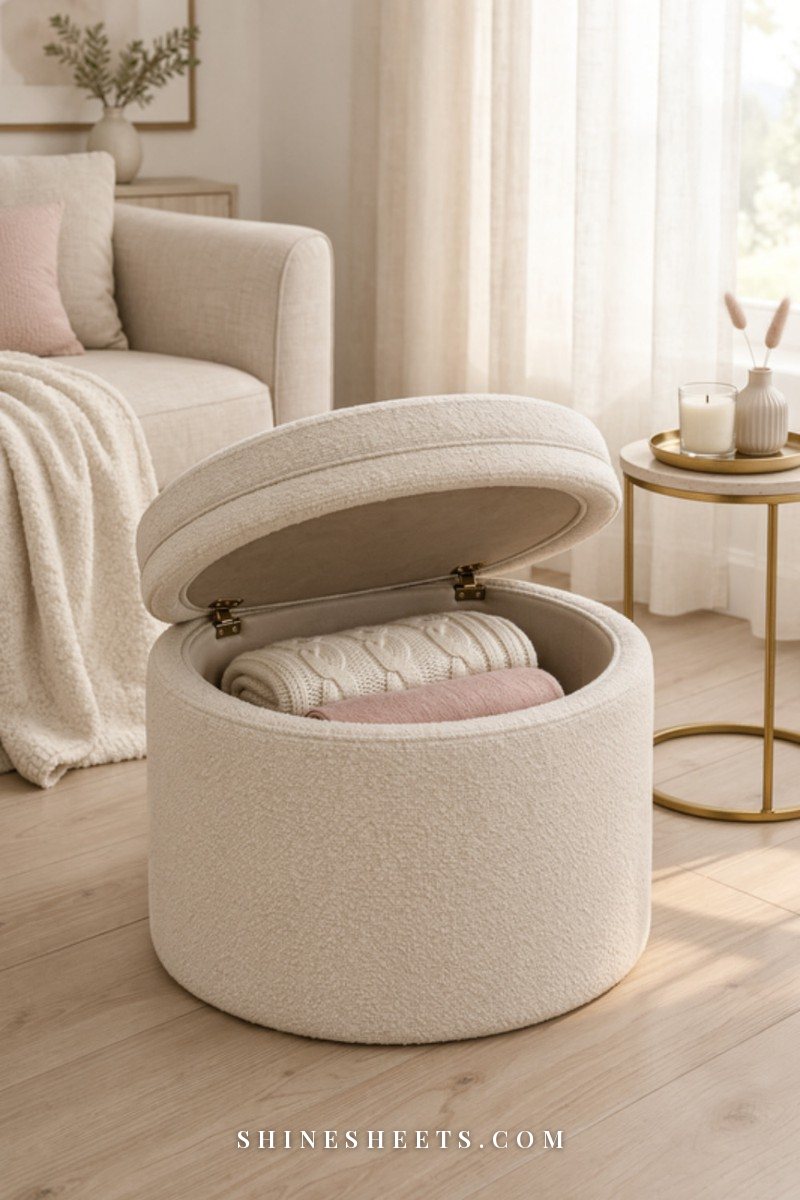
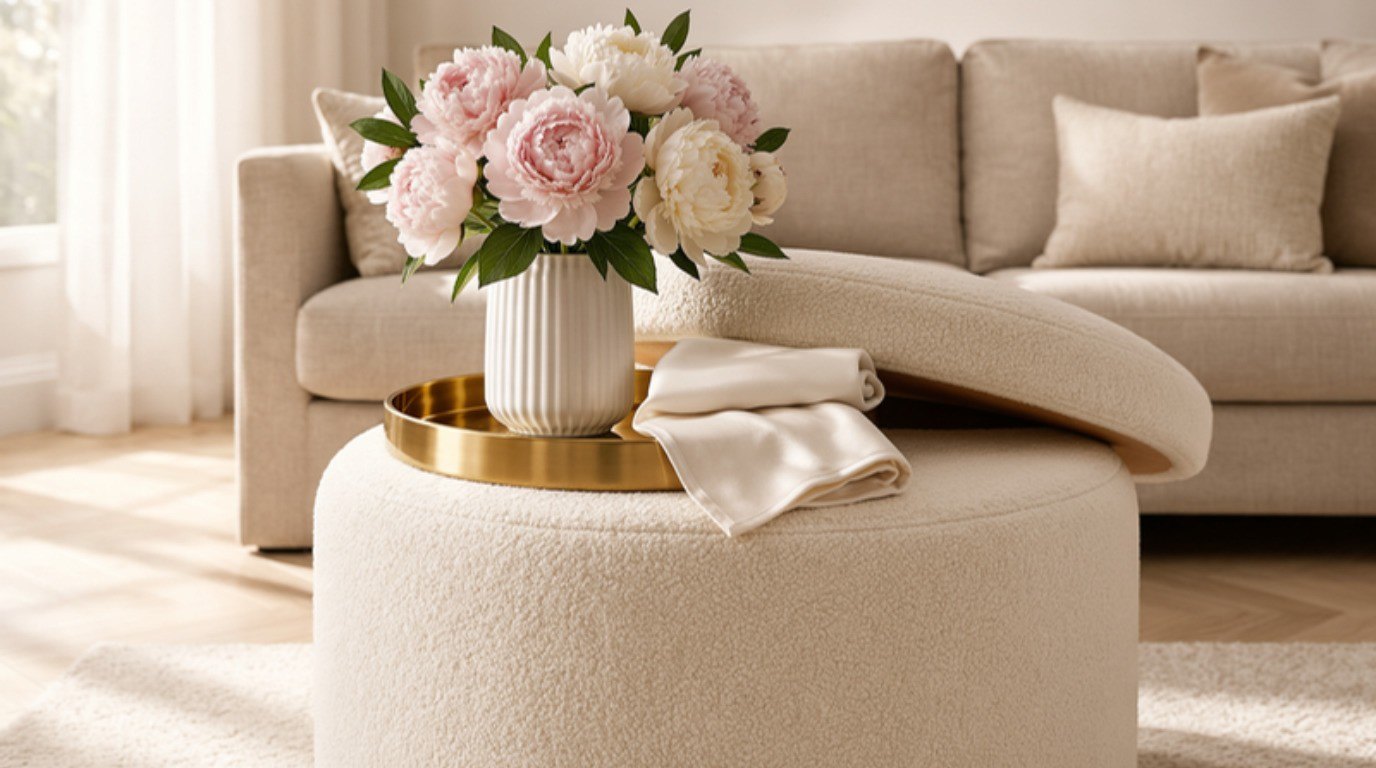
If you only buy one piece from this list, make it this one. A storage ottoman is a footrest, extra seating for a guest, a coffee table (add a tray) and a hidden blanket box, all at once. Round ones work well in tight spaces because there are no corners to bump into.
Look for a lid that lifts off or hinges easily, a firm top that won't sag when someone sits, and fabric you can spot-clean. A cream storage ottoman with a lift-off lid is a pick for a soft-neutral living room. Inside, keep one category only (throws, or board games, or spare pillow covers) so it never becomes a junk drawer with a cushion on top.
2. Lift-Top Coffee Table
A lift-top coffee table raises its surface toward you, so eating on the sofa or working on a laptop doesn't mean hunching over. Underneath, there's usually a hidden compartment for remotes, chargers, notebooks and coasters.
I'd choose a white lift-top coffee table with a smooth gas-lift or spring mechanism and rounded edges. Before you buy, check the raised height (around 24 to 26 inches is comfortable for most sofas) and whether the top stays steady when you type on it. A wobble at the raised position is the most common complaint, so read reviews for that detail specifically.
3. Sofa Bed or Daybed
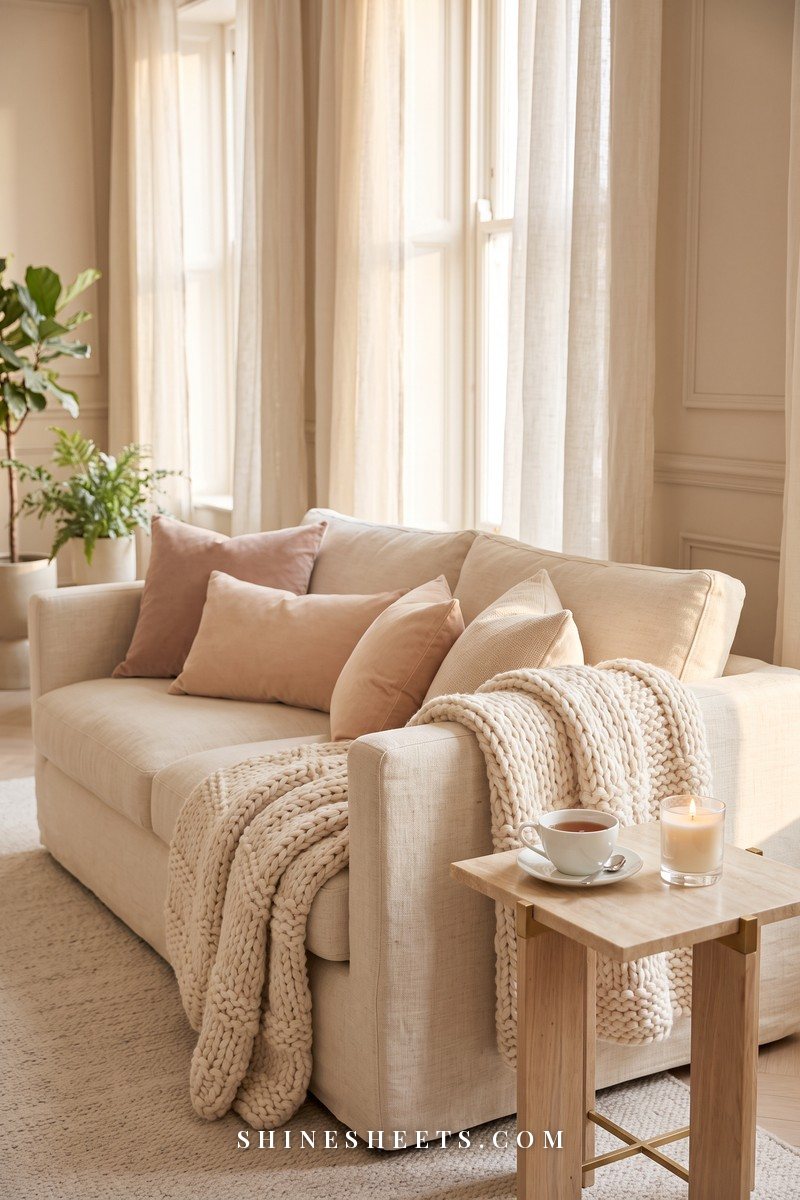
This is the classic double-duty piece, and it can make a studio or one-bedroom feel like it has a guest room. You have two main options:
- A sofa bed looks like a regular sofa and pulls out into a bed. It's best if guests are occasional and you want the room to feel like a living room most of the time.
- A daybed has a back and arms like a sofa, but the seat is a twin mattress. Many come with a trundle underneath that slides out for a second sleeper. It's comfortable for daily lounging and needs no unfolding at all.
A beige daybed with a pull-out trundle is a lovely choice for a studio or a reading corner that becomes a guest bed. If you host often during the holiday season, my guide to hosting holiday guests without a guest room has more small-home tips for making that setup feel welcoming.
4. Bed With Drawers
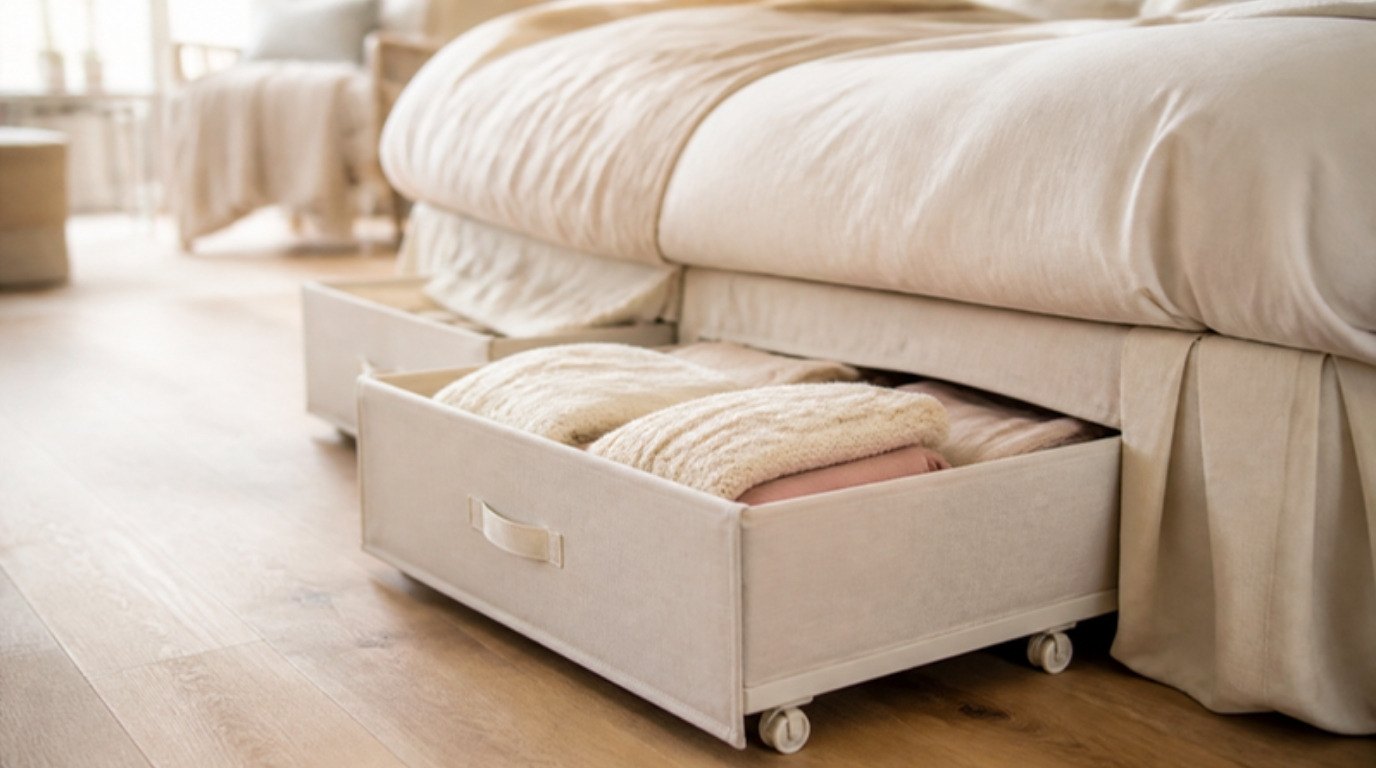
In a small bedroom, the space under the bed is often the biggest storage area you have. A bed frame with built-in drawers (sometimes called a captain's bed) turns that space into a dresser, which can free up an entire wall.
Measure the clearance you need to pull drawers fully open (usually 18 to 24 inches beside the bed). If one side of your bed is against a wall, choose a frame with drawers only on the open side or at the foot. A lift-up storage bed, where the whole mattress platform rises on gas struts, is another option for bulky items like suitcases and seasonal duvets. For more ways to use that space, see my under bed storage ideas.
5. Extendable or Drop-Leaf Dining Table
Most of the time, you probably need a table for one or two. A few times a year, you need it for four or six. An extendable or drop-leaf table solves that without a big table eating your floor every day.
A drop-leaf table has hinged sides that fold down, so it can sit against a wall as a slim console and open up for dinner. An extendable table has a center leaf that slides in. Drop-leaf styles are usually better for very small spaces, because they can shrink to a fraction of their open size. Check that the leaf supports (swing legs or pull-out brackets) feel sturdy, and that chairs can tuck fully underneath when the table is closed.
6. Nesting Tables
Nesting tables are two or three tables of different heights that slide under each other. Stacked, they take up the space of one side table. Pulled apart, they give every guest somewhere to put a cup of tea.
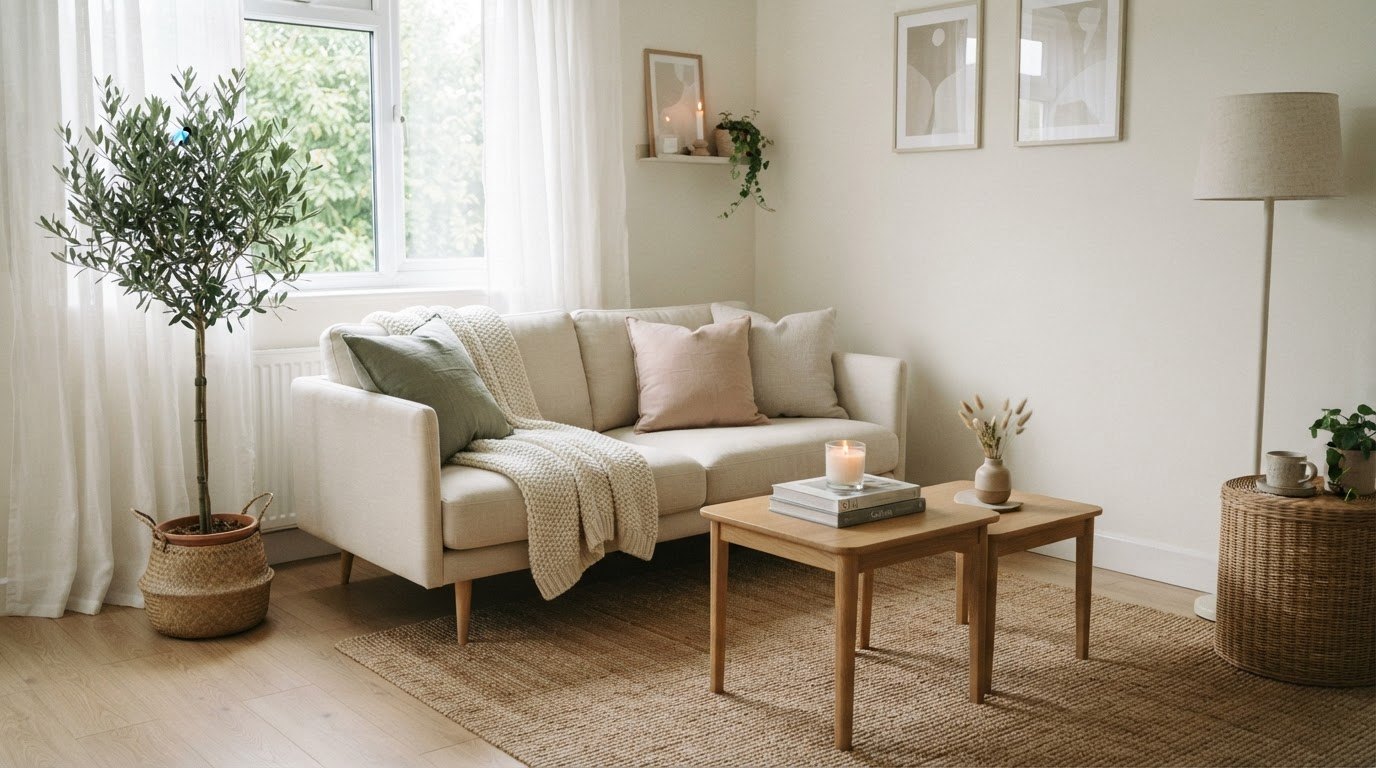
A set of oak and white nesting tables is a pick for mixing warmth with a light look. Choose round or oval tops in high-traffic spots and check that the smaller table slides out without lifting. They're also handy as a plant stand pair, a nightstand with a pull-out surface, or a temporary laptop perch.
7. Console Table That Works as a Desk
If you work from home only part of the week, a full desk can feel like the office has moved into your living room for good. A console table that's desk-height (about 29 to 30 inches tall and at least 16 inches deep) can be a hallway or sofa-back table most days and a workspace when you need it.
Keep work items in one lidded box or basket that lives on a lower shelf. At the end of the day, laptop and notebook go in the box, a lamp and a vase go back on top, and the room is a home again. That tiny closing routine matters more than the furniture itself.
8. Storage Bench for the Entryway
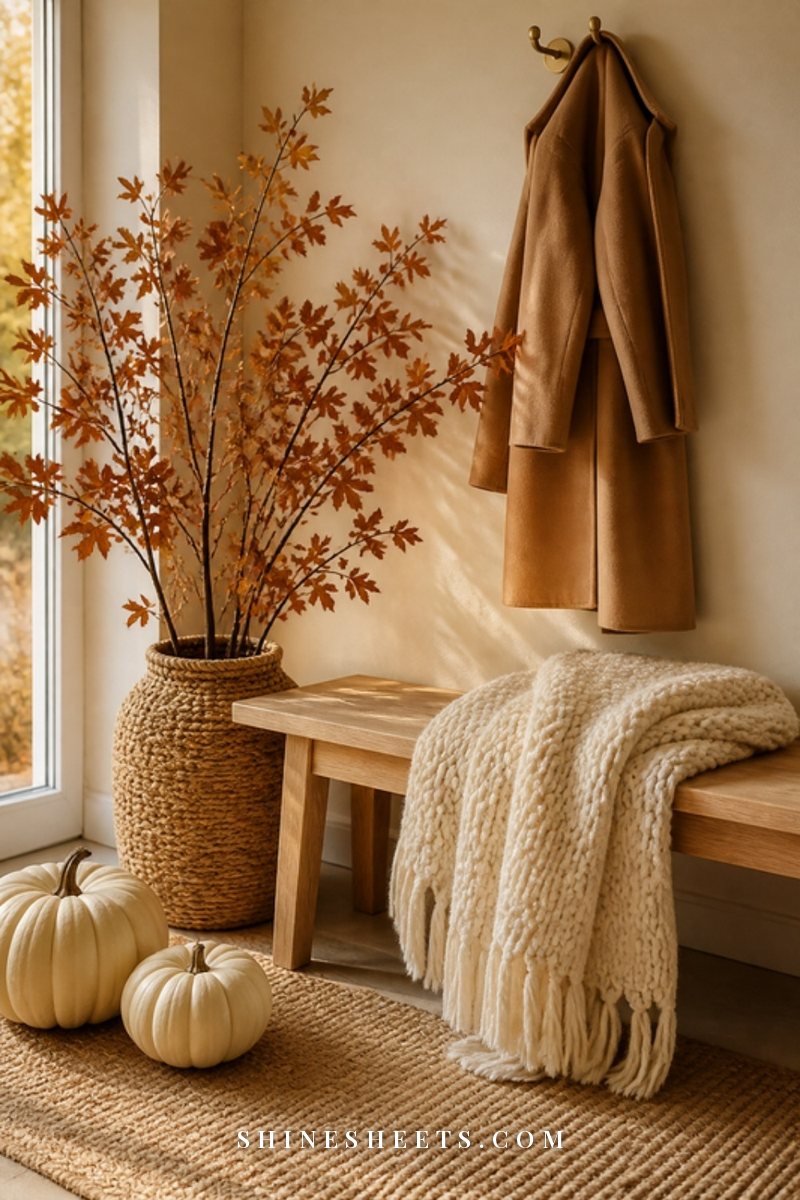
Small apartments often have no real entryway, which means shoes, bags and umbrellas drift all over the living room. A storage bench gives you a place to sit while you put on your shoes, plus hidden storage for the things that otherwise pile up by the door.
A linen storage bench with a lift-up seat works well at the end of a bed too, where it holds spare bedding and gives you somewhere to lay out tomorrow's outfit. For an entry, choose a wipeable cushion or keep a small washable mat in front of it, and set a limit: one pair of shoes per person out, everything else inside.
9. Wall-Mounted Fold-Down Desk
A fold-down desk mounts to the wall and opens into a work surface, then closes into a slim cabinet that sticks out only a few inches. It's perfect for a bedroom or a narrow hallway where a full desk would block the walkway.
Because it attaches to the wall, check your lease first and ask your landlord if you're renting. It needs to be mounted into wall studs or with anchors rated for the weight, and the instructions usually only need a screwdriver and a level. If wall mounting isn't allowed, a leaning ladder desk or a narrow folding desk you can store behind a door gives you a similar result with zero holes.
10. Bookshelf That Doubles as a Room Divider
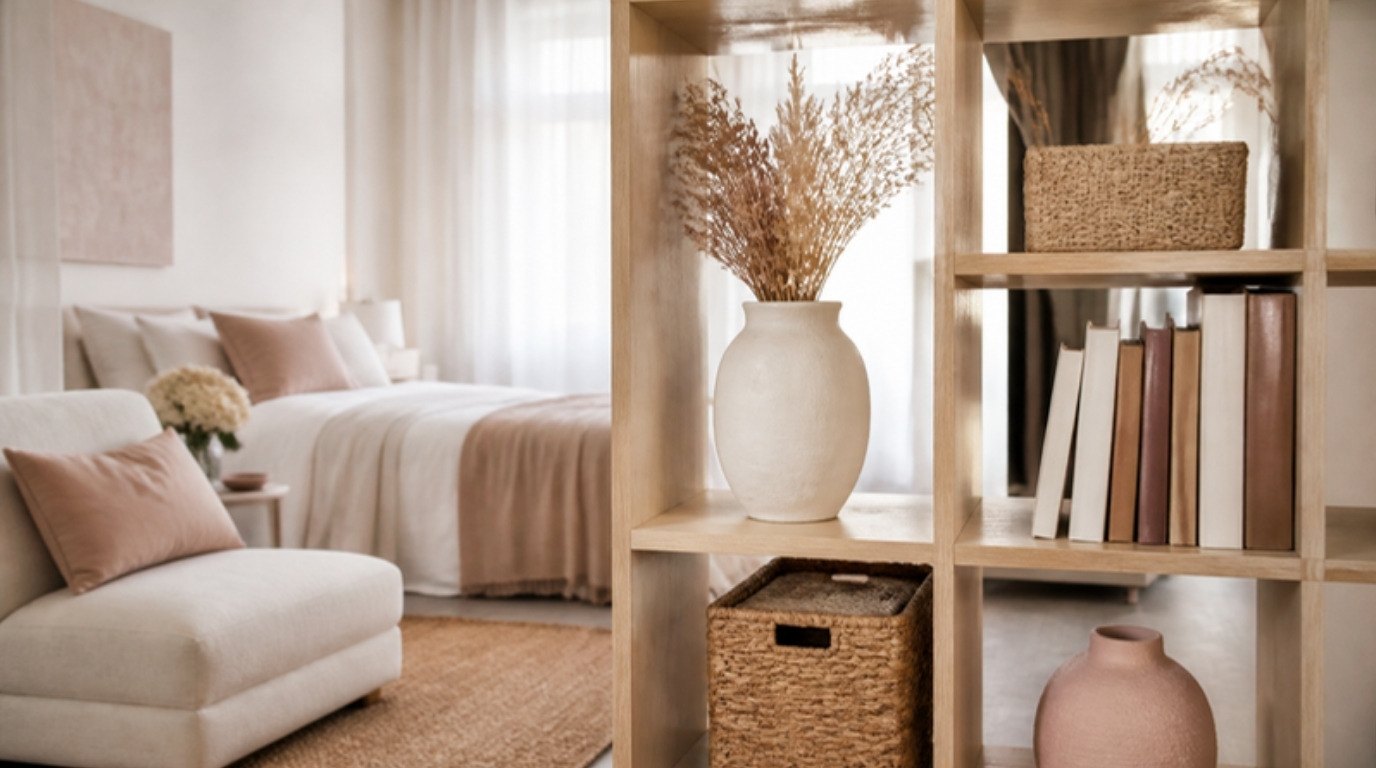
In a studio or open layout, an open-backed bookshelf placed perpendicular to the wall can separate the bed from the living area while still letting light through. You get storage, display space and a sense of two rooms, all from one piece.
Choose a cube-style shelf with open backs and a finished look on both sides, so it doesn't look like you're seeing the back of furniture. Keep heavy books on the lowest shelves, lighter objects higher up, and leave a few cubes partly empty so it looks airy rather than packed. If you're planning a whole studio layout, my studio apartment ideas go deeper into zoning one room into several.
Multifunctional Furniture at a Glance
Use this table to match pieces to the rooms on your list. Budget levels are rough: $ is usually under a typical side-table price, $$ is mid-range and $$$ is a bigger investment.
| Piece | Functions | Best room | Budget level |
|---|---|---|---|
| Storage ottoman | Footrest, extra seat, coffee table, blanket storage | Living room, bedroom | $ |
| Lift-top coffee table | Coffee table, laptop desk, dining surface, hidden storage | Living room, studio | $$ |
| Sofa bed or daybed | Sofa, guest bed, reading nook | Living room, studio, home office | $$–$$$ |
| Bed with drawers | Bed, dresser, linen storage | Bedroom | $$–$$$ |
| Drop-leaf or extendable table | Console, small dining table, hosting table | Kitchen, dining corner, living room | $$ |
| Nesting tables | Side table, extra surfaces for guests, plant stand | Living room, bedroom | $ |
| Console desk | Hallway or sofa table, part-time desk | Living room, hallway | $–$$ |
| Storage bench | Seat, shoe and bag storage, end-of-bed bench | Entryway, bedroom | $–$$ |
| Fold-down desk | Desk, wall cabinet, display shelf | Bedroom, hallway | $$ |
| Divider bookshelf | Storage, display, room divider | Studio, open-plan living | $–$$ |
Screenshot it if it helps, and start with the pieces that show up in more than one of your rooms.
How To Keep a Calm, Uncluttered Look

Multifunctional pieces can make a room look busy if every one of them is a different color, wood and style. A few simple guidelines keep things serene:
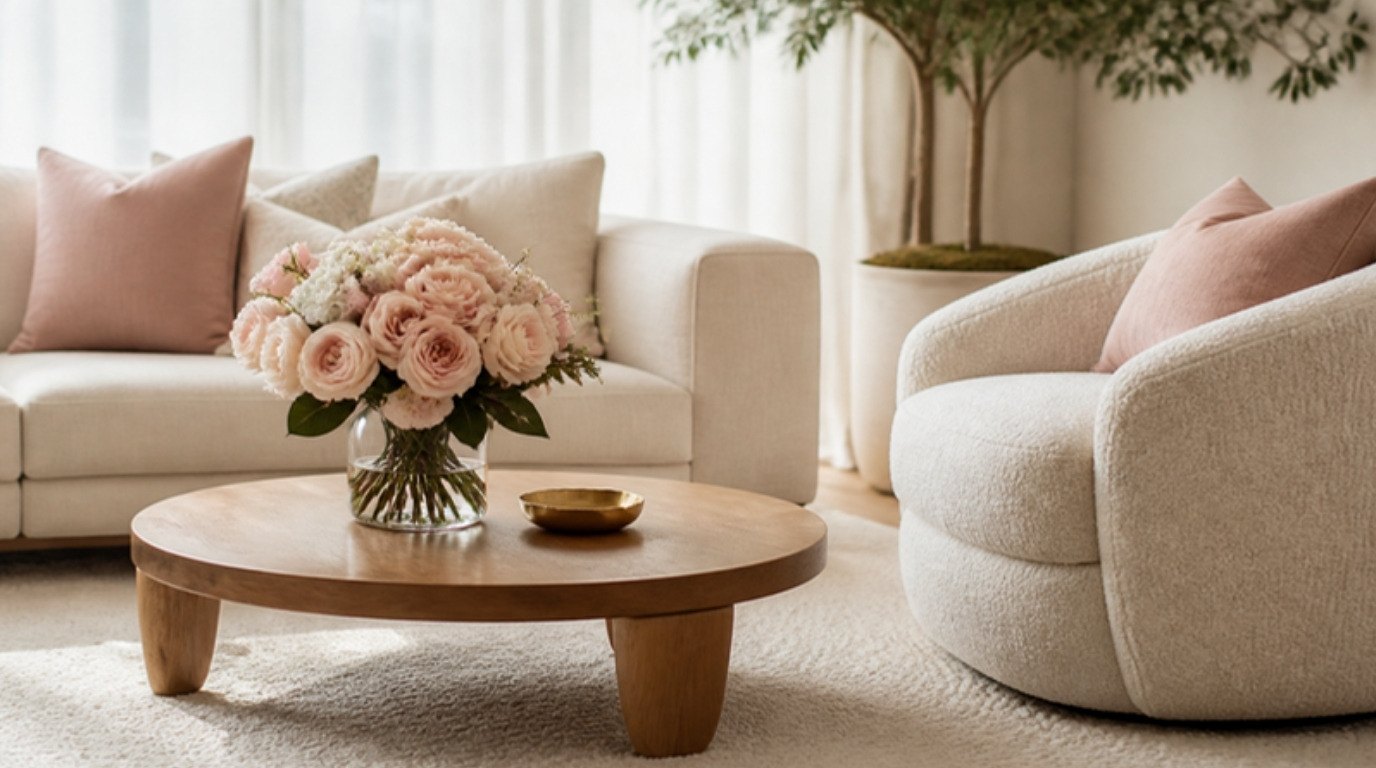
- Stick to two or three tones. Cream, beige and light oak, or white, soft gray and blush. When large pieces share a palette, they visually blend into the walls and the room looks bigger.
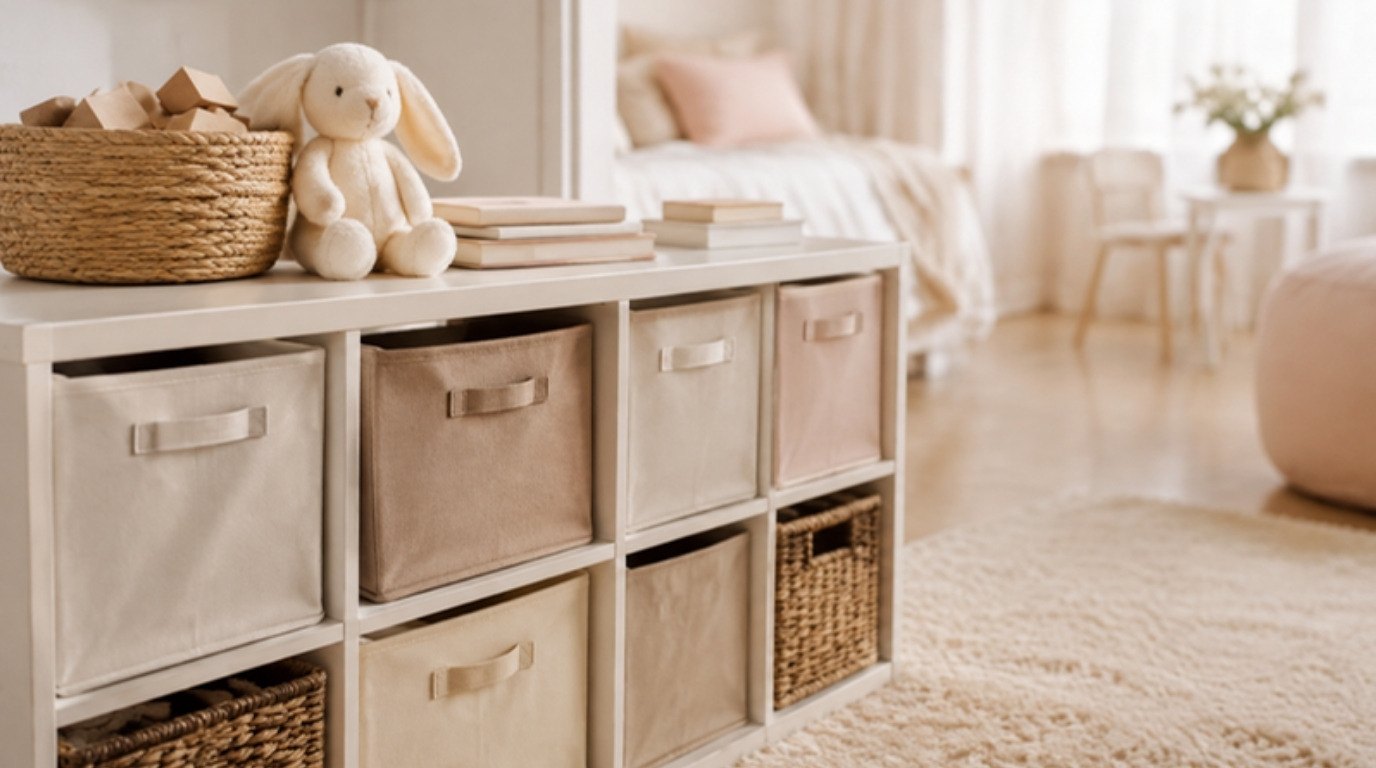
- Choose closed storage over open. Lids, doors and drawers hide visual noise. Keep open shelves for a few things you love looking at.
- Don't fill every inch. Leave about 20 to 30 percent of any storage piece empty. That breathing room is what keeps it working when life gets messy.
- Choose legs where you can. Furniture raised on slim legs shows more floor, which makes a room feel more open than pieces that sit flat on the ground.
- Reset daily in five minutes. Fold the throw, close the ottoman, lower the table, tuck the work box away. A tiny reset is what turns clever furniture into a calm home.
For more visual tricks, like using mirrors, light and curtain height, see my guide on how to make a small room look bigger.
Quality Checks Before You Buy
Pieces with moving parts get used hard, so a few minutes of checking saves a lot of frustration. Whether you're in a store, reading product details online or looking at a secondhand piece, check these:
- Hinges. Open and close the lid or leaf five times. It should move smoothly without squeaking, and the hinge screws should sit flush and tight.
- Gas lifts and soft-close mechanisms. A good lid stays open on its own and closes slowly. If it slams or drifts down, the lift may be weak or worn.
- Mattress comfort on sofa beds. Thin fold-out mattresses with a bar across the middle are the main reason guests sleep badly. Look for a mattress at least 4.5 inches thick, or plan to add a mattress topper that stores in the ottoman.
- Drawer glides. Drawers on metal glides last much longer than wood-on-wood ones and open fully without sticking.
- Stability. Push gently on the corners. A table or shelf that rocks now will only get worse.
- Fabric. Removable, washable covers or performance fabrics are kinder to everyday life, especially on ottomans and benches.
Safety Notes for Tall and Folding Furniture
A few safety basics matter even more in small spaces, where furniture is often taller and closer together:
- Anchor tall shelves and bookcases to the wall. Use the anti-tip strap or bracket that comes with the piece, or a simple furniture anti-tip kit. This is especially important for a bookshelf used as a room divider, which stands away from the wall; secure it to the floor or ceiling with a kit made for freestanding shelves, or choose a low, wide model instead.
- Keep fold-out mechanisms away from small fingers. Lift tops, sofa bed frames and drop leaves can pinch. If children visit, keep mechanisms closed and choose soft-close lids where you can.
- Respect the weight limits. Don't stand on ottomans, benches or fold-down desks to reach high shelves.
- Keep walkways clear when pieces are open. A sofa bed or extended table shouldn't block a door or the path to it, especially at night.
Five minutes with a screwdriver and a strap is a small price for the peace of mind of knowing nothing tall in your home can tip.
Secondhand and Easy DIY Options
Multifunctional furniture doesn't have to mean new furniture. Some of the best pieces turn up secondhand, often because someone moved into a bigger home.
- Shop secondhand for solid wood. Look for drop-leaf tables, storage benches and dressers at thrift stores, local resale groups and estate sales. Older solid wood pieces are often sturdier than new flat-pack ones.
- Test everything in person. Open every drawer, lift every lid and sit on every seat. Sniff fabric for smoke or damp smells, and check sofa beds for a clean, dry mattress.
- Refresh with paint or new hardware. A coat of cream furniture paint and a set of gold knobs can turn a dated piece into something that matches your palette, with only a brush and a screwdriver.
- Add storage to what you have. Lidded baskets under a console, a tray on an ottoman or a slipcover on an old bench can make existing furniture work harder without buying anything.
- Turn a dresser into a sideboard. A low dresser in the living room becomes a media unit, a bar for tea things and closed storage for games and candles.
Final Thoughts
A small apartment can feel generous when every piece in it is quietly doing more than one job. You don't need to replace everything at once. Start with your list of what each room must do, choose the one piece that solves the biggest daily frustration, and let the rest come slowly.
Choose things that open easily, look calm together and feel good to live with. A home that works with you, instead of against you, is the most spacious feeling there is.