You don't need a guest room to be a wonderful host. What guests remember isn't the square footage – it's whether they slept well, knew where the towels were and felt like they weren't in the way. Those three things can happen in a studio apartment just as easily as in a big house, with a little planning.
A small home actually has a hidden advantage: everything is close, cozy and personal. The trick is giving your guests a few clear "theirs" spaces (a place to sleep, a spot for their bag, a turn in the bathroom) so everyone can relax, including you.
This guide is all about hosting holiday guests without a guest room. You'll find the best sleeping options for a small space, a comparison table to help you choose, simple ways to create privacy, a guest kit basket, a bathroom sharing plan, kind ways to talk about routines and length of stay, and 8 hosting tips that make the whole visit feel easy.
Grab a cup of tea and a notebook, and let's make your home ready for overnight guests.
Where Your Guests Can Sleep

This is the first decision, and it shapes everything else. Think about who's coming (one friend, a couple, a parent with a sore back), how long they'll stay and where in your home the sleeping spot can be closed off or tucked away at night.
Sofa Bed
If you already have one, you're halfway there. Most sofa bed mattresses are thin, so the single best upgrade is a 2 to 3 inch mattress topper laid on top under the fitted sheet. Open the sofa bed a few days before your guests arrive, lie on it for ten minutes and check for bars you can feel through the mattress. Make it up with real sheets and a proper duvet, not just a throw blanket, and it suddenly feels like a bed rather than a couch.
Quality Air Mattress
A good air mattress is the most flexible option for small homes because it disappears into a closet the rest of the year. Look for a raised, double-height design (around 18 inches) so it's easier to get in and out of, a built-in pump and a flocked top so sheets don't slide. A memory foam topped air mattress adds a layer of comfort that makes a real difference by the second night.
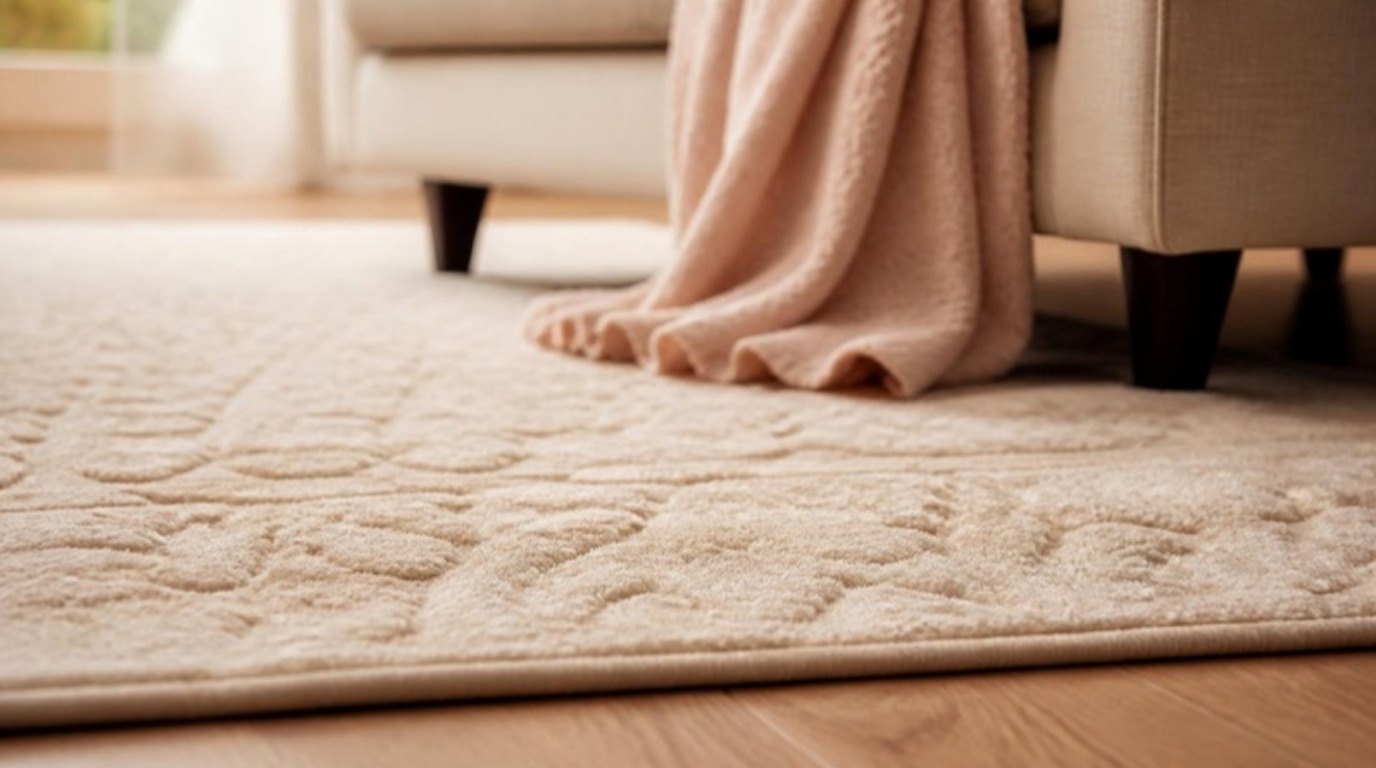
Inflate it fully the day before and leave it overnight. New mattresses stretch a little, so you may need to top it up before bedtime. Place it on a rug rather than bare floor (warmer and quieter), and keep it away from radiators and sharp furniture corners.
Daybed or Folding Guest Bed
A daybed works as a sofa during the day and a twin bed at night, which is perfect if you host often. A folding guest bed with a thick foam mattress is another lovely middle ground: it's more supportive than most air mattresses and rolls into a closet or behind a door. Both are great for older guests who'd struggle to get up from the floor.
Offering Your Own Room
Sometimes the kindest and simplest option is to give your guests your bedroom and take the sofa yourself. It works especially well for longer stays, couples or anyone who needs a door that closes. If you do this, clear a drawer and some hanging space, move your nightly essentials (skincare, phone charger, pajamas) into one basket you can grab, and change the sheets before they arrive. It's a generous gesture, but only offer it if you'll truly be okay on the sofa – a tired, resentful host helps no one.
Sleeping Options Compared
Here's a quick way to choose the right setup for your space and your guests. Screenshot it if you're shopping or planning.
| Sleeping option | Best for | Setup time | Storage needs | Comfort tips |
|---|---|---|---|---|
| Sofa bed | Short stays, one or two guests | 10 minutes | None (it's your sofa) | Add a 2–3 inch topper and a full duvet |
| Raised air mattress | Occasional hosting, tiny homes | 15 minutes (inflate the day before) | One closet shelf | Place on a rug, top up air before bed |
| Daybed | Frequent hosting, one guest | 5 minutes | None (it's furniture) | Add bolster pillows by day, real pillows by night |
| Folding guest bed | Older guests, longer stays | 5–10 minutes | Behind a door or in a closet | Choose a thick foam mattress, add a mattress protector |
| Your own bedroom | Couples, long stays, guests who need a door | 30–45 minutes (sheets and clearing space) | A basket for your own essentials | Fresh sheets, an empty drawer, a clear nightstand |
How To Create Privacy in an Open Space
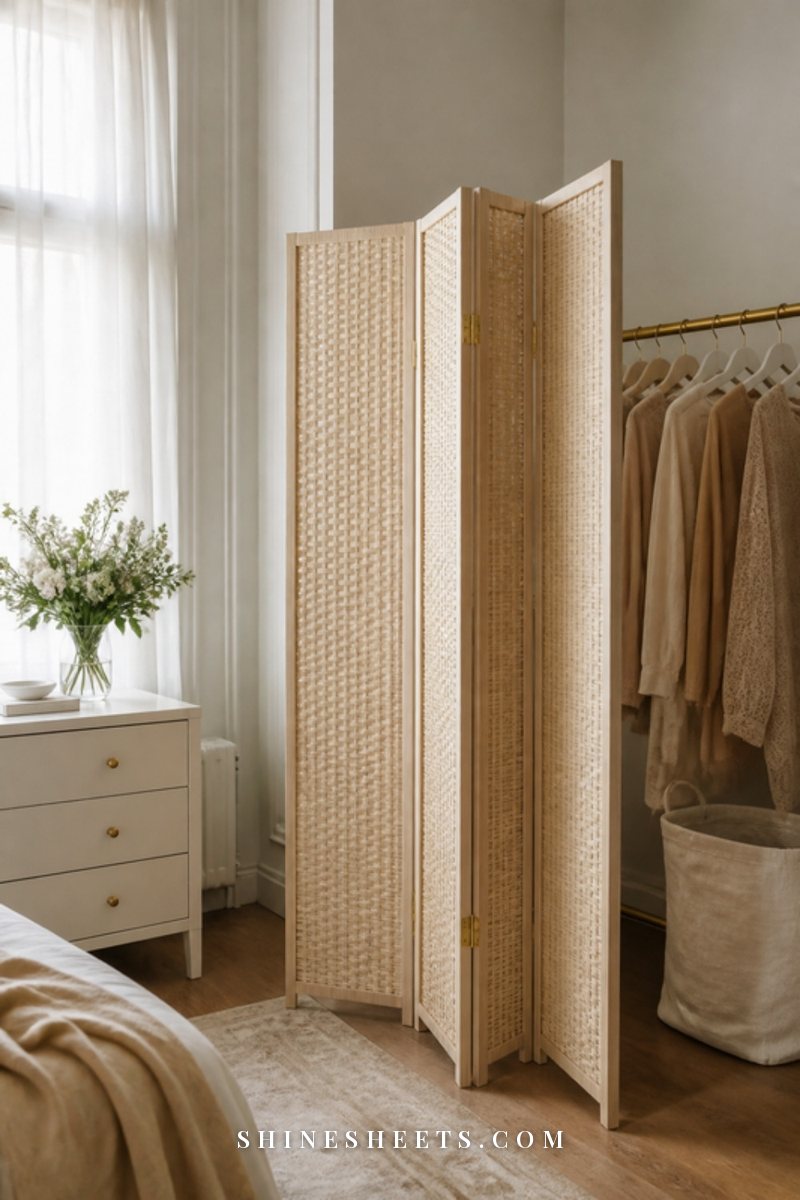
Privacy is what makes guests feel comfortable enough to actually rest. In a small home, it doesn't have to be a wall – it just needs to signal "this little corner is yours for now."
- A folding screen. A white folding privacy screen is the quickest way to turn a corner of the living room into a bedroom. Set it between the sleeping spot and the kitchen or walkway. It folds flat behind a sofa or into a closet afterward.
- A curtain on a tension rod. Fit a tension rod across an alcove or doorway without a door and hang a simple linen curtain from it. No holes, no tools, and it looks soft and intentional.
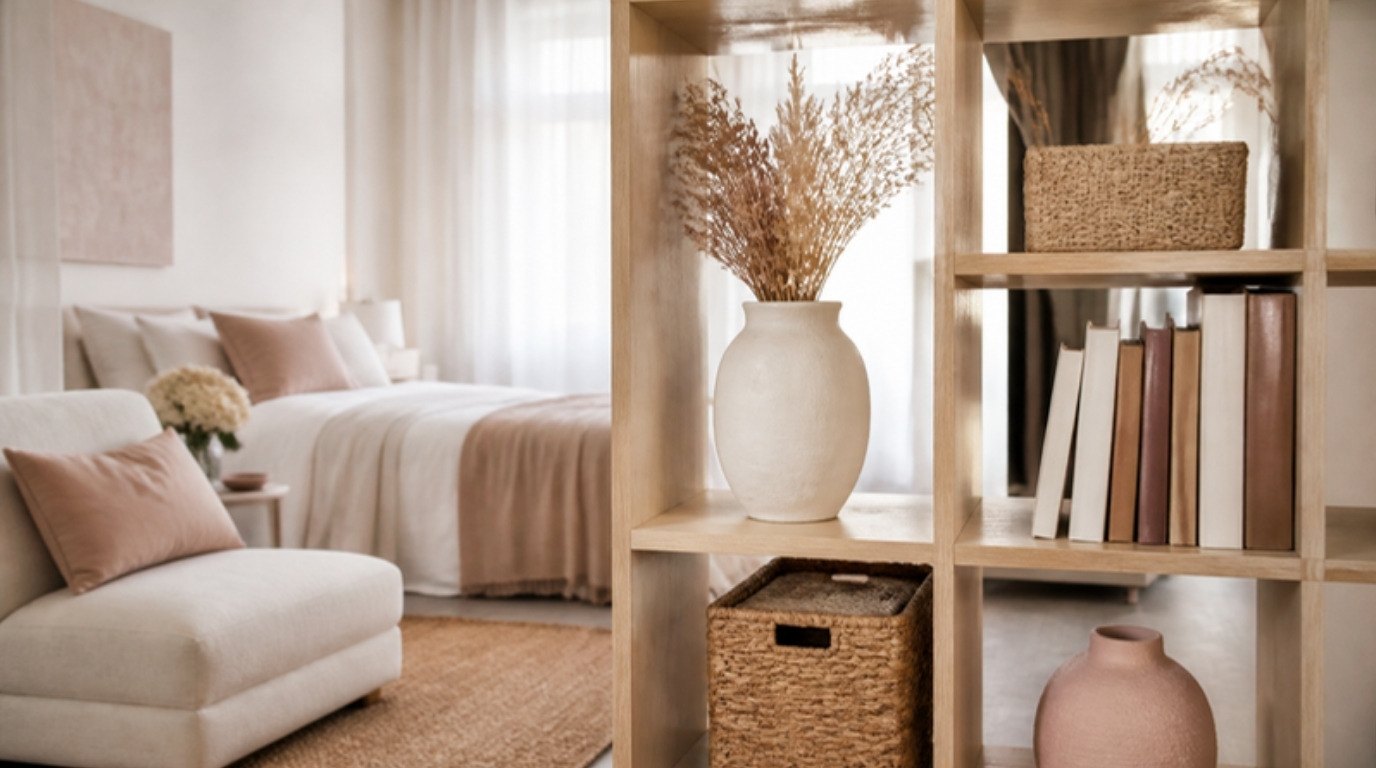
- Rearranged furniture. Turning a bookcase or the back of the sofa toward the sleeping area creates a natural half-wall.
- A clear morning schedule. This one is invisible but powerful. Tell guests when you'll usually be up and moving through the room ("I usually make coffee around 7:30, so I'll tiptoe through the kitchen then"). Knowing what to expect is its own kind of privacy.
If guests are sleeping in the living room, give them a way to make it dark: close the blinds, cover bright standby lights on electronics with a little tape, and leave an eye mask in their kit.
Make Space for Their Things

Living out of a suitcase on the floor is what makes a visit feel cramped. A few cleared spots make a huge difference, and none of them need extra furniture.
- One drawer or one shelf. Empty it completely. Even a single shelf in a bookcase becomes "their" space for folded clothes and toiletries.
- Hooks for coats. Add two or three removable adhesive hooks near the door or the sleeping spot for coats, bags and scarves.
- A spot for suitcases. Pick one place where the suitcase can stay open without being in the walkway: under a console table, beside the sofa or in a corner behind the screen.
- A few hangers. Clear three to five hangers in your closet, or hang them on a hook on the back of a door.
- A surface by the bed. A stool, a side table or even a stack of sturdy books with a tray on top gives guests a place for glasses, water and a phone.
If you're thinking "but I have no storage to clear," you're not alone. My guide to organizing a small apartment with no storage has easy ways to free up a shelf or a drawer before the holidays.
Put Together a Guest Kit Basket

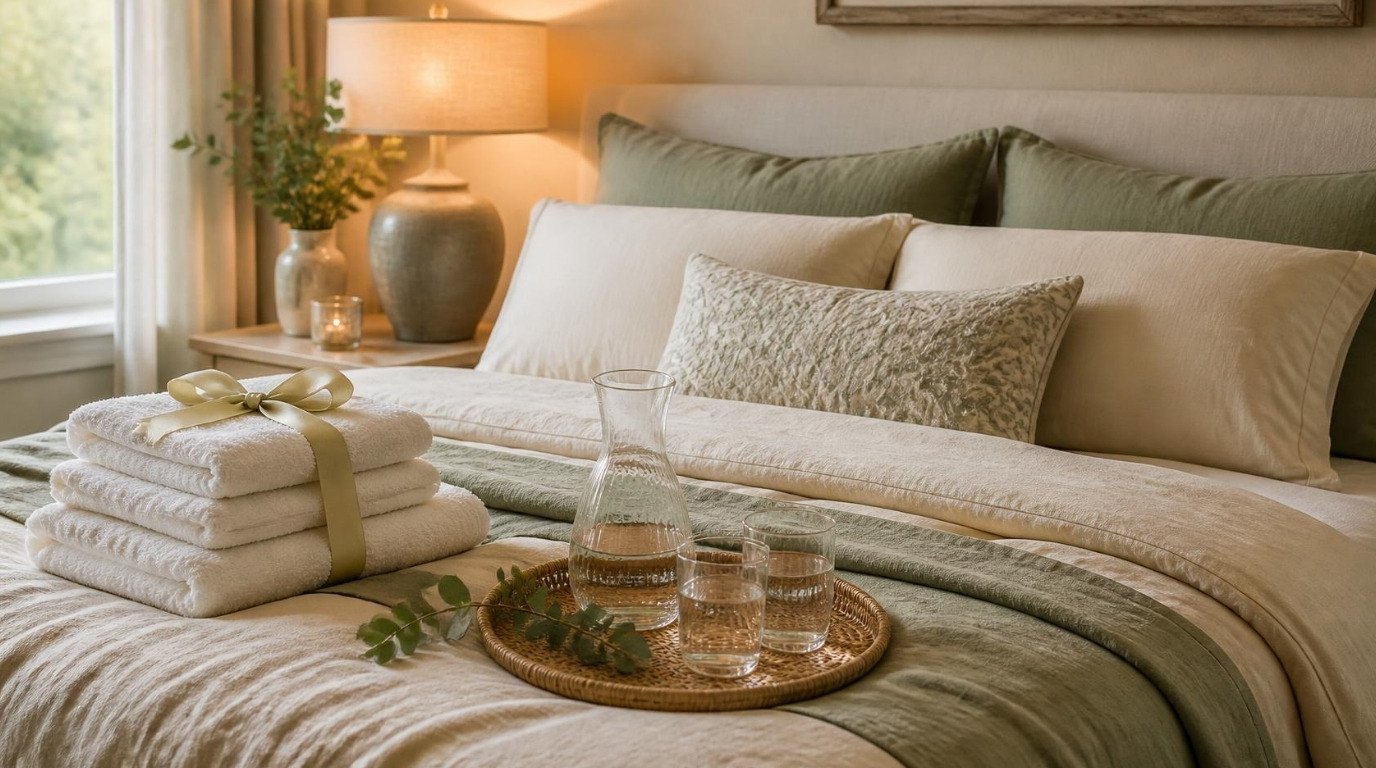
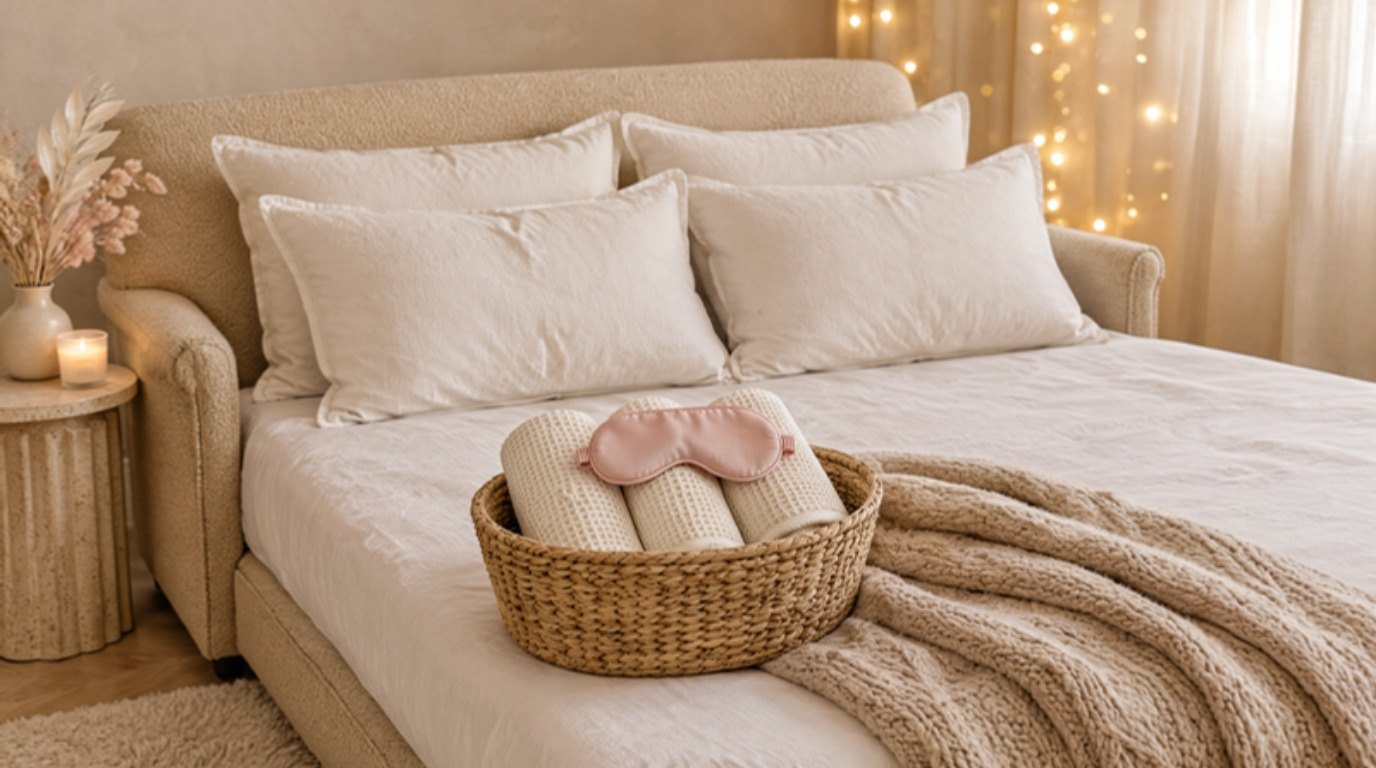
This is my favorite part of hosting, because it does so much of the talking for you. A guest basket says "everything you need is right here, you don't have to ask." Place it on or beside the bed so it's the first thing they see.
Use a woven basket with handles and fill it with:
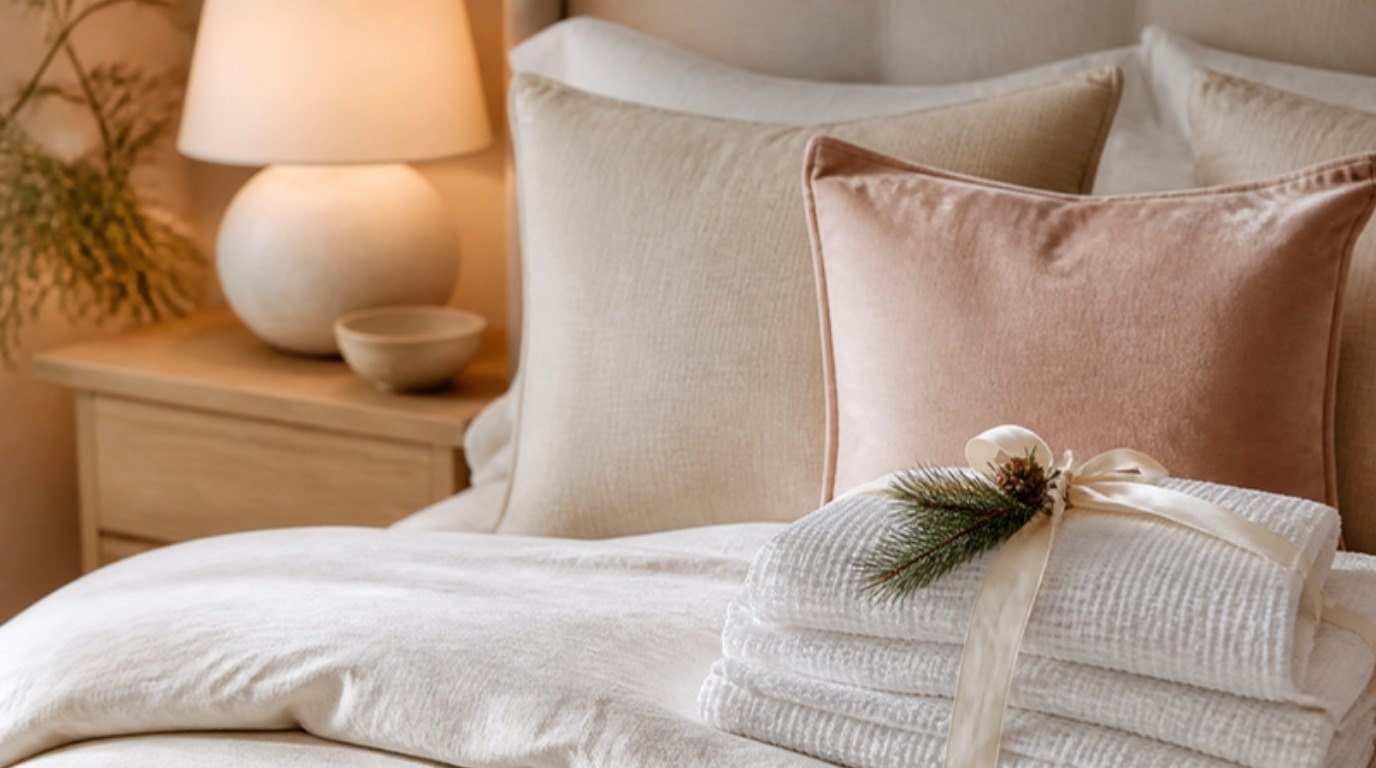
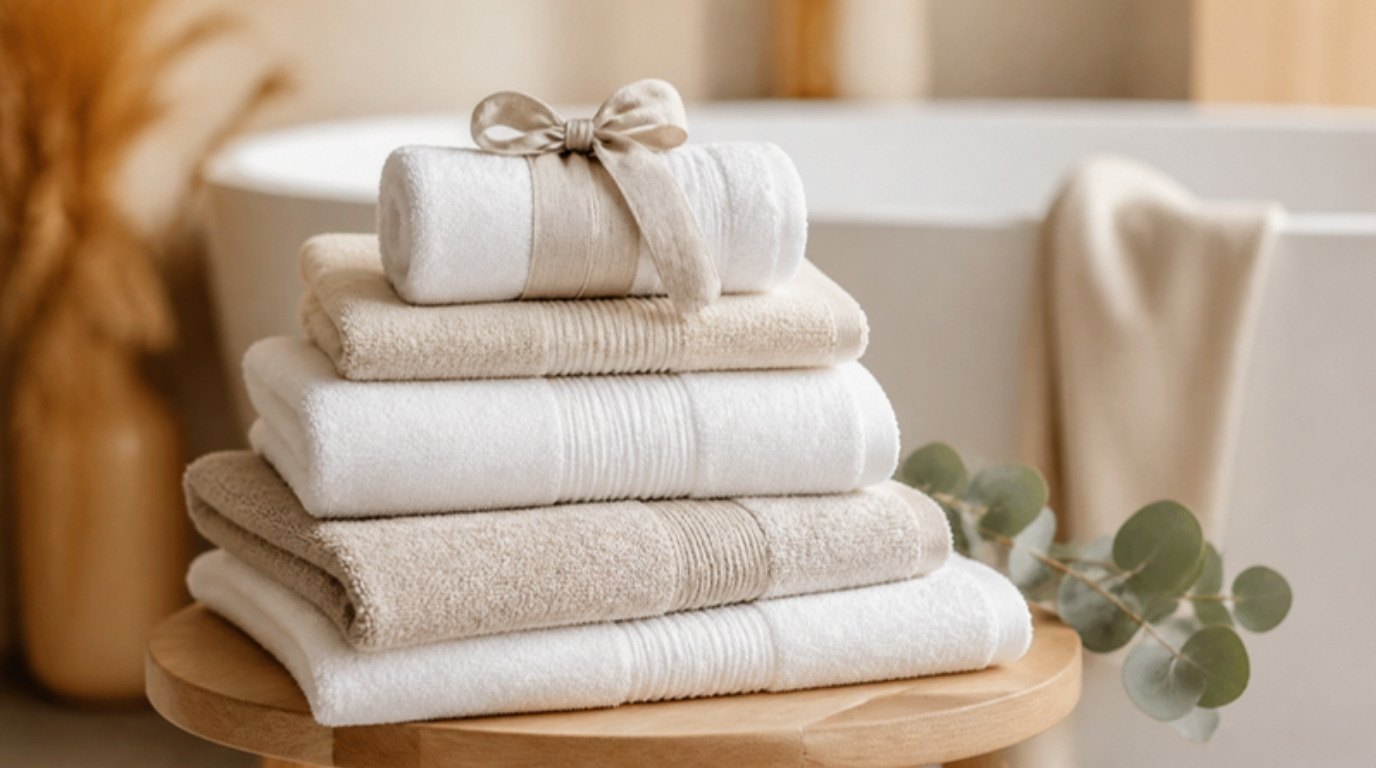
- Fresh towels. One bath towel, one hand towel and a washcloth per guest, rolled or folded neatly. A cream waffle towel set looks hotel-fresh and dries quickly in small bathrooms.
- Toiletries. Travel-size shampoo, conditioner, body wash, lotion, a new toothbrush, toothpaste and a few makeup remover pads. Guests forget these more often than anything else.
- A phone charger. A spare charging cable with a plug, so nobody has to borrow yours at midnight.
- An eye mask and earplugs. A soft eye mask set and a small pack of foam earplugs are essential when someone is sleeping in a shared space.
- A water carafe and glass. Fill it fresh each evening.
- A night light. A small plug-in night light in the hallway or bathroom helps guests find their way at night in a home they don't know (and saves a stubbed toe).
- A little note. The Wi-Fi password, where the extra blankets are and what time you're usually up, written by hand on a card.
Prep Sheets and Bedding the Day Before

Leaving bedding until your guests are standing in the doorway is how hosting starts to feel stressful. Do it the day before and you'll be calm when the doorbell rings.
- Wash the sheets. Even clean sheets that have been sitting in a closet can smell a little stale. Wash them, dry them fully and fold them right away. My guide on how to wash sheets and duvets covers temperatures and how to keep them soft.
- Air out pillows and duvets. Fluff them and let them sit near an open window for an hour, or tumble them on low with a couple of clean tennis balls for 15 to 20 minutes.
- Make up the bed if you can. If the sofa bed or air mattress can stay set up overnight, make it completely. If not, stack everything – fitted sheet, flat sheet, duvet, pillows – in one pile next to it so setup takes five minutes at bedtime.
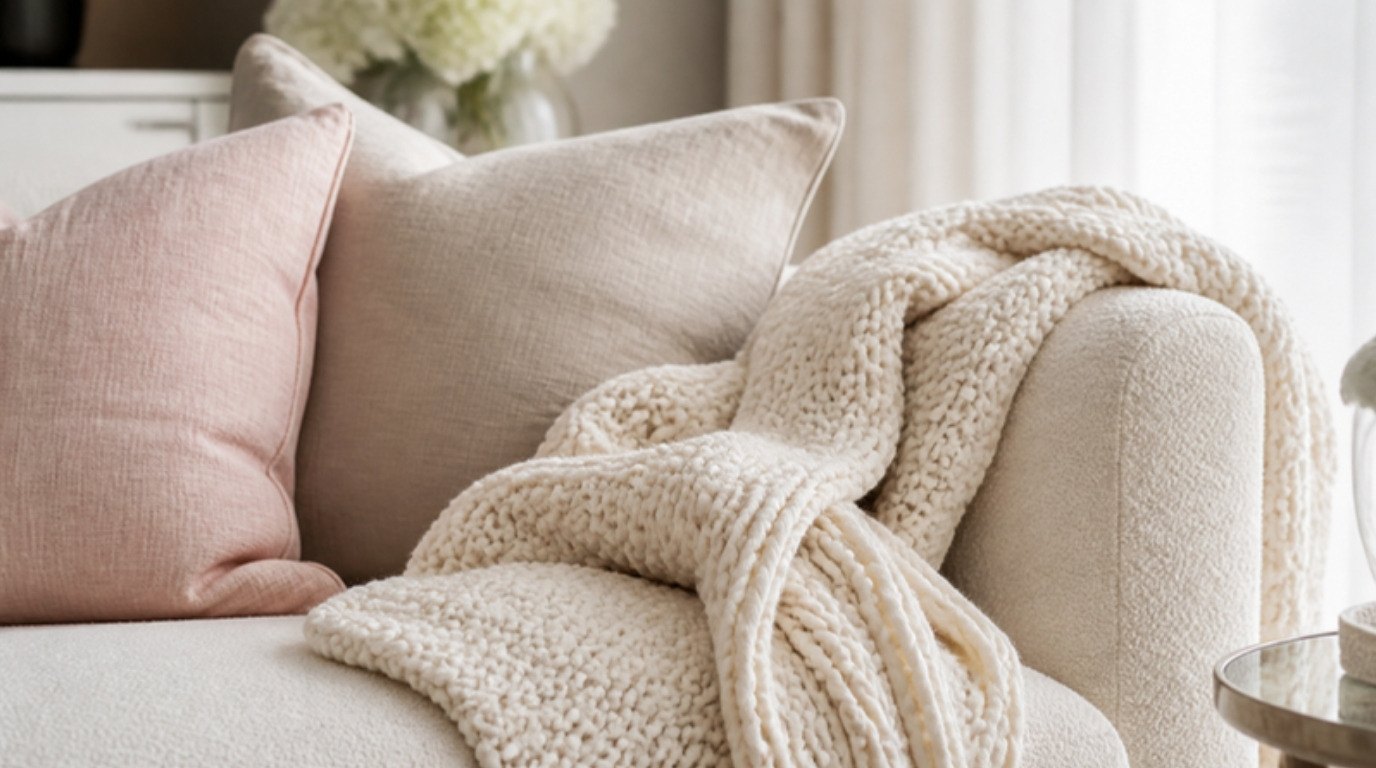
- Add an extra layer. Living rooms are often colder at night than bedrooms. Leave a folded blanket at the foot of the bed.
- Test the setup. Lie down for a minute. Is there a draft? Is a light shining in? Can they reach a plug? Fix it now.
A Simple Bathroom Sharing Plan

Sharing one bathroom is completely doable when everyone knows the plan. It takes two minutes to talk through on the first evening and saves a lot of awkward waiting outside the door.
- Agree on morning slots. Ask who needs to be ready first and take turns. A simple "I'll shower at 7, so the bathroom is all yours from 7:30" works beautifully.
- Clear one shelf or a hook. Give guests their own spot for toiletries and a hook for their towel so nothing gets mixed up.
- Keep extras visible. Put spare toilet paper, hand towels and a small bin where they can be seen, so nobody has to go searching.
- Do a quick daily reset. Wipe the sink and swap the hand towel each evening. It takes three minutes and keeps the shared space fresh.
For more small touches that make a shared bathroom feel welcoming, have a look at my guest bathroom ideas.
Quiet Hours and House Routines
When guests sleep in a shared room, everyone's day overlaps more than usual. Talking about routines early isn't rude – it's actually a kindness, because it removes all the guessing.
On the first evening, mention a few simple things: when you go to bed and get up, when the living room becomes "their bedroom" at night, any house quirks (the noisy radiator, the door that sticks), and things you'd like them to help themselves to, like tea, the fridge or the extra blankets.
Agree on quiet hours too. Something like "after 10:30 we keep it to low voices and headphones" makes it easy for night owls and early birds to share a small space happily.
Kind Ways To Talk About Length of Stay
This is the conversation many hosts dread, but it's so much easier to have before the visit than in the middle of it. Here are a few gentle scripts you can borrow:
- Before they book: "We'd love to have you! Our place is tiny, so two or three nights works best for us – does that fit your plans?"
- Confirming dates: "Just so I can plan, you're arriving on the 23rd and heading home on the 26th, right?"
- About routines: "I work from the living room in the mornings, so I'll fold the bed up by 9 – feel free to sleep in until then."
- If plans change: "I'd love more time together, but we can't stretch the sleeping setup past Saturday. Let's make the most of the days we have."
Clear and warm always beats vague and resentful. Most guests are relieved to know exactly what works for you.
8 Hosting Tips for a Small Home

These little habits make a small home feel calm and generous during a holiday visit:
- Declutter surfaces before they arrive. Clear tables, counters and the floor around the sleeping area. In small homes, empty surfaces make everything feel twice as spacious. My guide on getting your home guest-ready for the holidays walks you through it.
- Make a "help yourself" station. A tray with tea bags, mugs, a kettle and a few snacks on the counter means guests don't need to ask every time.
- Keep one calm corner for yourself. A chair by the window, your bedroom or even the bath. You'll host better if you can step away for ten minutes.
- Plan one thing per day, not five. A walk, a movie night or a visit to the market. Leave the rest of the day loose.
- Fold the bed away each morning. If the sleeping spot is in the living room, put the bed back together after breakfast so the room feels like a living room again.
- Keep a laundry basket by the door. Guests can drop used towels in it and you'll always know what to wash.
- Light the room softly in the evening. Lamps and fairy lights feel cozier than overhead lights. If you light candles, keep them away from bedding and greenery and blow them out before anyone goes to sleep.
- Let it be imperfect. A sofa bed and a shared bathroom are part of the charm. Your guests came for you, not for a hotel.
If you'd like ideas for the day you do have a spare room (or a corner that's almost one), my guide to cozy guest room ideas on a budget is full of inspiration.
Taking Care of Yourself as the Host

Hosting in a small space means you're "on" more than usual, and that's tiring even when you love the people visiting. A little self-care keeps you warm instead of frazzled.
- Protect your sleep. If you've given up your bed, make the sofa truly comfortable for yourself too, with a proper pillow and blanket.
- Take a short daily pause. Ten minutes alone with tea or a walk around the block resets your patience for the whole evening.
- Share the jobs. Guests usually want to help. Let them set the table, walk to the shop or fold the towels.
- Write a few lines at night. I love journaling after evening tea, and during a busy visit a few lines about the best moment of the day helps me fall asleep with a full heart instead of a to-do list.
Final Thoughts
A guest room is nice, but it was never the thing that made people feel welcome. Fresh sheets, a basket of thoughtful little things, a clear plan for the bathroom and a host who's glad they came – that's what guests carry home with them.
Your small home is more than enough. Make it soft, make it clear and then let yourself enjoy the people in it this holiday season.