A small room almost never feels small because of its square footage. It feels small because the eye keeps getting stopped: by a dark wall that ends too soon, a bulky sofa that blocks the floor, curtains that cut the window in half, a rug that floats like a postage stamp. Remove those little "stop signs" and the same room suddenly reads as calm, open and a lot bigger than it is.
That's really what designers do in tiny spaces. They don't knock down walls. They control where your eye travels, how much floor you can see, and how much light bounces around. Most of it is cheap, renter-friendly and doable in a weekend.
This guide covers how to make a small room look bigger with 20 designer tricks, from color drenching and curtain height to leggy furniture and rug size. You'll also find a "do this, not this" table you can screenshot before your next shopping trip, plus quick wins for the bedroom, living room, bathroom and home office.
Start with whichever room bugs you most. One or two of these changes can make a surprising difference on their own.
Why Small Rooms Feel Smaller Than They Are
Before the tricks, it helps to know the three things your brain uses to judge the size of a room in about half a second:
- Visible floor. The more floor you can see, including under furniture, the bigger the room feels.
- Uninterrupted lines. Walls, ceilings and windows that flow without harsh breaks read as larger.
- Light. Even, layered light pushes corners outward. Dark corners pull them in.
Every trick below works on at least one of those three. When you're unsure about a purchase or a layout, ask yourself: does this show more floor, keep lines continuous, or add light? If the answer is no to all three, it probably won't help the room feel bigger (even if it's lovely).
20 Designer Tricks To Make a Small Room Look Bigger
1. Choose Light, Warm Colors
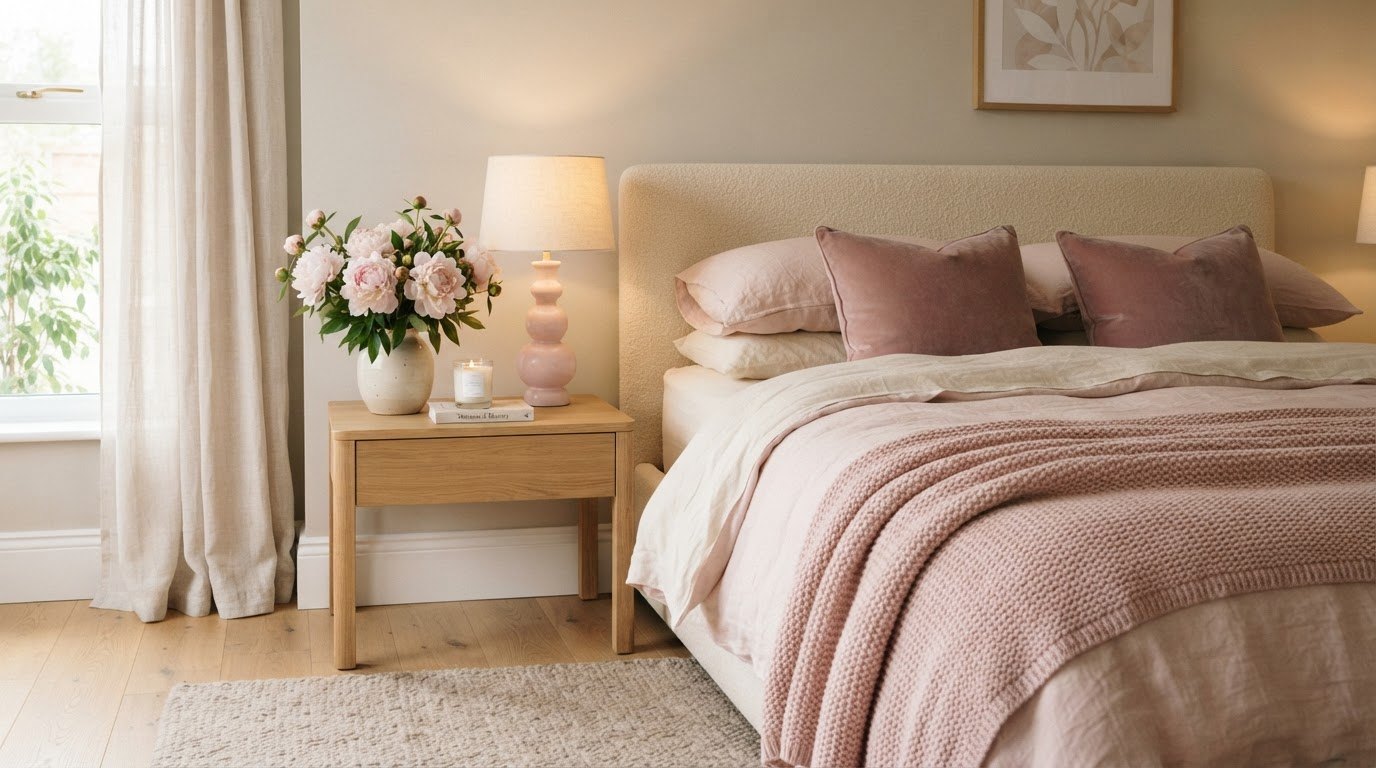
Light colors reflect more light, so walls seem to recede. The trick is choosing a light color with a little warmth: soft cream, warm white, pale greige or a whisper of blush. Stark, cool whites can look gray and flat in a small room with little daylight, which actually makes it feel smaller and colder.
Test three swatches on two different walls and look at them in the morning and the evening before you commit. Pay attention to undertones: a cream with a hint of yellow or pink feels warmer than one that leans gray.
2. Try Color Drenching
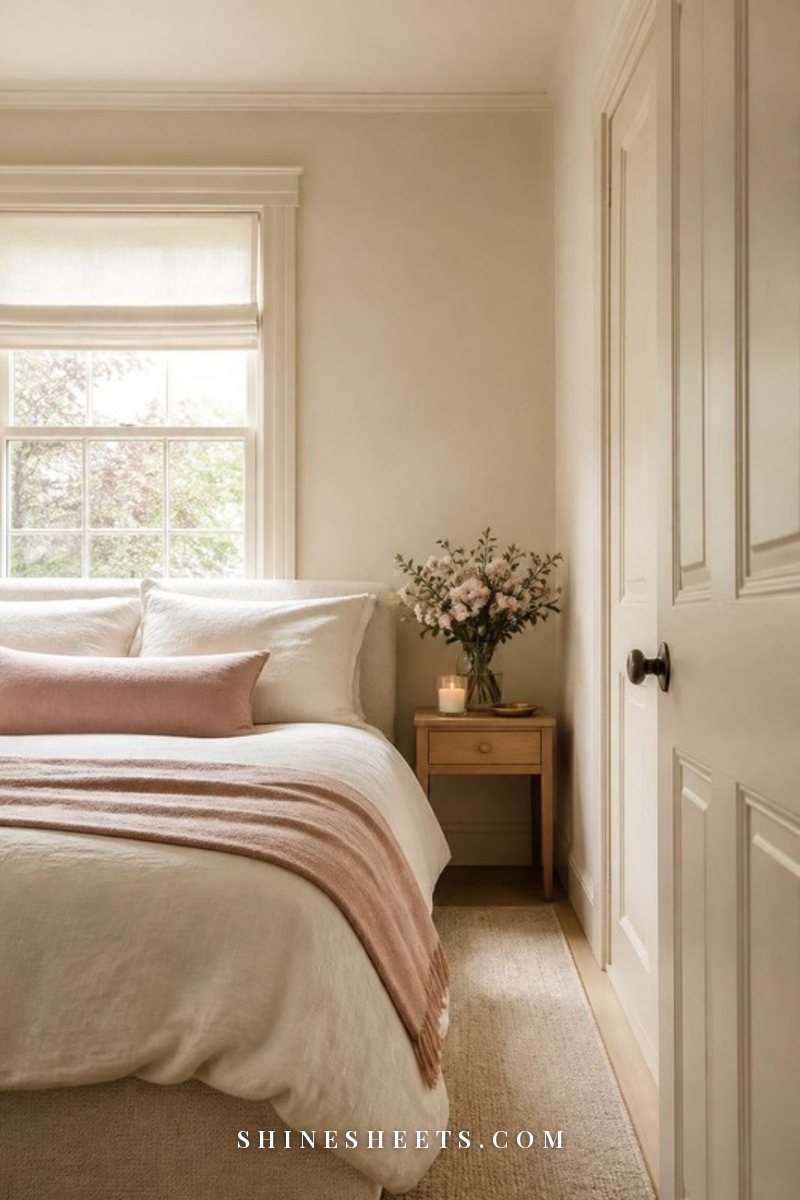
Color drenching means painting the walls, trim, doors and sometimes even the ceiling in the same color (or very close shades of it). It sounds bold, but in a small room it's one of the most effective ways to blur the edges. When there's no bright white trim outlining every corner, your eye can't easily tell where the wall ends, so the room feels softer and larger.
A simple formula: walls in eggshell, trim and doors in the same color in satin, ceiling in the same color lightened by 25–50%. Pale beige, oatmeal, soft sage or dusty blush all work beautifully.
3. Light the Room From Three Levels
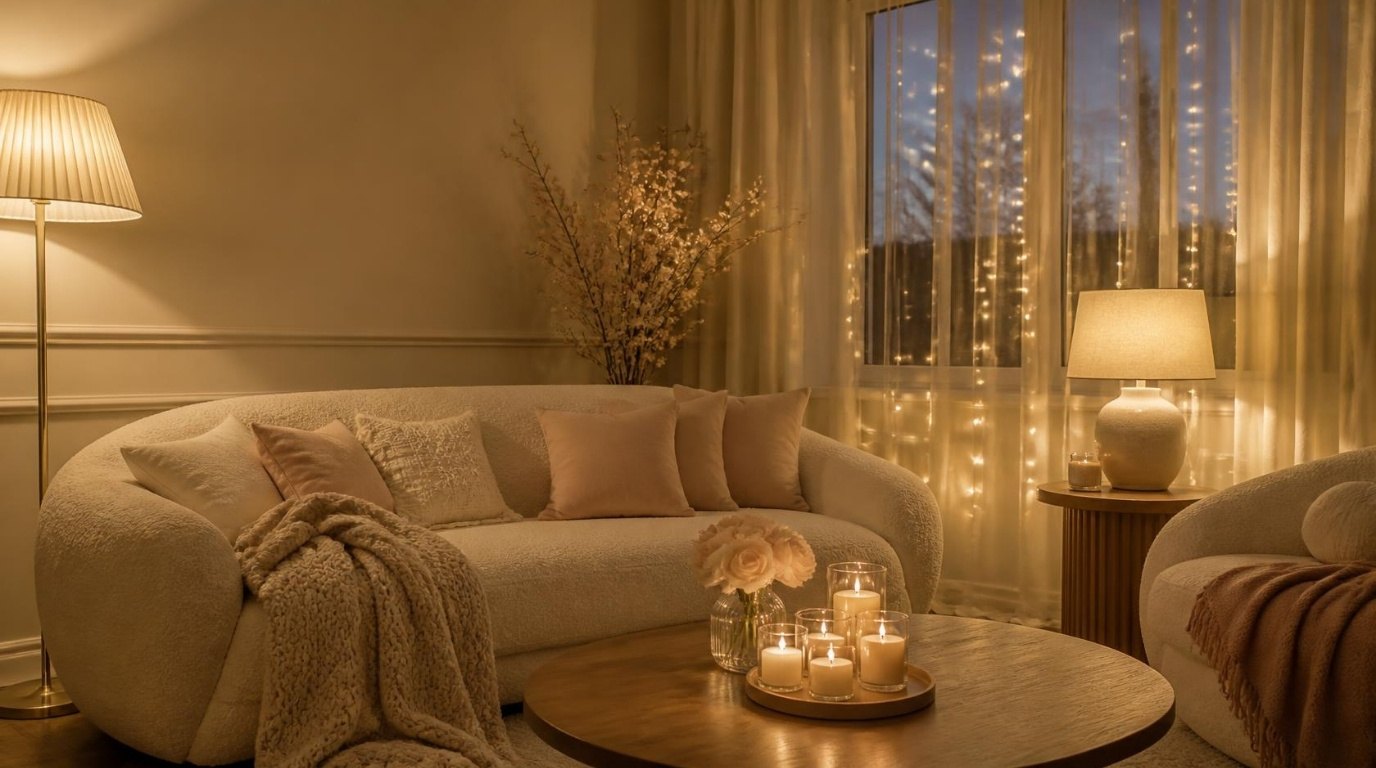
A single ceiling light makes a small room look like a box: bright in the middle, shadowy at the edges. Designers light from three levels instead:
- High: a ceiling fixture or a light bounced off the ceiling.
- Middle: wall sconces or table lamps at roughly eye level.
- Low: a small lamp on a shelf, a lit corner or candlelight.
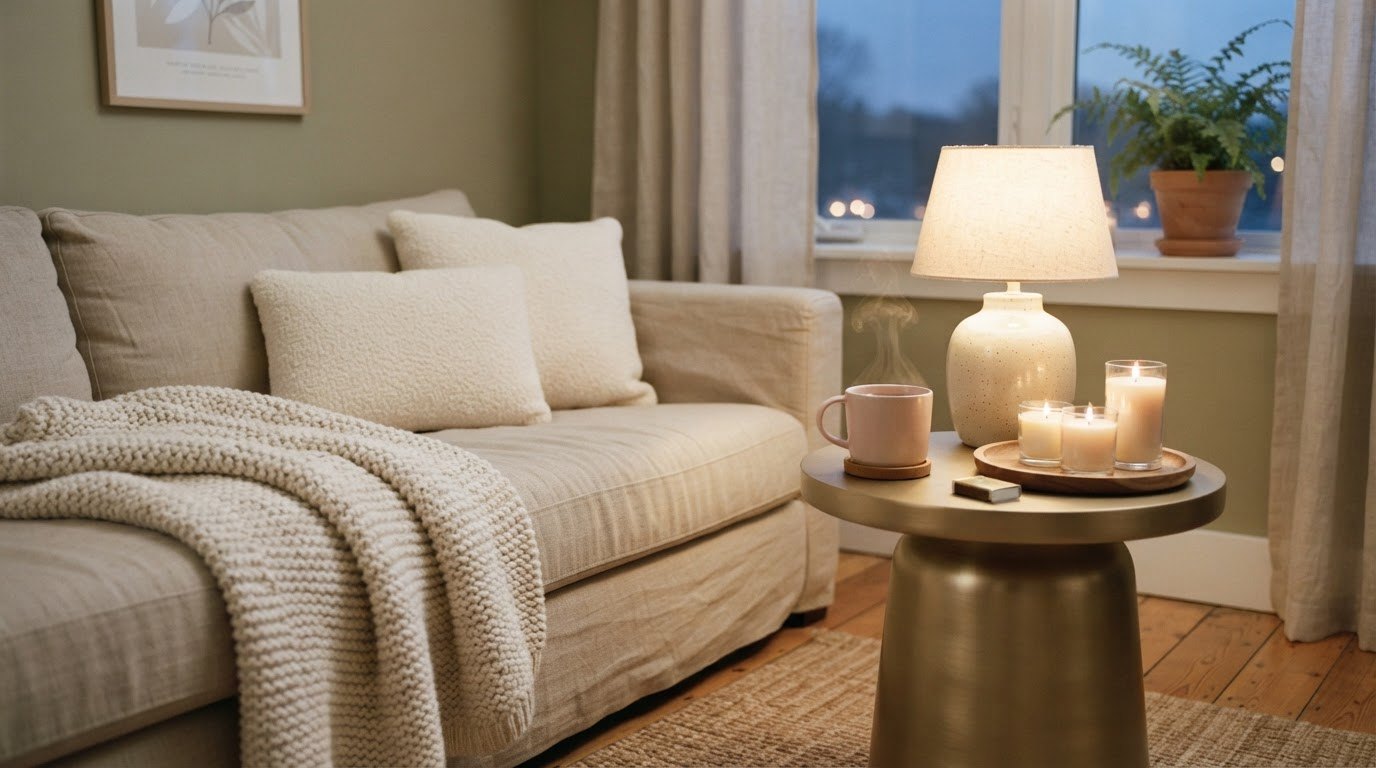
Aim each one at a different corner so no part of the room disappears. No hardwiring? A plug-in wall sconce with a soft linen shade frees up a nightstand or side table and adds light exactly where it's needed. For warmer bulbs and layering ideas, see my lighting ideas guide.
4. Hang Curtains High and Wide
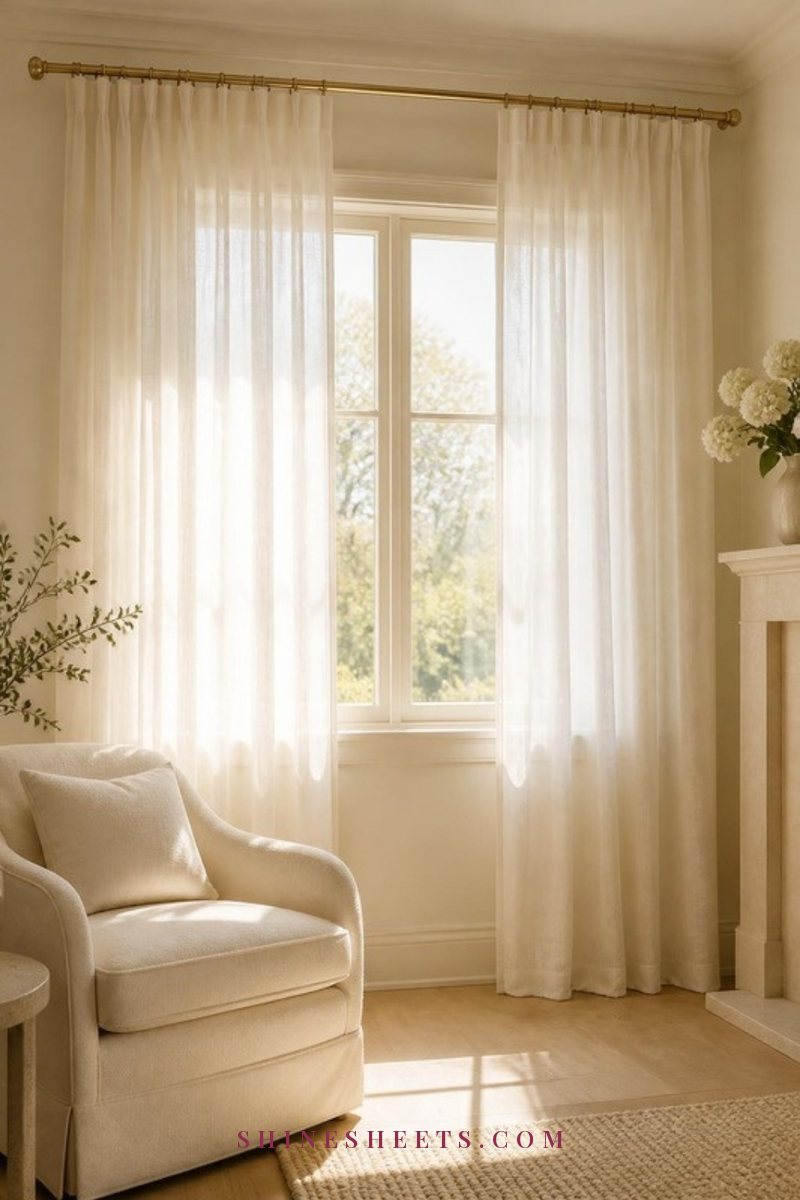
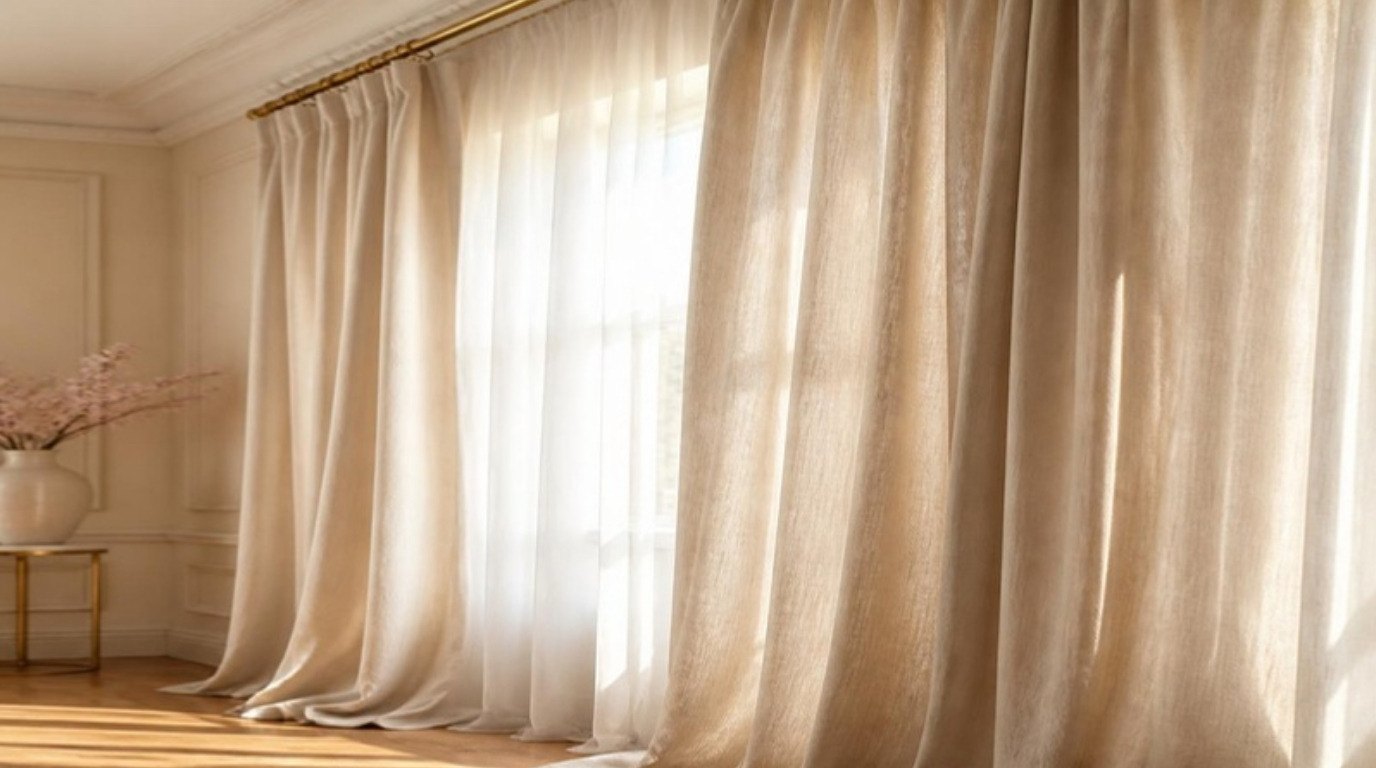
This is the trick that gets the most "wait, is that the same room?" reactions. Mount the curtain rod 4–6 inches below the ceiling (or just under the crown molding), and extend it 8–12 inches past the window frame on each side. The curtains then frame the wall instead of the glass, so the window looks taller and wider and the ceiling seems higher.
Choose panels long enough to just kiss the floor. Light, airy sheer white linen curtains keep daylight pouring in while softening the room. My curtain ideas post has a full measuring cheat sheet if you want exact numbers.
5. Use Mirrors to Bounce Light
A large mirror placed across from or beside a window doubles the light and the view. Lean a tall floor mirror against a wall, or hang a wide one above a dresser or sofa. One big mirror always looks more intentional (and more expansive) than a cluster of small ones.
Think about what it reflects: a window, a pretty lamp or an open part of the room. Avoid placing it where it would mirror clutter or a blank door.
6. Pick Leggy Furniture
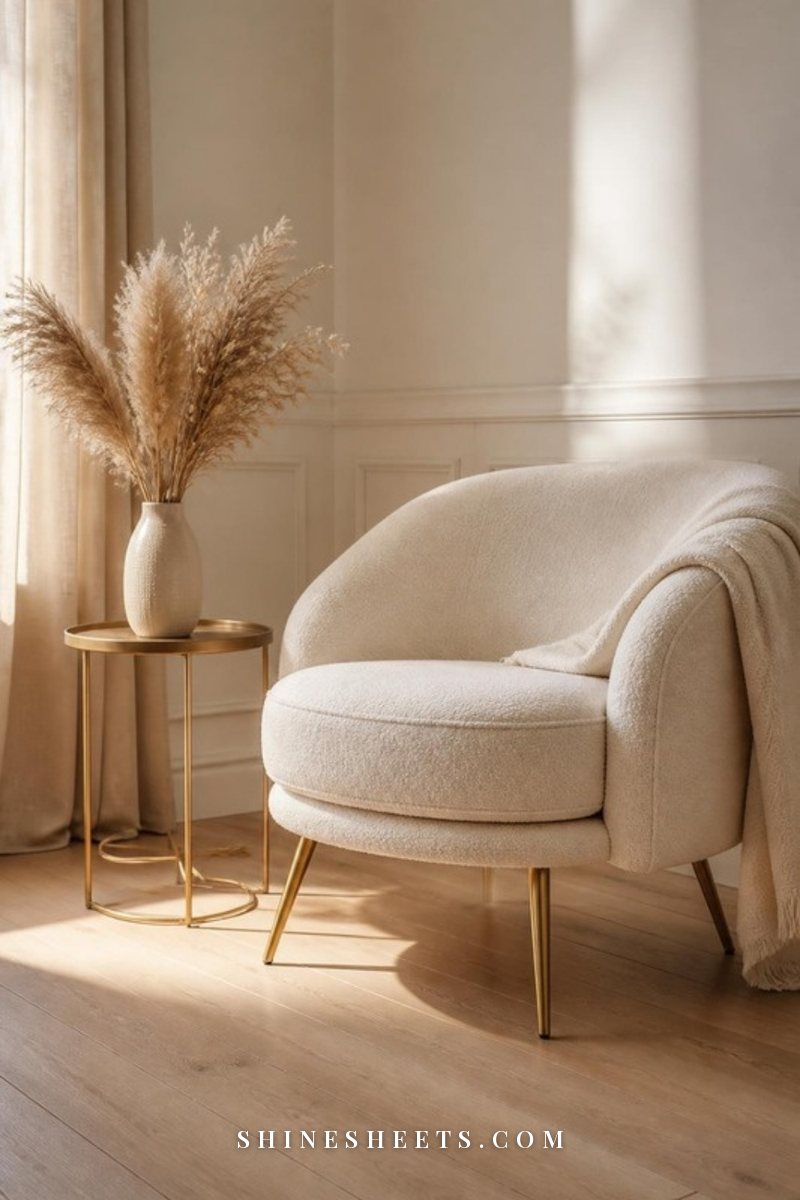
Furniture raised on slim legs lets you see the floor underneath, and seeing more floor tells your brain the room is bigger. A sofa on legs, a console with open space beneath and a nightstand on tapered feet all feel lighter than skirted, chunky pieces that sit flat on the ground.
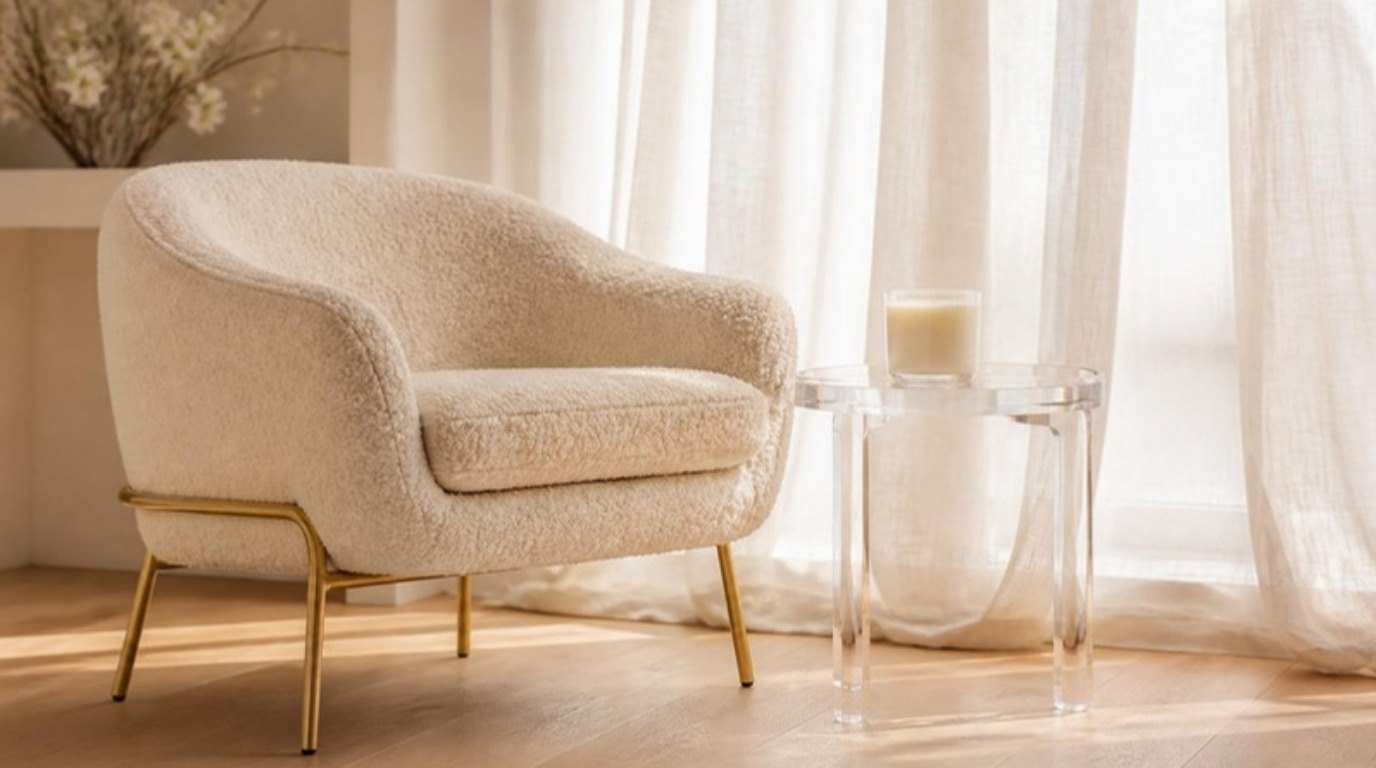
If you only replace one piece, make it the chair you see first when you walk in. A slim-legged accent chair in cream keeps a corner usable without making it heavy.
7. Choose Fewer, Bigger Pieces
This sounds backwards, but lots of small furniture makes a room look busier and smaller. Five little pieces create five sets of edges and gaps your eye has to process. One generous sofa instead of a loveseat plus two chairs, or one wide dresser instead of two narrow ones, feels calmer and more grown-up.
A good rule: if a piece is under knee height and has no real job, it's probably clutter in disguise.
8. Size the Rug Up
A tiny rug floating in the middle of the floor chops the room into pieces. A bigger rug ties everything together and makes the floor feel continuous. In a living room, at least the front legs of the sofa and chairs should sit on it. In a bedroom, the rug should extend 18–24 inches past the sides of the bed.
When in doubt, size up. For a full breakdown of sizes and placement, my guide on how to choose a rug has a quick chart.
9. Keep a Clear Path Across the Floor
Leave a clear walkway from the door to the window or the far wall, ideally 30–36 inches wide. When you can walk (and look) straight through a room without weaving around furniture, it feels open. Pull pieces a few inches off the walkway, tuck baskets under consoles and keep floor clutter like bags and shoes out of that line of sight.
10. Go Vertical With Storage
Small rooms have a lot of unused wall height. Tall bookcases, high shelves and wall hooks draw the eye upward and free up floor space at the same time. Run shelving almost to the ceiling instead of stopping at eye level.
White floating wall shelves painted the same color as the wall almost disappear, so books and a few pretty objects look like they're floating. Keep the top shelf lighter and the bottom shelves heavier for a calm look.
11. Bring In Glass and Acrylic
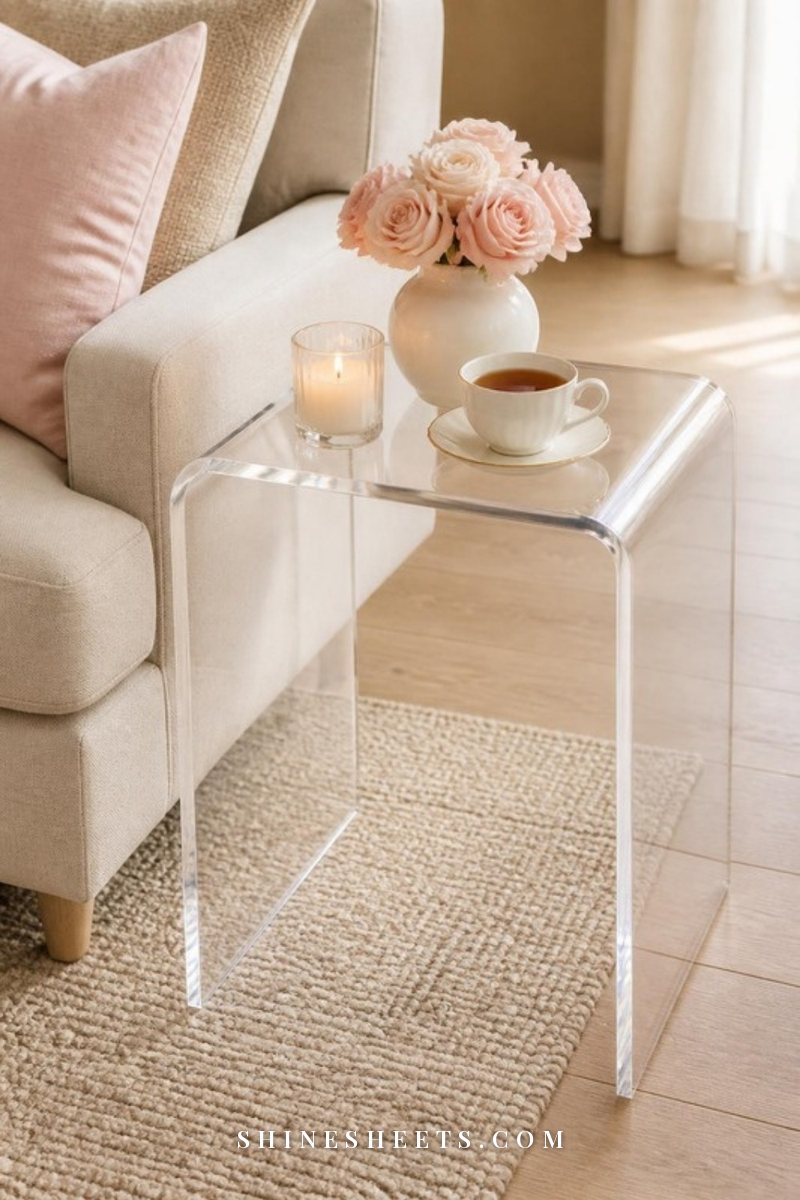
Clear furniture does its job without taking up visual space. An acrylic side table, a glass-topped coffee table or a clear console lets light and floor show straight through it. It's especially useful in a tight living room, where you need a surface but don't want another solid block.
A clear acrylic side table next to a sofa or bed holds a lamp, a glass candle and your evening tea while looking almost invisible. Keep what you place on it minimal so the effect stays airy.
12. Choose a Low-Profile Bed
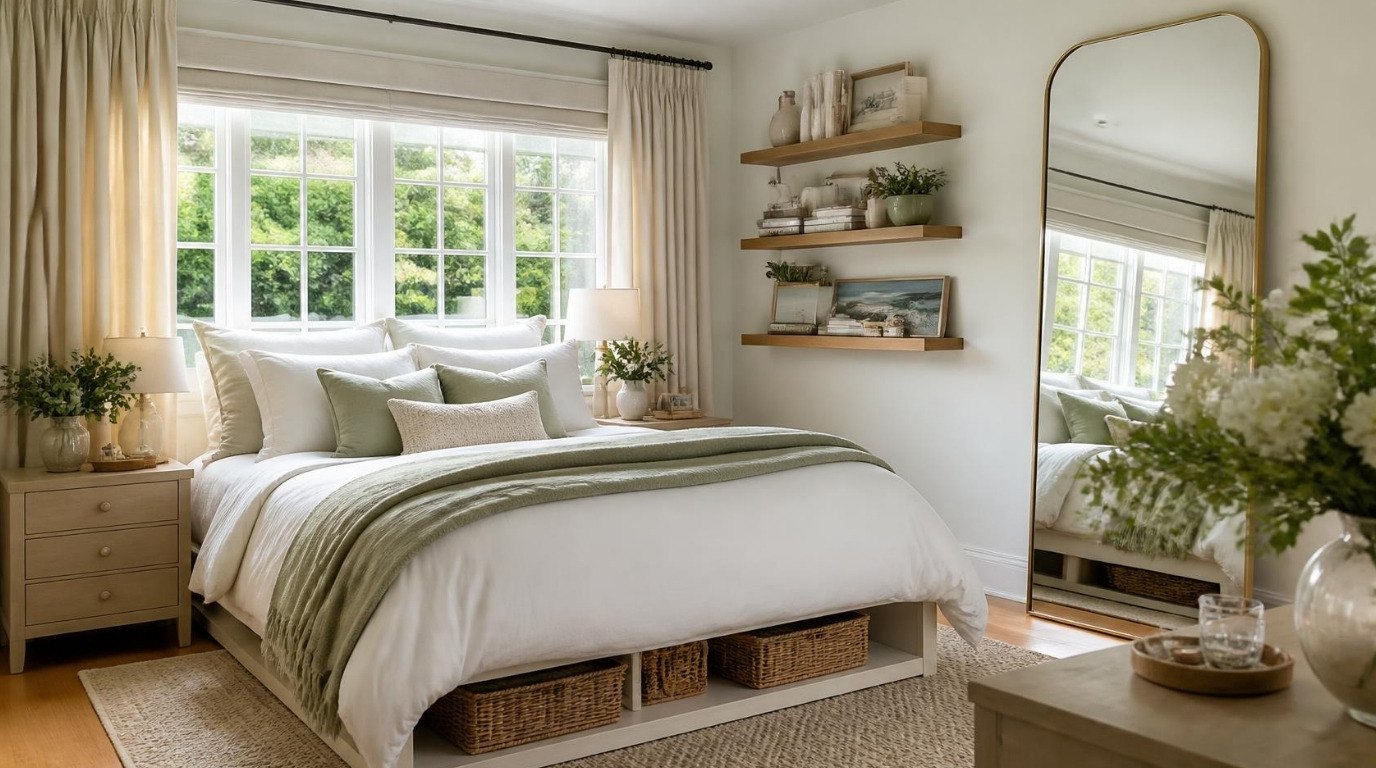
A lower bed frame leaves more wall above it, which makes the ceiling feel higher. Skip tall, heavy headboards and footboards in a small bedroom. A simple upholstered headboard or a platform frame with a slim profile keeps the biggest piece in the room from dominating it.
Pair it with bedding in the same family as your wall color so the bed blends in rather than blocking the view.
13. Hide Storage Under the Bed
Under the bed is the most valuable storage spot in a small home. Shallow, lidded bins hold off-season clothes, spare bedding and shoes, and they keep the dresser top and closet floor clear. Look for beige fabric under-bed storage bins with handles and a clear window so you can find things fast.
If your bed sits too low for bins, bed risers in a neutral finish add a few useful inches.
14. Scale Art Up, Not Down
Lots of small frames scattered across a wall look busy and make the wall feel shorter. One large piece of art, or a tight grid of matching frames, creates a single calm focal point and actually makes the wall feel bigger. Over a sofa or bed, aim for art about two-thirds the width of the furniture.
Hang it so the center sits around 57–60 inches from the floor, or 8–10 inches above the furniture.
15. Clear Your Surfaces
Every flat surface in a small room is visible from everywhere. Pick one styled moment per surface, like a lamp, a stack of two books and a candle, and give everything else a home in a drawer or box. The "rule of three" keeps nightstands, dressers and coffee tables pretty without crowding them.
A five-minute evening reset (put back, wipe, done) keeps it that way. It's one of those small habits that changes how the whole room feels.
16. Keep One Consistent Palette
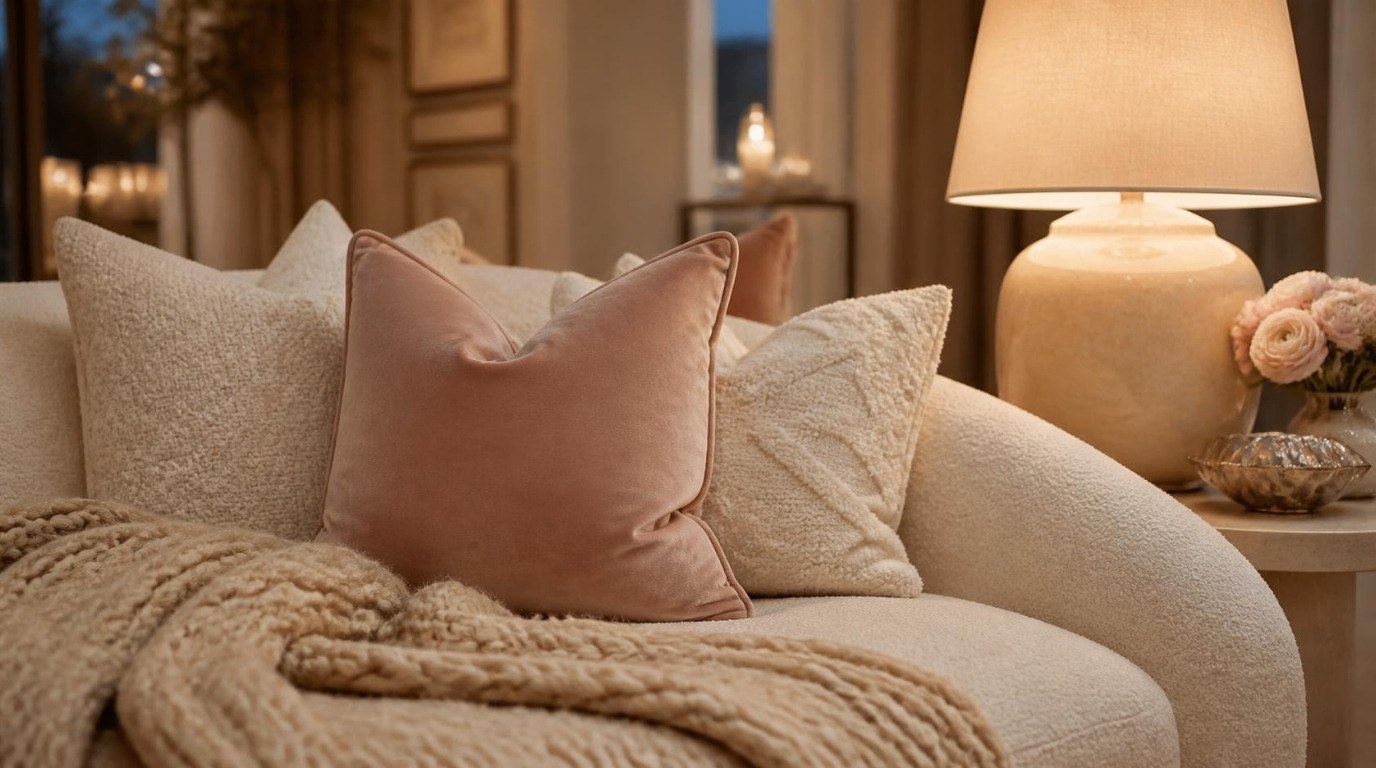
Too many colors in one small room create visual chopping. Choose a palette of three to four tones, for example cream, oatmeal, soft blush and a hint of gold, and repeat them across bedding, pillows, curtains and decor. When colors flow, your eye glides rather than jumps.
Add interest with texture (linen, boucle, wood, ceramic) instead of extra colors.
17. Choose Furniture That Does Two Jobs
Multi-use pieces earn their spot twice. A storage ottoman becomes a coffee table, a seat and a blanket box. A console behind the sofa can double as a desk. A bench at the foot of the bed holds throws and gives you somewhere to sit while you put on shoes.
Before you buy anything new, ask: can this hold, hide or seat something too?
18. Match Curtains, Walls and Big Pieces in Tone
When large items like the sofa, curtains and bed are close in tone to the walls, they blend into the background instead of standing out as separate blocks. A cream sofa against a warm white wall reads as part of the room. A dark navy sofa against the same wall reads as a big heavy shape.
Save your stronger colors for small, easy-to-change things like a throw or a vase.
19. Float Furniture Off the Walls (Just a Little)
Pushing every piece flat against the walls can make a room feel like a waiting area. Pulling the sofa or a chair just 4–6 inches forward creates a sliver of shadow and depth that makes the room feel more layered and spacious. In a very narrow room, angle one chair slightly toward the center for a softer flow.
20. Edit, Then Edit Again
The final designer trick isn't buying anything. It's removing. Walk into the room, take a photo, and look at it on your phone. Photos show clutter we've stopped noticing. Remove one piece of furniture, two decorative objects and anything on the floor that isn't a rug or furniture. Live with it for three days. Most of the time, you won't miss a thing.
If you're working with a tight budget, my guide to apartment decor on a budget has plenty of ideas for making the pieces you keep look more expensive.
Do This, Not This: Small Room Cheat Sheet
Here's the whole guide in one table. Screenshot it and keep it on your phone for the next time you're standing in a store wondering if that chair is "too much."
| Do This | Not This | Why It Works |
|---|---|---|
| Warm light walls (cream, warm white, soft greige) | Stark cool white in a dim room | Warm light colors bounce light without looking gray |
| Same color on walls, trim and doors | Bright white trim outlining every edge | Fewer lines blur the room's boundaries |
| Light from high, middle and low | One ceiling light only | Lit corners push walls outward |
| Curtain rod near the ceiling, extended past the frame | Rod right on top of the window frame | Window and ceiling look taller and wider |
| Floor-length curtains | Curtains that stop at the sill | Long lines draw the eye upward |
| Furniture on slim legs | Skirted, chunky pieces sitting flat on the floor | Visible floor reads as more space |
| One generous sofa | Loveseat plus two small chairs | Fewer pieces mean fewer visual breaks |
| Rug under at least the front legs of furniture | Small rug floating in the middle | A continuous floor feels bigger |
| Shelves running nearly to the ceiling | Short shelves at eye level | Vertical lines add height |
| Acrylic or glass side tables | Solid dark wood side tables | Light passes through clear pieces |
| One large artwork | Many tiny frames scattered | A single focal point calms the wall |
| Three to four repeating colors | A different color in every corner | Flowing color keeps the eye moving |
Room-by-Room Quick Wins
Every room has its own challenge, so here are the changes that make the biggest difference in each one.
Small Bedroom
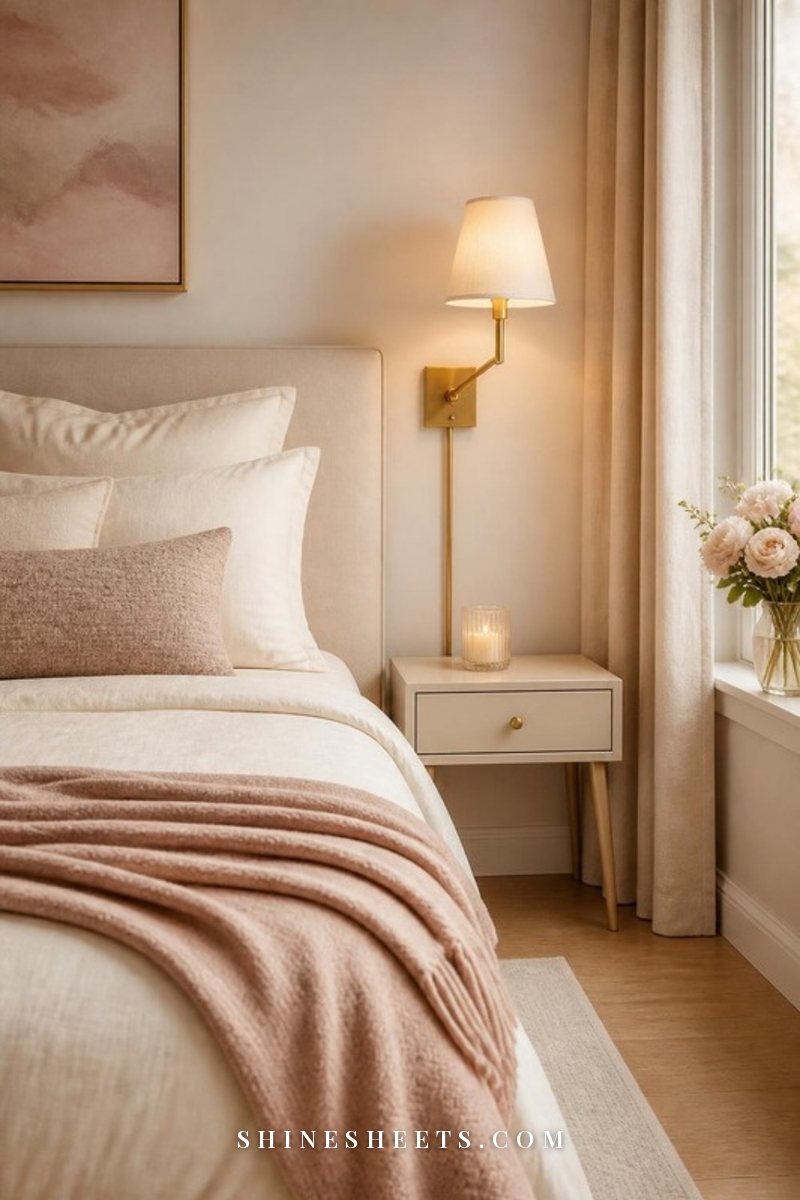
Start with the bed, because it's the biggest thing in the room. Choose a low frame, put storage underneath, and swap a bulky nightstand for a slim one on legs or a small floating shelf. Mount reading lights on the wall so the nightstand stays clear. Keep the bedding light and tone-on-tone, with one soft accent color in a throw or pillow.
For 30 more ideas, my small bedroom ideas guide goes deeper into layouts and storage.
Small Living Room
Focus on the floor. Pick one sofa on legs, a big enough rug, and a clear or round coffee table (round corners take up less visual space and are easier to walk around). Pull the sofa slightly off the wall if you can, and add a tall floor lamp in the darkest corner. If you need extra seating, a pair of soft poufs tuck under a console when not in use.
My small living room ideas post has renter-friendly layouts for tricky floor plans.
Small Bathroom
In a bathroom, the biggest wins are a large mirror, a light shower curtain hung near the ceiling, and almost nothing on the counter. A clear or white shower curtain in place of a patterned one opens the room immediately. Store toiletries in a closed cabinet or a tidy basket, and keep towels in one color so the space doesn't feel busy. A floating shelf above the toilet adds storage without taking any floor.
Small Home Office
Choose a desk with slim legs or a wall-mounted desk, and keep the surface for working only. Move paper, chargers and supplies into wall shelves or a slim drawer unit. Place the desk near the window if possible, and add a wall light so you don't need a desk lamp. A chair in a light tone that matches the wall stops it from looking like a dark block in the corner.
Common Mistakes That Make a Small Room Look Smaller
Most of us make at least a few of these (I've made almost all of them at some point). They're easy to fix once you notice them:
- Buying "small" everything. Doll-sized furniture makes a room look cramped, not bigger.
- Painting a small dark room bright white. Without much daylight, cool white turns gray. Go warmer.
- Pushing everything against the walls. A little breathing room adds depth.
- Using the floor as storage. Bags, baskets and stacks on the floor shrink a room fast.
- Relying on one overhead light. Dark corners make walls feel closer.
- Hanging art too high. Art floating near the ceiling disconnects from the furniture and breaks up the wall.
A gentle note on safety: when you go vertical with tall bookcases or dressers, anchor them to the wall with anti-tip hardware, especially if you live with pets or little visitors. And keep a clear path to the door and windows, which is a lovely design choice and a practical one too.
Final Thoughts
Making a small room look bigger is really about giving your eye room to rest: more visible floor, softer lines and light that reaches every corner. You don't need to do all 20 tricks at once. Raise the curtains this weekend, clear one surface tonight and see how the room starts to breathe.
A small space that feels calm and intentional can be one of the loveliest rooms you'll ever live in.