Learning something new every day doesn't take a big plan, an expensive course or a brand-new personality. It takes about fifteen minutes, one gentle theme and a tiny way to remember what you found. That's it. The magic isn't in how much you learn on any single day, it's in how quietly it adds up.
Most of us don't stop learning because we lose our curiosity. We stop because learning starts to feel like homework: too many tabs, too many half-finished courses, too much pressure to be impressive. The fix is to make it small enough that it fits into an ordinary Tuesday, and kind enough that you actually look forward to it.
This guide is all about how to learn something new every day in about fifteen minutes. You'll find how to pick a monthly theme, the best sources that fit into a short window, simple active learning tricks so things actually stick, where to tuck the habit into your day, how to keep a learning journal and a full 30-day learning menu you can start tomorrow.
Make a cup of tea, and let's start with why such a small window works so well.
Why 15 Minutes a Day Is Enough

Fifteen minutes sounds almost too small to count. But fifteen minutes a day is more than 90 hours a year, which is longer than many evening classes. And because it's short, you'll actually do it on the busy days, the tired days and the days when nothing else goes to plan.
Short sessions also suit the way memory works. Your brain tends to hold on to things better when you meet them in small, repeated doses instead of one long cram session. A little today, a little reminder in a few days, and the idea starts to feel like yours.
Here's my small honest admission: for a long time I thought daily learning meant I had to finish a whole book or a whole course, and when I couldn't, I'd quit entirely. What finally worked was lowering the bar until it was almost silly. One fact. One paragraph. One new word. Most days I end up doing more, but the bar stays low on purpose.
The simple rule: fifteen minutes, one thing, one line written down. If you only manage five minutes, that still counts.
Pick One Theme a Month
The fastest way to feel scattered is to learn about Roman history on Monday, sourdough science on Tuesday and stock markets on Wednesday. Random facts are fun, but they rarely connect, so they slip away. A monthly theme gives your fifteen minutes a home.
A theme can be broad ("art history") or tiny ("the trees on my street"). The only rule is that you feel a little spark of interest when you say it out loud. Some ideas to start with:
- A place: your own city, a country you dream of visiting, the history of Paris cafés.
- A craft: drawing, embroidery, flower arranging, candle making.
- A language: just enough to order a coffee and say thank you.
- A body of knowledge: how sleep works, basic money skills, how plants grow.
- A time period: Old Hollywood, the Renaissance, the 1920s.
- A person: one artist, writer or scientist you've always been curious about.
Write your theme at the top of a fresh page and give yourself permission to switch next month. A theme isn't a commitment for life. It's just a way to keep your days pointing in the same direction for a few weeks.
If you're stuck, my list of calm hobbies for introverts is full of quiet skills that make lovely monthly themes, and many of them only need a notebook and a little patience.
7 Places To Learn Something New in 15 Minutes
The best source is the one you can reach in under a minute. Mix two or three of these through your month so it never feels repetitive.
1. Books, Read in Small Bites
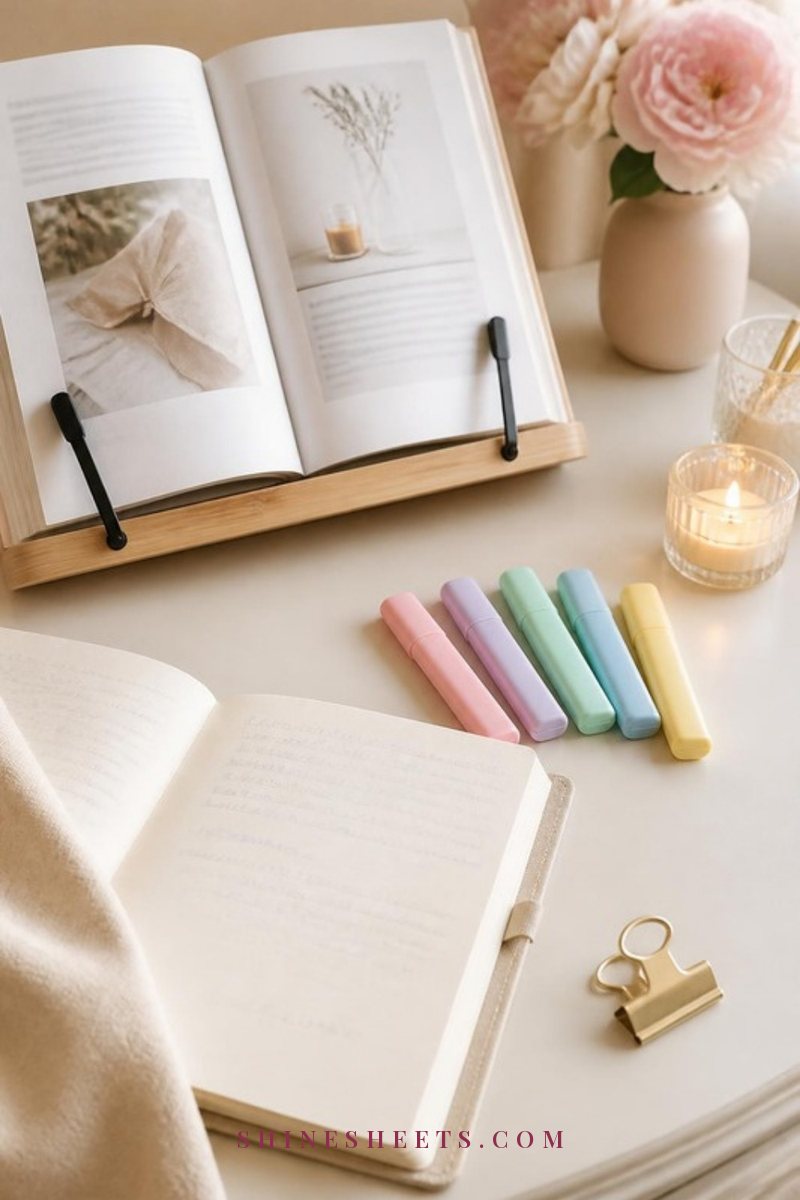
You don't need to read a whole book about your theme. Read one chapter, or even ten pages, and stop while it's still interesting. Nonfiction written for curious beginners is perfect here: popular history, science for non-scientists, memoirs by people who do the thing you're learning about.
Keeping a book open on a simple wooden book stand on your desk or kitchen counter is a quiet little nudge, because the book is already waiting at the right page. If you love reading on the go, an e-reader with a warm front light is a good pick for evening sessions, and it lets you highlight passages without marking up your books. Look for one with adjustable warmth and a lightweight body you can hold in one hand.
For more ways to fit pages into a busy life, my guide on how to read more books has tricks that work beautifully alongside this habit.
2. Podcasts and Audiobooks
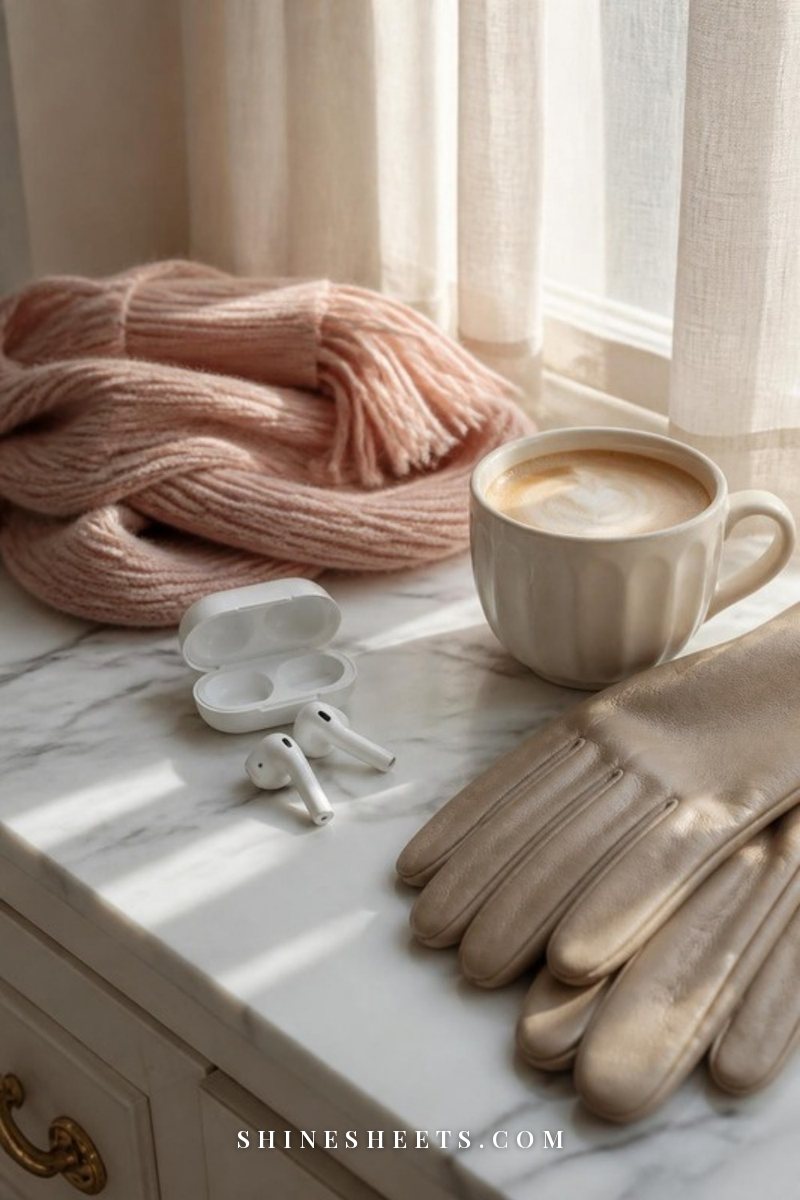
Audio turns "dead" time into learning time: walking, folding laundry, doing your skincare, waiting for the kettle. Choose one podcast that matches your theme and listen to one episode, or one fifteen-minute chunk of an audiobook.
A comfortable pair of white wireless earbuds makes this effortless. Look for a snug fit, good battery life and a case small enough to live in your bag. One gentle tip: pause the episode when something catches your attention and say the idea back to yourself in one sentence. That tiny pause is where listening turns into learning.
3. Short Online Courses
Many universities and museums offer free short courses and lecture videos. The trap is signing up for six at once. Pick one, and treat each lesson like a single episode of a show: watch one lesson, write one line about it, and close the tab.
If a course has quizzes, do them. They feel like a test, but they're actually one of the best memory tools you have.
4. Documentaries and Video Explainers
A good documentary can teach you more in twenty minutes than an hour of random clicking. Watch in short segments, fifteen minutes per evening, and stop at a natural chapter break. Turn on subtitles if you're learning a language, and keep your notebook within reach for the one sentence you want to keep.
5. Museums, Galleries and Libraries
You don't have to visit a museum for three hours. Go in for one room, or even one object. Read the little card next to it slowly, then look again. Many museums also have online collections where you can study one painting or artifact from your sofa.
Libraries are underrated, too. Ask a librarian for "one good beginner book about…" your theme. They love that question.
6. People Who Know Things
Some of the best learning happens in conversation. A friend who gardens, a relative who remembers how things used to be, a coworker who knows wine, a barista who can explain why coffee tastes the way it does. Ask one curious question and then really listen.
Mini script: "I'm learning a little about ___ this month. What's one thing you wish beginners knew?" It's flattering, easy to answer and you'll often get the most memorable fact of the week. Curiosity like this is also one of the quiet secrets in my guide on how to be more interesting.
7. Hands-On Practice
For skills, doing beats reading. Fifteen minutes of sketching, practicing three phrases out loud, sewing a button or arranging flowers will teach you things no video can. Keep the supplies out where you can see them, so starting takes seconds instead of a search through cupboards.
5 Active Learning Tricks That Make It Stick
Reading or listening is only half of learning. The other half is doing something with the information, even something tiny. These tricks take one to three minutes each and make a huge difference in what you'll still remember next month.
1. Explain It Back
Close the book and explain what you just learned in your own words, out loud or on paper, as if you're telling a friend over tea. If you get stuck, that's useful: it shows you exactly which part to reread. Simple language is the goal. If you can explain it to a curious ten-year-old, you've got it.
2. Take Tiny Notes
Not pages of notes. One to three lines. Write the main idea, one detail that surprised you and one question you still have. Short notes are easier to review, and they force you to choose what actually matters.
A set of pastel highlighters makes this feel lighter and more playful. I'd choose soft colors and use one for main ideas, one for surprising facts and one for questions, so a quick glance at a page tells you what kind of note you're looking at.
3. Review on a Gentle Schedule
This is the trick most people skip, and it's the one that matters most. Revisiting what you learned at growing intervals (often called spaced review) helps it settle into long-term memory. Here's an easy rhythm:
- The next day: reread yesterday's note before you start today's session (30 seconds).
- End of the week: flip through the week's notes and explain your three favorite ideas.
- End of the month: write a short wrap-up of your theme in five sentences.
4. Ask One Question
End every session with a question: "Why does that happen?" "Who else was doing this at the time?" "What would happen if…?" Write it down, and let it become tomorrow's starting point. This way your learning has a thread running through it, and you never sit down wondering what to do.
5. Use It Once
Try to use one new thing in real life within a day or two. Order your coffee with a new phrase, point out a tree by its name on a walk, share a fun fact at dinner. Using knowledge, even once, tells your brain this is worth keeping.
Habit Stacking: Where Your 15 Minutes Live

The hardest part of any daily habit is remembering to do it. Habit stacking solves that by attaching the new habit to something you already do every day. The formula is simple:
After I [existing habit], I will [learn for 15 minutes] at [place].
Some easy stacks to try:
- Morning coffee: after I pour my first cup, I'll read ten pages at the kitchen table.
- Commute or walk: after I lock the door, I'll start one podcast episode.
- Lunch break: after I finish eating, I'll watch one course lesson.
- Evening tea: after I make my tea, I'll do my learning session and write one line in my journal.
- Before bed: after I put my phone on the charger, I'll review today's note.
Evening tea is my favorite stack, mostly because it already feels like a soft pause in the day. A cream ceramic desk lamp with a warm bulb turns a corner of a table into a learning spot in seconds. Look for one with a linen or fabric shade and a warm white light, so it feels calming rather than like an office.
If mornings suit you better, my slow morning routine has a gentle structure that leaves room for a few quiet pages before the day gets loud.
Keep a Simple Learning Journal

A learning journal is the quiet backbone of this whole habit. It holds your notes, makes review easy and, on the days when you feel like you're not growing at all, it shows you a long list of things you didn't know a month ago. That's a lovely feeling.
A lined notebook with a linen cover is all you need. Look for thick pages that don't let pens bleed through, a lay-flat binding and a size small enough to carry. Keep it with your pen in the spot where your stack happens.
A simple daily entry formula (about three minutes):
- Date and theme: for example "Day 12 · Art and beauty."
- Today I learned: one or two sentences in your own words.
- The surprising bit: one detail you didn't expect.
- My question: what you'd like to know next.
- Source: book title, podcast name or person.
Once a week, leave a page for a mini review, and once a month, write a five-sentence wrap-up. If you enjoy journaling in general, my list of journaling ideas has prompts you can mix in on days when you want to reflect on how learning makes you feel, not only what you learned.
Your 30-Day Learning Menu
Here's a full month you can start tomorrow. Each week has a theme, each day has one fifteen-minute mini task, and every seventh day is a gentle review so things actually stay with you. Screenshot it, swap any task you don't like and skip days without guilt. It's a menu, not a contract.
| Day | Week theme | Your 15-minute mini task |
|---|---|---|
| 1 | Week 1: Your own city | Look up the story behind your street name or neighborhood and write two lines about it. |
| 2 | Week 1: Your own city | Learn the name of one tree or flower you pass every day (a plant ID app or a field guide works). |
| 3 | Week 1: Your own city | Read the history of one local landmark, café building or park. |
| 4 | Week 1: Your own city | Listen to one podcast episode or local radio segment about your area. |
| 5 | Week 1: Your own city | Browse your local museum's online collection and pick one object to read about. |
| 6 | Week 1: Your own city | Ask an older neighbor, relative or shop owner what the area used to be like. |
| 7 | Week 1: Your own city | Review: explain your three favorite facts from the week out loud, as if to a friend. |
| 8 | Week 2: Art and beauty | Pick one famous painting and read about who painted it and why. |
| 9 | Week 2: Art and beauty | Learn three color terms (for example hue, tint, undertone) and spot them in your home. |
| 10 | Week 2: Art and beauty | Watch a short documentary clip about an artist or designer you admire. |
| 11 | Week 2: Art and beauty | Learn the basics of one art movement, like Art Deco, and find one example around you. |
| 12 | Week 2: Art and beauty | Sketch one object on your desk for ten minutes, then read one drawing tip. |
| 13 | Week 2: Art and beauty | Read about the history of one Old Hollywood film costume or designer. |
| 14 | Week 2: Art and beauty | Review: flip back through your journal and star the one idea you want to remember. |
| 15 | Week 3: Words and languages | Learn ten greetings and polite phrases in a language you'd love to speak. |
| 16 | Week 3: Words and languages | Look up the origin of three everyday words you use without thinking. |
| 17 | Week 3: Words and languages | Learn one short poem by heart, four to eight lines is plenty. |
| 18 | Week 3: Words and languages | Practice yesterday's phrases out loud, then add five new ones. |
| 19 | Week 3: Words and languages | Read one page of a book in translation and note a sentence you love. |
| 20 | Week 3: Words and languages | Watch a five-minute video on pronunciation and copy it in your best accent. |
| 21 | Week 3: Words and languages | Review: say your poem and your phrases from memory, no peeking. |
| 22 | Week 4: How things work | Learn how one everyday object works, like a zipper, a candle wick or a kettle. |
| 23 | Week 4: How things work | Read about one body system in plain language, like how sleep cycles work. |
| 24 | Week 4: How things work | Learn one money concept, such as compound interest, and do one quick example on paper. |
| 25 | Week 4: How things work | Look up how your favorite tea or coffee is grown and processed. |
| 26 | Week 4: How things work | Learn one simple practical skill, like sewing on a button, and do it once. |
| 27 | Week 4: How things work | Watch a short science explainer and draw a tiny diagram of it. |
| 28 | Week 4: How things work | Review: teach one thing from this week to someone (or to your notebook). |
| 29 | Days 29–30: Your pick | Choose the week you enjoyed most and go one step deeper for fifteen minutes. |
| 30 | Days 29–30: Your pick | Write your learning wrap-up and choose next month's theme. |
How to use it: read tomorrow's task tonight, so you already know what you're doing when your stack comes around. If a task sparks something, stay with it for two or three days. If a week bores you, swap in your own theme and keep the same rhythm: five learning days, one practice day, one review day.
Keep It Fun, Not Another Productivity Project
Daily learning can quietly turn into one more thing to feel behind on. Please don't let it. This habit is meant to make your days feel richer, not to prove anything to anyone.
- Follow your curiosity. If you go down a lovely rabbit hole that has nothing to do with your theme, enjoy it. That still counts.
- Skip the streak pressure. Missing a day doesn't break anything. Just pick it up the next day without making up for lost time.
- Keep the bar low. On tired days, one fact and one line is a full session.
- Learn things that are simply pleasant. Not everything needs to be useful. The history of perfume or a classic film star is just as worthy as a work skill.
- Share it if you like. Tell a friend your fact of the day, or start a little learning swap with someone. A cozy book club is a lovely way to learn alongside people you like.
- Celebrate the month, not the day. At the end of each month, read your journal from the start. That's your reward.
Final Thoughts
Learning something new every day isn't about becoming a genius or filling every spare minute. It's about staying curious on purpose, fifteen minutes at a time, with a cup of tea and a notebook that slowly fills with things you didn't know before.
Pick your theme tonight, choose where your fifteen minutes will live and start with Day 1 tomorrow. A month from now, you'll flip back through those pages and feel quietly proud of how much wider your world has become.