Most of what we read, hear and learn slips away within a few days, not because we didn't care, but because we never gave it a place to land. A commonplace book is that place: one notebook where the lines, ideas and small lessons that move you get written down, so they're still there when you need them.
It's an old habit with a very modern payoff. In a world of saved posts and screenshots we never look at again, writing something by hand (and coming back to it) is what actually makes it stick. I've found that the act of choosing what's worth copying is half the magic. You start reading and listening differently once you know you're collecting.
This guide to starting a commonplace book covers what it is, why it helps, how to choose a format and set it up, what to put in it, a simple entry layout you can copy, a weekly ten-minute review habit and 20 starter ideas for your first pages. There's also a quick comparison with a regular journal and a bullet journal, so you know which one you actually want.
Find a pen you love. Let's start collecting.
What Is a Commonplace Book?
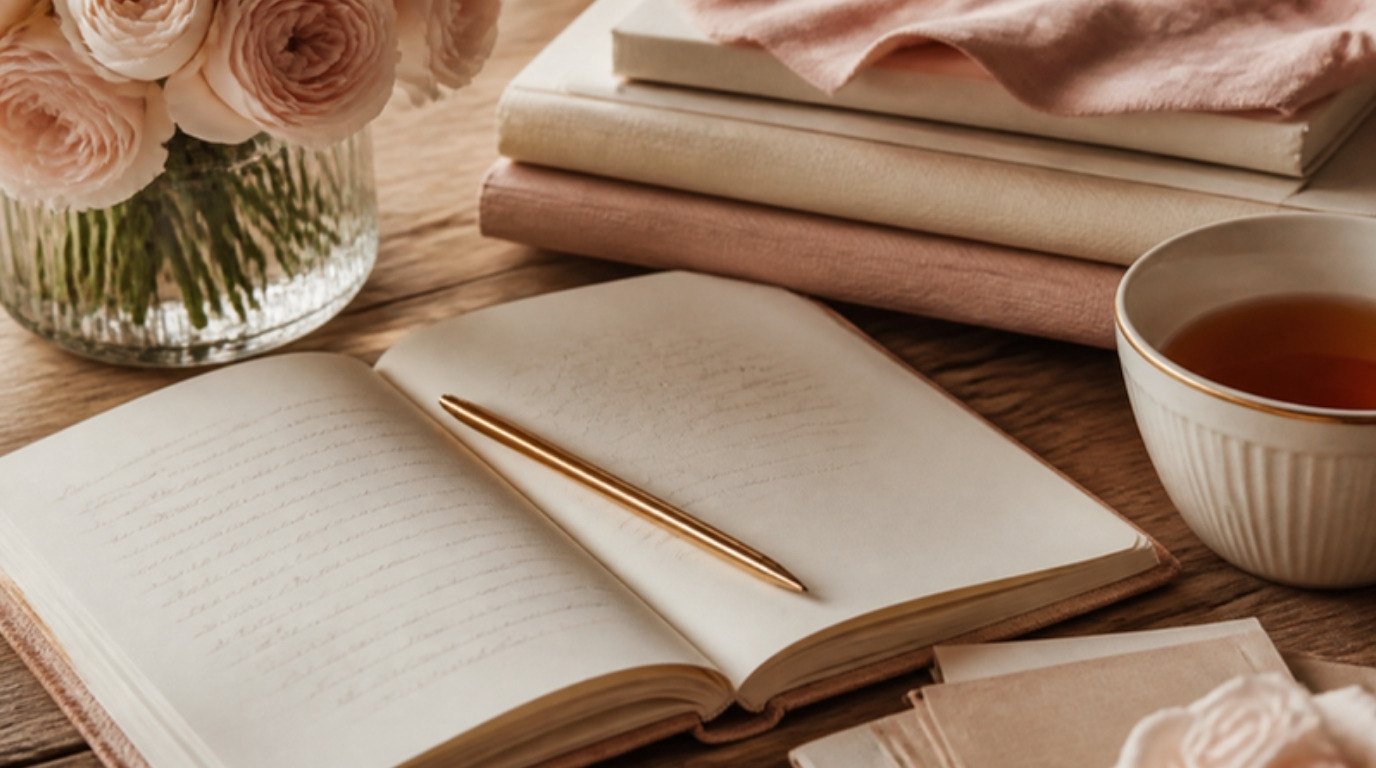
A commonplace book is a personal notebook of things worth keeping: quotes, ideas, passages from books, lessons from life, questions, overheard wisdom and your own short reflections on all of it. Think of it as a scrapbook for your mind rather than a diary of your days.
The habit goes back centuries. Students, scholars, writers and curious readers kept them to gather useful knowledge in one place, often organized under headings so they could find things again. The name comes from the idea of "common places," or topics, where related thoughts were stored together.
What makes a commonplace book different from simply highlighting a book is that it's yours, across every source. A line from a novel can sit next to something your grandmother said, a thought from a podcast and an idea you had in the shower. Over time, those neighbors start talking to each other.
Why Keep a Commonplace Book: 3 Quiet Benefits
It's a slow habit, but it pays off in ways that are easy to feel within a month or two.
- You remember more. Writing something by hand, in your own words, is one of the simplest ways to move it from "I read that somewhere" to "I know that." Revisiting it later locks it in. If memory is your main goal, my guide on how to remember what you read pairs beautifully with this habit.
- You connect ideas. When a thought about patience from a cookbook memoir sits next to a line about patience from a business book, you start seeing patterns no single source would have shown you. This is where your own original thinking begins.
- You write and speak better. A commonplace book becomes a private well of examples, phrases and stories. Writing a toast, a card, a work presentation or just a thoughtful message gets easier when you have a notebook full of good material.
There's a softer benefit too: it slows you down. Choosing what's worth keeping turns reading into a quiet, attentive ritual instead of another thing to rush through.
Choosing a Format: Notebook, Index Cards or Digital
There's no right format, only the one you'll actually open. Here's how the three main options compare.
A bound notebook
The classic choice, and the one I'd suggest for most beginners. It's portable, lovely to flip through and hard to lose pieces of. A dotted hardcover notebook in cream is a pick here: dots guide your handwriting without boxing you in, and a sturdy cover survives being carried around in a bag. Look for numbered pages or at least 160 pages, plus paper thick enough that ink doesn't bleed through.
Index cards
Cards are wonderful if you love rearranging. One idea per card, filed by theme, means you can shuffle related thoughts together when you're writing something. Index cards with a storage box keep everything tidy on a shelf, and dividers make each theme easy to find. The downside: less portable, and a box is less inviting to flip through on a slow evening.
Digital
A notes app or document is searchable and always with you, which is useful for capturing on the go. The trade-off is that typing is faster and more forgettable than handwriting, and digital notes tend to pile up without being reread. Many people capture digitally during the day and copy the best bits into a paper notebook once a week, which is a lovely middle ground.
Whichever you choose, commit to it for a month before switching. Most format doubts disappear once there are a dozen entries in it, because by then the notebook already feels like yours, and that feeling matters more than the perfect paper.
How To Set Up Your Commonplace Book
A little setup on day one saves you from a notebook full of good things you can't find. It takes about twenty minutes.
1. Number your pages
If your notebook isn't pre-numbered, number every page in the bottom corner now. It's slightly tedious and completely worth it, because page numbers are what make an index work.
2. Save the first pages for an index
Leave the first four to six pages blank and title them "Index." Each time you add an entry, write its theme and page number there (for example, "Courage – 14, 37, 52"). Over time this becomes a map of everything you care about.
3. Choose a few simple themes
Start with five to eight broad themes, not thirty. A few that work for almost anyone: Love and Friendship, Work and Craft, Courage, Rest, Beauty and Style, Money, Home, and Words I Love. You can add more as they naturally appear.
4. Pick your markers
Some people mark themes with a small symbol or short tag in the margin. Others use color. Pastel page flags on the edge of the page are an easy way to jump to favorite entries without searching the index every time.
5. Write a first entry today
Don't wait for something profound. Copy a line you already love from memory. A notebook with one entry is far easier to keep going than a perfect empty one.
What To Put in a Commonplace Book
Anything that makes you pause, think or smile is welcome. These eight categories cover most of what people collect:
- Quotes and passages. Lines from books, poems, songs and speeches that you want to remember word for word.
- Book notes. The two or three ideas from a book that actually changed how you think, summarized in your own words.
- Life lessons. Things you learned the hard way, written down so you don't have to learn them twice.
- Questions. Big and small questions you're curious about, even without answers yet.
- Compliments received. The kind things people have said to you. They are surprisingly powerful to reread on a low day.
- Overheard wisdom. Something a friend, a coworker, a stranger on a train or a family member said that stuck.
- Sketches and diagrams. A quick drawing of an idea, a room layout you loved or a simple mind map connecting thoughts.
- Your own ideas. Half-formed thoughts, plans, project ideas and observations. These often become the most valuable pages.
If you read a lot, my tips on how to read more books will keep your notebook well fed.
How To Write an Entry: The Entry Layout
Good entries are short and findable. This is the small layout I'd suggest for every entry, whether it's a quote or a lesson. Copy the fields into the margin or across the top of the page until it becomes habit.
| Field | What to write | Example |
|---|---|---|
| Theme | One of your themes, in the top corner | Rest |
| Date | The day you wrote it down | Sunday, early November |
| Source | Book and page, person, podcast, place | Novel, p. 112 / my aunt at lunch |
| The entry | The quote, idea or lesson, in a few lines | "You don't have to earn your rest." |
| My reflection | One sentence on why it matters to you | I feel guilty on slow Sundays. This is permission. |
| Links | Page numbers of related entries | See also 14, 37 |
The reflection line is the most important field. It turns a pretty quote into a thought you actually own, and it's what you'll be glad to find a year from now. Keep it to one honest sentence.
A smooth pen makes this so much nicer. A set of fine-liner pens is a pick for neat, small handwriting, and having two or three colors lets you separate the quote from your own reflection at a glance.
3 Example Entries To Copy the Style
Seeing a few real-looking entries makes the layout click. Here are three, each short enough to write in under two minutes.
A quote from a book
Theme: Courage. Source: a memoir, p. 88. Entry: "Brave doesn't mean unafraid. It means going anyway." My reflection: I keep waiting to feel ready before I start things, and I never do. Links: see 12.
Something a person said
Theme: Love and Friendship. Source: my friend, on a walk. Entry: "People remember how often you showed up, not how perfectly." My reflection: A short text counts. I don't need the perfect gift or long message to be a good friend. Links: see 21, 30.
A lesson from life
Theme: Rest. Source: a hard month. Entry: When I skip my evening tea and quiet hour for a full week, my anxiety creeps back by Friday. My reflection: The quiet hour is maintenance, not a reward. Links: see 9.
Notice that none of these are long. The power is in the reflection line and the links, which slowly turn separate pages into a web of your own thinking.
The Weekly 10-Minute Review

A commonplace book you never reread is just a storage box. The review is what turns it into a thinking tool, and it only needs ten minutes once a week. I like doing it on a quiet evening after tea, with a candle on.
- Minutes 1–3: Copy in your captures. Move anything from sticky notes, phone notes or book margins into the notebook.
- Minutes 4–5: Update the index. Add this week's entries and page numbers under their themes.
- Minutes 6–8: Reread one old page. Flip to a random page or a favorite theme and read slowly. Add a "See also" link if a new entry connects to it.
- Minutes 9–10: Write one connection. One or two sentences on a pattern you noticed, or how an old idea looks different now.
That's it. Some weeks you'll skip it, and that's fine. Pick it back up the next week without making up for lost time.
20 Starter Ideas for Your First Pages
If you're staring at the first blank page, start here. Pick one, write it down with a one-line reflection and you're on your way.
- A line from the last book you couldn't put down.
- The best piece of advice anyone ever gave you, and who said it.
- A compliment you still remember years later.
- Something a grandparent or older relative used to say.
- A lyric that feels like it was written about your life.
- One lesson from your last hard season.
- A question you'd love to ask someone wiser than you.
- A word you love the sound of, with its meaning.
- Three ideas from a book you finished this year, in your own words.
- A line from a film that made you cry or laugh.
- Something a child said that was unexpectedly wise.
- A rule you live by, even if you've never said it out loud.
- A sentence from a letter or card you've kept.
- An idea from a podcast or talk that changed your mind.
- A small observation about people you noticed this week.
- A poem, or just the two lines of it you know by heart.
- A belief you used to hold and why it changed.
- A quick sketch of a room, a view or an outfit that inspired you.
- A question you're currently living with, with no answer yet.
- One thing you want to remember about this exact season of your life.
Prompt lists like this are also lovely for regular journaling. If you enjoy them, my journaling ideas post has fifty more, sorted by mood.
Commonplace Book vs Journal vs Bullet Journal

All three live in notebooks, and you can absolutely keep more than one. The difference is what goes in and why.
| Commonplace book | Journal | Bullet journal | |
|---|---|---|---|
| Main purpose | Collecting ideas worth keeping | Processing your thoughts and feelings | Planning tasks, habits and time |
| Typical content | Quotes, book notes, lessons, questions | Daily reflections, emotions, events | To-dos, calendars, trackers |
| Organized by | Themes and an index | Date | Date and collections |
| You reread it to | Find ideas and make connections | See how you've grown | Stay on track |
| Best for | Readers, thinkers, writers | Emotional clarity | Busy, organized lives |
Many people keep a commonplace section at the back of their regular journal, which is a gentle way to try it without buying anything new. If planning is what you really want, my bullet journal ideas are a better starting point. And if your mind feels too full to collect anything, a few weeks of morning pages can clear the space first.
How To Keep the Habit Going: 6 Small Tips
Most commonplace books are abandoned for one reason: they started feeling precious. The pages looked so nice that adding a messy thought felt like ruining them, so nothing got added at all. A few small things keep it light.
- Keep it where you read. On your nightstand, by your reading chair or in your everyday bag. A book stand on your desk holds a book open while you copy a passage, so you aren't fighting the pages.
- Light your reading spot well. Evening is when most of us read, and squinting kills the urge to write anything down. A small clip-on reading light in a soft warm tone makes late notes easy.
- Allow messy pages. Crossed-out words, wonky handwriting and coffee rings are all part of it. Nobody grades this.
- Capture fast, copy slowly. Jot ideas anywhere during the week, then copy the best ones in during your review.
- Lower the bar. One entry a week is a real habit. Ten pages in a month and then nothing is not.
- Start a new volume without guilt. When a notebook fills up, number the next one "Volume 2" and copy your index themes onto its first page. Keep the old ones together on a shelf so you can browse them.
Final Thoughts
A commonplace book is one of the quietest, most rewarding habits you can start. It asks for very little, just a notebook, a pen and the willingness to notice what moves you, and it gives back a growing record of everything that has shaped how you think.
Start with one line today. Give it a theme, a source and one honest sentence of your own. A year from now, you'll open those pages and find a version of yourself who was paying attention, and that's a lovely thing to have kept.