
Forgetting most of a book is not a sign that you read it wrong or that your memory is bad. It is simply how memory works: your brain keeps what it uses and quietly lets go of the rest. The good news is that remembering more has very little to do with reading faster or reading more. It has to do with what you do before, during and after the pages.
A handful of small habits – a clear reason to read, a few notes in the margins, a two-sentence summary, one short review a week later – make a surprising difference. None of them take long, and none of them turn reading into homework.
This guide is all about how to remember what you read: why we forget, what to do before you open a book, while you read and after you close it, a few easy note systems, how fiction and non-fiction differ, what to do with audiobooks and e-books, and a simple reading system table you can screenshot. Make a cup of tea and let's start with the forgetting part, because understanding it takes away a lot of the guilt.
Why We Forget What We Read

In the late nineteenth century, a German researcher named Hermann Ebbinghaus studied how quickly he forgot lists he had memorized. What he found became known as the forgetting curve: memories fade fastest in the first hours and days after we learn something, then the fading slows down. Every time we go back and recall the information, the curve flattens a little and the memory lasts longer.
In plain words: reading a book once and never thinking about it again is the fastest way to forget it. That is not a personal failure. It is the default setting.
There are a few other reasons books slip away:
- We read passively. Eyes move over the page while the mind plans dinner. Nothing was really stored in the first place.
- We read too much, too fast. Ten books in a row with no pause means each one gets crowded out by the next.
- We never use the ideas. An idea you try out in real life, talk about or write down has a place to live. An idea you only read about has nowhere to go.
- We read when we are exhausted. Reading in bed is lovely, but if you are half asleep, very little sticks (and that's fine for comfort reading).
Everything below is about working with the forgetting curve instead of against it: giving your brain a reason to keep what matters.
Before You Read: Set Yourself Up To Remember
Two minutes of preparation changes how your brain treats a book. Instead of a long stream of words, it becomes a set of answers to questions you actually care about.
1. Know Why You're Reading This Book

Before the first chapter, finish this sentence on a sticky note or the inside cover: "I'm reading this because I want to…" Learn to sleep better. Understand money. Get lost in another world for a week. Feel less alone in something.
Your reason works like a filter. When you know what you are looking for, the parts that matter jump out, and your brain flags them as worth keeping. It also gives you permission to skim the chapters that have nothing to do with your reason (yes, you are allowed to skip).
2. Skim the Structure First
For non-fiction, spend three to five minutes on a quick tour before you start reading properly:
- Read the table of contents and notice how the book is organized.
- Read the introduction and the conclusion first. Many authors state their main ideas there.
- Flip through and look at headings, bold words, lists and any summaries at the end of chapters.
This gives your memory a map with empty rooms. As you read, each new idea has somewhere to go instead of floating around on its own.
3. Choose Fewer Books, Read Them Deeper
This is the least popular advice and the most useful. If you want to actually keep what you read, one book absorbed slowly beats four books rushed through. Reading goals are lovely when they motivate you, but if a number on a tracker is pushing you to finish quickly, consider swapping it for a different goal: "three books this season that I can explain to a friend."
If you want more reading time overall, my guide on how to read more books has gentle ways to fit pages into a busy week, and they pair perfectly with the memory habits here.
While You Read: Habits That Make Ideas Stick
Active reading sounds serious, but it really just means having a small conversation with the book instead of letting it talk at you. Pick one or two of these habits, not all of them at once.
Slow Down on the Parts That Matter
Not every page deserves the same attention. Move quickly through stories, examples and repetition, then slow right down when you reach an idea that connects to your reason for reading. Read that paragraph twice. Pause and look away from the page for a moment, then try to say the idea in your own words, quietly or in your head.
That tiny pause is a mini recall exercise, and it is one of the simplest ways to move something from "seen" to "stored."
Mark the Margins or Use Sticky Tabs
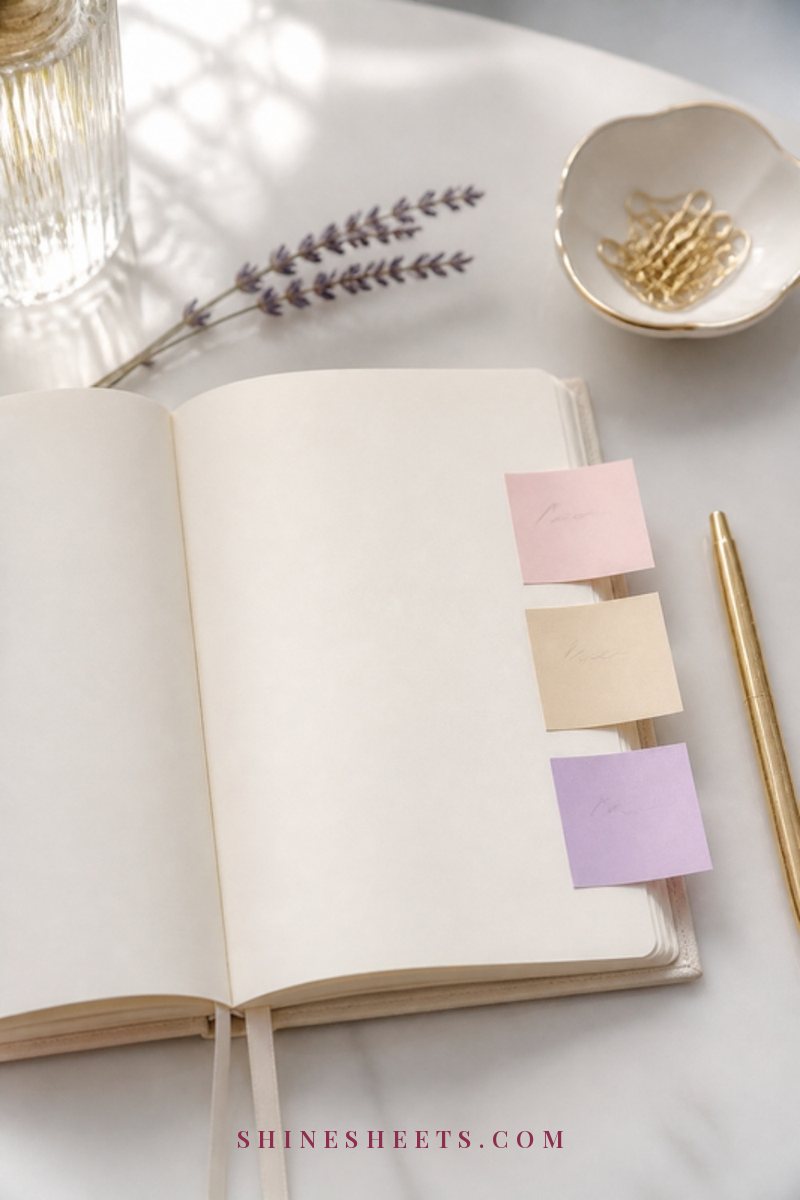
Marking a book keeps your attention on the page and makes review later take minutes instead of hours. A few options, depending on how you feel about writing in books:
- Margin notes in pencil. A short word or two next to a key passage: "try this," "yes!," "disagree," "remember for work."
- Sticky tabs by color. For example, pink for ideas to try, lavender for quotes, mint for questions. A pack of pastel sticky tabs makes this feel tidy instead of messy, and they come out of library books cleanly.
- Gentle highlighting. If you highlight, keep it to one sentence per page at most. A soft pastel highlighter set won't bleed as harshly as neon, but the real rule is restraint: if everything is highlighted, nothing is.
Whatever you choose, write a few words about why you marked something. Future-you will not remember why that sentence felt important.
Ask Questions as You Go
Questions make your brain hunt for answers, and the hunting is what makes the answers memorable. Keep three questions in mind while you read:
- What is the main point of this chapter?
- Do I agree, and why or why not?
- Where could this help me this week?
You don't have to write the answers every time. Just asking them at the end of a section turns reading into thinking.
Summarize Each Chapter in 2–3 Sentences
This is the single habit I'd keep if I could only keep one. When you finish a chapter, close the book and write two or three sentences about it, without looking. Something like: "This chapter says that tiny habits stick better when they're attached to something I already do. The example was flossing one tooth. I could try it with stretching after brushing my teeth."
If you can't write the summary without peeking, that is useful information too: it shows you exactly which part to reread. The whole thing takes about two minutes per chapter.
After You Read: Lock It In
The days right after you finish a book are when the forgetting curve is steepest. A little effort here goes a very long way.
Write a One-Page Summary
Within a day or two of finishing, write one page (no more) answering these prompts:
- The book in one sentence.
- The three ideas I want to keep.
- One thing I will try or change because of it.
- One quote I loved (copied exactly).
- Who I would recommend it to.
A dedicated reading journal keeps all these pages together, so over time you build a little library of your own thoughts. Any notebook works too – the habit matters more than the paper. If you like writing in general, my journaling ideas are full of easy prompts that fit right next to your book pages.
Teach It to Someone

Explaining an idea out loud is one of the strongest memory tools there is, because you have to pull the idea out of your head and put it in order. You don't need a classroom. Try:
- Telling a friend about the most interesting idea over coffee: "I just read something about why we forget things – want to hear the short version?"
- Sending a voice note to a sister or a friend with your favorite takeaway.
- Talking it through with yourself on a walk, as if you were explaining it to someone curious.
A book club is the gentlest way to make this a habit, because talking about the book is the whole point. My guide to hosting a book club has questions and ideas to get one going.
Use Active Recall Questions
Rereading your notes feels productive, but testing yourself works far better. Active recall means you try to remember first, then check. Turn your notes into a few questions:
- "What are the three main reasons the author gives for…?"
- "What was the example about…?"
- "How would I explain this idea to someone who hasn't read the book?"
Cover your answers, try to answer from memory, then look. The small struggle of trying to remember is exactly what strengthens the memory. It is the same principle behind the tricks in my guide on how to remember names: recall it, use it, repeat it.
Spaced Review: A Day, a Week, a Month

Spaced review is the forgetting curve's best friend. Instead of rereading everything at once, come back to your notes at growing intervals:
- After one day: read your chapter summaries and your one-page summary (5 minutes).
- After one week: answer your recall questions without looking first (5–10 minutes).
- After one month: reread only the tabbed pages and ask yourself what you've actually used (10 minutes).
Put a small note in your planner for each review, or attach it to something you already do. I like doing mine in the evening with tea, right before journaling, when the house is quiet and a few minutes feel like a treat instead of a task.
A Simple Reading System: Before, During and After
Here is the whole method in one table. Screenshot it, or copy it into the back of your reading journal. Start with the actions marked as the easiest and add more only if you enjoy them.
| Stage | Action | Time needed | Easiest place to start? |
|---|---|---|---|
| Before | Write your reason for reading on a sticky note | 1 minute | Yes |
| Before | Skim contents, introduction, conclusion and headings | 3–5 minutes | Non-fiction only |
| During | Tab or mark key passages with a short note | A few seconds each | Yes |
| During | Pause and restate important ideas in your own words | 30 seconds | Yes |
| During | Write a 2–3 sentence chapter summary without looking | 2 minutes per chapter | Best single habit |
| After | Write a one-page summary | 15–20 minutes | Within 1–2 days |
| After | Tell someone about one idea | 5 minutes | Yes |
| After | Turn notes into recall questions | 10 minutes | For books that matter most |
| Review | Review after a day, a week and a month | 5–10 minutes each | Set reminders in your planner |
For a typical non-fiction book, the whole system adds roughly an hour spread over a month. That hour is the difference between "I read something about that once" and "here's what I learned and how it changed my week."
Note Systems That Actually Work
The best note system is the one you will still be using in a year. Here are three simple options – pick one and keep it boring and consistent.
A Commonplace Notebook

A commonplace notebook is an old habit with a lovely name: one notebook where you collect quotes, ideas and thoughts from everything you read, all mixed together. Writers and thinkers kept them for centuries.
How to keep one simply:
- Write the book title and the date at the top of each new entry.
- Copy the quote or idea, then add one line of your own: why it matters or where you could use it.
- Leave the first two pages blank and use them as an index by topic (sleep, money, friendship, confidence) with page numbers.
Over time, ideas from different books start talking to each other on the page, and that is where real understanding happens.
Index Cards in a Box
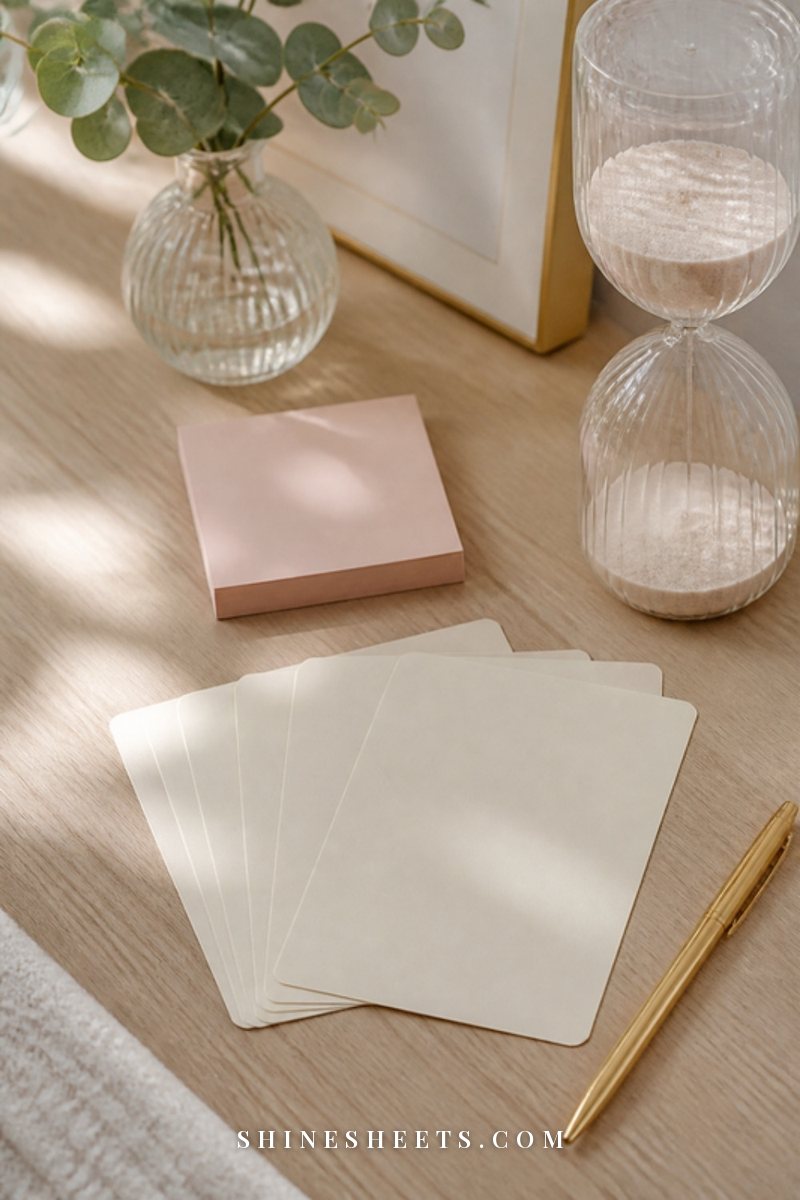
Index cards are perfect if you like things you can shuffle and sort. Write one idea per card: the idea in your own words on the front, the book and page on the back. File them by topic with simple dividers.
A set of index cards with a storage box keeps everything in one tidy place on your desk or shelf. Cards also make recall practice easy – pull five at random each week, read only the topic, and try to explain the idea before turning the card over.
Digital Notes
If you live in notes apps, that works too. Create one note per book with the same structure as the one-page summary, and add tags by topic. Two gentle rules keep digital notes useful:
- Type in your own words. Copying and pasting long passages feels productive but skips the thinking that makes memory work.
- Keep it in one place. Notes scattered across five apps are notes you will never find again.
Many people find a mix works best: paper while reading (it's slower, which helps memory), and a quick digital copy of the one-page summary for searching later.
Fiction vs. Non-Fiction

You don't need to read a novel the same way you read a book about habits. Fiction is about experience, feeling and story; non-fiction is about ideas you want to use.
For fiction, try remembering:
- The main characters and one word that describes each.
- How the story made you feel, and the scene you keep thinking about.
- One line that stayed with you.
- A short "what happened" note in three sentences, written when you finish.
For non-fiction, focus on:
- The main argument in one sentence.
- Three ideas you want to keep.
- One action you will take.
And please, give yourself permission to read some books just for pleasure, with no notes at all. Not every book needs to be remembered in detail. Some are simply there to keep you company, and a comfortable spot makes those even better. If you're dreaming of one, my reading nook ideas are full of small-space corners, and a supportive reading pillow with arms turns any bed into a place you'll actually want to stay.
Audiobooks and E-Books
Audiobooks and e-books count as real reading. They just need a few small adjustments to help your memory.
Audiobooks:
- Save the important books for times when your mind is free (walking, folding laundry), not for driving in busy traffic or answering emails.
- Use the bookmark or clip feature when something stands out, then write a one-line note about it later the same day.
- Slow the speed down for dense chapters. Fast listening is fine for stories, less so for ideas.
- Write your chapter summaries right after a listening session, while it's fresh.
E-books:
- Use the built-in highlights and notes, but export or copy them into your notebook after finishing – otherwise they disappear into the device.
- Turn off notifications while reading. One ping is enough to pull the idea right out of your head.
- Try reading important books on paper when you can. Many people find it easier to remember where something was on a physical page.
If you read paper books at night, a small rechargeable book light lets you read without bright overhead lights, which is kinder to your eyes and your wind-down routine.
Realistic Expectations
Even with every habit in this guide, you will forget most of the details of most books. That is completely normal. The goal is not to remember every page – it's to keep the few ideas that change how you think or live, and to know where to find the rest.
A few gentle truths worth holding on to:
- Remembering three ideas from a book is a success. Remembering one idea that you actually use is a big success.
- Books shape you even when you forget them. Many ideas quietly become part of how you see the world, even if you can't recall where they came from.
- Rereading is not failure. Your favorite books will teach you different things at different moments of your life.
- Start with one habit. The chapter summary alone is enough to notice a difference.
Reading well is one of the most rewarding skills to learn, and like any skill, it grows slowly with practice rather than all at once.
Final Thoughts
Learning how to remember what you read is less about memory tricks and more about slowing down enough to let a book matter. Know why you're reading, have a little conversation with the pages, write a few sentences when you finish, and come back once or twice. That's it.
Start with the next book on your nightstand and just one habit. The ideas worth keeping will start staying with you, one chapter at a time.