Every January I'd set up the same tracker. Water glasses. Steps. Workouts. Early nights. Tiny boxes all lined up, waiting to be colored in. And every year, by the middle of February, those boxes had turned into a quiet little report card of everything I hadn't done.
The year I changed what I tracked, everything changed. I added a row for "laughed properly," another for "something pretty I noticed," and one for "evening tea + journaling." Suddenly my tracker wasn't scolding me – it was showing me my life. On hard weeks, it reminded me that good things were still happening. On good weeks, it showed me exactly what made them good.
So these are 40 tracking journal ideas that go far beyond water and steps. Some are about mood and rest, some about connection, creativity and home, and a whole lot of them are simply about joy. You'll also find a simple monthly tracker layout you can copy into any notebook in about 20 minutes, plus tips for keeping it gentle so it never turns into another thing to feel guilty about.
Why Track Joy, Not Just Discipline?
Most trackers are built around willpower: did you do the hard, healthy, productive thing or not? That's useful sometimes. But when every row is a "should," the page starts to feel like homework, and missing a day feels like failing.
Tracking joy flips that. When you color in a box for "sat in the sun for five minutes" or "texted a friend first," you're training your attention to notice what's already good. It's the same idea as noticing glimmers – those tiny moments of safety and delight that are easy to miss when you're busy or anxious. I'm prone to anxiety (mostly well managed these days), and seeing a page full of small good things is honestly one of the most calming visuals I know.
And there's a practical bonus: patterns. After a month, you might notice that your mood is brighter on days you went outside before noon, or that you sleep better on days you didn't drink coffee after lunch. That kind of insight is hard to get any other way.
A quick note: this list deliberately leaves out weight and calorie tracking. Those can quietly turn a kind practice into a harsh one, and there are so many lovelier things to pay attention to.
What You Need To Start
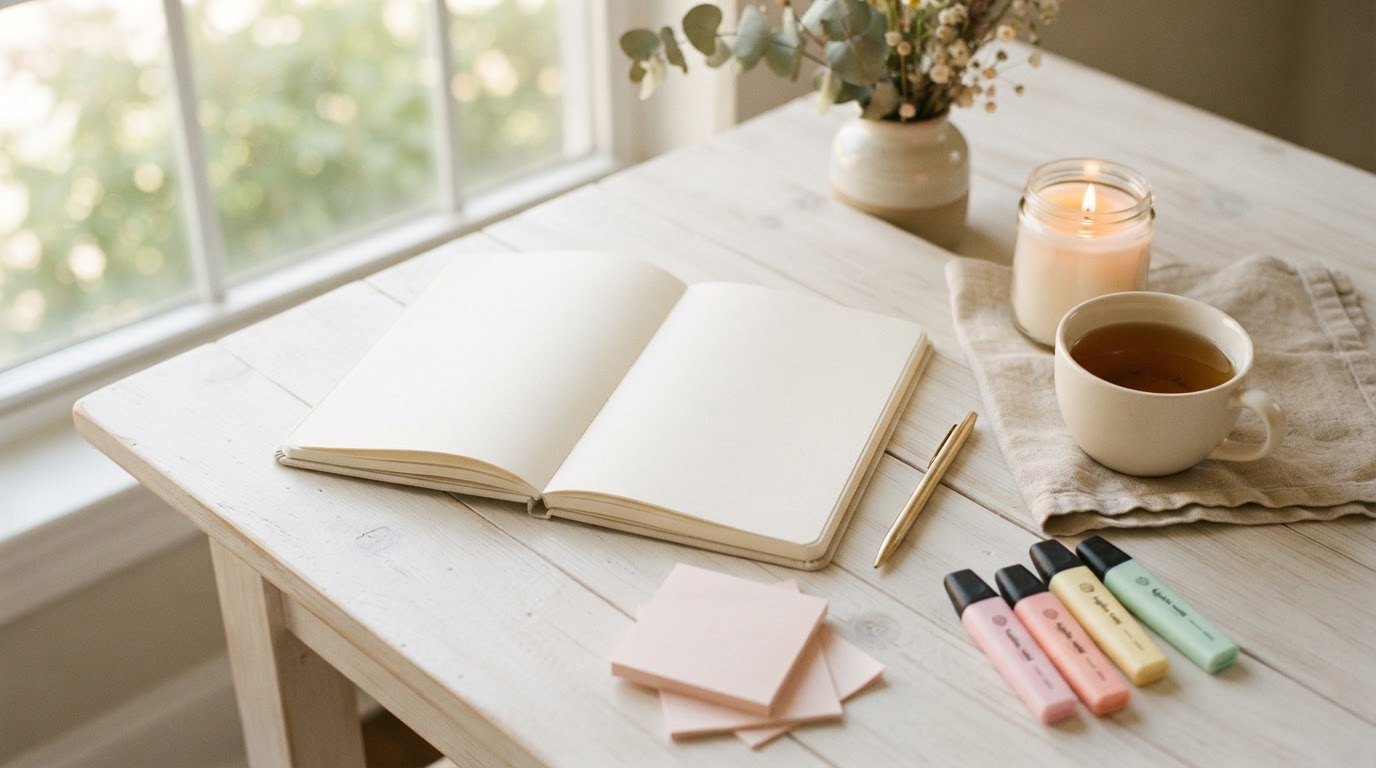
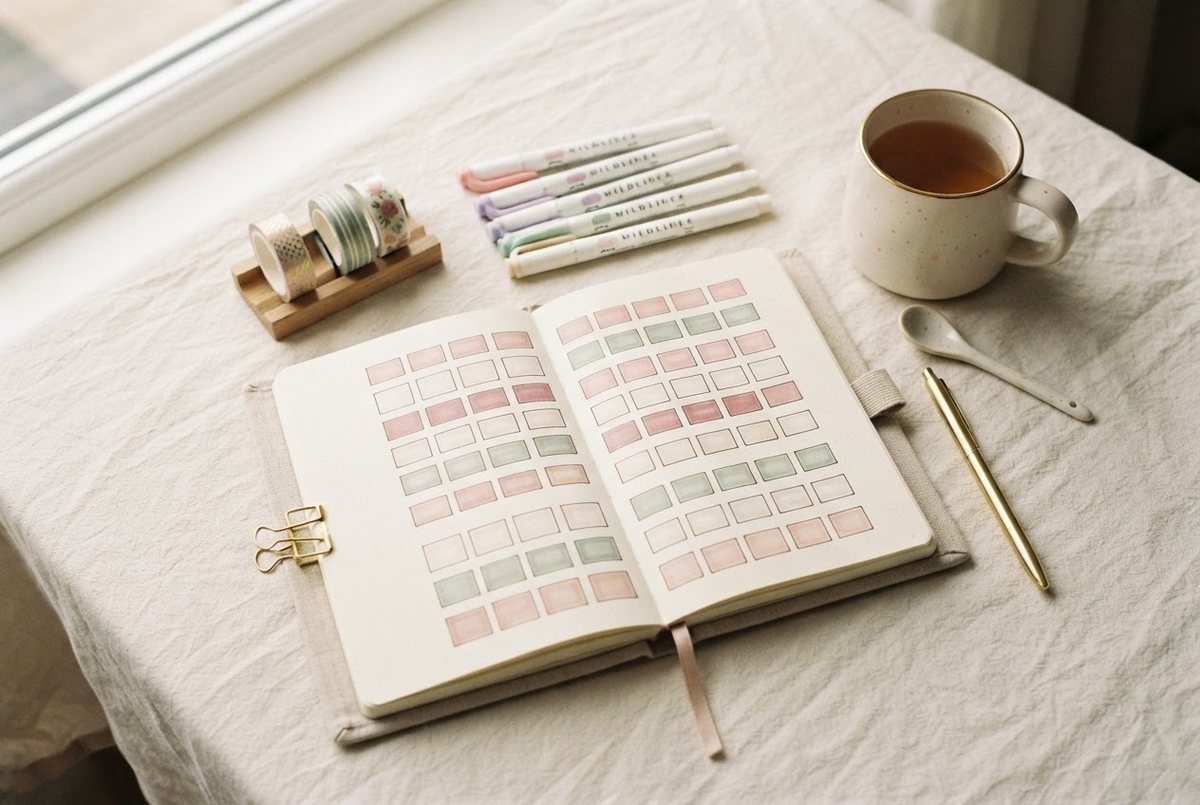
Almost nothing. A notebook, a pen and ten minutes on the first of the month. That said, a few small things make it more inviting to open every day:
- A dotted notebook. A cream dotted grid journal makes it easy to draw neat boxes without a ruler – look for paper that's at least 120gsm so markers don't bleed through to the next page.
- Soft highlighters. A set of pastel highlighters lets you color-code your trackers without the page looking loud. Choose chisel tips so you can fill a small box in one swipe.
- A fine pen. For writing tiny notes in the boxes, a set of fine liner pens with a 0.3–0.5 mm tip is ideal – look for pigment ink that dries fast and won't smear under a highlighter.
- Something pretty, optional. A roll or two of pastel washi tape to frame the page. It's not necessary, but if it makes you want to open the notebook, it's worth it.
Joy and Small Pleasures: 10 Things To Track
Start here. These are the rows that make the tracker feel like a gift instead of a test.
- Laughed out loud. Just a checkmark when it happens. You might be surprised how few (or how many) days you do.
- Something beautiful I noticed. One word in the box: "frost," "sunset," "tulips."
- Time outside. Minutes spent outdoors, even if it was a walk to the mailbox. Color the box darker for longer.
- Sunlight on my face. Especially in winter, when it can feel like you never see the sun. Pairs beautifully with my winter blues toolkit.
- Music I loved today. Write the song title. At the end of the month, you have a playlist of your life.
- A treat I gave myself. A fancy coffee, a bath, a new candle, ten minutes alone. Joy counts when you choose it on purpose.
- Something from my dopamine menu. If you've made a dopamine menu, track which "starters" and "mains" you actually picked. It shows you what really lifts you.
- Played or did something just for fun. No productivity allowed. Puzzles, dancing, doodling, a silly game.
- Felt cozy. A simple yes or no. Blankets, tea, rain on the window – you know the feeling.
- Best moment of the day. Three to five words in a small column. This is the row I'd keep if I could only keep one.
Mood and Mind: 8 Things To Track
These help you understand your inner weather. Keep them light – you're observing, not judging.
- Mood in one color. Make a key (pastel yellow for happy, baby blue for calm, lavender for tired, gray for low, pink for loved) and color one box per day. A month of colors tells a story at a glance.
- Anxiety level, 1 to 5. Just a number. Over time, you'll spot your triggers and your helpers.
- Energy, morning and evening. Two tiny boxes per day. Great for figuring out when to schedule hard things.
- One worry I let go of. Write it down, then cross it out. Strangely satisfying.
- Gratitude, three things. Or just one if three feels like too much. On blank days, "a warm drink" absolutely counts.
- Screen-free time. Minutes or hours without your phone. Not to punish yourself, just to notice how it feels.
- Said no to something. A small star whenever you protected your time or energy.
- Kind thing I said to myself. Practice talking to yourself like a friend, then give yourself a box for it.
Rest and Body Care: 6 Things To Track
Gentle care, no numbers on a scale. These are about how you feel, not how you look.
- Hours of sleep and how rested I feel. Two separate things – you can sleep eight hours and still feel foggy, and that's worth knowing.
- Movement I enjoyed. Not "workouts completed," but "moved in a way that felt good": stretching, dancing, a slow walk, yoga.
- Evening wind-down done. Whatever your ritual is. Mine is tea, then journaling, then lights low.
- Caffeine after 2 p.m. Coffee perks me up some days and makes me jittery on others, so this row has taught me a lot.
- Skincare morning and night. Two tiny boxes. Helpful when you're testing whether a new routine actually makes a difference.
- Cycle day. If you have a cycle, noting the day helps you connect energy, mood and sleep to where you are in the month.
Connection: 6 Things To Track
Loneliness can creep in quietly. These rows make your relationships visible.
- Reached out first. A text, a voice note, a call. Tick it every time you started the conversation.
- Quality time with someone I love. Write their initial in the box.
- Real conversation. Not just logistics – a conversation where you actually talked about something.
- Act of kindness. Holding the door counts. So does a thoughtful message.
- Sent mail or a card. Especially nice to track in December. Two lines in a card are plenty.
- Felt understood. A small heart on days someone really got you. If this row stays empty for a while, it's useful information too.
Creativity and Growth: 5 Things To Track
- Pages read. Or minutes read, if pages feel competitive. Add the book title in the margin when you start a new one.
- Made something. Cooking, sketching, crafting, writing a poem – anything you created.
- Learned something new. One word or a short note: "how to say thank you in Korean," "what a gua sha is for."
- Journaled. Even three sentences counts. If you need ideas, my list of journaling ideas has 50 things to write about.
- Did one brave thing. Sent the email, asked the question, wore the red lipstick. A small gold star every time.
Home and Money: 5 Things To Track
- Ten-minute tidy. A quick reset of one room. Watching the boxes fill up is oddly motivating.
- No-spend day. A soft way to notice spending without making a big budget.
- Fresh flowers or plants watered. Little living things make a home feel cared for.
- Candle lit. Yes, really. If you love candles as much as I do, you'll want to know how many cozy evenings you gave yourself. If you're choosing a new one, a cream glass jar candle with a cotton or wood wick and a soft scent is a lovely pick – and blow it out before you fall asleep.
- Bed made. A tiny win at the start of the day that sets the tone for everything else.
4 Tracker Styles: Pick the One That Fits You
The same row can look completely different on the page, and the right style is the one you'll actually enjoy filling in. Here are four easy ones:
- Classic boxes. One small square per day, colored in or ticked. Best for yes-or-no rows like "laughed out loud" or "bed made." Quick and tidy.
- Number boxes. Write a number instead of a tick: minutes outside, hours of sleep, anxiety from 1 to 5. Perfect when you want to spot patterns, not just streaks.
- Mini bar graph. Draw a short vertical bar for each day and fill it to the level that matches – great for energy or sleep. After a month it looks like a little skyline of your moods.
- Year in pixels. One tiny square per day for the whole year, colored with your mood key. It's slow and beautiful, and by December you have a single page that shows your entire year at a glance.
You can mix styles on one page. I like boxes for joy rows and numbers for anything I'm curious about, because numbers make patterns so much easier to see.
3 Starter Sets if You Don't Know Where To Begin
Forty ideas can feel like a lot. If you'd rather not choose, borrow one of these ready-made sets of 6 rows and adjust as you go:
- The anxious-season set: anxiety level, time outside, caffeine after 2 p.m., evening wind-down done, one worry I let go of, best moment of the day. This one helps you see what actually calms you down.
- The winter-blues set: sunlight on my face, movement I enjoyed, felt cozy, reached out first, mood in one color, music I loved today. Gentle rows for the darkest months.
- The busy-season set: said no to something, ten-minute tidy, screen-free time, hours of sleep and how rested I feel, a treat I gave myself, laughed out loud. For when life is full and you need small anchors.
Whichever you choose, give it a full month before you decide whether it's working. The first week always feels a little awkward; by week three, it starts to feel like yours.
A Simple Monthly Tracker Layout
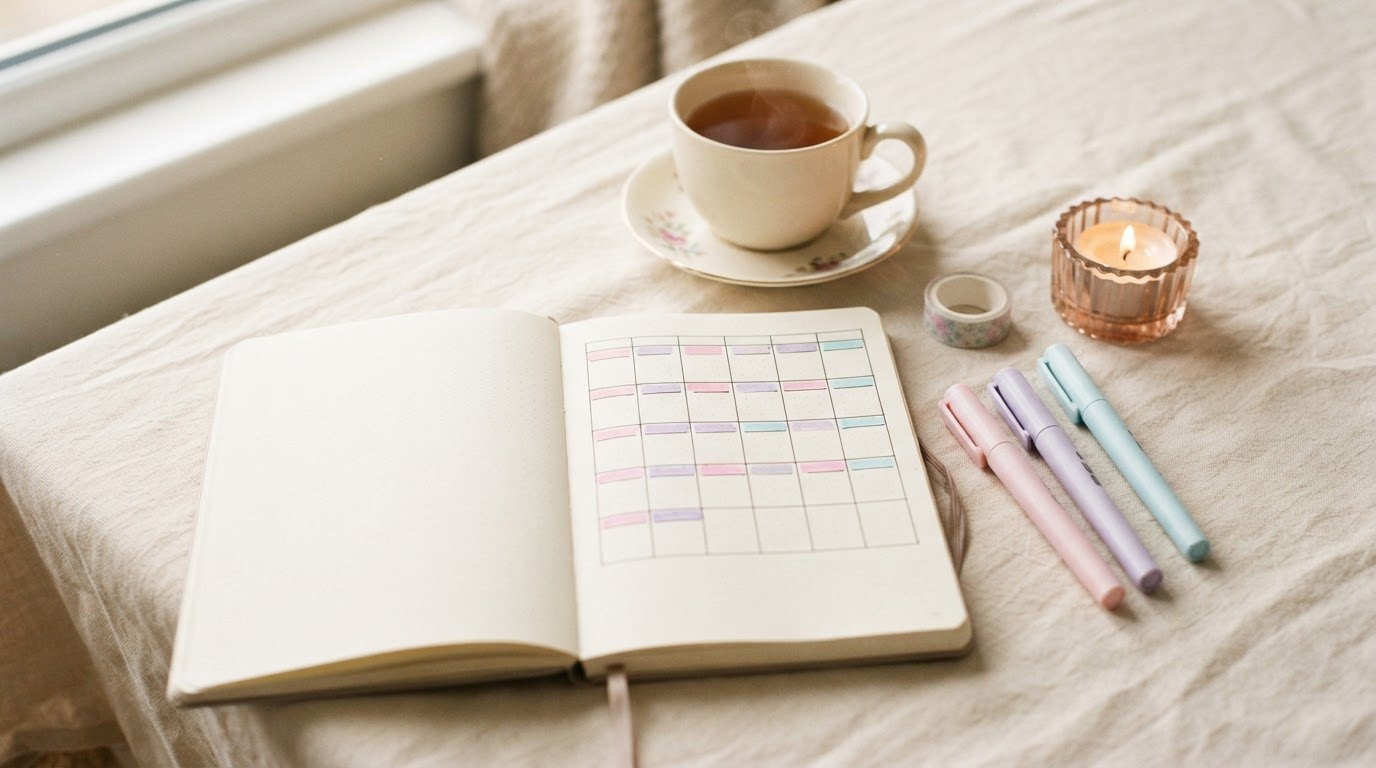
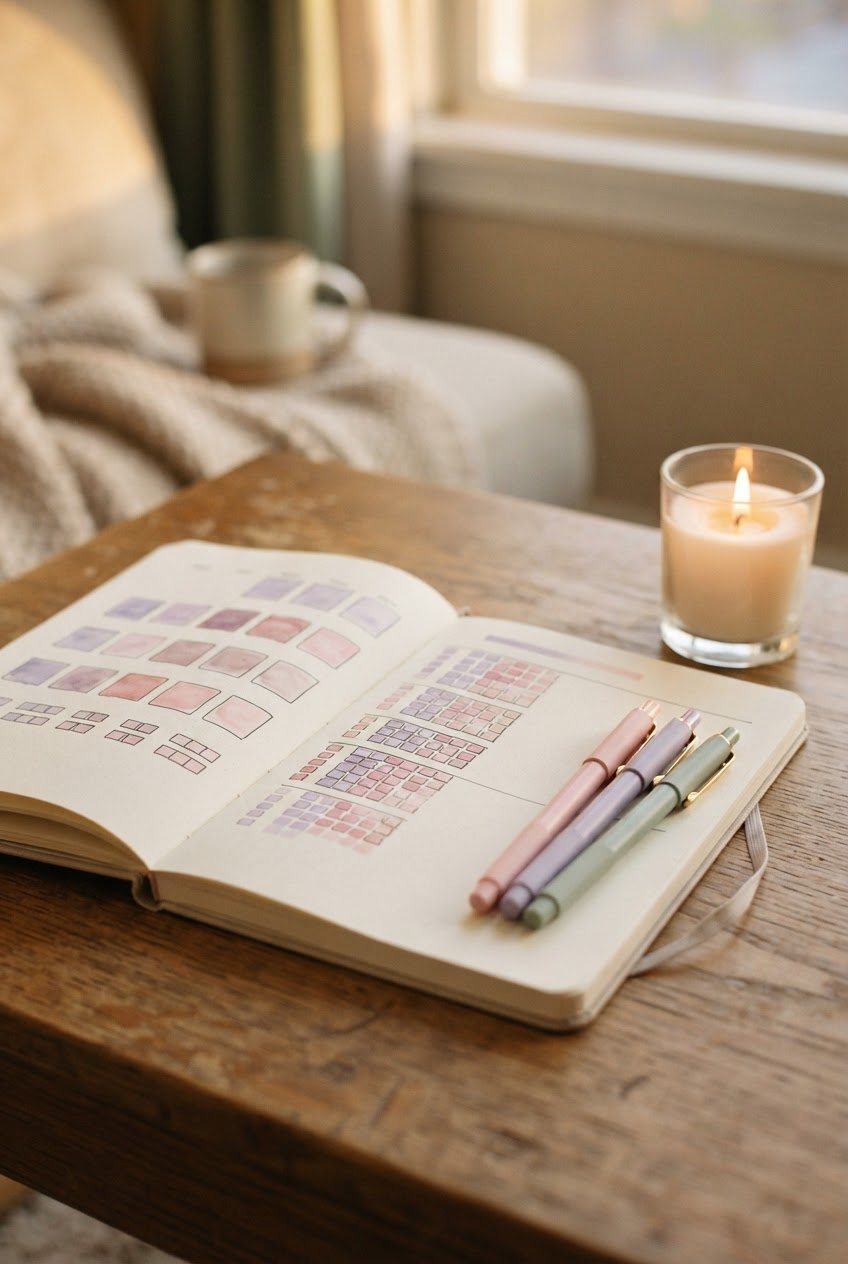
Here's the layout I'd suggest for your first month. It fits on a two-page spread and takes about 20 minutes to draw. The key is to choose no more than 8 rows – mix 4 joy rows, 2 mood or rest rows and 2 from any other category.
| Section | Where on the page | What goes in it | Daily time |
|---|---|---|---|
| Month header | Top of the left page | The month name, your word or intention for the month and one small goal | Once a month |
| Habit grid | Left page, main area | Up to 8 rows (your chosen trackers) and 28–31 columns (days). One small box per day | 1 minute |
| Mood strip | Bottom of the left page | One row of 31 boxes, colored with your mood key | 10 seconds |
| Color key | Bottom corner of the left page | Your 4–5 mood colors and what they mean | Once a month |
| Best moment column | Right page, left half | Numbered 1–31, with 3–5 words for each day | 1 minute |
| Monthly lists | Right page, top right | Songs I loved, books I read, places I went | As they happen |
| End-of-month reflection | Right page, bottom right | 3 questions: What lit me up? What drained me? What will I keep doing? | 10 minutes, once |
And here's what a single row looks like in practice, for one week:
| Tracker | Mon | Tue | Wed | Thu | Fri | Sat | Sun |
|---|---|---|---|---|---|---|---|
| Laughed out loud | ✓ | ✓ | ✓ | ✓ | ✓ | ||
| Time outside (min) | 10 | 5 | 30 | 0 | 15 | 60 | 45 |
| Anxiety (1–5) | 3 | 4 | 2 | 3 | 2 | 1 | 2 |
| Evening wind-down | ✓ | ✓ | ✓ | ✓ | ✓ |
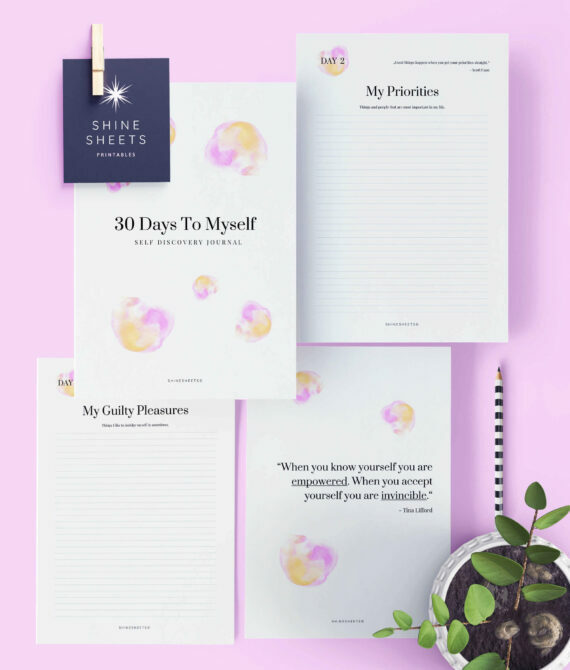
Look at that tiny sample and you can already see a pattern: the lowest anxiety days are the ones with the most time outside. That's the magic of tracking – it gives your hunches some evidence. If you'd rather print than draw, my free habit tracker printable works with any of the rows above.
For colors, a set of pastel gel pens makes a mood strip look soft and lovely rather than like a spreadsheet – look for quick-drying ink so it doesn't smudge when you close the notebook.
How To Keep Tracking Without Turning It Into Pressure
- Track at the same moment every day. Attach it to something you already do: your evening tea, brushing your teeth, getting into bed. Mine lives right after tea, before I journal.
- Empty boxes are data, not failure. A blank week tells you something about that week. That's all.
- Catch up without guilt. Missed three days? Fill in what you remember and leave the rest blank. Never "start over" – just carry on.
- Change rows every month. If a tracker bores you or stresses you, drop it. A tracker that you've outgrown has done its job.
- Celebrate the end of the month. Before you set up the next page, look back and write down three things you're proud of, however small.
- Keep it private if that helps. A tracker you're secretly performing for (even for an imaginary audience) gets tidier and less honest. This page is only for you, so let it be messy, crossed out and real.
- Read the page, not just the boxes. Once a month, sit with your tea and look at the whole spread for five quiet minutes. Ask: which rows tend to move together? When my mood strip is brightest, what else is filled in? The answers are usually small, practical and surprisingly kind – "go outside earlier," "text friends more," "protect my evenings."
A gentle note: mood and anxiety tracking is a lovely way to understand yourself, but it isn't a diagnosis or a treatment. If your tracker shows mostly low or anxious days for two weeks or more, or you're finding it hard to get through the day, please reach out to a doctor or a mental health professional. Bringing your tracker along can actually make that conversation easier.
Final Thoughts
A tracking journal doesn't have to be a list of rules you keep breaking. It can be a soft, colorful record of the things that make your life feel like yours – laughter, sunlight, kind words, cozy evenings and small brave moments.
So pick eight rows, draw your first page and color in just one box tonight. That single box is the beginning of a much kinder way of paying attention to yourself.