Smooth skin on your body rarely comes from scrubbing harder. It comes from scrubbing smarter: the right method for each area, the right rhythm for your skin, and a little bit of care right afterward. Most of the roughness on elbows, knees and the backs of the arms is simply dead skin and dryness that didn't get a chance to shed, and it responds beautifully to gentle, regular attention.
The trouble is that body exfoliation tends to swing between two extremes. Either it gets forgotten for months, or it turns into an enthusiastic weekly scrub-down that leaves skin red, tight and itchy. (I've been on both sides of that, and my sensitive skin was very clear about which one it preferred.)
This guide covers how to exfoliate your body in a way that actually feels good: the difference between physical and chemical exfoliation, the three body acids worth knowing, how often to exfoliate for your skin type, a simple step-by-step shower method, area-by-area tips, the mistakes that cause irritation, and a body exfoliation planner you can screenshot and keep.
Think of it as a calm little system rather than one more thing to do. Once it's set up, it takes about five extra minutes a week.
Why Body Exfoliation Is Worth It

Your skin renews itself constantly, and in an ideal world the old cells would just quietly flake away. On the body, though, a few things get in the way: dry indoor air, hot showers, tight clothes rubbing the same spots, and areas like the elbows and knees that naturally build thicker skin. The result is that dull, slightly rough feeling, and lotion that seems to sit on top instead of sinking in.
Gentle exfoliation helps in a few practical ways:
- Smoother texture. Rough patches soften within a couple of weeks of consistent care.
- Better moisturizer absorption. Body lotion and oil work better on skin without a layer of buildup.
- Fewer ingrown hairs. Clearing dead skin helps hairs grow out instead of curling back under.
- A more even finish. Self tanner, body shimmer and even a simple sheer lotion look smoother.
What exfoliation can't do is fix everything at once. It works best as one quiet part of a bigger body care routine that also includes gentle cleansing, moisturizing and sunscreen on exposed skin.
Physical vs Chemical Body Exfoliation
There are two ways to remove dead skin, and both have a place. Physical exfoliation lifts it away with friction. Chemical exfoliation loosens the "glue" between dead cells so they shed on their own. Neither is better in general. The right choice depends on the area, your skin type and how your skin reacts.
Physical Exfoliation: Scrubs, Gloves and Brushes
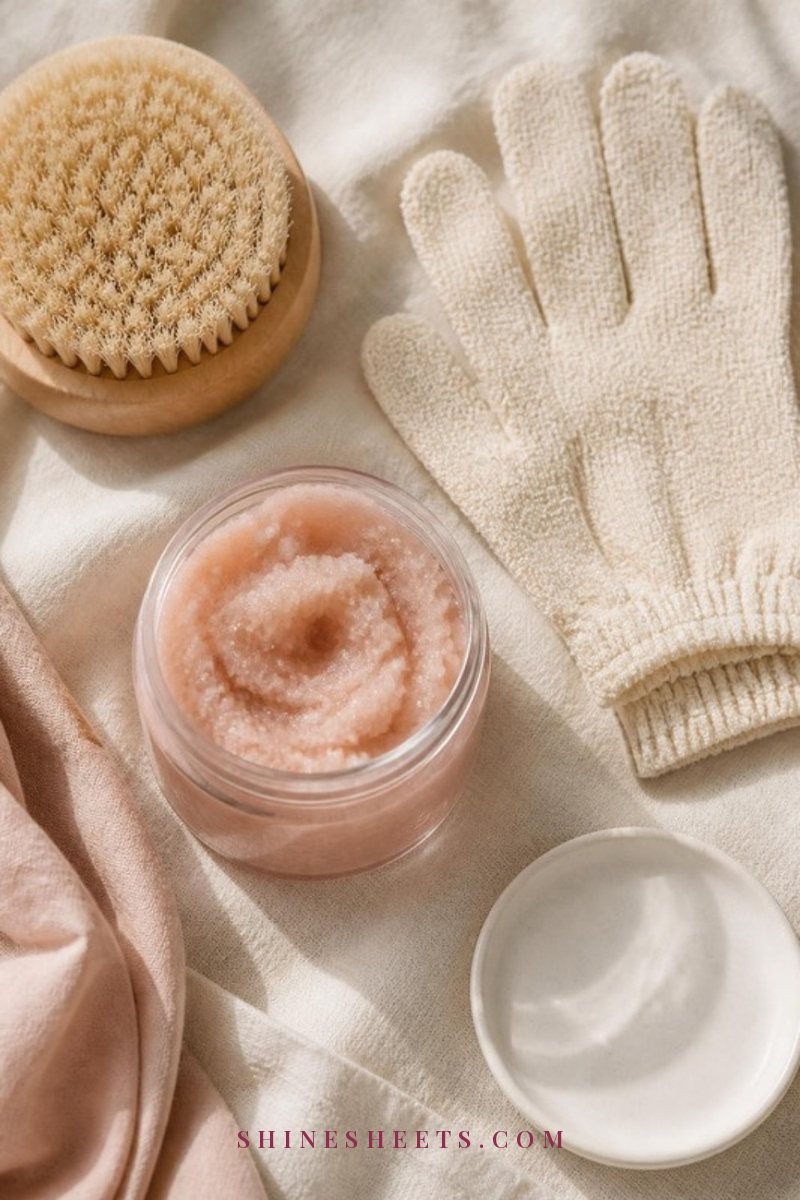
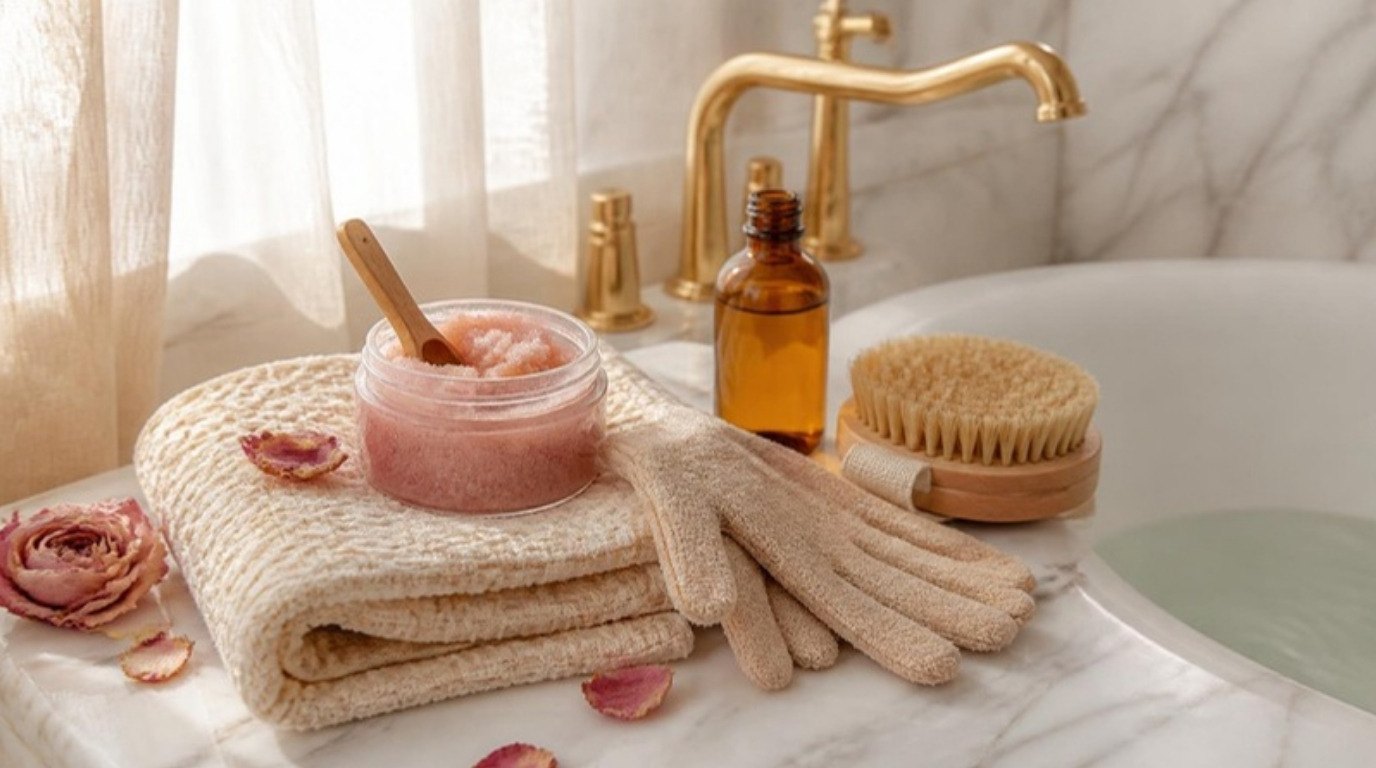
Physical exfoliation is what most of us picture: a scrub, a textured glove, a brush. It gives instant results, which is lovely, but it's also the method that's easiest to overdo.
- Body scrubs. Sugar scrubs dissolve slightly as you work them in, so they tend to be gentler than salt. Look for fine, rounded grains and a base of oils or butters. A gentle sugar body scrub is a lovely pick for legs, arms and rough spots, used with light pressure.
- Exfoliating gloves and mitts. These are wonderful because you control the pressure completely, and you can use them with your regular body wash. A pair of soft exfoliating shower gloves takes up no space and dries quickly if you hang it up after each use.
- Body brushes. Used on dry skin before a shower, a soft natural-bristle brush gives very light exfoliation. If you're curious, my guide to dry brushing benefits and technique walks through the strokes.
The rule for all physical methods: light pressure, damp (not soaking) skin for scrubs, and never on irritated or freshly shaved skin.
Chemical Exfoliation: Body Acids That Work Quietly
Chemical exfoliants come in lotions, washes and sprays, and they work without any scrubbing at all. That makes them a kind option for sensitive skin, bumpy arms and areas where friction just makes things angrier. Results are slower (think two to four weeks), but they're steadier, and they don't depend on how hard you rub.
Body products usually use one of three acids, and each has its own personality.
The 3 Body Acids Worth Knowing
You don't need a cabinet full of acids. Most people do well with one, picked for their main concern. If you've already read about how to exfoliate your face, these will sound familiar, but body products are formulated a little differently, often in richer lotions.
1. Lactic Acid: The Gentle Smoother
Lactic acid is an AHA with a larger molecule, so it works more slowly and gently on the surface. It also helps skin hold on to moisture, which makes it ideal for dry, flaky legs and rough elbows. A lactic acid body lotion is the easiest way to start: apply it at night, three times a week, and moisturize normally on the other nights.
2. Glycolic Acid: The Stronger Resurfacer
Glycolic acid has the smallest AHA molecule, so it works faster and more noticeably. It's great for stubborn rough patches and dull skin, but it can sting on dry or sensitive skin. I'd choose it only for areas that tolerate it well, like the legs or the backs of the arms, and introduce it slowly: twice a week at first.
3. Salicylic Acid: The Pore Clearer
Salicylic acid is a BHA, which means it's oil-soluble and can work inside the pore. That makes it the best choice for back and chest breakouts, clogged bumps and ingrown hairs. Because it's often found in washes, you only need to leave it on for a minute or two. A salicylic acid body wash used three or four times a week on the back and chest is a simple place to begin.
One important note: AHAs can make skin more sensitive to the sun. If you use them on areas that see daylight, like the arms, shoulders or legs in summer, sunscreen becomes part of the deal.
How Often To Exfoliate Your Body by Skin Type
Here's the honest answer: less often than most people think. For the body, one to three times a week is plenty for almost everyone, and the sweet spot depends on your skin.
- Dry skin: once or twice a week, preferably with lactic acid or a gentle sugar scrub, always followed by a rich moisturizer.
- Normal skin: two or three times a week, alternating a scrub or glove with an acid lotion.
- Oily or breakout-prone skin: salicylic acid wash three or four times a week on the back and chest, plus a physical scrub once a week on the arms and legs.
- Sensitive skin: start with once a week, choose chemical over physical, and patch test anything new on a small area for a few days.
- Bumpy or rough skin: chemical exfoliation two or three times a week works better than scrubbing, which tends to irritate the bumps.
Watch your skin, not the calendar. If it feels tight, stings in the shower or looks pink and shiny, take a full week off and just moisturize. That's not failing; that's listening.
How To Exfoliate Your Body in the Shower: 7 Steps
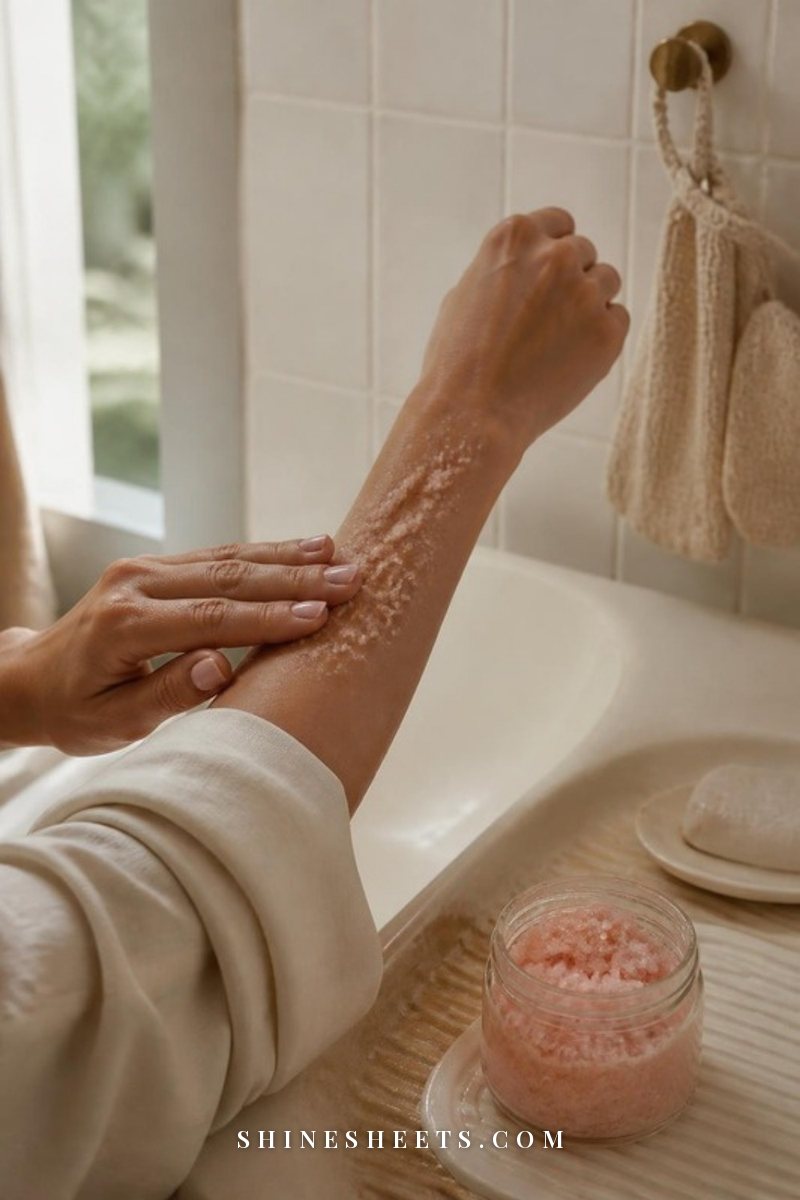
This is the routine for a scrub or glove day. It takes about five minutes longer than a regular shower and works best in the evening, when your skin has the night to settle.
- Keep the water warm, not hot. Hot water strips natural oils and makes skin more reactive. Aim for comfortably warm and keep the shower to about ten minutes.
- Cleanse first. Wash with your usual gentle body wash so you're exfoliating clean skin, not a layer of lotion, sweat and sunscreen.
- Let your skin soften for two or three minutes. Wash your hair or simply enjoy the steam. Slightly softened skin sheds more easily and needs less pressure.
- Exfoliate with light, circular movements. Use about a tablespoon of scrub per leg (less for arms) or a damp glove with body wash. Work upward from the feet in small circles for about 20 to 30 seconds per area. Light pressure, like you're polishing something delicate.
- Give extra attention to rough spots only. Elbows, knees and heels can take a few more seconds. Thin skin, like the inner arms and chest, needs very little.
- Rinse thoroughly with lukewarm water. Finish with slightly cooler water if you like the feeling. Scrub residue left on skin can feel greasy or itchy later.
- Pat dry and moisturize within three minutes. Don't rub with the towel. Leave the skin a little damp and go straight to body oil or lotion to seal in hydration.
On acid days, skip steps 4 and 5 entirely. Just cleanse, pat dry and apply the acid lotion to fully dry skin (damp skin can make acids sting more).
How To Exfoliate Each Body Area
Your body isn't one big even surface. The skin on your knees is nothing like the skin on your chest, so it makes sense to treat each area a little differently.
Elbows and Knees
These spots build up thicker, drier skin because they bend and lean on things all day. They tolerate physical exfoliation well: a sugar scrub or glove twice a week, followed by a thick balm or a lactic acid lotion on the nights in between. Give it two to three weeks; the gray, ashy look fades gradually.
Your Back

The back is hard to reach and often prone to clogged pores, which makes it the perfect place for a salicylic acid wash. Lather it onto the back, let it sit while you rinse your conditioner, then rinse. For physical exfoliation once a week, a long-handled back scrubber with soft bristles makes the whole thing possible without twisting into odd shapes. If back breakouts are the main concern, keep the scrubber for non-breakout days and let the salicylic wash do most of the work.
Legs
Legs respond well to both methods. Use a scrub or glove once or twice a week on non-shaving days, and an acid lotion on two or three evenings. If you notice dark dots around the hair follicles, my article on strawberry legs explains why they happen and how to smooth them gently. Exfoliating a day before shaving (never right after) also helps prevent ingrown hairs.
Arms With Bumps
Those small, rough bumps on the backs of the arms are often keratosis pilaris, and they're one area where scrubbing usually backfires. Friction can make the bumps redder. A lactic or glycolic acid lotion three times a week, plus a plain moisturizer every other day, works much better. My guide to keratosis pilaris has a full gentle routine if bumpy arms are your main frustration.
Chest, Neck and Inner Arms
The skin here is thinner and more sensitive. Skip scrubs entirely and use only a mild acid lotion once or twice a week, or simply a soft washcloth. Many people find these areas need no exfoliation at all, and that's completely fine.
Feet and Heels
Heels have the thickest skin on the body, so they can handle more. After a shower, when the skin is soft, use a foot file gently on dry heels once a week, then apply a rich foot cream and slip on cotton socks overnight. Stop well before the skin feels tender.
Your Body Exfoliation Planner
Here's the whole system in one place. Screenshot it and keep it on your phone until it becomes second nature.
| Area | Best method | How often | Aftercare |
|---|---|---|---|
| Elbows and knees | Sugar scrub or glove + lactic acid lotion | Scrub 2x a week, acid 2x a week | Thick balm or body butter |
| Back | Salicylic acid wash + long-handled brush | Wash 3–4x a week, brush 1x a week | Light, non-greasy lotion |
| Legs | Glove or scrub + AHA lotion | Scrub 1–2x a week (not after shaving), acid 2–3x | Body oil on damp skin |
| Arms with bumps | Lactic or glycolic acid lotion only | 3x a week | Fragrance-free moisturizer daily |
| Chest and neck | Mild acid lotion or soft washcloth | 1–2x a week or not at all | Gentle lotion + sunscreen |
| Bikini line | Soft glove, very light pressure | 1x a week, 24 hours before shaving | Soothing, fragrance-free lotion |
| Feet and heels | Foot file on soft skin | 1x a week | Rich foot cream + cotton socks |
A simple weekly rhythm that works for most people: scrub or glove on Sunday, acid lotion on Tuesday and Thursday, plain moisturizer every other day. That's it.
6 Body Exfoliation Mistakes To Avoid
Most irritation after exfoliating comes from a handful of very common habits. None of them make you a bad skincare person. They're just easy to slip into.
1. Scrubbing Freshly Shaved Skin
Shaving is already a form of exfoliation, because the blade removes a thin layer of skin along with the hair. Scrubbing right afterward is like exfoliating twice, and it often ends in stinging, redness and razor bumps. Exfoliate the day before you shave, or at least 24 hours after. More on that in my guide to getting rid of ingrown hairs.
2. Exfoliating Every Day
Daily scrubbing wears down the skin barrier, the protective layer that keeps moisture in and irritants out. Skin can actually become rougher and drier as a result, which tempts you to scrub even more. Two or three sessions a week is the upper limit for most people.
3. Using Scrubs on Broken or Irritated Skin
Cuts, scratches, sunburn, active eczema patches, inflamed breakouts and fresh tattoos all need a break from exfoliation. Work around those areas, or skip the session completely until the skin has healed.
4. Combining Too Many Exfoliants
A scrub, an acid wash and an acid lotion on the same day is simply too much. Pick one method per session. If you use a glycolic body lotion, skip the scrub that evening, and don't layer a salicylic wash under it.
5. Pressing Too Hard
Good exfoliation feels pleasant, not scratchy. If your skin looks pink afterward or feels warm for longer than a few minutes, lighten your hand. Let the product or glove do the work.
6. Forgetting Sunscreen on Acid-Treated Skin
AHAs increase sun sensitivity for a while after use. If you're wearing shorts, a sleeveless dress or heading to the beach, apply sunscreen to any exfoliated area that will see daylight.
A kind safety note: if you have a skin condition like eczema, psoriasis or very reactive skin, or if a rash, burning or swelling doesn't settle within a day or two, pause all exfoliants and check in with a dermatologist or doctor before starting again.
Aftercare: What To Do Right After You Exfoliate
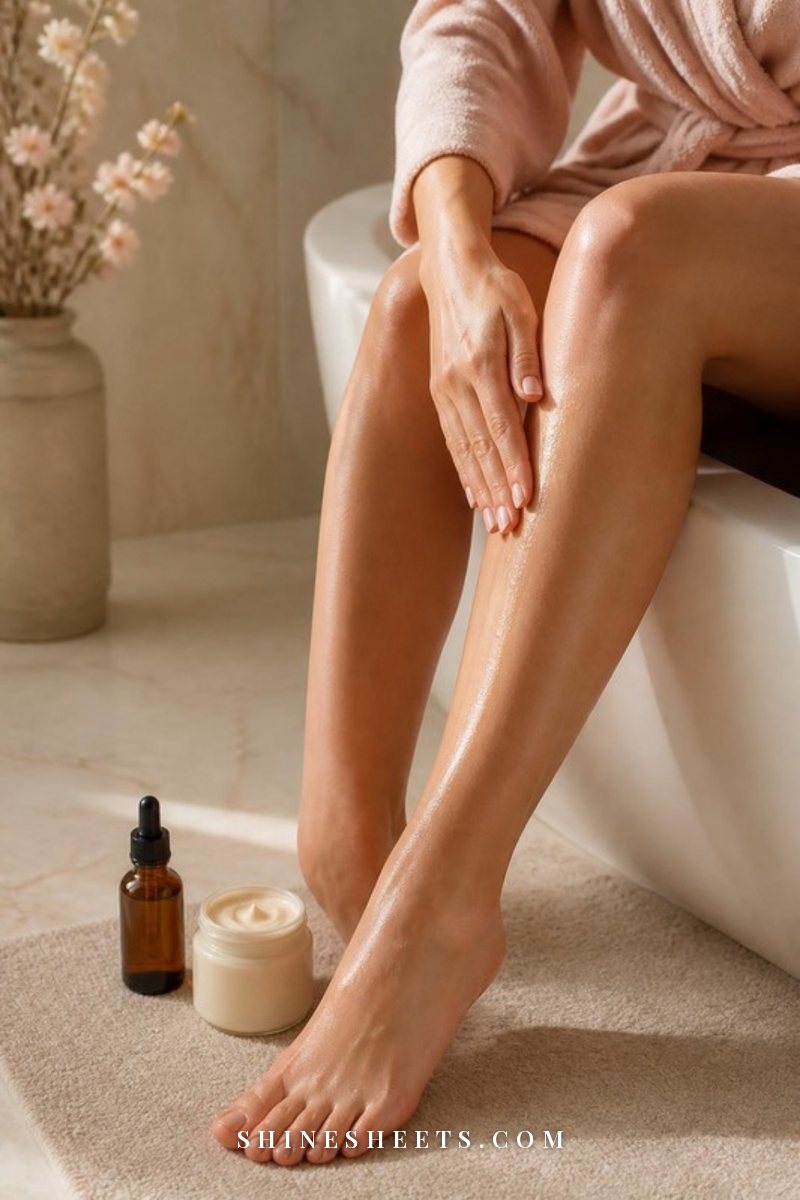
Aftercare is the part that turns "freshly scrubbed" into "soft for days." Freshly exfoliated skin loses moisture faster, so the first few minutes matter.
- Moisturize while skin is still slightly damp. This traps water in the skin. A few drops of a lightweight body oil pressed into damp legs and arms absorbs beautifully and leaves a soft sheen instead of a greasy film.
- Layer lotion over oil if your skin is very dry. Oil first, then a cream on top, especially on elbows, knees and shins.
- Choose soothing over scented. Right after exfoliating, skip lotions with heavy fragrance, alcohol or more acids. Simple formulas with glycerin, ceramides, shea butter or squalane are ideal.
- Wear soft, loose clothes. Cotton or silk pajamas are kinder to freshly exfoliated skin than tight leggings.
- Wait before self tanner, if you use it. Exfoliate the day before, so the skin has time to settle and the color goes on evenly.
- Look after your tools. Rinse gloves and brushes, hang them to dry fully and replace gloves every two to three months.
I like making exfoliation night a small ritual: a warm shower, body oil, soft pajamas, a glass candle and a cup of evening tea afterward. It stops feeling like maintenance and starts feeling like care.
Final Thoughts
Learning how to exfoliate your body is less about finding a miracle scrub and more about finding a gentle rhythm your skin trusts. One method per session, two or three sessions a week, light pressure and generous moisture afterward. That's the whole secret.
Start small, maybe with just your elbows and legs this week, and let your skin show you what it likes. A few weeks from now, you'll run a hand over your arm and notice how soft it feels, and that quiet little moment is worth every minute.