Whiteheads are one of the most stubborn kinds of breakout, and also one of the most fixable. They don't need to be scrubbed, squeezed or attacked with five strong products at once. They need the pore to stay a little clearer, day after day, until the tiny plugs stop forming in the first place.
That's the slightly unglamorous truth: clearing whiteheads is less about one miracle step and more about a calm, steady routine your skin can actually tolerate. It took me a while to accept that the gentler I was with my shiny T-zone, the faster those little bumps along my chin and nose settled down.
In this guide to whiteheads, you'll learn what they really are, how to tell them apart from milia, fungal acne and regular pimples (there's a quick comparison table for that), what causes them, a gentle step-by-step routine to clear them, the habits that quietly keep them coming back, and when it's time to let a dermatologist take over.
Think of this as the soft, sensible version of acne care. No harsh scrubs, no panic, just a plan.
What Are Whiteheads, Really?
A whitehead is what dermatologists call a closed comedone. It forms when oil (sebum) and dead skin cells get stuck together inside a pore, and the opening of that pore stays covered by a thin layer of skin. Because the plug never meets the air, it stays pale – white, cream or skin-colored – and sits under the surface like a tiny smooth dome.
Its close cousin, the blackhead, is the same plug with an open top. The dark color isn't dirt; it's oil that has oxidized after being exposed to air. If blackheads are your bigger frustration, my guide on how to get rid of blackheads and keep them at bay walks through that side of things.
A few things that make whiteheads unique:
- They're usually small. Often 1–3 mm, sometimes so tiny you feel them more than see them, especially when you run your fingers over your forehead or chin.
- They're not usually red or painful. A plain whitehead is non-inflamed. Once it turns red, swollen and tender, it has become a pimple (a papule or pustule).
- They love oily zones. Forehead, nose, chin, along the jawline and sometimes the upper back or chest.
- They come in clusters. Many people get a scattering of them across one area, which reads as bumpy, uneven texture rather than "breakouts."
That clustered, sandpaper-like feel is why whiteheads often get confused with general rough skin. If your bumps feel more like dry patches than plugs, my guide to smoothing textured skin might be a better match.
Whitehead or Something Else?
Before you change your whole routine, it helps to know what you're actually looking at. Several small white or skin-colored bumps look almost identical in the mirror but need very different care. Screenshot this table and compare it with your skin in good daylight:
| Bump | What it looks like | Usual cause | What helps |
|---|---|---|---|
| Whitehead (closed comedone) | Small, smooth, skin-colored or white dome; not sore; often in clusters on forehead, nose, chin | Oil and dead skin trapped under a closed pore; heavy products; hormones | Salicylic acid, gentle exfoliation, a retinoid introduced slowly, non-comedogenic products |
| Milia | Hard, pearly white "grains," very firm, often around the eyes and cheeks; won't squeeze out | Keratin trapped under the skin; rich eye creams; sun damage; sometimes after skin injury | Patience and gentle exfoliation; a dermatologist can extract them safely. Don't pick |
| Fungal acne (Malassezia folliculitis) | Tiny, uniform bumps all the same size, often itchy, on forehead, hairline, chest or back | Overgrowth of a yeast that lives on skin; heat, sweat, occlusive products | Doesn't respond to typical acne care; see a dermatologist for diagnosis and the right treatment |
| Pimple (papule or pustule) | Red, raised, tender; may have a white or yellow center | A clogged pore that has become inflamed | Spot care, hydrocolloid patches, hands off; ongoing routine to prevent new clogs |
| Sebaceous hyperplasia | Soft, yellowish bump with a tiny dip in the middle; doesn't come and go | Enlarged oil glands; more common with age | Not a breakout; a dermatologist can advise on treatment options |
A simple rule of thumb: if it's smooth, soft-ish and comes and goes, it's probably a whitehead. If it's rock-hard and stays for months, think milia. If it itches and every bump looks like a perfect copy of the next, mention fungal acne to a professional.
What Causes Whiteheads
Whiteheads aren't a sign that you're not washing your face enough. In fact, over-washing can make them worse. They usually come from a mix of these:
- Extra oil. Oily and combination skin types make more sebum, which gives a plug more "glue" to work with.
- Dead skin that doesn't shed evenly. Normally skin cells loosen and fall away on their own. When they stick together instead, they block the pore opening.
- Heavy or pore-clogging products. Thick creams, some oils, waxy balms you leave on overnight, heavy foundations and even hair products that touch your forehead.
- Hormones. Shifts around your cycle, stopping or starting birth control, and stress hormones can all increase oil. If your whiteheads cluster along the chin and jaw each month, a hormone-focused routine is worth looking into.
- Friction and sweat. Masks, helmets, headbands, phone screens pressed to your cheek and gym sessions in makeup.
- Skipping proper cleansing at night. Sunscreen and long-wear makeup are designed to stay put, so a quick splash of water doesn't fully remove them.
Most people have two or three of these going on at the same time. That's good news, actually: it means small changes in a few places can add up to a big difference.
The Gentle Routine To Clear Whiteheads
Here's the routine I'd build if I were starting from zero with a face full of whiteheads. You don't have to start everything this week. In fact, please don't. Begin with steps 1, 2, 5 and 6, then add the exfoliant, and only after a few calm weeks bring in the retinoid.
1. Double Cleanse at Night
If you wear sunscreen or makeup (and I hope you wear sunscreen), a single wash often leaves a thin film behind, and that film is exactly what helps plugs form. Double cleansing means an oil-based cleanser first to melt everything, then a gentle water-based cleanser to rinse it clean.
An oil cleansing balm works beautifully here. Look for one that "emulsifies," which means it turns milky when you add water and rinses off completely. Massage it over dry skin for about 30–60 seconds (give extra attention to the nose and chin), add a splash of water, then rinse.
It might feel odd to put oil on skin with whiteheads, but a rinse-off cleanser doesn't stay on long enough to clog anything. It's the leave-on heavy stuff you want to watch. If you're new to this, my guide to double cleansing in 60 seconds shows exactly how to do it without overdoing it. In the morning, a single gentle cleanse is plenty.
2. Use a Salicylic Acid Cleanser
For your second cleanse, a gentle salicylic acid cleanser is a smart pick. Salicylic acid is a beta hydroxy acid (BHA) that's oil-soluble, so it can work its way into the pore lining rather than just sitting on top.
Look for a concentration around 0.5–2%, a gel or light foam texture and no gritty beads. Massage it in for 30–60 seconds before rinsing so it has a moment to work. Start with once a day (evenings are easiest), and if your skin feels fine after two weeks, you can use it morning and night.
One small note: if your skin is on the sensitive side, like mine, a salicylic cleanser plus a salicylic leave-on exfoliant every day can be too much. Pick one daily star and keep the other occasional.
3. Add a BHA Liquid Exfoliant
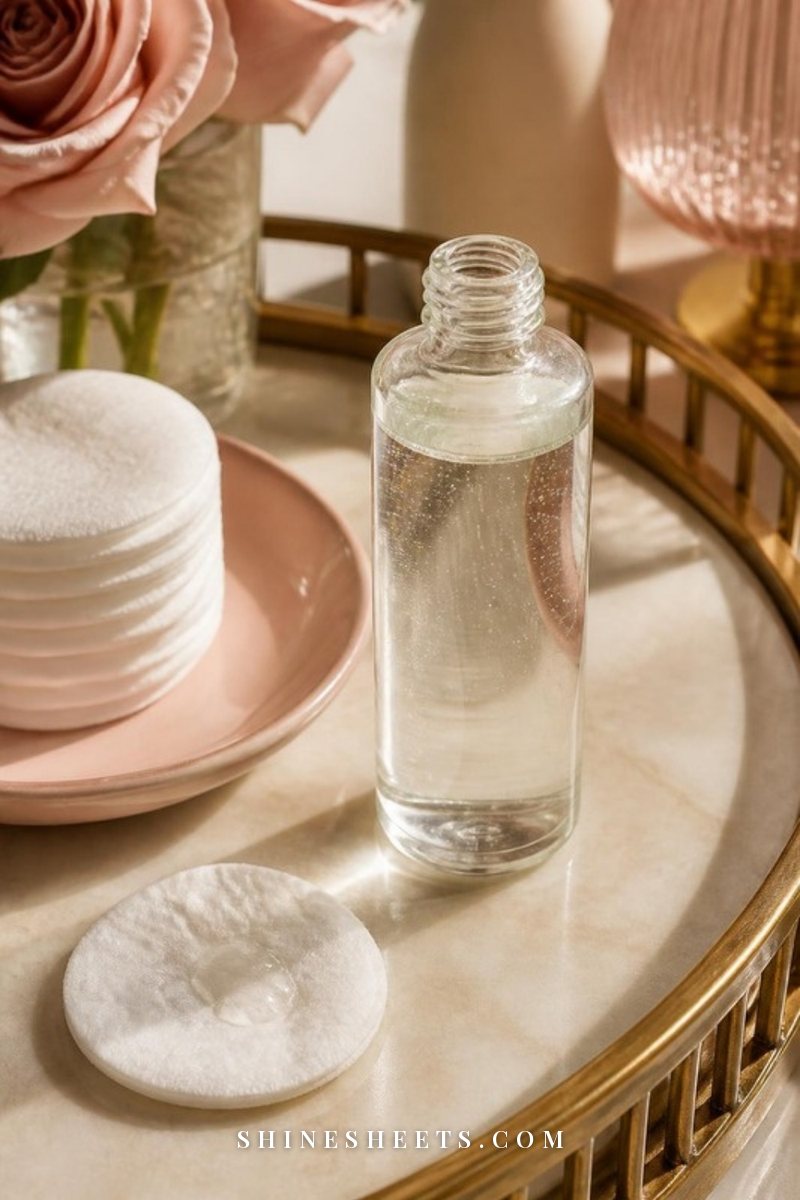
This is the step that tends to make the most visible difference for whiteheads. A 2% BHA liquid exfoliant is a leave-on treatment that keeps the inside of the pore from building up new plugs.
How I'd use it:
- Weeks 1–2: 2–3 evenings a week, after cleansing, on dry skin.
- Weeks 3–4: every other evening if your skin is happy.
- After that: up to once a day if you need it, though many people do perfectly well with 3–4 times a week.
Apply a few drops with your fingertips or a cotton pad, focusing on whitehead-prone areas, and let it sit for a minute or two before moving on. A little tingling can be normal; stinging, burning or flaking is your cue to cut back.
Wondering whether a glycolic or lactic acid would be better? For whiteheads specifically, BHA usually wins because it's oil-soluble. My AHA vs BHA guide explains when each one makes sense.
4. Introduce a Retinoid Slowly
If you only remember one "big gun" for whiteheads, make it a retinoid. Retinoids help skin cells turn over more evenly, so dead cells stop clumping together in the pore. Over time, that means fewer new whiteheads forming at all.
An over-the-counter adapalene gel is a widely available option made specifically for acne. The key word is slowly:
- Start with 2 nights a week, on clean, completely dry skin.
- Use a pea-sized amount for the whole face. More doesn't work faster; it just irritates more.
- Avoid the corners of your nose, mouth and eyes, where skin is thinnest.
- Don't use it on the same night as your BHA exfoliant at first. Alternate them.
- Increase by one night a week every two weeks, only if your skin feels comfortable.
Expect a possible adjustment phase in the first 4–8 weeks. Some people notice a few extra bumps as clogs come to the surface (often called "purging"), plus a bit of dryness. That should ease. If you get burning, raw patches or swelling, stop and check with a doctor or dermatologist.
A kind safety note: retinoids aren't recommended if you're pregnant, trying to conceive or breastfeeding, so talk to your doctor first in those cases. Retinoids also make skin more sensitive to the sun, which makes the next steps non-negotiable.
5. Choose a Non-Comedogenic Moisturizer
Skipping moisturizer because your skin feels oily is one of the most common whitehead mistakes. Dehydrated skin can produce more oil to compensate, and actives like BHA and retinoids feel much harsher on skin without a buffer.
A lightweight non-comedogenic moisturizer is the answer. "Non-comedogenic" means it's formulated not to clog pores (it's not a guarantee for every person, but it's a helpful starting point). Gel-creams and light lotions with glycerin, hyaluronic acid, niacinamide or ceramides tend to work well for whitehead-prone skin.
Apply it after your exfoliant or retinoid, and in the morning before sunscreen. If your skin feels tight after a retinoid night, you can even apply a thin layer of moisturizer before the retinoid to soften it (a trick called "buffering").
6. Wear a Light Sunscreen Every Morning
Sun protection doesn't clear whiteheads on its own, but it protects skin that's working hard with exfoliants and retinoids, and it helps any marks left behind fade faster. Choose a fluid or gel texture labeled non-comedogenic, SPF 30 or higher, and apply about two finger-lengths for your face and neck.
Then, at night, remember step one. Sunscreen that stays on is wonderful during the day and not so wonderful when it's left in your pores overnight.
7. Use a Clay Mask Once a Week
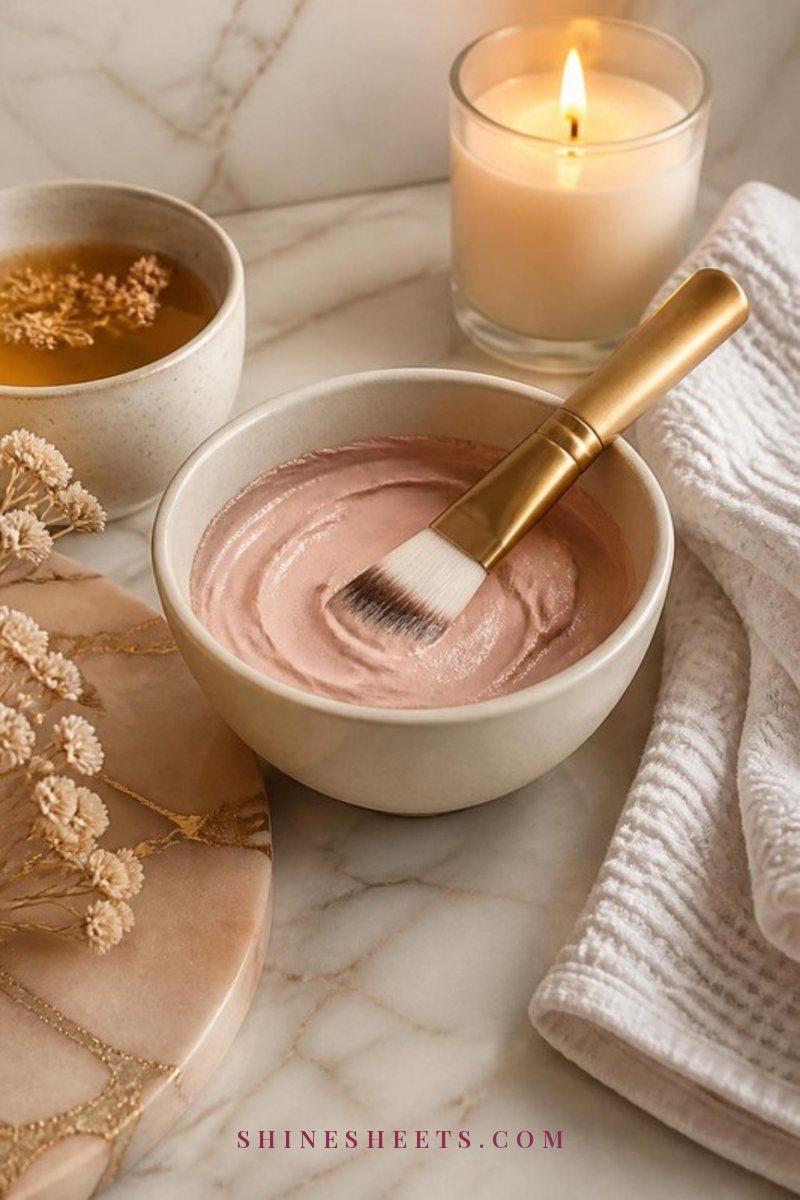
A clay mask is a lovely weekly extra, not a treatment on its own. Clay (especially kaolin and bentonite) soaks up excess oil on the surface, so your T-zone looks fresher and feels less congested.
A gentle kaolin clay mask is the softer choice for sensitive or combination skin. Here's the formula:
- Once a week (twice at most) on a night you're not using your retinoid.
- Apply only where you need it – often the nose, chin and forehead – and skip dry cheeks.
- Leave it on 8–10 minutes, and rinse before it cracks and pulls completely dry.
- Follow with moisturizer right away.
Light a glass candle, make a cup of evening tea and let it be a small ritual. Ten minutes of doing nothing is good for your skin's routine and your nervous system.
A Gentle Weekly Plan for Whiteheads
To make the routine easier to follow, here's how a balanced week might look once your skin has adjusted (around week 6–8). Morning is always the same: gentle cleanse, moisturizer, sunscreen.
| Evening | Routine |
|---|---|
| Monday | Double cleanse, retinoid, moisturizer |
| Tuesday | Double cleanse, BHA exfoliant, moisturizer |
| Wednesday | Double cleanse, retinoid, moisturizer |
| Thursday | Double cleanse, BHA exfoliant, moisturizer |
| Friday | Double cleanse, retinoid, moisturizer |
| Saturday | Double cleanse, clay mask on T-zone, moisturizer |
| Sunday | Rest night: gentle cleanse and moisturizer only |
That rest night matters more than it looks. It gives your skin barrier a chance to recover and keeps the routine sustainable. If your skin is very sensitive, drop one retinoid night and one BHA night and you'll still be doing plenty.
What Not To Do With Whiteheads
These are the habits that feel productive in the moment and then make whiteheads last longer. I've been guilty of a few of them, so no judgment here, only a gentle redirect:
- Squeezing them. Because whiteheads are closed, pressing them often pushes the plug deeper or tears the skin, which can turn a quiet bump into a red, inflamed pimple and leave a mark. If one is truly bothering you, a warm compress and a hydrocolloid patch are kinder options.
- Using harsh scrubs. Gritty scrubs, rough washcloths and aggressive brushes scratch the surface but can't reach inside the pore. They also irritate skin, which can mean more oil and more bumps.
- Stacking too many actives. BHA, AHA, retinoid, vitamin C, benzoyl peroxide and a peel pad all in one routine is a recipe for a damaged barrier. Two main actives, alternated, is plenty.
- Changing everything at once. If you add five products in one week and something goes wrong, you'll never know which one was the problem. Add one new product every 2–3 weeks.
- Giving up after two weeks. Pores need time. Most routines take 8–12 weeks to show their real results.
- Using heavy oils and thick creams on whitehead zones. Rich facial oils, thick balms and heavy eye creams spread onto your cheeks can feed both whiteheads and milia. Keep the richer products for dry areas only.
Small Daily Habits That Keep Whiteheads Away

Once your skin starts to clear, these quiet habits help keep new whiteheads from moving in:
- Change your pillowcase twice a week. It collects oil, hair products and skincare. Flip it over midweek if washing that often feels like a lot.
- Wash makeup brushes and sponges weekly. A gentle soap and lukewarm water, then let them dry flat on a towel.
- Keep hair products off your forehead. Apply styling creams and oils away from your face, and wash your hairline well in the shower.
- Cleanse after workouts. Sweat plus sunscreen plus friction is a whitehead's favorite combo. A quick rinse within an hour helps.
- Wipe your phone screen. Especially if your whiteheads tend to show up on one cheek.
- Check your makeup labels. Choose foundations, primers and concealers marked non-comedogenic and remove them every night without exception.
- Be kind to your stress levels. You can't control every stressful week, but sleep, water and a few calm minutes a day support your skin too.
For more on keeping your pores looking smooth and refined overall, my pore care guide pairs nicely with everything above.
How Long Does It Take To Clear Whiteheads?
This is the part nobody likes to hear, but knowing it makes it so much easier to stay patient:
- Weeks 1–2: Skin may feel cleaner and look less shiny. Whiteheads are mostly still there.
- Weeks 3–6: Texture starts to soften. If you've started a retinoid, you might see a short purging phase.
- Weeks 8–12: This is usually when you see a real difference – fewer new whiteheads and a smoother feel when you touch your skin.
- After 3 months: The goal becomes maintenance. Many people can lower their exfoliant to 2–3 times a week while keeping the retinoid going.
Take a photo in the same spot by the window at the start, then again at week 6 and week 12. Day-to-day changes are hard to see, but side-by-side photos tell the real story.
When To See a Dermatologist
A gentle at-home routine helps a lot of people, but it's not the right answer for every bump. Please book an appointment with a dermatologist or your doctor if:
- Nothing has changed after 3 months of a consistent routine.
- You think you have milia. Those hard white grains don't respond well to home care, and a professional can extract them safely with sterile tools.
- Your bumps itch, look identical and spread. That pattern can point to fungal acne, which needs different treatment.
- Whiteheads turn into painful, deep or cystic breakouts, or start leaving marks or scars.
- Over-the-counter products irritate you even at low frequency, or you have a skin condition like rosacea or eczema.
- You're pregnant or breastfeeding and want to know which treatments are safe for you.
A dermatologist can offer prescription-strength retinoids, other topical treatments, professional extractions or gentle peels when they're appropriate. Asking for help isn't giving up; it's simply choosing the faster, safer path. And if you'd like the bigger picture on calm, clear skin, my list of gentle habits for clear skin is a wonderful next read.
Final Thoughts
Whiteheads can make your skin feel bumpy and unpredictable, but they respond beautifully to patience. A thorough evening cleanse, one well-chosen exfoliant, a slowly introduced retinoid and a light moisturizer will do more than any scrub or squeeze ever could.
Start small, go slowly and give your skin a full three months before you judge the results. Be as gentle with yourself as you are with your skin while you wait, and you'll notice the day your fingertips glide over a smoother forehead.